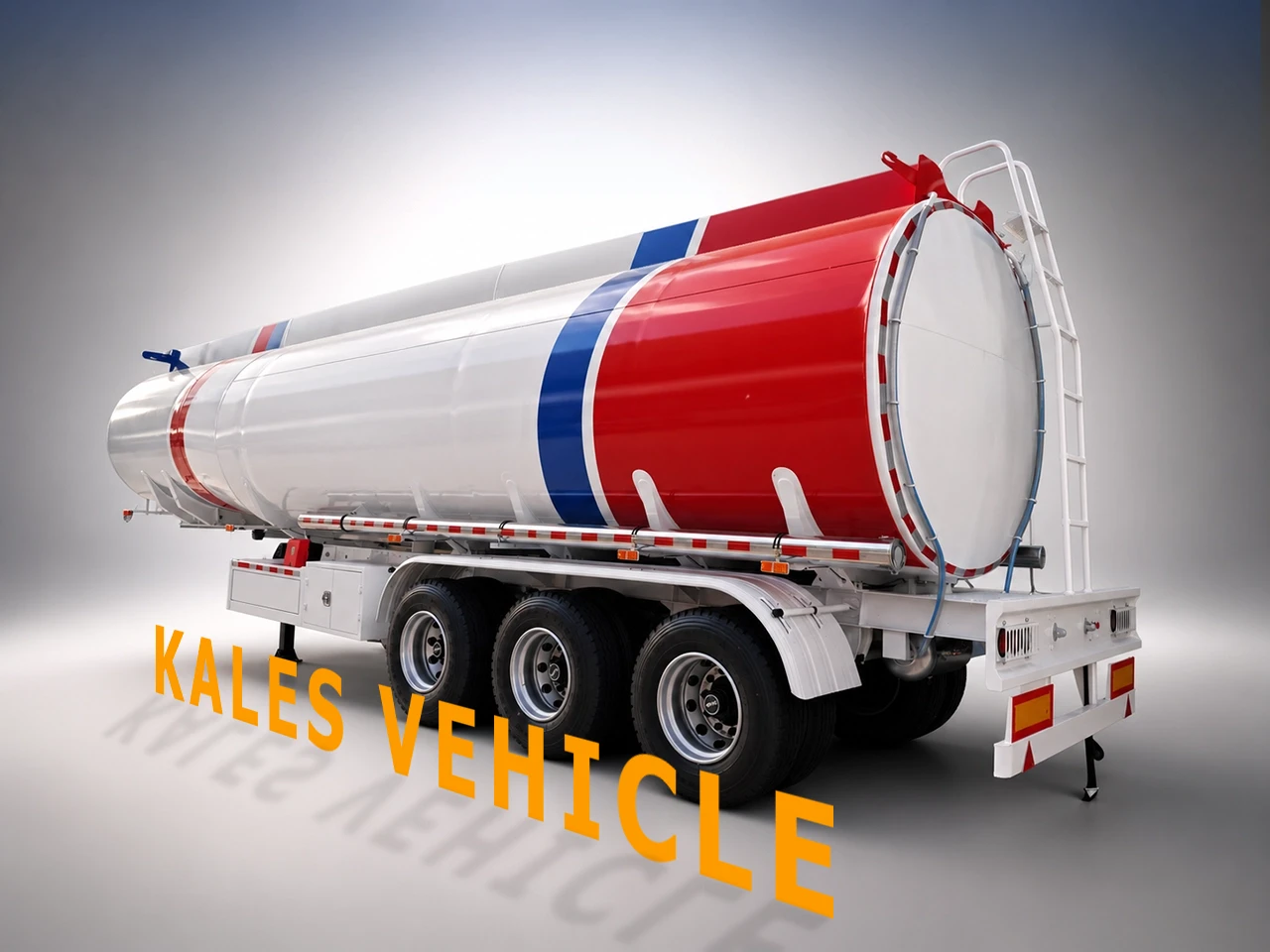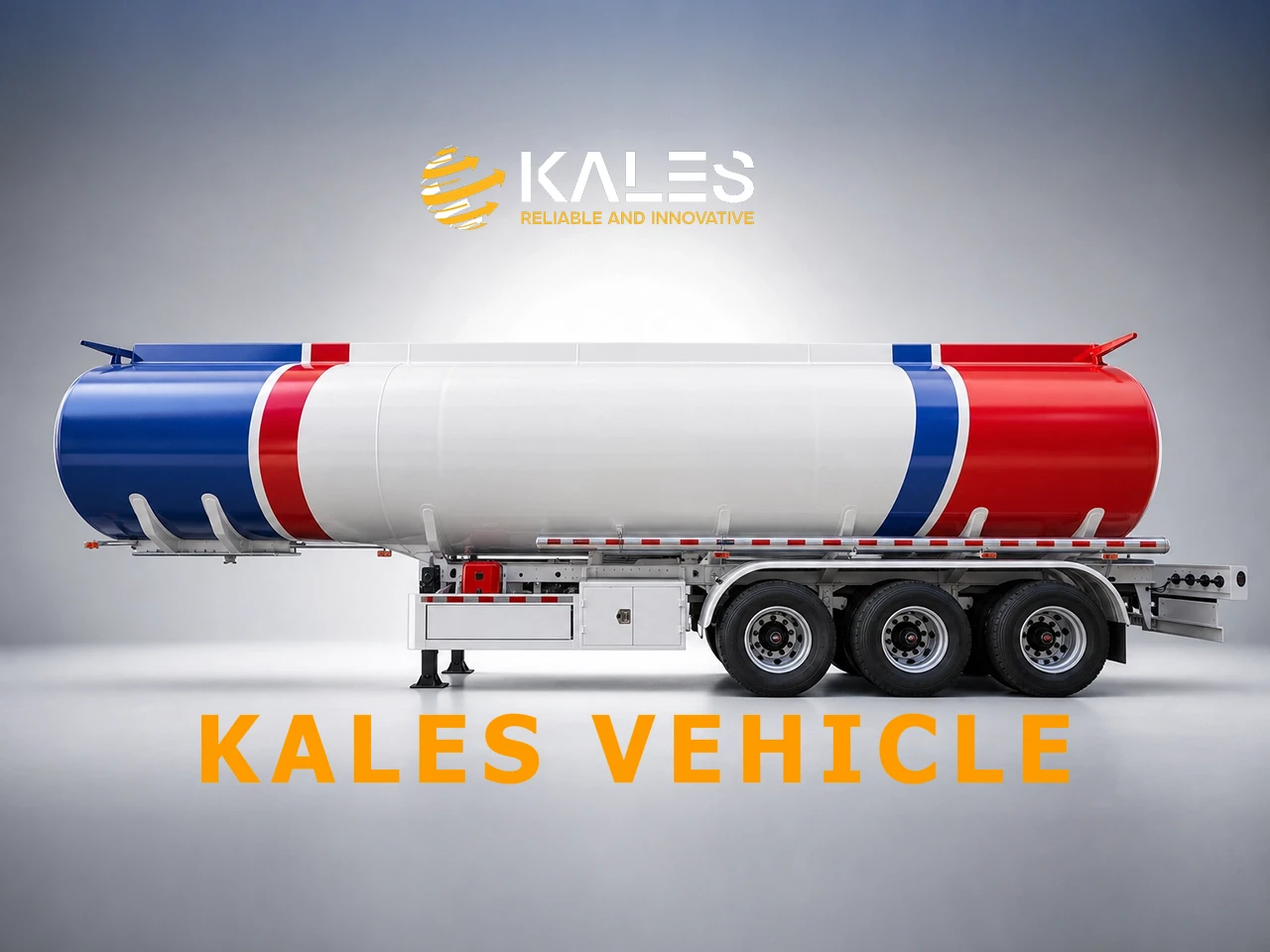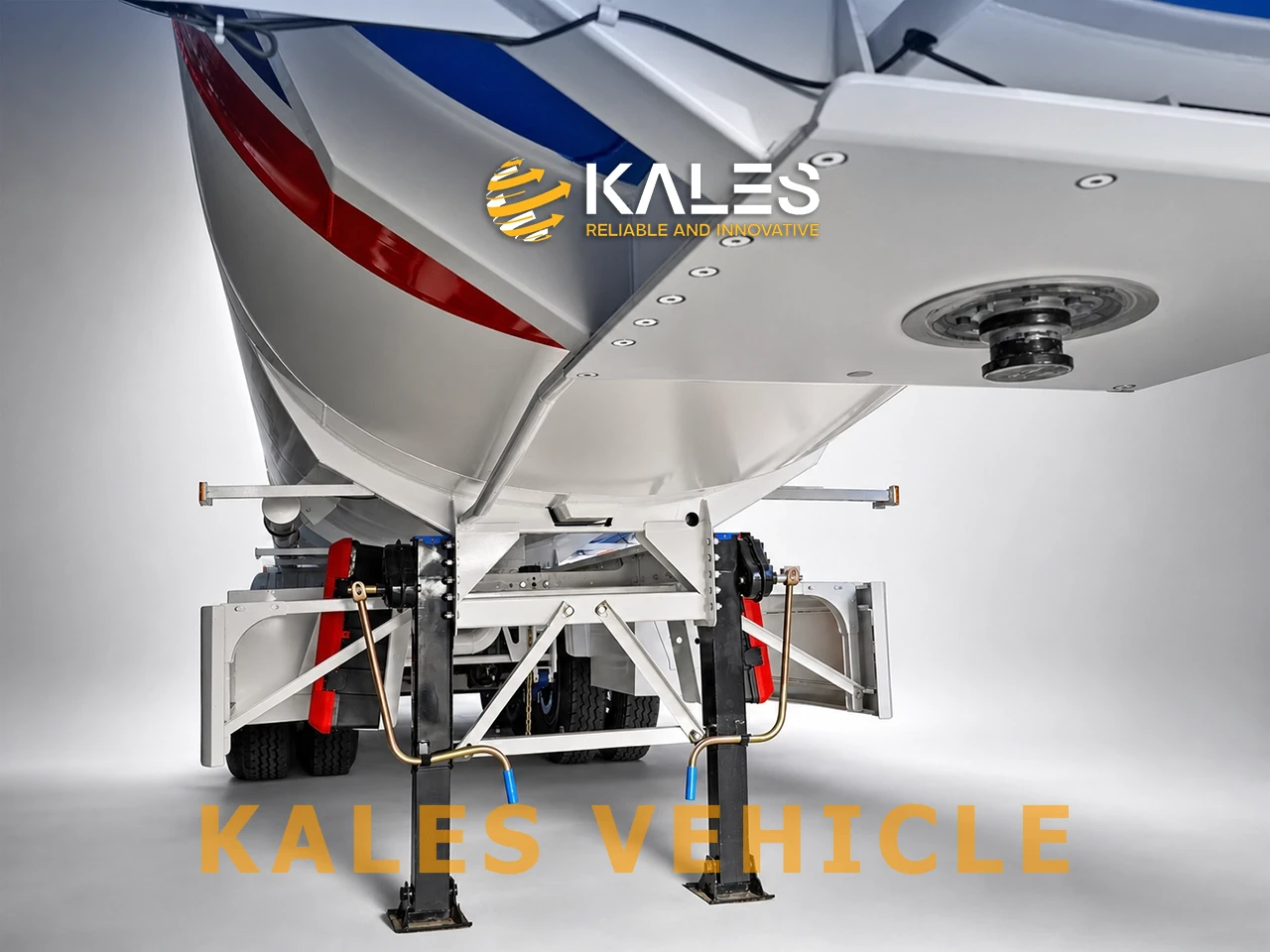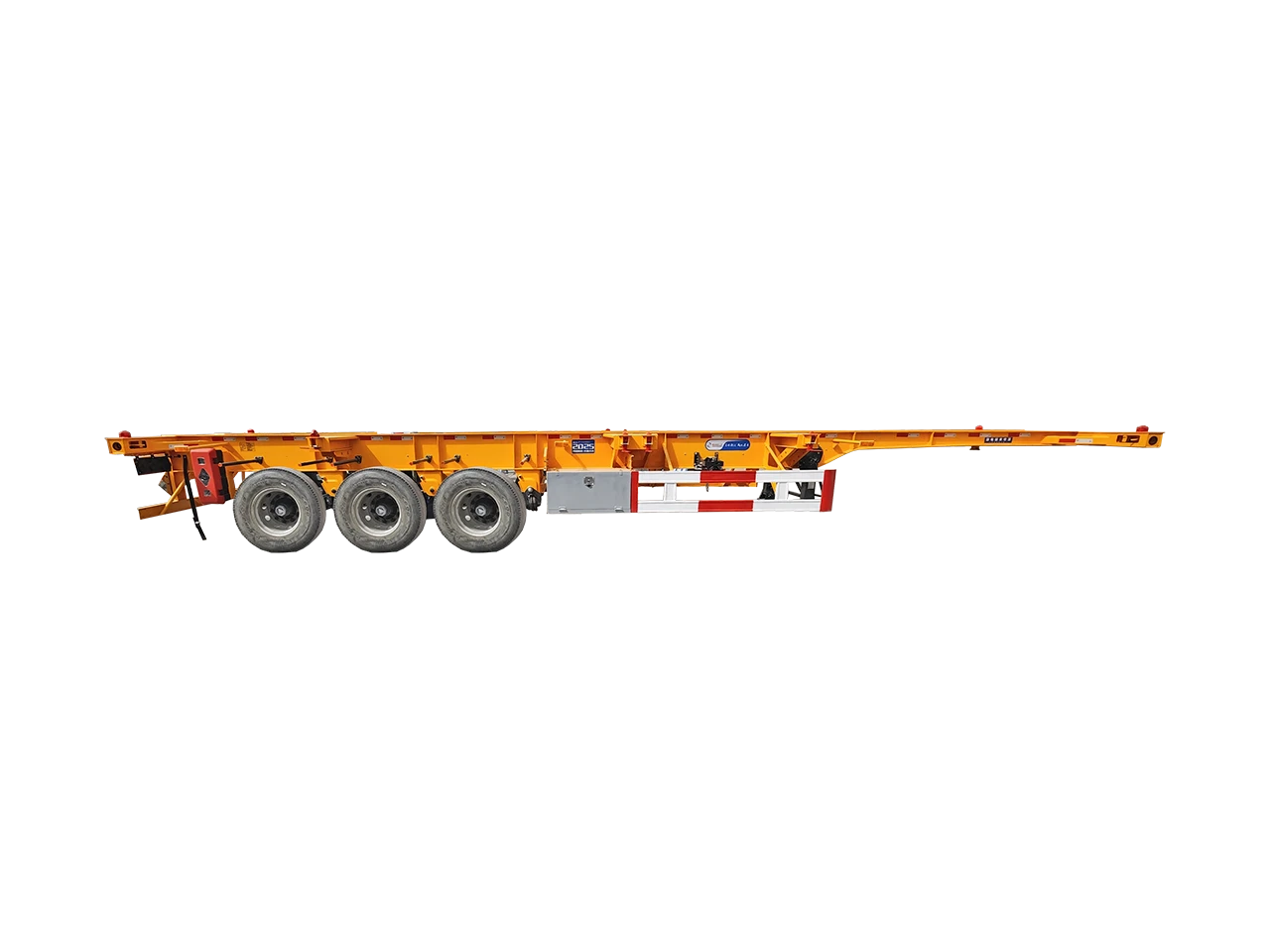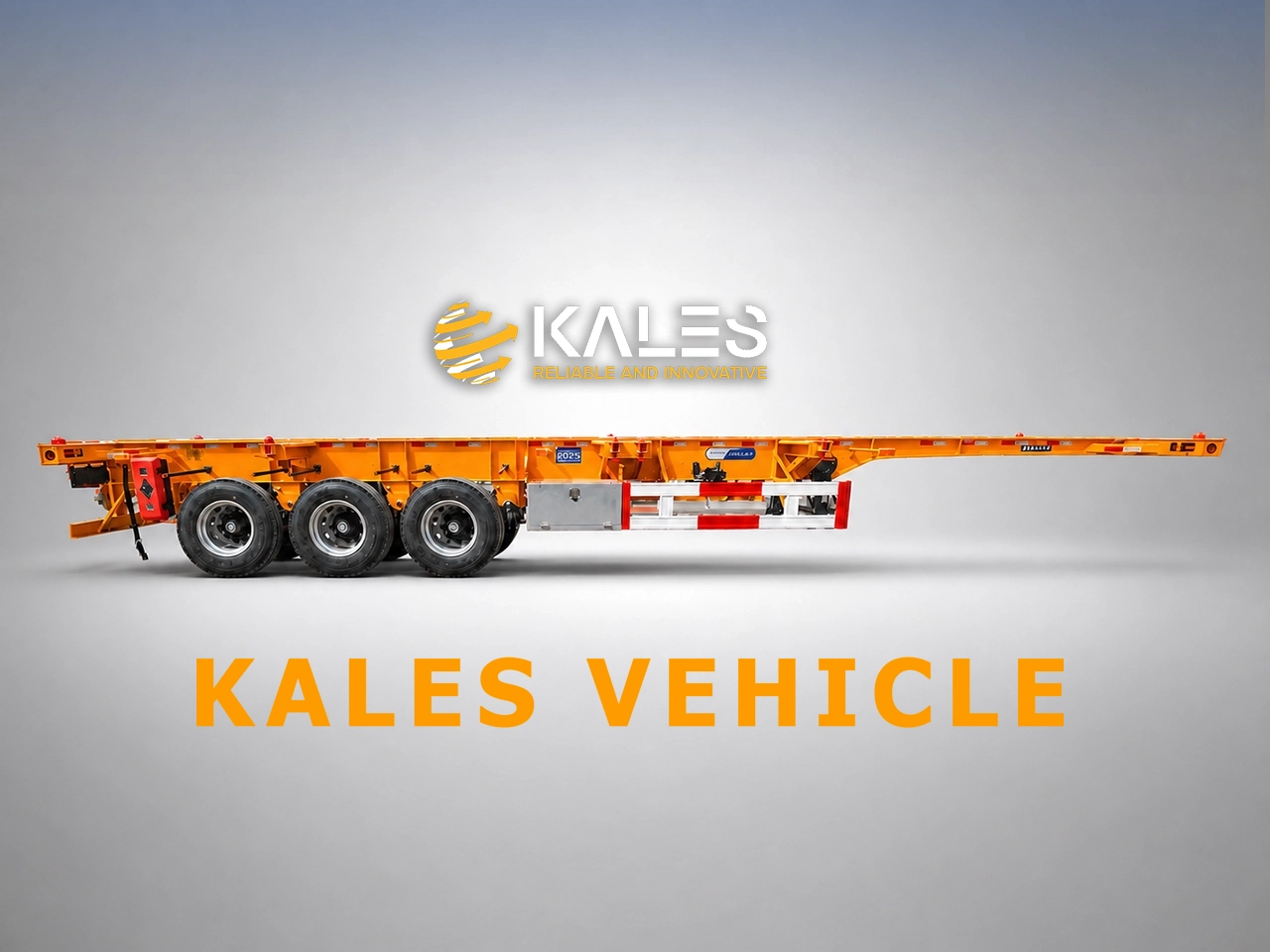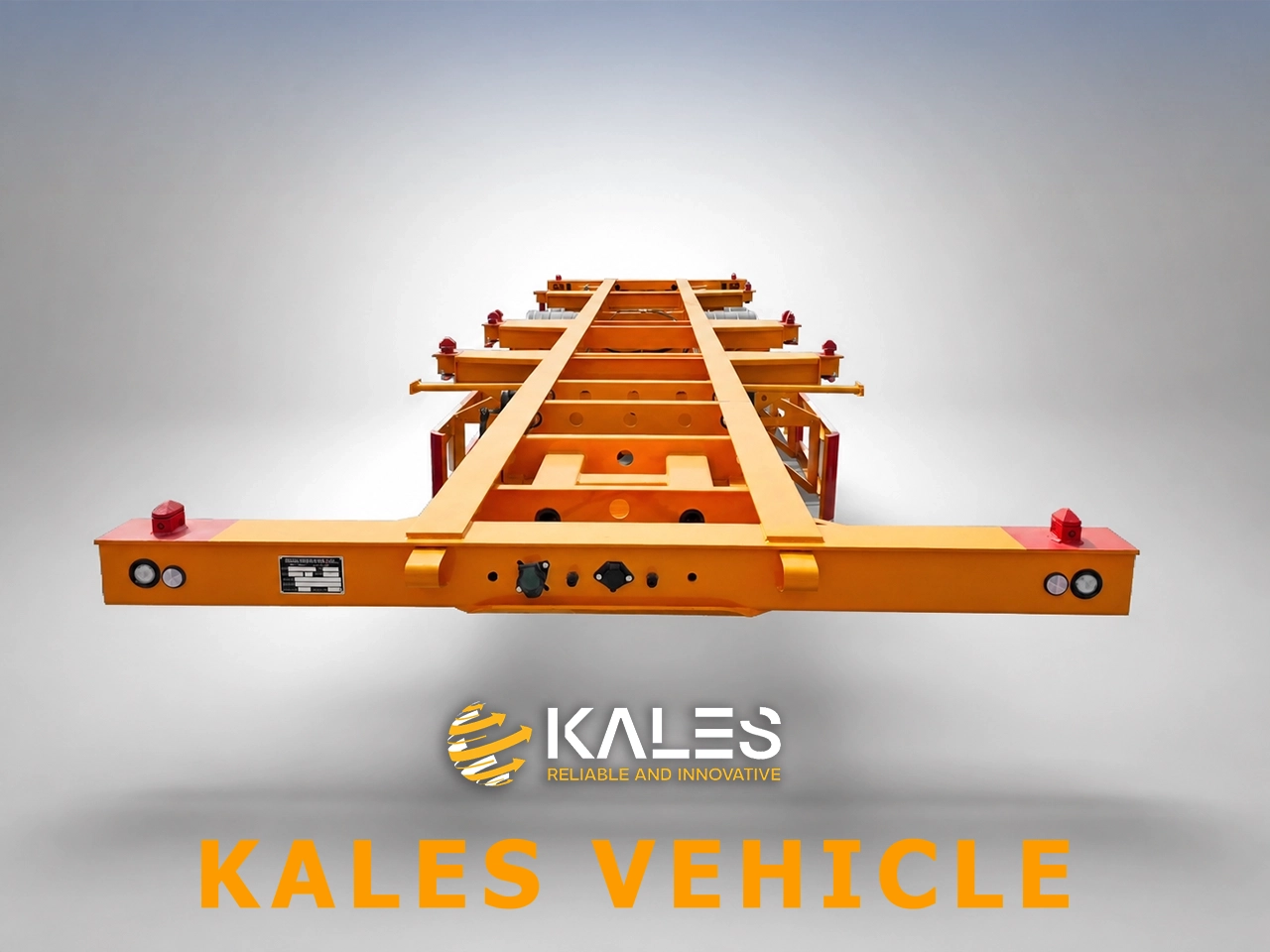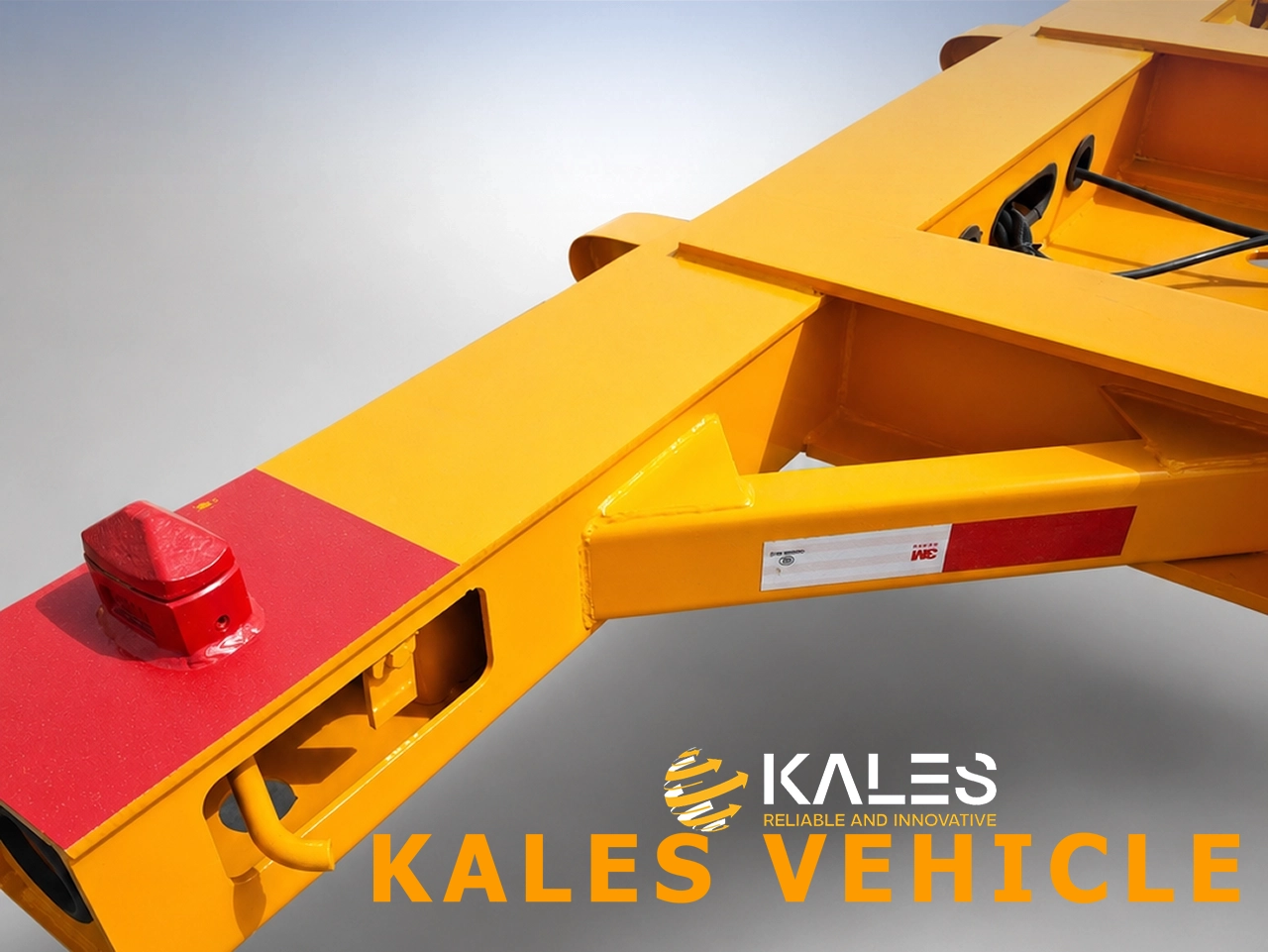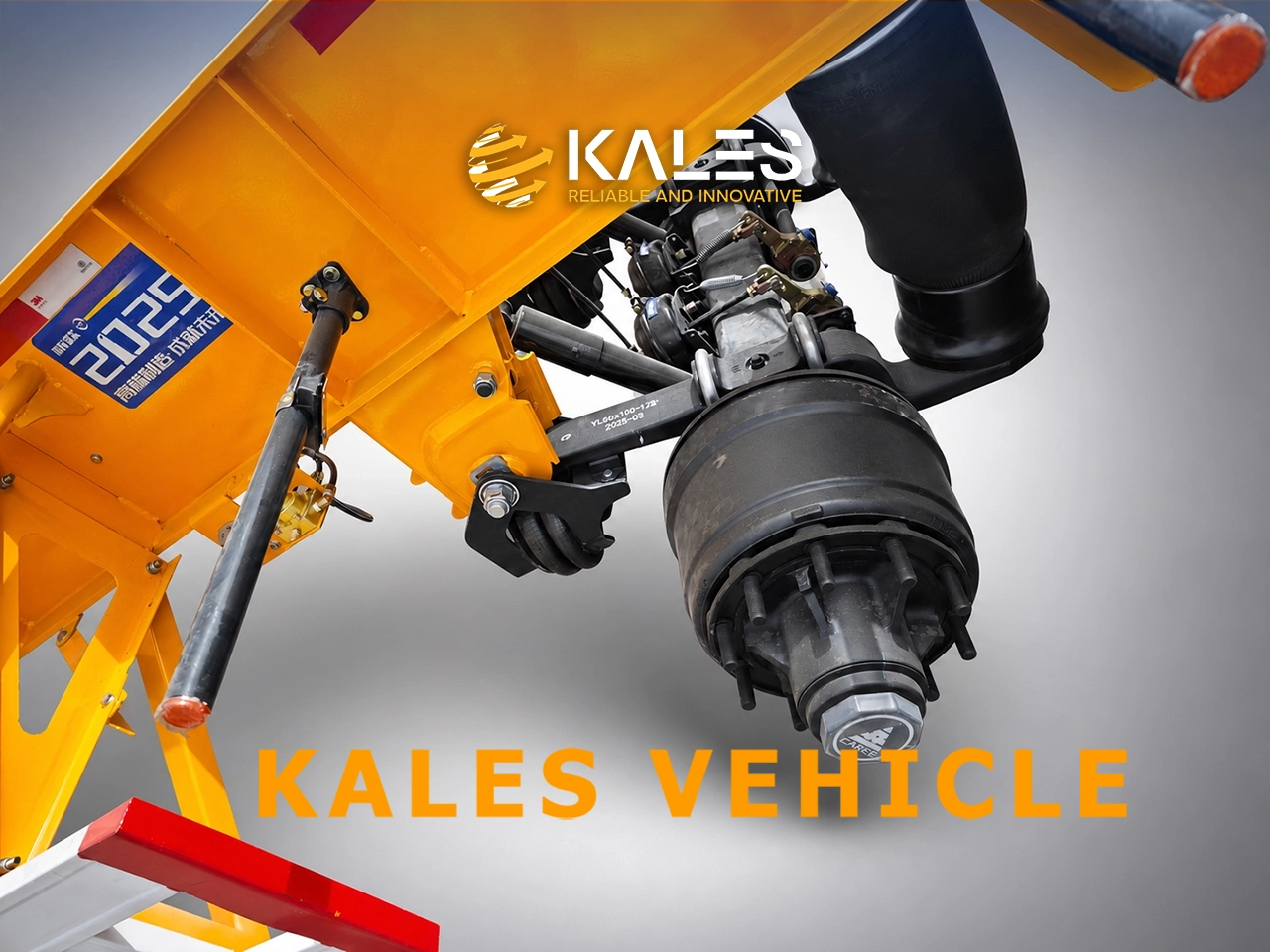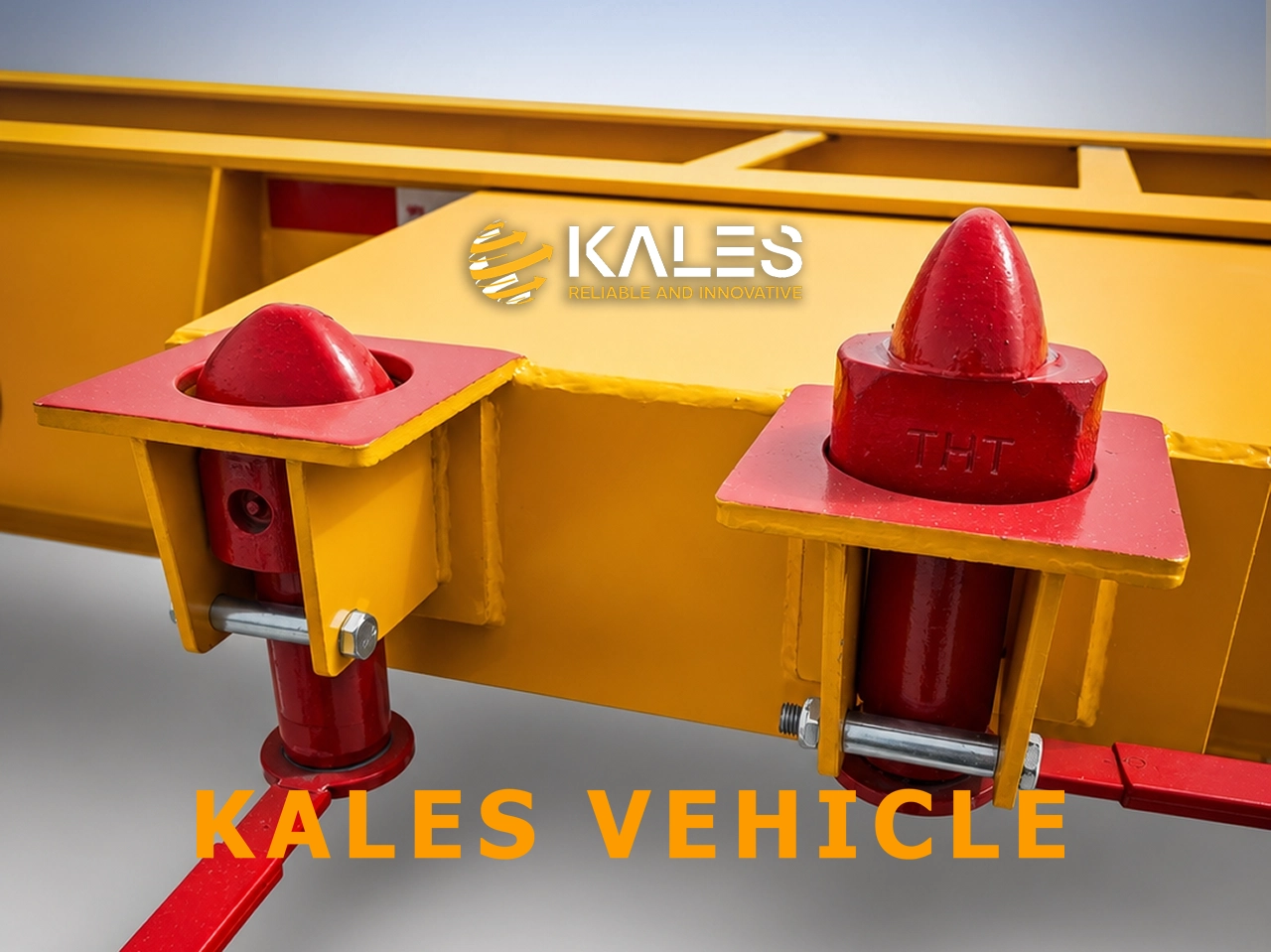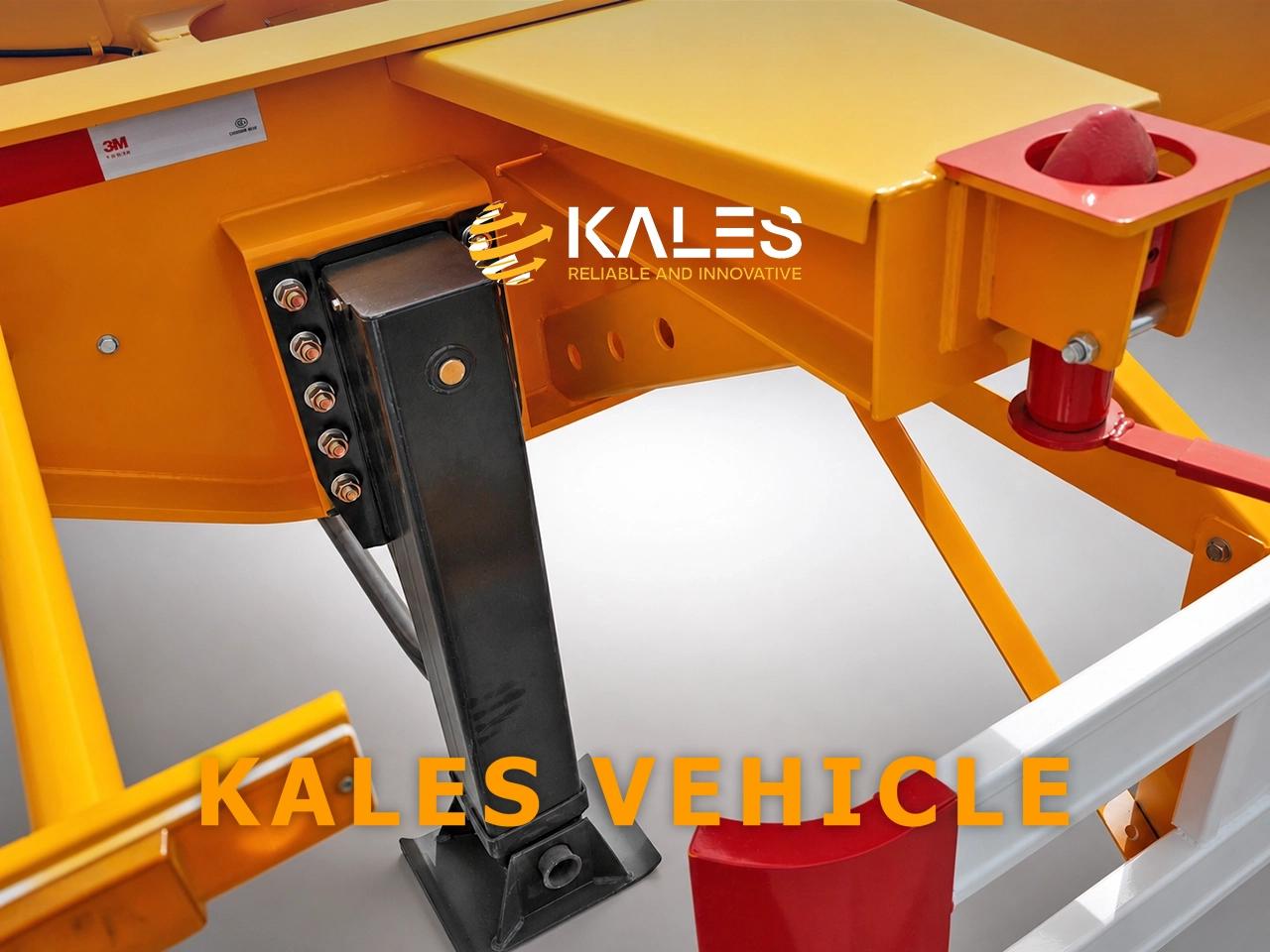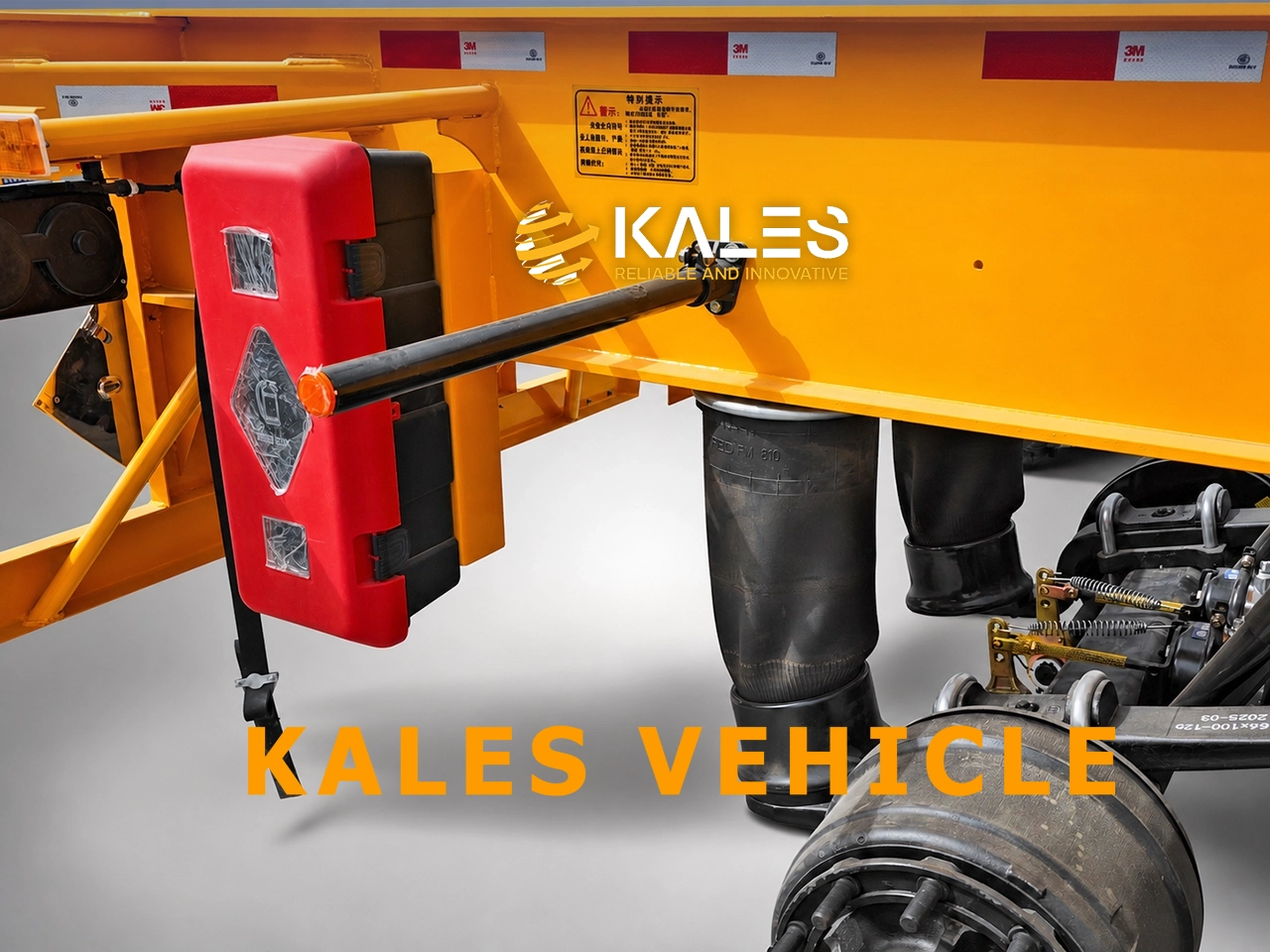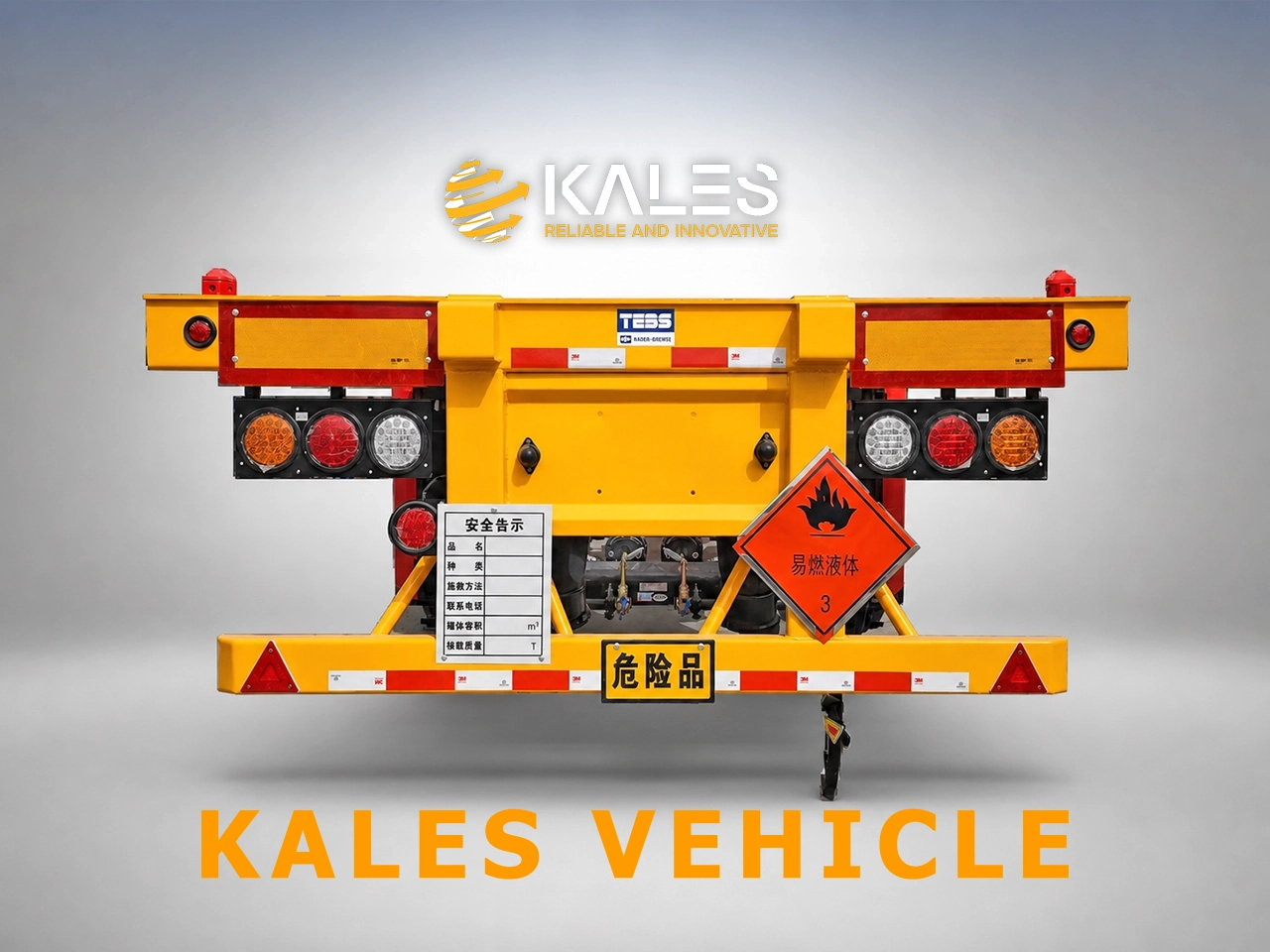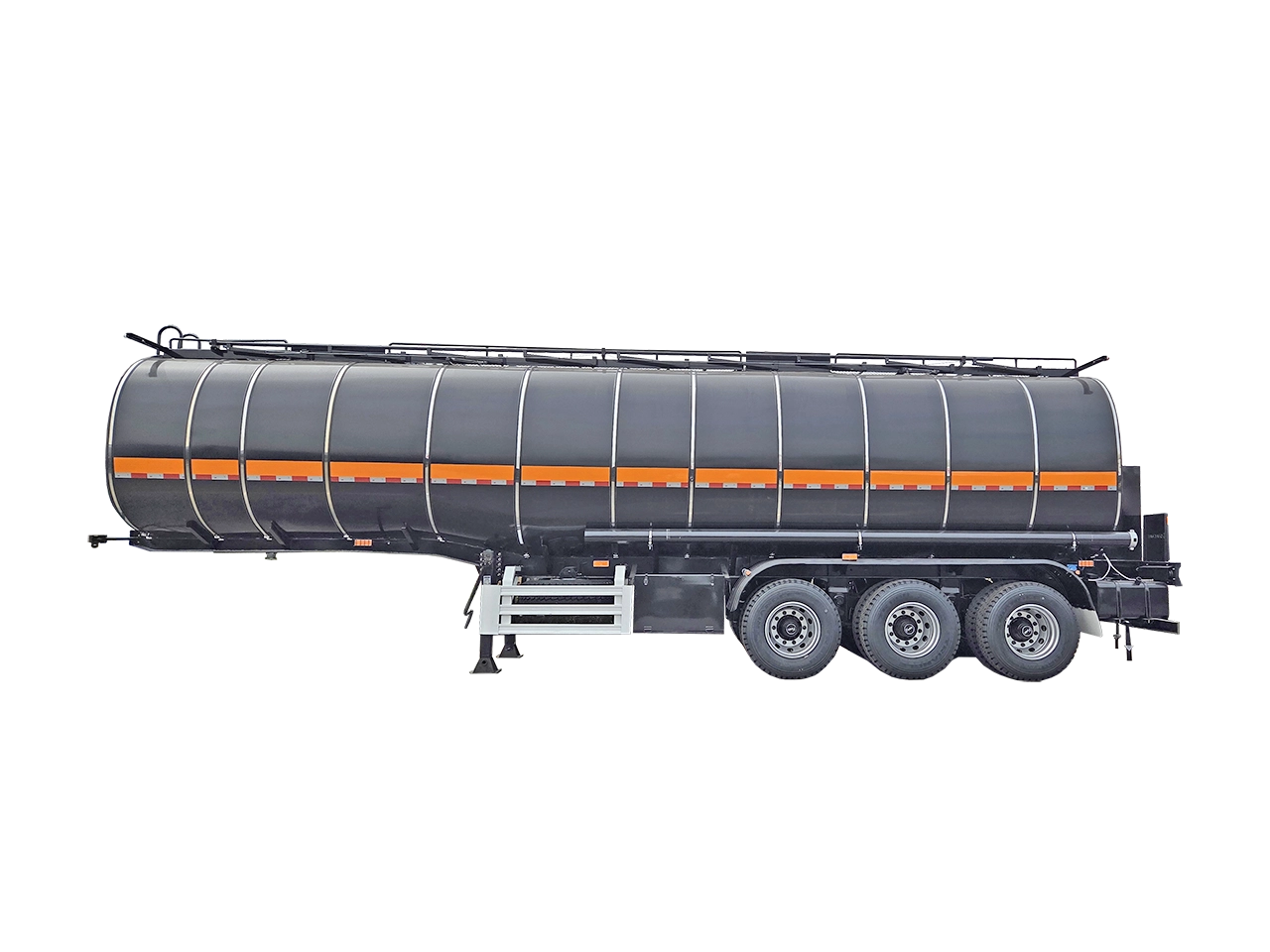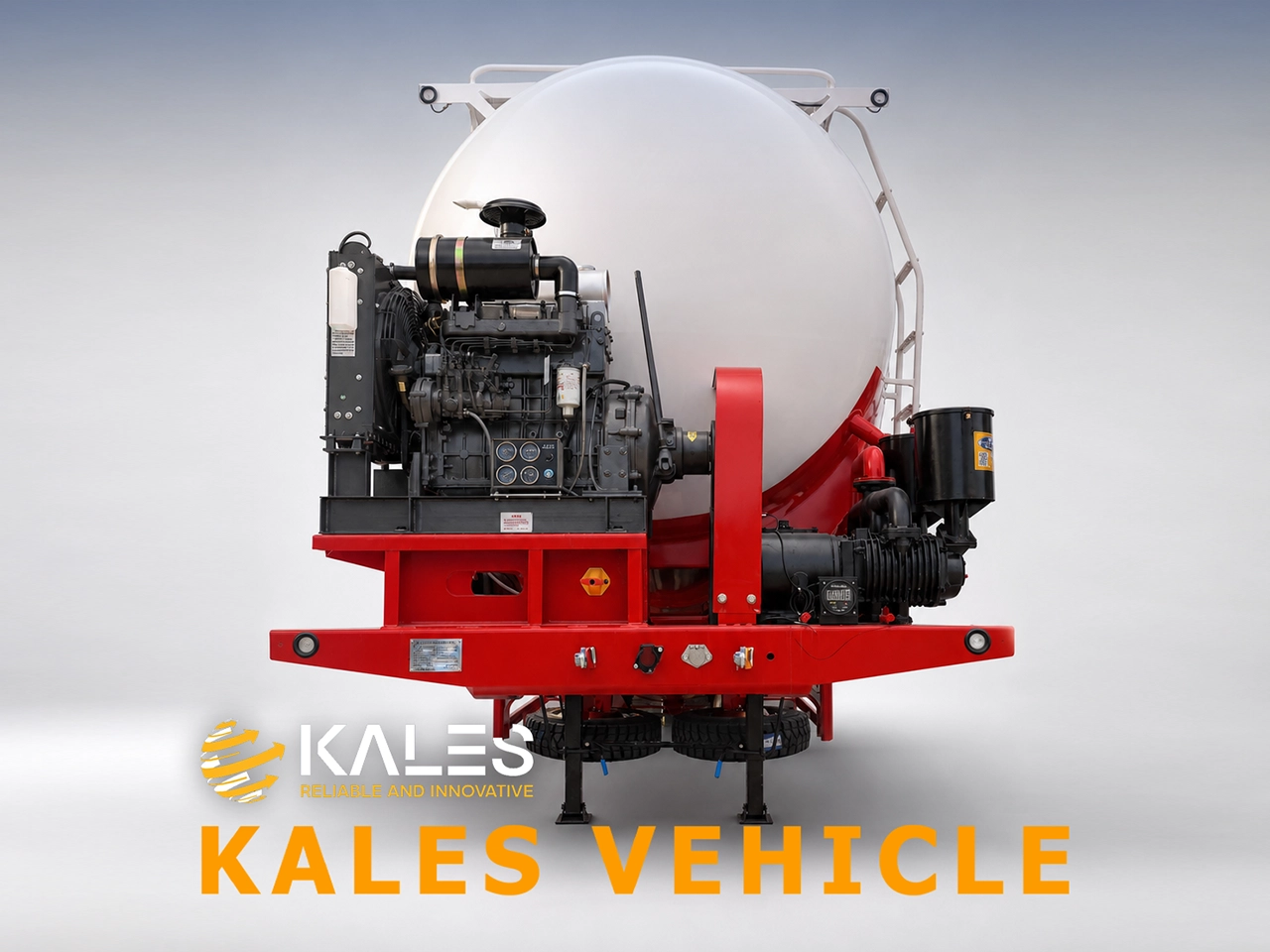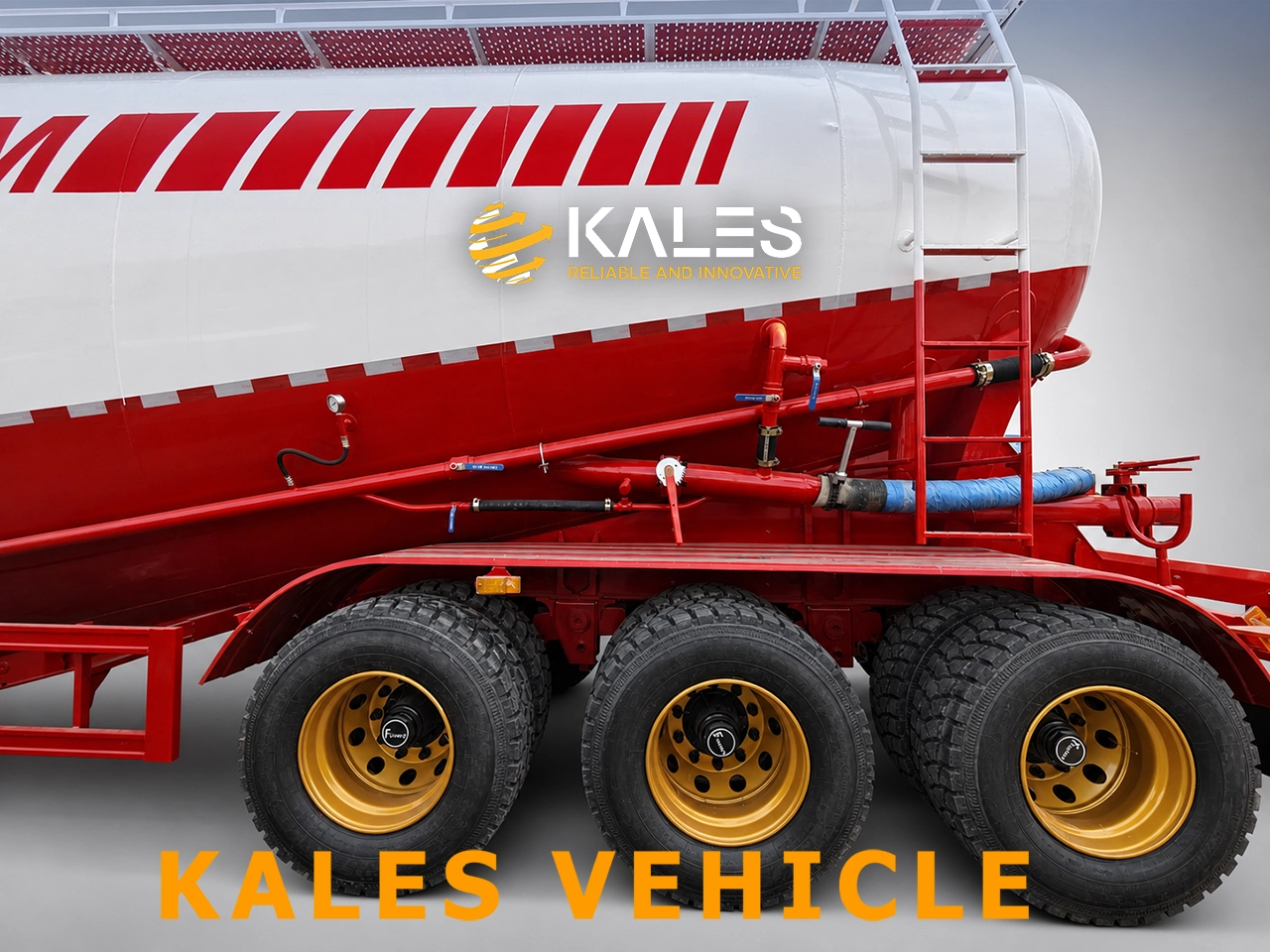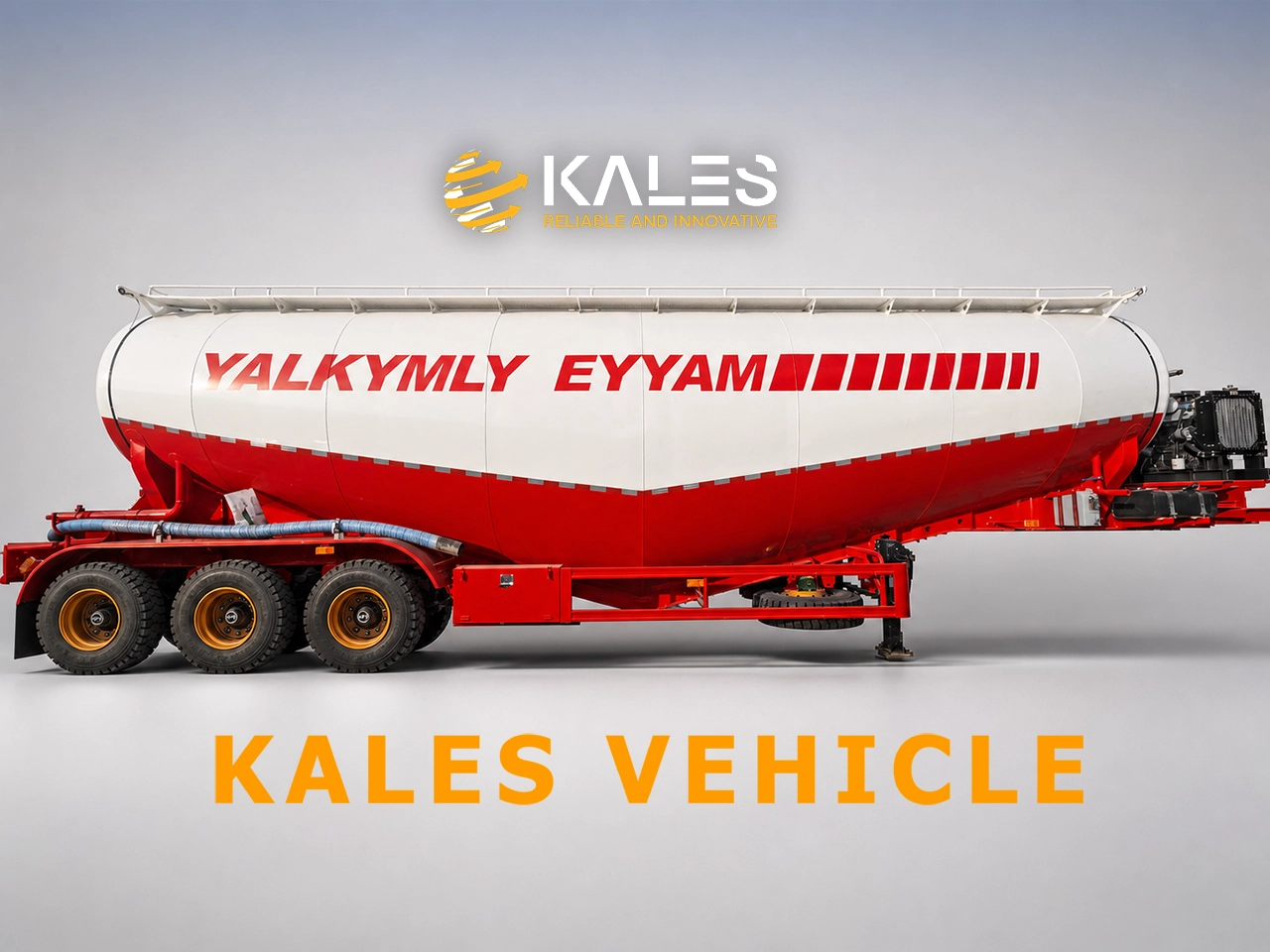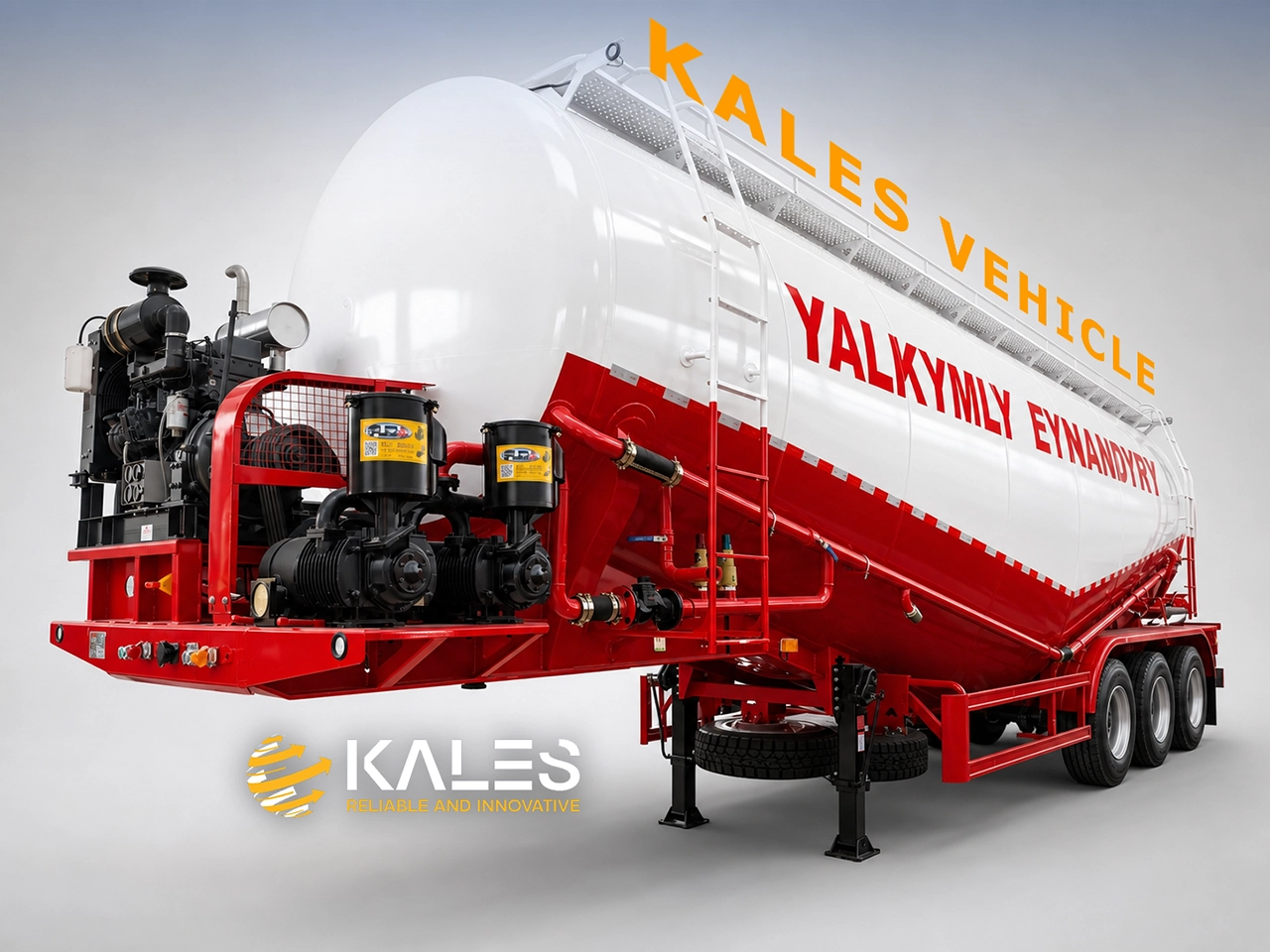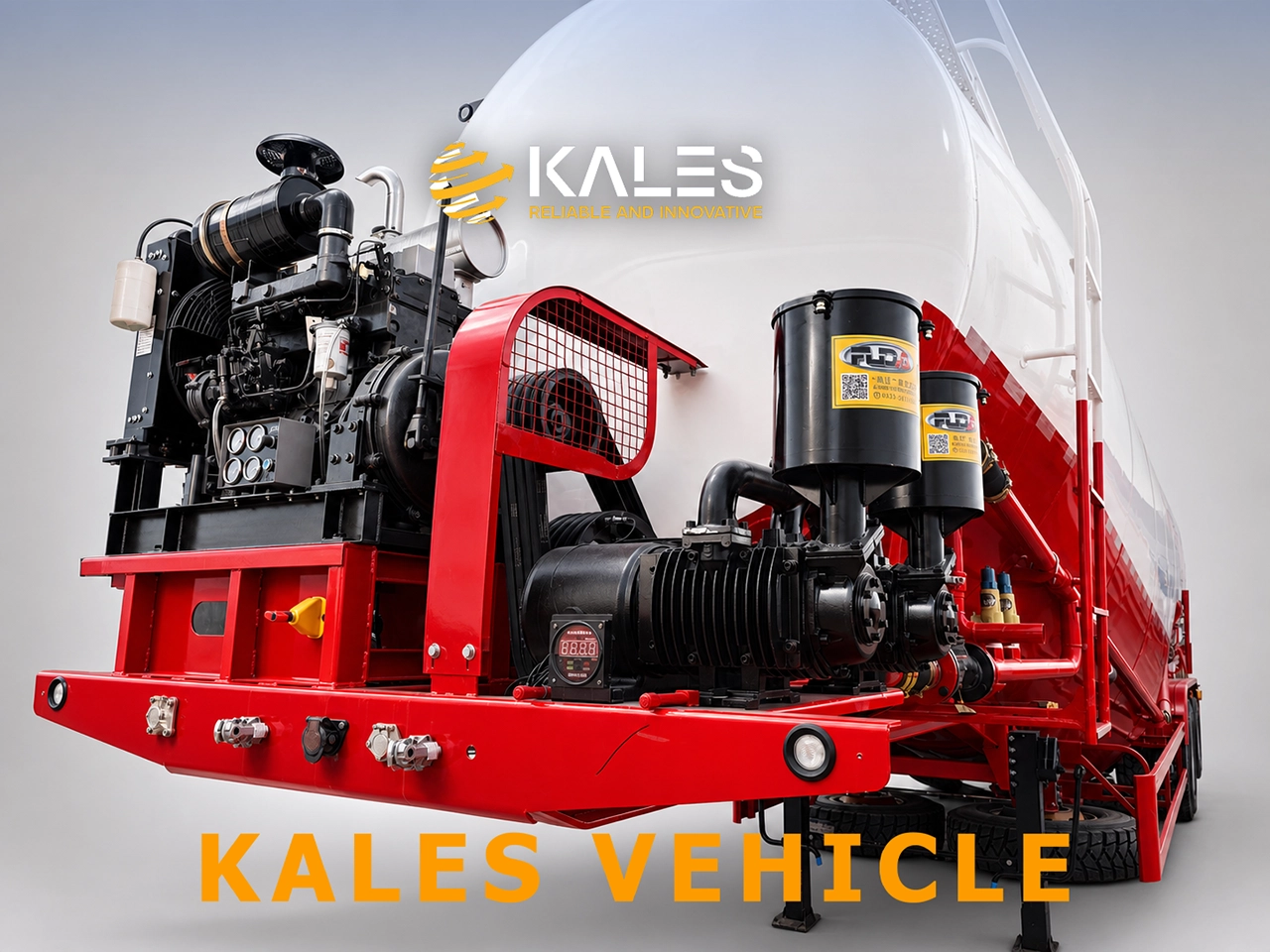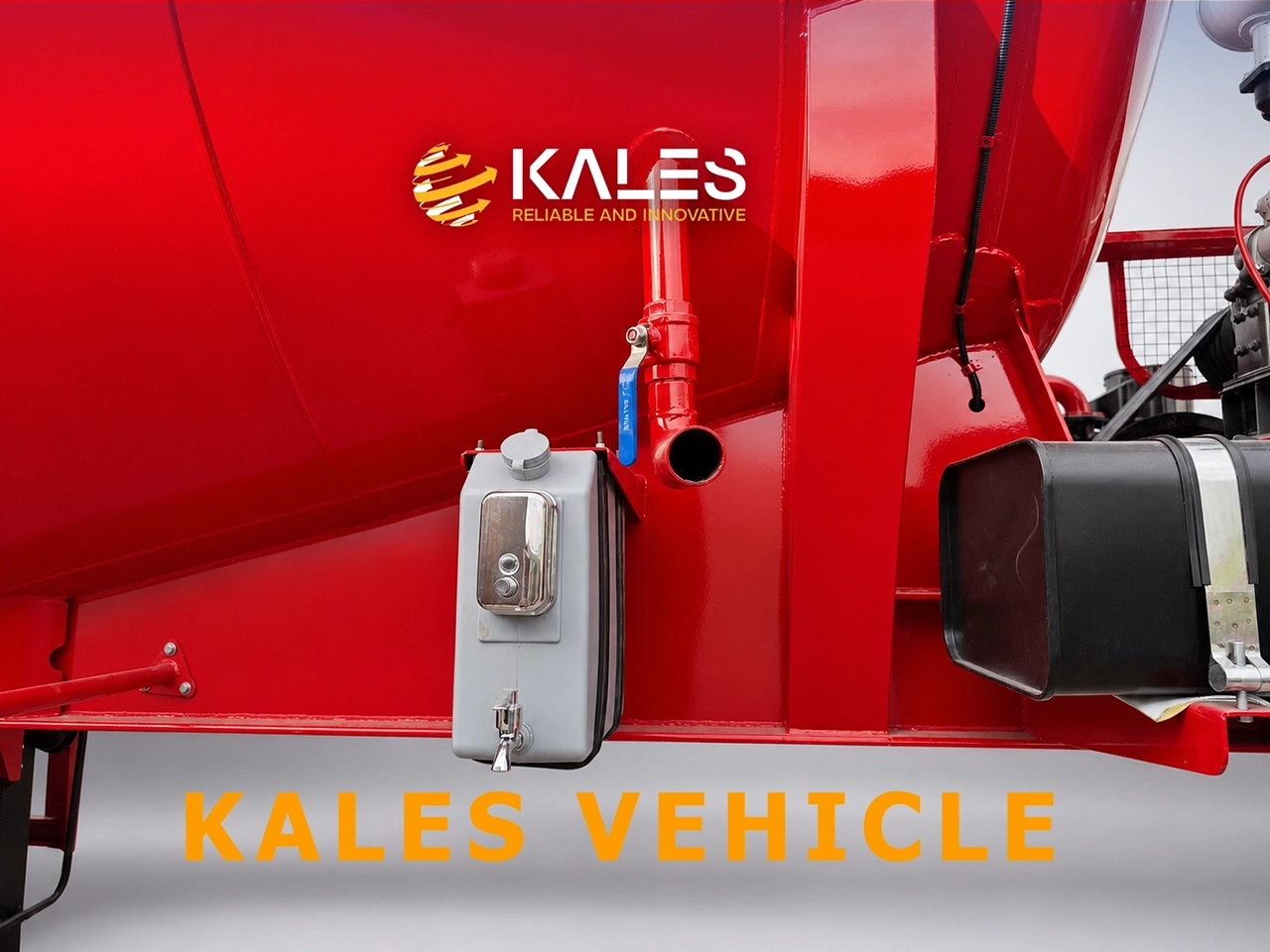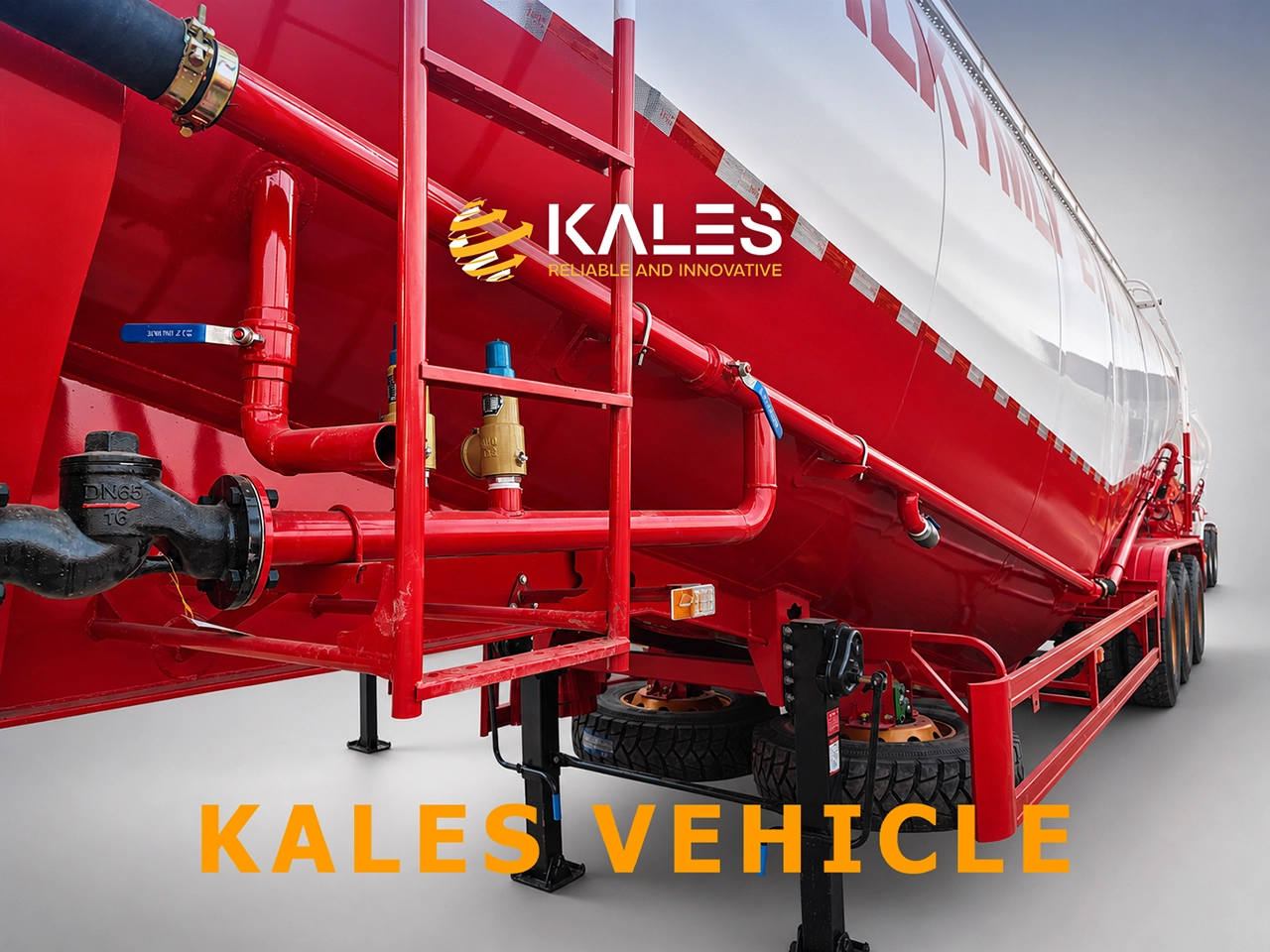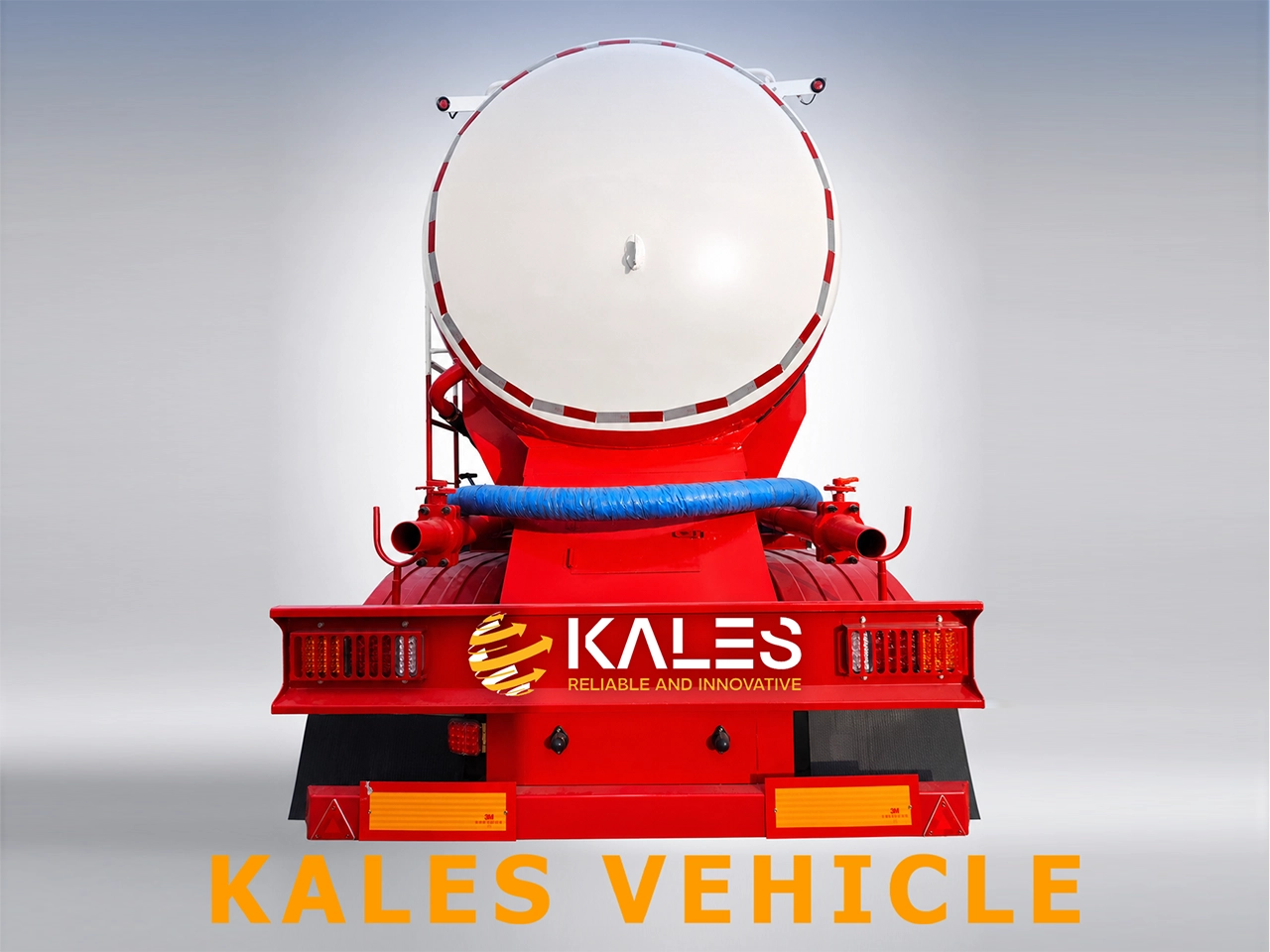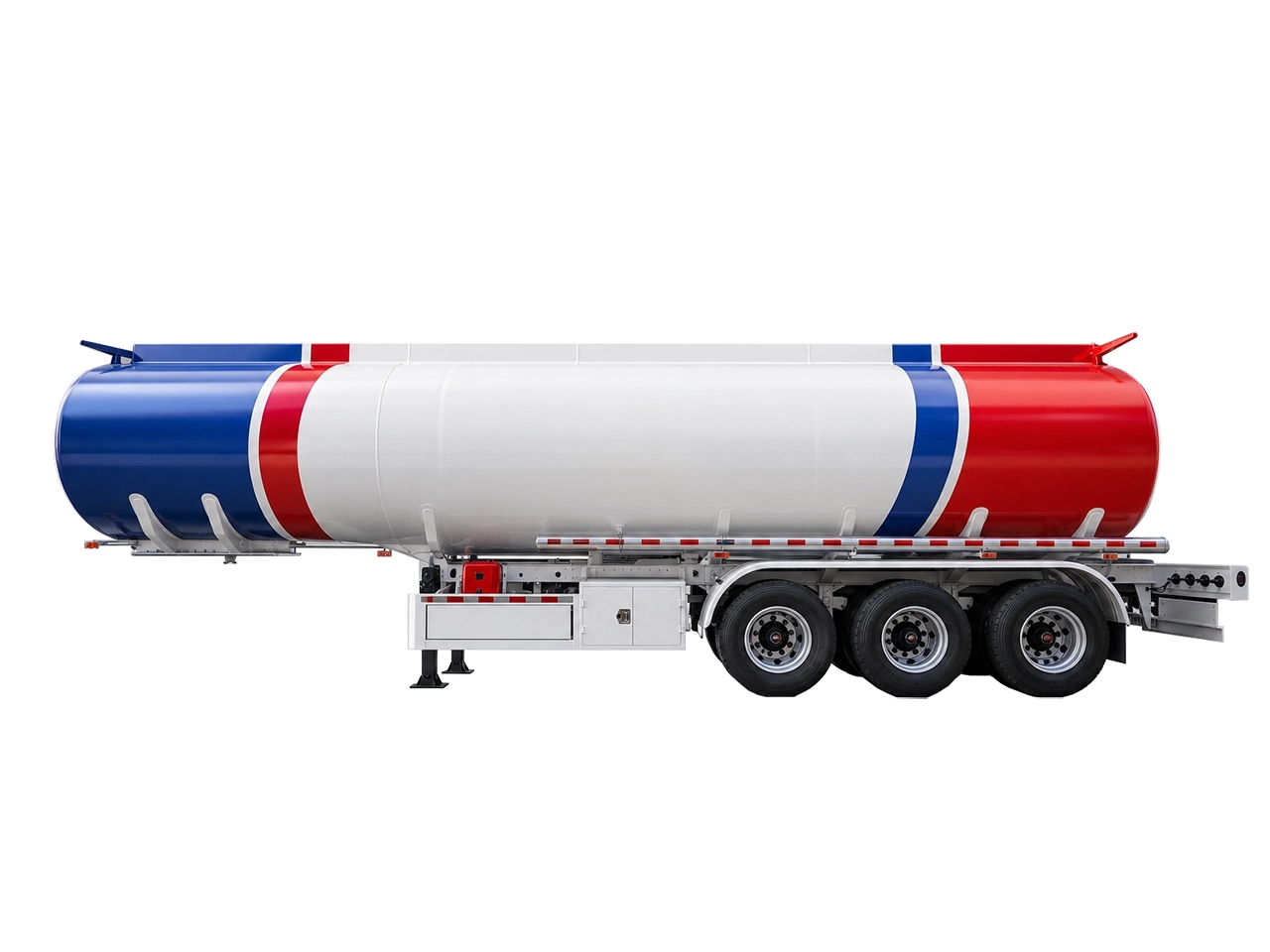
Reliable Transport Solutions Direct from the Factory At Kales Vehicle, we engineer semi trailers built to withstand the toughest road conditions in Africa, Latin America, and Central Asia. As a leading semi trailer manufacturer in China, we combine advanced welding technology with high-strength steel to deliver fleets that last longer and perform better.
Our Diverse Product Range Whether you are transporting ISO containers, bulk cargo, or heavy machinery, our comprehensive catalog covers every logistical need:
Container & Bulk Transport: Optimized solutions including Flatbed, Skeleton, and Fence semi trailers for versatile cargo handling.
Heavy Haulage: Robust Lowbed trailers designed for construction machinery and oversized loads.
Tankers: Specialized Fuel and Cement Tankers ensuring safety and efficiency.
Why Choose Kales Vehicle? We offer factory-direct pricing without compromising on quality. All Kales trailers are compatible with major truck heads (Sinotruk, Shacman) and meet strict ISO standards. Browse our categories below to find the perfect specification for your business.
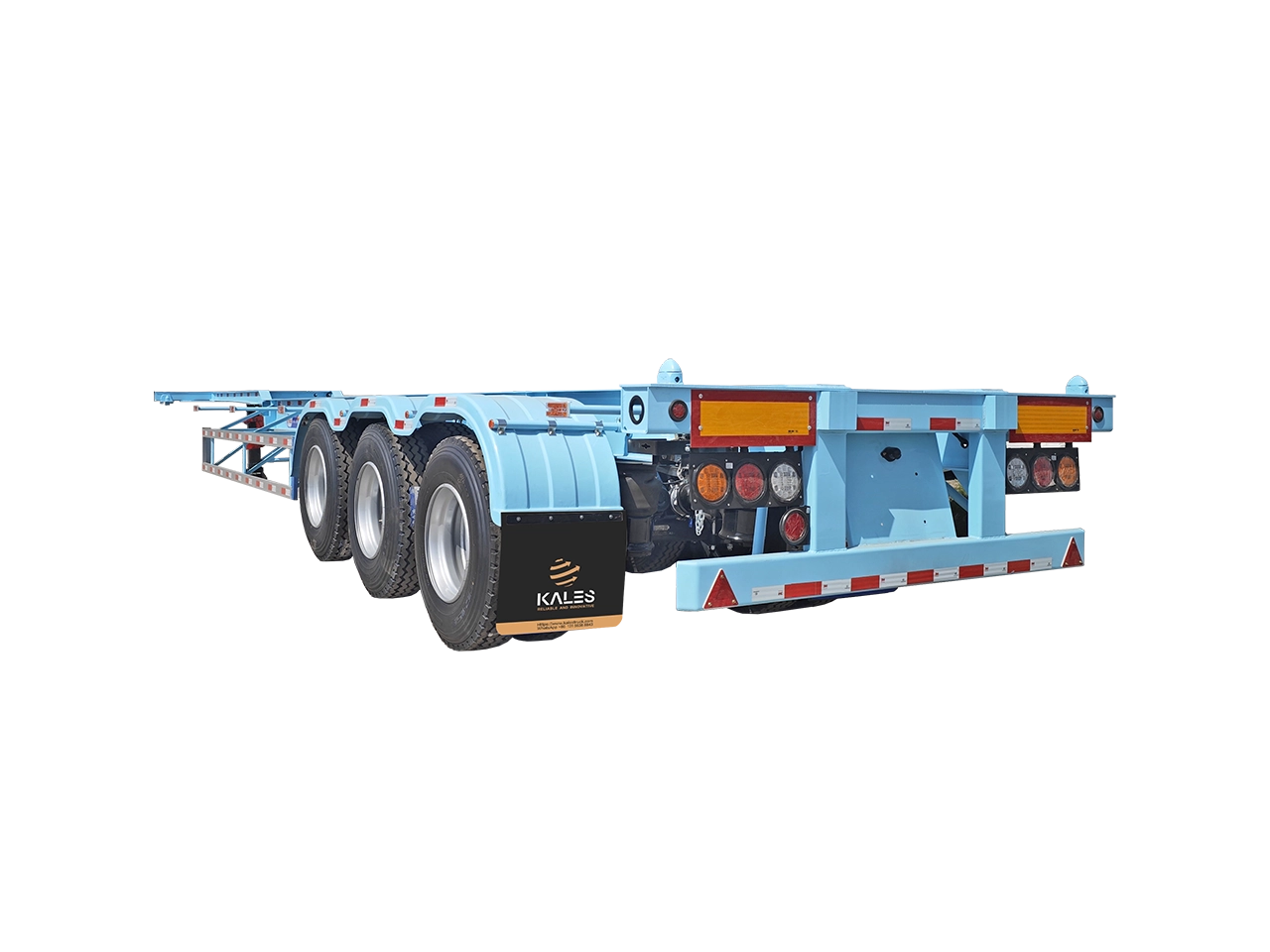
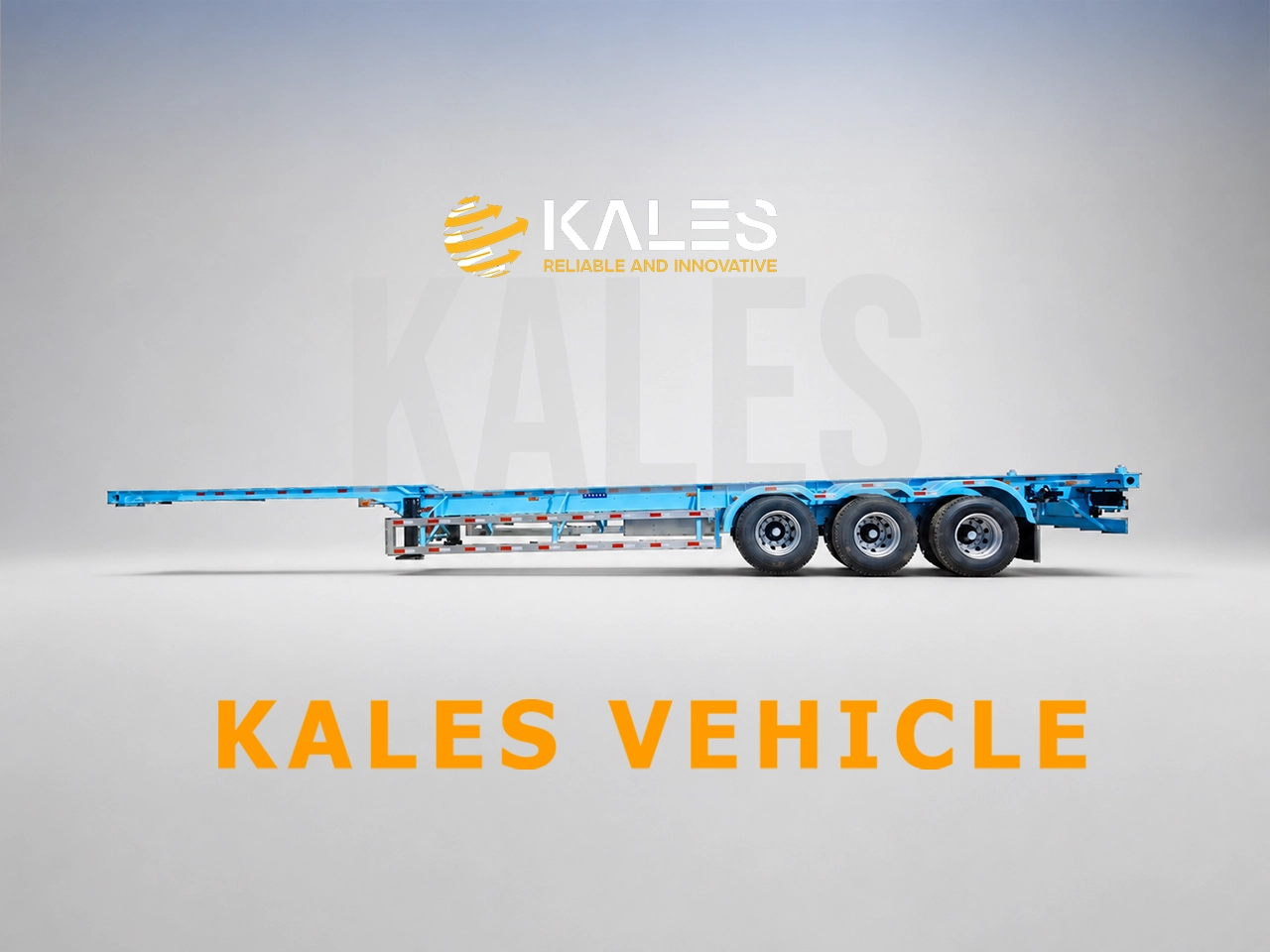
40ft refrigerated container skeleton trailer with a lightweight high-strength frame for temperature-controlled container routes.
Container & Bulk Transport Product Guide · Published: July 30, 2026 · Updated: July 30, 2026 · By Kales Vehicle Engineering Team · Reviewed by Kales Export Sales Engineering · Market focus: cold-chain logistics, reefer containers, port corridors, and inland distribution
40ft refrigerated container skeleton trailer: this lightweight BPW reefer chassis is designed for fleets that need more legal payload, smoother running for refrigerated equipment, and durable corrosion protection. The represented configuration combines a 4,800 kg tare target, BPW ECO Plus 400-series tri-axle running gear with a liftable first axle, and electrostatic powder coating for temperature-controlled container work.
Engineering guidance from the Kales Vehicle product team for buyers comparing a lightweight reefer chassis with a conventional 6.5-ton steel skeleton trailer.
Quick answer: choose this 40ft refrigerated skeleton trailer when your fleet moves high-value reefer containers on routes where payload, ride control, and corrosion resistance affect total cost of ownership. The BPW air suspension and front lift axle suit empty-return fuel savings and loaded axle-load compliance. Confirm the final tare, legal gross weight, lift-axle control logic, and container lock layout against the destination country’s rules before ordering.
Technical Snapshot
System
Parameter
Specification
Dimensions
Overall size (L x W x H)
13,500 x 2,550 x 1,450 mm
Dimensions
Wheelbase
6,800 + 1,310 + 1,310 mm
Weight
Tare weight
4,800 kg +/- 3% represented configuration
Weight
Rated payload
40,000 kg, subject to local axle and gross-weight limits
Weight
Gross vehicle weight
44,800 kg represented design rating
Frame
Main beam material
T700L / Q690D high-strength steel
Frame
Main beam height
450-480 mm variable section
Frame
Flange / web thickness
Top and bottom flange 14-16 mm / 16-18 mm; web 6-8 mm
Frame
Welding and finish
Robotic automatic welding, shot blasting, and electrostatic powder coating
Running gear
Axle brand and model
BPW ECO Plus 400 series
Running gear
Axle configuration
Tri-axle; first axle liftable
Running gear
Suspension
Air suspension, dual air bags per axle, isolated lift-axle circuit
Running gear
Shock absorbers
Twin-tube hydraulic, 6 units
Wheels and tires
Tire / rim
12R22.5 18PR / 9.0-22.5 aluminum rim option
Locks
Twist locks
4 ISO-standard floating twist locks
Braking and electrical
Brake control
WABCO or KNORR ABS/EBS
Braking and electrical
Air tanks
Aluminum dual chamber, 40 L + 40 L
Braking and electrical
Wiring and lamps
7-core national-standard harness and LED lights
Landing gear
Configuration
JOST or BPW two-speed linked landing gear
Surface protection
Coating system
80-120 micrometer electrostatic powder coating after Sa2.5 blast cleaning and pre-treatment
Best Fit Operating Profile
This reefer skeleton chassis fits pharmaceutical, seafood, frozen-food, and other high-value cold-chain operators moving 40ft refrigerated containers between ports, cold stores, distribution centers, and regional hubs. It is especially relevant to fleets that pay close attention to legal payload, compressor-friendly ride quality, empty-leg fuel use, and corrosion exposure in coastal or de-icing environments.
Best for
40ft refrigerated container transport on regulated port and inland corridors
Fleet operators that need a lower tare target without abandoning a 40-ton rated chassis
Cold-chain routes with frequent empty repositioning where a lift axle can reduce rolling resistance and tire scrub
Coastal, humid, or washdown-heavy operations where a documented coating system matters
Not ideal for
Container-only work that does not require reefer ride control or the higher equipment specification
General cargo that needs a full deck, side retention, or weather protection
Routes whose legal axle limits or road conditions require a different axle count or suspension design
Why Buyers Choose This Reefer Skeleton Chassis
Protects commercial payload: the represented 4.8-ton tare target uses T700L/Q690D steel and aluminum components to leave more legal payload under a fixed gross-weight limit than a conventional 6.5-ton steel chassis.
Controls road vibration: BPW air suspension and twin hydraulic shocks reduce high-frequency shock transfer to the container and reefer equipment. The independent lift-axle air circuit keeps chassis height stable during raise and lower cycles.
Improves empty-leg economics: lifting the first axle when the load and local rules permit can reduce tire scrub, rolling resistance, and unnecessary axle wear. The final control logic must be set for the destination market.
Extends corrosion protection: 80-120 micrometer powder coating, Sa2.5 blast cleaning, and pre-treatment are specified for coastal humidity, de-icing salt, and cold-store washdown exposure.
Uses serviceable running gear: BPW axles, JOST/BPW landing gear, WABCO or KNORR brake control, and standard 12R22.5 tires give export fleets a recognizable replacement-parts path.
How the business case is assessed
In the supplied fleet example, an East China pharmaceutical cold-chain operator reported annual savings of about $1,700 per vehicle on tires and $3,900 on fuel after a 20-unit purchase, with cargo claims falling from $12,000 to $1,250 per vehicle and uptime reaching 98% after 12 months. These are customer-reported operating results, not a universal guarantee; Kales should validate the route, payload, tire policy, and baseline before using them in a fleet ROI model.
Engineering and Serviceability Details
Main beam and welding
The variable-section T700L/Q690D main beam balances strength and tare control along the chassis. Robotic automatic welding is followed by shot blasting so weld penetration and surface preparation are more consistent than a purely manual process. The represented frame is rated for a 40-ton payload class, but the legal load on the road remains the lower of the design rating and the destination jurisdiction’s limits.
BPW air suspension and lift axle
Dual air bags per axle and six twin-tube hydraulic shock absorbers are intended to damp road input before it reaches the refrigerated container and compressor mountings. The lift axle has an isolated air circuit so raising or lowering it does not unnecessarily change the load-bearing axle air pressure. A load-sensing interlock can be specified to keep all axles in contact when the payload exceeds the agreed threshold; speed-sensitive lowering and manual cabin control should be confirmed in the final drawing.
Powder coating and repair logic
Powder coating is specified at 80-120 micrometers with a target of at least 1,000 hours in salt-spray testing and GB/T 9286 Class 0 adhesion for the represented process. Actual performance depends on pretreatment, film thickness, edge coverage, and operating exposure. Small chips can be cleaned and spot-repaired with a compatible epoxy primer and polyurethane topcoat; large impact or corrosion areas should be assessed before recoating.
Warranty and acceptance
Three-year / 300,000 km frame warranty, subject to the signed supply agreement.
Two-year unlimited-mileage BPW axle coverage for the supplied axle package.
Five-year anti-corrosion coating warranty for the represented powder-coat system.
Delivery checks: empty weight 4,656-4,944 kg, lift-axle raise/lower time no more than 8/5 seconds, diagonal twist-lock deviation no more than 3 mm, BPW serial-number validation, and e-warranty activation.
Factory Images and Inspection Views
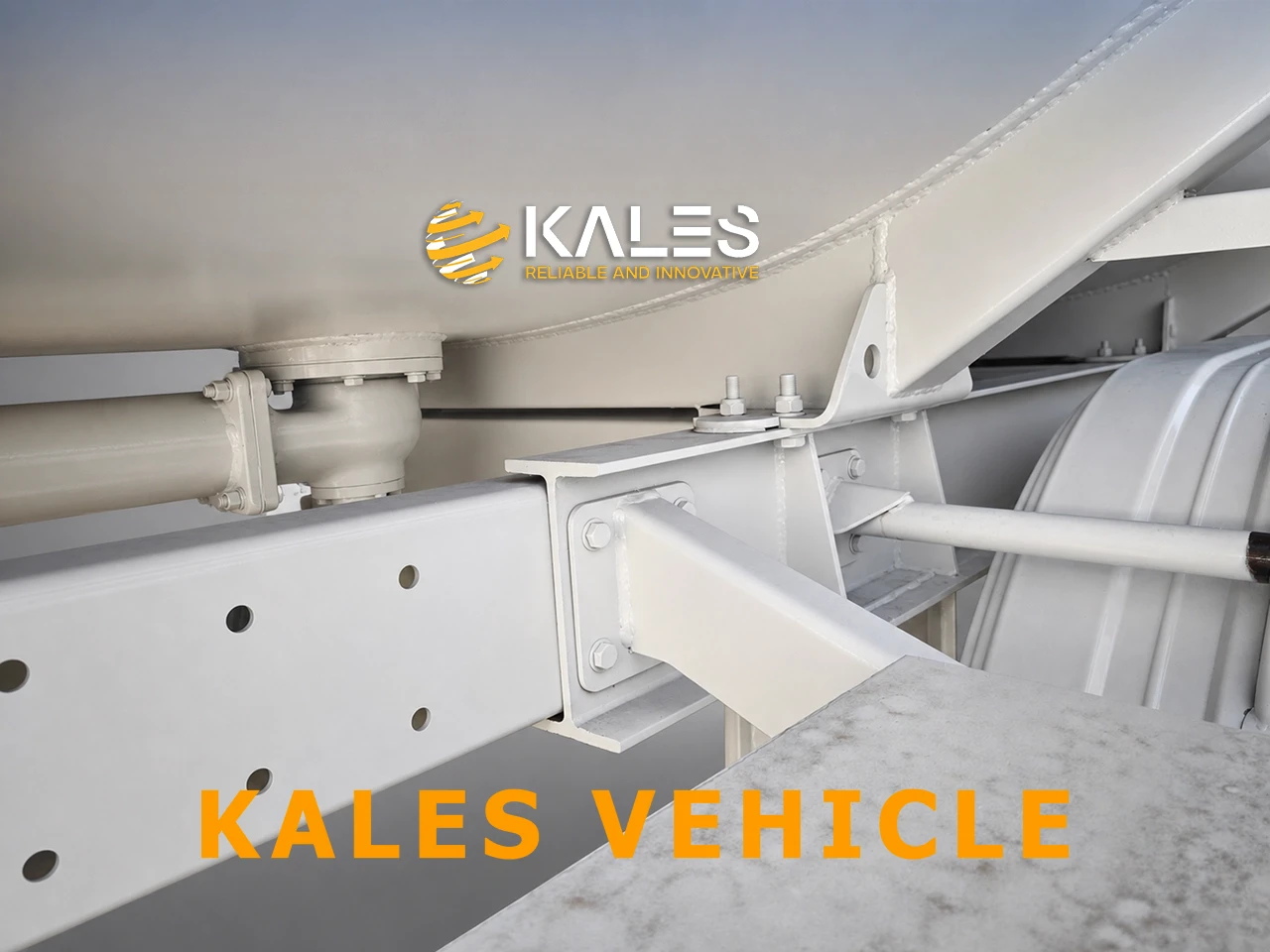
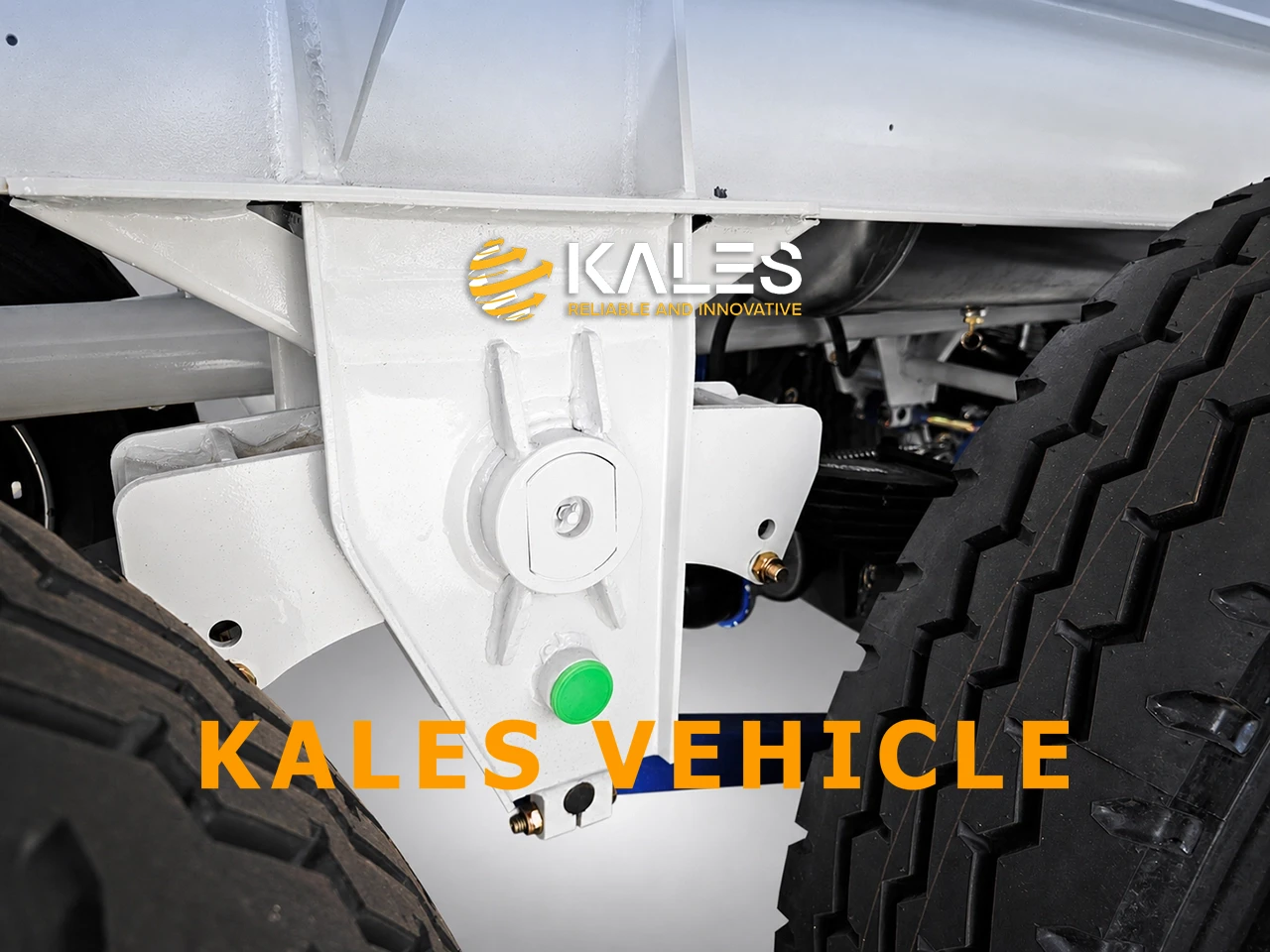
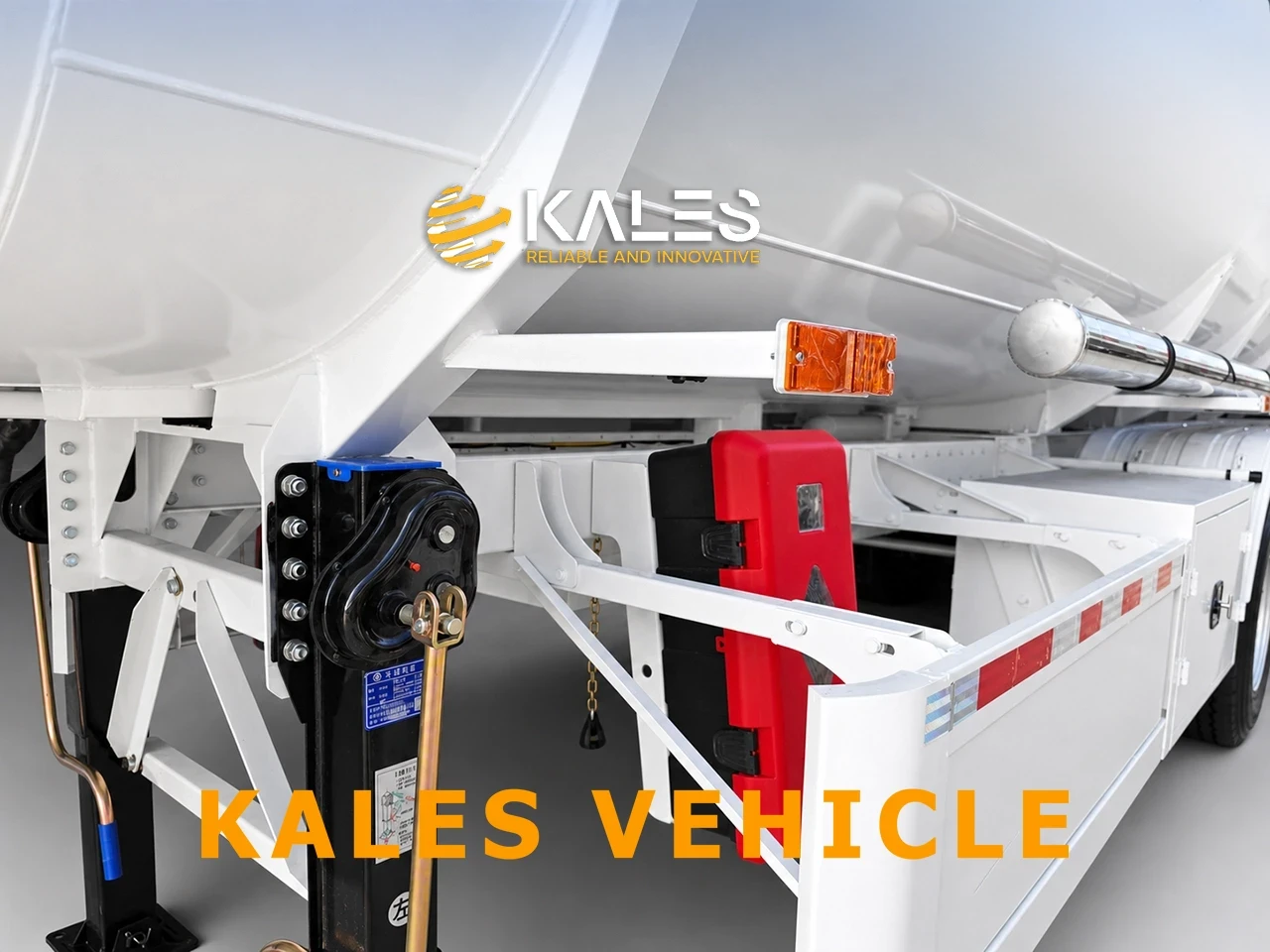
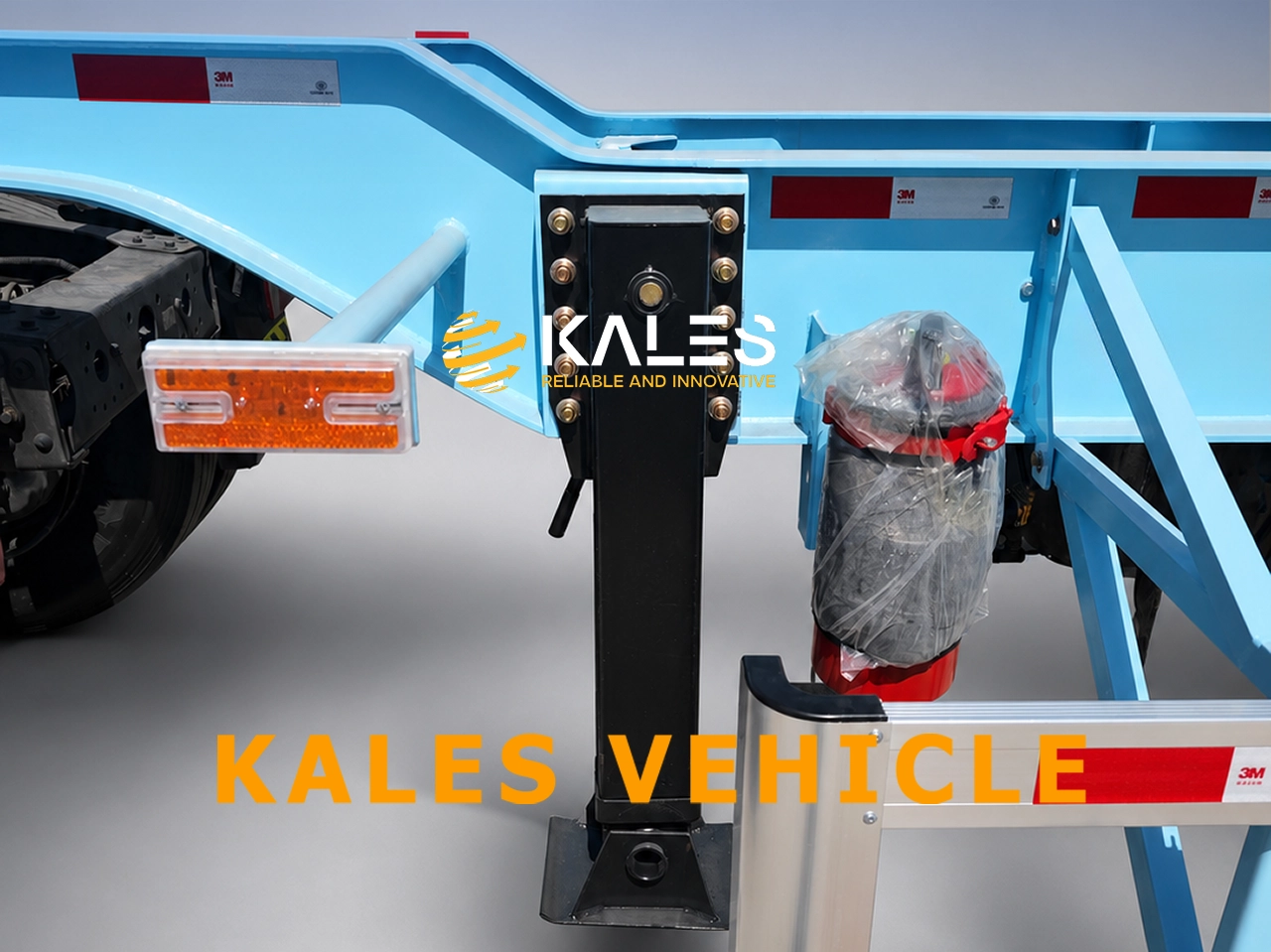
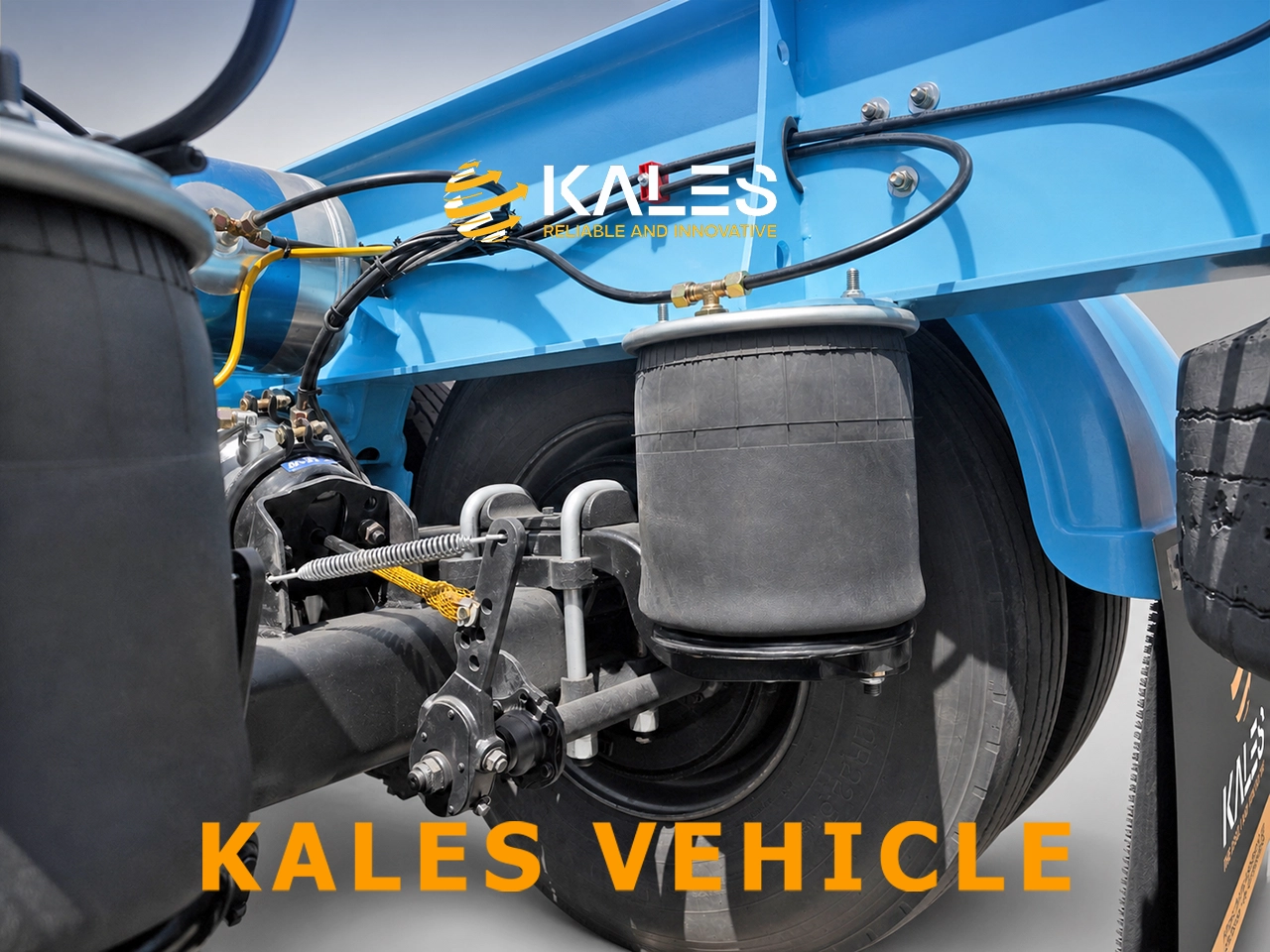
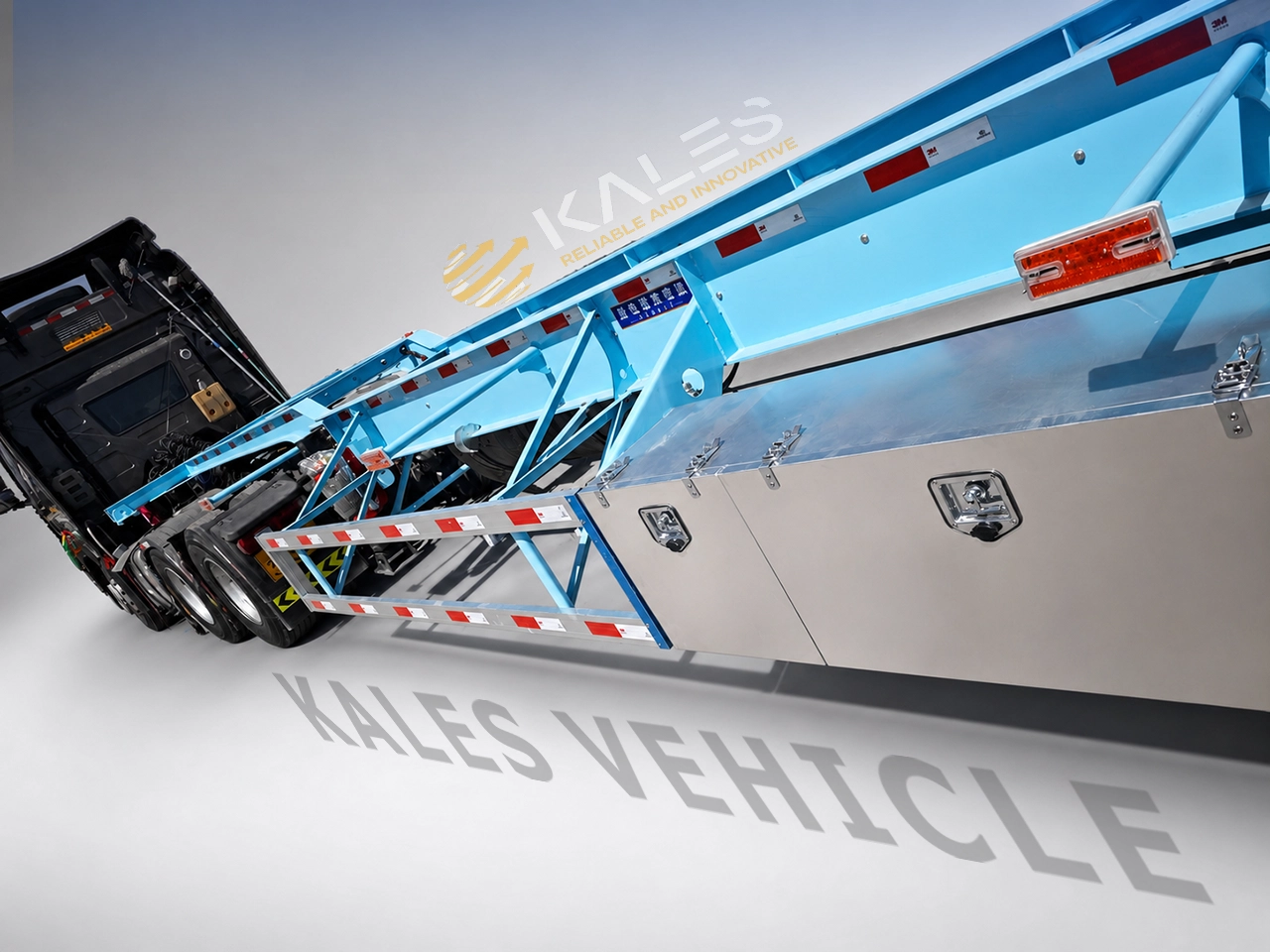
Side profile showing the BPW tri-axle air suspension and liftable first axle.JOST landing gear and fire-extinguisher mounting detail for routine inspection.Spare-tire carrier bracket positioned for workshop access and secure retention.Rear-angle view of the complete chassis and powder-coated frame finish.Front-angle view showing the aluminum side guard and toolbox arrangement.BPW ECO Plus axle, 12R22.5 tire, and aluminum rim close-up.Rear safety guard and LED lighting layout for cold-chain route visibility.Aluminum dual air tanks and air-suspension plumbing detail.Waterproof aluminum toolbox for straps, fittings, and route-service items.
Frequently Asked Questions
Does the 4.8-ton tare target compromise frame strength?
No. The target is achieved through high-strength T700L/Q690D steel, a variable-section beam, aluminum components, and controlled welding. The represented design is checked for a 40-ton payload class with a stated safety factor of at least 1.8. Final registration and legal payload still depend on the local vehicle standard and axle limits.
When should the front lift axle be lowered?
The axle should be lowered whenever the payload, axle-load distribution, speed, or local regulation requires three axles on the road. Speed-sensitive lowering above 30 km/h, load-sensing interlock above 18 tons, and a manual cabin switch can be specified, but the final thresholds must be confirmed for the destination market.
How is powder coating repaired after a stone chip?
Clean and key the damaged area, remove any corrosion, apply a compatible epoxy primer, and finish with a matching polyurethane touch-up. Larger damage should be inspected for substrate loss before local repair. Full recoating is not normally required for an isolated chip.
What maintenance interval should we expect for the air suspension?
Inspect air bags, air lines, valves, and shock absorbers during scheduled service and after severe road events. A typical air-bag service life is 5-8 years or about 800,000 km, while shock absorbers commonly last 3-5 years; actual life depends on load, road conditions, and maintenance. OEM BPW parts are available through the supply program.
What should be confirmed before ordering?
Send the destination country, reefer container mix, target payload, route condition, legal gross and axle limits, preferred axle and brake brands, lift-axle control requirements, coating environment, quantity, and delivery term. Kales will then confirm the drawing, acceptance values, warranty scope, and quotation.
Request a Cold-Chain Drawing and Quote
For a tailored quotation, send your container type, payload target, route country, annual mileage, empty-return pattern, corrosion environment, and required BPW, brake, lift-axle, or wheel specification. The Kales engineering team can then price the right reefer chassis instead of a generic 40ft skeleton trailer.
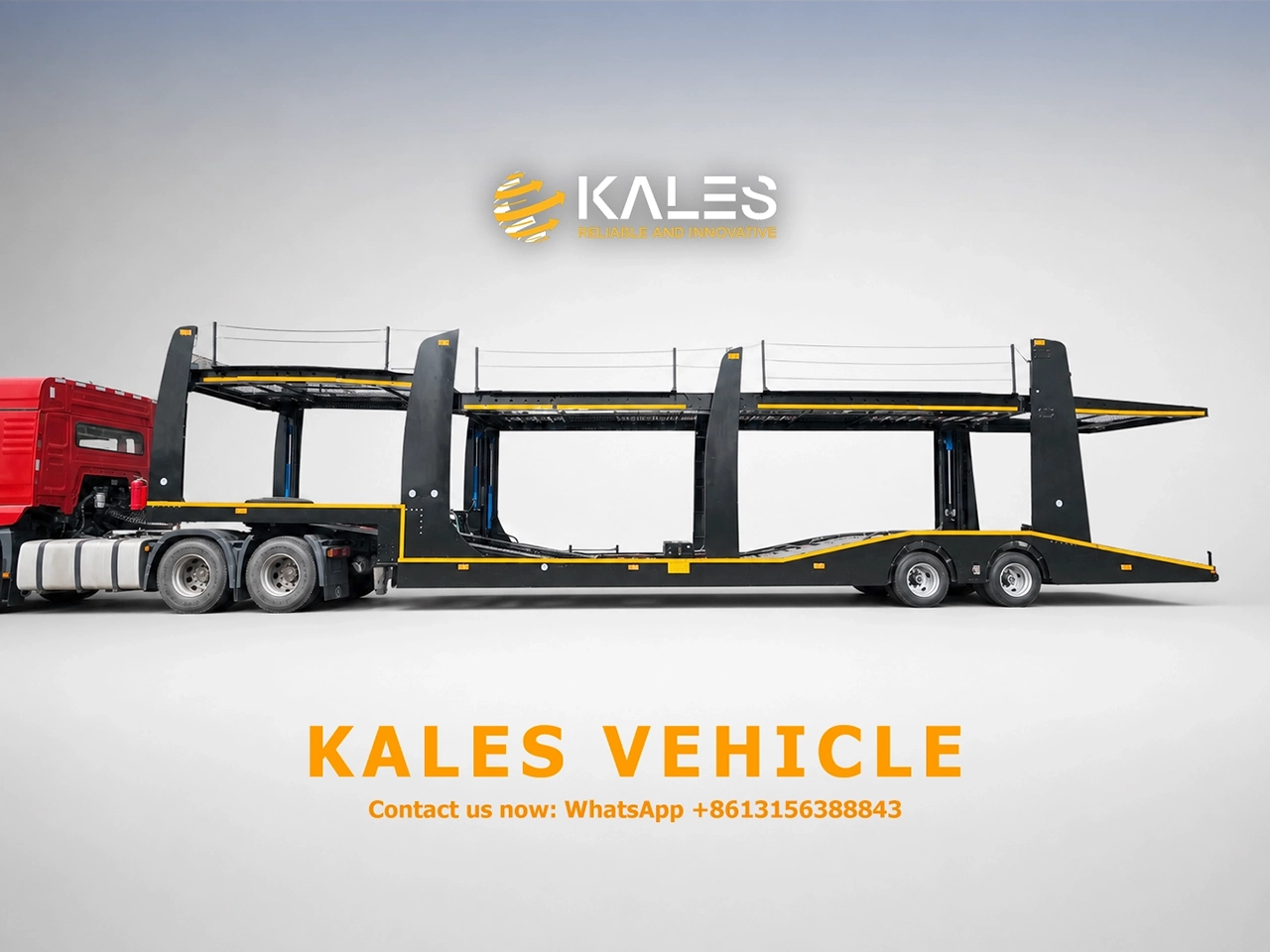
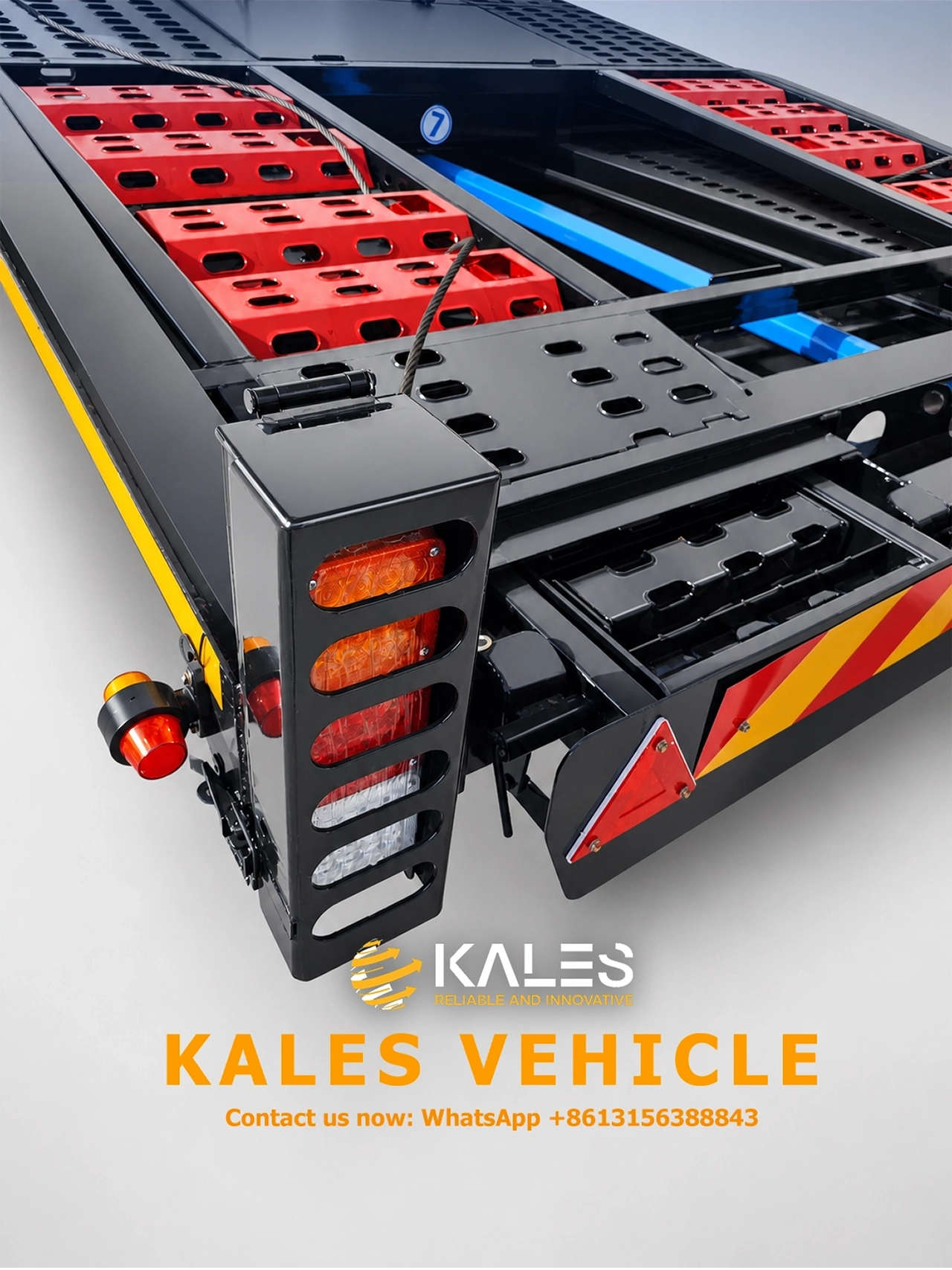
Product photography for the Kales European 8-car carrier trailer is being prepared. Request current loading and inspection views from the Central Asia business team before ordering.
Car Carrier Trailer · Published: July 25, 2026 · Updated: July 25, 2026 · By Kales Vehicle Technical Team and Central Asia Business Department · Technical review scope: open cage frame, hydraulic loading platform, running gear, vehicle restraint, and cross-border delivery · Market focus: Kazakhstan, Uzbekistan, Kyrgyzstan, Tajikistan, Russia, and Russian-speaking CIS fleets
Kales European 8-car carrier trailer: a 17.1 m double-deck finished-vehicle transport semi-trailer for dealers, vehicle logistics operators, and cross-border fleets in Central Asia and Russia. The Russian market commonly calls this equipment an Автовоз or полуприцеп-автовоз.
The product combines an open cage-type loading body, hydraulic upper-platform lifting, a rear pull-out loading ramp, double-axle dual-tyre running gear, and wheel restraint equipment for carrying approximately 6-8 passenger cars. The final count depends on the dimensions, wheelbase, height, and legal loading limits of the vehicles being transported.
Quick answer: choose this European 8-car carrier when a fleet needs a light, open-frame double-deck Автовоз for repeat vehicle logistics on Central Asian and Russian routes. The body uses vertical posts without side sheeting, front panel, rear door, or roof panel, reducing tare, purchase cost, and aerodynamic drag compared with a fully enclosed body. A hydraulic cylinder and pulley-wire-rope lifting system raises and lowers the upper deck; tyre stops and wheel tensioners restrain each loaded car. The two rear axles use four tyres per axle, eight tyres in total, while reverse-mounted suspension leaves the perforated deck about 1,250 mm above ground in the reference layout, improving load-bearing clearance but affecting the usable loading angle and vehicle height envelope. The deck is covered with 4 mm high-strength anti-slip perforated steel plate to increase tyre friction, reduce upper-body weight, and drain rain or wash water instead of holding standing water.
European 8-Car Carrier Technical Specifications
Product type
European open cage-frame car carrier semi-trailer / Автовоз
Overall dimensions (L × W × H)
17,100 × 2,550 × 3,880 mm reference configuration
Vehicle loading capacity
Approximately 6-8 passenger cars in a double-deck arrangement, subject to vehicle dimensions and legal limits
Longitudinal beam
420 mm I-beam reference height
I-beam plates
12 mm upper flange / 12 mm lower flange / 8 mm web
Axles
FUWA 13T × 2, forming a two-axle rear group
Tyres
235 Linglong tyres; four tyres per axle and eight tyres in total in the dual-axle dual-tyre layout
Suspension
Air suspension with reverse-mounted suspension arrangement in the reference configuration
Reference perforated-deck height
Approximately 1,250 mm from ground in the reverse-mounted axle/suspension layout; confirm against final deck and tyre specification
Fifth-wheel imposed-load design
18,000 kg reference fifth-wheel capacity; final tractor combination requires imposed-load and legal-mass calculation
King pins
Interchangeable 90# and 50# king pins; three-piece supply direction as specified
Brake chambers
Four large brake chambers
Brake control
WABCO relay valve and Komi/Ruili ABS reference package
Hydraulic lifting system
Electric-pump hydraulic system with hydraulic cylinders and pulley-wire-rope lifting; reference package includes 11 cylinders, four at the front
Vehicle restraint
Standard tubular tyre-limit frames and passenger-car tyre tensioners; plate-style limit frames optional
Spare-tyre carriers
Two standard gate-type carriers, each securing a spare tyre with two bolts
Deck flooring
4 mm high-strength anti-slip perforated steel plate for tyre friction, upper-body weight control, drainage, and anti-pooling performance
Fire safety
Two fire extinguishers in the reference safety package
Best-Fit Operating Profile for CIS Vehicle Logistics
The Kales European 8-car carrier is intended for finished-vehicle movement between assembly plants, ports, dealer compounds, border terminals, and regional distribution centres. It is especially suitable for fleets that value low tare and straightforward loading over the weather protection of a fully enclosed vehicle transporter.
Best for
Passenger-car dealers and vehicle logistics companies serving Kazakhstan, Uzbekistan, Kyrgyzstan, Tajikistan, and Russia
Repeat routes where the carrier can be loaded with vehicle dimensions confirmed in advance
Operators seeking a light, lower-cost open body with hydraulic upper-deck handling
Fleets that need dual-axle, dual-tyre load support and common FUWA parts
Cross-border operations that require a documented dimension, mass, restraint, and tractor-coupling review before shipment
Not ideal for
High-value vehicles that require a fully enclosed body, dust sealing, or strong weather shielding
Mixed vehicle loads whose height, width, approach angle, or wheelbase exceed the approved loading plan
Routes where a 3,880 mm reference height or the final legal axle/fifth-wheel loads are not permitted
Operations that do not have trained staff for hydraulic isolation, ramp positioning, tyre restraint, and pre-departure checks
Why Central Asian Buyers Choose This Open Автовоз
Buyer priority
Technical implementation
Practical value and trade-off
Low tare and operating cost
Open skeleton body made from vertical posts, with no side sheeting, front panel, rear door, or roof panel
Reduces structural weight, purchase cost, and aerodynamic drag. The open body offers less weather and impact protection than an enclosed transporter.
Double-deck productivity
Two loading decks with an upper platform that raises and lowers hydraulically
Supports approximately 6-8 cars per trip when vehicle dimensions and route law allow the planned arrangement.
Load-bearing running gear
Two FUWA 13T axles, four tyres per axle, eight tyres total, and reverse-mounted air suspension
Provides a conventional two-axle dual-tyre load base. The raised deck height improves under-structure clearance but reduces loading space for taller vehicles.
Anti-slip and drainage deck
4 mm high-strength perforated steel plates on the loading platforms
Improves tyre friction and anti-slip contact, reduces upper-body weight compared with a solid plate, and lets rain or wash water drain away to limit standing water.
Ground-level hydraulic handling
Hydraulic cylinders and pulley-wire-rope lifting for the upper platform, plus rear hydraulic pull-out ramp
Reduces the need to manually lift deck sections and supports more controlled loading and unloading at compounds.
Vehicle restraint
Tubular tyre-limit frames, optional plate-style stops, and passenger-car tyre tensioners
Blocks forward/rearward tyre movement and limits vehicle bounce when correctly positioned and tensioned.
Long-haul braking and coupling
WABCO relay valve, Komi/Ruili ABS, four large brake chambers, and 18,000 kg reference fifth-wheel design
Creates a familiar heavy-duty pneumatic braking and tractor-coupling basis; final EAEU and destination requirements must be checked.
Specification-Backed Advantages
Open-frame body: vertical posts without side, front, rear, or roof panels reduce tare and cost while keeping the vehicle suitable for planned double-deck loading.
Eight-tyre rear group: two FUWA 13T axles with four tyres per axle provide a clear, conventional dual-tyre load path for route and parts planning.
Hydraulic restraint workflow: the upper platform, tyre stops, and tyre tensioners turn loading height and vehicle movement into defined inspection points rather than relying on improvised blocking.
Open Cage-Frame Body: What the Structure Includes
This Автовоз uses a skeleton-style body. The side sections are formed by upright posts and supporting members; there is no side sheeting, front panel, rear door, or roof panel. The result is a lighter and lower-cost body with lower aerodynamic resistance than a closed transporter. It also means the finished vehicles remain exposed to rain, dust, road spray, and side impact from loose objects, so route suitability, vehicle covers, and pre-departure inspection should be addressed in the fleet procedure.
The 420 mm I-beam longitudinal members form the main chassis backbone. The reference 12 mm upper flange, 12 mm lower flange, and 8 mm web provide a defined steel section for engineering review. Final steel grade, weld details, deck arrangement, local safety equipment, and any market-specific reinforcement belong in the approved technical drawing rather than being inferred from the body appearance.
Double-Axle Dual-Tyre Layout and Reverse-Mounted Suspension
The reference running gear uses two FUWA 13T axles in the rear group. Each axle has four tyres, giving eight tyres in total. This is a dual-axle, dual-tyre arrangement rather than a single-axle or super-single layout, and the final tyre load index must be checked against the loaded car combination, legal axle limit, inflation pressure, and destination-country rules.
The reverse-mounted suspension arrangement places the perforated loading deck relatively high. The reference clearance is approximately 1,250 mm above ground. That height can support a stronger under-structure and load-bearing layout, but it also affects the usable loading space, approach angle, ramp length, and the maximum height of vehicles on the lower deck. Buyers should supply representative vehicle dimensions before the deck geometry is frozen.
The loading platforms are covered with 4 mm high-strength anti-slip perforated steel plates. The perforations increase tyre friction and reduce sliding risk, remove unnecessary solid-plate weight from the upper body, and provide drainage so rainwater or wash water does not remain trapped on the deck. The approved plate grade, hole pattern, welds, and local edge treatment should be checked against the vehicle restraint and load plan.
The carrier uses an upper and lower loading platform. The upper platform raises and lowers to create the access space needed for loading and unloading. In this model, hydraulic cylinders work with a pulley and wire-rope pulling system. The reference hydraulic package contains 11 cylinders, including four cylinders at the front; the final cylinder arrangement is confirmed by the approved hydraulic drawing.
The rear hydraulic pull-out ramp lowers to the ground to form the loading path. The operator must confirm that the ramp is fully supported, the hydraulic system is isolated as required, the deck is at the approved height, and the vehicle’s approach angle clears the ramp transition. The gooseneck lifting area has its own adjustment function so the front loading position can be matched to the car wheelbase and underbody clearance.
Tyre Limit Frames and Passenger-Car Tensioners
Vehicle restraint is a primary safety system on an open car carrier. Standard tubular tyre-limit frames locate the tyres; the lower hooks drop into adjacent holes in the perforated deck. Plate-style limit frames are available as an option when the fleet’s loading procedure or vehicle mix calls for a different contact shape.
Passenger-car tyre tensioners are used with the limit frames to hold the loaded vehicle in position and reduce forward/rearward movement. Restraints must be placed against the correct tyres, tightened to the approved procedure, and rechecked after the first movement. A restraint system cannot compensate for an overloaded deck, an unsuitable vehicle dimension, or incorrect platform height.
Gate-Type Spare-Tyre Carriers and Service Equipment
The standard spare-tyre arrangement uses two gate-type carriers. Each spare tyre is fixed to the gate with two bolts, giving the crew a defined inspection point for bolt torque, bracket condition, and tyre security. The final spare-tyre position must maintain clearance from the ramp, hydraulic cylinders, vehicle bodywork, and road envelope.
The reference supply also includes an aluminium-alloy toolbox, two fire extinguishers, and 4 mm perforated deck plates for anti-slip contact, drainage, and weight control. Spare parts, tie-down equipment, wheel chocks, hydraulic hose kits, and winter lubricants should be listed separately in the commercial quotation for Central Asian routes.
Braking, Coupling, and Tractor Matching
The reference braking package uses a WABCO relay valve, Komi/Ruili ABS, and four large brake chambers. Buyers should confirm whether the destination requires a specific ABS/EBS variant, diagnostics connector, air-dryer arrangement, or cold-weather component rating. The carrier’s 18,000 kg fifth-wheel design and interchangeable 90#/50# king-pin direction must be matched to the tractor’s fifth-wheel size, height, imposed load, and national registration data.
For coupling-part selection, compare the Kales 50 mm and 90 mm king-pin options. The final tractor and trailer combination should be checked as one system; a compatible king pin alone does not confirm legal gross mass, turning clearance, brake balance, or fifth-wheel load.
Loading Method and Pre-Departure Checks
Confirm the planned cars, wheelbase, height, tyre size, approach angle, and deck positions against the approved loading drawing.
Park the tractor and trailer on firm, level ground; apply the parking brake and inspect hydraulic hoses, cylinders, wire ropes, pulleys, pins, and deck locks.
Lower the rear ramp and set the upper platform to the approved loading height. Keep people clear of pinch points and never stand under a suspended deck.
Drive each vehicle to its marked position, then place tubular or plate tyre-limit frames so the hooks sit in adjacent perforated-deck holes.
Apply the passenger-car tyre tensioners, confirm tyre contact and tension, and repeat the check for every vehicle before raising the upper platform.
Raise and lock the upper deck, secure the ramp, inspect spare-tyre gates and fire extinguishers, and complete a low-speed brake and restraint check before entering the highway.
The Kales semi-trailer maintenance guide provides a broader schedule for tyres, brakes, axles, suspension, landing gear, coupling, and inspection records.
Central Asia and Russia Delivery Documentation
For Kazakhstan, Uzbekistan, Kyrgyzstan, Tajikistan, and Russia, the final technical agreement should state dimensions, vehicle loading plan, axle and tyre ratings, fifth-wheel load, brake equipment, hydraulic safety controls, restraint equipment, spare-tyre carriers, and fire-safety provisions. Kales can provide factory technical drawings, conformity documents, VIN information, and component data for the buyer’s customs broker and accredited certification body.
Delivery can be quoted to Chinese border points such as Khorgos, Alashankou, Bakhtu, or Kashgar, with onward TIR road transport to inland destinations evaluated separately. DAP scope, border handover, customs responsibility, registration, and any ОТТС/ЭПТС or national approval requirements must be confirmed before production. Certification is controlled by the applicable authority and assessment body, not by a factory page alone.
Loading and Inspection Views
The following inspection views show the open cage frame, double-deck layout, hydraulic equipment, restraint hardware, and 4 mm perforated loading plates. Ask the Kales Central Asia Business Department for the latest loading photos and approved drawing before placing an order.
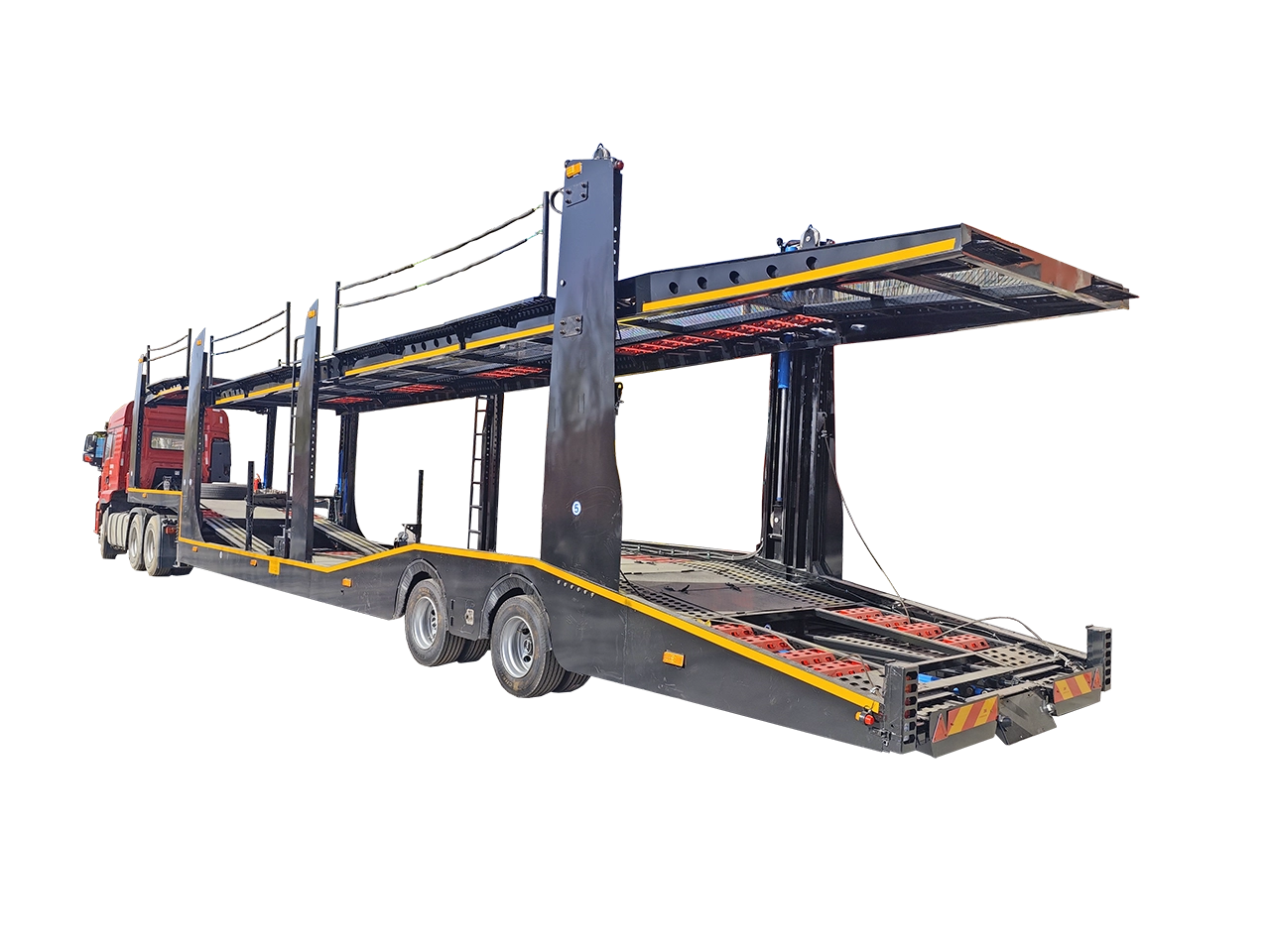
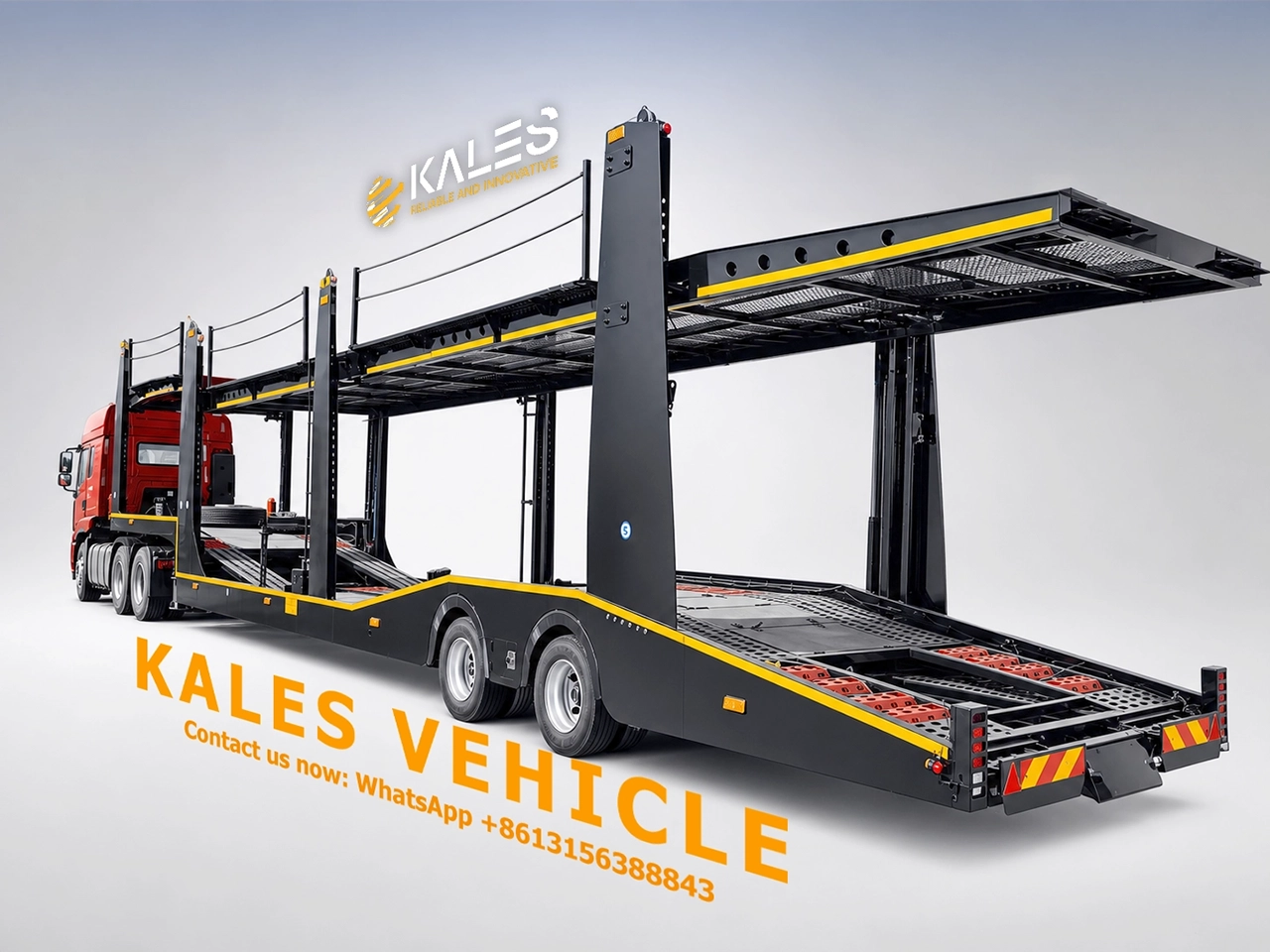
Rear 45-degree view showing the two-level vehicle deck, open side posts, rear lighting, and overall loading envelope.Side view of the open cage-frame body, including the upright pillars and the absence of side sheeting, front panel, rear door, and roof panel.Front 45-degree inspection view showing the ladder, front platform, fire extinguishers, and access around the gooseneck.Rear view for checking underrun protection, rear structure, lighting, and the hydraulic pull-out loading platform.235 Linglong all-steel tyre close-up for reviewing the tyre position, tread, wheel, and dual-tyre running-gear specification.High-strength pillar and hydraulic lifting-device view for checking the upper-platform support and lifting interface.Deck detail showing the 4 mm high-strength anti-slip perforated plate and the tubular tyre stopper engaged in adjacent holes.Close-up of the rear hydraulic pull-out platform, pivot area, and loading transition used for controlled vehicle entry.
The reference double-deck layout carries approximately 6-8 passenger cars within a 17,100 mm overall length. The exact count depends on each vehicle’s length, wheelbase, width, height, tyre position, approach angle, deck clearances, and the legal loading limits in the destination country.
Is the body closed or open?
The body is an open skeleton frame made from vertical posts and supporting members. It has no side sheeting, front panel, rear door, or roof panel. This reduces tare, purchase cost, and aerodynamic drag, but it provides less weather and impact protection than an enclosed car carrier.
Why is the perforated deck about 1,250 mm above ground?
The two-axle dual-tyre running gear uses a reverse-mounted suspension arrangement. This places the perforated deck relatively high, with an approximately 1,250 mm reference ground height. The layout supports under-structure clearance and load-bearing capability, but it reduces the available loading height and must be checked against the cars being carried.
Why does the loading platform use 4 mm perforated steel plate?
The 4 mm high-strength anti-slip perforated steel plate increases tyre friction, reduces the weight of the upper body compared with a solid deck, and lets rainwater or wash water drain through the platform. The final hole pattern and plate treatment must still be checked against the tyre-limit frames, tensioners, car wheel loads, and approved drawing.
How does the upper loading platform rise?
The upper platform uses hydraulic cylinders combined with a pulley and wire-rope pulling system. A hydraulic power pack operates the cylinders so the platform can be lowered for loading and raised for transport. The reference system contains 11 hydraulic cylinders, including four at the front; the final arrangement follows the approved drawing.
How are the loaded cars prevented from moving?
Standard tubular tyre-limit frames hook into adjacent holes in the perforated deck to block the tyres. Passenger-car tyre tensioners then secure the vehicles against forward and rearward movement and reduce bounce. Plate-style limit frames are available as an option. Every restraint must be positioned and tensioned according to the approved loading procedure.
How many tyres does the two-axle carrier use?
The reference two-axle dual-tyre layout has four tyres on each axle, eight tyres in total. The selected 235 Linglong tyre load index, inflation pressure, wheel specification, and spare-tyre plan must be checked against the final route and legal axle load.
What is the spare-tyre carrier design?
The standard package includes two gate-type spare-tyre carriers. Each spare tyre is secured to the gate with two bolts. The carrier position and bolt access are checked against the hydraulic ramp, loaded-vehicle envelope, and road-clearance requirements.
Can Kales deliver the carrier to Central Asia or Russia?
Kales can prepare quotations for DAP delivery to Khorgos, Alashankou, Bakhtu, or Kashgar and evaluate TIR road delivery to destinations such as Almaty, Tashkent, or Moscow. The final route, border handover, customs scope, carrier, permits, and registration documents must be agreed for the actual configuration.
What information is needed for a quotation?
Send the destination country and city, planned car models and dimensions, target cars per trip, tractor model and fifth-wheel height, route condition, preferred tyre and axle brands, restraint requirements, delivery point, order quantity, and required documentation. Kales will then confirm the loading plan, technical configuration, and DAP or TIR quotation.
Request a CIS Автовоз Configuration and Border Delivery Quotation
Send your car dimensions, target loading count, tractor information, destination, and preferred delivery term. The Kales Central Asia Business Department will prepare a configuration review, loading and restraint checklist, technical document scope, and quotation for Khorgos, Alashankou, or onward TIR delivery.
Actual dimensions, loading count, components, certification, and delivery are governed by the technical agreement and commercial contract confirmed by both parties. Manufacturing tolerances and optional-component positions may vary.
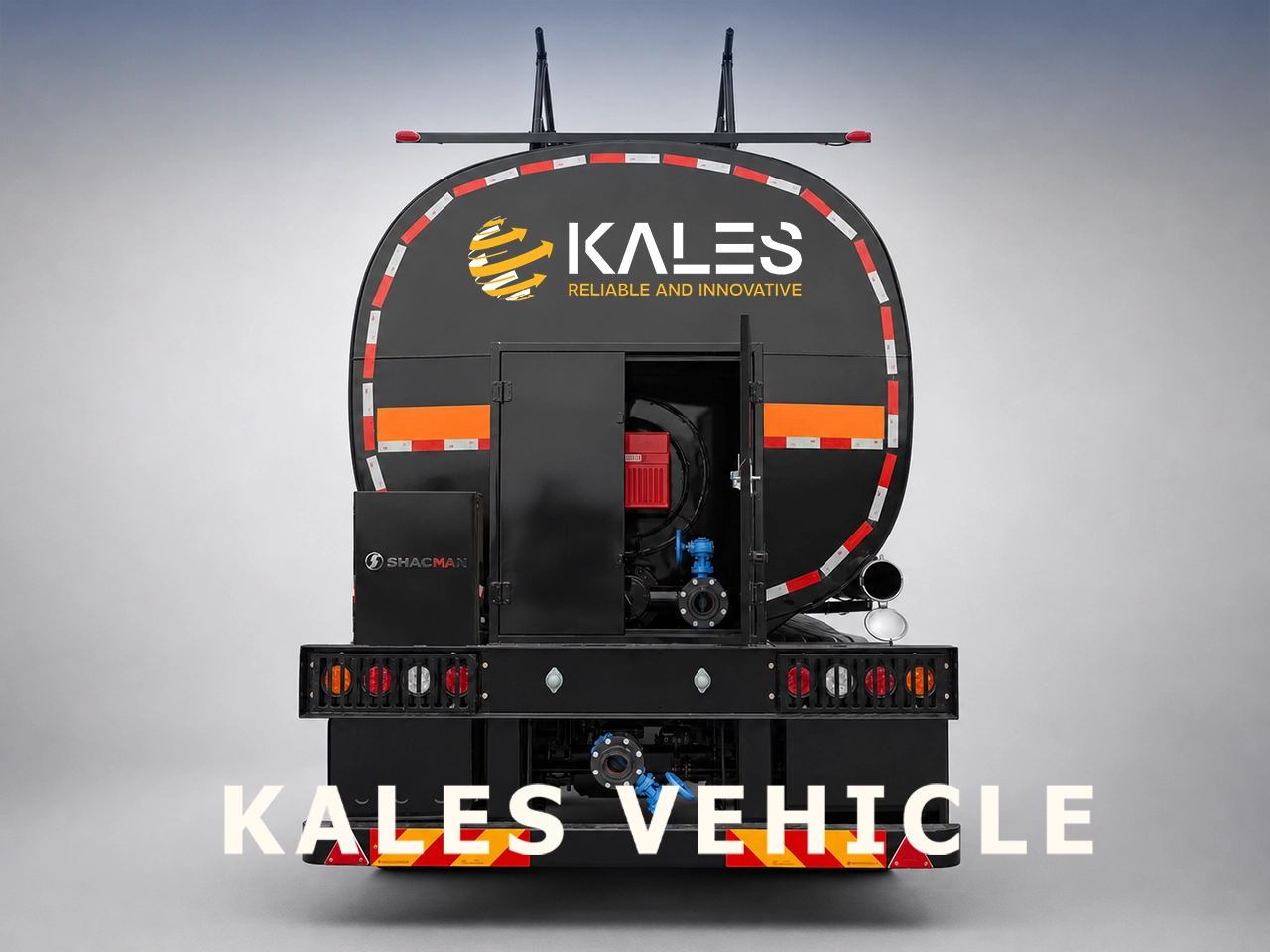
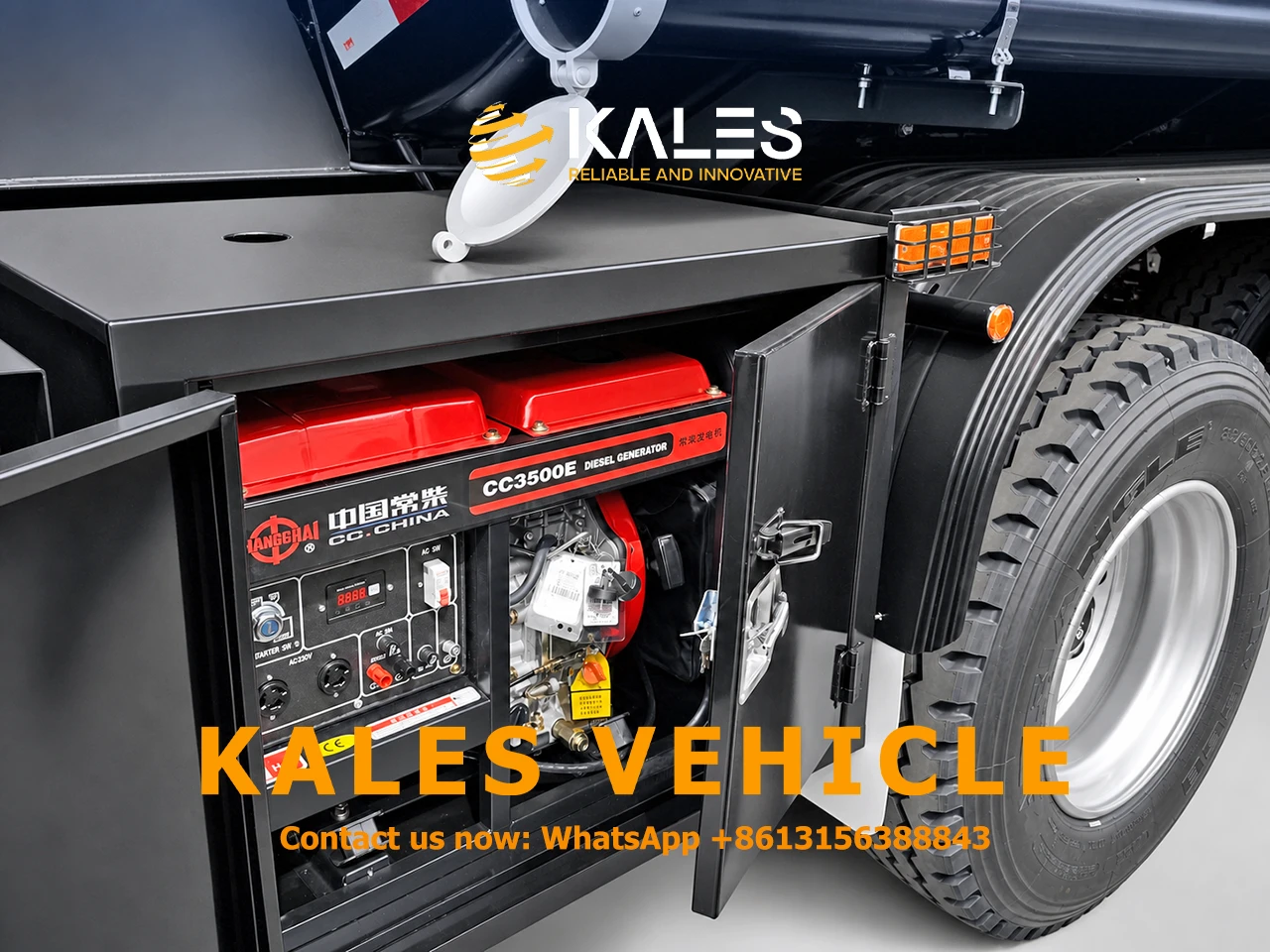
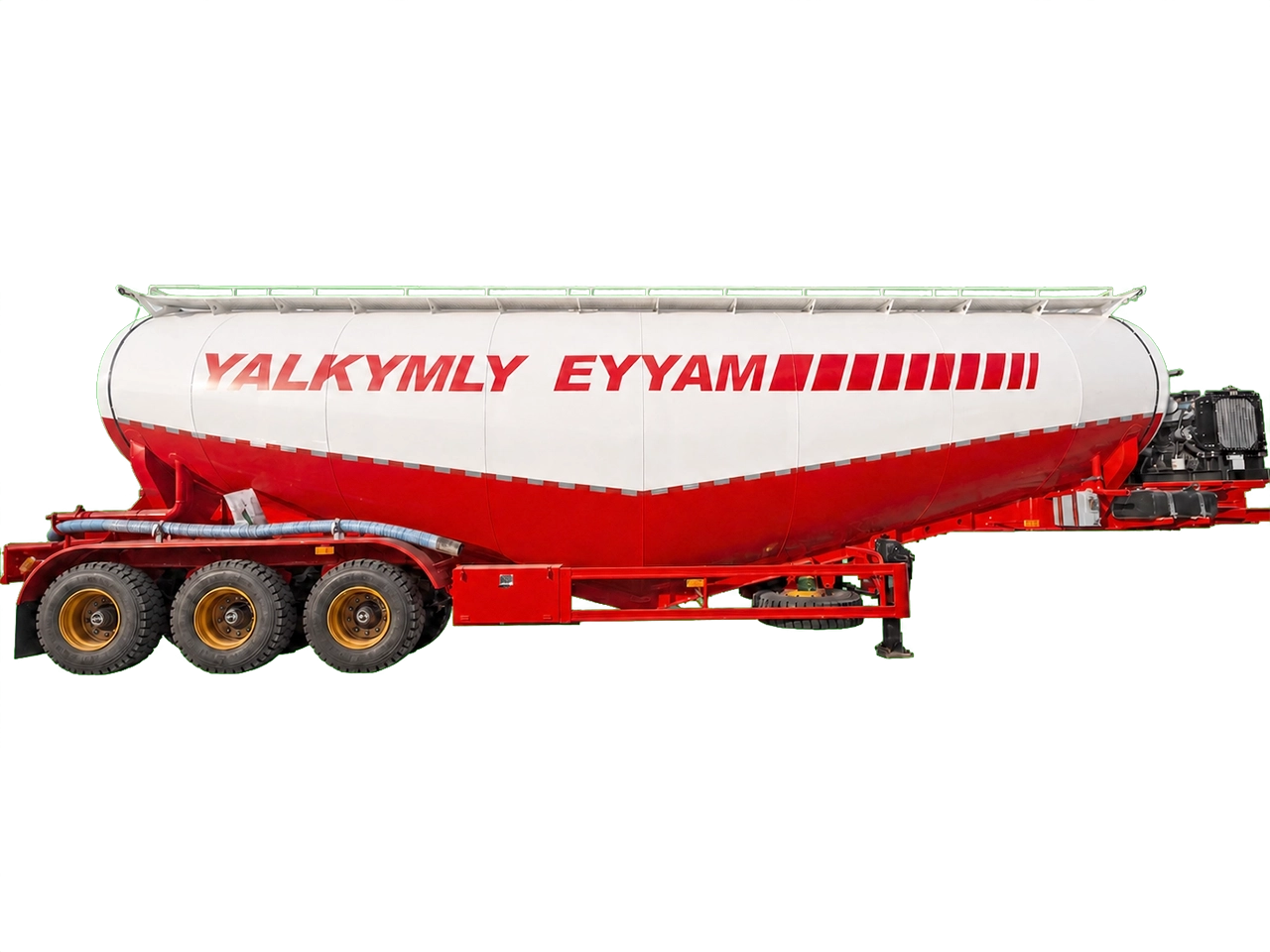
Feature view of the Kales 35m³ three-axle cement tanker, showing the streamlined tank, optimized piping, access ladders, and independent compressor package.
Cement Tanker Trailer · Published: July 24, 2026 · Updated: July 24, 2026 · By Kales Vehicle Technical and Central Asia Business Teams · Technical review scope: tank, pneumatic discharge, chassis configuration, and export documentation · Market focus: Kazakhstan, Uzbekistan, Kyrgyzstan, Tajikistan, and Russian-speaking CIS procurement
Kales 35m³ bulk cement tanker trailer: a 12,500 mm, three-axle pneumatic powder semi-trailer developed for long-distance cement logistics in Central Asia and Russian-speaking markets. In regional procurement searches, this vehicle is commonly called a Полуприцеп-цементовоз, цементовоз полуприцеп, or cement tank semi-trailer.
The configuration combines a Q355 high-strength steel tank, approximately 34m³ effective volume, an independent diesel-driven 12m³/min compressor, and selectable cold-weather braking components. Final material grade, homologation package, axle loading, and winter equipment are confirmed in the signed technical agreement for the destination country.
Quick answer: this 35m³ cement bulker is best for CIS fleets that need about 33 tonnes of reference payload, independent unloading at remote projects, and a long 12,500 mm platform for controlled axle-load distribution on cross-border highways. For operation approaching -40°C, specify the required low-temperature steel impact grade, material certificates, low-temperature lubricants and seals, an air dryer, and WABCO-compatible anti-freezing brake controls in the purchase agreement. Kales can prepare the technical drawings, VIN data, conformity documents, and border-delivery file used by the buyer’s accredited EAEU certification body and customs broker.
40,000 kg reference value; legal combination mass and axle limits must be confirmed locally
Curb weight options
Approximately 7,100 / 6,800 / 6,500 kg, depending on tank, running gear, tyres, and power-unit configuration
Reference rated payload
Approximately 32,900 / 33,200 / 33,500 kg, calculated against the corresponding curb weight
Tank volume
35m³ total / approximately 34m³ effective
Tank material
Q355 high-strength low-alloy steel; low-temperature impact grade and certificate to be specified for the minimum design temperature
Tank shell / end plates
5 mm shell / 6 mm end plates in the reference design
Axles / axle-group load
3 axles / 24,000 kg reference tri-axle-group load
Wheelbase options
4,600 + 1,310 + 1,310 mm; 4,480 + 1,310 + 1,310 mm; or 4,300 + 1,310 + 1,310 mm
Leaf springs
10/10/10, 8/8/8, or 4/4/4; air suspension optional
Tyre options
11.00R20 12PR, 12R22.5 12PR, or 11R22.5 14PR; dual or super-single layout by load plan
Diesel power unit
Huafeng 4105 or Weichai, with optional low-temperature starting aid
Air compressor
12m³/min Suzhou or Fuda twin-cylinder compressor
Reference discharge rate
Approximately 1.2-1.8 tonnes/min under suitable material, hose, pressure, and site conditions
Reference residual target
≤0.3% under suitable cement condition, fluidisation setup, and operating procedure
Compatible media
Bulk cement, fly ash, and compatible mineral powders; density and fluidisation behaviour must be confirmed before production
Delivery directions
DAP Khorgos, Alashankou, Bakhtu, or Kashgar; TIR delivery to inland destinations subject to route and carrier confirmation
Where This CIS Cement Bulker Fits
The 35m³ Kales cement tanker is intended for cement producers, dry-bulk carriers, batching-plant supply fleets, and infrastructure contractors operating between plants, border terminals, depots, and remote construction sites. It is configured for Kazakhstan, Uzbekistan, Kyrgyzstan, Tajikistan, and comparable Russian-speaking procurement programs, subject to each country’s registration and mass limits.
Best for
Long-distance cement and fly-ash routes across open steppe and cross-border highways
Remote sites without a dependable stationary air source
Fleets standardised around Weichai, FUWA, BPW, SAF, JOST, or WABCO service networks
Buyers who need a documented EAEU homologation support package and overland border delivery
Operations that need a 35m³ platform rather than a larger-volume multi-compartment tanker
Not ideal for
Operation at -40°C unless the complete low-temperature material and component package is written into the technical agreement
Any route where the 4,000 mm reference height, 40,000 kg mass, or selected axle loads exceed national limits
Wet cargo, liquid products, food-grade cargo, or powders whose density and fluidisation characteristics have not been reviewed
Sites without a compatible receiving silo, safe pressure procedure, and trained unloading personnel
Core Advantages for CIS and Central Asian Fleets
Procurement priority
Technical direction
Operational value
Cold-climate preparation
Specified low-temperature Q355 grade, certified impact properties, WABCO-compatible anti-freezing valve, air dryer, low-temperature seals and lubricants
Reduces brittle-fracture, condensate icing, and frozen-control risk when the complete package is correctly selected and maintained.
Long-route stability
12,500 mm overall platform with selectable 4,300-4,600 mm front wheelbase and engineered axle-load distribution
Supports predictable tracking and load distribution on high-speed cross-border routes. Stability still depends on tank geometry, suspension, tyres, speed, wind, and loading practice.
Low-residue unloading
Large-area fluidisation bed (Аэрационная система), 1.2-1.8 t/min reference rate, and ≤0.3% residual target
Reduces unloading time and retained product when cement condition, pressure, hose arrangement, and operator procedure meet the design basis.
Independent power station
Huafeng 4105 or Weichai diesel engine with 12m³/min twin-cylinder compressor
Allows pneumatic unloading at remote infrastructure sites without relying on plant electricity or a stationary compressor.
Tractor compatibility
50 mm (2 inch) or 90 mm (3.5 inch) king pin
Supports specification matching for Shacman, Sitrak, HOWO, KAMAZ, MAZ, and other tractors after fifth-wheel height and load checks.
Homologation support
Technical drawings, VIN data, conformity documents, component details, and liaison with the buyer’s broker/certification body
Provides the evidence needed for the applicable EAEU TR CU 018/2011, ОТТС, and ЭПТС process without claiming automatic approval.
Specification-Backed Advantages
Tank structure: the reference 5 mm Q355 shell and 6 mm end plates establish a defined material baseline; the required low-temperature impact grade is confirmed against the minimum design temperature.
Pneumatic output: a 12m³/min twin-cylinder compressor supports independent unloading, with reference output of 1.2-1.8 tonnes/min under suitable operating conditions.
Load planning: three curb-weight and wheelbase directions let the engineering team reconcile payload, axle-group load, tractor fifth-wheel load, and destination-country limits before production.
How the Tank and Pneumatic Unloading System Work
The Kales 35m³ cement tanker uses a pressure tank, internal fluidisation bed, intake piping, safety controls, discharge piping, and an onboard compressor. Compressed air passes through the fluidisation material and suspends the cement particles so pressure can move the powder towards the outlet. The related bulk powder tanker operation and maintenance guide explains loading, pressure control, discharge, depressurisation, cleaning, and inspection in more detail.
The stated 1.2-1.8 tonnes/min discharge rate and ≤0.3% residual are engineering reference values, not unconditional guarantees. Cement moisture, particle size, ambient temperature, air-slide condition, hose length and lift, system pressure, receiving-silo back pressure, and operator sequence all affect actual performance.
Tank-section options
Dimension
Scheme 1
Scheme 2
Tank length including end plates
8,200 mm
8,080 mm
Maximum tank width
2,500 mm
2,550 mm
Maximum cross-section height
3,050 mm
3,170 mm
Buyer selection basis
Narrower envelope and route-clearance preference
Wider section where national width and registration rules permit
Kales confirms tank section, overall height, axle layout, and tractor coupling geometry together. A longer 12,500 mm platform can improve longitudinal load distribution and directional tracking, but length alone does not lower the centre of gravity; rollover resistance also depends on tank cross-section, loaded centre height, suspension, tyre behaviour, speed, steering input, and crosswind.
Cold-Climate Configuration for Operation Down to -40°C
A trailer should only be described as suitable for -40°C after the minimum design temperature is tied to verified material and component data. For the tank and structural parts, the technical agreement should identify the exact Q355 grade, low-temperature impact requirement, heat numbers, and mill certificates. Welding procedures, consumables, and inspection records must match that material selection.
Air system: WABCO-compatible air dryer, oil-water separator, anti-freezing emergency relay valve, protected drain points, and a maintenance interval based on condensate load.
Power unit: low-temperature starter, suitable battery capacity, winter-grade diesel and lubricants, fuel filtration, and optional pre-heater according to the agreed temperature range.
Seals and hoses: elastomers and pneumatic hoses selected for the declared minimum temperature rather than standard temperate-climate parts.
Operating control: daily condensate draining, dryer-cartridge service, pressure-leak inspection, and warm-up procedures documented for the fleet.
Power Station and No-Compressor Option
The standard independent unloading package combines a Huafeng 4105 or Weichai diesel engine with a 12m³/min Suzhou or Fuda twin-cylinder compressor. Weichai is widely used across Central Asian heavy-vehicle fleets, which can simplify access to routine filters and service knowledge; the buyer should still verify the exact model’s local parts coverage.
If every receiving site has a verified stationary air source, Kales can quote a no-compressor configuration. Removing the front power package can shorten the trailer to approximately 8,400 mm and reduce curb weight, but the external source’s pressure, flow, air quality, coupling, hose route, and operating responsibility must be approved before the order is frozen.
Braking, Suspension, Axles, and Tyres
System
Available configuration
CIS buyer check
Braking
Aluminium air tanks, dual brake chambers, emergency relay valve, Ruili/Kormee ABS; WABCO ABS/EBS and air dryer upgrade
Confirm cold-temperature rating, EAEU documentation, diagnostics access, and local service support.
Axles
FUWA, Kales, BPW, or SAF; front lift axle optional
Match legal axle loads, empty-running strategy, bearing/brake parts availability, and workshop capability.
Suspension
Mechanical leaf spring or air suspension
Mechanical suspension favours rugged sites and simple repair; air suspension favours highway ride and weld-load protection. Compare both in the leaf spring vs air suspension guide.
For an EAEU-market vehicle, the applicable approval path should be confirmed before production with the buyer’s accredited certification body and customs broker. Kales can design the agreed configuration with reference to applicable requirements of TR CU 018/2011 and provide factory conformity documents, technical specifications, drawings, component information, and VIN data for the ОТТС and ЭПТС workflow.
ОТТС issuance is controlled by the authorised conformity-assessment process, not by the manufacturer alone. The importing party remains responsible for confirming national registration, customs, recycling-fee, dimensional, mass, lighting, braking, and electronic-passport requirements. The signed technical agreement and pro forma invoice should list every certification-sensitive component before production starts.
Technical and document freeze: both parties confirm dimensions, mass, components, low-temperature package, drawings, commercial terms, and certification responsibilities.
Production and inspection: Kales supplies agreed production records, dimensional checks, tank/pneumatic inspection evidence, and vehicle identification documents.
Border delivery: the quotation can be prepared for DAP Khorgos, Alashankou, Bakhtu, or Kashgar, with handover scope and customs responsibility stated under the selected Incoterms rule.
Inland option: TIR road transport to destinations such as Almaty or Tashkent can be arranged subject to carrier availability, route permits, dimensions, and the final delivery agreement.
Product and Component Inspection Views
Rear 45-degree overall view showing the tank body, chassis, rear protection, and route-ready three-axle layout.Front power-station view showing the independent diesel engine and air compressor used for remote-site unloading.Running-gear inspection view for checking the mechanical suspension, steel wheels, dual tyres, and axle arrangement.Full side profile showing the tank cross-section, long chassis, side protection, and pneumatic pipe routing.Front three-quarter view for inspecting gooseneck clearance, pipeline placement, platform access, and ladders.Close inspection of the gooseneck reinforcement and grouped pneumatic controls.Front accessory area showing the service water tank and cleaning-system arrangement.Reinforced landing gear and dual spare-tyre carriers for route-support and parked-trailer inspection.Rear straight-on view showing the LED lighting, outlet area, ladder, and rear underrun-protection arrangement.
Frequently Asked Questions
What is a Полуприцеп-цементовоз?
A Полуприцеп-цементовоз is a semi-trailer designed to carry dry bulk cement in a sealed pressure tank and unload it pneumatically into a receiving silo. The Kales CIS model has 35m³ total volume, approximately 34m³ effective volume, three axles, and an optional independent diesel-compressor package.
Is the Kales 35m³ cement tanker certified for -40°C?
Cold-weather suitability is configuration-specific, not automatic. For a declared -40°C design target, the order must specify the exact low-temperature steel impact grade, mill certificates, welding requirements, seals, hoses, lubricants, battery and starting package, air dryer, and brake-valve ratings. Kales confirms these items in the technical agreement before production.
Why use the 12,500 mm extended platform?
The 12,500 mm layout provides room for the power station and supports engineered distribution between the king pin and 24,000 kg reference tri-axle group. The longer layout can improve tracking and longitudinal load distribution, but it does not lower the centre of gravity by itself; tank geometry, suspension, tyres, load condition, speed, and crosswind remain critical.
How fast does the trailer unload cement?
The reference discharge rate is approximately 1.2-1.8 tonnes per minute, with a target residual of ≤0.3% under suitable conditions. Actual results depend on cement moisture and particle condition, fluidisation-bed cleanliness, compressor output, hose length and lift, pressure, receiving-silo back pressure, ambient temperature, and operator procedure.
Can the trailer unload without an external air source?
Yes. The standard direction uses a Huafeng 4105 or Weichai diesel engine and a 12m³/min Suzhou or Fuda twin-cylinder compressor. A no-compressor version is available when the buyer verifies a compatible stationary source at every unloading location.
Can Kales provide documents for ОТТС and ЭПТС?
Kales can provide the agreed factory conformity documents, technical specifications, drawings, component data, and VIN information used by the buyer’s accredited certification body and customs broker. Final ОТТС and ЭПТС acceptance depends on the applicable EAEU and national approval process; it is not guaranteed by a factory document package alone.
Which Central Asian border ports are available for delivery?
Kales can quote DAP delivery to Khorgos, Alashankou, Bakhtu, or Kashgar. TIR delivery to inland destinations such as Almaty or Tashkent can also be evaluated after the final dimensions, route, carrier, border procedure, and delivery term are confirmed.
Are local spare parts available?
The specification can use Weichai engines, FUWA/BPW/SAF axles, JOST landing gear, and WABCO brake components that have established service channels in many CIS markets. Buyers should verify the selected model and local distributor coverage before ordering; Kales can include a route-specific spare-parts kit in the quotation.
Request a DAP Khorgos or Alashankou Quotation
Send your destination country and city, cargo density, target payload, minimum operating temperature, tractor model and fifth-wheel height, preferred axle and suspension, unloading-site air-source details, order quantity, and requested delivery term. The Kales Central Asia team will prepare a USD or RMB quotation, technical configuration, and document-scope checklist.
Actual delivery is governed by the technical agreement and commercial contract confirmed by both parties. Manufacturing tolerances and optional-component positions may vary. Registration, certification, customs, and route legality remain subject to the destination authority’s requirements.
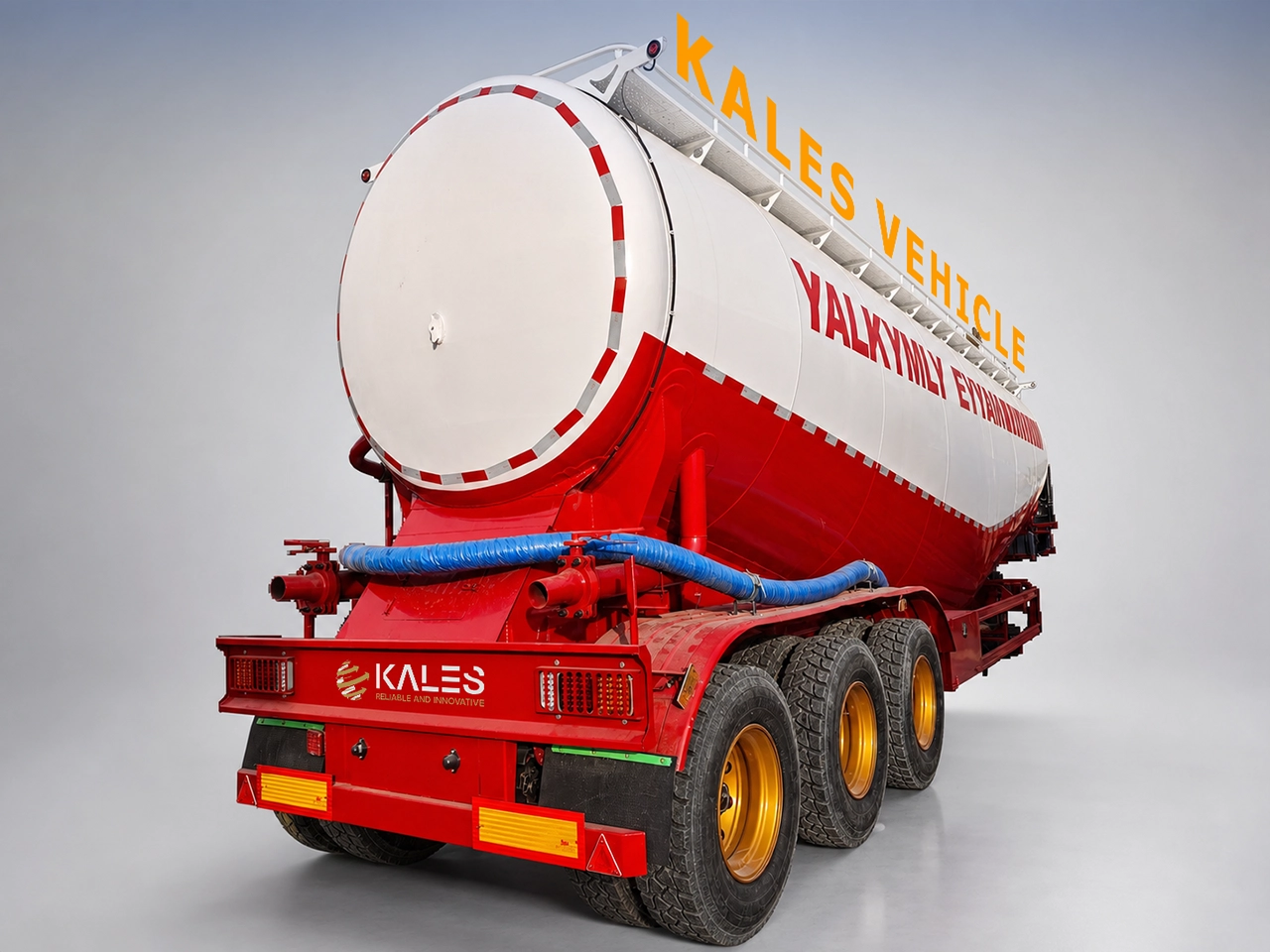
Rear three-quarter inspection view of the Kales 35m³ cement bulker trailer, showing the tank, rear protection, ladder, and super-single tyre configuration.
Cement Tanker Trailer · Published: July 23, 2026 · Updated: July 23, 2026 · By Kales Vehicle Technical Team · Reviewed by Kales Africa Export Engineering · Market focus: Nigeria, Ghana, Kenya, Tanzania, Zambia, and neighbouring African markets
Kales 35m³ bulk cement tanker trailer: a three-axle pneumatic-discharge cement bulker developed for cement plants, concrete batching and mixer-truck operations, building-material distributors, and dry-bulk transport fleets working across African trunk roads and demanding last-mile sites.
International buyers may also know this equipment as a cement bulker trailer, dry bulk cement trailer, powder tanker, or silo trailer. This page covers the 35m³ single-product configuration rather than the larger 58m³ multi-compartment powder tanker family.
Quick answer: choose this 35m³ cement tanker semi-trailer when your operation needs a practical three-axle unit with an independent diesel engine and 12m³ twin-cylinder air compressor for unloading at sites without a reliable external air supply. The represented trailer uses super-single tyres to reduce wheel count, simplify running-gear inspection, and avoid stones becoming trapped between paired tyres. Its Q355 tank, mechanical leaf-spring suspension, and locally familiar powertrain options make it a strong fit for African cement distribution routes where uptime and repair access matter.
35m³ total capacity; approximately 34m³ effective volume
Rated payload range
Approximately 32,900-33,500 kg, subject to final tare weight and local axle limits
Gross vehicle mass
40,000 kg reference configuration; destination regulations must be checked before production
Overall dimensions
Length options 8,400-9,300 mm × 2,550 mm wide × 3,850-4,000 mm high
Tank material
Q355 high-strength steel
Tank shell and head
5 mm shell with 6 mm reinforced heads in the reference specification
Axles and axle-group load
3 axles; 24,000 kg reference axle-group load
Suspension
Mechanical leaf spring with 10/10/10, 8/8/8, or 4/4/4 leaf options; air suspension available
Tyres
Super-single tyre configuration on the represented trailer; final size and load index matched to axle load, route, and local regulation
Discharge engine
Huafeng 4105 or Weichai diesel engine, depending on destination support and buyer preference
Air compressor
12m³ twin-cylinder Suzhou or Fuda compressor
Reference discharge rate
Approximately 1.2-1.8 tonnes per minute under suitable material and site conditions
Reference residual target
Up to 0.3% under suitable cement condition, fluidisation setup, pressure, and operating procedure
Departure angle
37° or 39° configuration for ramps and uneven site access
Transport media
Bulk cement; other compatible low- or medium-density dry powders require engineering confirmation
Custom quotation
Contact KALES with the cargo density, target payload, route, tractor model, destination port, and unloading conditions.
Best-Fit Operating Profile for African Fleets
This 35m³ cement bulker is designed for fleet owners who need more control over unloading time and material handling than bagged-cement logistics can provide. It is particularly useful for regular movement between ports, cement terminals, grinding plants, depots, and concrete batching plants.
Best for
Cement manufacturers and distributors supplying batching plants or regional depots
Dry-bulk carriers operating from Lagos, Tema, Mombasa, Dar es Salaam, or other African ports
Sites where the trailer must unload without depending on a fixed external compressor
Fleets that prioritise mechanical suspension, common axle brands, and workshop-friendly components
Operators replacing bagged transport on stable, repeat-volume cement routes
Not ideal for
Very high-volume multi-product work that requires the larger 58m³ four-compartment tanker
Dense powder or abrasive mineral cargo without a confirmed tank, fluidisation, and payload review
Routes where the proposed gross mass, axle load, or overall height exceeds local legal limits
Wet cargo, liquid fuel, or products that are not compatible with a dry pneumatic tanker
Why African Buyers Choose This Cement Tanker Trailer
Low-residue fluidisation design: the air slide and discharge geometry target residual material of up to 0.3% when cement condition, pressure, and operating procedure are suitable, helping reduce product left inside the tank after repeated trips.
Independent unloading package: the Huafeng or Weichai diesel engine and 12m³ twin-cylinder compressor let the trailer unload at remote depots and worksites where grid power or a fixed air supply may be unavailable.
Road-duty Q355 tank: a 5 mm Q355 shell with 6 mm reinforced heads provides a defined structural baseline for corrugated roads, ramps, and repeated pressure cycles. Buyers can review the related Kales powder tanker manufacturing process for more detail on tank fabrication and inspection.
Practical 35m³ operating size: the approximately 34m³ effective volume and 32.9-33.5 tonne reference payload range balance trip productivity with a manageable three-axle platform.
Super-single tyre efficiency: one wide tyre per wheel position reduces the number of tyres and rims compared with a dual-tyre arrangement, can reduce tare and rolling resistance when correctly specified, prevents stone trapping between paired tyres, and gives workshop teams clearer access for brake, hub, and suspension inspection.
Serviceable running gear: mechanical leaf springs and selectable FUWA, BPW, SAF, or Kales axles allow the buyer to match components to the parts network and workshop capability in the destination country.
Configured for the actual route: super-single tyre size and load index, king pin, landing gear, suspension, tank section, power unit, and pipe arrangement are confirmed before production instead of forcing one stock specification on every market.
Specification-Backed Advantages
Tank material: Q355 high-strength steel with a 5 mm shell and 6 mm reinforced heads provides a concrete structural specification for demanding road and pressure cycles.
Air compressor: the 12m³ twin-cylinder compressor supports independent pneumatic unloading at ports, depots, and batching plants.
Suspension: selectable mechanical leaf-spring packs give fleets a repairable setup that can be matched to road severity and local workshop support.
Tank Structure and Pneumatic Unloading
The trailer combines five main systems: the pressure tank, supporting chassis, running gear, pneumatic discharge system, and operating accessories. The fluidisation bed is the key unloading component. Compressed air passes through the air-slide material and suspends the cement so it can move towards the outlet and discharge through the pipe under pressure. The bulk powder tanker operation and maintenance guide explains the loading, pressure-control, discharge, cleaning, and inspection workflow in more detail.
Discharge performance is never determined by compressor size alone. Cement moisture, particle condition, fluidisation-bed cleanliness, hose length, outlet height, pressure control, and operator procedure all affect the actual rate and residual material. For that reason, Kales treats 1.2-1.8 tonnes per minute and up to 0.3% residual as reference engineering targets for suitable operating conditions, not as universal results for every cargo and site.
Two tank-section options
Item
Option 1
Option 2
Tank length including heads
8,200 mm
8,080 mm
Maximum width
2,500 mm
2,550 mm
Maximum section height
3,050 mm
3,170 mm
Front and rear head geometry
1,908 mm diameter; 1,808 mm optional
2,230 × 1,950 mm long-axis/short-axis section
For a broader review of axle loading, suspension choice, tyre availability, tractor matching, and rough-road specification, use the Africa semi-trailer buying guide before confirming the final build.
Discharge Power and Remote-Site Readiness
The standard independent power package uses a Huafeng 4105 or Weichai diesel engine with a 12m³ Suzhou or Fuda twin-cylinder air compressor. Weichai consumables and service knowledge are widely available in many African heavy-vehicle markets, which can simplify routine maintenance. Buyers should still confirm the preferred engine and compressor brand against their own local parts network before ordering.
Where a cement terminal or batching plant already provides a verified fixed air source, the front power unit can be omitted. This can shorten the trailer to approximately 8,400 mm and reduce tare weight, but the receiving-site pressure, flow, connection, and operating procedure must be checked first.
Braking, Coupling, and Safety Equipment
King pin: 50# or 90# options for matching common HOWO, SHACMAN, and other tractor units.
Brake hardware: corrosion-resistant aluminium air reservoirs, dual brake chambers, and a WABCO emergency valve in the reference package.
ABS/EBS: Ruili/Kormee ABS can be specified, with WABCO available according to the final configuration and destination requirement.
Protection: Q235 side guards and rear underrun protection, plus toolbox, spare-wheel carrier, and fire extinguisher provision.
Route review: brake specification, tyre rating, axle load, lighting, and underrun protection should be confirmed for the destination country before production.
Configuration Options for Budget, Roads, and Local Support
System
Available direction
Buyer decision
Axles
FUWA, Kales, BPW, or SAF
Choose against local parts access, workshop familiarity, load plan, and route quality.
Landing gear
FUWA, Kales, or JOST
Match fleet standardisation and local service support.
Suspension
Mechanical leaf spring or air suspension
Mechanical suspension suits rougher roads and simpler repairs; air suspension suits better roads and cargo-protection priorities.
Tyres
Super-single tyres
Confirm tyre size and load index, legal axle load, inflation-control practice, replacement availability, route condition, and spare-tyre plan.
Tank and piping
Section geometry, intake pipe, ladder position, and power-unit layout
Configure around width limits, receiving-site layout, maintenance access, and unloading connection.
Bulk Cement Versus Bagged Transport
Bulk cement transport can remove bag and pallet costs, reduce dependence on manual loading crews, and keep cement enclosed between the terminal and silo. On stable high-volume routes, pneumatic unloading can also shorten vehicle turnaround compared with handling individual bags. Fleets that need a larger single-tank step can compare the 40 CBM bulk cement tanker trailer. The commercial case still depends on having compatible loading and receiving silos, trained operators, reliable route volume, and a payload that complies with local law.
CIF Shipping and Pre-Delivery Inspection
Kales can prepare a configuration-specific CIF quotation for major African ports such as Lagos, Tema, Mombasa, and Dar es Salaam. Shipment may use break-bulk or Ro-Ro service depending on dimensions, sailing availability, destination, and packing plan. Export documentation can be coordinated with the buyer and clearing agent, but final customs requirements must be confirmed for the importing country.
Before shipment, buyers can request production photos, tank and chassis inspection views, pneumatic-system checks, and loading documentation. The final supply scope should state the selected axle, suspension, tyre, power-unit, compressor, braking, spare-parts, and documentation package.
Factory and Component Inspection Views
Front three-quarter view for checking the tank section, discharge pipe routing, working platform, and access ladder.Independent diesel engine and compressor package used for pneumatic unloading where no fixed air source is available.Landing-gear inspection view showing support placement and chassis mounting around the front structure.Reinforced mechanical suspension and axle area for buyers checking road-duty components and workshop service access.Side profile showing the streamlined tank body, chassis relationship, side protection, and toolbox position.Rear inspection view of the ladder, lighting, outlet area, and underrun-protection layout.Spare-wheel carrier and landing-gear view for reviewing roadside support and front chassis reinforcement.
Frequently Asked Questions
What are the tank volume and reference payload?
The tank has a 35m³ total capacity and approximately 34m³ effective volume. Reference rated payload is about 32.9-33.5 tonnes, but the legal payload must be calculated from the final tare weight, tractor combination, axle limits, and regulations in the destination country.
Can the trailer unload without an external air supply?
Yes. The standard direction includes a Huafeng or Weichai diesel engine and a 12m³ twin-cylinder compressor. If the receiving site has a compatible fixed air source, the front power package can be omitted after the pressure, flow, and connection are verified.
Is the claimed 0.3% residual guaranteed for every powder?
No single residual figure applies to every material and site. Up to 0.3% is a reference target for suitable cement condition, fluidisation setup, pressure, hose arrangement, and operating procedure. Different powders must be tested or reviewed before the specification is confirmed.
Are spare parts practical to source in Africa?
The trailer can use Weichai power, FUWA or BPW axles, mechanical leaf springs, WABCO brake components, and other brands already familiar to many African workshops. Buyers should select the final brands against the actual dealer and parts network in their country. A recommended wear-parts package can be included in the supply quotation.
Why does this cement tanker use super-single tyres?
Super-single tyres reduce the number of tyres and rims compared with a dual-tyre setup, remove the gap where stones can become trapped, and improve access for checking brakes, hubs, and suspension. A correctly matched wide tyre can also support lower tare and rolling resistance. The trade-off is that the specified tyre size, load index, inflation pressure, local replacement supply, and spare-tyre plan must be confirmed before the trailer enters service.
How can the trailer be shipped to Africa?
Kales can quote break-bulk or Ro-Ro shipment and prepare CIF options for ports including Lagos, Tema, Mombasa, and Dar es Salaam. The most suitable method depends on destination, sailing schedule, final dimensions, and the selected packing plan.
Can I inspect the finished trailer before shipment?
Yes. Buyers can request production photos, tank and chassis inspection views, pneumatic-system checks, and loading records before the trailer leaves the factory.
How is the final quotation confirmed?
Send the cargo type and density, target payload, route condition, tractor model, preferred axle and suspension, unloading-site details, destination port, and order quantity. Kales will then confirm the configuration, delivery terms, and CIF quotation.
Request a 35m³ Cement Tanker Configuration and CIF Quotation
For a configuration matched to your country, send your operating route, cement density, daily trip target, tractor model, unloading-site conditions, preferred destination port, and required delivery schedule. Kales Africa Export Engineering will prepare a technical configuration and shipping proposal for review.
Kales 60 ton 3-axle drop-side semi trailer configured for bagged cargo, steel, construction supply, container backhaul, and regional African freight that needs stronger side restraint than a removable-sidewall platform.
General Freight Trailer Product Guide · Published: December 21, 2025 · Updated: June 4, 2026 · By Kales Vehicle Engineering Team · Reviewed by Kales Export Sales Engineering · Market focus: Africa regional freight, construction supply, bagged cargo, steel distribution, and mixed-route sidewall transport
60 ton 3-axle drop-side semi trailer: this Kales sidewall trailer is built for buyers who need a heavier and more closed cargo-retention platform than an open removable-sidewall flatbed, but do not need to move all the way into the denser 80 ton dropside program. It fits cement bags, fertilizer, steel, palletized building supply, regional consumer goods, and mixed-route freight across African corridors where sidewall strength, suspension durability, and workshop-friendly service matter more than a lighter multi-purpose deck.
Engineering guidance from the Kales Vehicle product team for buyers comparing an Africa-oriented 60 ton sidewall trailer with removable-sidewall flatbeds, open flatbeds, and heavier 80 ton dropside configurations.
Quick answer: choose this 60 ton 3-axle drop-side semi trailer when your freight mix needs a stronger sidewall body for African regional routes, bagged cargo, pallets, steel, and construction supply, but does not need the higher payload class of an 80 ton dropside. Contact KALES for a tailored quotation based on the required configuration, order quantity, and destination.
Why Buyers Choose This 60 Ton Africa Sidewall Trailer
Stronger cargo retention than a removable-sidewall platform: this page is for heavier daily sidewall-duty work, not for a lighter mixed-purpose deck that only occasionally needs side panels.
Balanced 60 ton positioning: it sits between lighter regional sidewall work and a more aggressive 80 ton payload program.
Africa-route durability logic: reinforced mechanical suspension, stronger beam sections, and practical service hardware suit rougher regional freight conditions.
Container backhaul flexibility: 12 ISO twist locks help fleets earn revenue on return legs without turning the trailer into a pure chassis page.
Closed-sidewall utility for dense and bagged cargo: better fit than open stake trailers when the load needs fuller lateral containment.
Clear differentiation from nearby pages: this page owns heavier Africa-oriented 60 ton sidewall intent, not removable-sidewall versatility and not ultra-heavy 80 ton positioning.
Specification-backed advantages
Primary role: Bagged cargo, steel, construction supply, palletized freight, mixed regional cargo, and occasional container backhaul. This provides a concrete durability and load-control basis for the stated duty cycle.
Payload class: About 60 tons depending on route regulation, cargo density, and final axle matching. This defines the working band to validate against the cargo, route, and local legal limits.
Brake system: Dual-circuit air brake logic with ABS or EBS options depending on the final market build. This gives the buyer a specific braking or safety package to verify for the intended route.
Technical Snapshot
Product type
60 ton 3-axle drop-side / sidewall semi trailer for African regional freight
Primary role
Bagged cargo, steel, construction supply, palletized freight, mixed regional cargo, and occasional container backhaul
Payload class
About 60 tons depending on route regulation, cargo density, and final axle matching
Reference dimensions
About 12,500 mm x 2,500 mm x 2,200 mm on the represented build, customizable by route and cargo program
Main beam
T700 high-strength steel main beam with heavy-duty sidewall trailer logic for repeated mixed freight loading
Sidewall body
Reinforced drop-side body with steel side panels for stronger daily containment than a removable-sidewall flatbed
Deck floor
3 mm anti-slip checkered steel floor for bagged freight, steel, pallets, and construction materials
Axles
3 axles, usually 13T or 16T; FUWA, BPW, SAF, or KALES matching depending on market
Suspension
Thickened mechanical suspension standard for tougher road conditions; air suspension optional on selected road programs
Tires
12 units, typically 12R22.5 or 12.00R22.5 depending on final setup
Container support
12 ISO twist locks for 1 x 40ft or 2 x 20ft backhaul flexibility
Landing gear
28T heavy-duty landing gear, JOST or equivalent export matching
Brake system
Dual-circuit air brake logic with ABS or EBS options depending on the final market build
Custom quotation
Contact KALES for a tailored quotation based on the required configuration, order quantity, and destination.
Best Fit Operating Profile
This page fits operators moving denser and more containment-sensitive general freight on regional African corridors. The right use case is a fleet that needs more sidewall strength and more durable regional-road behavior than a removable-sidewall flatbed, but does not need to pay for a higher 80 ton payload class. It is especially useful for cement bags, fertilizer, steel products, construction materials, packaged cargo, and mixed-route distribution where side retention is part of the daily loading reality.
Best for
Cement bags, fertilizer, feed, steel, pallets, and regional mixed freight that need fuller side retention
African trunk and secondary-road routes where a stronger sidewall body is more important than lighter open-deck versatility
Fleet buyers who want a practical 60 ton sidewall workhorse before moving into 80 ton heavy-freight positioning
Operations that still benefit from occasional container backhaul but remain general-freight first
Not ideal for
Lighter multi-purpose work where removable side panels and open-deck flexibility are the real priority
Open agricultural cargo that benefits more from a fence trailer and greater side airflow
Very dense heavy-freight programs that already justify an 80 ton dropside page
Pure container-first work that should be handled by a dedicated container chassis or flatbed
How This 60 Ton Sidewall Page Differs From Nearby Cargo Trailer Pages
Buyer situation
Best-fit Kales page
Why
Mixed cargo with only occasional need for side panels and more open-deck versatility
3-axle drop-side flatbed trailer
The removable-sidewall platform stays more flexible when heavy daily sidewall duty is not the main requirement
Regional African freight needing a stronger 60 ton sidewall body
This 60 ton 3-axle drop-side semi trailer
The page owns Africa-oriented 60 ton sidewall intent with stronger retention and tougher regional-road logic
Heavier dense cargo and a higher payload-class sidewall program
80 ton dropside semi trailer
The 80 ton page is the better fit when the operation has already moved into heavier dense-freight positioning
Open agricultural cargo with higher airflow and easier side access
3 axle fence semi trailer 60 ton
The fence trailer is more suitable when open side access and ventilation matter more than closed sidewall retention
Engineering and Serviceability Details
This is a sidewall workhorse, not a lighter multi-purpose deck
The main separation from the removable-sidewall flatbed page is operational. That page wins when the buyer wants a more flexible open deck that can sometimes add side panels. This page wins when the sidewall body itself is part of the daily work and needs to hold up against heavier regional freight cycles.
T700 beam and reinforced sidewall logic matter on rougher roads
Sidewall trailers carrying bagged goods, steel, and construction cargo on mixed African routes see repeated edge loading, side pressure, and floor stress. The stronger beam and more committed sidewall-body structure are there to prevent early distortion, not just to make the spec sheet look heavier.
Mechanical suspension is still the rational default
For this page, thickened mechanical suspension remains the correct baseline because tougher roads, simpler workshops, and denser bagged cargo usually make mechanical systems more practical than air. Air suspension is still possible, but only when the route and cargo profile truly justify the extra complexity.
Container support is useful, but it is not the page’s main identity
The 12 ISO locks matter because fleets often want return-leg flexibility. But this should still read as a sidewall freight page first. The trailer exists to carry retained general freight on regional roads, not to compete with dedicated chassis pages.
How is the final quotation confirmed?
KALES confirms the quotation after reviewing the required specification, quantity, destination, and delivery terms. Send the operating requirements for an accurate proposal.
Factory Images and Inspection Views
Overall three-quarter view of the 60 ton sidewall trailer configured for regional freight work.Front wall and gooseneck view for checking body stance and structural proportion.Rear protection and lighting view for export road configuration review.Mechanical suspension detail for tougher African route service.Landing gear detail for workshop serviceability and export fitment review.Sidewall hinge and container-lock detail showing freight-retention plus backhaul flexibility.
Frequently Asked Questions
How is this page different from the removable-sidewall drop-side flatbed?
This page is for heavier daily sidewall-duty work. The removable-sidewall flatbed page is better when the operator wants a more flexible open deck that only sometimes needs side panels.
When should I choose this page instead of the 80 ton dropside page?
Choose this page when the route needs a strong 60 ton regional sidewall trailer but does not need the higher payload class and heavier dense-freight positioning of the 80 ton page.
Can this trailer still support container backhaul?
Yes. The 12 ISO twist locks help fleets handle 40ft or 20ft return-leg container moves when the freight program requires that flexibility.
Should I keep mechanical suspension or move to air suspension?
Mechanical suspension is usually the correct default for rougher African routes and denser bagged cargo. Air suspension only becomes the better fit when the route quality and cargo sensitivity clearly justify it.
What should I send before requesting a quote?
Send your main cargo types, route country, target payload, sidewall height preference, axle brand preference, whether container backhaul is regular, and whether the route is mostly trunk road, mining access, or mixed secondary-road work.
Request Drawing and Quote
If you are comparing a 60 ton 3-axle drop-side semi trailer for African regional freight, bagged cargo, steel, or construction supply, send your route country, main cargo mix, target payload, and sidewall height requirement. Kales can then match the beam, suspension, axle package, and sidewall build to the real working conditions.
Kales 4-axle 12m container skeleton semi-trailer configured for 40ft ISO containers, reefer box transport, and export programs that need lighter tare with broader axle-load distribution.
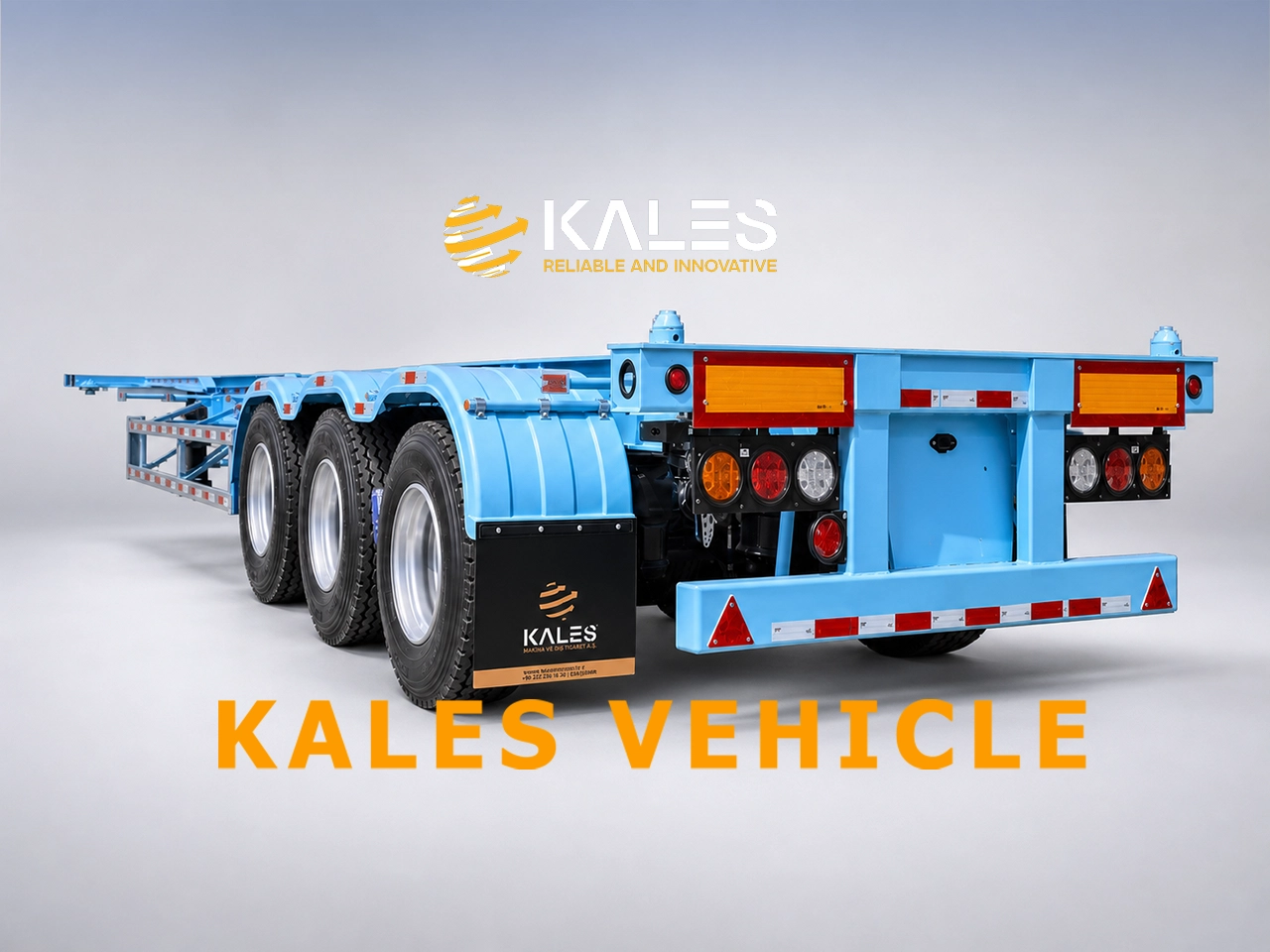
Container Transport Product Guide · Published: December 20, 2025 · Updated: June 4, 2026 · By Kales Vehicle Engineering Team · Reviewed by Kales Export Sales Engineering · Market focus: Europe-spec export work, reefer container logistics, port shuttle, and higher-compliance 4-axle container haulage
4-axle 12m container skeleton semi-trailer: this Kales lightweight 40ft chassis is built for buyers who need more axle distribution than a mainstream 3 axle container chassis, but still want a tare-conscious export platform. It fits port shuttle work, reefer container programs, bonded container transport, and routes where legal axle spread, lift axles, and Euro-style running gear matter more than a simpler low-cost chassis.
Engineering guidance from the Kales Vehicle product team for buyers comparing a lightweight 4 axle 12m skeleton trailer with standard 3 axle 40ft container chassis, broader 40ft and 45ft flatbeds, and other export logistics platforms.
Quick answer: choose this 4-axle 12m container skeleton semi-trailer when your route or compliance logic already requires broader axle-load distribution than a 3 axle chassis can provide, and when lower tare, lift axles, disc brakes, and Euro-style spec matter to fleet economics. Contact KALES for a tailored quotation based on the required configuration, order quantity, and destination.
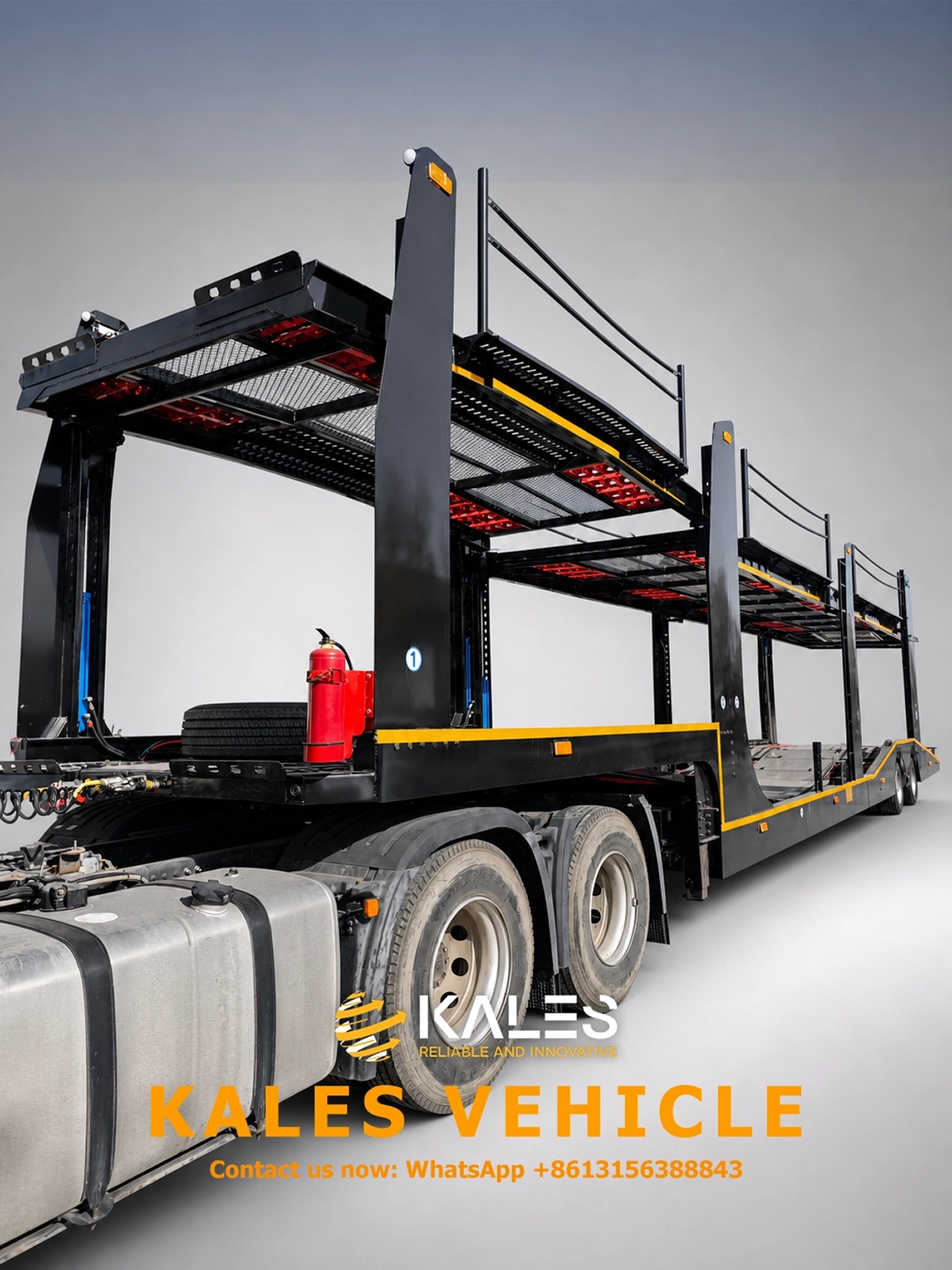
Why Buyers Choose This 4-Axle Skeleton Trailer
4-axle legal and operational spread: the extra axle count helps fleets that already need better load distribution on regulated container corridors.
Lightweight export spec: T700 structure and lighter component choices help protect payload and operating efficiency.
Front lift-axle logic: the first two liftable axles reduce empty-running tire scrub and rolling resistance on return legs.
Disc brakes and WABCO control: this page is positioned for higher-spec container transport rather than a basic yard-only chassis.
Reefer-friendly road behavior: air-ride running gear and a more refined chassis package fit containerized cold-chain work better than a rougher low-spec frame.
Clear step-up from the standard 3 axle chassis: this page owns lightweight 4 axle 40ft skeleton intent, not mainstream 3 axle port-chassis intent.
Specification-backed advantages
Container fit: 40ft container duty with Euro-spec 12m chassis layout; specific lock positioning can be matched to route and load program. This provides a concrete durability and load-control basis for the stated duty cycle.
Payload class: About 40 tons on the represented lightweight 4 axle export configuration, subject to route regulation and container load concentration. This defines the working band to validate against the cargo, route, and local legal limits.
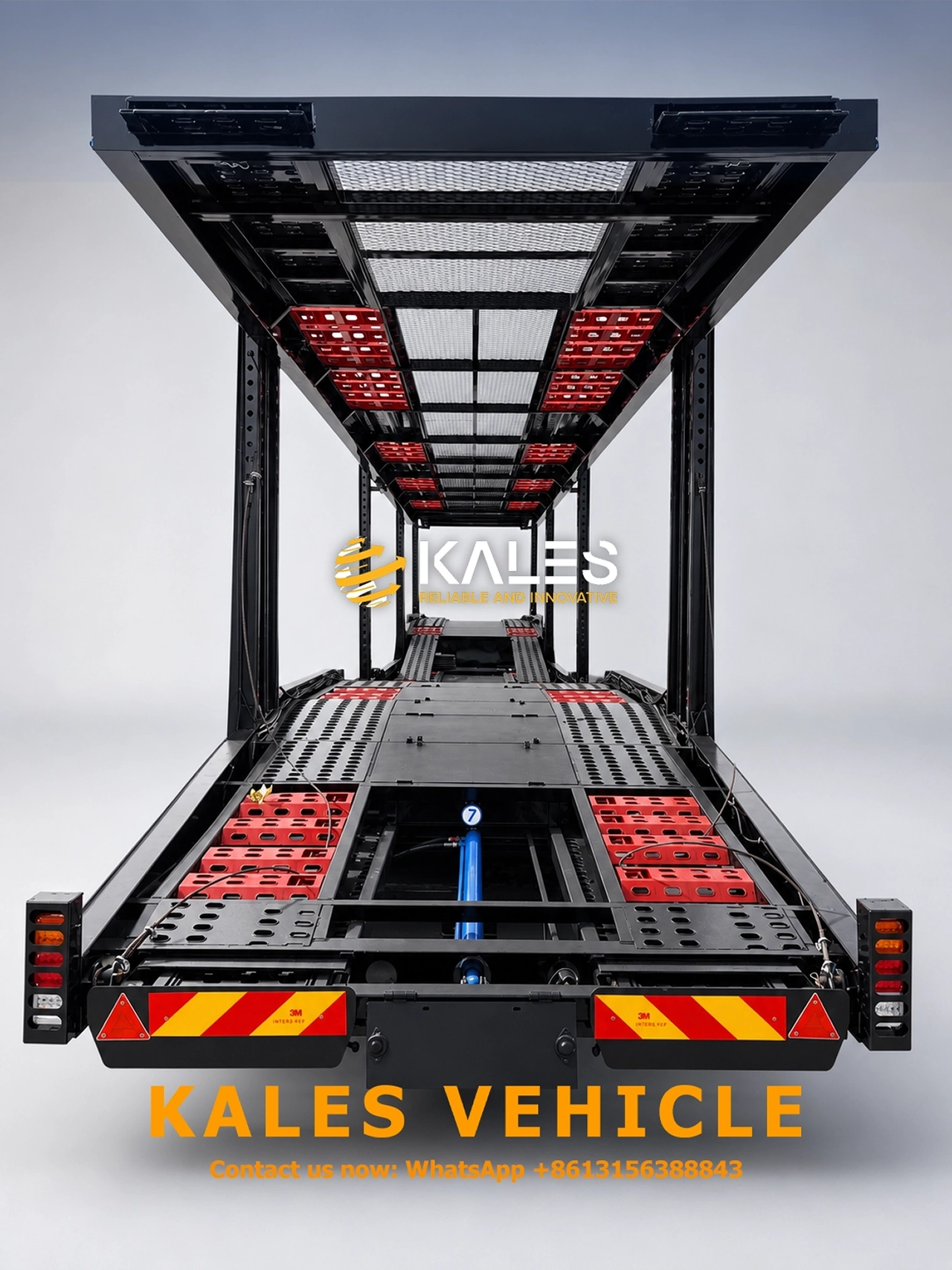
Axle package: 4 axles with disc brakes; front two axles liftable on the represented Euro-spec build. This gives the buyer a specific braking or safety package to verify for the intended route.
40ft ISO container, reefer container, port shuttle, and export container haulage with broader axle-load distribution
Container fit
40ft container duty with Euro-spec 12m chassis layout; specific lock positioning can be matched to route and load program
Overall dimensions
About 12,550 mm x 2,550 mm x 1,100 mm on the represented build
Payload class
About 40 tons on the represented lightweight 4 axle export configuration, subject to route regulation and container load concentration
Main beam
T700 high-strength cold-bent steel structure for lower tare and stronger fatigue resistance than basic carbon-steel chassis
Axle package
4 axles with disc brakes; front two axles liftable on the represented Euro-spec build
Suspension
Air-ride running gear with lift-axle control logic on the front axle set
Wheels and tires
Single wide-base tire layout with aluminum-alloy rim package on the represented lightweight export specification
Brake system
WABCO valve logic with ABS-ready disc-brake setup
Container locks
Up to 14 container lock positions depending on the final dispatch pattern and container program
Landing gear
JOST 28T linkage landing gear
Custom quotation
Contact KALES for a tailored quotation based on the required configuration, order quantity, and destination.
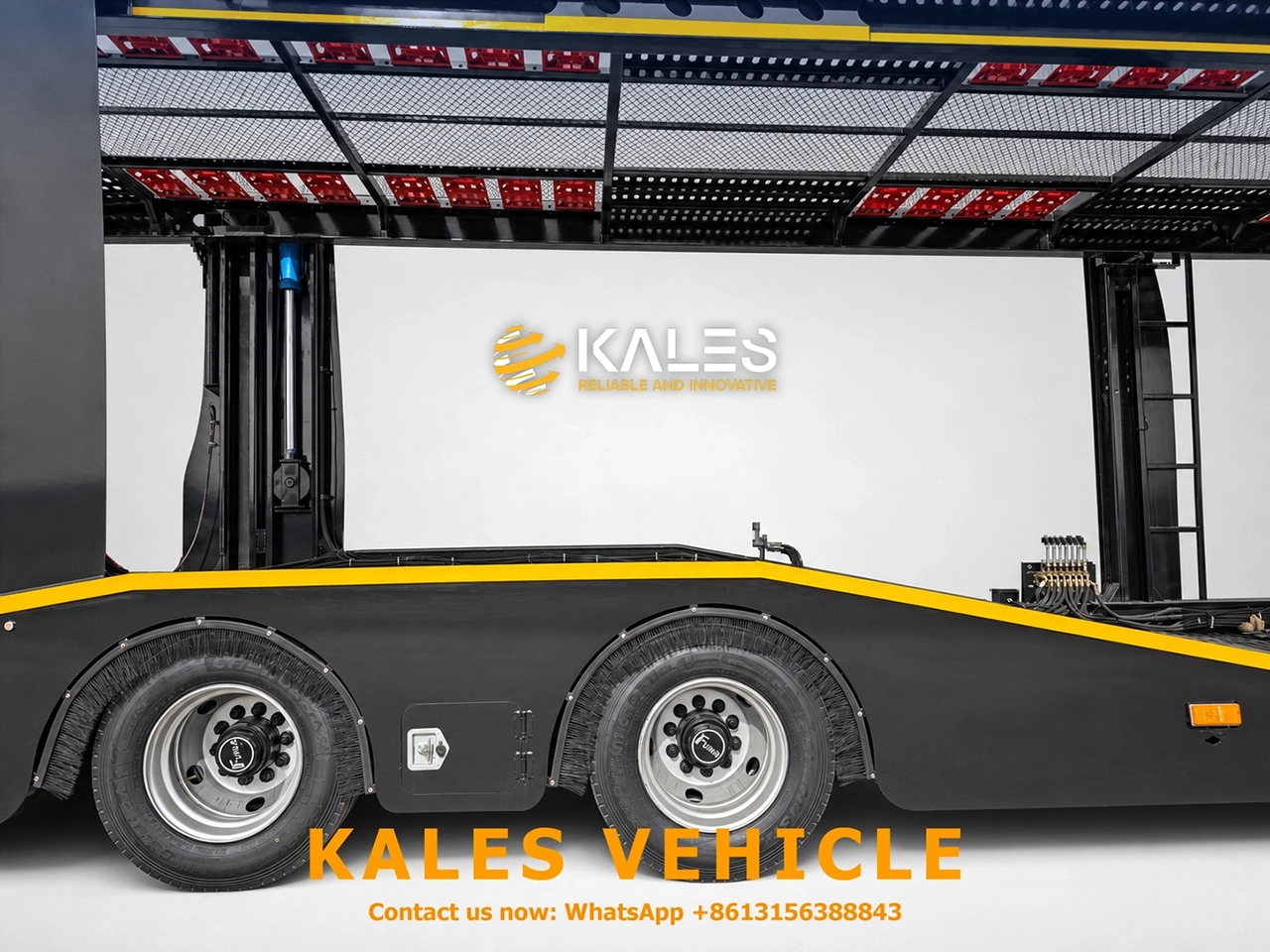
Best Fit Operating Profile
This page fits buyers whose container operation has already moved beyond the mainstream 3 axle chassis. The real driver here is not decoration. It is axle distribution, tare control, reefer-friendly running gear, and a higher-spec export platform for port, bonded, and long-haul container work. It is strongest where a lighter 4 axle chassis makes more sense than a cheaper but more concentrated 3 axle frame.
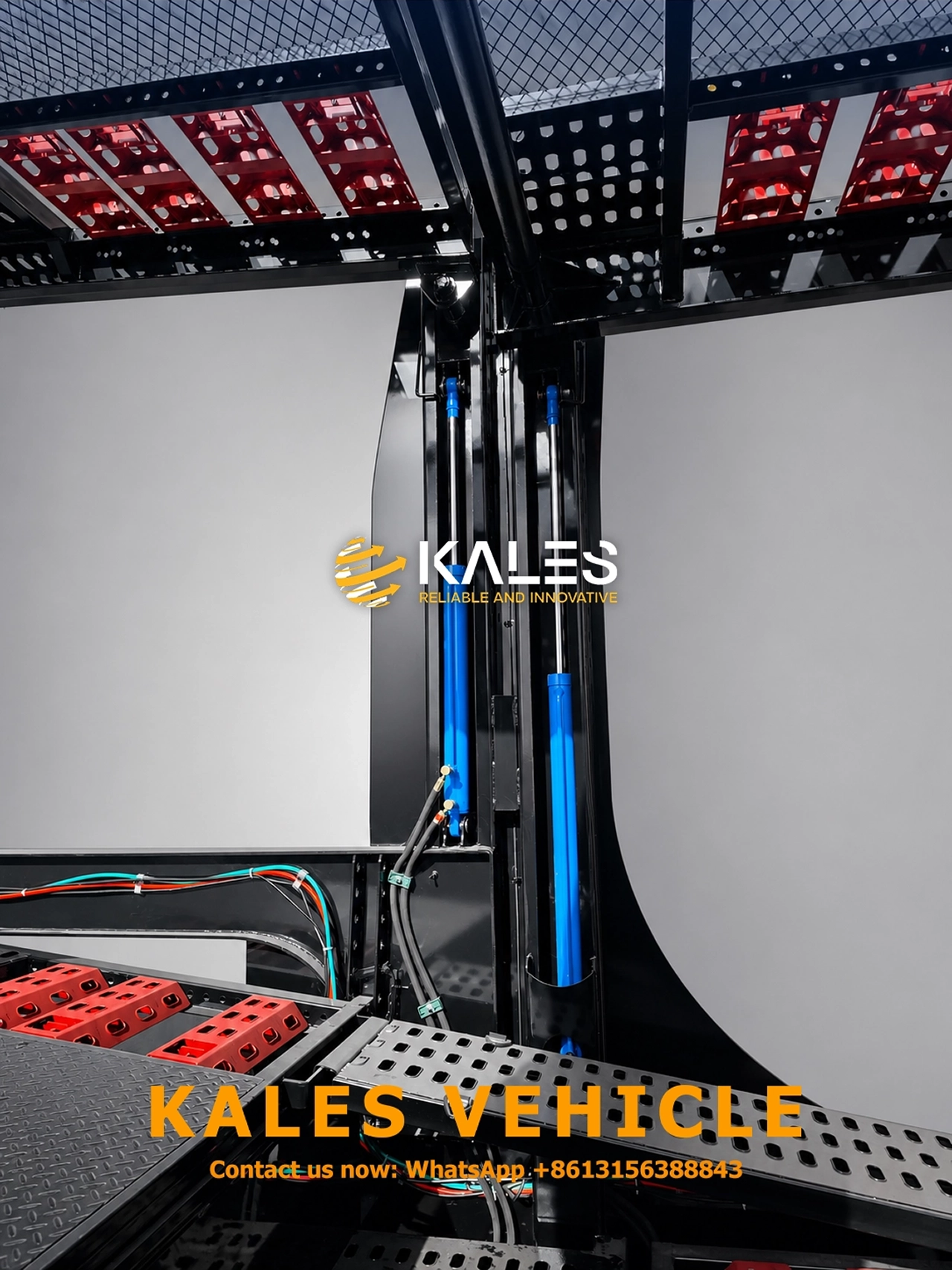
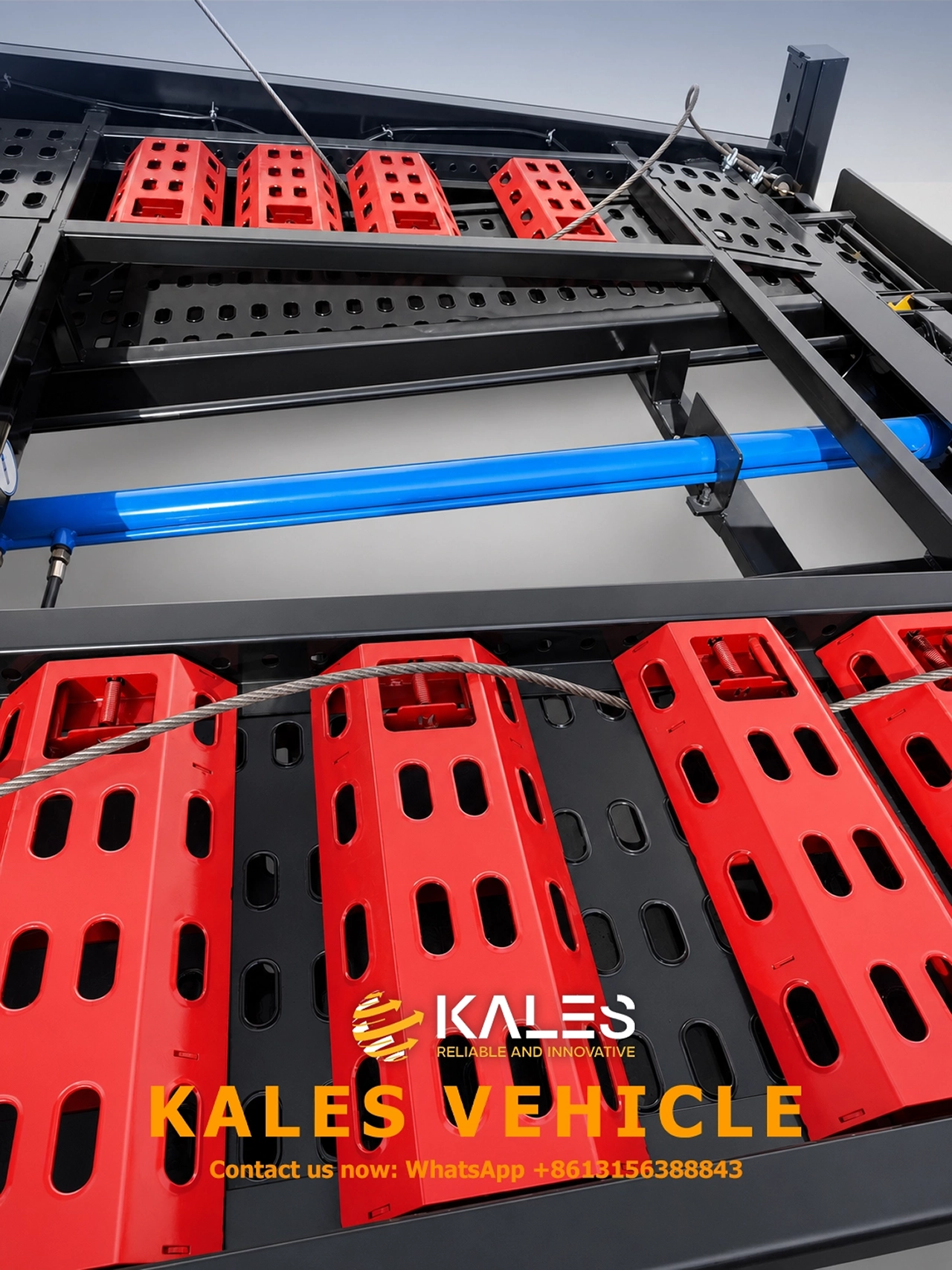
Best for
40ft container and reefer box transport on regulated trunk corridors
Fleet operators who want lift axles, disc brakes, and Euro-style running gear on a container chassis
Markets where 4 axles improve legal axle-load compliance or operational flexibility
Buyers who want a lighter export-oriented 4 axle chassis instead of a heavier conventional frame
Not ideal for
Mainstream port shuttle fleets that only need a standard 3 axle 40ft chassis
Open-deck freight that should move on flatbeds instead of a skeletal frame
Buyers whose routes do not justify air suspension, disc brakes, or lift-axle complexity
General cargo programs where a dropside or curtainsider body is the real answer
How This 4-Axle Skeleton Page Differs From Nearby Logistics Pages
Buyer situation
Best-fit Kales page
Why
Mainstream 20ft and 40ft container haulage without extra axle complexity
40ft container chassis semi trailer
The standard 3 axle chassis remains the more rational default when the route does not require 4 axles
40ft container work with lighter tare and broader axle-load distribution
This 4 axle 12m skeleton trailer
The page owns lightweight 4 axle skeleton intent with higher-spec running gear
Open-deck 40ft or 45ft freight rather than pure container chassis work
Tri-axle 45ft flatbed semi trailer
A flatbed is more suitable when the cargo is not consistently moving as an ISO container
Open platform freight without container-chassis specialization
40ft flatbed semi trailer
A flatbed is simpler when the fleet needs deck utility instead of skeletal container logic
Engineering and Serviceability Details
4 axles here are about compliance and route fit, not just headline tonnage
Buyers often misread this page as simply a heavier chassis. That misses the real reason it exists. The 4 axle layout is primarily about better load distribution, route legality, and axle-pressure management on container work that has already outgrown a mainstream 3 axle format.
Lightweight structure protects commercial payload
This page uses a lighter-weight export logic because extra axles alone do not help if tare weight climbs too far. T700 high-strength steel, aluminum-alloy wheel logic, and a more optimized 12m frame help fleets keep payload efficiency while gaining the route benefits of a 4 axle chassis.
Lift axles improve empty-leg economics
The represented front lift-axle setup matters because container work often includes empty returns, depot transfers, or lighter repositioning moves. Being able to lift the front axle set reduces tire wear, drag, and scrub that would otherwise make a 4 axle chassis unnecessarily expensive to run.
Disc brakes and air ride signal a higher-spec export platform
This page is not positioned as a rough, low-spec yard chassis. Disc brakes, WABCO control logic, and air suspension make more sense for buyers running reefer containers, higher-speed trunk routes, and markets where better braking consistency and smoother road behavior are commercially useful.
How is the final quotation confirmed?
KALES confirms the quotation after reviewing the required specification, quantity, destination, and delivery terms. Send the operating requirements for an accurate proposal.
Factory Images and Inspection Views
Side profile of the 4 axle lightweight chassis built around a Euro-style export container program.Reefer-container transport view showing the page’s fit for higher-spec cold-chain chassis work.Full side view of the air-ride 4 axle configuration.Twist-lock detail for secure ISO container engagement.Lightweight wheel and rim logic that supports tare control.Lift-axle control hardware for empty-leg operating efficiency.
Frequently Asked Questions
When should I choose this page instead of the standard 3 axle container chassis?
Choose this page when legal axle-load distribution, route compliance, reefer-road behavior, or higher-spec export requirements already justify a 4 axle chassis. If your work is still mainstream port and inland container duty, the 3 axle chassis usually remains the more rational answer.
Why do the front lift axles matter?
They help reduce tire wear and rolling resistance on empty returns or lighter repositioning moves. That makes a 4 axle chassis more commercially efficient in real fleet use.
Is this page mainly for reefer containers?
No. It can work for standard ISO container haulage as well. Reefer use simply highlights why air ride, disc brakes, and a higher-spec running package can matter on this type of 4 axle chassis.
What should I send before requesting a quote?
Send your container mix, route country, legal axle-load requirement, whether reefer boxes are part of the program, preferred axle brand, and whether you need front lift axles, air ride, or disc brakes on the final build.
Request Drawing and Quote
If you are comparing a 4 axle 12m container skeleton semi-trailer for regulated container routes, reefer box transport, or higher-compliance export work, send your container mix, route country, target payload, and axle-load requirement. Kales can then match the lock pattern, lift-axle package, brake setup, and reinforcement level to the real route.