Product Category: Trailers

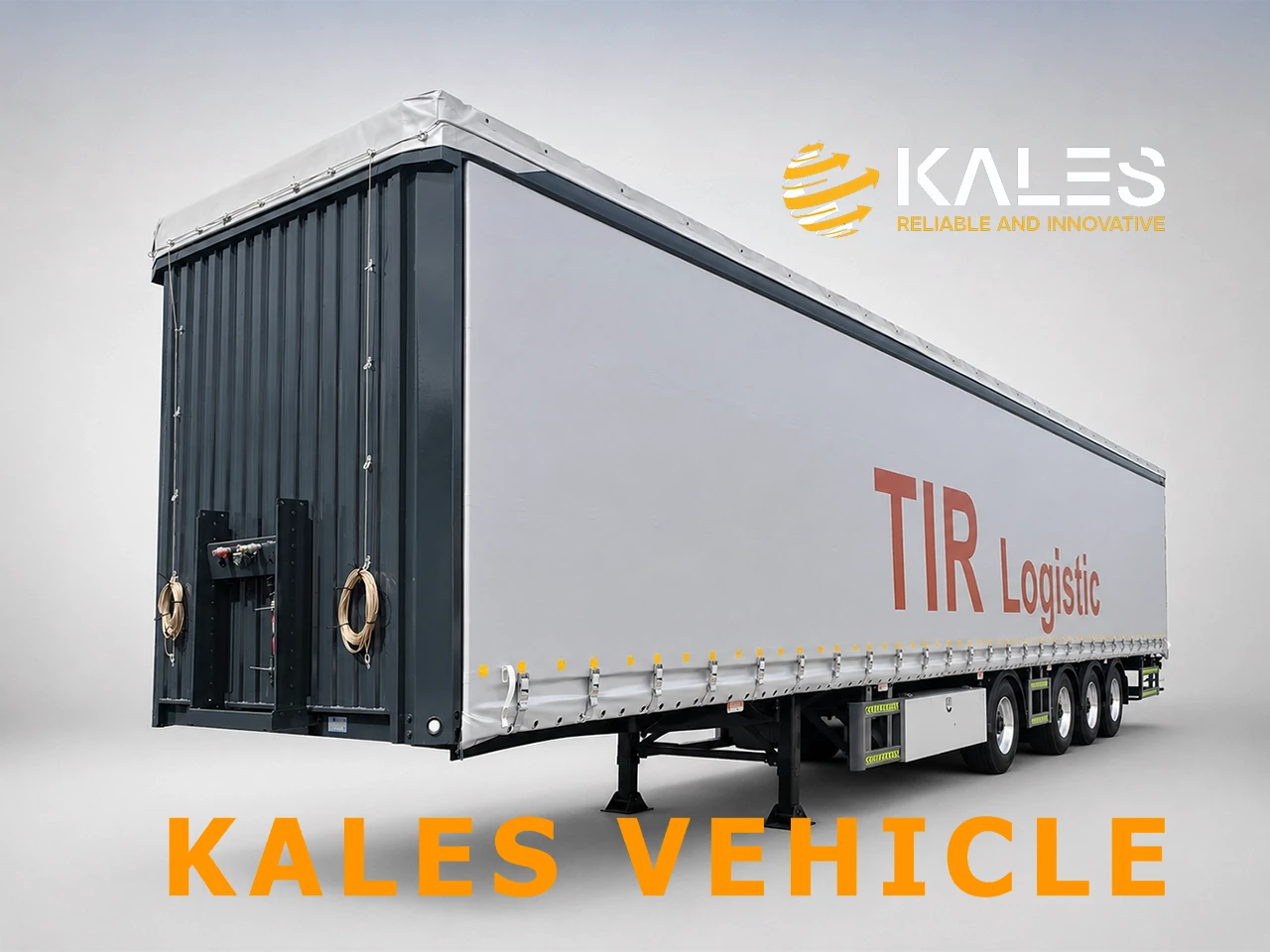
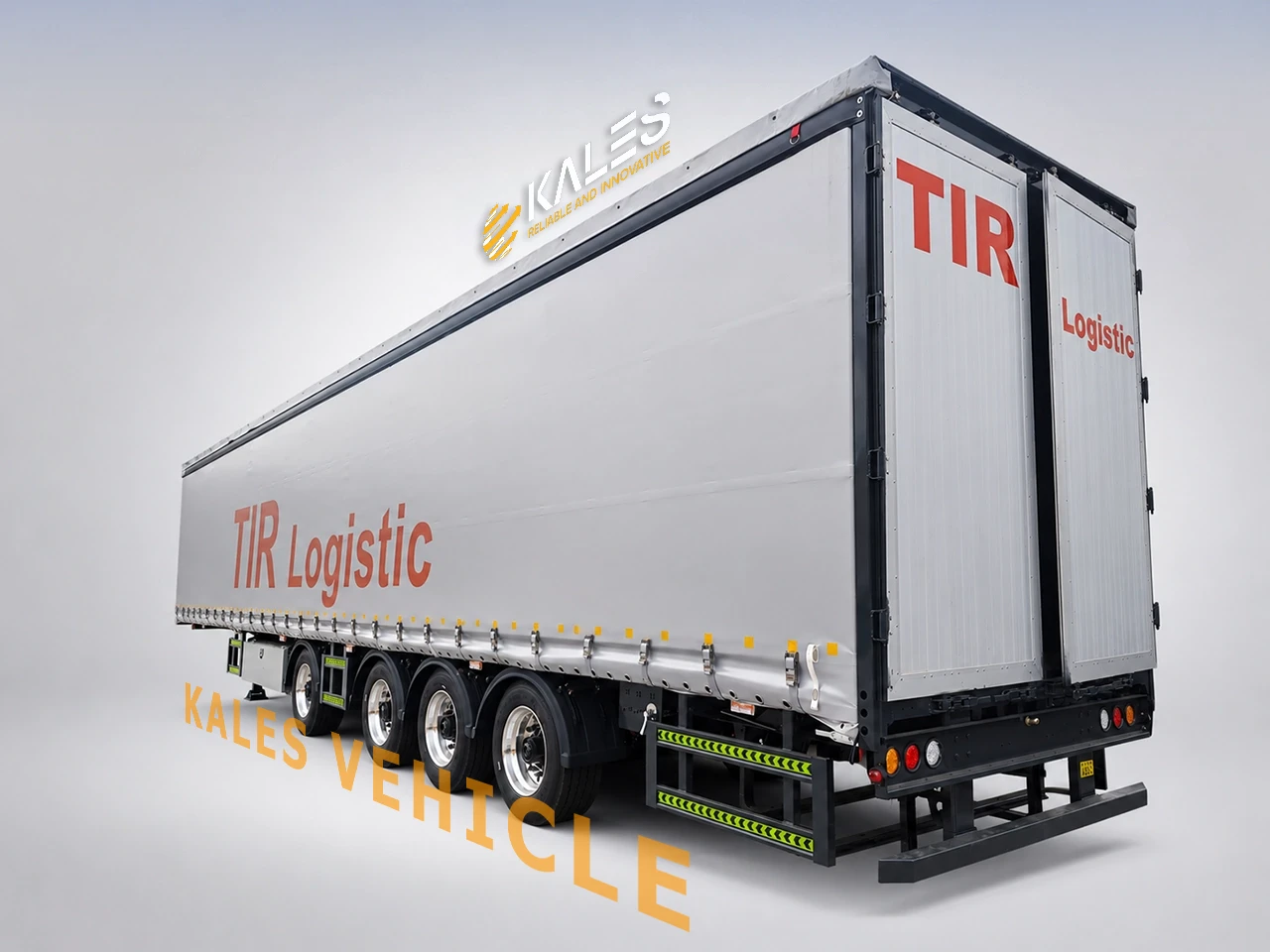
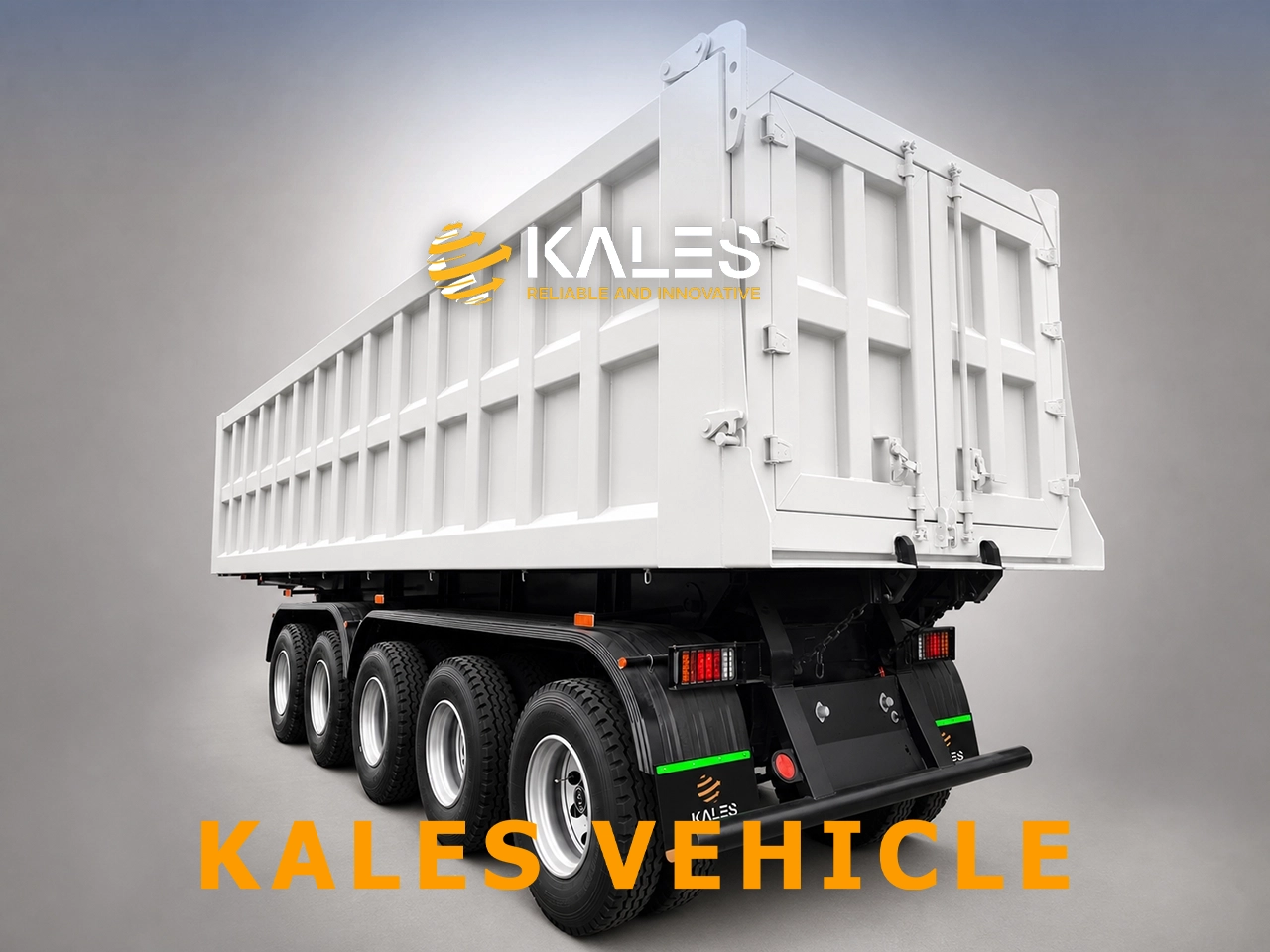
Reliable Transport Solutions Direct from the Factory At Kales Vehicle, we engineer semi trailers built to withstand the toughest road conditions in Africa, Latin America, and Central Asia. As a leading semi trailer manufacturer in China, we combine advanced welding technology with high-strength steel to deliver fleets that last longer and perform better.

Our Diverse Product Range Whether you are transporting ISO containers, bulk cargo, or heavy machinery, our comprehensive catalog covers every logistical need:

  • Container & Bulk Transport: Optimized solutions including Flatbed, Skeleton, and Fence semi trailers for versatile cargo handling.

  • Heavy Haulage: Robust Lowbed trailers designed for construction machinery and oversized loads.

  • Tankers: Specialized Fuel and Cement Tankers ensuring safety and efficiency.

Why Choose Kales Vehicle? We offer factory-direct pricing without compromising on quality. All Kales trailers are compatible with major truck heads (Sinotruk, Shacman) and meet strict ISO standards. Browse our categories below to find the perfect specification for your business.

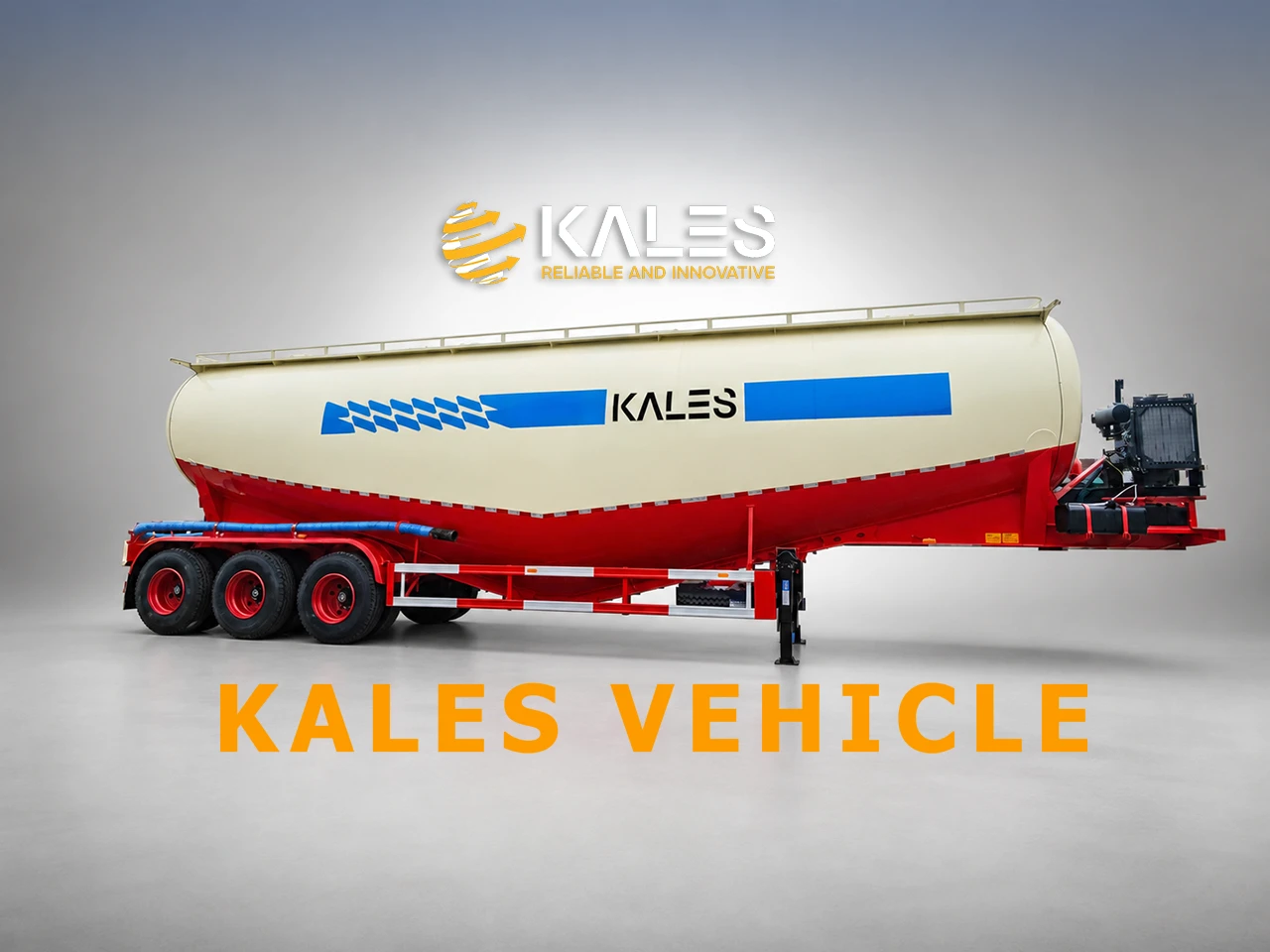
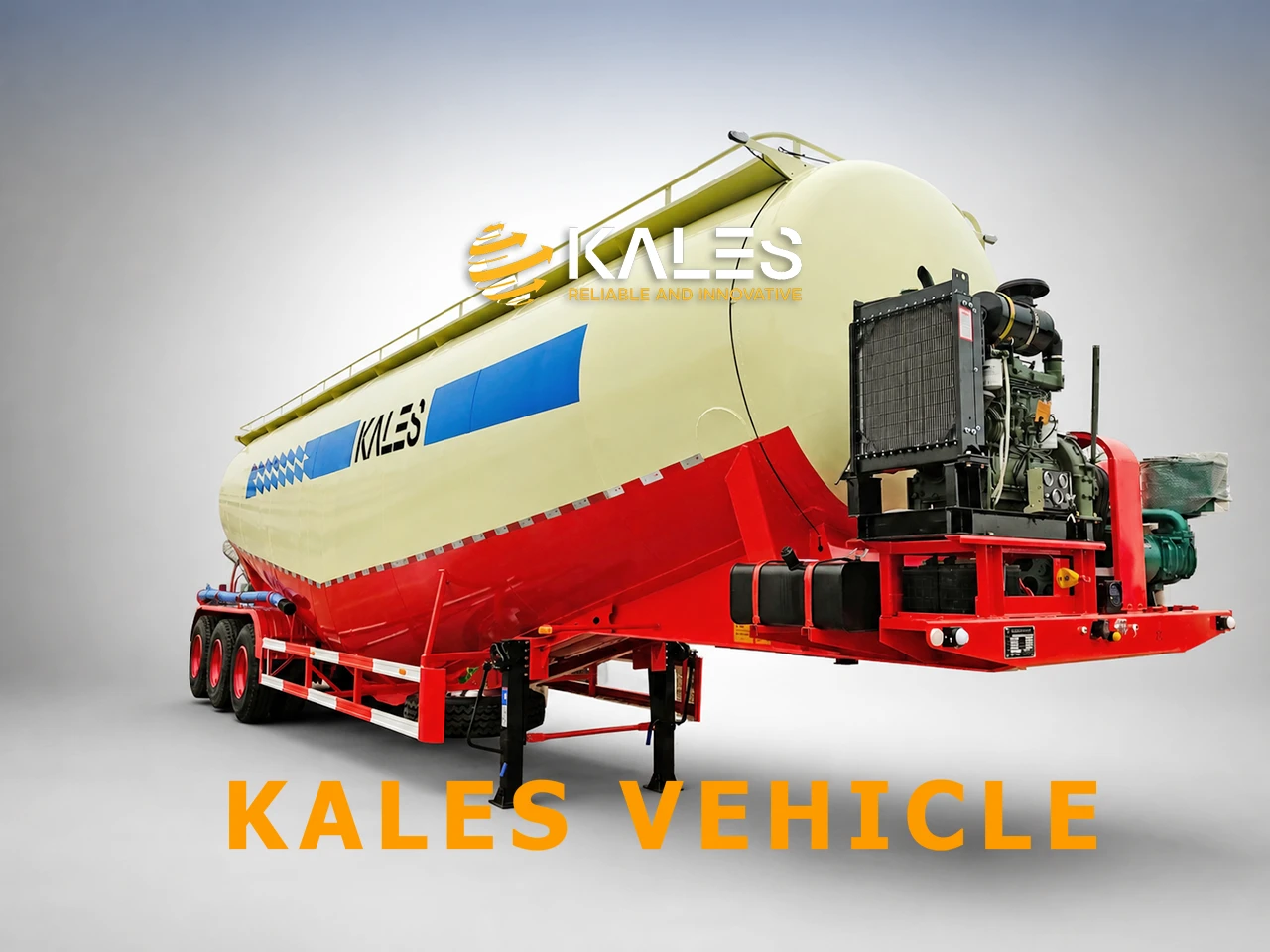
  • Kales 60 CBM / 63 CBM Bulk Powder Tanker Trailer for Africa

    Kales 60 CBM / 63 CBM Bulk Powder Tanker Trailer for Africa

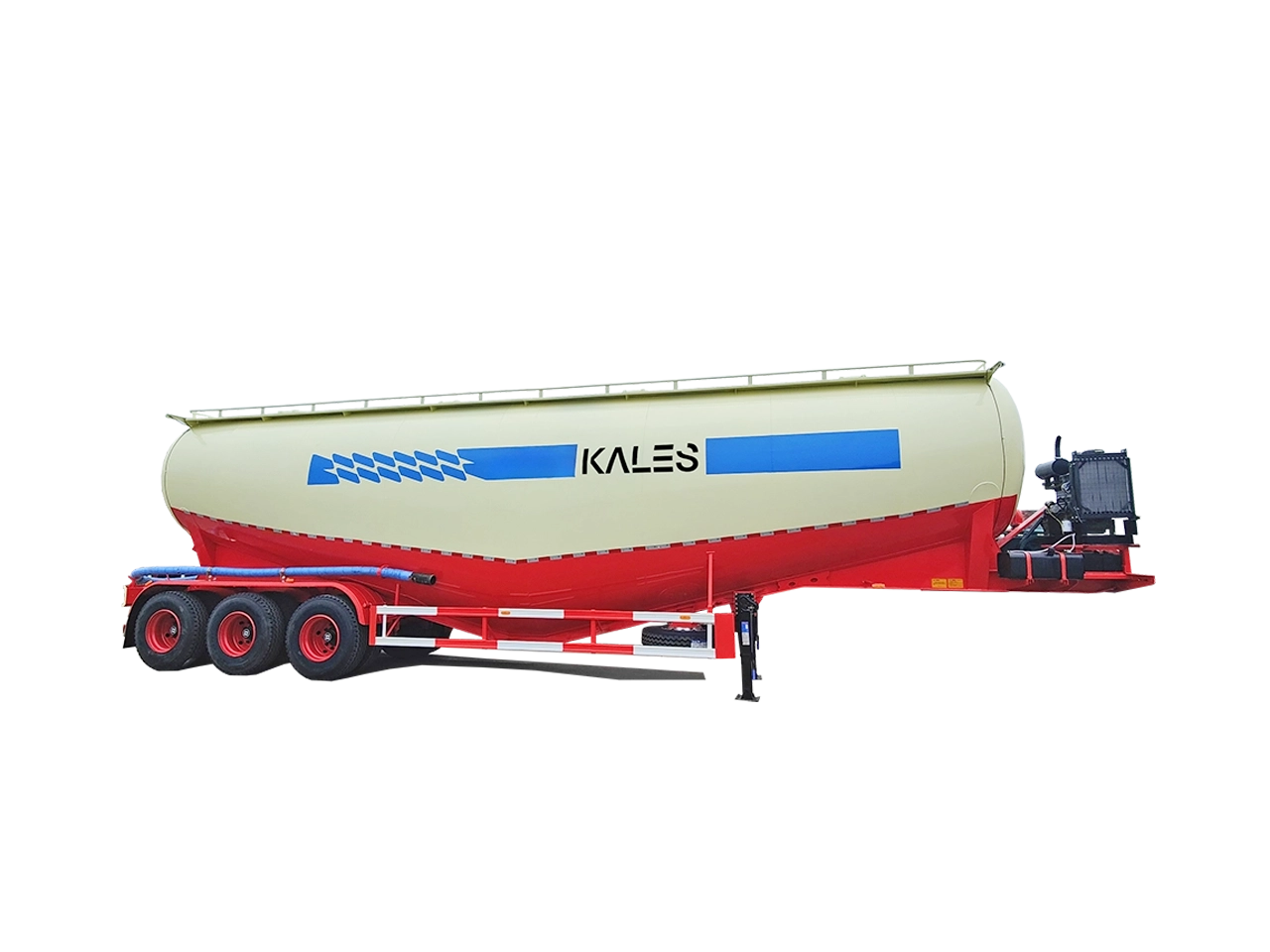
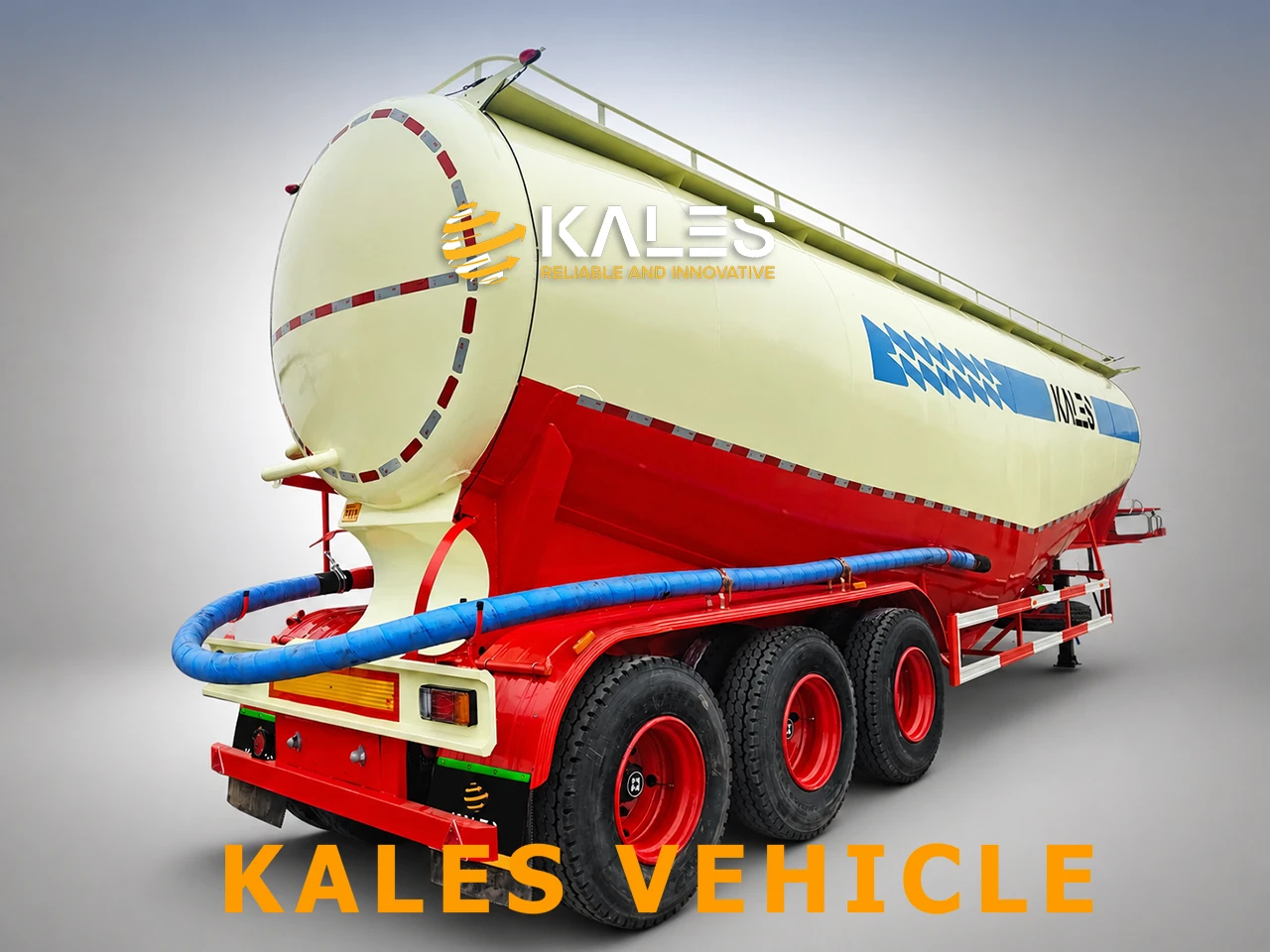
    Kales heavy-duty 60 CBM 63m3 bulk powder tanker trailer with streamlined tank and optimized discharge pipes
    Kales 60 CBM / 63 CBM pneumatic bulk powder tanker trailer for dry-bulk logistics and silo-linked unloading.

    Bulk Powder Tanker Procurement Guide · Published: August 10, 2026 · Updated: August 10, 2026 · By Kales Vehicle Engineering Team · Scope: African dry-bulk logistics, industrial powder transport, plant-to-silo delivery, and export configuration enquiries

    Kales 60 CBM / 63 CBM bulk powder tanker trailer: this tri-axle pneumatic dry-bulk trailer is intended for fleets moving compatible low-density powders between plants, terminals, construction sites, power projects, and receiving silos. The reference configuration combines a high-tensile steel tank, mechanical leaf-spring running gear, and an independent Weichai engine with a Bohai air compressor unit.

    The 60 m3-class tank is a volume choice, not a universal payload promise. The final load depends on cargo density, tank fill level, axle limits, tractor combination, route conditions, and the regulations of the destination country.

    Quick answer: choose this 60 CBM bulk powder tanker trailer when your fleet needs a high-volume pneumatic dry-bulk configuration for compatible coal powder, fly ash, hydrated lime, bentonite, dry mortar, or similar light mineral powders. The represented build uses three heavy-duty axles, a 60 CBM effective / 63 m3 nominal tank class, a Weichai 4205 diesel engine, and a Bohai 14 m3/min twin-cylinder compressor reference package. For dense cement or higher-density minerals, confirm the legal payload and compare a smaller heavy-duty cement tanker before ordering.

    Technical Snapshot

    The following values describe the represented reference configuration. Kales confirms the final specification against the cargo, tractor, route, destination, and agreed technical requirements.

    Product type Kales KLS9400GFL tri-axle pneumatic dry bulk tanker semi-trailer
    Tank capacity 60 CBM effective volume / 63 m3 nominal volume class
    Tank filling reference Approximately 0.95 filling coefficient; final loading plan depends on cargo density and operating procedure
    Gross vehicle weight 40,000-50,000 kg configurable reference range
    Tare weight 11,860 kg +/- 2% reference value before final equipment confirmation
    Payload range Approximately 28,140-38,000 kg reference range; legal payload must be calculated from the final build, material density, and axle limits
    Overall dimensions Approximately 13,000 x 2,500 x 4,000 mm
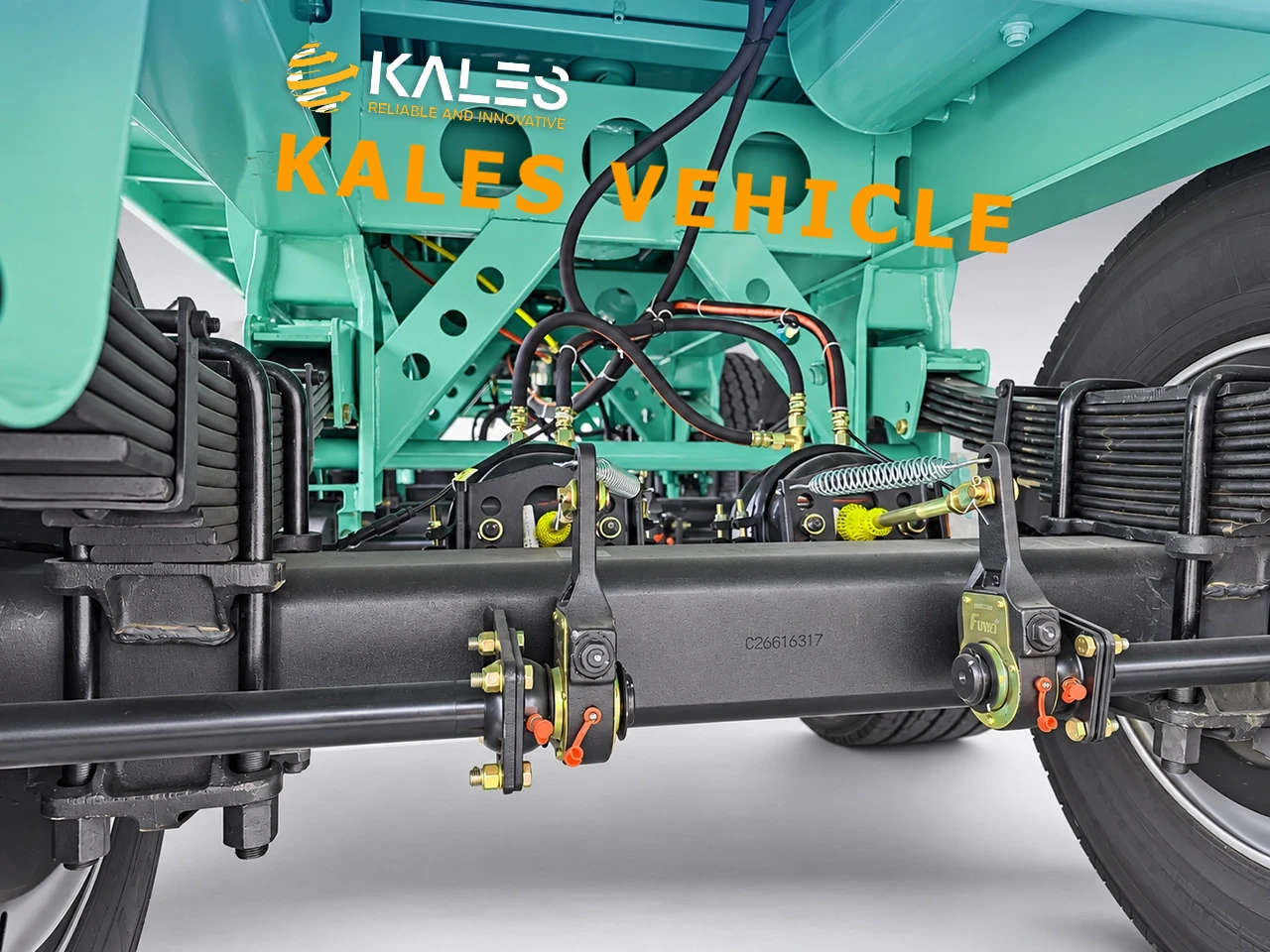
    Axles 3 x 13-ton or 16-ton FUWA, BPW, or Kales axles according to the selected configuration
    Suspension Heavy-duty mechanical leaf spring suspension with reinforced equalizer components in the reference build
    Tyres 13R22.5 18PR tubeless tyres, with 12 road tyres plus spare-tyre provision in the reference arrangement
    Kingpin 2 inch (50#) or 3.5 inch (90#) JOST-type kingpin options
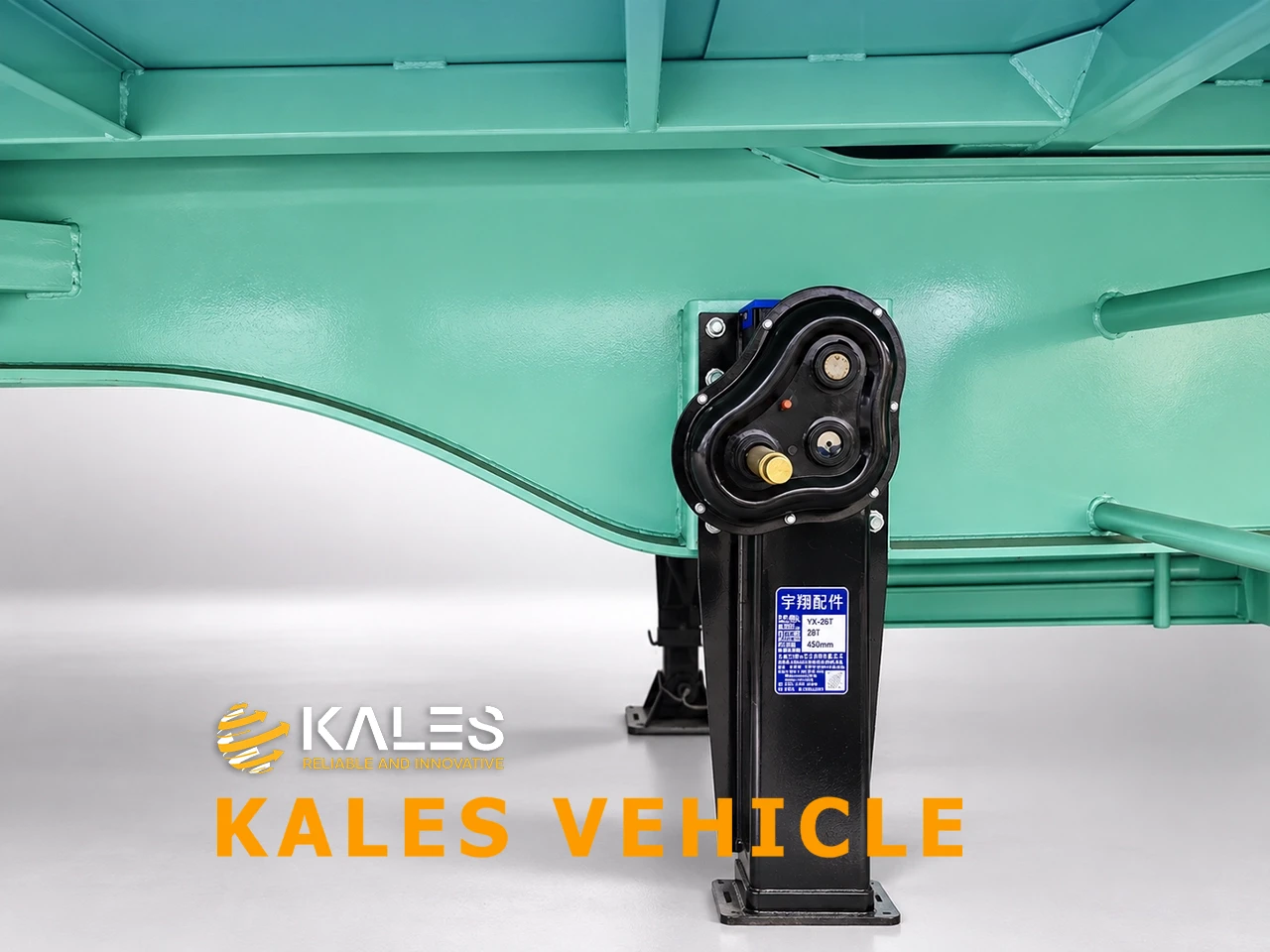
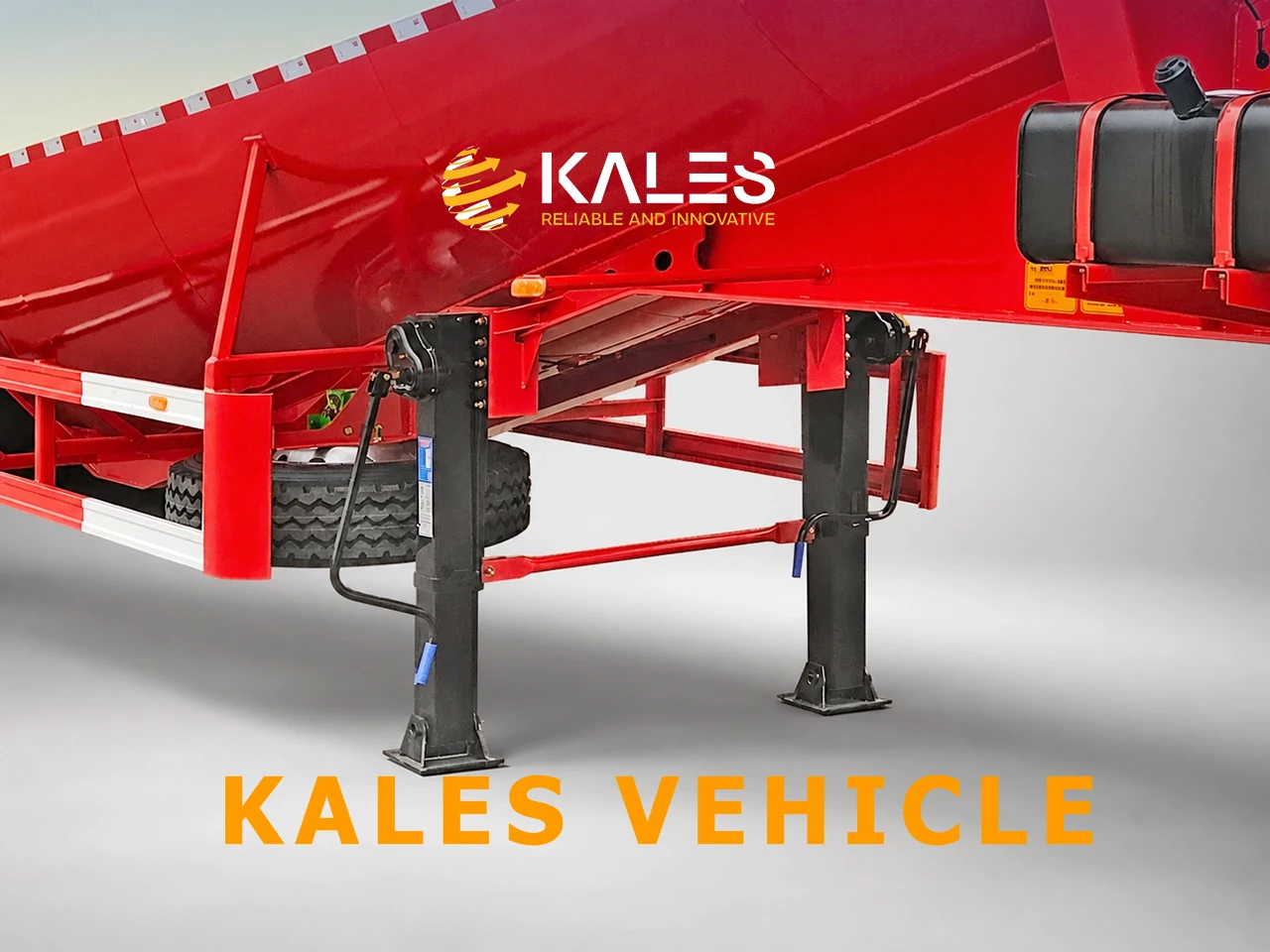
    Landing gear JOST or FUWA 28-ton two-speed manual landing gear options
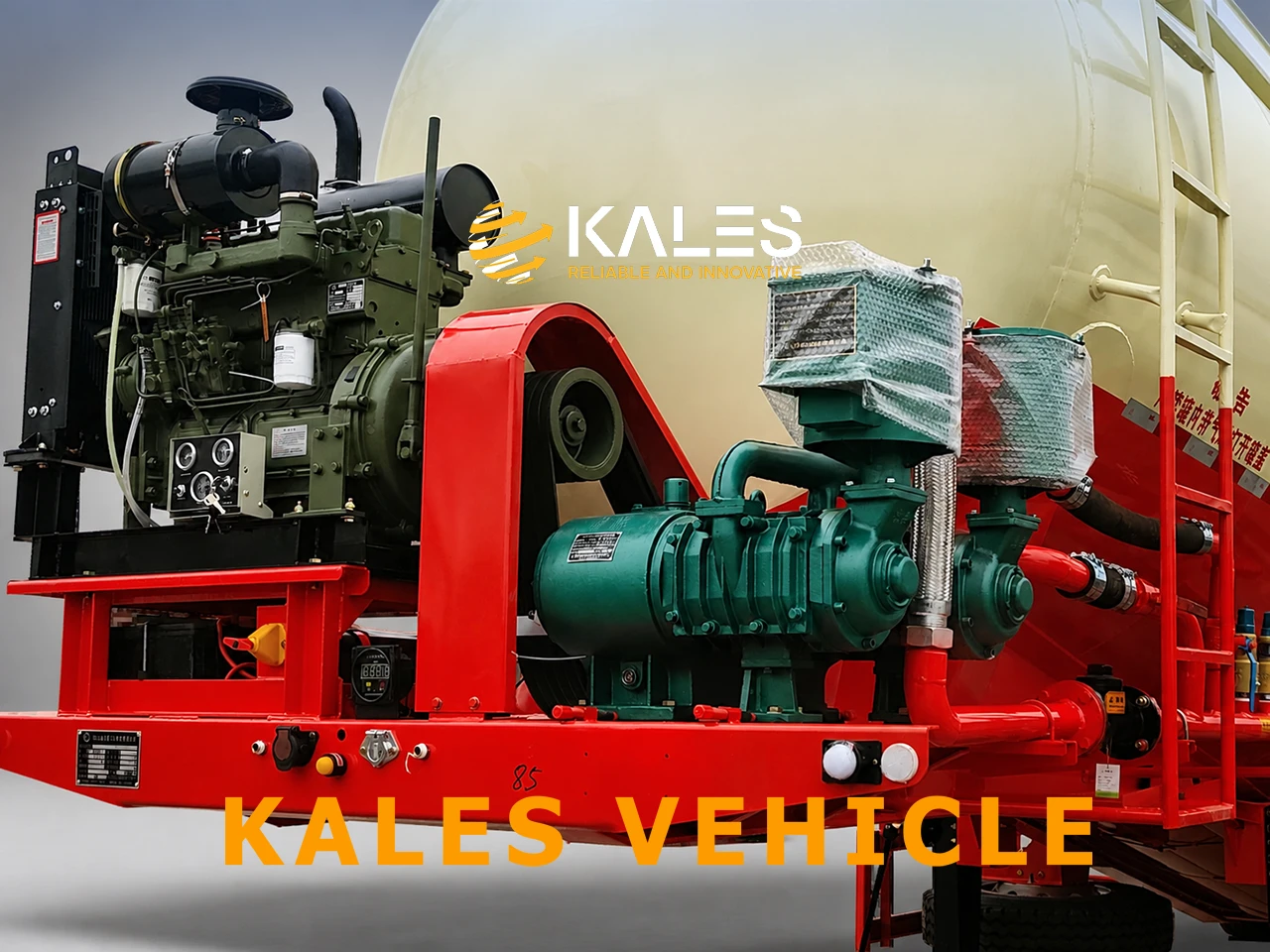
    Auxiliary engine Weichai 4205 four-cylinder diesel engine reference package
    Air compressor Bohai 14 m3/min twin-cylinder compressor reference package; other compressor options can be reviewed
    Working pressure Approximately 0.20 MPa reference working pressure; pressure and testing requirements follow the final technical agreement
    Fluidization layout W-shape double-compartment fluidized-bed arrangement with approximately 19 degree incline reference
    Discharge reference Approximately 1.50 m3/min reference discharge rate under suitable cargo, pressure, hose, silo, and operating conditions
    Discharge reach reference Vertical 22-25 m and horizontal at least 5 m reference range; confirm against the receiving silo and piping layout
    Configuration enquiry Send the cargo, target payload, route, tractor, destination, and unloading conditions for detailed information and pricing

    Best-Fit Operating Profile

    This dry bulk tanker is best suited to fleet operators, industrial logistics teams, power projects, mining suppliers, and infrastructure contractors that load compatible powders into a pneumatic tanker and unload into a receiving silo or enclosed transfer system.

    Suitable cargo discussions

    • Coal powder and dry fly ash where the density and cargo classification are confirmed
    • Hydrated lime, bentonite, dry mortar, and light mineral powders compatible with pneumatic conveying
    • Cross-border and regional dry-bulk routes where a three-axle platform is appropriate for the legal axle plan
    • Plant-to-silo, terminal-to-project, and construction-material delivery programs

    When to choose a different size

    Dense cement and higher-density minerals can fill the legal payload before the tank volume is used. If the operation regularly handles dense cement, confirm the cargo density and compare the related 35 CBM or 40 CBM cement tanker options. The larger tank should not be treated as a reason to exceed legal axle or gross-mass limits.

    Why Buyers Consider This 60 CBM Powder Tanker

    • High-volume dry-bulk platform: the 60 CBM effective / 63 m3 nominal class gives fleets a larger powder-tank option than mainstream 35-40 CBM cement tankers when cargo density and route law allow it.
    • Independent unloading package: the Weichai 4205 engine and Bohai compressor reference unit are intended for sites where the receiving operation cannot rely on a permanent external air source.
    • Three-axle running gear: FUWA, BPW, or Kales axle options allow the final running gear to be matched to payload, route, workshop capability, and local parts planning.
    • Practical service layout: the gallery shows the axle and leaf-spring area, landing gear, compressor package, gooseneck, rear lights, and underrun protection so buyers can review the represented equipment before requesting a quotation.
    • Clear configuration boundaries: cargo density, legal payload, pressure, unloading height, tractor matching, and destination requirements remain explicit parts of the final specification review.

    Engineering and Serviceability Details

    Tank and fluidization arrangement

    The reference tank uses a T700L high-tensile steel structure and a W-shape double-compartment fluidized-bed arrangement. The fluidization bed is the part that receives compressed air and helps compatible powders move toward the discharge outlet. Material moisture, particle condition, pressure, hose length, elevation, receiving-silo back pressure, and operator procedure all affect the result.

    Engine and compressor package

    The independent Weichai 4205 diesel engine and Bohai 14 m3/min twin-cylinder compressor are shown as a reference unloading package. A different engine, compressor capacity, or tractor-driven arrangement can be reviewed when the site has a verified air source or when the buyer has a specific maintenance and parts plan.

    Axles, suspension, and tyre decisions

    Three axles with mechanical leaf springs provide a conventional running-gear direction for buyers comparing durability, maintenance access, and route suitability. The final axle rating, spring pack, tyre load index, brake equipment, kingpin, and landing gear must be matched to the tractor, legal axle plan, road conditions, and replacement-part availability.

    Safety and operating checks

    Pressure relief, grounding, lighting, rear underrun protection, hose routing, manhole access, and operator walkways should be reviewed against the cargo classification and destination requirements. Powder properties can change the safety package, so the final operating instructions and equipment selection should be confirmed before production.

    Configuration options

    System Reference options Buyer decision
    Compressor Bohai, Tiancheng, or Fuda 10-14 m3/min range Match air delivery to cargo, hose, silo, discharge height, and maintenance plan
    Axles FUWA, BPW, SAF, or Kales subject to final quotation Choose against legal axle load, workshop capability, and parts access
    Suspension Mechanical leaf spring or air suspension with front lift where available Compare rough-road serviceability, cargo protection, tyre wear, and route quality
    Manholes Aluminium alloy quick-opening or pressure-rated steel cover options Confirm sealing, access, material compatibility, and operating procedure
    PTO arrangement Tractor PTO-driven compressor in place of an auxiliary engine where suitable Check tractor PTO capability, site workflow, and the weight/configuration effect

    How is the final quotation confirmed?

    Kales confirms the detailed configuration and pricing after reviewing the powder type and density, target payload, receiving silo, unloading height and distance, tractor model, axle and suspension preference, destination, order quantity, and delivery terms.

    Inspection Views and Component Details

    The following images are the supplied product and component views. Their existing WordPress media alt text has been preserved for accessibility and image search context.

    Rear 45 degree angle view of Kales dry bulk tanker trailer with rear ladder and discharge valve
    Rear three-quarter view showing the ladder, rear discharge area, and tank stance.
    Side view of Kales 60 CBM powder trailer showing side access ladders warning lights and side guardrails
    Side view showing the tank length, access ladders, warning lights, and side guards.
    Front 45 degree view of Kales 60CBM pneumatic powder tanker showing discharge piping and dual safety relief valves
    Front three-quarter view showing the discharge piping and pressure-relief area.
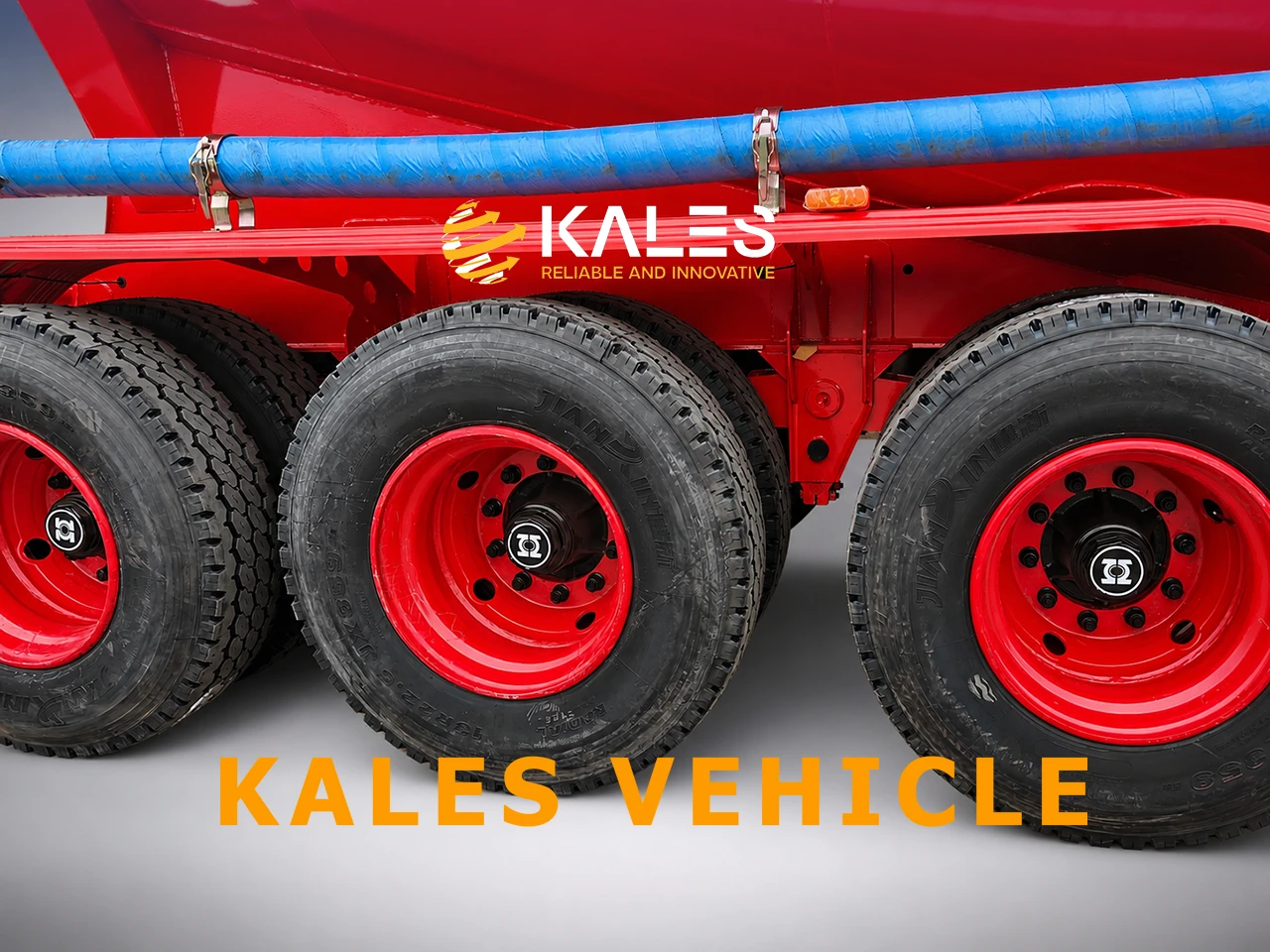
    Kales trailer showing FUWA 16 ton axle heavy duty leaf spring suspension and 13R22.5 tubeless tires
    Axle, leaf-spring suspension, and 13R22.5 tyre detail.
    Front view of Kales powder tanker trailer with reinforced gooseneck structure and LED clearance lights
    Front view of the gooseneck, coupling area, and LED clearance lights.
    Kales powder tanker trailer with heavy duty 28 ton landing gear and dual spare tire carrier
    Landing-gear and spare-tyre carrier detail for service planning.
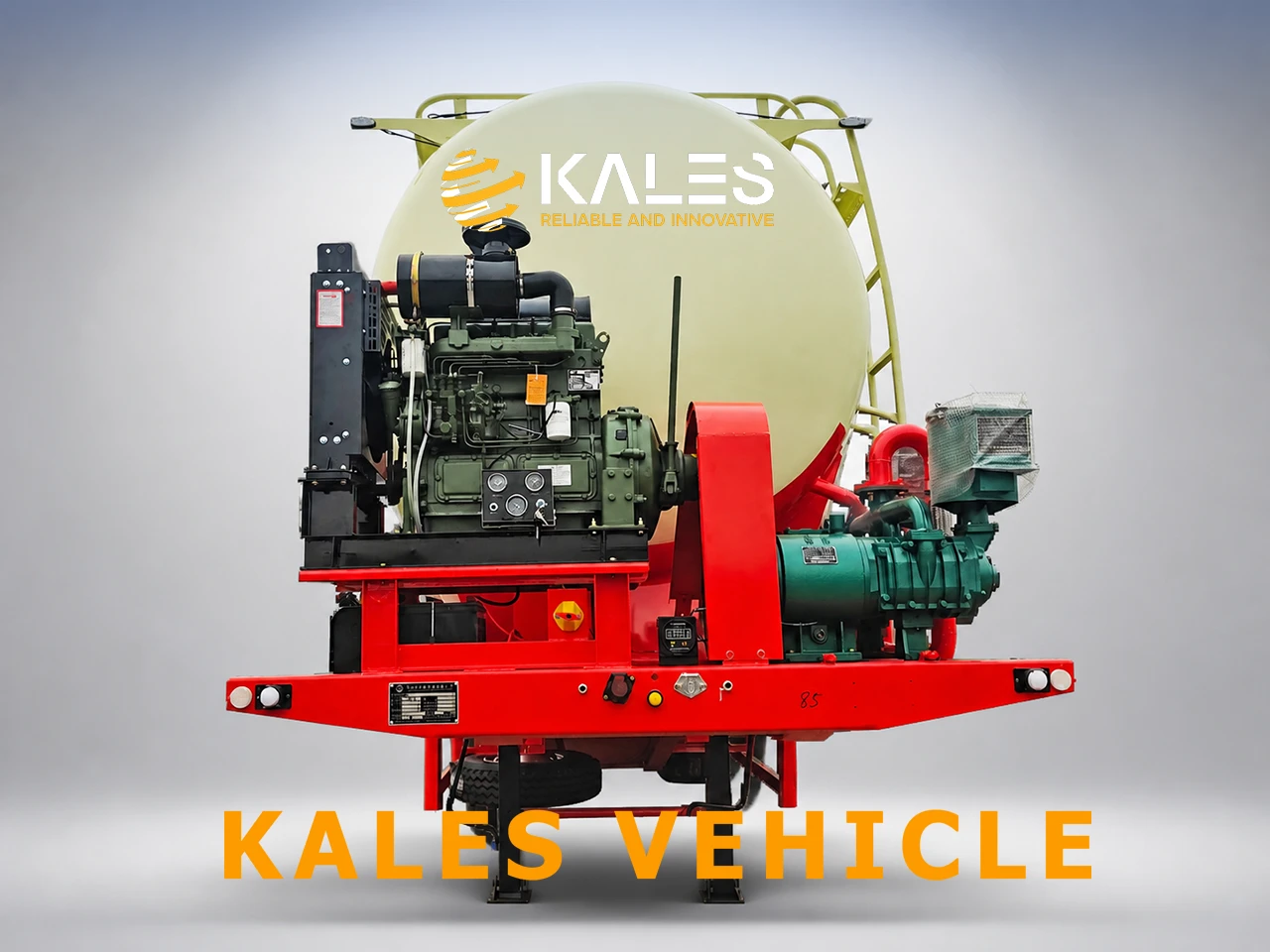
    Kales powder tanker trailer featuring Weichai 4205 diesel engine and Bohai 14m3 per min air compressor unit
    Independent engine and compressor unit for pneumatic unloading.
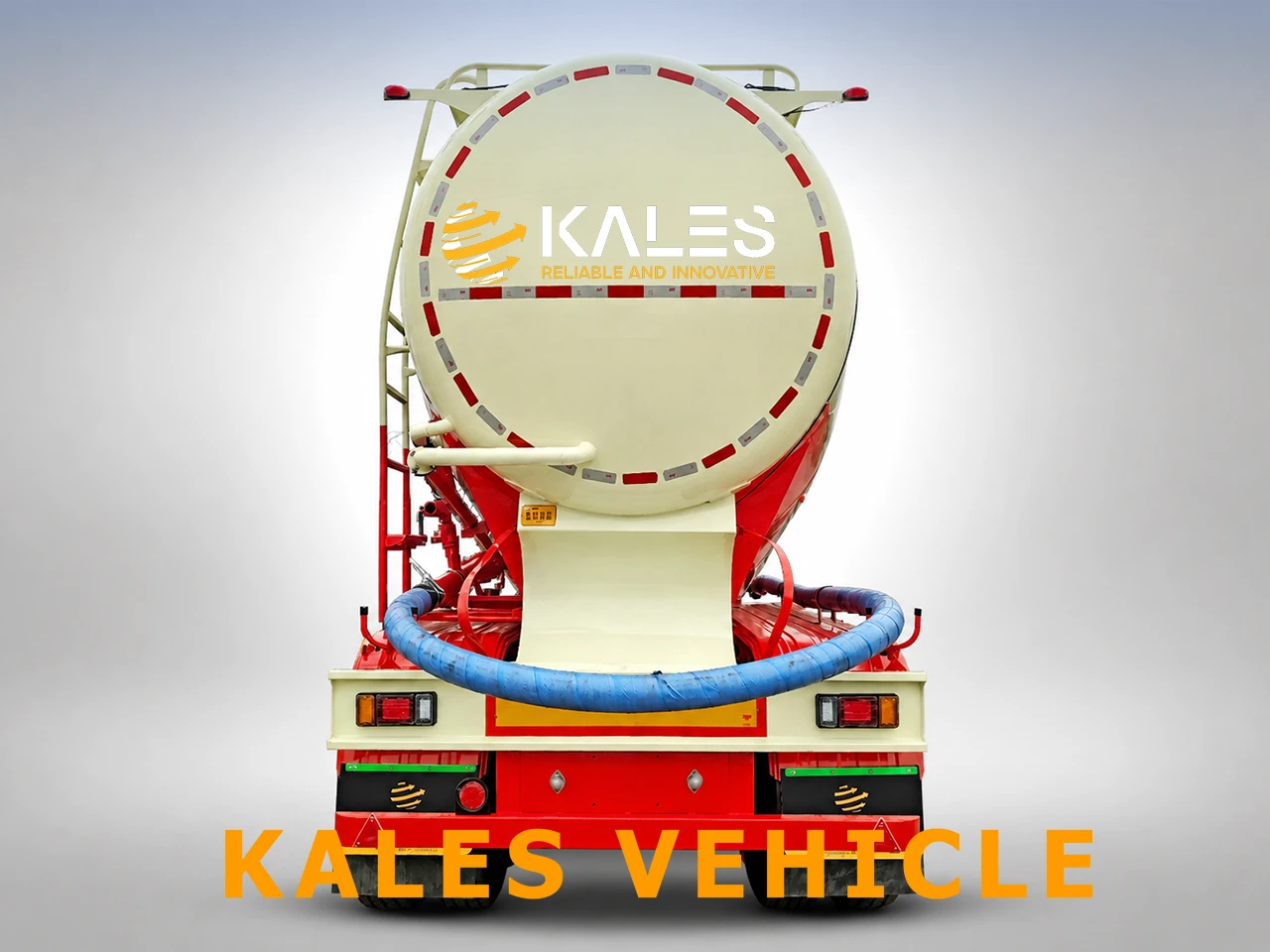
    Rear view of Kales bulk powder trailer with LED lights reflective sign and rear underrun protection device
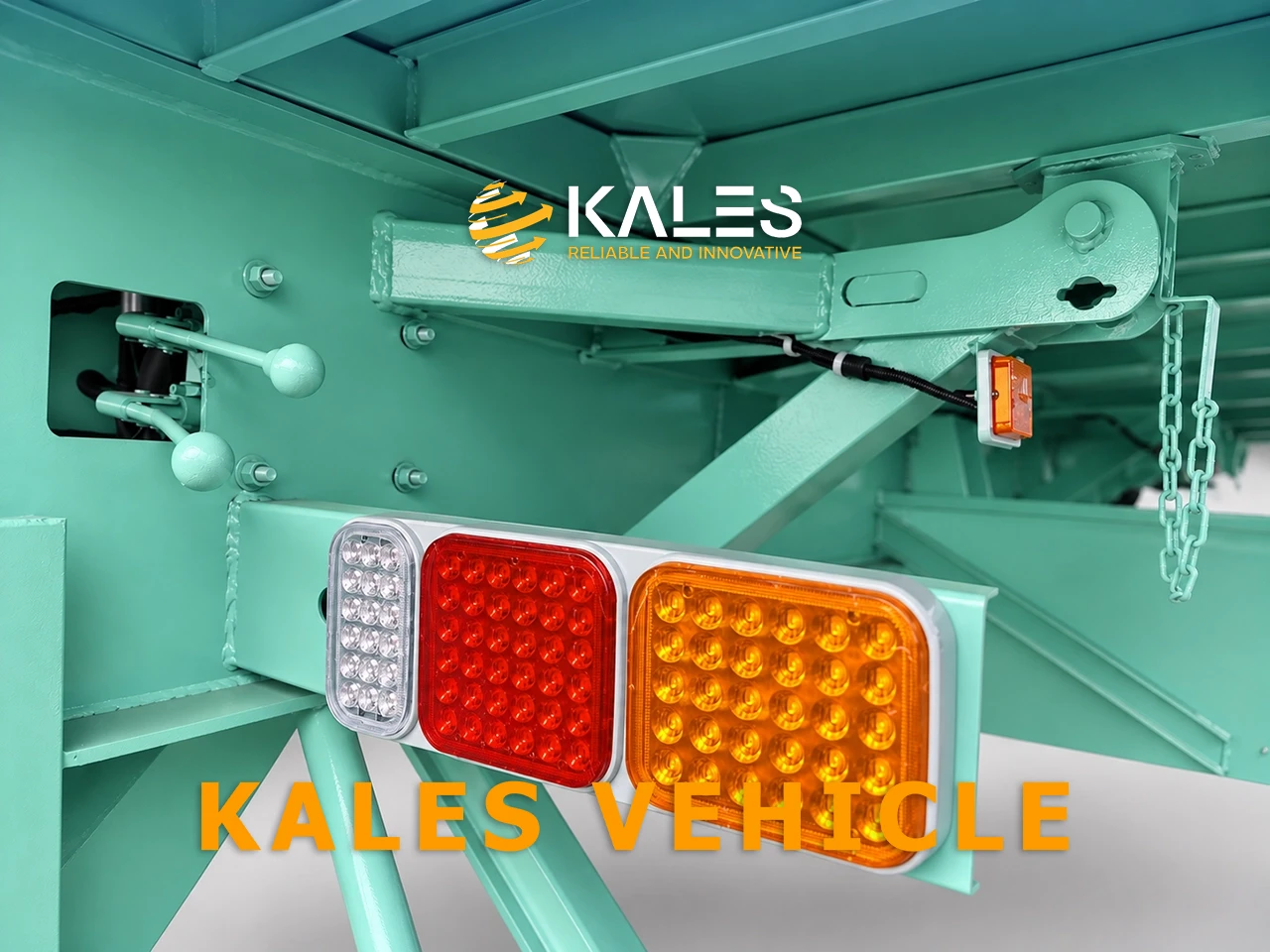
    Rear lighting, reflective marking, and underrun protection details.

    Frequently Asked Questions

    What materials can this 60 CBM powder tanker transport?

    The reference use cases include coal powder, dry fly ash, hydrated lime, bentonite, dry mortar, and light mineral powders that are compatible with pneumatic conveying. Confirm the cargo density, moisture, particle properties, and safety classification before finalizing the tank and unloading system.

    Can it carry a full 60 CBM load of cement?

    Not necessarily. Dense cement can reach the legal payload limit before the tank is full. Calculate the actual load from density, tare, axle rating, tractor combination, and destination regulations. A smaller 35-40 CBM cement tanker may be the better fit for frequent dense cement routes.

    Does the trailer include its own compressor?

    The represented configuration includes a Weichai 4205 diesel engine and Bohai 14 m3/min compressor reference package. A tractor PTO or site-air configuration can be reviewed when the receiving system and operating procedure have been checked.

    What should be confirmed for African routes?

    Confirm legal axle and gross-mass limits, road surface and gradients, tractor fifth-wheel compatibility, tyre supply, preferred axle brand, suspension service capability, destination customs requirements, and the receiving silo connection before ordering.

    How do I get detailed information and pricing?

    Send the powder type and density, target payload, unloading height and distance, silo connection, tractor model, destination, order quantity, and preferred delivery term. Kales will use those details to confirm the configuration and prepare pricing.

    Request Detailed Information and Pricing

    Tell Kales what you plan to carry, where the trailer will operate, how it will unload, and which tractor and axle configuration you prefer. The export team can then confirm the technical scope, available options, delivery terms, and price for your application.

    • Email: [email protected]
    • Request details: cargo type and density, target payload, unloading conditions, destination, tractor model, order quantity, and delivery term

    Related Kales Dry-Bulk Options

  • Kales 5 Axle Tipper Trailer | 100 Ton U-Shape Mining Dumper

    Kales 5 Axle Tipper Trailer | 100 Ton U-Shape Mining Dumper

    Kales 5 axle 100 ton U-shape tipper semi trailer for African mining haulage
    Represented 5-axle U-shape tipper semi-trailer for high-capacity mine, quarry and infrastructure haulage. Final payload, axle loads, body material and hydraulic package are confirmed on the approved order drawing.

    Heavy Mining Tipper Trailer Procurement Guide | Published: August 7, 2026 | Updated: August 7, 2026 | By Kales Vehicle Trailer Engineering Team | Reviewed by Kales Export Sales Engineering | Market focus: African open-pit mining, quarry aggregate, mine-to-plant bulk transport and private haul roads

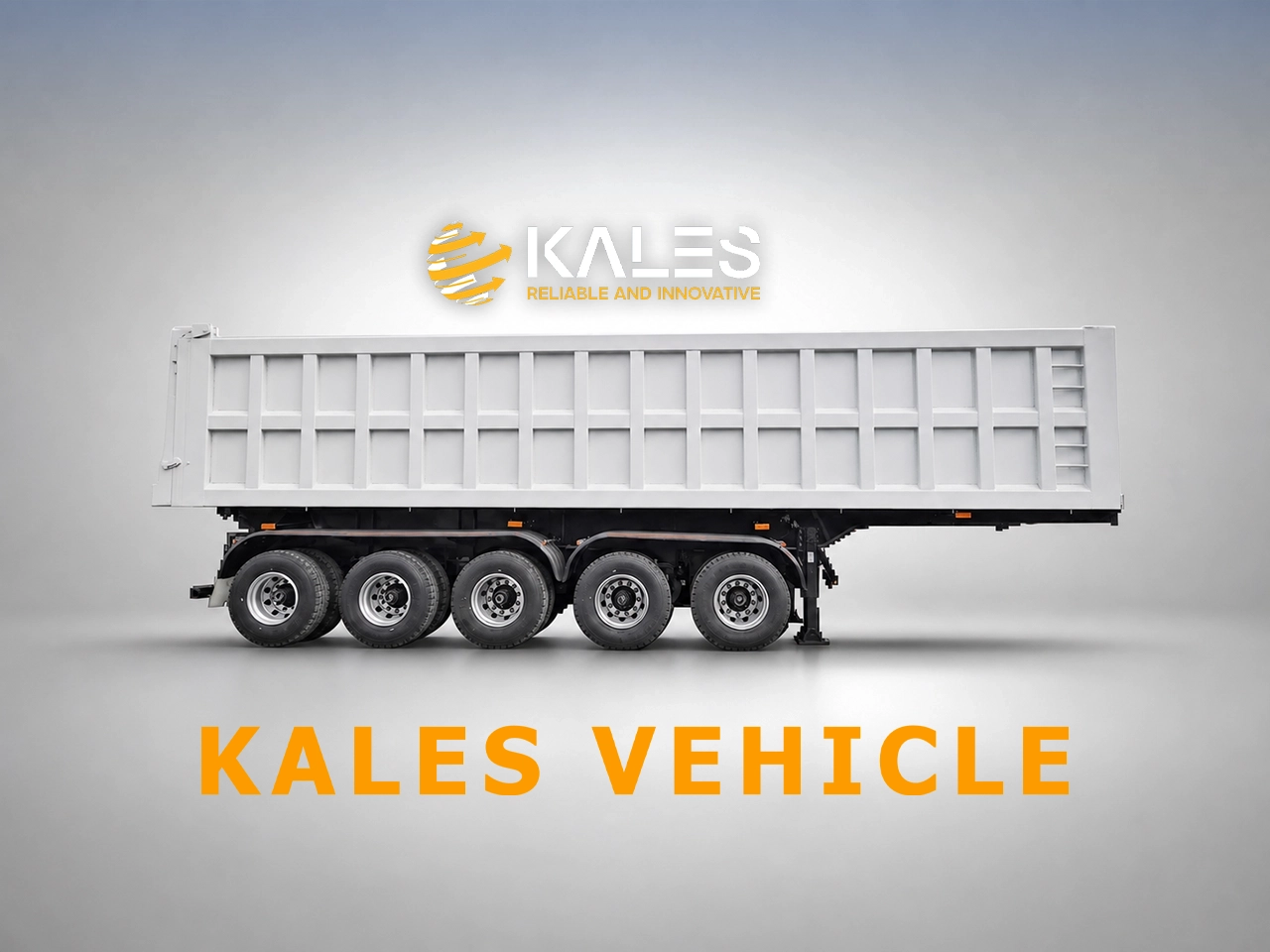
    5-axle U-shape tipper semi-trailer for extreme heavy-haul cycles: this represented configuration combines an approximately 11-meter dump body, NM500 wear-resistant body steel, a T700 high-strength chassis concept, two front air-suspension lift axles and a rear mechanical tridem group. A Hyva FC A238-5 front-end cylinder is represented for the long-body tipping geometry.

    The 100-tonne payload is an off-road or private mining-zone design reference, not a universal public-road allowance. Kales confirms the legal payload, axle group, tractor compatibility, cargo density, braking system and operating route before production.

    Quick answer: choose this 5-axle mining tipper when an operation needs more payload and body length than the represented 4-axle 80-tonne tipper, while retaining a smooth U-shaped body, front-end hydraulic hoist and lift-axle flexibility for empty returns. The represented values are up to 100 tonnes off-road payload and 118.2 tonnes design GVW, subject to the final build and destination-country rules.

    Key Specifications Overview

    Product type 5-axle U-shape tipper semi-trailer for mining, quarry and heavy infrastructure bulk haulage
    Represented payload class Up to 100,000 kg for off-road or private mining-zone duty; public-road payload must be calculated for the destination
    Represented design GVW Approximately 118,200 kg, subject to kingpin load, axle distribution, tyre ratings and the approved drawing
    Represented tare Approximately 18,200 kg; final tare changes with body thickness, axle brand, tyres, accessories and coating
    External dimensions Approximately 11,000 x 2,500 x 3,780 mm; final dimensions and volume are configuration-specific
    Dump body U-shape body using an NM500 wear-steel concept; represented standard plate selection is 6 mm floor and 4 mm sides
    Severe-impact body option 8 mm floor and 6 mm sides can be evaluated for larger rock and higher impact loading
    Chassis T700 high-strength main-beam concept with reinforced kingpin, suspension and hydraulic mounting zones
    Axles and suspension 5 x 13-tonne axle package; front two air-suspension lift axles plus rear 3-axle heavy mechanical suspension
    Hydraulic hoist Hyva FC A238-5-07630-009-K0486 front multi-stage cylinder as represented; final pressure, stroke and valve package are confirmed for the build
    Landing gear 28-tonne two-speed landing gear; JOST, FUWA or Kales options subject to the purchase order
    Kingpin 90 mm or 50 mm interchangeable specification according to tractor and duty requirements
    Brakes Dual-line pneumatic braking with ABS; EBS and WABCO component options available for market-specific requirements
    Tyres and rims 20 x 12R22.5 tyres with 9.0-22.5 rims as represented; tread and load index selected for the route

    These are represented configuration values rather than a declaration of road legality. The signed technical agreement controls the final dimensions, payload envelope, component brands, material thicknesses and inspection scope.

    African Mining and Route Fit

    This 5-axle dumper is intended for high-volume, high-mass bulk cycles where a standard three- or four-axle trailer does not provide the required off-road payload envelope. Typical routes include pit-to-crusher, mine-to-plant, quarry-to-stockyard, private mine-to-port corridors and major earthmoving projects.

    Best-fit cargo and operating conditions

    • DRC and Zambia Copperbelt: copper-bearing ore, cobalt material, aggregate and mine-development spoil on controlled private routes.
    • Guinea and West African bauxite operations: abrasive bauxite, wet laterite and high-rainfall mine-road cycles where body release and corrosion control matter.
    • East African infrastructure corridors: clinker, limestone, coal, excavated material and aggregates, with axle-load calculations reviewed for the specific country and route.
    • Southern African mines and quarries: iron ore, coal, crushed rock and heavy aggregate where tyre availability, brake support and workshop serviceability influence the component choice.

    Check before selecting a 100-tonne configuration

    • Confirm whether the route is a closed mine/private road or a public highway. The 100-tonne payload reference is not automatically legal under EAC, SADC, ECOWAS or national axle-load rules.
    • Provide cargo density, maximum particle size, loading equipment and drop height so the body floor, sidewall and top-rail design can be selected for impact and abrasion.
    • Confirm tractor model, axle arrangement, fifth-wheel height, PTO capacity, hydraulic flow, wheelbase and permissible kingpin load.
    • Review turning radius, ramp gradient, cross-slope, dumping pad condition, overhead clearance and recovery access before approving an 11-meter body.

    Why Choose the 5-Axle Configuration

    • Higher represented mining payload: the 5-axle platform provides an engineering basis for a 100-tonne off-road payload, compared with up to 80 tonnes for the represented 4-axle model.
    • Long U-shape body: curved floor-to-side transitions help reduce material retention when unloading clay, fines and mineral concentrates, while the longer body supports higher-volume cargo profiles.
    • Dual front lift-axle option: the first two axles can be configured for pneumatic lifting during approved unladen operation, reducing tyre contact and rolling resistance. Actual fuel and tyre savings depend on route and control strategy.
    • Rear mechanical tridem: the three rear axles use a field-serviceable mechanical suspension concept for heavy mine-road duty and straightforward workshop maintenance.
    • Component choice for regional support: axle, brake, landing-gear and hydraulic brands can be aligned with parts availability in the destination market.

    Specification-backed advantages

    • Wear-focused material pairing: NM500 is used as the abrasion-facing body-steel concept, while T700 is used for high-strength chassis structure; the approved bill of materials records the actual grades and thicknesses.
    • Defined hydraulic starting point: the represented Hyva FC A238-5 cylinder gives engineering and procurement teams a named reference for stroke, mounting, valve and service-parts review.
    • Load-distribution flexibility: five axles, two front air-lift positions and a rear mechanical tridem provide more configuration options than the 4-axle model, but legal axle loading still requires route-specific calculation.

    4-axle versus 5-axle mining tipper

    Selection factor Represented 4-axle model This 5-axle model
    Off-road payload reference Up to 80 tonnes Up to 100 tonnes
    Body length reference Approximately 9,500 mm Approximately 11,000 mm
    Lift-axle concept One front air-lift axle Two front air-lift axles
    Rear heavy-duty group Rear mechanical tridem Rear mechanical tridem
    Hydraulic reference FC A202-series class Hyva FC A238-5 class
    Typical decision Choose when manoeuvrability, lower tare and an 80-tonne mine-duty envelope are sufficient Choose when the mine plan justifies higher payload and the route can support the longer, heavier combination

    Engineering, Hydraulic Safety and Quality Control

    T700 chassis and NM500 dump-body architecture

    The chassis uses a T700 high-strength steel concept with reinforced load paths around the kingpin plate, main beams, suspension hangers, hydraulic trunnion area and rear tipping pivots. The body uses an NM500 wear-steel concept in the abrasion zone. Material certificates, plate thickness and welding consumables should be listed in the confirmed production documents.

    The U-shaped cross-section avoids the sharp internal floor corners found in a traditional rectangular body. That geometry can improve discharge of sticky or fine material and distribute local side impact differently, but it does not remove the need for correct loading practice or a level dumping surface.

    Hyva FC A238-5 front-end hoist

    The represented Hyva FC A238-5-07630-009-K0486 multi-stage cylinder is positioned at the front of the body to provide the stroke needed for an approximately 11-meter dump box. Before production, Kales checks cylinder stroke, closed length, tipping angle, mounting geometry, tractor PTO flow and hydraulic reservoir capacity as one system.

    • The valve package can include limit and controlled-lowering functions according to the approved hydraulic schematic.
    • An anti-rollover or body-angle protection function can support the operating procedure, but no valve makes tipping on soft, cross-sloped or unstable ground safe.
    • Hyva, Binotto or another agreed package can be reviewed against local service coverage, seals, hoses and replacement-part availability.

    Hybrid five-axle suspension logic

    The represented layout combines two front air-suspension lift axles with a three-axle mechanical leaf-spring group at the rear. The lift axles are intended for approved empty-running conditions. They must be lowered when the load, speed, braking requirement or local rule demands full axle contact.

    The rear tridem uses a heavy mechanical suspension concept that is familiar to many mining workshops. Final spring packs, equalizers, axle ratings, wheel-end seals and brake chamber sizes are selected around the intended duty cycle rather than treated as universal values.

    Manufacturing and inspection plan

    • Main-beam and body welding can use automated or robotic processes where the joint design and production batch make them appropriate. Welding procedure and welder qualification records can be included in the order inspection plan.
    • Critical welds around the kingpin, suspension hangers, cylinder support and tipping pivots can be assigned ultrasonic or magnetic-particle inspection. The percentage, acceptance standard and reporting format must be agreed before production.
    • Dimensional inspection, brake pressure/leak checks, hydraulic function tests and controlled tipping trials are completed according to the confirmed factory quality plan.
    • Axle-load calculation, kingpin load, centre-of-gravity review and finite-element analysis can be supplied when the buyer provides complete tractor, cargo and route inputs.

    Corrosion protection and ocean shipping

    Export preparation can include abrasive blasting, an epoxy zinc-rich primer and a compatible topcoat or powder-coating system. The agreed surface preparation grade, dry-film thickness, colour and repair procedure should be recorded in the purchase specification.

    • Hydraulic rods, landing-gear screws, kingpins, electrical connectors and exposed brake components receive shipment protection appropriate to the transport method.
    • Marine wax, wrapping and desiccant can be specified for long ocean transit or high-salinity destinations.
    • Stacking or semi-knocked-down shipment can be evaluated against trailer geometry, port handling capability and reassembly resources. Freight savings vary by vessel, route and quantity.

    Product Inspection Views

    NM500 wear steel reinforced side body on a Kales 100 ton mining dumper
    Reinforced U-shape body side view for checking NM500 wear zones, top rail and sidewall proportions.
    Dual-function open rear tailgate doors on a Kales 5 axle dump trailer
    Dual-function rear tailgate shown open for reviewing discharge and side-opening access.
    Rear 45 degree view of a Kales 100 ton 5 axle U-shape mining dumper
    Rear three-quarter view showing the long U-body, five-axle footprint and tailgate geometry.
    Automatic tailgate locking and opening mechanism on a Kales mining tipper
    Automatic tailgate latch mechanism for checking linkage protection and release operation.
    Front pneumatic air suspension lift axles on a Kales 5 axle dumper
    Front air-suspension lift-axle arrangement represented for approved unladen operation.
    Rear tridem mechanical leaf spring suspension with 13 tonne axles
    Rear mechanical tridem group with leaf springs and 13-tonne-class axle components.
    Reinforced gooseneck Hyva cylinder bracket on a Kales 100 ton tipper
    Reinforced front gooseneck and cylinder bracket where hydraulic loads enter the chassis.
    Side guard toolbox and access ladder on a Kales 5 axle mining dumper
    Side guard, toolbox and ladder layout for service access and daily inspection.
    Heavy-duty rear tipping hinge and pivot bracket on a mining dump trailer
    Rear tipping hinge and pivot bracket for checking pin support, weld access and lubrication points.
    Hyva FC A238 hydraulic cylinder front view on a Kales 100 ton tipper trailer
    Front view of the represented Hyva FC A238 cylinder and its relationship to the gooseneck structure.

    Frequently Asked Questions

    Is a 100-tonne payload legal on African public roads?

    Not automatically. The 100-tonne figure is an off-road or private mining-zone design reference. Public-road operation requires a country- and route-specific review of axle limits, bridge formulas, dimensions, braking, permits and tractor combination mass.

    When should I choose the 5-axle model instead of the 4-axle 80-tonne tipper?

    Choose the 5-axle model when the mine plan, loading equipment, dumping area and private route justify the longer body and higher represented payload. The 4-axle model can be a better fit where manoeuvrability, lower tare or an 80-tonne envelope is sufficient.

    Why combine T700 chassis steel and NM500 body steel?

    The two materials serve different functions. T700 is used as a high-strength chassis concept for bending and torsional loads, while NM500 is used as a wear-steel concept in the dump body. Exact grades and thicknesses must appear on the approved bill of materials.

    Can both front axles lift while the trailer is empty?

    The represented design can use two front pneumatic lift axles for approved unladen operation. The control logic, legal conditions and minimum axle contact are confirmed for the destination. The axles must be lowered whenever load distribution, braking or local rules require them.

    What information is needed for the Hyva FC A238 hydraulic selection?

    Provide the tractor PTO specification, hydraulic flow and pressure, reservoir capacity, fifth-wheel height, body dimensions, target tipping angle, cargo density and site gradient. Kales then checks the cylinder, mounting and valve package as a complete system.

    Which documents can be supplied before factory release?

    Request the approved CAD drawing, axle-load calculation, bill of materials, component list, coating and packing record, brake and hydraulic test results, dimensional inspection sheet, and any agreed welding or NDT reports.

    Request a 100-Ton Tipper Technical Review

    Send the cargo type, bulk density, maximum particle size, target payload, route profile, destination country, tractor model, fifth-wheel height and preferred axle and hydraulic brands. Kales Vehicle Trailer Engineering will review the 5-axle configuration and prepare a project-specific CAD drawing, axle-load analysis and quotation.

    Related Kales Tipper Options

  • Kales 4 Axle Tipper Trailer | 80 Ton U-Shape Mining Dumper

    Kales 4 Axle Tipper Trailer | 80 Ton U-Shape Mining Dumper

    Kales 4 axle 80 ton U-shape tipper trailer for African mining and quarry haulage
    4-axle U-shape tipper semi-trailer represented for heavy mining, quarry, aggregates and infrastructure haulage. Final payload, materials and running gear are confirmed against the order specification.

    Mining and Quarry Tipper Trailer Procurement Guide | Published: August 6, 2026 | Updated: August 6, 2026 | By Kales Vehicle Trailer Engineering Team | Reviewed by Kales Export Sales Engineering | Market focus: Africa export procurement, open-pit mining, quarry aggregate, earthmoving and mine-to-plant bulk haulage

    4-axle U-shape tipper semi-trailer for heavy African haul routes: this represented configuration combines an abrasion-focused NM500 dump body with a T700 high-strength chassis, a front liftable air axle and a multi-stage front hydraulic hoist. It is intended for procurement teams moving ore, rock, gravel, sand, coal or construction spoil between mine, quarry, crusher, plant and port.

    The page is a technical starting point, not a substitute for a signed drawing. Kales confirms body thickness, volume, axle loads, tyre pattern, braking equipment and tractor compatibility before production.

    Quick answer: choose this 4-axle U-shape tipper when a mining or infrastructure fleet needs a high-capacity rear dumper with low-body geometry, wear-resistant steel and a lift-axle option for empty returns. The represented design is up to 80 tonnes off-road payload and 93.3 tonnes design GVW, subject to the final build, cargo density, route and destination-country axle-load rules.

    Key Specifications Overview

    Product type 4-axle U-shape tipper semi-trailer for mining, quarry and infrastructure bulk haulage
    Represented payload class Up to 80,000 kg off-road / private mining-zone payload; confirm the legal road payload for the destination
    Represented design GVW 93,300 kg, subject to final axle distribution and local bridge-formula limits
    Represented tare Approximately 13,300 kg; final tare varies with body thickness, options and accessories
    External dimensions Approximately 9,500 x 2,500 x 3,780 mm; confirmed on the approved CAD drawing
    Dump body U-shape body with NM500 wear-resistant steel; floor and side thickness selected for cargo impact and density
    Chassis T700 high-strength main beam with reinforced crossmembers and hydraulic mounting zones
    Axles and suspension 4 x 13-tonne axle package; front air lift axle plus rear 3-axle heavy mechanical suspension, with Kales, FUWA or BPW options
    Hydraulic hoist FC A202-4-04300 front multi-stage cylinder as represented; Hyva, Binotto or other approved package available by request
    Landing gear 28-tonne two-speed landing gear; JOST, FUWA or Kales matching subject to the purchase order
    Brakes Dual-line pneumatic braking with ABS; EBS and valve brand confirmed for the destination market
    Tyres 12R22.5 or another approved heavy-haul pattern, selected for route, axle load and parts availability

    All figures above are represented configuration values. Payload, GVW, dimensions and component brands must be checked against the final technical drawing and the laws of the operating country.

    Application and Route Fit

    This trailer is designed for demanding bulk cycles in African mining and infrastructure supply chains. Typical workflows include pit-to-crusher, mine-to-plant, quarry-to-stockyard, construction earthmoving and short port-to-project shuttle routes. It can be evaluated by fleets in Kenya, Tanzania, Uganda, Zambia, Ghana, Nigeria, South Africa and other African markets, but those examples do not imply automatic regulatory approval.

    Best fit

    • Iron ore, copper-bearing rock, granite, bauxite, aggregates, gravel, sand, coal and excavated soil.
    • Private mine roads, quarry ramps, laterite routes and mixed paved/unpaved haul cycles.
    • Operators that value a smooth U-shaped interior for material release and a liftable axle for empty returns.
    • Export buyers that need axle-brand, hydraulic and brake packages matched to local workshops and parts supply.

    Check before selection

    • Confirm bulk density and loading method; an 80-tonne rating does not make every body volume safe for every material.
    • Confirm tractor wheelbase, fifth-wheel height, PTO and hydraulic flow before selecting the hoist.
    • Confirm the legal axle group, bridge formula, speed and braking requirements in the destination country.

    Why This Configuration Is Considered

    • U-shape discharge geometry: the curved floor-to-side transition helps reduce corner build-up when carrying wet clay, fines, gravel or mineral concentrates.
    • Material-led steel selection: NM500 is specified for abrasion exposure while T700 is used where high-strength chassis structure is needed; thickness remains a cargo and route decision.
    • Lift-axle flexibility: the front air lift axle can be raised when the trailer is unladen, subject to the approved air-control and axle-load design.
    • Serviceable axle choices: Kales, FUWA and BPW options let procurement teams align the running gear with regional parts and workshop capability.
    • Configuration transparency: the quote can document payload envelope, axle distribution, hydraulic package, coating system and inspection scope before manufacture.

    Specification-backed advantages

    • Wear-focused body: NM500 body steel is a concrete starting point for abrasive quarry and mining cargo, with thickness confirmed for the impact profile.
    • High-capacity running gear: a 4-axle layout with a front lift axle and rear tridem group gives the engineering team a defined basis for load distribution and empty-return configuration.
    • Front hoist access: the FC or Hyva multi-stage cylinder position supports a clear tipping workflow and can be matched to the tractor hydraulic system.


    Structural Engineering, Manufacturing and Quality Control

    T700 chassis and NM500 body architecture

    The chassis uses a high-strength T700 beam concept with reinforced crossmembers around the kingpin, suspension hangers and hydraulic supports. The dump body uses an NM500 wear-steel concept for high-abrasion cargo. The final plate grade, thickness and welding procedure are recorded on the order drawing rather than assumed from a marketing label.

    Manufacturing controls available for the confirmed build

    • Welding procedures and welder qualification records can be included in the inspection plan; automated or robotic welding is used where it is appropriate to the joint and production batch.
    • Critical load-bearing areas can be specified for non-destructive inspection such as ultrasonic or magnetic-particle testing, with the scope and acceptance criteria agreed before production.
    • Dimensional checks, air-brake pressure checks and hydraulic tipping tests are completed according to the approved factory inspection plan. Test records should be requested with the release documents.
    • Finite-element review, axle-load calculation and kingpin-to-axle distribution are available when the cargo, tractor and route data are supplied.

    Hydraulic and anti-rollover considerations

    A front multi-stage cylinder provides the lift path for the body. The final hydraulic circuit should include the agreed limit, lowering-control and anti-rollover protection. Tipping on uneven ground remains unsafe; operators must follow the site risk assessment and the approved operating instructions.

    Inspection Views and Component Details

    U-shape NM500 steel dump body side view on a Kales 4 axle tipper trailer
    U-shape NM500 dump body side view for checking body geometry and sidewall proportions.
    Side guard ladder and toolbox on a Kales mining tipper trailer
    Side guard, access ladder and toolbox layout for daily inspection and service access.
    Dual-mode rear door opening mechanism on a Kales U-shape tipper
    Rear door detail showing the dual-mode opening arrangement for different bulk materials.
    JOST 28 tonne landing gear with reinforced mounting on a Kales trailer
    28-tonne JOST landing gear and reinforced mounting area for parked-trailer support.
    Heavy-duty rear tipping pivot bracket on a Kales mining dumper
    Heavy-duty tipping pivot bracket for reviewing rear hinge support and service access.
    Front gooseneck hydraulic cylinder bracket on a Kales tipper trailer
    Front gooseneck hydraulic-cylinder bracket and load-transfer area.
    Air suspension front axle lifting system on a Kales 4 axle trailer
    Air-suspension lift system for the front axle, subject to the approved air-control configuration.
    4 axle suspension and front lift air axle on a Kales tipper trailer
    Four-axle suspension arrangement with front lift air axle for load-distribution review.
    Hyva FC hydraulic cylinder front view on a Kales mining tipper
    Hyva FC front hydraulic cylinder option shown for hoist-package review.

    Frequently Asked Questions

    Is the 80-tonne payload legal on public roads in Africa?

    Not automatically. The 80-tonne figure is an off-road or private mining-zone design reference. Kales must confirm the legal payload, axle group and bridge formula for the operating country and route.

    Why combine T700 chassis steel with NM500 body steel?

    The materials serve different engineering priorities: T700 is selected for high-strength chassis structure, while NM500 is selected for abrasion exposure in the dump body. The approved drawing confirms the exact grades and thicknesses.

    What does the front lift axle do?

    When approved for the operating configuration, the front air axle can be lifted while unladen to reduce rolling resistance and tyre contact. It must be lowered whenever the load distribution or local rules require it.

    Which hydraulic cylinder can I order?

    The represented page shows an FC A202-4-04300 arrangement and a Hyva FC component view. Hyva, Binotto and other packages can be evaluated against tractor PTO flow, tipping angle and local service support.

    What documents should I request before release?

    Request the approved CAD drawing, axle-load calculation, bill of materials, coating and packing record, brake and hydraulic inspection results, and any agreed NDT or welding inspection records for the confirmed build.

    Request a Technical Quote and CAD Review

    Send the cargo type and density, target payload, body volume, route percentage on paved and unpaved roads, destination country, tractor model, fifth-wheel height, preferred axle brand and hydraulic package. Kales Vehicle Trailer Engineering can then confirm whether this 4-axle U-shape tipper is the right fit and issue a configuration-specific drawing and quotation.

    Related Kales Tipper Options

  • KALES 45000L 3-Axle Oil Tank Semi-Trailer | 3-Compartment Fuel Tanker

    KALES 45000L 3-Axle Oil Tank Semi-Trailer | 3-Compartment Fuel Tanker

    KALES 45,000L three-compartment fuel tanker semi-trailer for African petroleum transport
    KALES 45,000L three-compartment fuel tanker semi-trailer for petroleum, diesel, and other approved liquid-cargo routes.

    Fuel Tanker Trailer Product Guide | Published: August 3, 2026 | Updated: August 3, 2026 | By KALES Vehicle Engineering Team | Reviewed by KALES Export Sales Engineering | Market focus: East Africa, Southern Africa, West Africa, and cross-border fuel distribution

    KALES 45,000L three-compartment fuel tanker trailer: this tri-axle split-type oil tanker is designed for high-volume road distribution of petroleum products and other approved liquid cargoes. The reference configuration combines a 45,000L tank, three independently loaded compartments, a Q355 high-strength carbon-steel tank body, emergency shut-off equipment, and a detachable tank-and-chassis layout that can simplify overseas shipping.

    This product brief is prepared by the KALES Vehicle trailer engineering and export teams. Final tank material, cargo approval, axle load, braking package, and country documentation must be confirmed in the signed technical agreement before production.

    Quick answer: choose this 45,000L three-compartment fuel tanker trailer when a fleet needs to carry different petroleum products on one route, unload each compartment independently, and ship the tank and running gear in separate packages. The reference build uses three compartments, approximately 13,000 x 2,600 x 3,950 mm overall dimensions, 6 mm tank-wall steel, 8 mm head plates, three emergency shut-off valves, internal anti-surge baffles, and three axles. Actual legal payload and equipment depend on liquid density, axle limits, tractor compatibility, and the destination country’s rules.

    45,000L Fuel Tanker Technical Snapshot

    Product type Tri-axle, three-compartment split-type fuel tanker semi-trailer
    Overall dimensions Approximately 13,000 x 2,600 x 3,950 mm reference configuration
    Effective tank capacity 45,000 litres, subject to final tank design and filling limits
    Compartments 3 independent compartments with separate loading and discharge arrangements
    Tank material Q355 high-strength carbon steel reference build; stainless steel, aluminium, or lined options can be specified for suitable cargoes
    Tank and head thickness 6 mm tank wall and 8 mm head reference values, subject to engineering review
    Manhole covers 3 European-style explosion-protection manhole covers
    Emergency shut-off 3 bottom emergency valves, pneumatic or manual operation according to configuration
    Overflow protection 3 level-probe sets, one for each compartment, when included in the selected package
    Anti-surge protection Multiple internal baffles to reduce liquid movement during braking, acceleration, and cornering
    Axles and suspension 3 FUWA, BPW, or KALES axles; mechanical suspension or air suspension options
    Tyres 12R22.5 dual tyres, 12 units, or a 315/80R22.5 single-tyre alternative where approved
    King pin 2-inch (50#) or 3-inch (90#) standard king pin selected for the tractor fifth wheel
    Reference tare and payload Approximately 8,500-9,500 kg tare and 35,000-36,500 kg payload range; confirm legal values for the final build and route
    Split-type shipping Tank body and chassis can be separated for containerized or disassembled ocean transport

    Where This Fuel Tanker Fits African Fleet Operations

    The three-compartment layout is intended for fuel distributors, mining support fleets, industrial fuel suppliers, and logistics operators that need controlled multi-product delivery. Separate compartments can reduce the need to send different trailers on the same route, but each compartment must be assigned only to a compatible and approved liquid.

    Good fit for

    • Petrol, diesel, kerosene, lubricating oil, and other approved petroleum distribution between terminals, depots, mines, and service stations
    • Port-to-inland routes from Mombasa, Dar es Salaam, Walvis Bay, Durban, Tema, or other regional gateways after local route and cargo checks
    • Cross-border delivery in Kenya, Tanzania, Uganda, Rwanda, Zambia, Ghana, Nigeria, Mozambique, and neighbouring markets when the final package meets each jurisdiction’s requirements
    • Operators that need three independent loading and unloading cycles for different grades or delivery destinations
    • Export buyers that benefit from shipping the tank and chassis as separate packages and assembling them at destination

    Not a universal fit

    • Highly corrosive, food-grade, or hazardous chemical cargo without the required tank material, lining, cleaning procedure, and certification review
    • Routes where the combined tractor, trailer, cargo density, axle spacing, or gross mass exceeds local limits
    • Operations that cannot provide approved loading bays, grounding points, emergency equipment, driver training, and spill-response procedures

    Why Buyers Choose a Three-Compartment Split Tanker

    • One trailer, three delivery plans: independent compartments support separate products, customers, or unloading sequences when the cargo plan allows it.
    • Lower liquid movement: internal anti-surge baffles help moderate surge forces and improve stability; safe speed and loading practice remain essential.
    • Export logistics flexibility: separating the tank body from the chassis can reduce shipping volume and simplify destination assembly. Customs treatment and savings vary by country and must be checked with the importer.
    • Serviceable running gear: FUWA, BPW, or KALES axle and landing-gear options allow the buyer to match local parts availability and service capability.
    • Configurable cargo protection: stainless steel, aluminium, internal lining, vapour recovery, heating, metering, and pump packages can be reviewed for the actual liquid and operating environment.

    Safety, Tank, and Chassis Engineering Details

    Three independent compartments

    Internal partition plates divide the tank into three sections. Each section can be loaded and discharged independently, which supports mixed petroleum grades or staged delivery. The final compartment volume, fill limit, vapour-management method, and compatibility matrix must be stated in the technical agreement rather than assumed from the nominal 45,000L capacity.

    Manholes, valves, and overflow control

    Each compartment can receive a European-style explosion-protection manhole cover with breathing and pressure-relief functions appropriate to the selected cargo system. Bottom emergency shut-off valves are intended to isolate flow after a serious incident, while level probes can help stop filling before overflow. Operators still need a written loading procedure, grounding check, inspection routine, and emergency response plan.

    Grounding, fire equipment, and anti-surge baffles

    The reference package includes a tank-to-chassis static-grounding connection, two dry-powder extinguishers, an exhaust flame arrestor where specified, and multiple internal anti-surge baffles. These features support safe operation but do not replace site risk assessment, compatible transfer hoses, correct placarding, or local fire and dangerous-goods rules.

    Pressure and weld inspection

    KALES can arrange factory leak testing, weld inspection, dimensional checks, and delivery documentation according to the agreed inspection plan. The inspection method, test pressure, non-destructive testing scope, and report format must be confirmed before fabrication; this page does not claim a universal certification or a fixed test result.

    Split chassis and overseas assembly

    The tank body and chassis are joined with high-strength bolts and locating features so they can be separated for transport and reassembled at destination. A typical assembly requires suitable lifting equipment, torque-controlled tools, grounding continuity checks, valve and hose checks, brake and lighting tests, and a final roadworthiness inspection. KALES should confirm the assembly drawings and tool list for the buyer’s site.

    Africa procurement checklist

    1. Confirm each liquid, density, flash point, compatibility requirement, and compartment allocation.
    2. Check national and corridor rules for gross mass, axle loads, dimensions, dangerous-goods marking, fire equipment, and driver training.
    3. Match the king pin, fifth-wheel height, electrical connector, brake system, tyre size, and suspension to the tractor and local workshops.
    4. Specify the unloading valves, hoses, vapour recovery, pump, meter, grounding cable, and spill-control equipment required at the loading and delivery sites.
    5. Request the final drawing, material schedule, inspection plan, spare-parts list, assembly instructions, and delivery scope before signing the order.

    Inspection Views of the 45,000L Split-Type Tanker

    Split-type fuel tanker showing bolted tank-body and chassis connection
    Bolted tank-body and chassis connection used for split shipping and destination assembly planning.
    Reinforced leaf-spring mechanical suspension and axle on a fuel tanker trailer
    Reinforced leaf-spring suspension and axle detail for heavy-road service review.
    Rear quarter view of a 45,000L oil tanker trailer with discharge pipeline
    Rear quarter inspection view of the 45,000L tanker body and discharge pipeline layout.
    FUWA landing gear and fire extinguisher mounted on an oil tank trailer
    FUWA landing gear and accessible fire-extinguisher mounting detail.
    Three discharge outlets and safety valve box on a 45,000L fuel tanker
    Three discharge outlets and the safety valve box for independent compartment service.
    Rear view of a fuel tanker trailer with underrun protection and access ladder
    Rear protection, access ladder, and lighting arrangement for inspection and maintenance.
    Front quarter view of a 45,000L split-type oil tanker with marker lights and side guard
    Front quarter view showing marker lights, side guard, and the split-type tanker profile.
    Front view of a 45,000L oil tank semi-trailer with coupling connections
    Front coupling connections for tractor matching and pre-delivery inspection.
    Side view of a tri-axle oil tanker trailer with mechanical suspension and gooseneck
    Full side view of the tri-axle mechanical-suspension tanker and gooseneck.
    Two-inch king pin coupling detail on a fuel tank semi-trailer
    Two-inch king-pin detail for fifth-wheel compatibility checks before ordering.

    Frequently Asked Questions

    Can the three compartments carry different fuels?

    They can be assigned to different compatible products when the tank material, seals, valves, loading procedure, cleaning plan, and local rules allow it. The final compartment matrix should be approved before production.

    What is the legal payload of the 45,000L tanker?

    The supplied reference range is approximately 35,000-36,500 kg payload, but legal payload depends on liquid density, tare weight, axle limits, gross vehicle weight, and the destination route. The signed technical agreement is the controlling document.

    Is the split design suitable for shipping to Africa?

    The detachable tank-and-chassis layout is intended to support separate-package ocean transport and destination assembly. Container dimensions, lifting equipment, customs treatment, and assembly scope must be confirmed for the chosen port and inland route.

    Can the tanker carry chemicals or food-grade liquids?

    Only after a separate engineering review. Stainless steel, aluminium, or lined tanks, compatible seals, cleaning procedures, and the required local documentation may be needed. The carbon-steel fuel configuration should not be assumed suitable for another cargo.

    Which tractor should be matched to this trailer?

    Confirm the tractor fifth-wheel height and rating, king-pin size, electrical and brake connections, engine and axle capacity, tyre clearance, and local gross-mass limit. KALES can prepare a matching checklist from the buyer’s tractor data.

    What should an African buyer request with the quotation?

    Request the final general arrangement drawing, compartment volumes, material schedule, valve and hose list, axle and brake brands, inspection plan, assembly instructions, spare-parts list, delivery terms, and the documents required by the destination country and corridor operator.

    Request a 45,000L Fuel Tanker Specification

    Send KALES your cargo list, compartment plan, loading and unloading sites, tractor details, destination country, port, route, and required compliance documents. The engineering team can then confirm the tank material, valve package, suspension, axles, brakes, shipping method, and assembly scope for your project.

    WhatsApp KALES Email KALES sales

    Related KALES Tanker Options

  • Kales Hazmat Container Trailer for East Africa

    Kales Hazmat Container Trailer for East Africa

    Kales hazmat container trailer for East Africa shown with an ISO tank container
    Kales tri-axle skeletal trailer shown with an ISO tank container for an East Africa hazardous-cargo configuration review. The tank container and final road approval are separate from the chassis specification.

    Hazardous Cargo Container Chassis Product Guide · Published: August 2, 2026 · Updated: August 2, 2026 · By Kales Vehicle Engineering Team · Reviewed by Kales Export Sales Engineering · Market focus: Tanzania, Kenya, East African port corridors, chemical logistics, and ISO tank container operations

    Kales hazmat container trailer for East Africa: this product page documents a configurable tri-axle skeletal chassis for buyers planning ISO tank container and regulated hazardous-cargo movements. The factory images confirm the chassis layout, air suspension hardware, reinforced frame sections, container locking hardware, landing support, equipment cabinet, rear lighting, conspicuity treatment, placard area, and underrun protection.

    This is an evidence-led buying page, not a certificate of compliance. The correct trailer configuration depends on the tank or container data plate, cargo classification, legal axle and gross-weight limits, tractor interface, route permits, emergency equipment, inspection regime, and destination-country marking rules. Kales should confirm those items on the signed drawing and supply agreement before production.

    Quick answer: choose this hazmat container chassis when your operation needs a dedicated skeletal trailer with visible air suspension, reinforced frame transitions, container locking hardware, mounted safety-equipment storage, and a clearly arranged rear safety zone. Do not order from the photographs alone. Send the container or tank drawing, cargo information, tractor details, route countries, legal weight limits, and required safety equipment so the final chassis can be checked for the actual East African duty cycle.

    Photo-Confirmed Configuration and Order Checks

    System Confirmed in the supplied images Confirm before ordering
    Chassis layout Tri-axle skeletal semi-trailer with an open center frame Overall dimensions, tare, design rating, legal payload, axle spacing, and kingpin position
    Cargo interface Multiple container locking points and visible locking mechanisms Tank or container size, corner-casting drawing, lock spacing, center of gravity, load concentration, and dispatch pattern
    Frame Reinforced gooseneck transition, cross-members, gussets, and welded support structure Steel grade, section thickness, fatigue basis, weld procedure, inspection method, and corrosion-protection specification
    Suspension Pneumatic suspension with visible air bags and link hardware Axle ratings, suspension brand, ride height, control valves, lift-axle requirement, and local service support
    Braking Wheel-end brake, air chamber, hoses, and pneumatic hardware are visible Brake type, ABS or EBS architecture, component brand, tractor compatibility, connector standard, and approval documentation
    Landing support Paired mechanical landing legs mounted below the forward frame Rated capacity, lift specification, foot type, brand, operating clearance, and spare-parts availability
    Safety equipment Protected red equipment cabinet mounted beside the running gear Required cabinet contents, extinguisher quantity and rating, spill response kit, wheel chocks, PPE, and inspection labels
    Rear safety zone LED lamp clusters, reflective markings, placard location, triangles, and rear underrun protection Destination lighting standard, electrical voltage, connector pinout, placard language and class, conspicuity layout, and underrun dimensions
    Storage and protection Side-mounted metal toolbox and side protection structure Tool inventory, lock type, weather sealing, side-guard geometry, and operator access procedure

    Best Fit Operating Profile

    This chassis is a relevant starting point for chemical logistics companies, tank-container operators, port hauliers, and project fleets that need a dedicated container interface rather than a full flatbed deck. It is especially useful when the procurement team wants the running gear, locking points, equipment mounting, and rear safety layout reviewed as one system before dispatch to Tanzania, Kenya, or another East African market.

    Best for

    • ISO tank or regulated container movements where the exact container interface is provided for engineering review
    • Port-to-depot and inland corridor work that benefits from an air-suspension chassis configuration
    • Buyers who need dedicated locations for emergency equipment, placards, lights, reflective markings, and rear protection
    • Fleet programs that will document tractor compatibility, route limits, inspection responsibility, and local compliance before production

    Not ideal for

    • Transporting hazardous material without an approved tank or container and the required cargo documentation
    • General open-deck cargo that should use a flatbed, dropside, or other load-retention body
    • Operations that cannot provide the container drawing, center-of-gravity data, route limits, or tractor specification
    • Buyers seeking a universal East Africa compliance claim from photographs instead of a destination-specific technical review

    Why Buyers Start With This Configuration

    • Inspection-friendly skeletal layout: the open frame makes cross-members, locks, suspension connections, air lines, and rear equipment easier to inspect than components hidden under a full deck.
    • Reinforcement is visible: the gooseneck transition and cross-member joints can be reviewed from several factory angles before the final drawing is accepted.
    • Air suspension is documented: the supplied close-up shows pneumatic suspension hardware, allowing the buyer to ask specific questions about ride height, controls, axle loading, and local parts support.
    • Safety equipment has a defined location: the mounted cabinet separates emergency equipment storage from loose tools, although its final contents must follow the cargo and destination requirements.
    • The rear layout is ready for a compliance review: lamps, reflective material, placard positions, underrun protection, and air connections are visible together, so destination-specific changes can be identified before shipping.

    Engineering and Inspection Guidance

    Start with the tank or container, not a generic payload number

    A hazmat chassis cannot be selected responsibly from a headline tonnage alone. The engineering review should begin with the tank or container identification, overall drawing, corner-casting locations, maximum gross mass, empty and loaded center of gravity, product classification, and any special handling restrictions. Kales can then check lock position, frame load path, axle distribution, tractor load, and clearance using the actual cargo unit.

    Review the frame transition and concentrated load path

    The supplied images show added structure around the gooseneck transition and cross-members. These are useful inspection views because tank-container loads enter a skeletal chassis through discrete locking points rather than through a continuous deck. The final order should state the material specification, member thicknesses, weld procedure, surface preparation, coating system, and factory inspection records instead of relying on paint appearance.

    Match suspension and braking to the tractor and service network

    Air suspension hardware is visible, but the photographs do not prove the axle rating, lift function, brake type, or electronic control architecture. The buyer should confirm whether the tractor supports the required pneumatic and electrical connections, whether the selected brake components have service coverage on the operating corridor, and what fault diagnostics and spare parts the workshop can handle.

    Validate every locking point before dispatch

    The locking mechanisms must match the actual container corner castings, operating clearances, and expected load concentration. Acceptance should include a physical fit check or dimensional inspection against the approved drawing, positive lock engagement, retention-pin inspection, and confirmation that handles remain accessible without exposing the operator to the cargo or traffic side.

    Treat emergency equipment and placards as cargo-specific items

    A mounted equipment cabinet and rear placard area are useful provisions, but they do not establish compliance by themselves. Required extinguishers, spill-control materials, PPE, warning signs, emergency instructions, and placard classes depend on the substance, quantity, container, carrier obligations, insurer, terminal, route, and national rules. The final packing list should name every supplied item and identify which items remain the operator’s responsibility.

    East Africa Procurement Checklist

    1. Define the cargo: provide the product name, safety data sheet, hazard classification, transport conditions, and emergency-response instructions.
    2. Identify the cargo unit: send the tank or container data plate, dimensional drawing, corner-casting arrangement, maximum gross mass, center of gravity, and certification documents.
    3. Map the route: list ports, terminals, border crossings, road classes, bridge or axle restrictions, gradients, surface conditions, and planned operating speeds.
    4. Confirm legal limits: obtain written guidance for axle loads, gross combination mass, dimensions, underrun protection, lighting, reflective marking, and hazardous-goods operation in every destination and transit country.
    5. Match the tractor: confirm fifth-wheel height, kingpin interface, air and electrical connectors, brake-control capability, turning clearance, and permitted combination mass.
    6. Define safety equipment: agree the placards, languages, extinguisher and spill-kit requirements, chocks, PPE, grounding or bonding provisions where applicable, and cabinet layout.
    7. Plan inspection and maintenance: define pre-trip checks, lock inspection, brake and air-system service, torque records, corrosion checks, parts stock, and responsibility for periodic statutory inspection.
    8. Approve evidence before production: sign the general arrangement drawing, technical schedule, inspection plan, document list, and acceptance criteria before fabrication starts.

    Factory Images and Inspection Views
    Side view of tri-axle skeletal trailer with air suspension and metal toolbox
    Full side profile showing the tri-axle skeletal layout, side protection, equipment cabinet, toolbox, and open frame.
    Front view of skeletal trailer frame with reinforced gooseneck and cross-members
    Front inspection view of the gooseneck, longitudinal members, cross-members, front lighting, and connector area.
    Welded gooseneck and cross-member reinforcement detail on container chassis
    Close-up of the welded transition and gusset arrangement. Material grade, thickness, and weld procedure remain drawing-controlled items.
    Air suspension bags and wheel-end brake hardware beneath skeletal trailer frame
    Air suspension and wheel-end hardware inspection view. Brake type, electronic controls, axle rating, and lift function require specification confirmation.
    Container locking mechanisms mounted on reinforced skeletal chassis brackets
    Two visible locking positions and their welded supports. Final lock geometry must be checked against the actual tank or container drawing.
    Mechanical landing support leg mounted below reinforced container chassis frame
    Landing support and forward mounting structure. Capacity, operating clearance, foot type, and brand must be confirmed in the order schedule.
    Protected red safety equipment cabinet mounted beside trailer air suspension
    Protected equipment-storage position near the running gear. Cabinet contents must be specified for the cargo and destination rules.
    Trailer rear with LED lamps reflective markings placard area and underrun bar
    Rear safety layout with factory-example placards, LED lamps, reflective markings, triangles, and underrun protection. Replace or supplement the visible markings with destination-specific placards and languages before dispatch.

    Frequently Asked Questions

    Is this trailer already approved for hazardous cargo in Kenya or Tanzania?

    The photographs and product page do not prove national approval. Compliance must be checked for the exact cargo, tank or container, tractor, trailer configuration, operator, route, and current destination-country requirements. Ask Kales to include the agreed technical documents and inspection evidence in the contract.

    Can this chassis carry an ISO tank container?

    The chassis is shown with container locking hardware and the feature image presents an ISO tank application. Final compatibility still requires the tank drawing, corner-casting locations, maximum gross mass, center of gravity, load concentration, and physical or dimensional lock-fit verification.

    Is the tank container included with the trailer?

    Not unless the quotation and supply agreement explicitly include it. Treat the skeletal trailer, tank or container, emergency equipment, documentation, and destination approvals as separate line items until the contract states otherwise.

    What does air suspension change for this application?

    The visible pneumatic suspension provides a configurable running-gear basis, but operating benefits depend on axle loading, ride-height control, road condition, maintenance capability, and tractor integration. Confirm the full valve, brake, axle, and spare-parts package rather than selecting it from the air bags alone.

    What information is needed for a reliable quotation?

    Send the cargo safety data, tank or container drawing and data plate, intended routes and countries, legal axle and gross-weight limits, tractor specification, annual duty pattern, brake and electrical requirements, placard and emergency-equipment list, quantity, and delivery term. Kales can then prepare a configuration and inspection plan for review.
    Request an East Africa Configuration Review and Quote

    For a useful quotation, send the actual tank or container documents and route information instead of only a target payload. Kales Export Sales Engineering can review the lock interface, frame layout, axle distribution inputs, tractor connection, safety-equipment mounting, rear marking plan, documentation, and factory acceptance scope before pricing the final configuration.

    • Email: [email protected]
    • WhatsApp: +86 131 5638 8843
    • Send: cargo SDS, tank or container drawing, route countries, tractor data, legal limits, safety equipment, quantity, and delivery term

    Related Kales Container Transport Options

  • 3-Axle Heated Asphalt Tanker Semi Trailer

    3-Axle Heated Asphalt Tanker Semi Trailer

    Kales 3-axle heated asphalt tanker semi trailer for liquid asphalt transport
    Kales 3-axle heated asphalt tanker semi trailer for liquid asphalt and bitumen transport on road construction and maintenance routes.

    Asphalt Tanker Trailer Product Guide · Published: July 31, 2026 · Updated: July 31, 2026 · By Kales Vehicle Trailer Engineering Team · Reviewed by Kales Export Sales Engineering · Market focus: Central Asia road construction, municipal maintenance, asphalt plants, and cross-border liquid asphalt logistics in Kazakhstan, Uzbekistan, Kyrgyzstan, Tajikistan, and Turkmenistan

    3-axle heated asphalt tanker semi trailer: this Kales tanker is built for fleets that need to move liquid asphalt or emulsified asphalt while controlling temperature, unloading time, and on-site power requirements. The represented configuration combines a 33.69 m3 tank, approximately 32 m3 effective capacity, 80 mm rock wool insulation, automatic heating, an independent diesel generator, and flexible unloading modes.

    Engineering guidance from the Kales Vehicle trailer team for buyers comparing heated bitumen tankers, insulated asphalt trailers, and general liquid tanker equipment for Central Asian project routes.

    Quick answer: choose this 3-axle heated asphalt tanker semi trailer when your project needs controlled-temperature liquid asphalt delivery to road construction or municipal maintenance sites. The represented build uses a 33.69 m3 total tank, approximately 32 m3 effective capacity, 3 x 13T axles, 80 mm rock wool insulation, a Riello 40 burner, a CC3500E diesel generator, and 3-inch or 4-inch unloading options. It is a strong fit for cross-border and remote-site work where asphalt must arrive hot and ready to flow. Final load, axle, heating, and road-compliance decisions must follow the destination country’s regulations and the signed technical agreement.

    Technical Snapshot

    Product type 3-axle heated asphalt tanker semi trailer
    Overall dimensions 10,360 x 2,500 x 3,800 mm
    Gross vehicle weight 40,000 kg reference configuration
    Tare weight 7,950-8,730 kg depending on equipment
    Tank capacity 33.69 m3 total; approximately 32 m3 effective capacity
    Maximum stated medium density 974 kg/m3; legal payload must be checked for the actual product and route
    Tank material Q355B carbon steel or stainless steel, subject to configuration
    Insulation 80 mm rock wool insulation with stainless steel outer shell
    Axles and axle spacing 3 x 13T axles; 4,600 + 1,310 + 1,310 mm spacing reference
    Tyres 11.00R20 or 12R22.5 (12PR), 12 units
    Suspension Mechanical suspension
    Heating burner Riello 40 imported burner with automatic temperature control
    Independent power CC3500E diesel generator for heating and pumping systems
    Unloading 3-inch or 4-inch ball valve; two 4-inch rubber hoses, approximately 6 m each
    Brake system WABCO valve system with WABCO or Kemi EBS and disc brakes
    Support equipment JOST, Kales, or Fuwa landing legs; Q235 bolted side and rear protection

    Best Fit Operating Profile

    This heated asphalt tanker is intended for road contractors, asphalt plants, municipal maintenance fleets, and infrastructure suppliers moving liquid asphalt between a production site and a paving or repair location. It is particularly useful when routes include long distances, cold weather, remote worksites, or limited access to external electrical power.

    Best for

    • Road paving and highway maintenance projects in Kazakhstan, Uzbekistan, Kyrgyzstan, Tajikistan, and Turkmenistan
    • Liquid asphalt and bitumen transfer from an asphalt plant to a paving crew or storage tank
    • Emulsified asphalt transport where the cargo temperature and unloading method are defined in advance
    • Remote or temporary construction sites that need independent heating and pumping power
    • Fleets comparing a heated asphalt tanker trailer with a general-purpose liquid tanker

    Not ideal for

    • Fuel, chemical, food-grade, or other liquid cargo that requires a different tank and certification package
    • Projects that do not need temperature control or heated unloading
    • Routes where the selected axle load, total weight, or heating equipment does not meet local road requirements

    Why Buyers Choose This Heated Asphalt Tanker

    • Temperature-controlled transport: automatic heating supports the operating temperature selected for the asphalt grade and construction process.
    • Lower heat loss: the 80 mm rock wool layer and stainless steel outer shell help slow temperature loss during transit. Actual retention depends on ambient temperature, travel time, starting temperature, and operating conditions.
    • Independent site operation: the CC3500E generator supplies power for heating and pumping where grid power is unavailable.
    • Flexible unloading: gravity discharge, pressure pumping, self-pumping, internal circulation, and external pump filling support different site layouts.
    • Serviceable running gear: mechanical suspension, 13T axle options, JOST landing legs, and WABCO EBS support practical export-fleet maintenance.

    Engineering and Serviceability Details

    Insulated tank construction

    The tank body can be specified in Q355B carbon steel or stainless steel. Its ladder-round section keeps the body compact and places the load relatively low on the chassis. The insulation package uses approximately 80 mm of rock wool under a stainless steel outer shell. This construction is intended to reduce heat loss and delay asphalt stiffening between loading and unloading.

    Riello 40 burner and automatic control

    The Riello 40 burner works with automatic temperature control so operators can manage the heating process against the selected asphalt grade and site procedure. Heating setpoints should be confirmed with the asphalt supplier and the paving method. The system is not a substitute for checking cargo temperature, pressure, ventilation, and fire-safety procedures before operation.

    Five operating modes for site logistics

    1. Gravity discharge: uses height difference when the receiving tank is lower than the trailer.
    2. Pressure discharge: supports delivery when the receiving point is higher or natural flow is insufficient.
    3. Self-pumping intake: draws asphalt through the trailer’s own pipework when an external intake pump is unavailable.
    4. Internal circulation: moves the asphalt during heating to improve temperature uniformity.
    5. External pump filling: allows loading through the top manhole with an external pump.

    Safety and maintenance checks

    The stated package includes emergency shut-off, overflow protection, pressure relief, explosion-protection provisions, WABCO valve equipment, EBS options, and bolted Q235 side and rear protection. Kales recommends pressure, sealing, and high-temperature durability checks before delivery, followed by routine inspection of burner lines, hoses, valves, insulation, grounding, brakes, and axle components.

    Central Asia procurement guidance

    For Central Asian routes, confirm winter ambient conditions, border-crossing and axle-load rules, tractor fifth-wheel height, local fire requirements, asphalt grade, unloading elevation, and spare-parts support before final specification. A correct quotation should state the tank material, effective capacity, burner and generator package, hose and valve sizes, axle brand, brake configuration, and delivery scope.

    Inspection Views

    Front 45-degree view of an asphalt tanker trailer with JOST landing legs and side guards
    Front 45-degree inspection view showing the JOST landing legs and side protection.
    Front view of an asphalt tanker semi trailer with access ladder and marker lights
    Front view of the tanker body, access ladder, and marker-light arrangement.
    Close-up of the mechanical suspension system on an asphalt tanker semi trailer
    Mechanical suspension detail for running-gear and service inspection.
    Rear 45-degree view of an asphalt tanker trailer showing the heating system and fuel tank
    Rear 45-degree view showing the heating system and fuel tank installation.
    Rear view of an asphalt tanker semi trailer with rear underride protection guard
    Rear inspection view of the protection guard and lower rear structure.
    Close-up of the spare wheel mounted on a heated asphalt tanker semi trailer
    Spare-wheel mounting detail for export fleet service planning.
    Close-up of the CC3500E diesel generator for an asphalt tanker trailer
    CC3500E diesel generator used to supply the heating and pumping systems.
    Close-up of reinforced suspension components on an asphalt tanker semi trailer
    Reinforced suspension detail for load-support and maintenance review.
    Close-up of the Riello 40G heating system on an asphalt tanker trailer
    Riello 40G heating system detail for burner and control-package review.

    Frequently Asked Questions

    What cargo can this heated asphalt tanker transport?

    It is configured for liquid asphalt, bitumen, and selected emulsified asphalt applications. The tank material, temperature range, loading method, and local transport rules must be confirmed for the actual cargo.

    How much asphalt can the trailer carry?

    The tank has approximately 32 m3 effective capacity. The legal load depends on asphalt density, tare weight, axle limits, gross vehicle weight, and the destination country’s road regulations.

    Does the trailer need external electricity?

    No. The CC3500E diesel generator is designed to provide independent power for the heating and pumping systems. External electrical requirements still depend on the final equipment package.

    Is this trailer suitable for winter road projects in Central Asia?

    It can be specified for cold-weather asphalt logistics because it combines insulation, automatic heating, and independent power. Buyers should confirm the expected ambient temperature, transport time, asphalt grade, and heating procedure before ordering.

    Can Kales customize the unloading system?

    Yes. The trailer can be configured with 3-inch or 4-inch ball valves, two 4-inch hoses, circulation and pumping functions, and other equipment according to the receiving tank, unloading height, and project workflow.

    What should be confirmed before requesting a quotation?

    Send the asphalt type, density, target capacity, route countries, winter temperature range, unloading method, tractor specification, preferred axle and brake brands, and any local certification requirements. Kales can then match the tank, heating, running gear, and delivery scope to the real project.

    Request a Technical Drawing and Quote

    If you are comparing a heated asphalt tanker semi trailer for a Central Asian road or municipal project, send your asphalt type, route, required capacity, unloading setup, tractor details, and destination country. Kales can confirm the suitable tank material, insulation, burner, generator, axle, brake, and hose configuration before production.

    WhatsApp Kales Email Inquiry

    Related Kales Tanker Trailer Options