Heavy Mining Tipper Trailer Procurement Guide | Published: August 7, 2026 | Updated: August 7, 2026 | By Kales Vehicle Trailer Engineering Team | Reviewed by Kales Export Sales Engineering | Market focus: African open-pit mining, quarry aggregate, mine-to-plant bulk transport and private haul roads
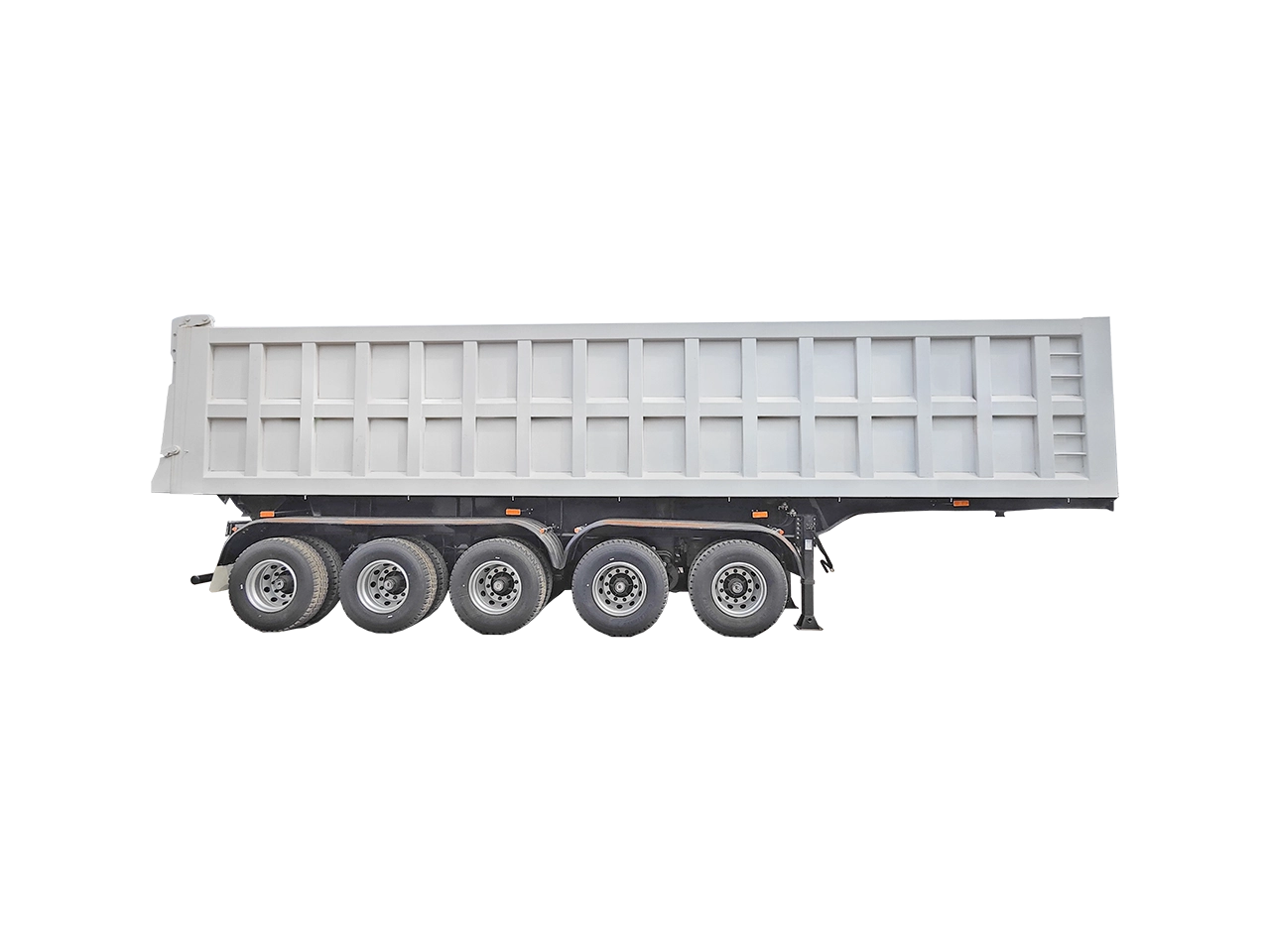
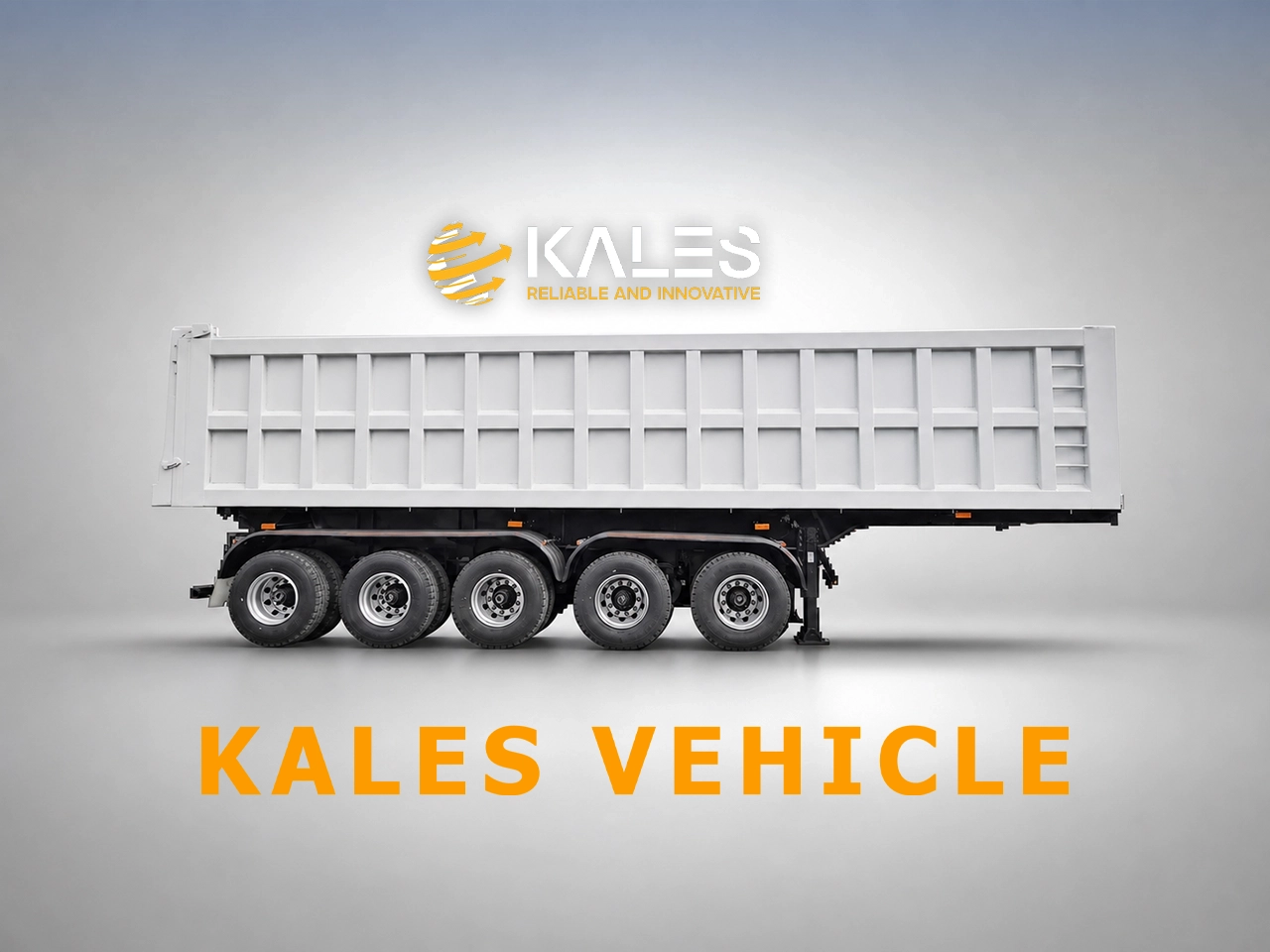
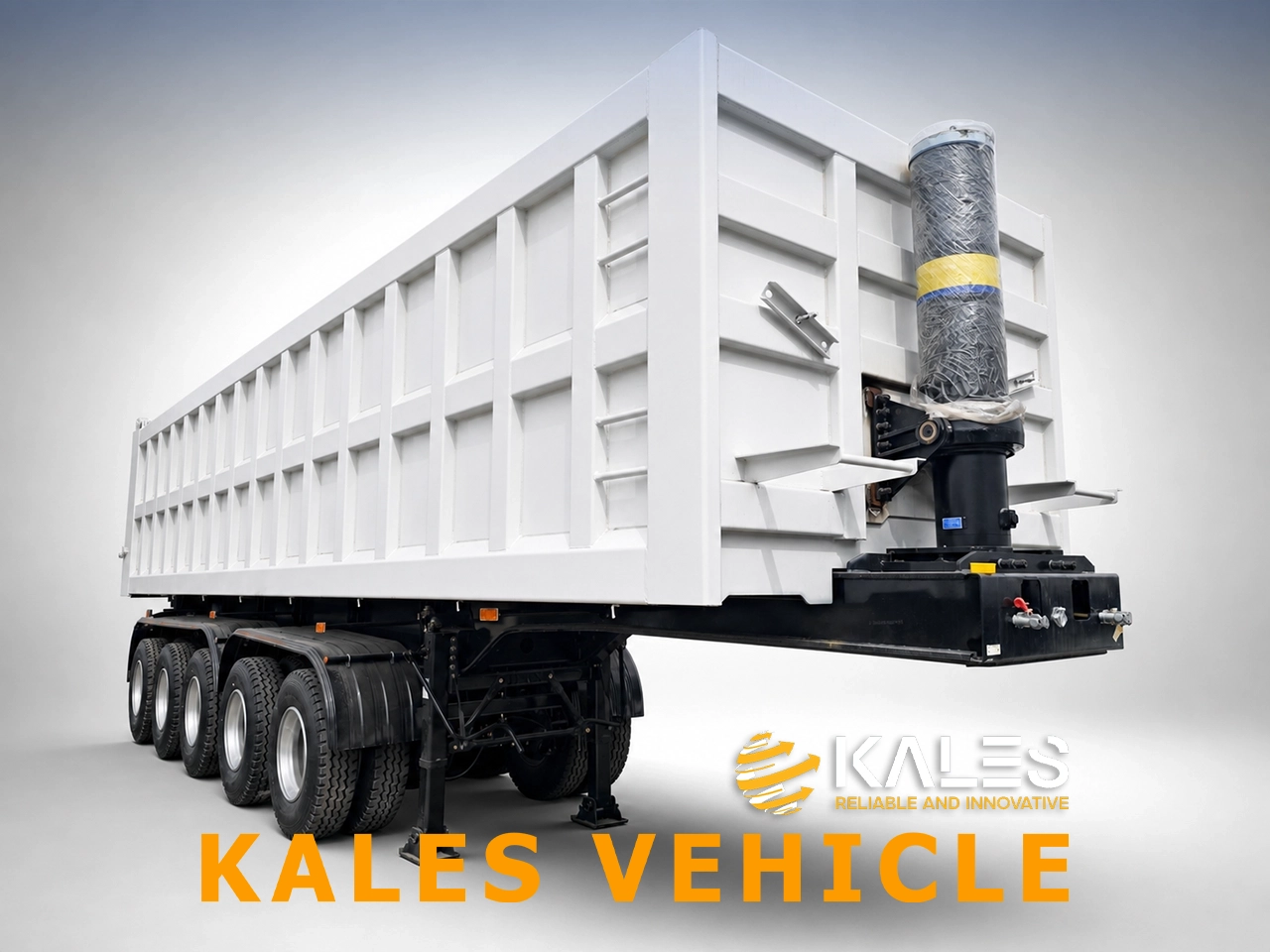
5-axle U-shape tipper semi-trailer for extreme heavy-haul cycles: this represented configuration combines an approximately 11-meter dump body, NM500 wear-resistant body steel, a T700 high-strength chassis concept, two front air-suspension lift axles and a rear mechanical tridem group. A Hyva FC A238-5 front-end cylinder is represented for the long-body tipping geometry.
The 100-tonne payload is an off-road or private mining-zone design reference, not a universal public-road allowance. Kales confirms the legal payload, axle group, tractor compatibility, cargo density, braking system and operating route before production.
Quick answer: choose this 5-axle mining tipper when an operation needs more payload and body length than the represented 4-axle 80-tonne tipper, while retaining a smooth U-shaped body, front-end hydraulic hoist and lift-axle flexibility for empty returns. The represented values are up to 100 tonnes off-road payload and 118.2 tonnes design GVW, subject to the final build and destination-country rules.
Key Specifications Overview
| Product type | 5-axle U-shape tipper semi-trailer for mining, quarry and heavy infrastructure bulk haulage |
|---|---|
| Represented payload class | Up to 100,000 kg for off-road or private mining-zone duty; public-road payload must be calculated for the destination |
| Represented design GVW | Approximately 118,200 kg, subject to kingpin load, axle distribution, tyre ratings and the approved drawing |
| Represented tare | Approximately 18,200 kg; final tare changes with body thickness, axle brand, tyres, accessories and coating |
| External dimensions | Approximately 11,000 x 2,500 x 3,780 mm; final dimensions and volume are configuration-specific |
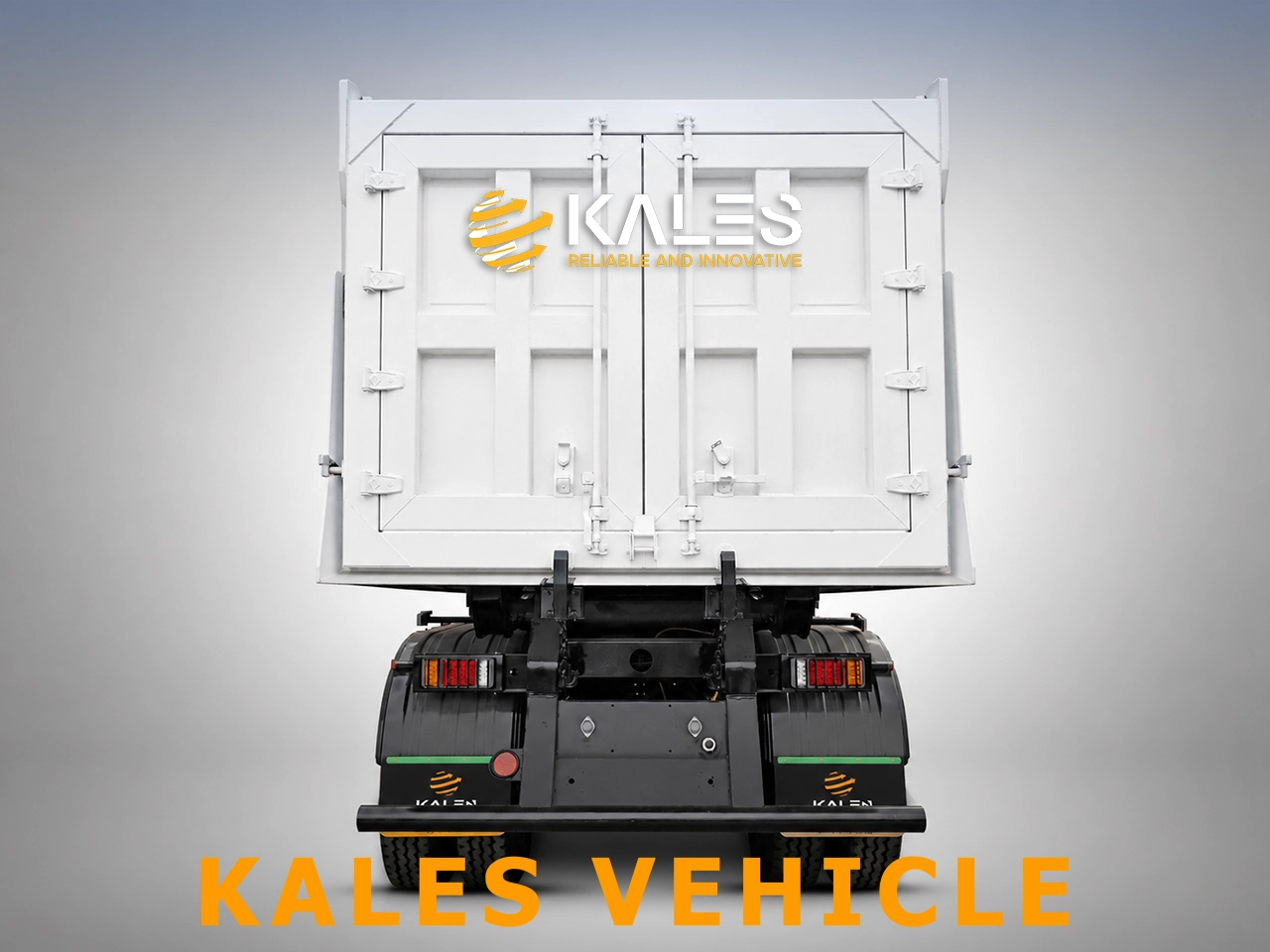
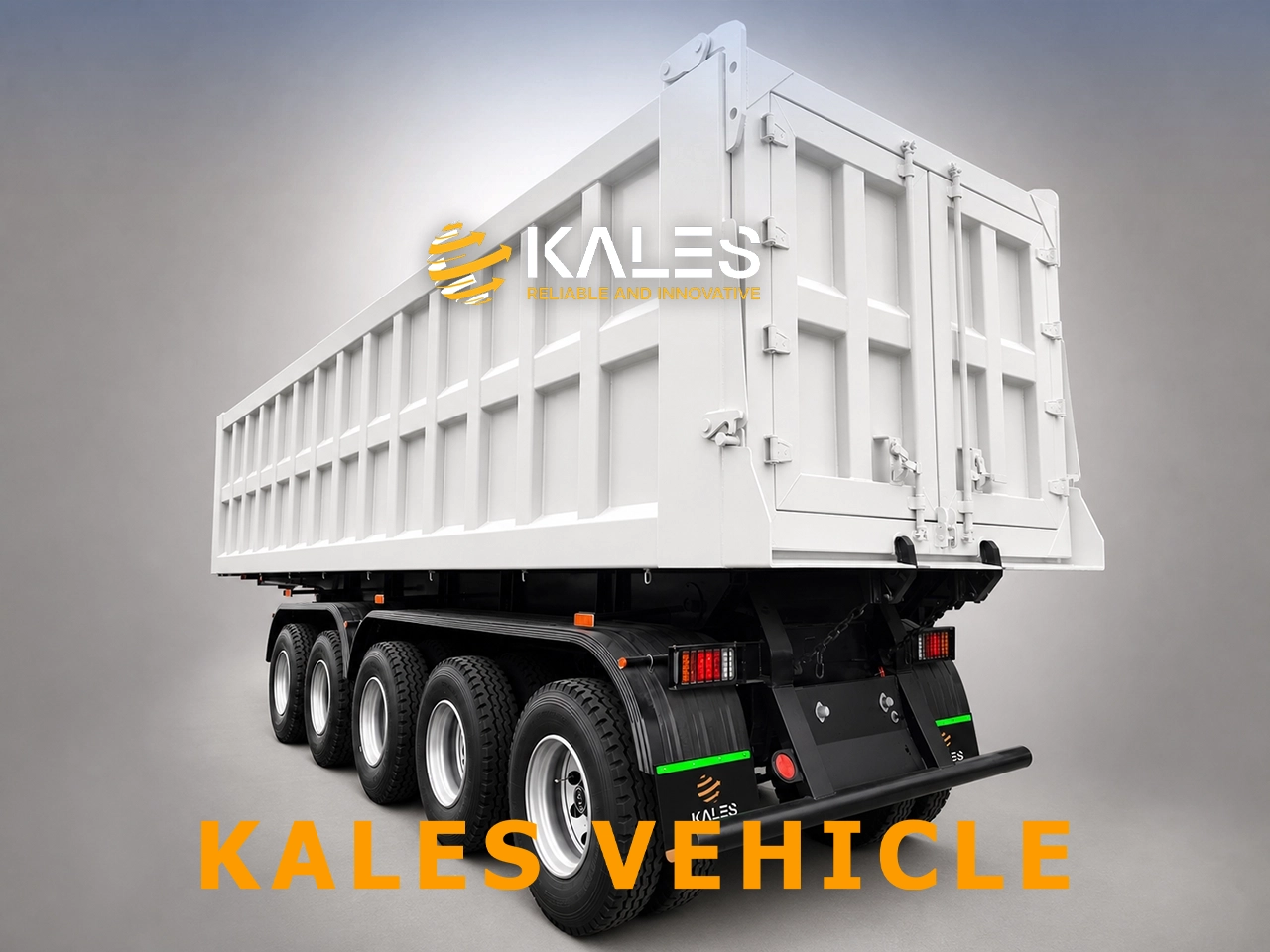
| Dump body | U-shape body using an NM500 wear-steel concept; represented standard plate selection is 6 mm floor and 4 mm sides |
| Severe-impact body option | 8 mm floor and 6 mm sides can be evaluated for larger rock and higher impact loading |
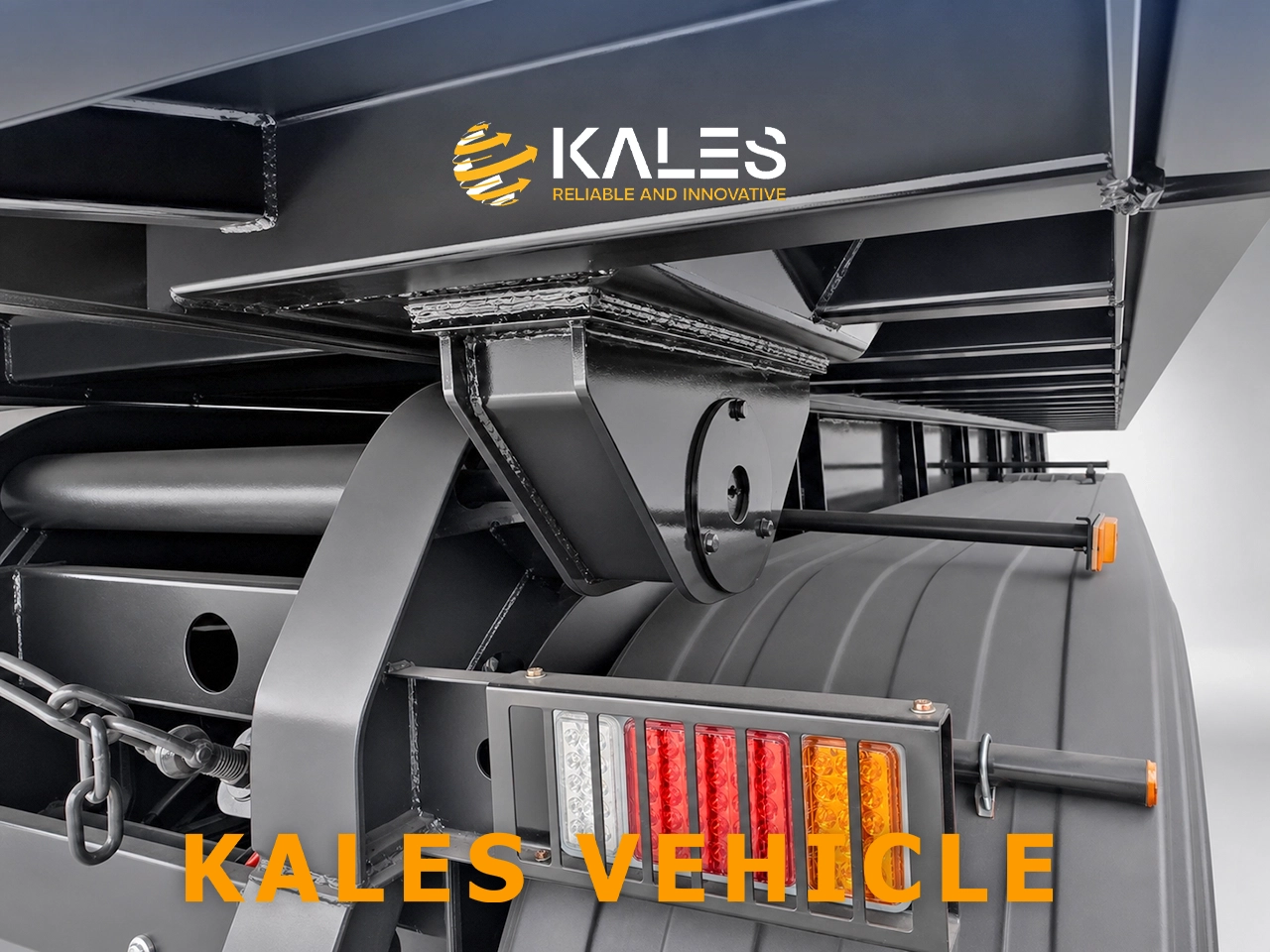
| Chassis | T700 high-strength main-beam concept with reinforced kingpin, suspension and hydraulic mounting zones |
| Axles and suspension | 5 x 13-tonne axle package; front two air-suspension lift axles plus rear 3-axle heavy mechanical suspension |
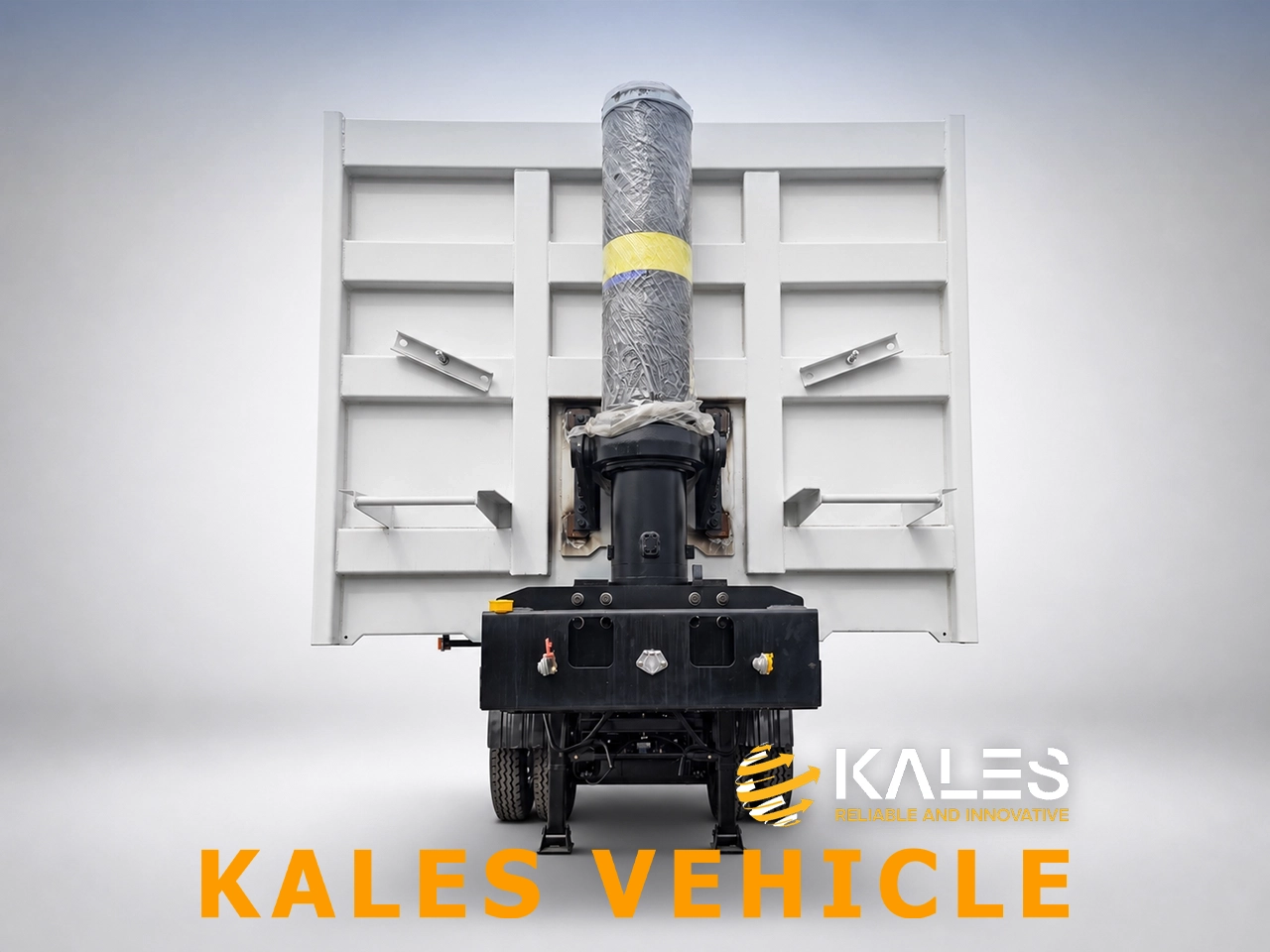
| Hydraulic hoist | Hyva FC A238-5-07630-009-K0486 front multi-stage cylinder as represented; final pressure, stroke and valve package are confirmed for the build |
| Landing gear | 28-tonne two-speed landing gear; JOST, FUWA or Kales options subject to the purchase order |
| Kingpin | 90 mm or 50 mm interchangeable specification according to tractor and duty requirements |
| Brakes | Dual-line pneumatic braking with ABS; EBS and WABCO component options available for market-specific requirements |
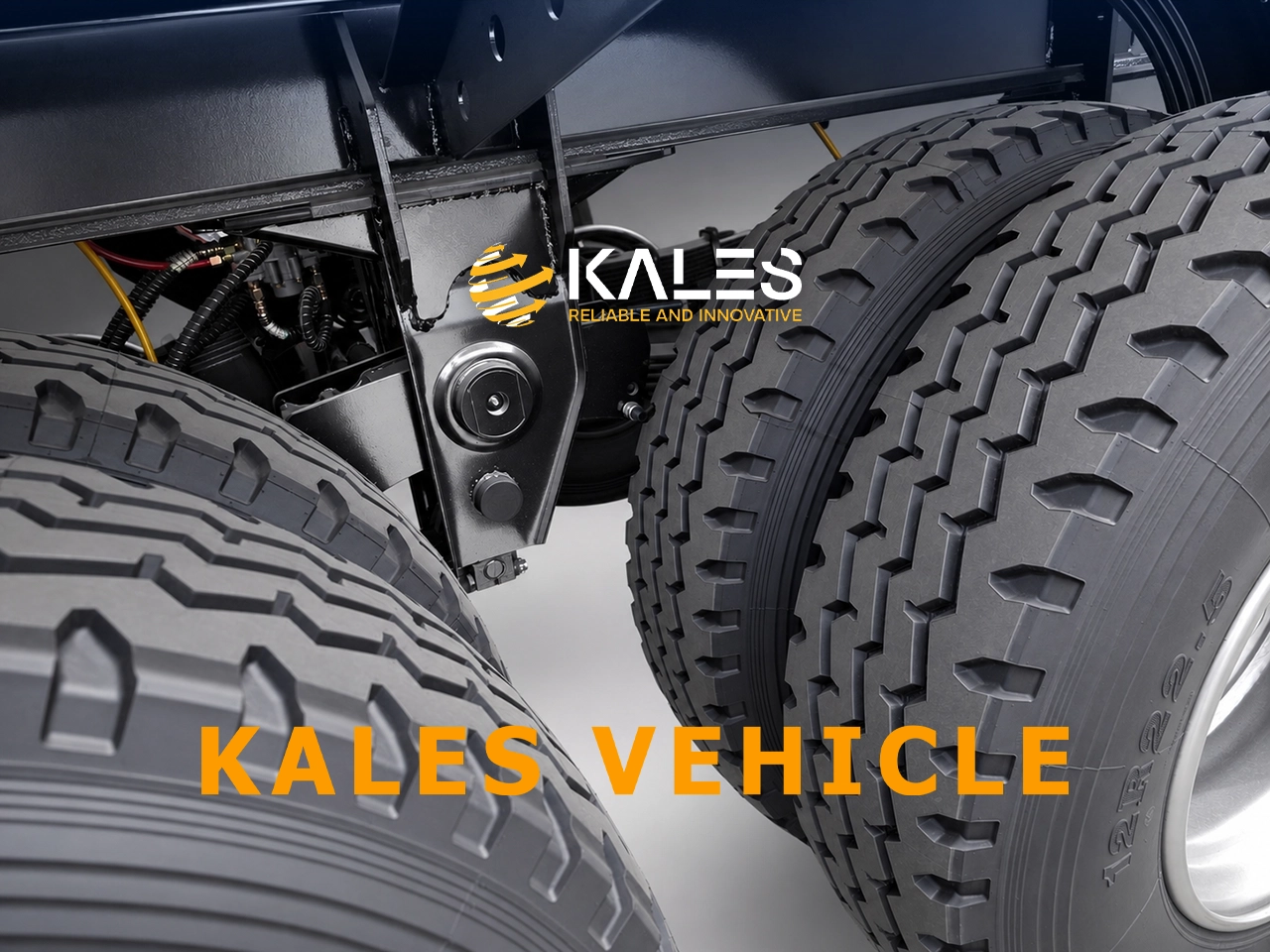
| Tyres and rims | 20 x 12R22.5 tyres with 9.0-22.5 rims as represented; tread and load index selected for the route |
These are represented configuration values rather than a declaration of road legality. The signed technical agreement controls the final dimensions, payload envelope, component brands, material thicknesses and inspection scope.
African Mining and Route Fit
This 5-axle dumper is intended for high-volume, high-mass bulk cycles where a standard three- or four-axle trailer does not provide the required off-road payload envelope. Typical routes include pit-to-crusher, mine-to-plant, quarry-to-stockyard, private mine-to-port corridors and major earthmoving projects.
Best-fit cargo and operating conditions
- DRC and Zambia Copperbelt: copper-bearing ore, cobalt material, aggregate and mine-development spoil on controlled private routes.
- Guinea and West African bauxite operations: abrasive bauxite, wet laterite and high-rainfall mine-road cycles where body release and corrosion control matter.
- East African infrastructure corridors: clinker, limestone, coal, excavated material and aggregates, with axle-load calculations reviewed for the specific country and route.
- Southern African mines and quarries: iron ore, coal, crushed rock and heavy aggregate where tyre availability, brake support and workshop serviceability influence the component choice.
Check before selecting a 100-tonne configuration
- Confirm whether the route is a closed mine/private road or a public highway. The 100-tonne payload reference is not automatically legal under EAC, SADC, ECOWAS or national axle-load rules.
- Provide cargo density, maximum particle size, loading equipment and drop height so the body floor, sidewall and top-rail design can be selected for impact and abrasion.
- Confirm tractor model, axle arrangement, fifth-wheel height, PTO capacity, hydraulic flow, wheelbase and permissible kingpin load.
- Review turning radius, ramp gradient, cross-slope, dumping pad condition, overhead clearance and recovery access before approving an 11-meter body.
Why Choose the 5-Axle Configuration
- Higher represented mining payload: the 5-axle platform provides an engineering basis for a 100-tonne off-road payload, compared with up to 80 tonnes for the represented 4-axle model.
- Long U-shape body: curved floor-to-side transitions help reduce material retention when unloading clay, fines and mineral concentrates, while the longer body supports higher-volume cargo profiles.
- Dual front lift-axle option: the first two axles can be configured for pneumatic lifting during approved unladen operation, reducing tyre contact and rolling resistance. Actual fuel and tyre savings depend on route and control strategy.
- Rear mechanical tridem: the three rear axles use a field-serviceable mechanical suspension concept for heavy mine-road duty and straightforward workshop maintenance.
- Component choice for regional support: axle, brake, landing-gear and hydraulic brands can be aligned with parts availability in the destination market.
Specification-backed advantages
- Wear-focused material pairing: NM500 is used as the abrasion-facing body-steel concept, while T700 is used for high-strength chassis structure; the approved bill of materials records the actual grades and thicknesses.
- Defined hydraulic starting point: the represented Hyva FC A238-5 cylinder gives engineering and procurement teams a named reference for stroke, mounting, valve and service-parts review.
- Load-distribution flexibility: five axles, two front air-lift positions and a rear mechanical tridem provide more configuration options than the 4-axle model, but legal axle loading still requires route-specific calculation.
4-axle versus 5-axle mining tipper
| Selection factor | Represented 4-axle model | This 5-axle model |
|---|---|---|
| Off-road payload reference | Up to 80 tonnes | Up to 100 tonnes |
| Body length reference | Approximately 9,500 mm | Approximately 11,000 mm |
| Lift-axle concept | One front air-lift axle | Two front air-lift axles |
| Rear heavy-duty group | Rear mechanical tridem | Rear mechanical tridem |
| Hydraulic reference | FC A202-series class | Hyva FC A238-5 class |
| Typical decision | Choose when manoeuvrability, lower tare and an 80-tonne mine-duty envelope are sufficient | Choose when the mine plan justifies higher payload and the route can support the longer, heavier combination |
Engineering, Hydraulic Safety and Quality Control
T700 chassis and NM500 dump-body architecture
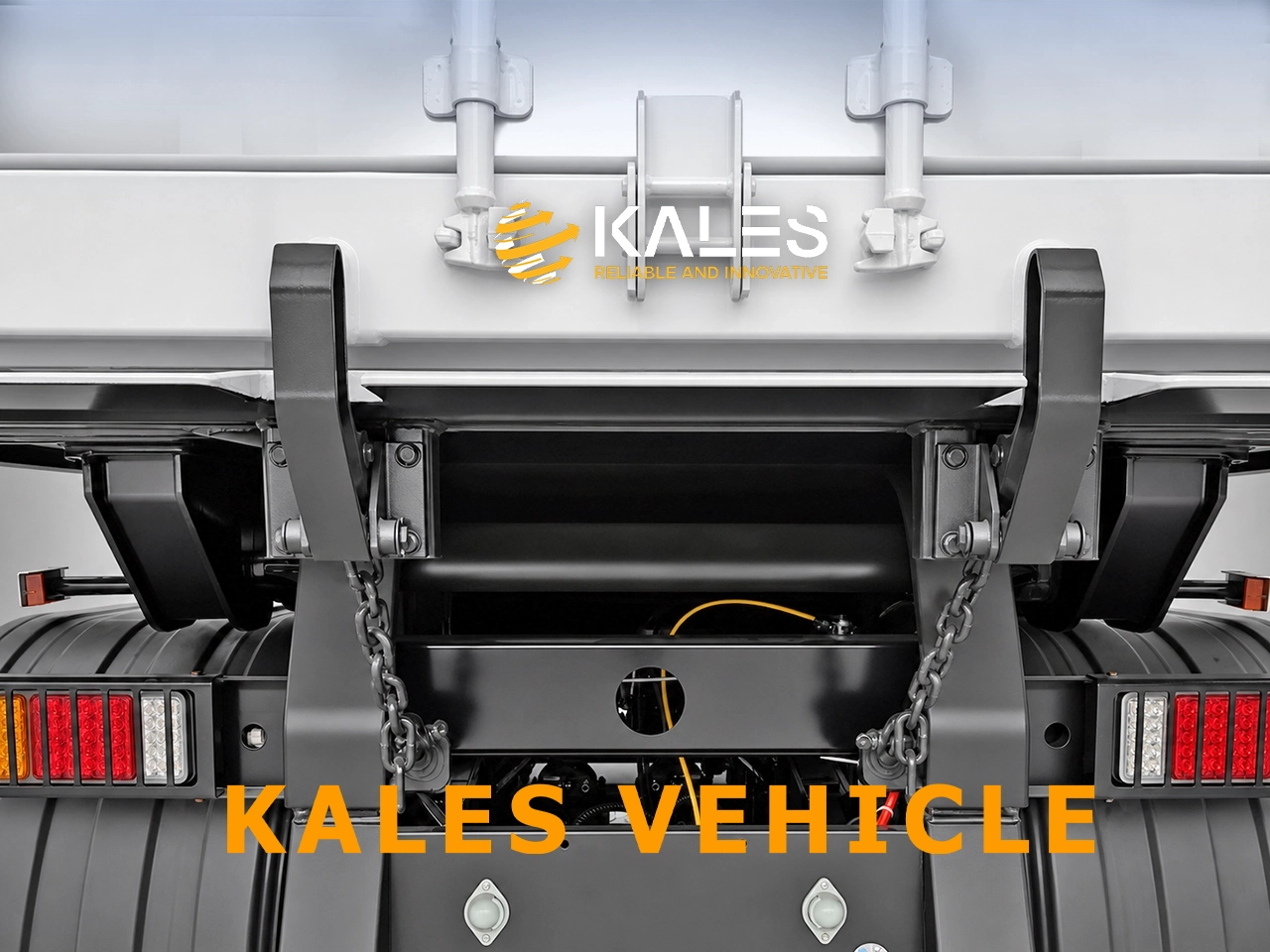
The chassis uses a T700 high-strength steel concept with reinforced load paths around the kingpin plate, main beams, suspension hangers, hydraulic trunnion area and rear tipping pivots. The body uses an NM500 wear-steel concept in the abrasion zone. Material certificates, plate thickness and welding consumables should be listed in the confirmed production documents.
The U-shaped cross-section avoids the sharp internal floor corners found in a traditional rectangular body. That geometry can improve discharge of sticky or fine material and distribute local side impact differently, but it does not remove the need for correct loading practice or a level dumping surface.
Hyva FC A238-5 front-end hoist
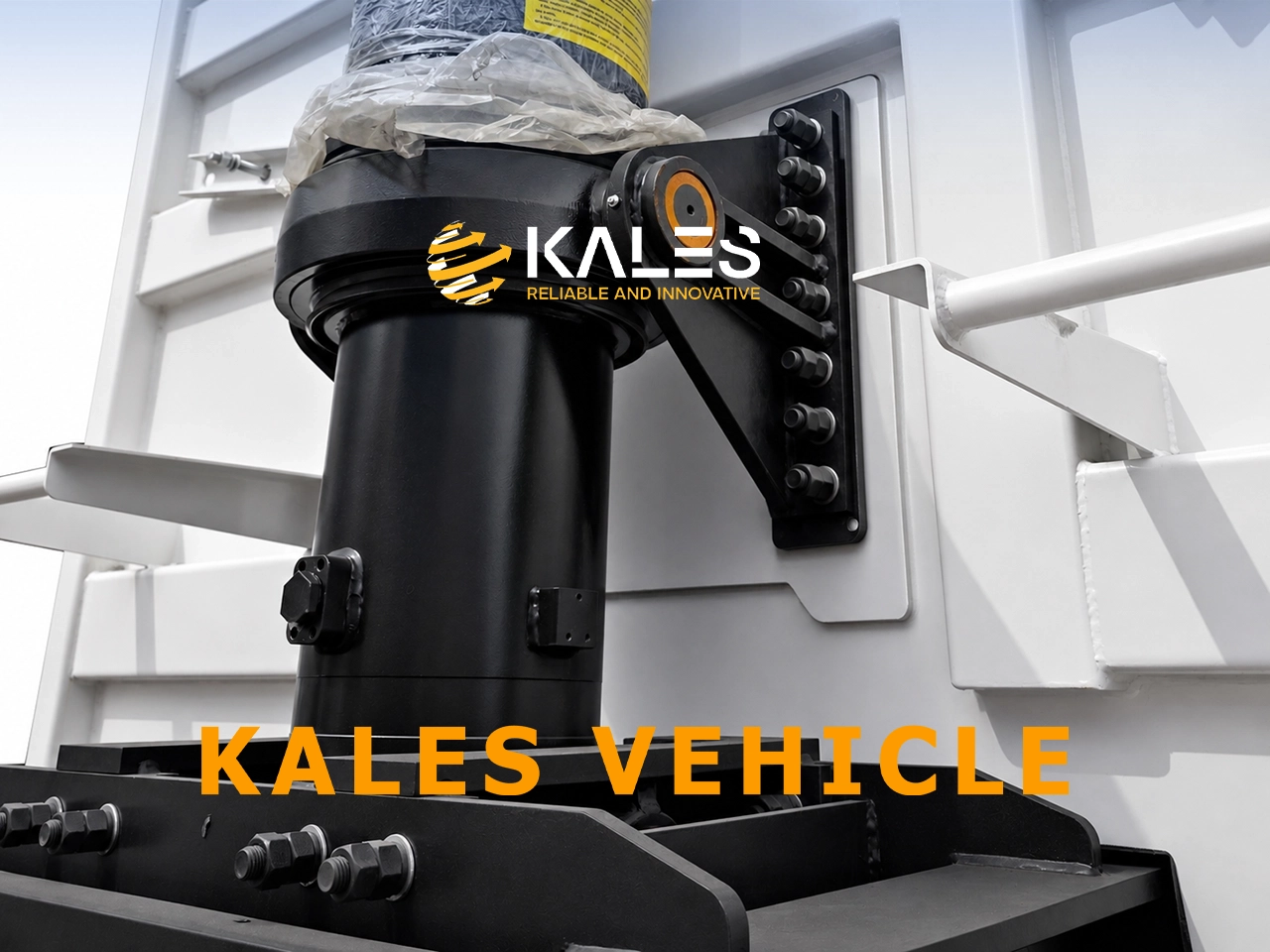
The represented Hyva FC A238-5-07630-009-K0486 multi-stage cylinder is positioned at the front of the body to provide the stroke needed for an approximately 11-meter dump box. Before production, Kales checks cylinder stroke, closed length, tipping angle, mounting geometry, tractor PTO flow and hydraulic reservoir capacity as one system.
- The valve package can include limit and controlled-lowering functions according to the approved hydraulic schematic.
- An anti-rollover or body-angle protection function can support the operating procedure, but no valve makes tipping on soft, cross-sloped or unstable ground safe.
- Hyva, Binotto or another agreed package can be reviewed against local service coverage, seals, hoses and replacement-part availability.
Hybrid five-axle suspension logic
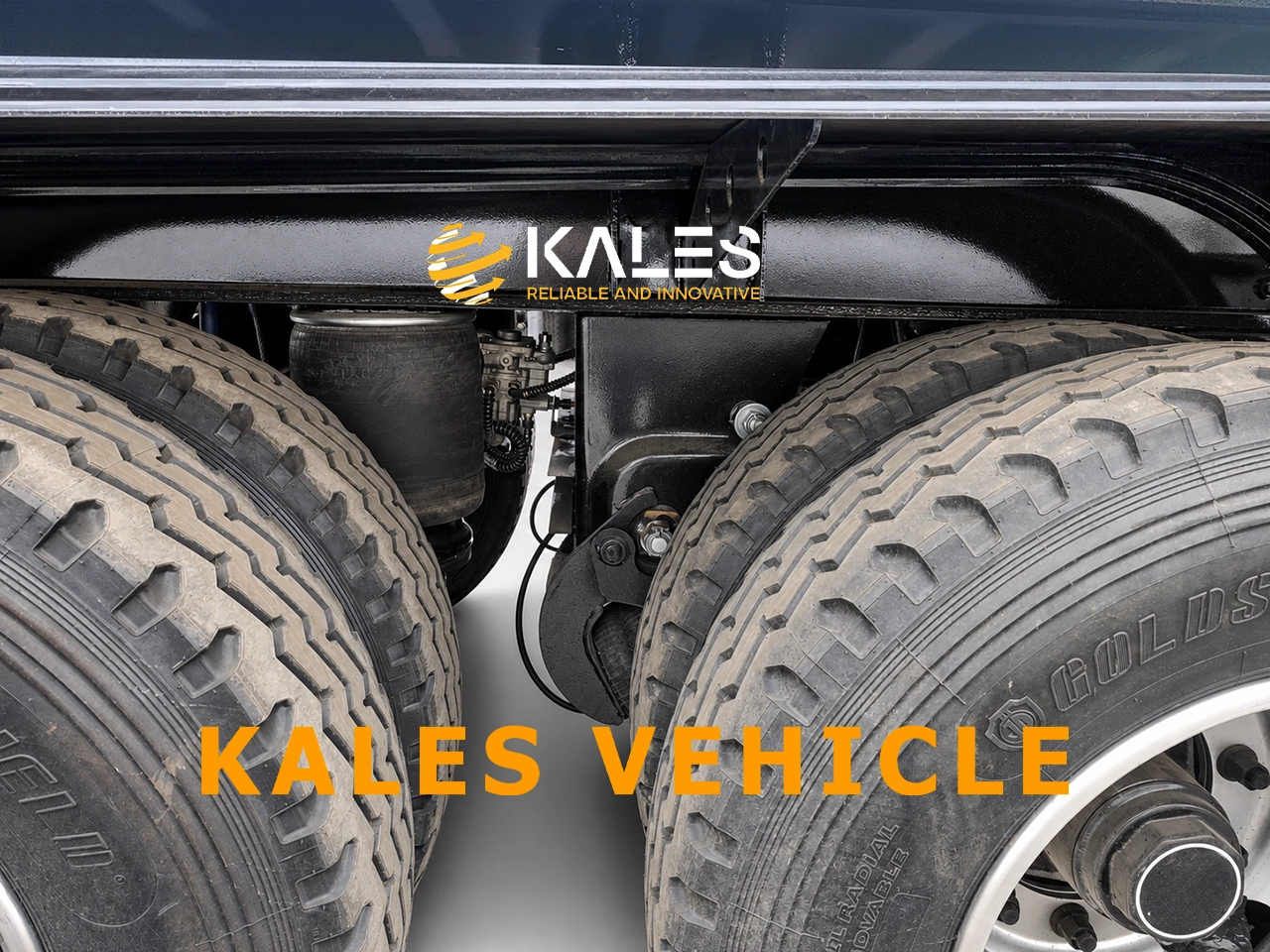
The represented layout combines two front air-suspension lift axles with a three-axle mechanical leaf-spring group at the rear. The lift axles are intended for approved empty-running conditions. They must be lowered when the load, speed, braking requirement or local rule demands full axle contact.
The rear tridem uses a heavy mechanical suspension concept that is familiar to many mining workshops. Final spring packs, equalizers, axle ratings, wheel-end seals and brake chamber sizes are selected around the intended duty cycle rather than treated as universal values.
Manufacturing and inspection plan
- Main-beam and body welding can use automated or robotic processes where the joint design and production batch make them appropriate. Welding procedure and welder qualification records can be included in the order inspection plan.
- Critical welds around the kingpin, suspension hangers, cylinder support and tipping pivots can be assigned ultrasonic or magnetic-particle inspection. The percentage, acceptance standard and reporting format must be agreed before production.
- Dimensional inspection, brake pressure/leak checks, hydraulic function tests and controlled tipping trials are completed according to the confirmed factory quality plan.
- Axle-load calculation, kingpin load, centre-of-gravity review and finite-element analysis can be supplied when the buyer provides complete tractor, cargo and route inputs.
Corrosion protection and ocean shipping
Export preparation can include abrasive blasting, an epoxy zinc-rich primer and a compatible topcoat or powder-coating system. The agreed surface preparation grade, dry-film thickness, colour and repair procedure should be recorded in the purchase specification.
- Hydraulic rods, landing-gear screws, kingpins, electrical connectors and exposed brake components receive shipment protection appropriate to the transport method.
- Marine wax, wrapping and desiccant can be specified for long ocean transit or high-salinity destinations.
- Stacking or semi-knocked-down shipment can be evaluated against trailer geometry, port handling capability and reassembly resources. Freight savings vary by vessel, route and quantity.
Product Inspection Views
Frequently Asked Questions
Is a 100-tonne payload legal on African public roads?
Not automatically. The 100-tonne figure is an off-road or private mining-zone design reference. Public-road operation requires a country- and route-specific review of axle limits, bridge formulas, dimensions, braking, permits and tractor combination mass.
When should I choose the 5-axle model instead of the 4-axle 80-tonne tipper?
Choose the 5-axle model when the mine plan, loading equipment, dumping area and private route justify the longer body and higher represented payload. The 4-axle model can be a better fit where manoeuvrability, lower tare or an 80-tonne envelope is sufficient.
Why combine T700 chassis steel and NM500 body steel?
The two materials serve different functions. T700 is used as a high-strength chassis concept for bending and torsional loads, while NM500 is used as a wear-steel concept in the dump body. Exact grades and thicknesses must appear on the approved bill of materials.
Can both front axles lift while the trailer is empty?
The represented design can use two front pneumatic lift axles for approved unladen operation. The control logic, legal conditions and minimum axle contact are confirmed for the destination. The axles must be lowered whenever load distribution, braking or local rules require them.
What information is needed for the Hyva FC A238 hydraulic selection?
Provide the tractor PTO specification, hydraulic flow and pressure, reservoir capacity, fifth-wheel height, body dimensions, target tipping angle, cargo density and site gradient. Kales then checks the cylinder, mounting and valve package as a complete system.
Which documents can be supplied before factory release?
Request the approved CAD drawing, axle-load calculation, bill of materials, component list, coating and packing record, brake and hydraulic test results, dimensional inspection sheet, and any agreed welding or NDT reports.
Request a 100-Ton Tipper Technical Review
Send the cargo type, bulk density, maximum particle size, target payload, route profile, destination country, tractor model, fifth-wheel height and preferred axle and hydraulic brands. Kales Vehicle Trailer Engineering will review the 5-axle configuration and prepare a project-specific CAD drawing, axle-load analysis and quotation.
- Email: jennylee@kalestruck.com
- WhatsApp: +86 131 5638 8843
Related Kales Tipper Options
- 4-Axle 80 Ton U-Shape Mining Tipper when the operation needs a shorter, lighter heavy-duty configuration.
- 80 Ton Tipper Trailer with Electric Tarp when covered-load control is more important than the 100-tonne mining envelope.
- 60 Ton Rear Dump U-Shape Tipper for lower payload quarry, aggregate and construction haulage.