Container & Bulk Transport Product Guide · Published: December 4, 2025 · Updated: June 4, 2026 · By Kales Vehicle Engineering Team · Reviewed by Kales Export Sales Engineering · Market focus: Middle East, Africa, port corridors, export freight, and mixed 40ft/45ft container programs
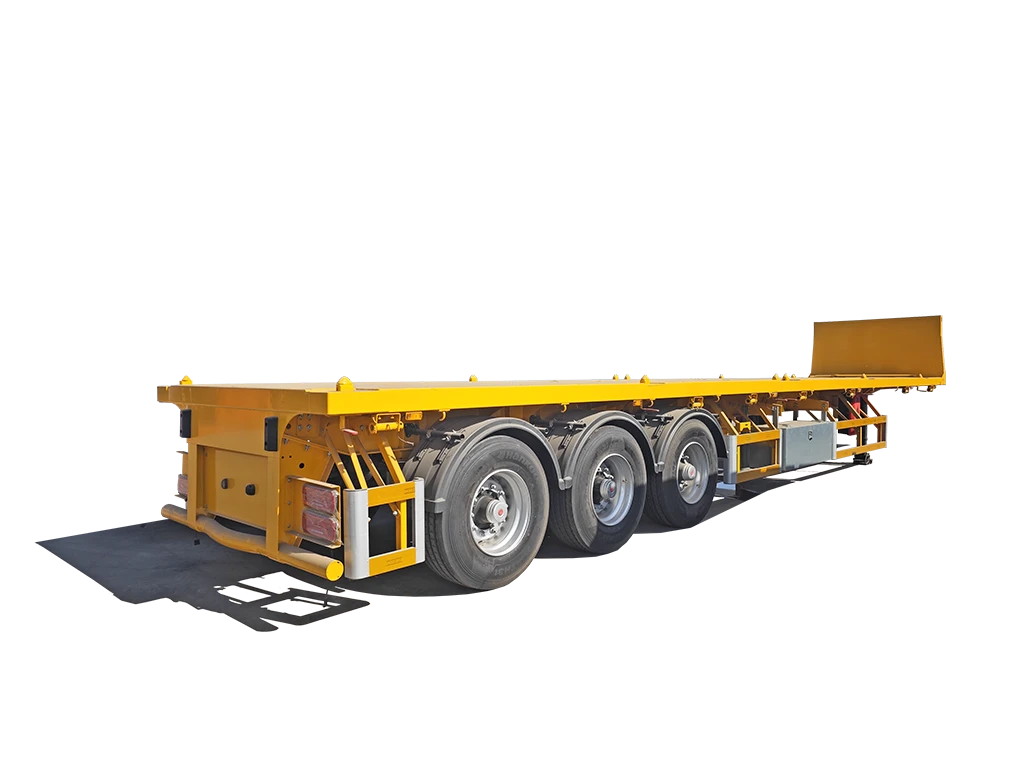
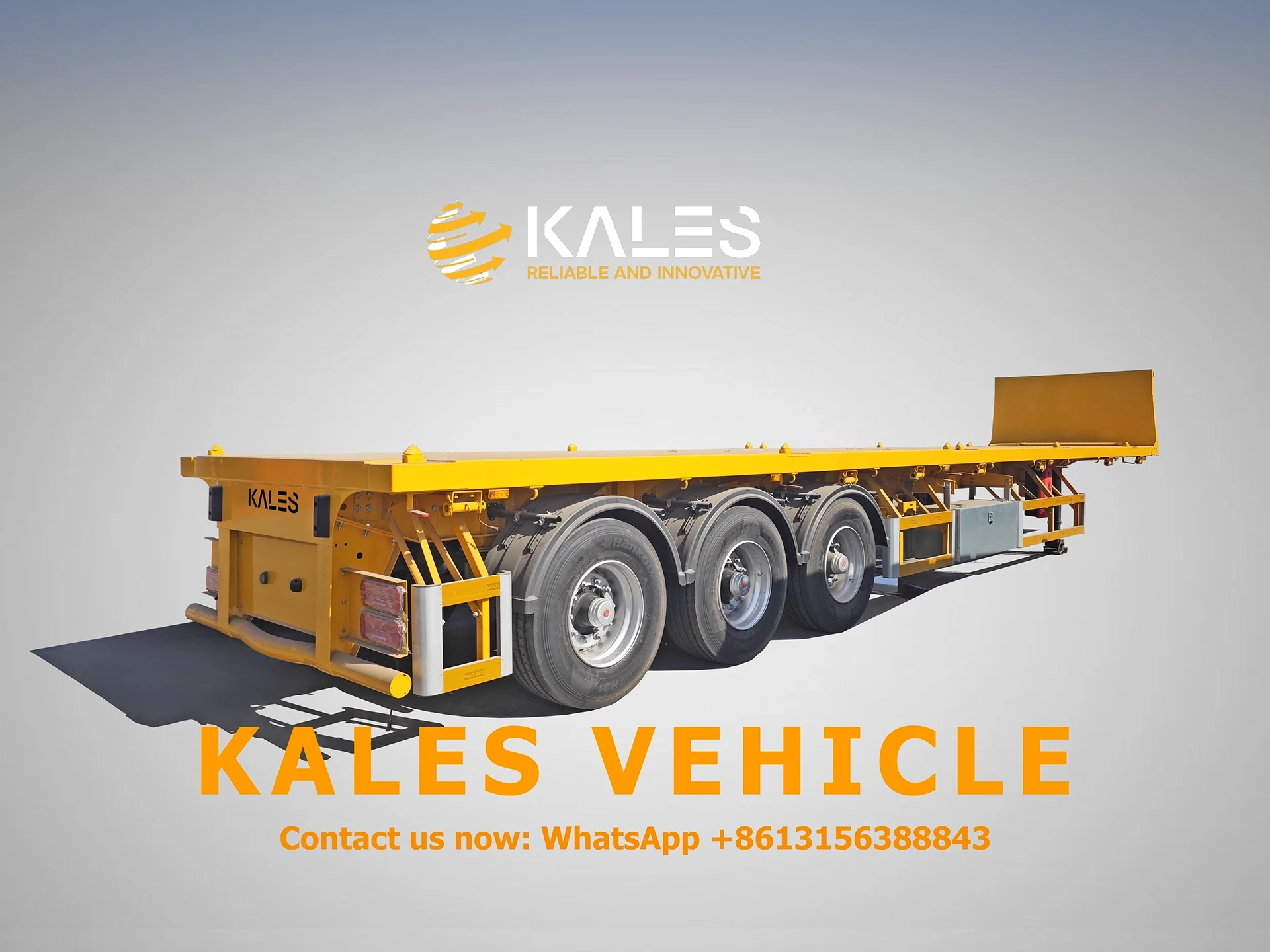
Tri-axle 45ft flatbed semi trailer: this Kales export-oriented platform is built for buyers who need a broader 40ft and 45ft container-capable flatbed rather than a regional 40ft-only workhorse page. It fits fleets moving containers, steel, bagged cargo, pallets, timber, and project freight where deck flexibility, export compliance, and longer-route stability matter more than chasing the lowest base build.
Engineering guidance from the Kales Vehicle product team for buyers comparing a 45ft flatbed platform with regional 40ft flatbeds, container chassis, and more specialized cargo bodies.
Quick answer: choose this tri-axle 45ft flatbed semi trailer when your operation needs broader 40ft and 45ft container compatibility, export-oriented configuration depth, and a platform that can handle container work plus open-deck freight on the same trailer. It is the better fit for buyers comparing SASO-ready export supply, longer cargo footprint, and mixed logistics use across highways, ports, and industrial corridors.
Why Buyers Choose This 45ft Export Flatbed Platform
- 40ft and 45ft container flexibility: better aligned with export buyers who need one platform across multiple ISO dispatch patterns.
- Broader route framing: positioned for international and cross-border logistics rather than a narrower Africa-only 40ft workhorse role.
- Open-deck versatility: carries containers, steel, palletized freight, timber, machinery, and general project cargo on the same platform.
- Export compliance focus: stronger fit for buyers reviewing SASO-style documentation, axle matching, and highway-led operating programs.
- Longer deck utility: more useful where 45ft cargo footprint or higher loading length matters in everyday commercial planning.
Specification-backed advantages
- Payload class: 40T to 60T depending on route regulation, beam reinforcement, axle choice, and final specification. This provides a concrete durability and load-control basis for the stated duty cycle.
- Brake system: WABCO valve logic with dual-circuit air braking. This gives the buyer a specific braking or safety package to verify for the intended route.
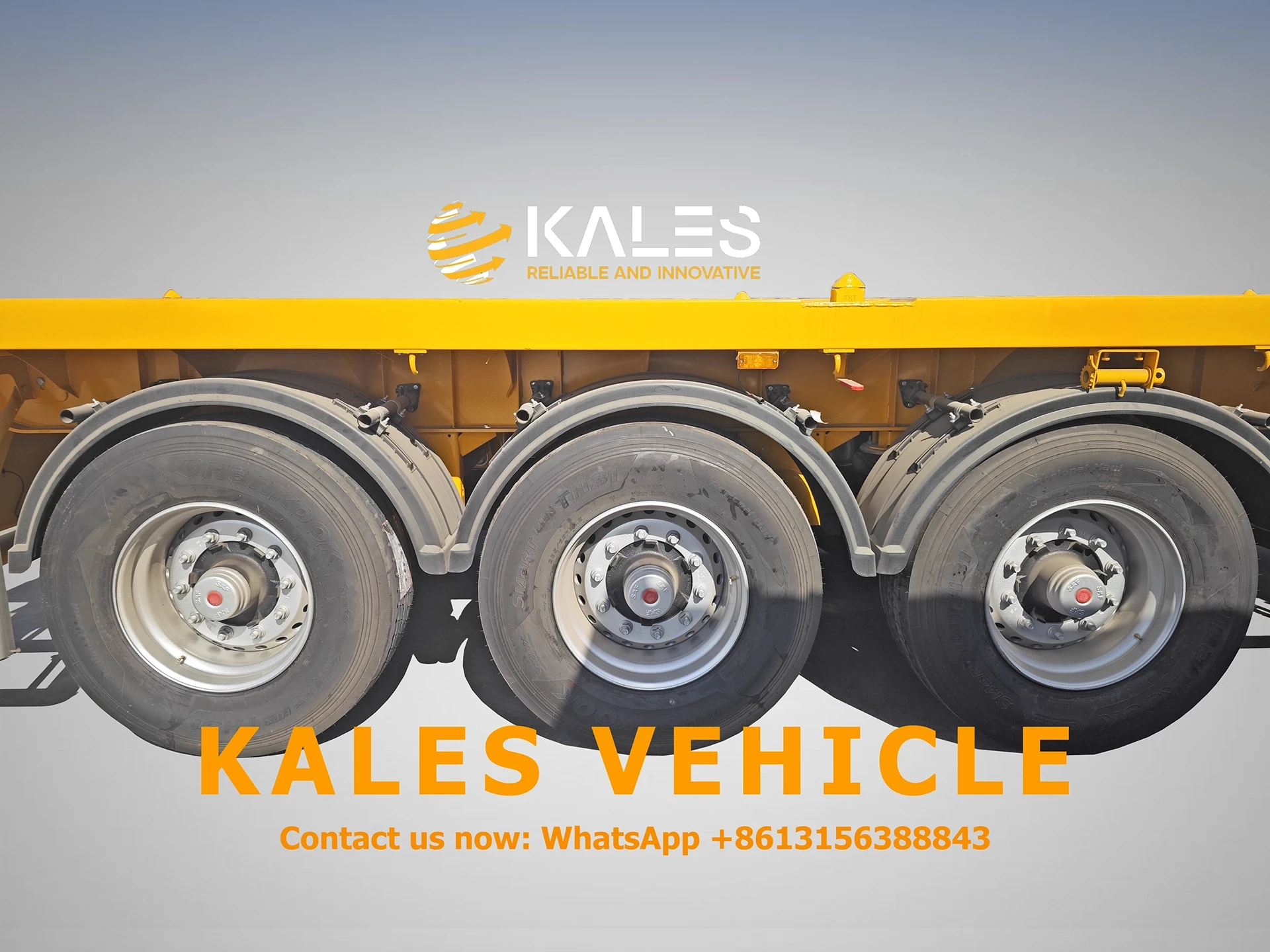
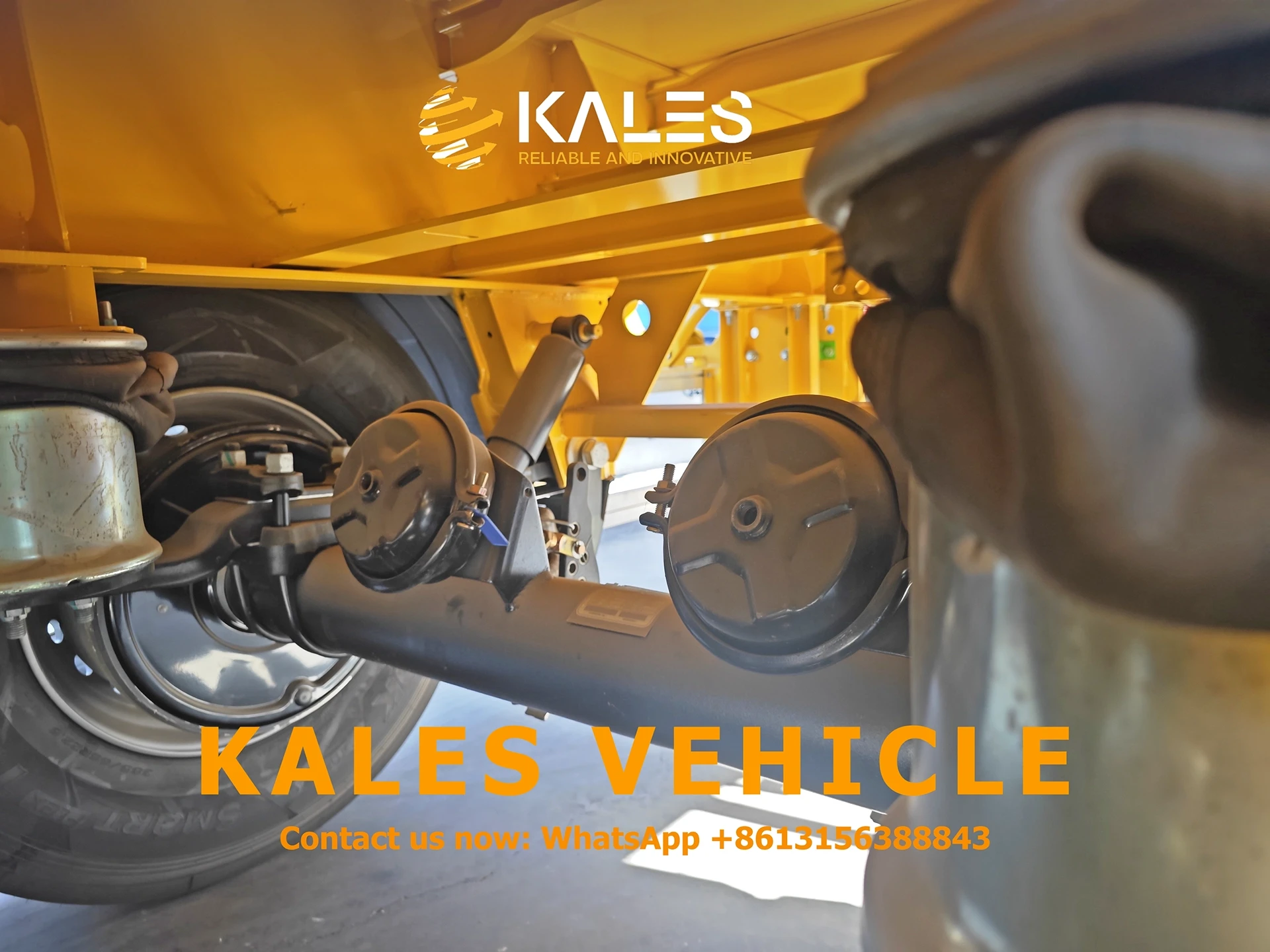
- Axles: 3 axles, typically 13T or 16T; FUWA, BPW, or KALES matching. This makes destination-market parts support and workshop planning easier to confirm before production.
Technical Snapshot
| Product type | Tri-axle 45ft flatbed semi trailer / export platform trailer |
|---|---|
| Primary freight role | 40ft and 45ft container transport plus general open-deck freight |
| Reference dimensions | About 13,750 mm x 2,500 mm x 1,550 mm, customizable by market and cargo program |
| Payload class | 40T to 60T depending on route regulation, beam reinforcement, axle choice, and final specification |
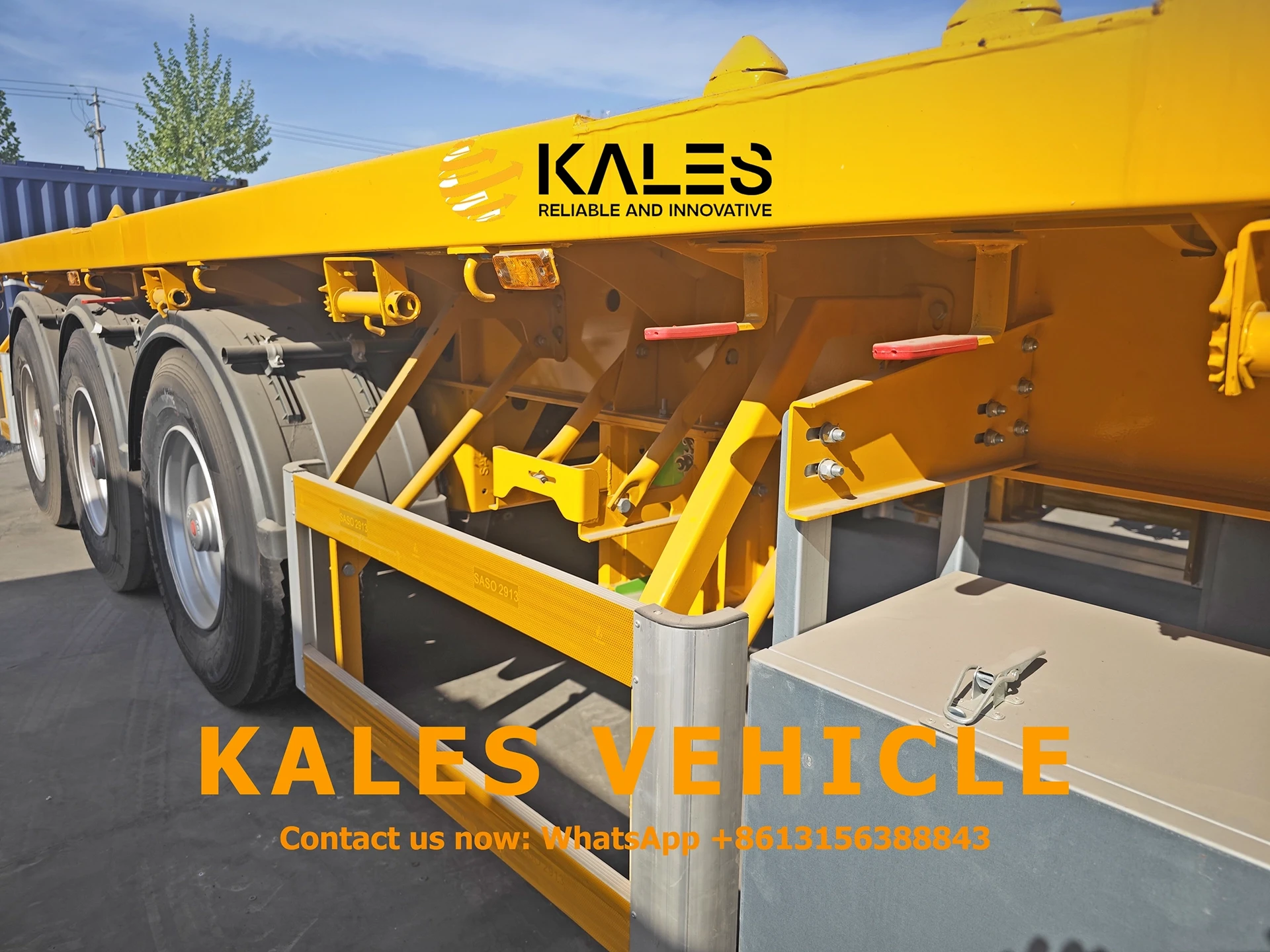
| Main beam | T700 high-strength steel beam with reinforced gooseneck and dense cross-member support |
| Deck floor | Anti-slip steel plate with export-duty cross-member layout |
| Container locking | Configured for 40ft and 45ft container positioning with ISO lock layout according to dispatch need |
| Axles | 3 axles, typically 13T or 16T; FUWA, BPW, or KALES matching |
| Suspension | Heavy-duty mechanical suspension standard, with air suspension possible on selected highway programs |
| Brake system | WABCO valve logic with dual-circuit air braking |
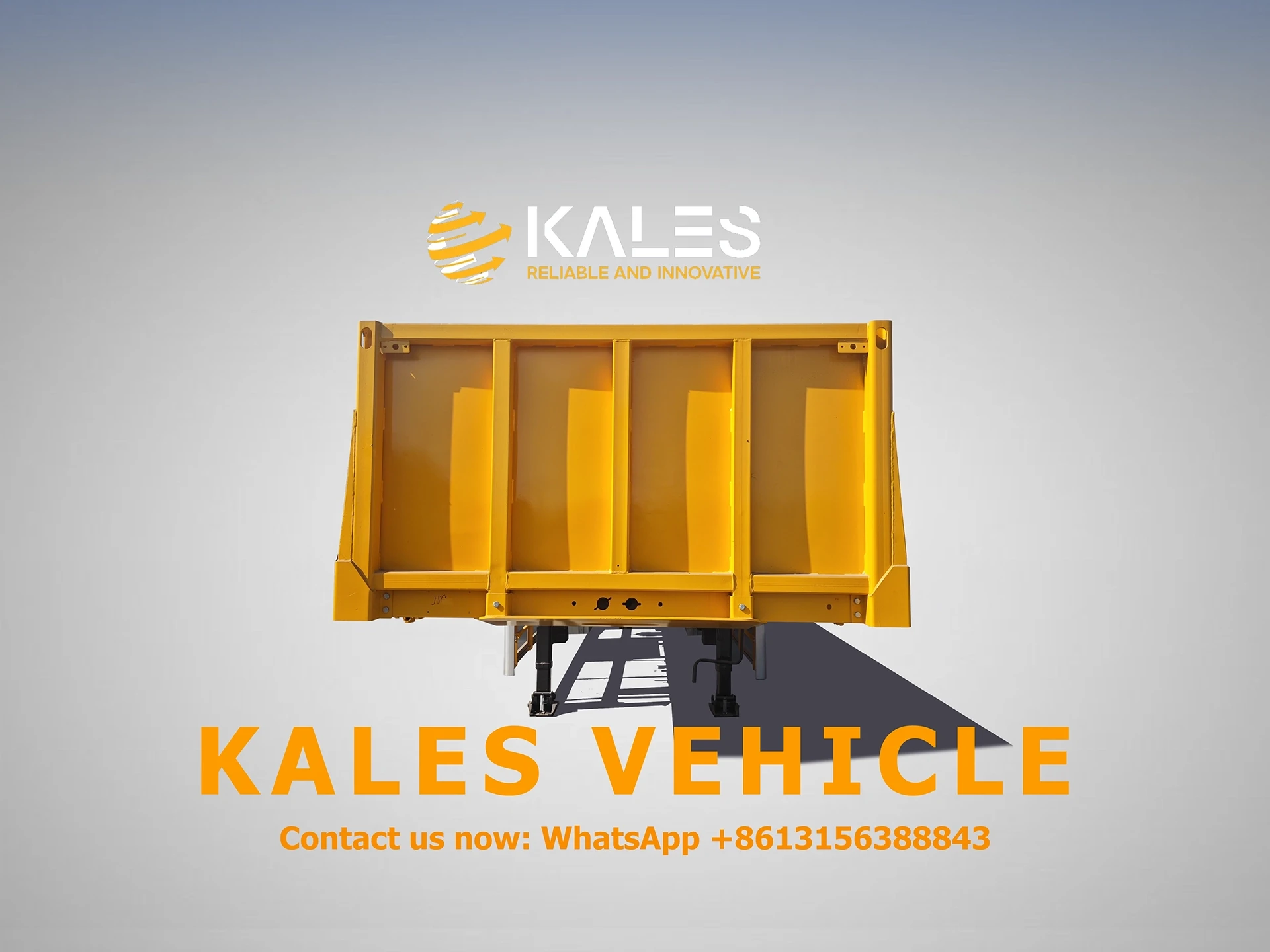
| Landing gear | JOST or KALES 28T heavy-duty landing gear |
| Custom quotation | Contact KALES for a tailored quotation based on the required configuration, order quantity, and destination. |
Best Fit Operating Profile
This page fits buyers whose freight program is broader than a standard regional 40ft flatbed. It is a good match for port corridors, export projects, container-plus-general-cargo fleets, steel distributors, and long-haul operators who need more deck length and stronger international procurement positioning. The trailer works best when container dispatch is mixed with open-deck freight and the business wants one export-ready platform rather than multiple narrow-use trailers.
Best for
- Export buyers needing one flatbed for 40ft containers, 45ft containers, and open-deck freight
- Middle East and Africa highway logistics where longer cargo footprint and compliance framing matter
- Steel, timber, pallet, machinery, and project cargo that benefits from a longer deck than a standard 40ft platform
- Procurement teams comparing flatbed, container chassis, and specialized body options for mixed route use
Not ideal for
- Buyers whose real operating need is a simpler regional 40ft workhorse for Africa or Latin America
- Container-only shuttle work where a dedicated container chassis is commercially cleaner
- Cargo that needs permanent side structure, curtains, or enclosed-body protection rather than an open flat deck
How This Page Differs From the Regional 40ft Flatbed Workhorse
This page owns the broader 45ft export flatbed intent. It is written for buyers comparing longer deck utility, 40ft and 45ft container compatibility, and export-market procurement logic. The regional 40ft page stays narrower: a simpler workhorse for mixed freight and easier service in Africa or Latin America. Here, the positioning is more international and more configuration-led.
| Buyer comparison point | This 45ft page | Regional 40ft page |
|---|---|---|
| Primary intent | Broader 40ft and 45ft export flatbed platform | Regional 40ft mixed-freight workhorse |
| Route frame | Port, highway, export, and cross-border logistics | Africa or LATAM freight with simpler service logic |
| Buyer concern | Container flexibility, compliance, and deck length | Durability, repair simplicity, and practical mixed-freight uptime |
| Alternative path | Container chassis or specialized cargo body | This 45ft page when broader export framing is needed |
Engineering and Serviceability Details
Longer deck, broader dispatch logic
The reason to choose this page is not that 45ft is automatically better than 40ft. It is that some freight programs genuinely need the longer platform. That can be because of 45ft container compatibility, longer steel and timber bundles, or mixed project cargo that fits awkwardly on a shorter regional flatbed. The longer deck only makes sense when the route and loading environment can monetize that extra length.
T700 beam and export-duty reinforcement
A longer flatbed needs a coherent beam program, not only a longer piece of steel. Kales positions this trailer around a T700 main beam, reinforced gooseneck support, and a dense cross-member layout so the deck can stay more stable under mixed cargo instead of drifting into sagging and fatigue under longer-span loading.
Container capability without losing flatbed usefulness
This product should not be treated as only a container tool. It is valuable because it can combine container locking logic with open-deck freight handling. That makes it more commercially flexible than a pure chassis when the return leg or secondary route still needs steel, pallets, timber, or machinery support.
How is the final quotation confirmed?
KALES confirms the quotation after reviewing the required specification, quantity, destination, and delivery terms. Send the operating requirements for an accurate proposal.
Quotation and Procurement Guidance
Buyers searching for a tri-axle 45ft flatbed semi trailer should compare this platform against real route and cargo need, not only against the cheapest 40ft platform on a quote sheet. The key questions are whether you truly need 45ft deck utility, whether 40ft and 45ft container handling will both be used, and whether the export corridor expects stronger compliance and highway readiness.
Kales can match lock layout, beam reinforcement, axle brand, suspension, landing gear, and deck thickness before production. That keeps the trailer aligned with the freight program instead of overspecifying a regional workhorse or underspecifying a broader export platform.
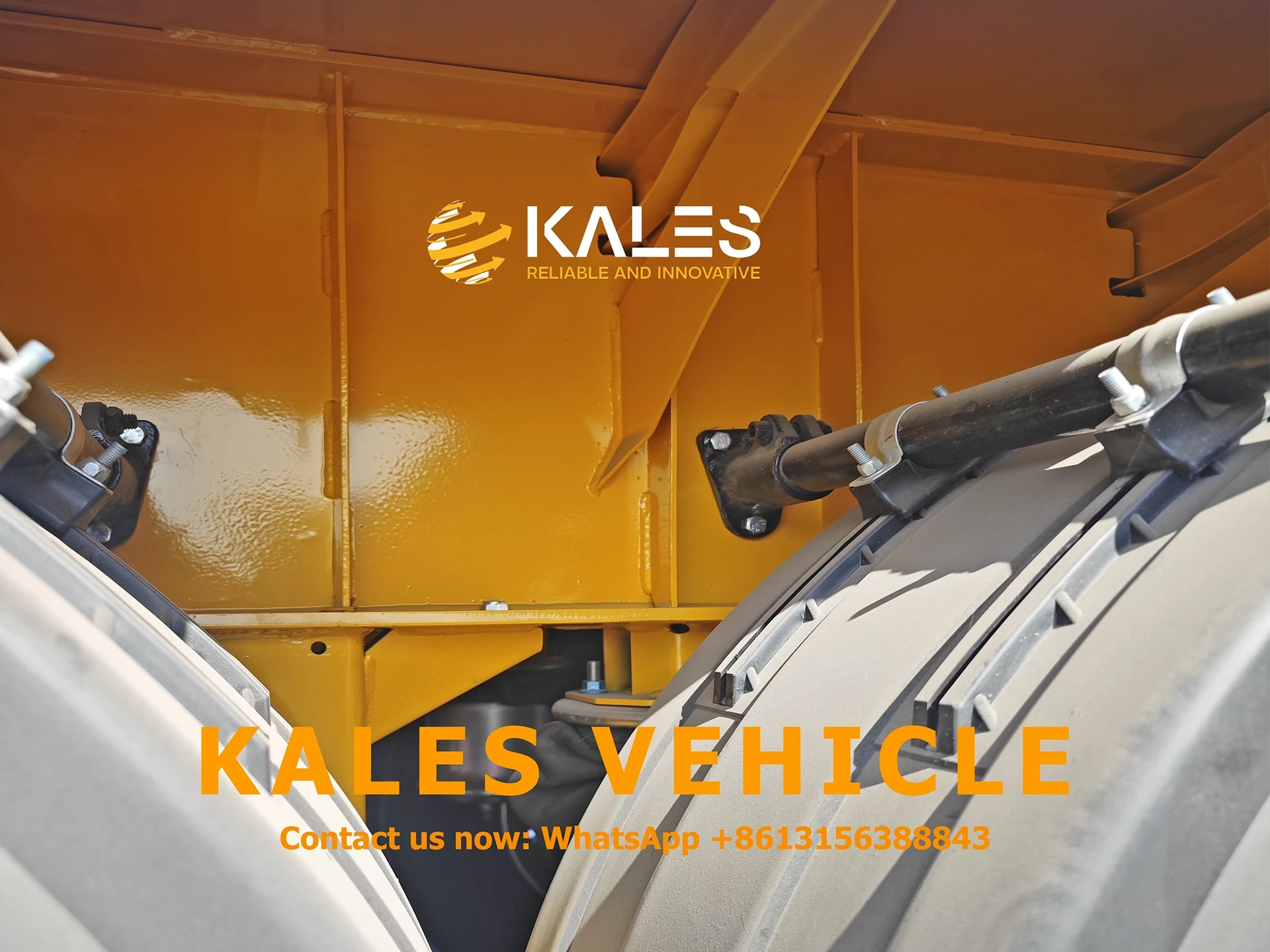
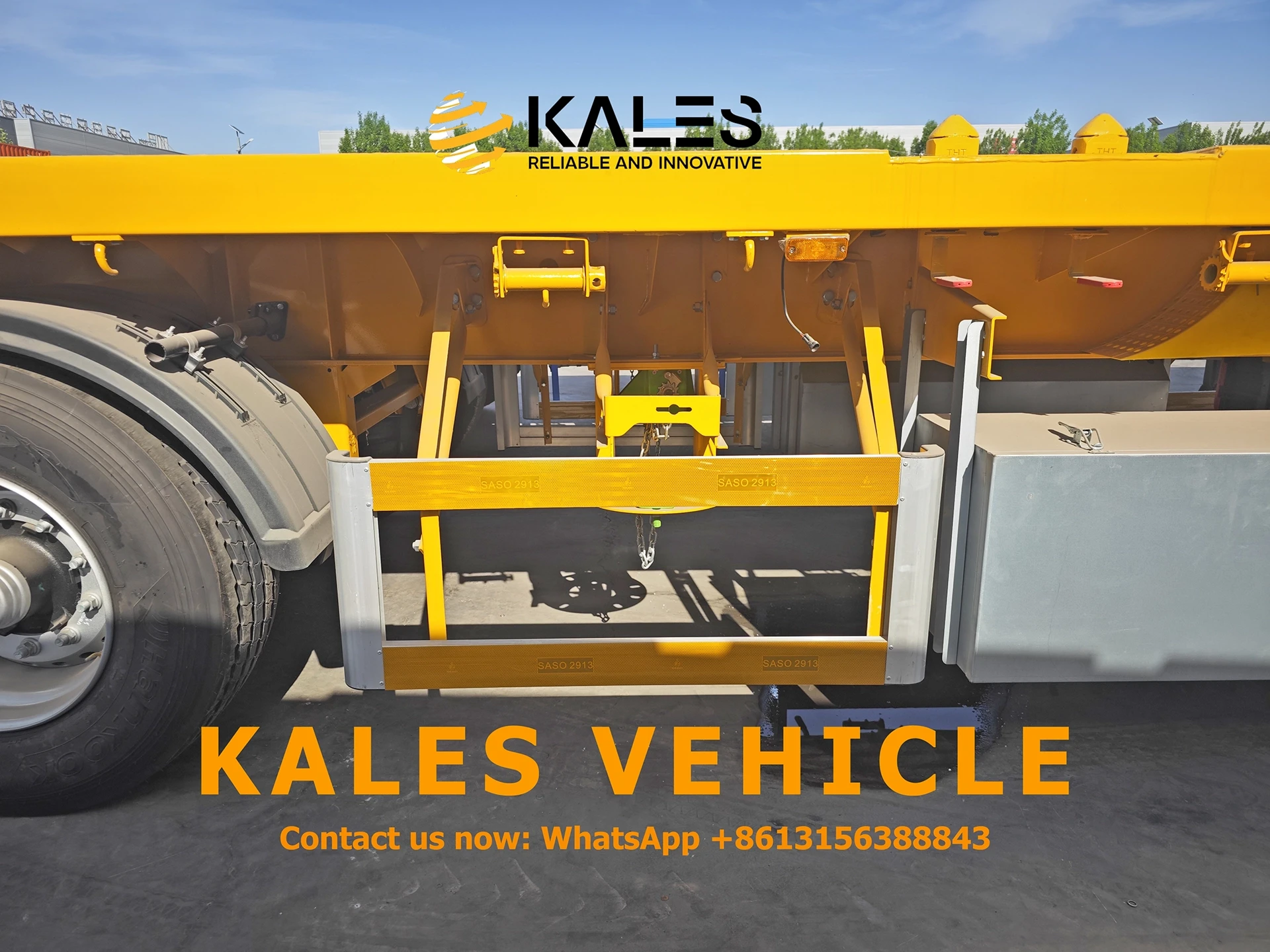
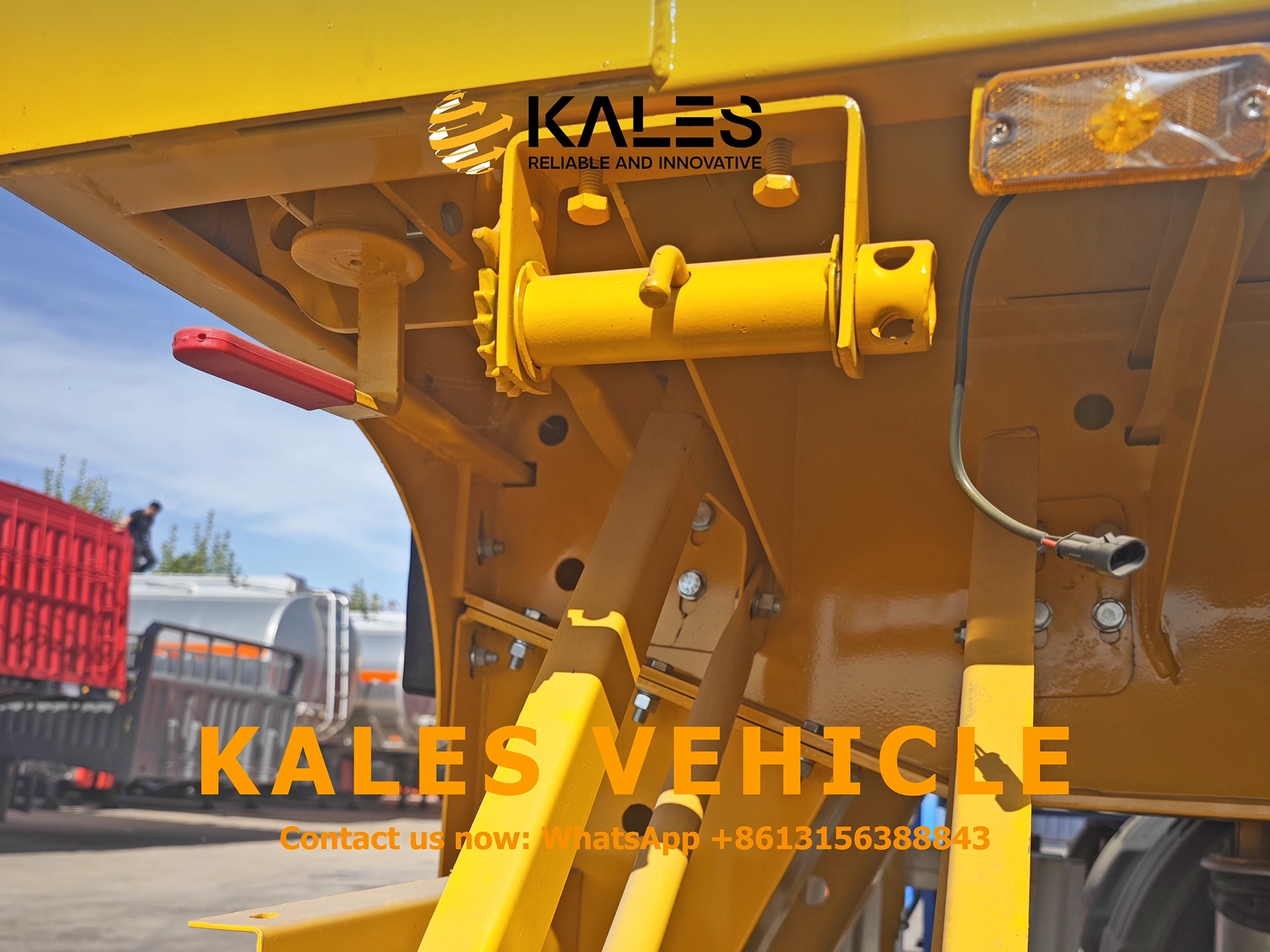
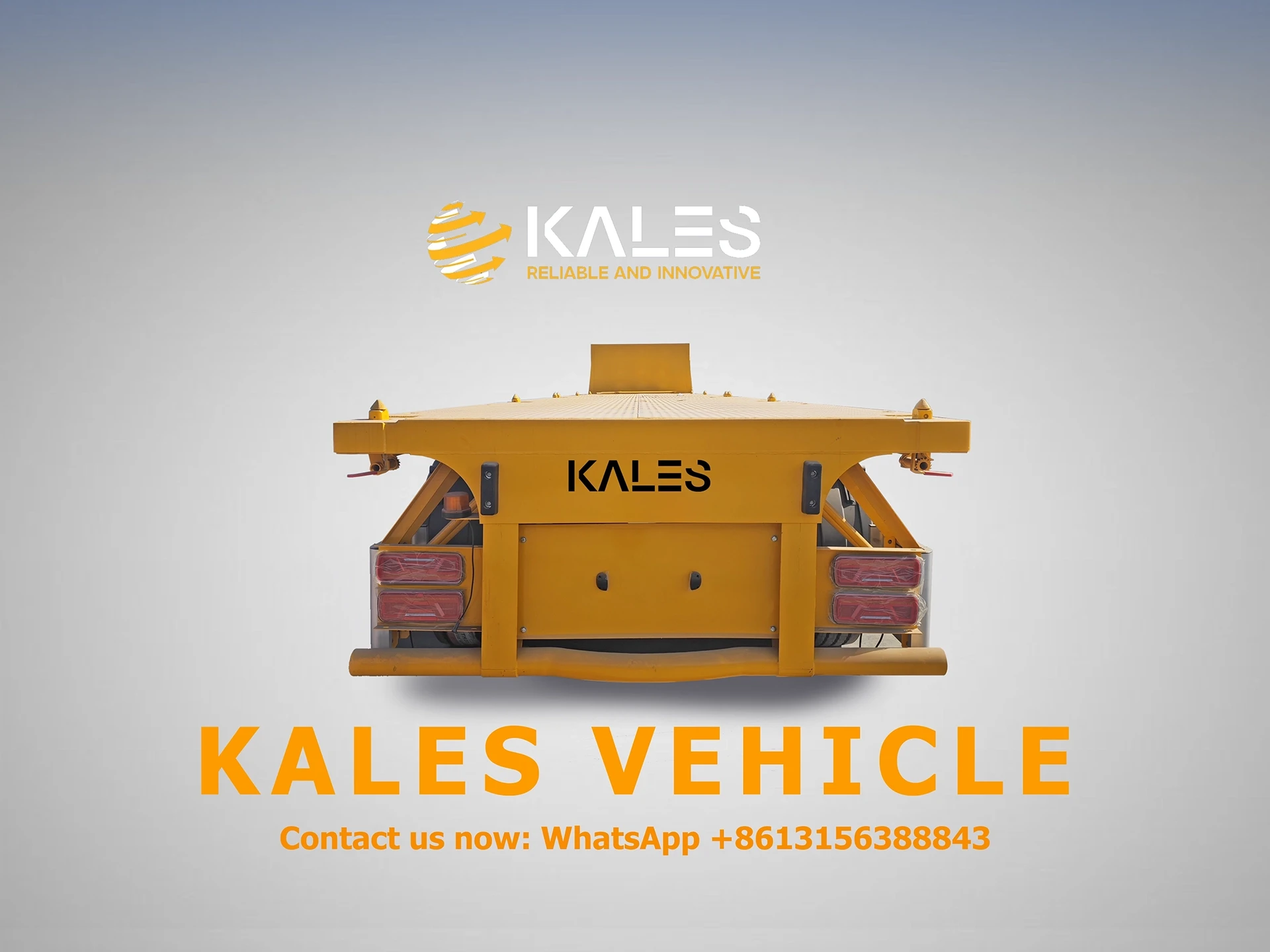
Factory Images and Inspection Views
Frequently Asked Questions
Who should choose this page instead of the Africa 40ft flatbed page?
Choose this page when your buying logic is broader: 40ft and 45ft container compatibility, longer freight footprint, and export-oriented configuration depth. Stay with the Africa 40ft page when your real need is a simpler 40ft regional workhorse.
Is this trailer only for containers?
No. It supports container work, but it is still a flatbed platform. That means it can also carry steel, pallets, timber, machinery, and other open-deck freight when the dispatch plan changes.
Why not just use a container chassis?
A container chassis is more focused when every trip is ISO-box transport. This flatbed makes more sense when the route needs both container capability and practical open-deck cargo use.
What should I confirm before asking for a quote?
Confirm whether you truly need 45ft deck length, your container mix, route country, target cargo types, axle preference, suspension preference, and any export compliance requirement such as SASO-related documentation.
Request Drawing and Quote
If you are comparing a tri-axle 45ft flatbed semi trailer for 40ft and 45ft container work, export freight, or longer open-deck cargo, send your route country, container mix, cargo types, target payload, and compliance requirements. Kales can then match the deck length, lock layout, axle package, and reinforcement program to the actual logistics duty.
- Email: jennylee@kalestruck.com
- WhatsApp: +86 131 5638 8843
Related Kales Flatbed and Container Options
- 3-Axle 40ft Flatbed Trailer for Africa | Regional Workhorse Platform for buyers whose real need is a simpler regional 40ft workhorse.
- 40ft Flatbed Semi Trailer | Kales for mainstream 40ft platform demand without the broader 45ft export framing.
- 3-Axle Drop-Side Flatbed Trailer | Container, Bulk & General Cargo for mixed cargo work that needs removable side retention.
Leave a Reply
You must be logged in to post a comment.