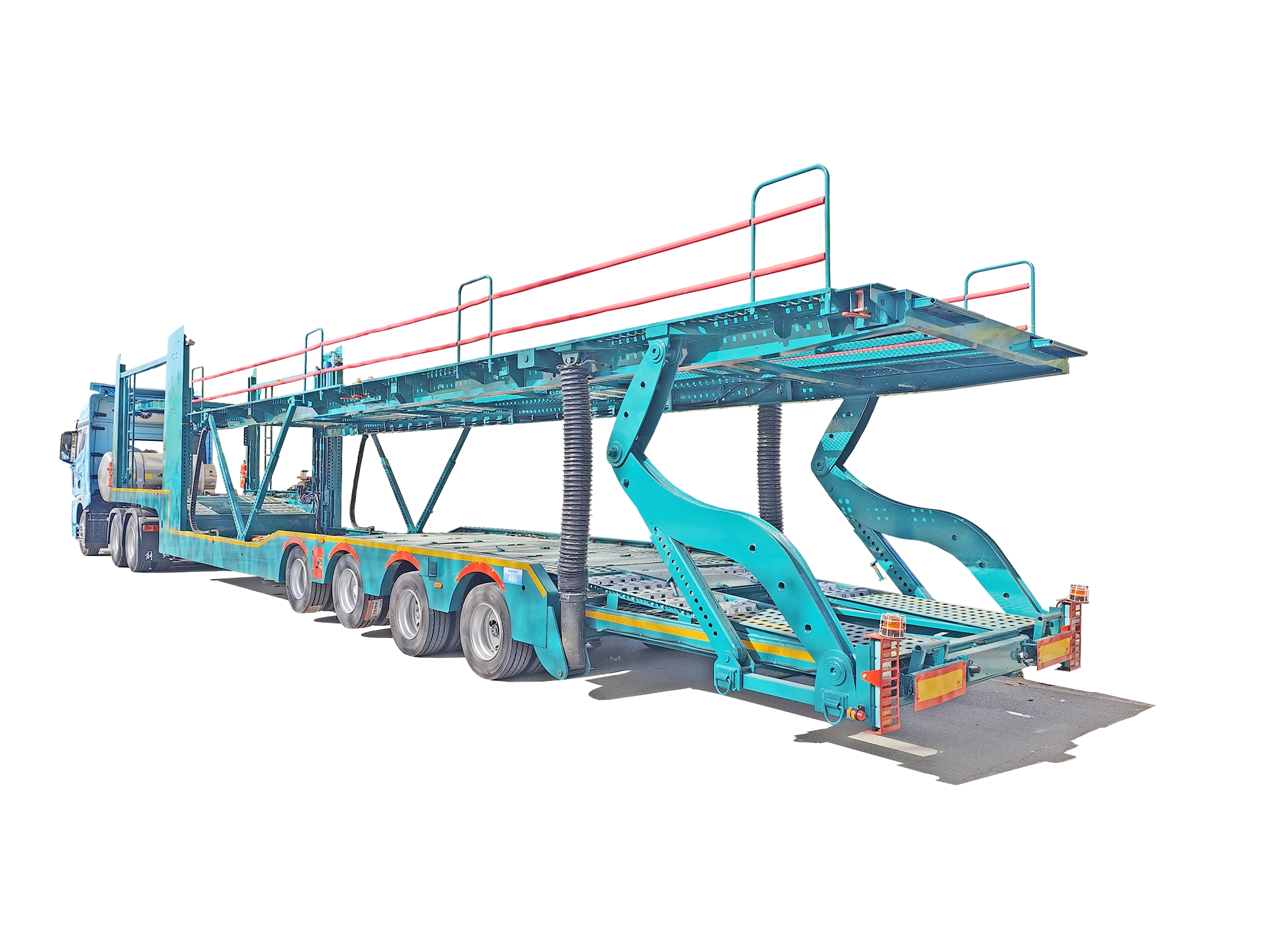
Quick answer: Choose this 4-axle hydraulic car carrier when your core job is finished vehicle transport and you need a folding-arm upper deck that can be adjusted quickly for mixed vehicle heights, safer loading angles, and denser vehicle placement. It is especially useful on longer routes where better lower-deck utility and more flexible backhaul planning matter more than buying a basic fixed-structure carrier.
Why Buyers Choose This Configuration
- Hydraulic folding-arm control: the upper deck can be positioned more precisely for sedans, SUVs, and mixed-height finished vehicles without relying on crude manual adjustment.
- Higher load density: better deck-angle management helps fleets use vertical space more efficiently across multi-car dispatch work.
- More flexible return-leg planning: the lower deck can support more useful backhaul thinking than a basic single-purpose carrier when fleets are trying to reduce empty kilometers.
- 4-axle route logic: the longer chassis and axle spread better match operators running heavier multi-vehicle programs on export and regional corridors.
- Cargo protection focus: air suspension, ABS braking, and hydraulic stability all support safer handling for high-value finished vehicles.
Specification-backed advantages
- Main structure: T700 high-strength steel main beam with automated submerged-arc welding. This provides a concrete durability and load-control basis for the stated duty cycle.
- Rated loading capacity: 40 tons. This defines the working band to validate against the cargo, route, and local legal limits.
- Deck system: Electro-hydraulic folding-arm upper deck with multi-point cylinder control. This directly supports the loading, unloading, or handling workflow described for this product.
Technical Snapshot
| Product type | 4-axle hydraulic folding-arm car carrier semi trailer |
|---|---|
| Primary use | Finished vehicle transport for sedans, SUVs, and mixed dealer distribution loads |
| Overall dimensions | 17,000 x 2,550 x 3,800 mm |
| Rated loading capacity | 40 tons |
| Tare weight | About 14.5 tons depending on final configuration |
| Deck system | Electro-hydraulic folding-arm upper deck with multi-point cylinder control |
| Hydraulic layout | 11 cylinder sets with centralized 24V control station |
| Main structure | T700 high-strength steel main beam with automated submerged-arc welding |
| Axles | 4 x 13T BPW-style axles, front 2 axles liftable on the represented build |
| Suspension | Heavy-duty air suspension |
| Braking system | WABCO ABS with T30/30 brake chambers |
| Tires | 245/70R17.5 low-profile tires |
| Custom quotation | Contact KALES for a tailored quotation based on the required configuration, order quantity, and destination. |
Best Fit Operating Profile
This trailer fits auto logistics operators, dealer transfer fleets, OEM distribution partners, and regional exporters moving finished vehicles over medium and long corridors. It makes the most sense where fleets need controlled deck operation for varied vehicle heights, reliable chassis stability, and a procurement model that balances vehicle-carrying density with the need to reduce empty return exposure.
It is less suitable for buyers whose work is only occasional local vehicle relocation or who do not need hydraulic deck control and 4-axle distribution.
Engineering and Serviceability Details
Hydraulic deck logic
The core engineering value is not just that the trailer carries several vehicles. It is that the folding-arm hydraulic structure gives operators a repeatable way to set deck angles for different wheelbases and roof heights. That matters when the cargo is finished vehicles and loading damage risk is unacceptable.
Structure and axle distribution
The represented configuration uses a T700 main beam, 4 axle layout, and air suspension package to control flex, stabilize deck behavior, and spread load over a long chassis. That combination is more coherent for export vehicle logistics than trying to force a simpler trailer into dense multi-car duty.
Return-leg flexibility
One reason this page should not be positioned as a generic car carrier is that its lower-deck utility affects route economics. Fleets running long one-way finished-vehicle deliveries often care about what the trailer can still do on the return leg, especially when dispatch planners are trying to avoid deadhead miles and recover part of the trip cost.
Maintenance logic
The service profile centers on hydraulic oil checks, hose inspection, filter changes, brake support parts, suspension consumables, and axle-running gear rather than specialized bodywork. Buyers should confirm local support for air and hydraulic components, but the represented build uses familiar heavy-trailer logic rather than a closed proprietary structure.
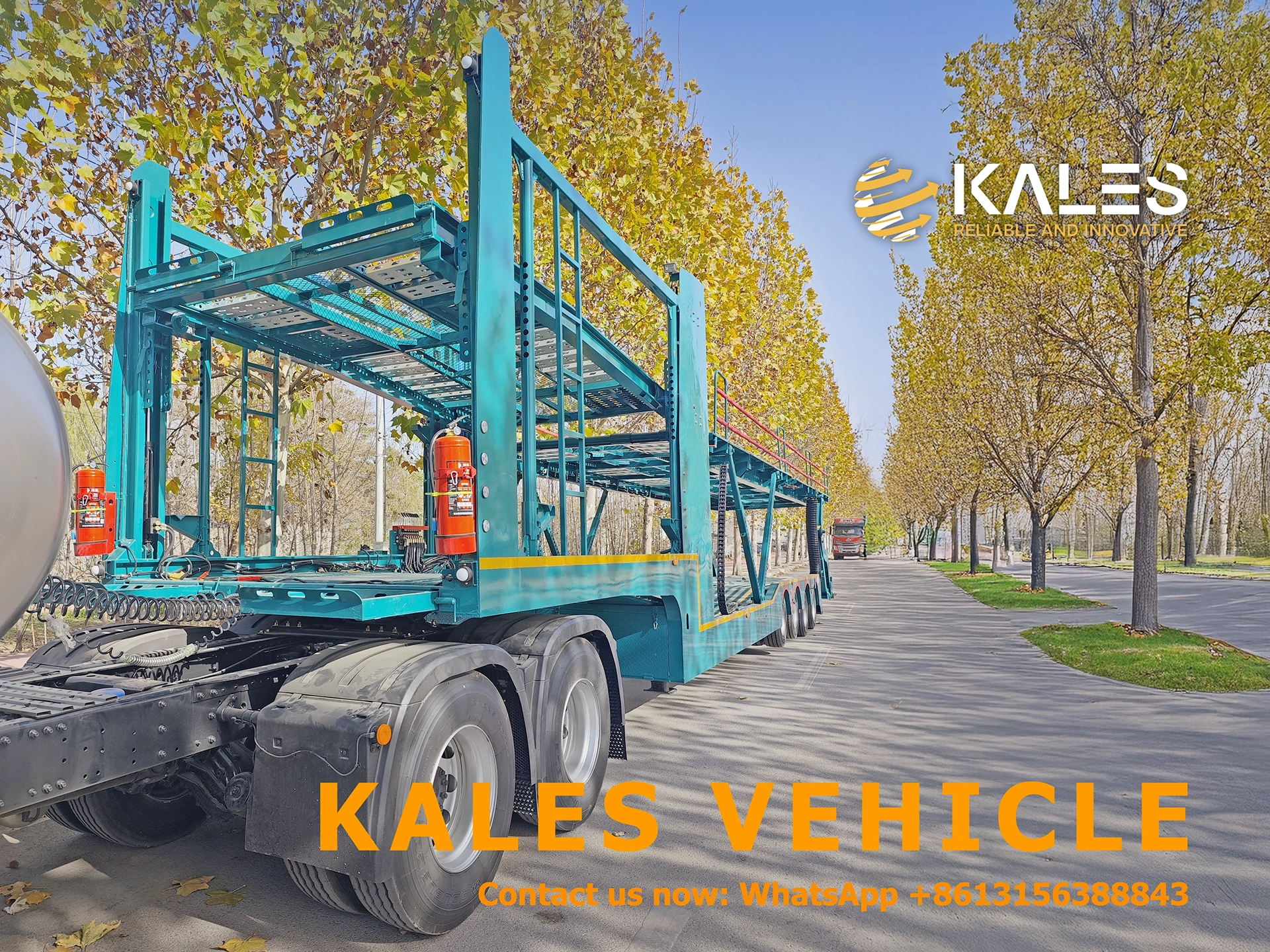
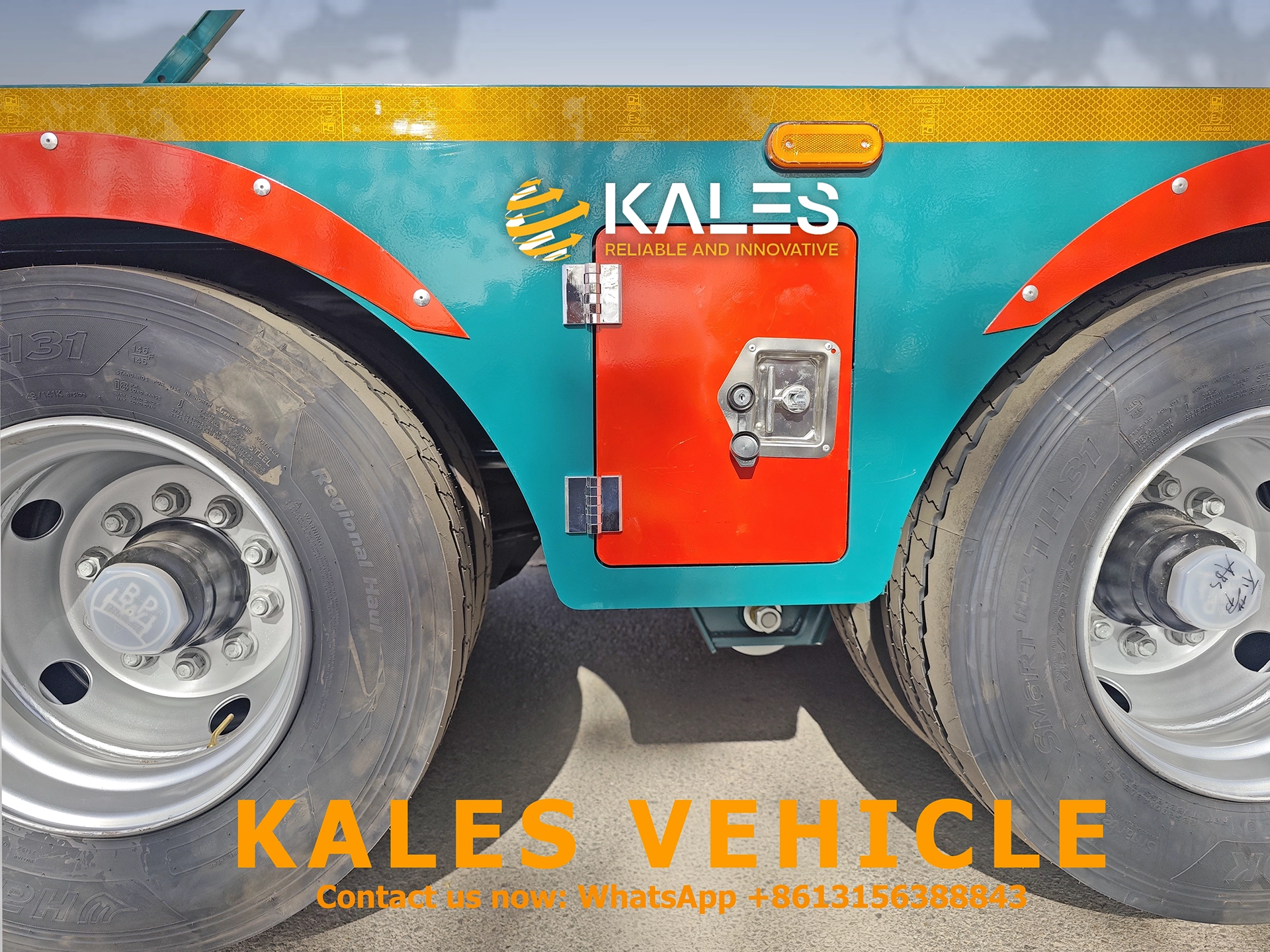
Factory Images and Inspection Views





Frequently Asked Questions
Is this trailer mainly for finished vehicles or general freight?
It is primarily for finished vehicle transport. The route-economics discussion around return-leg flexibility does not change the core product role, which is still a hydraulic car carrier for multi-vehicle delivery work.
Why does hydraulic deck control matter compared with a simpler carrier?
Because mixed vehicle heights and wheelbases need better angle control, safer loading geometry, and tighter deck packing. Hydraulic adjustment helps operators reduce wasted space and loading risk.
What maintenance does the hydraulic system need?
Routine work usually includes hydraulic oil inspection, hose and seal checks, filter replacement on schedule, and visual confirmation that cylinder movement remains synchronized and leak-free.
When is a 4-axle carrier the better choice?
It becomes the better answer when route length, vehicle count, chassis length, and load-distribution demands justify a longer, more stable multi-axle platform rather than a lighter local-delivery carrier.
What should I send before asking for a quote?
Send your target vehicle mix, route country, tractor-head specification, deck-height limits, axle preference, and whether backhaul flexibility is part of the real operating requirement.
Request Drawing and Quote
If you are comparing a 4-axle hydraulic folding-arm car carrier semi trailer, send your finished vehicle mix, route profile, trailer-head match, unloading environment, and backhaul expectations. Kales can then confirm the deck program, axle package, and hydraulic setup against the actual operating plan.
- Email: jennylee@kalestruck.com
- WhatsApp: +86 131 5638 8843
Related Kales Options
- 40ft Container Chassis Semi Trailer for fleets that need a dedicated container backhaul tool instead of combining vehicle-delivery and route-flexibility logic in one carrier program.
- 3 Axles Curtainsider Semi Trailers for protected pallet freight and regional distribution that do not involve finished vehicle loading.
- 40ft Flatbed Semi Trailer for open-deck freight where vehicle ramps and hydraulic upper-deck control are unnecessary.
Leave a Reply
You must be logged in to post a comment.