Container Transport Product Guide · Published: December 20, 2025 · Updated: June 4, 2026 · By Kales Vehicle Engineering Team · Reviewed by Kales Export Sales Engineering · Market focus: Europe-spec export work, reefer container logistics, port shuttle, and higher-compliance 4-axle container haulage
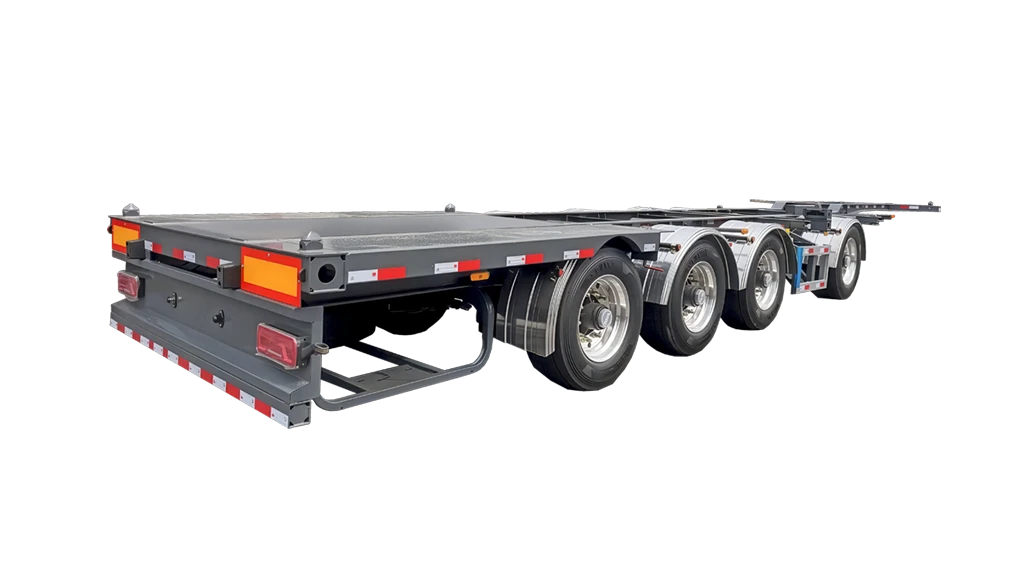
4-axle 12m container skeleton semi-trailer: this Kales lightweight 40ft chassis is built for buyers who need more axle distribution than a mainstream 3 axle container chassis, but still want a tare-conscious export platform. It fits port shuttle work, reefer container programs, bonded container transport, and routes where legal axle spread, lift axles, and Euro-style running gear matter more than a simpler low-cost chassis.
Engineering guidance from the Kales Vehicle product team for buyers comparing a lightweight 4 axle 12m skeleton trailer with standard 3 axle 40ft container chassis, broader 40ft and 45ft flatbeds, and other export logistics platforms.
Quick answer: choose this 4-axle 12m container skeleton semi-trailer when your route or compliance logic already requires broader axle-load distribution than a 3 axle chassis can provide, and when lower tare, lift axles, disc brakes, and Euro-style spec matter to fleet economics. Contact KALES for a tailored quotation based on the required configuration, order quantity, and destination.
Why Buyers Choose This 4-Axle Skeleton Trailer
- 4-axle legal and operational spread: the extra axle count helps fleets that already need better load distribution on regulated container corridors.
- Lightweight export spec: T700 structure and lighter component choices help protect payload and operating efficiency.
- Front lift-axle logic: the first two liftable axles reduce empty-running tire scrub and rolling resistance on return legs.
- Disc brakes and WABCO control: this page is positioned for higher-spec container transport rather than a basic yard-only chassis.
- Reefer-friendly road behavior: air-ride running gear and a more refined chassis package fit containerized cold-chain work better than a rougher low-spec frame.
- Clear step-up from the standard 3 axle chassis: this page owns lightweight 4 axle 40ft skeleton intent, not mainstream 3 axle port-chassis intent.
Specification-backed advantages
- Container fit: 40ft container duty with Euro-spec 12m chassis layout; specific lock positioning can be matched to route and load program. This provides a concrete durability and load-control basis for the stated duty cycle.
- Payload class: About 40 tons on the represented lightweight 4 axle export configuration, subject to route regulation and container load concentration. This defines the working band to validate against the cargo, route, and local legal limits.
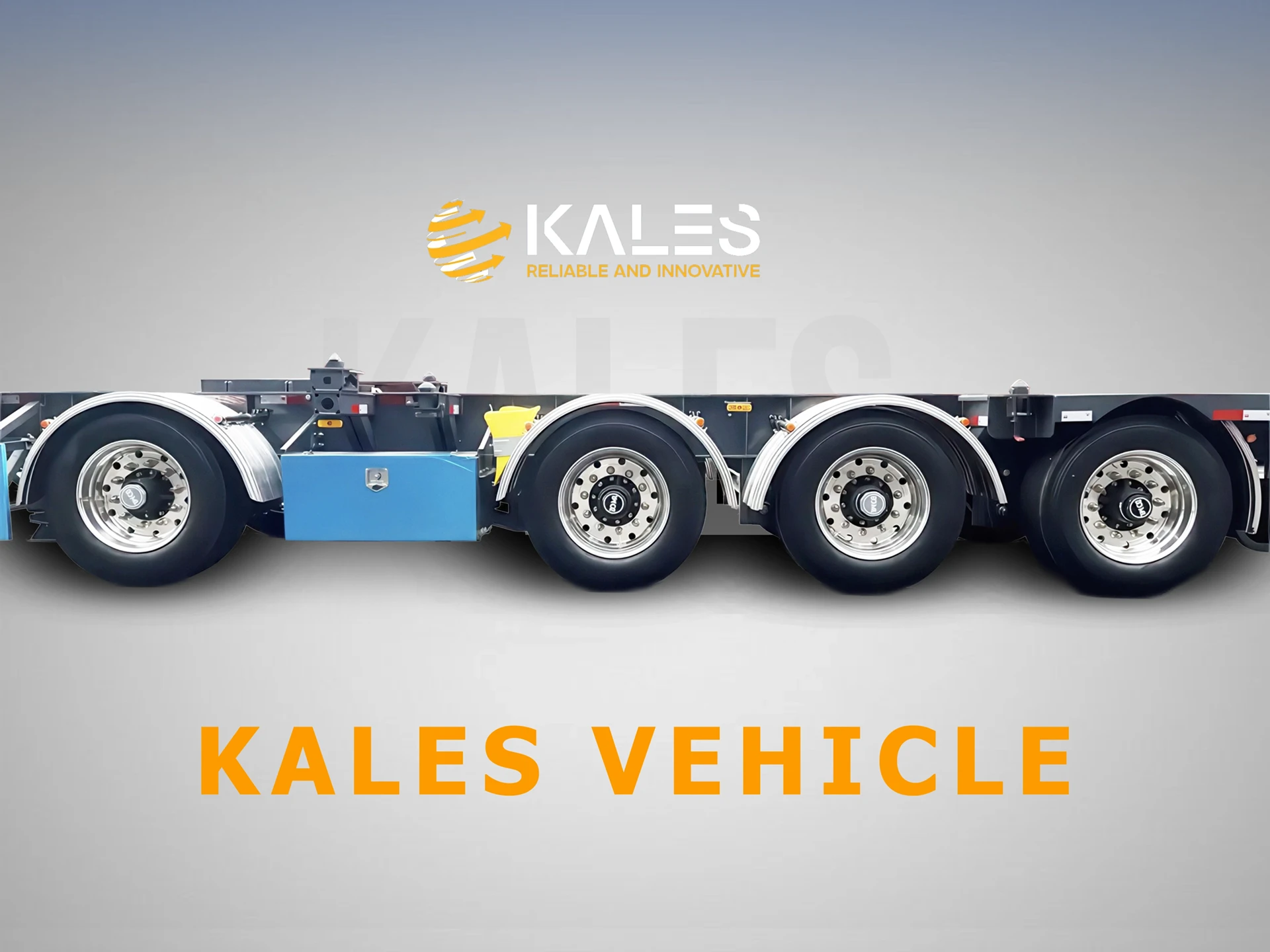
- Axle package: 4 axles with disc brakes; front two axles liftable on the represented Euro-spec build. This gives the buyer a specific braking or safety package to verify for the intended route.
Technical Snapshot
| Product type | 4 axle 12m container skeleton semi-trailer / lightweight 40ft chassis |
|---|---|
| Primary role | 40ft ISO container, reefer container, port shuttle, and export container haulage with broader axle-load distribution |
| Container fit | 40ft container duty with Euro-spec 12m chassis layout; specific lock positioning can be matched to route and load program |
| Overall dimensions | About 12,550 mm x 2,550 mm x 1,100 mm on the represented build |
| Payload class | About 40 tons on the represented lightweight 4 axle export configuration, subject to route regulation and container load concentration |
| Main beam | T700 high-strength cold-bent steel structure for lower tare and stronger fatigue resistance than basic carbon-steel chassis |
| Axle package | 4 axles with disc brakes; front two axles liftable on the represented Euro-spec build |
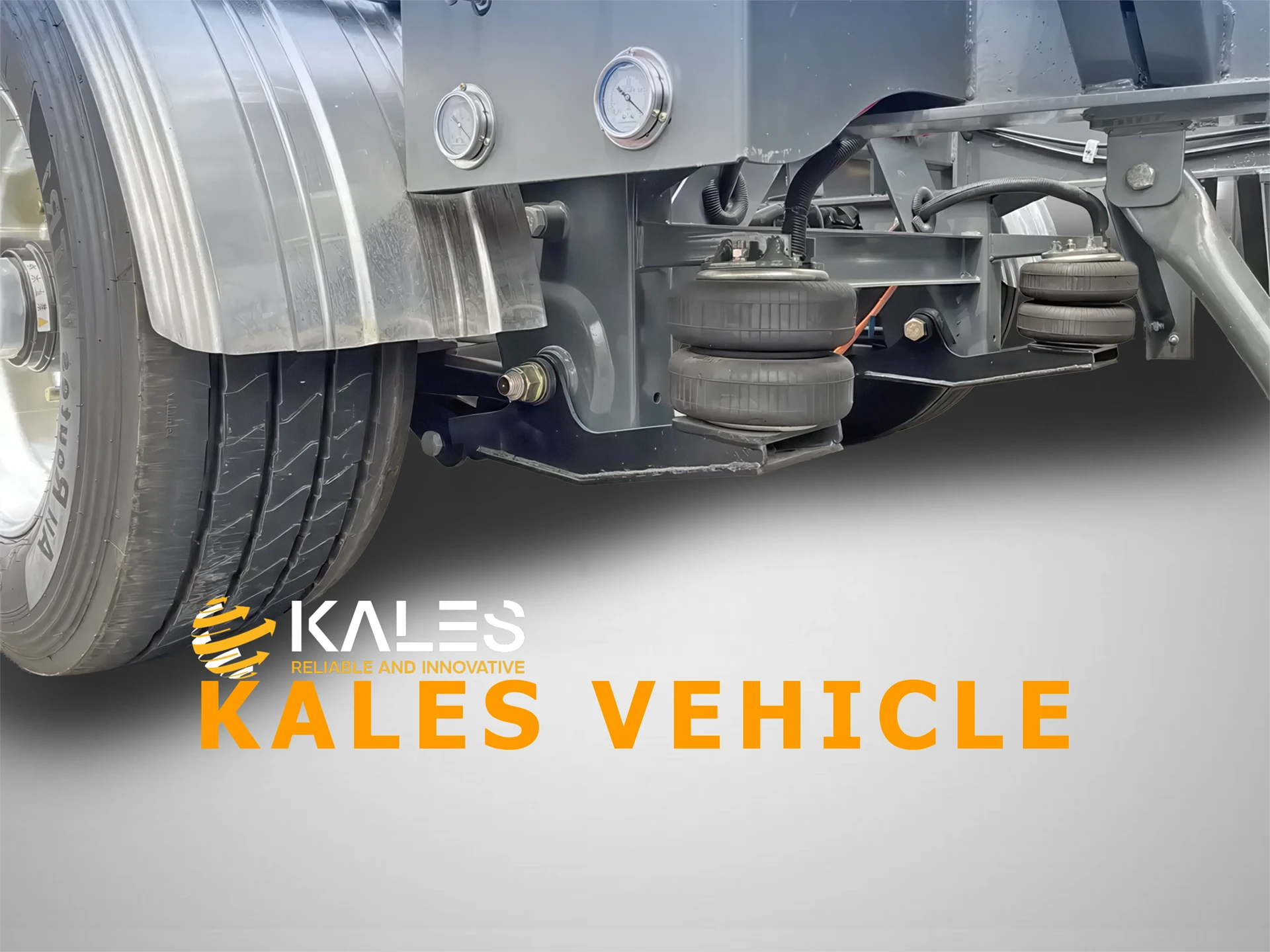
| Suspension | Air-ride running gear with lift-axle control logic on the front axle set |
| Wheels and tires | Single wide-base tire layout with aluminum-alloy rim package on the represented lightweight export specification |
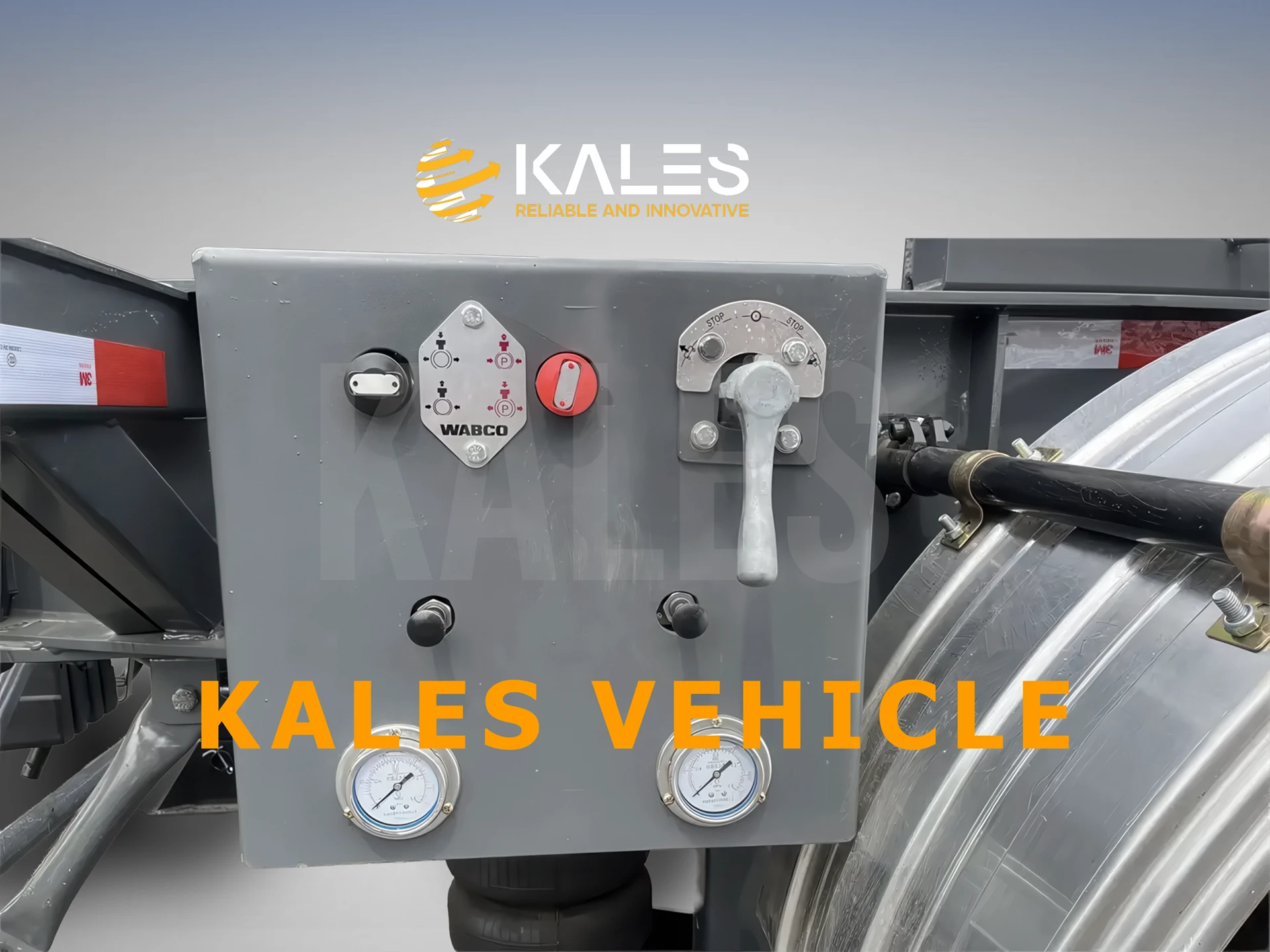
| Brake system | WABCO valve logic with ABS-ready disc-brake setup |
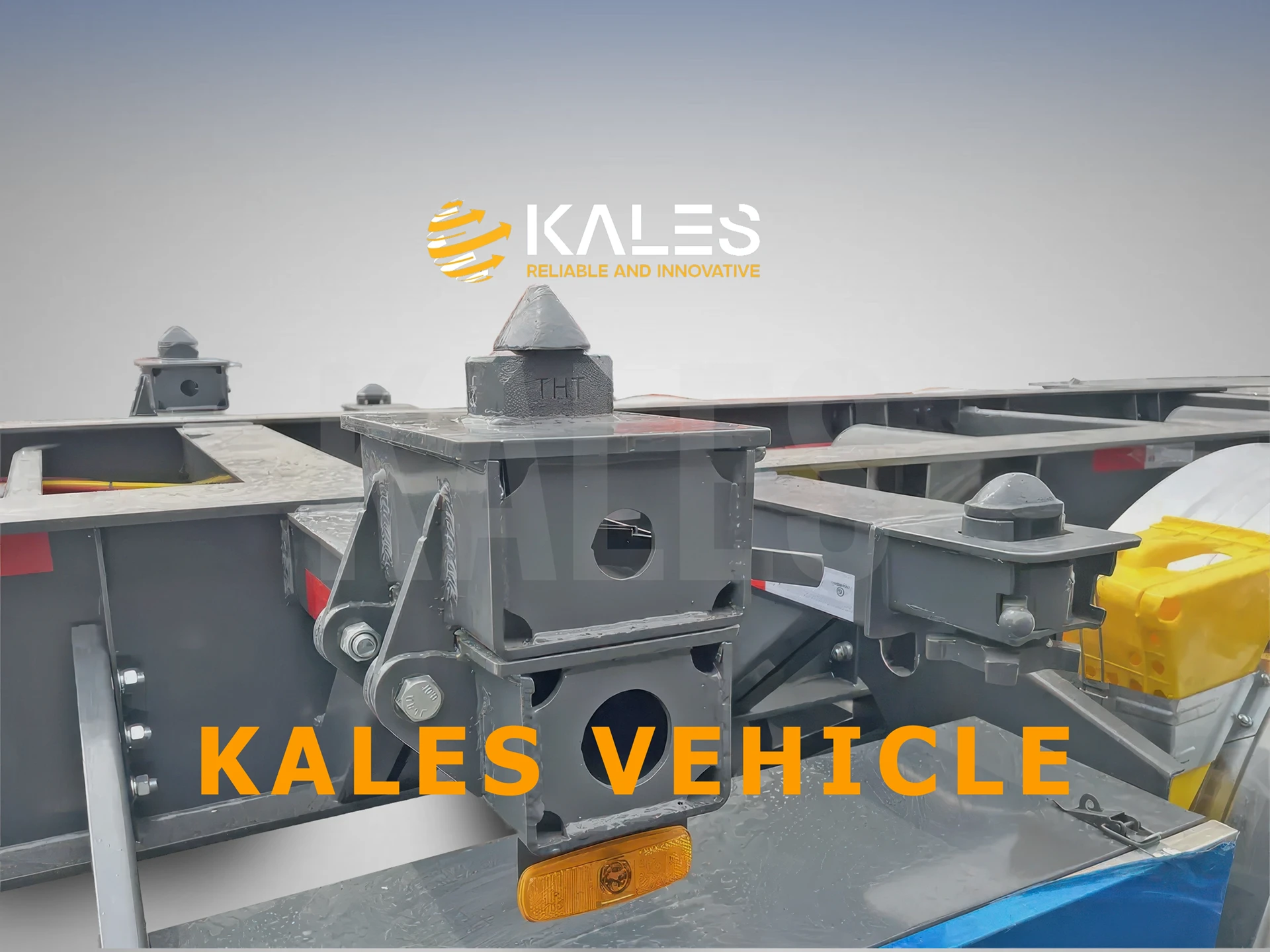
| Container locks | Up to 14 container lock positions depending on the final dispatch pattern and container program |
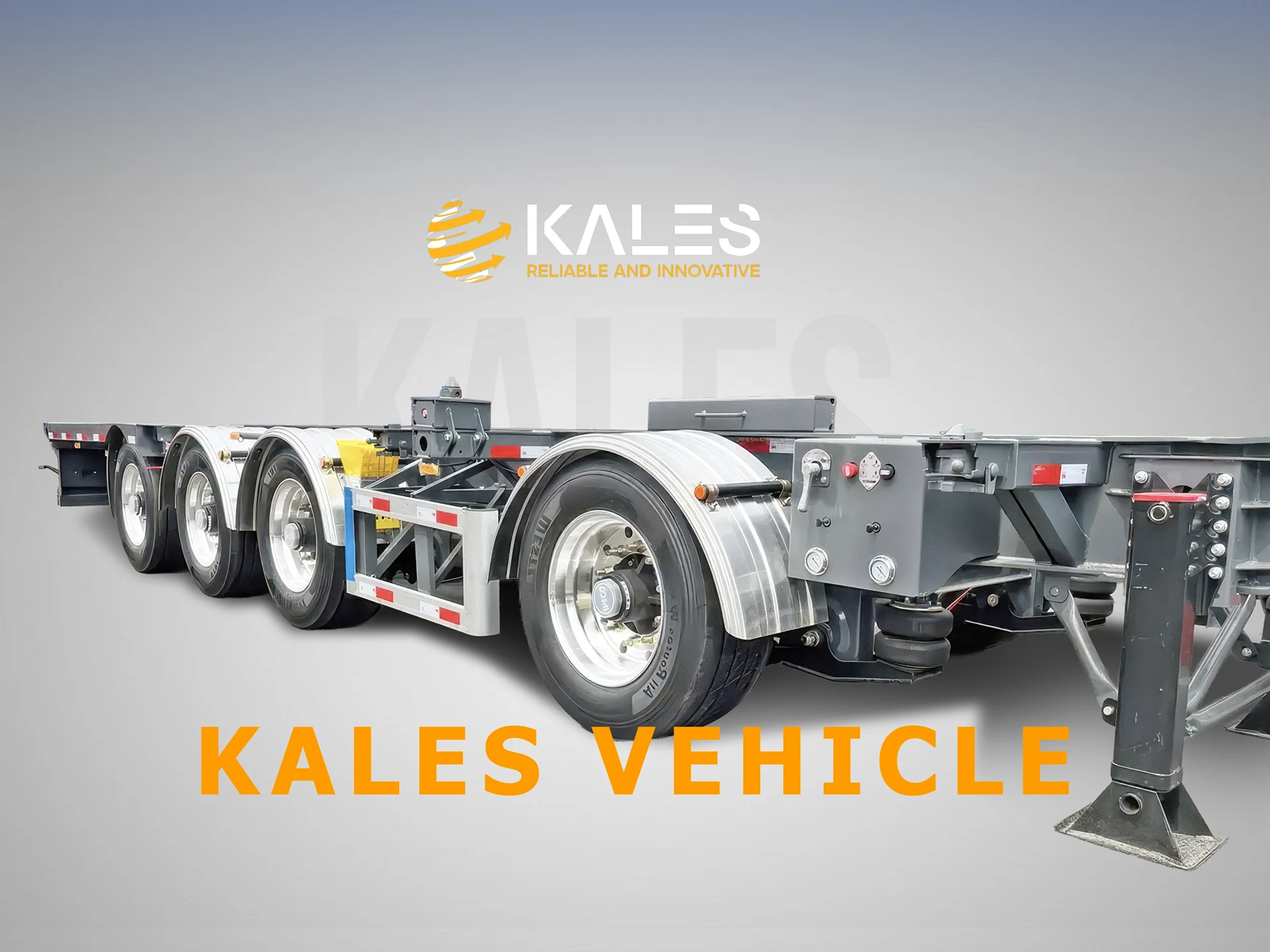
| Landing gear | JOST 28T linkage landing gear |
| Custom quotation | Contact KALES for a tailored quotation based on the required configuration, order quantity, and destination. |
Best Fit Operating Profile
This page fits buyers whose container operation has already moved beyond the mainstream 3 axle chassis. The real driver here is not decoration. It is axle distribution, tare control, reefer-friendly running gear, and a higher-spec export platform for port, bonded, and long-haul container work. It is strongest where a lighter 4 axle chassis makes more sense than a cheaper but more concentrated 3 axle frame.
Best for
- 40ft container and reefer box transport on regulated trunk corridors
- Fleet operators who want lift axles, disc brakes, and Euro-style running gear on a container chassis
- Markets where 4 axles improve legal axle-load compliance or operational flexibility
- Buyers who want a lighter export-oriented 4 axle chassis instead of a heavier conventional frame
Not ideal for
- Mainstream port shuttle fleets that only need a standard 3 axle 40ft chassis
- Open-deck freight that should move on flatbeds instead of a skeletal frame
- Buyers whose routes do not justify air suspension, disc brakes, or lift-axle complexity
- General cargo programs where a dropside or curtainsider body is the real answer
How This 4-Axle Skeleton Page Differs From Nearby Logistics Pages
| Buyer situation | Best-fit Kales page | Why |
|---|---|---|
| Mainstream 20ft and 40ft container haulage without extra axle complexity | 40ft container chassis semi trailer | The standard 3 axle chassis remains the more rational default when the route does not require 4 axles |
| 40ft container work with lighter tare and broader axle-load distribution | This 4 axle 12m skeleton trailer | The page owns lightweight 4 axle skeleton intent with higher-spec running gear |
| Open-deck 40ft or 45ft freight rather than pure container chassis work | Tri-axle 45ft flatbed semi trailer | A flatbed is more suitable when the cargo is not consistently moving as an ISO container |
| Open platform freight without container-chassis specialization | 40ft flatbed semi trailer | A flatbed is simpler when the fleet needs deck utility instead of skeletal container logic |
Engineering and Serviceability Details
4 axles here are about compliance and route fit, not just headline tonnage
Buyers often misread this page as simply a heavier chassis. That misses the real reason it exists. The 4 axle layout is primarily about better load distribution, route legality, and axle-pressure management on container work that has already outgrown a mainstream 3 axle format.
Lightweight structure protects commercial payload
This page uses a lighter-weight export logic because extra axles alone do not help if tare weight climbs too far. T700 high-strength steel, aluminum-alloy wheel logic, and a more optimized 12m frame help fleets keep payload efficiency while gaining the route benefits of a 4 axle chassis.
Lift axles improve empty-leg economics
The represented front lift-axle setup matters because container work often includes empty returns, depot transfers, or lighter repositioning moves. Being able to lift the front axle set reduces tire wear, drag, and scrub that would otherwise make a 4 axle chassis unnecessarily expensive to run.
Disc brakes and air ride signal a higher-spec export platform
This page is not positioned as a rough, low-spec yard chassis. Disc brakes, WABCO control logic, and air suspension make more sense for buyers running reefer containers, higher-speed trunk routes, and markets where better braking consistency and smoother road behavior are commercially useful.
How is the final quotation confirmed?
KALES confirms the quotation after reviewing the required specification, quantity, destination, and delivery terms. Send the operating requirements for an accurate proposal.
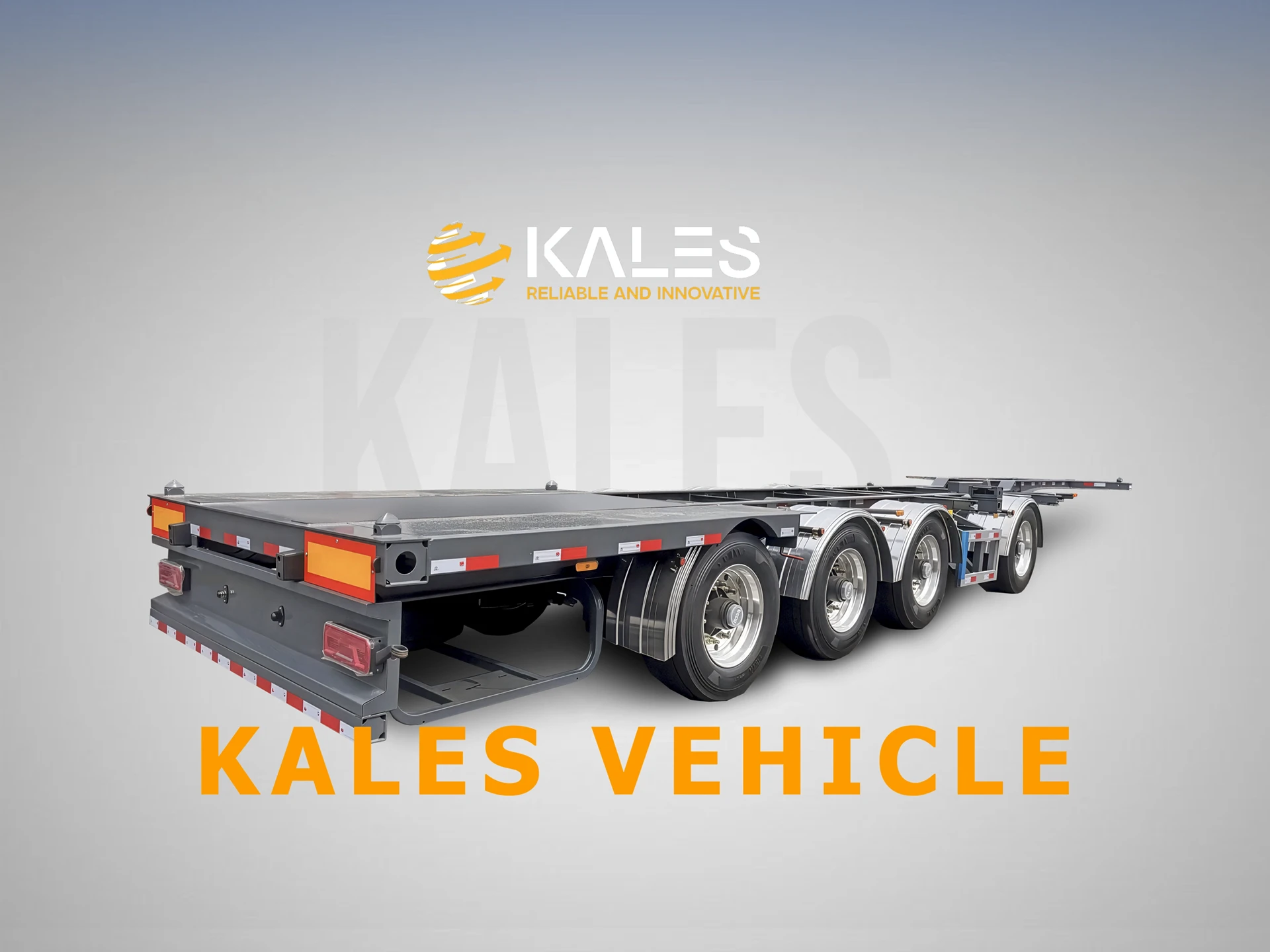
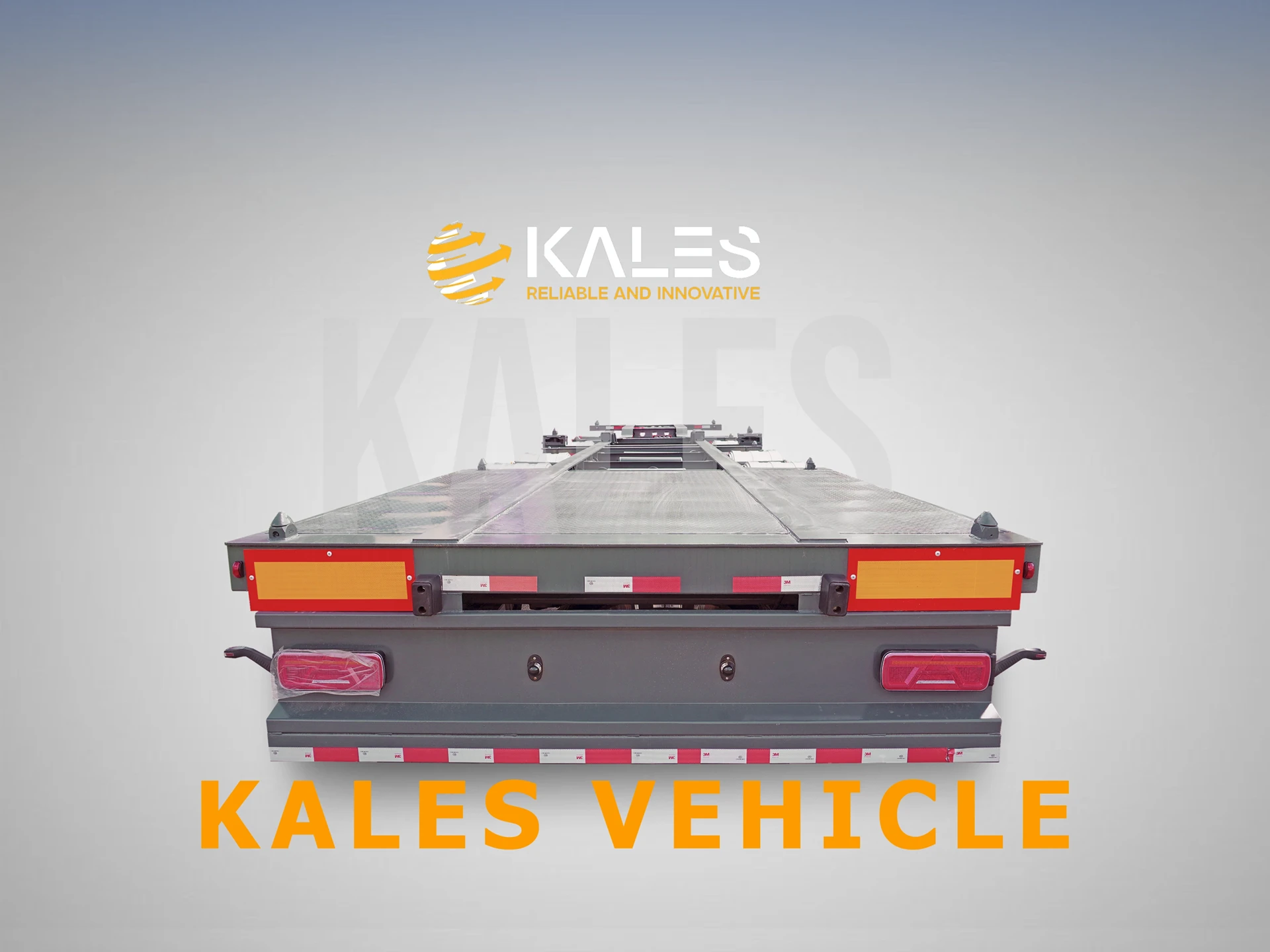
Factory Images and Inspection Views
Frequently Asked Questions
When should I choose this page instead of the standard 3 axle container chassis?
Choose this page when legal axle-load distribution, route compliance, reefer-road behavior, or higher-spec export requirements already justify a 4 axle chassis. If your work is still mainstream port and inland container duty, the 3 axle chassis usually remains the more rational answer.
Why do the front lift axles matter?
They help reduce tire wear and rolling resistance on empty returns or lighter repositioning moves. That makes a 4 axle chassis more commercially efficient in real fleet use.
Is this page mainly for reefer containers?
No. It can work for standard ISO container haulage as well. Reefer use simply highlights why air ride, disc brakes, and a higher-spec running package can matter on this type of 4 axle chassis.
What should I send before requesting a quote?
Send your container mix, route country, legal axle-load requirement, whether reefer boxes are part of the program, preferred axle brand, and whether you need front lift axles, air ride, or disc brakes on the final build.
Request Drawing and Quote
If you are comparing a 4 axle 12m container skeleton semi-trailer for regulated container routes, reefer box transport, or higher-compliance export work, send your container mix, route country, target payload, and axle-load requirement. Kales can then match the lock pattern, lift-axle package, brake setup, and reinforcement level to the real route.
- Email: jennylee@kalestruck.com
- WhatsApp: +86 131 5638 8843
Related Kales Container Options
- 40ft Container Chassis Semi Trailer for buyers whose route still fits the mainstream 3 axle standard chassis.
- Tri-Axle 45ft Flatbed Semi Trailer for broader 40ft and 45ft export platform work rather than pure skeletal container hauling.
- 40ft Flatbed Semi Trailer for open-deck freight programs that do not need a dedicated container chassis frame.
Leave a Reply
You must be logged in to post a comment.