Container & Bulk Transport Product Guide · Published: October 24, 2024 · Updated: June 3, 2026 · By Kales Vehicle Engineering Team · Reviewed by Kales Export Sales Engineering · Market focus: Africa, Latin America, port corridors, inland freight, and mixed cargo export routes
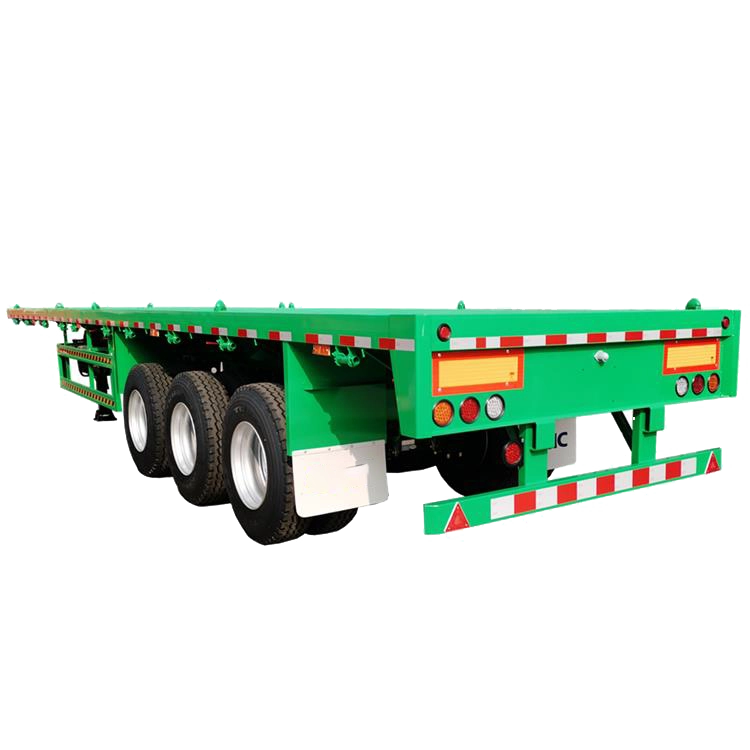
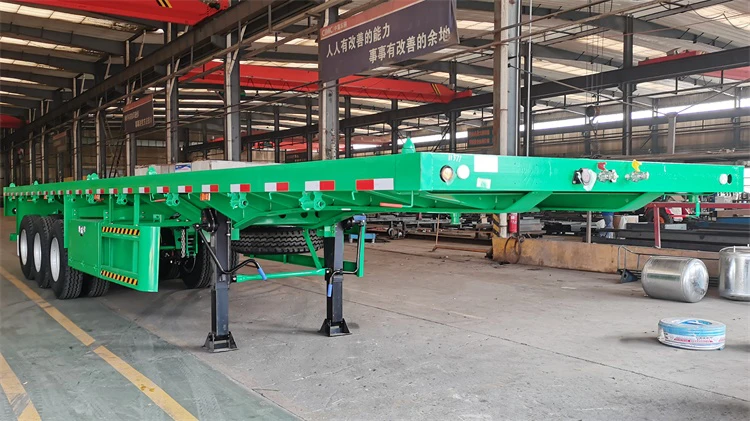
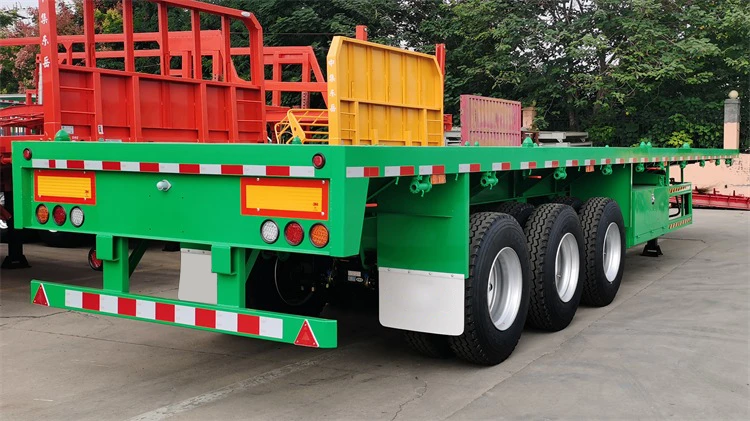
40ft flatbed semi trailer: this Kales 3 axle platform trailer is built for fleets that need one open-deck trailer to handle both ISO containers and general cargo without losing deck strength or maintenance simplicity. It fits buyers moving bagged cement, steel, timber, pallets, pipes, machinery, and containerized freight on the same regional network.
Engineering guidance from the Kales Vehicle product team for transport buyers comparing a standard 40ft flatbed trailer with skeletal, dropside, and curtainsider alternatives.
Quick answer: Choose this 40ft flatbed semi trailer when you need the mainstream 3 axle platform for container work plus general cargo loading on the same trailer. It is the practical fit for fleets that want a reinforced steel deck, 12 ISO twist locks, mechanical suspension, and a 40T to 60T payload class without moving into a container-only chassis or a more specialized enclosed body.
Why Buyers Choose This 40ft Flatbed Trailer
- Dual-use loading logic: carries one 40ft container, two 20ft containers, or loose freight on the same platform.
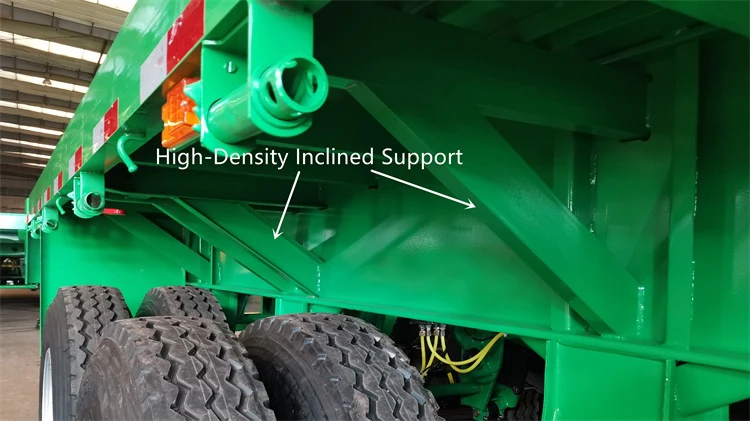
- Reinforced deck structure: 3 mm to 4 mm checkered plate and dense cross-member support help control sagging under concentrated cargo.
- T700 steel beam program: stronger resistance to long-term deformation than ordinary carbon-steel flatbed builds.
- Future upgrade flexibility: side-post sockets and open layout make later conversion to stake or sidewall use easier.
- Serviceable export hardware: FUWA or BPW axle matching, WABCO brake components, and JOST landing gear support after-sales maintenance.
- Better backhaul economics: unlike a skeleton chassis, the trailer can return with bagged, bundled, or palletized cargo instead of running empty.
Specification-backed advantages
- Deck floor: 3 mm to 4 mm anti-slip checkered steel plate. This provides a concrete durability and load-control basis for the stated duty cycle.
- Payload class: 40T standard working range, up to 60T in heavier-duty matching. This defines the working band to validate against the cargo, route, and local legal limits.
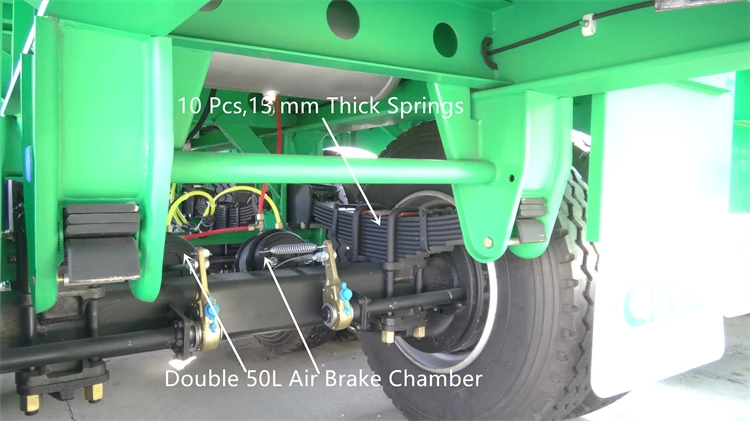
- Brake system: WABCO relay valve with T30/30 double chambers. This gives the buyer a specific braking or safety package to verify for the intended route.
Technical Snapshot
| Product type | 3 axle 40ft flatbed semi trailer / platform trailer |
|---|---|
| Main freight role | General cargo plus ISO 20ft and 40ft container transport |
| Overall dimensions | 12,500 mm x 2,500 mm x 1,550 mm |
| Payload class | 40T standard working range, up to 60T in heavier-duty matching |
| Deck floor | 3 mm to 4 mm anti-slip checkered steel plate |
| Main beam | T700 high-strength steel beam with reinforced gooseneck area |
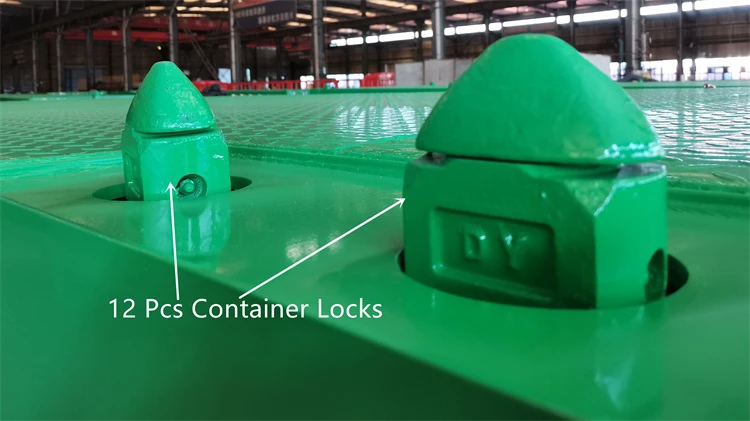
| Container locks | 12 ISO twist locks for one 40ft or two 20ft containers |
| Axles | 3 axles, 13T or 16T; FUWA, KALES, or BPW options |
| Suspension | 10-leaf heavy-duty mechanical suspension, air suspension optional for selected highway programs |
| Landing gear | JOST D200T, 28T lifting capacity |
| Brake system | WABCO relay valve with T30/30 double chambers |
| Custom quotation | Contact KALES for a tailored quotation based on the required configuration, order quantity, and destination. |
Best Fit Operating Profile
This trailer is a strong match for fleets that combine port container pickup with inland general freight. It works well when the return trip should not be empty and when the operator needs one durable platform for steel sections, timber, bagged cement, machinery, packaged freight, and containerized cargo across the same route network.
Best for
- Port-to-inland container delivery with return-trip general cargo
- Construction supply fleets moving steel, pipes, timber, and bagged materials
- Export buyers who want a standard 40ft platform before moving to more specialized trailer bodies
- Operators prioritizing rugged serviceability over enclosed-body features
Not ideal for
- Container-only shuttle work where a lighter skeletal chassis is the better economic answer
- Palletized cargo that requires weather protection and side loading
- Loose agricultural or consumer goods that need permanent sidewalls for load retention
Why This Flatbed Works Better Than a Container-Only Chassis for Mixed Freight
Many buyers search for a 40ft flatbed semi trailer after realizing that a skeletal trailer is too narrow in use. A flatbed keeps the ISO twist-lock function but adds a real deck, which changes the economics of return cargo. For regional fleets in Africa and Latin America, that difference matters more than a small saving on day-one purchase price.
| Buyer situation | Best-fit Kales option | Why |
|---|---|---|
| Container plus general cargo on the same route network | This 40ft flatbed semi trailer | Open deck plus twist locks gives the best dual-use flexibility |
| Container-only shuttle with no loose cargo requirement | 40ft container chassis semi trailer | Skeleton chassis is lighter and more focused when the cargo is always ISO boxes |
| Bulk and packaged cargo needing side restraint | 3 axle dropside semi trailer | Side structure helps contain loose or stacked freight |
| Palletized freight needing weather protection | 13m curtainsider semi trailer | Curtain-side body improves protection and side-loading efficiency |
Engineering and Serviceability Details
T700 beam and dense cross-member support
The flatbed deck is only valuable if it stays straight under concentrated weight. Kales uses a T700 beam program and dense cross-member support to reduce the sagging risk that often appears when cheaper flatbeds carry steel coils, bagged cement, or compact machinery.
12 ISO twist locks without sacrificing deck practicality
This product is not just an open deck. It is a platform with standard container locking logic. The 12 twist locks preserve container capability while leaving the deck open for general freight when the dispatch pattern changes.
Reinforced gooseneck and braking stress control
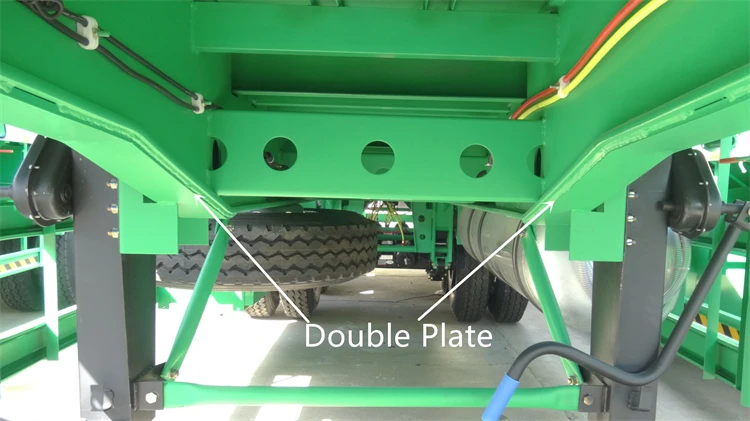
Emergency braking with a heavy deck load pushes stress into the gooseneck transition. Reinforcement at that zone matters because fatigue and distortion usually start there on lower-grade flatbeds. The double-layer structure is intended to extend service life under export-road duty.
Mechanical suspension for route simplicity
Heavy-duty mechanical suspension remains the default because many target markets value repair simplicity, overload tolerance, and roadside serviceability more than ride refinement. Air suspension is possible, but it fits smoother long-haul highway logistics better than rough mixed-road freight programs.
Quotation and Procurement Guidance
A flatbed trailer should be quoted against the real cargo mix, not only by base price. The correct axle class, floor thickness, beam grade, and side-post provision depend on whether your freight is mostly containers, steel sections, bagged goods, machinery, or a rotating mix of all of them.
Kales can match axle brand, suspension, floor thickness, twist-lock setup, landing gear, and reinforcement level before production. For buyers comparing against cheaper local builds, the more important question is not whether the trailer starts lower in price, but whether the deck and beam stay usable after several years of concentrated cargo loading.
Factory Images and Inspection Views
Frequently Asked Questions
What is the main difference between this flatbed and a skeleton trailer?
The flatbed has a full steel deck, so it can carry general freight as well as containers. A skeleton trailer is mainly for ISO containers and does not give the same flexibility for return cargo.
Can this trailer carry both one 40ft container and two 20ft containers?
Yes. The 12-lock layout is designed for standard 40ft and dual-20ft container matching, provided the final payload and route stay within the correct legal and engineering limits.
Is this flatbed suitable for bagged cement and steel sections?
Yes. That is a common use case. The reinforced deck, cross-members, and heavy-duty suspension are intended for concentrated freight such as bagged cargo, steel products, timber, and machinery.
Can I add side stakes or sidewalls later?
Yes. Kales can prepare the side beam layout with post sockets so the trailer can be adapted later if your cargo profile shifts toward restrained loose freight.
How are these flatbed trailers shipped for export?
Kales can arrange stackable loading for bulk or Ro-Ro export programs to reduce ocean freight cost per trailer.
Request Drawing and Quote
If you are comparing a 40ft flatbed semi trailer for mixed container and general cargo work, send your target payload, cargo mix, route country, axle preference, and whether you need later sidewall conversion. Kales can then match the deck thickness, beam grade, suspension, and twist-lock layout to the real job.
- Email: jennylee@kalestruck.com
- WhatsApp: +86 131 5638 8843
Related Kales Open-Deck and Logistics Options
- Tri-Axle 45ft Flatbed Semi Trailer | 40ft/45ft Export Platform for buyers who truly need the longer export deck.
- 3-Axle 40ft Flatbed Trailer for Africa | Regional Workhorse Platform for mixed regional road work and Africa-positioned freight.
- 3-Axle Drop-Side Flatbed Trailer | Container, Bulk & General Cargo for bulk and general cargo that benefits from removable side retention.