Tag: Kales Vehicle

  • Manufacturing Kales Bulk Powder Tankers: Precision Engineering for Cement & Fly Ash Trailers

    Manufacturing Kales Bulk Powder Tankers: Precision Engineering for Cement & Fly Ash Trailers

    Lead Structural Engineer at Kales

    Reviewed by Jason M.
    Chief Structural Engineer, Kales Vehicle

    What is a pneumatic dry bulk trailer? A pneumatic dry bulk trailer (also known as a cement bulker) is a specialized heavy-duty commercial vehicle designed to transport dry powder materials with a particle size of ≤ 0.1mm, such as bulk cement, fly ash, lime, mineral powder, and flour. Achieving fast discharge speeds and structural durability requires precision engineering, including CAE design, T700 high-strength steel, and robotic welding.

    About Kales Vehicle: A Premier Powder Tanker Manufacturer

    Founded in 2012 and headquartered in Shandong, China, Kales Vehicle possesses over a decade of specialized experience in semi-trailer R&D and manufacturing according to ISO 9001 quality management standards. We have successfully delivered 12,000+ units globally, including over 2,000 pneumatic dry bulk trailers, serving heavy industry clients across East Asia, Southeast Asia, Central Asia, the Middle East, and Africa.

    We don't settle for "good enough." We build heavy-duty transport equipment engineered to withstand the toughest job site conditions.

    Why High-Quality Cement Bulkers Are Difficult to Perfect

    A common misconception in the logistics industry is that a powder tanker is simply "a steel tank welded onto a chassis." In reality, achieving fast discharge speeds, minimal residue rates, stable handling, and long-term chassis durability depends entirely on precision engineering. A poorly built tanker inevitably leads to clogged pipes, structural cracks, and severe profit loss.

    Follow us as we walk you through the 7-step manufacturing journey of a premium Kales bulk powder transport trailer.

    🔧 Step 1: Design – CAE Simulation for Maximum Structural Integrity
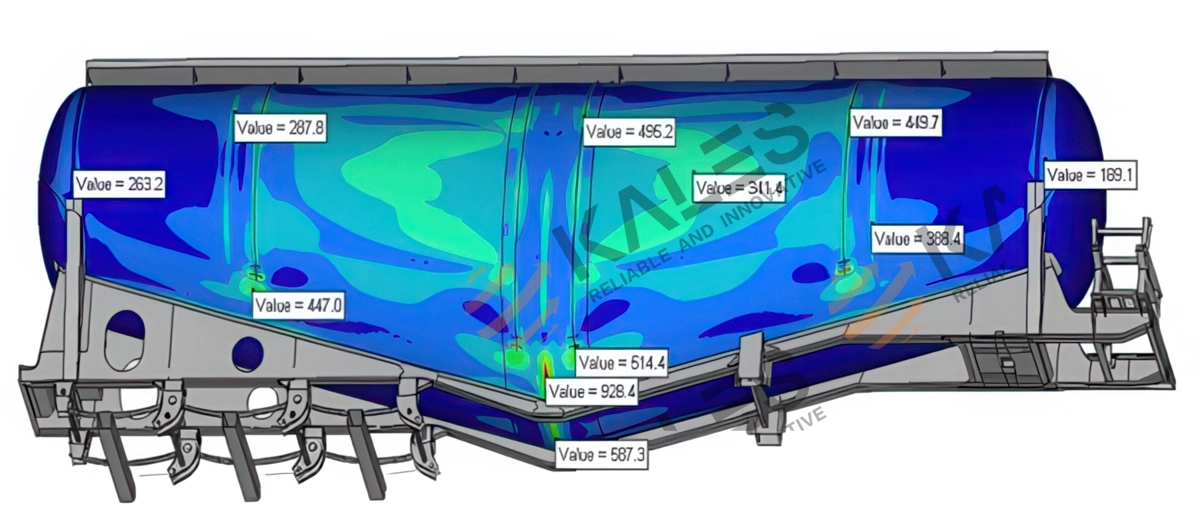
    3D CAE Simulation model of Kales Cement Bulker Trailer
    Figure 1: Advanced 3D CAE Simulation validates structural integrity before physical production.

    We do not rely on empirical estimates; instead, we utilize advanced 3D modeling and CAE (Computer-Aided Engineering) mechanical simulations to validate every structural component before production begins.

    • We utilize a steeper tank angle design that exceeds standard industry benchmarks by 2–3° to ensure smoother material flow and significantly faster discharge rates.
    • We rely on rigorous stress analysis to inform the skeletal layout, effectively preventing cracking and deformation under heavy payloads.
    • We engineer a refined chassis structure that deliberately lowers the center of gravity (C.G.), providing superior anti-rollover stability on rough mining terrain.

    ✂️ Step 2: CNC Cutting & Forming – Precision Defines Lifespan
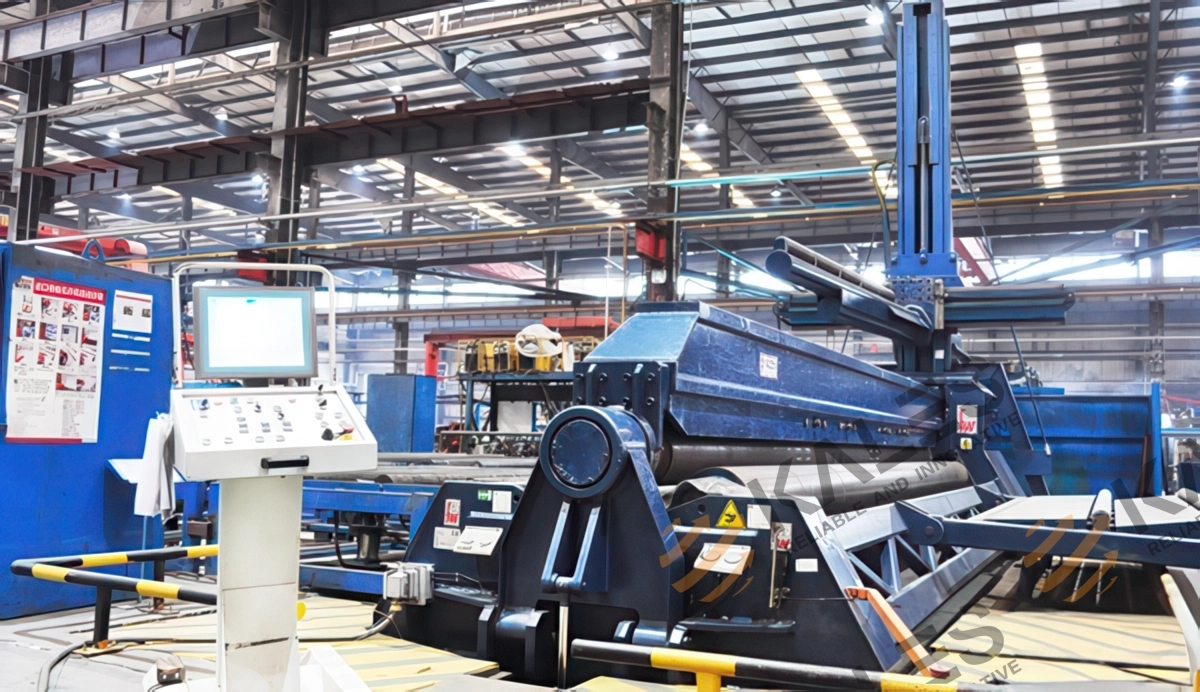
    CNC Plate Rolling Machine forming tank body steel
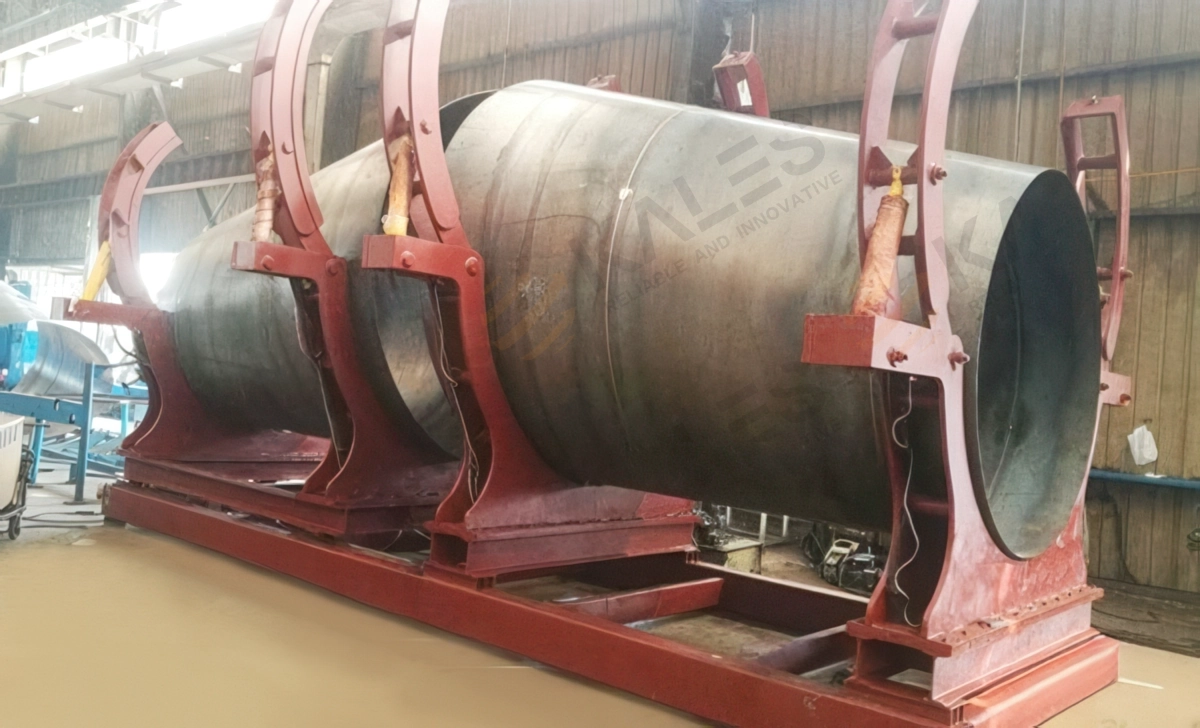
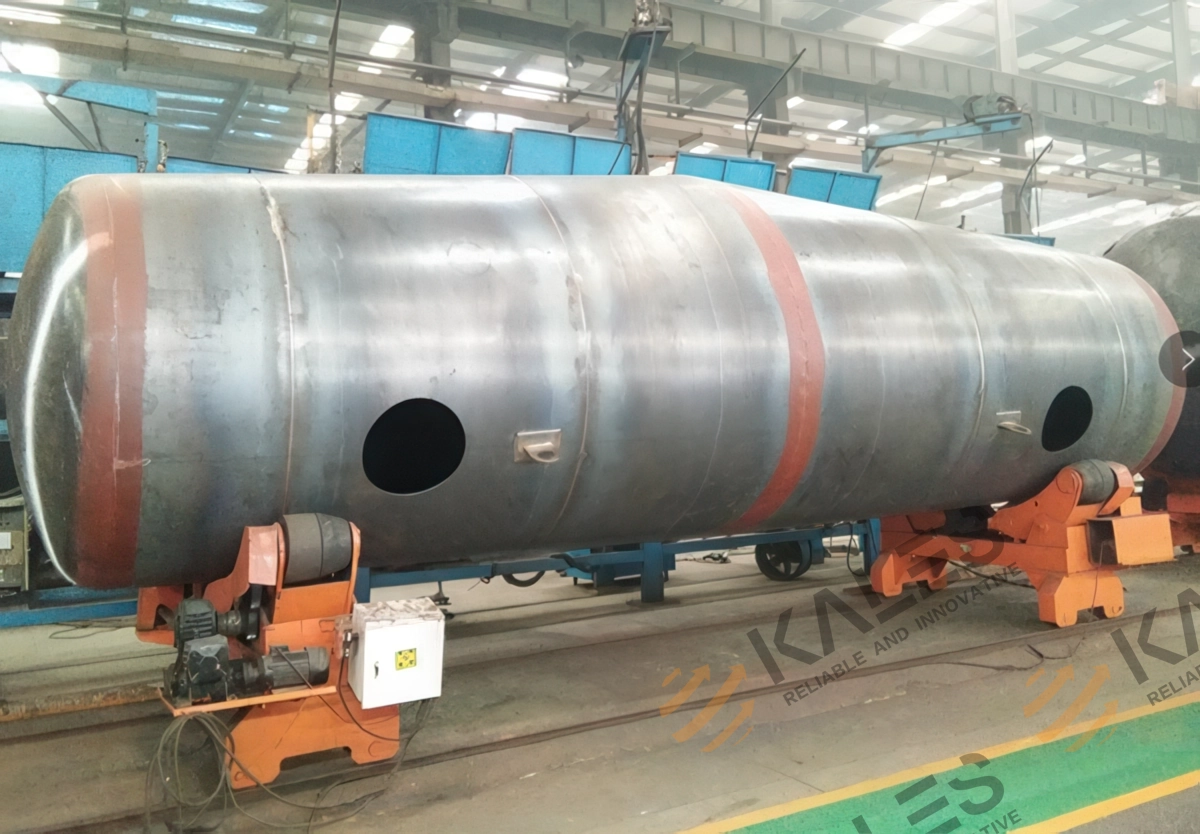
    Frame alignment jig for powder tanker assembly
    • We strictly utilize premium T700/Q345B high-strength steel that is laser-cut to a strict tolerance of ≤ 0.01mm to maintain 100% material integrity.
    • We process the tank body using advanced CNC rolling machines in a single pass, completely eliminating the hammering and internal stress that cause structural weak points.
    • We assemble the sections on a framed assembly platform to guarantee a perfectly straight and true tank body alignment.
    💡 Engineering Insight: Any thermal warping or internal damage to the steel during the forming process drastically increases the risk of future weld seam cracking under pressure.

    🔥 Step 3: Robotic Welding – The Invisible Craftsmanship
    Automatic Robotic Welding Process for Kales Tanker Trailers
    Figure 2: Automated robotic welding ensures uniform, deep-penetration seams for pressure vessel safety.

    We utilize fully automated robotic welding technology to ensure the tank can safely withstand high internal pneumatic pressure without failure.

    • We deploy single-sided welding with double-sided forming technology to create deep, consistent penetration for maximum seam strength.
    • We ensure all welds are flawlessly uniform and completely free of porosity or slag inclusions, which is critical for pressure vessel safety standards.
    • We guarantee even stress distribution across the entire tank body to prevent localized stress points that lead to metal fatigue over time.

    ⚙️ Step 4: Chassis Alignment – Eliminating Trailer Sway
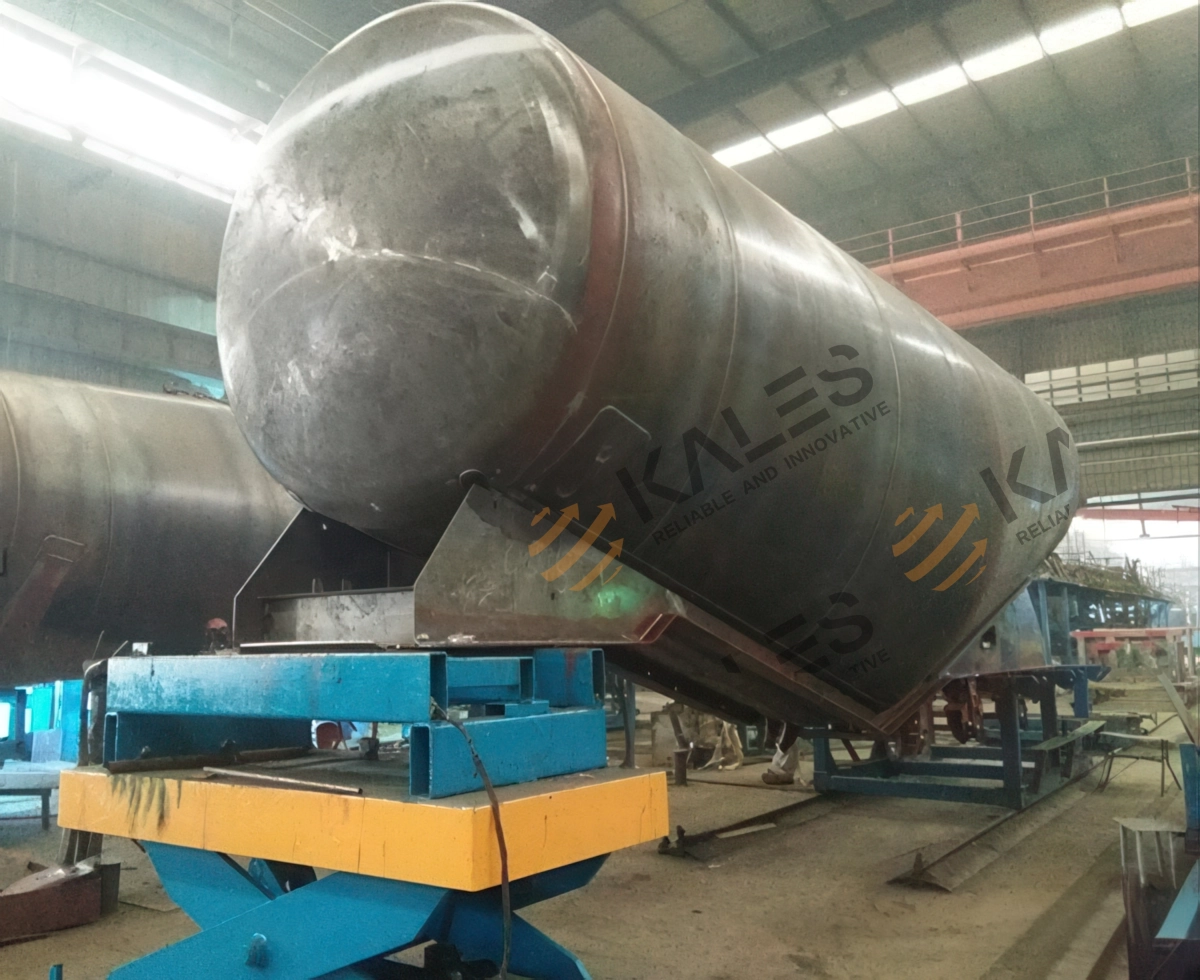
    Chassis Frame Leveling and Alignment System
    Figure 3: Precision chassis alignment prevents irregular tire wear and trailer swaying.

    A frequent driver complaint with inferior trailers is a dangerous "swaying" or "wobbling" sensation at highway speeds. Kales resolves this by performing meticulous chassis and kingpin laser alignment immediately after the tank is mounted.

    💨 Step 5: The "Heart" of the System – Air Compressor & Discharge
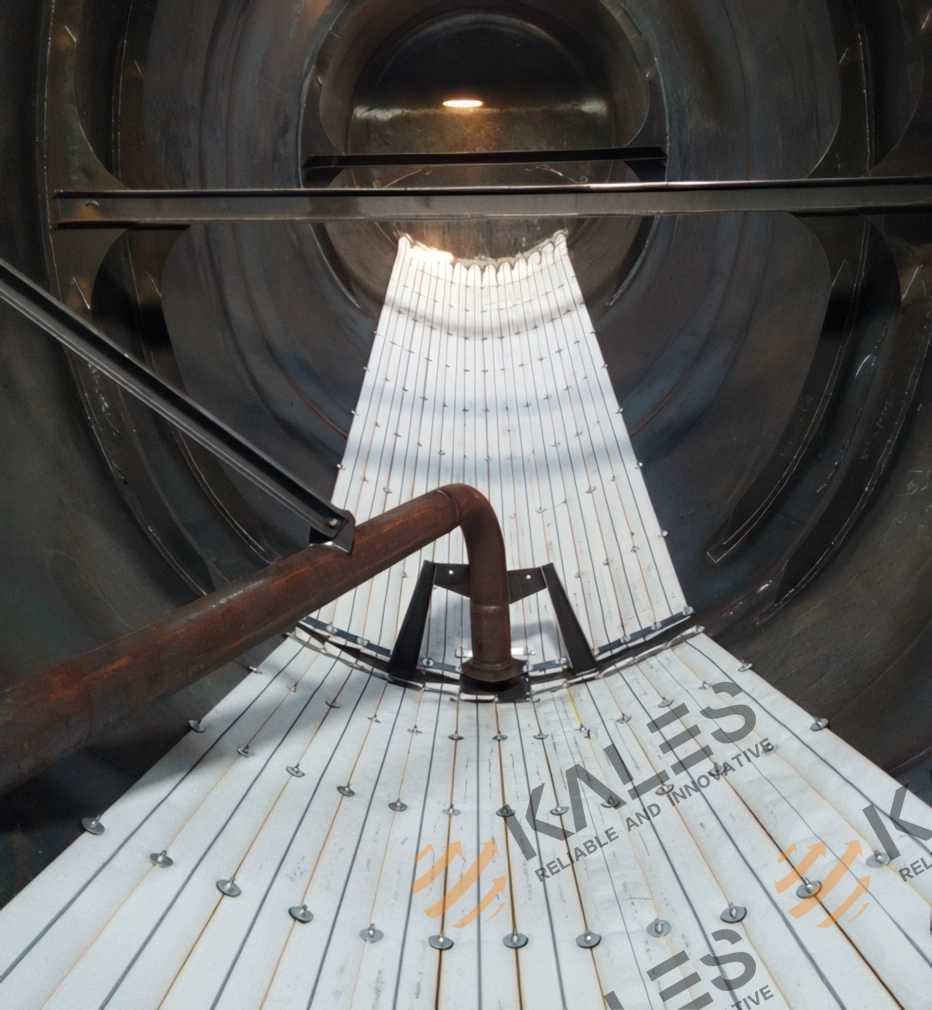
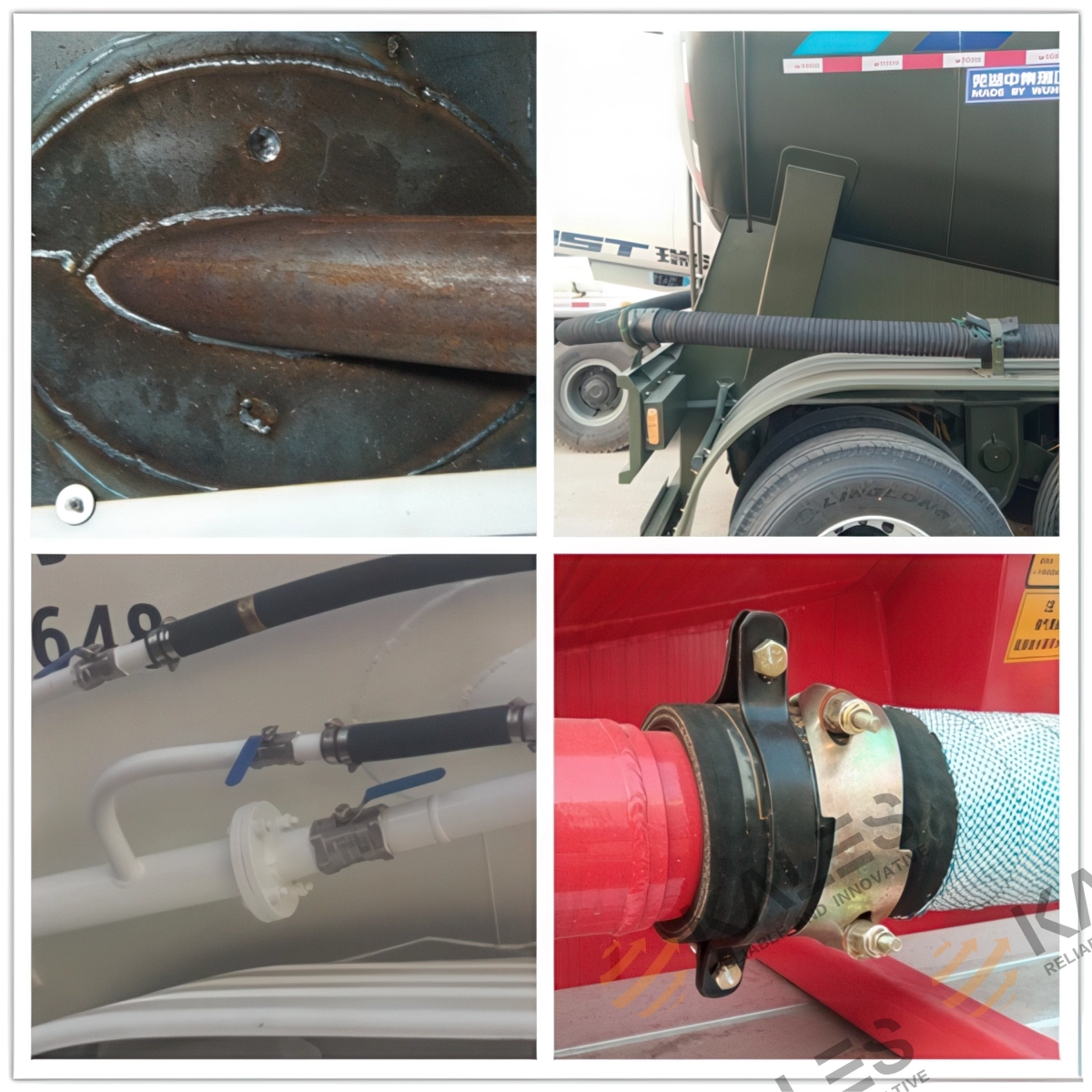
    Internal Fluidization Bed of Kales Powder Tanker
    Detailed schematic of Kales Cement Bulker discharge system

    The operational efficiency of a pneumatic trailer relies entirely on its power source and internal fluidization design.

    • We equip our trailers with renowned Weichai Diesel Engines and Bohai/Fuda Air Compressors (12m³ double-cylinder) to ensure a massive and stable air pressure output.
    • We combine an enlarged outlet with a high-angle fluidized bed to achieve remarkable discharge speeds of up to 1.5 tons per minute.
    • We implement a "No-Dead-Corner" internal tank structure to guarantee a residual rate of <0.3%, ensuring you deliver more product on every load.
    📈 Real Field Experience: In 2024, a major cement logistics client in the Middle East reported that our optimized fluidized bed design reduced their per-truck discharge time by 12 minutes, directly saving thousands of liters in diesel fuel annually across their fleet.

    🎨 Step 6: Protective Coating – Marine-Grade Protection
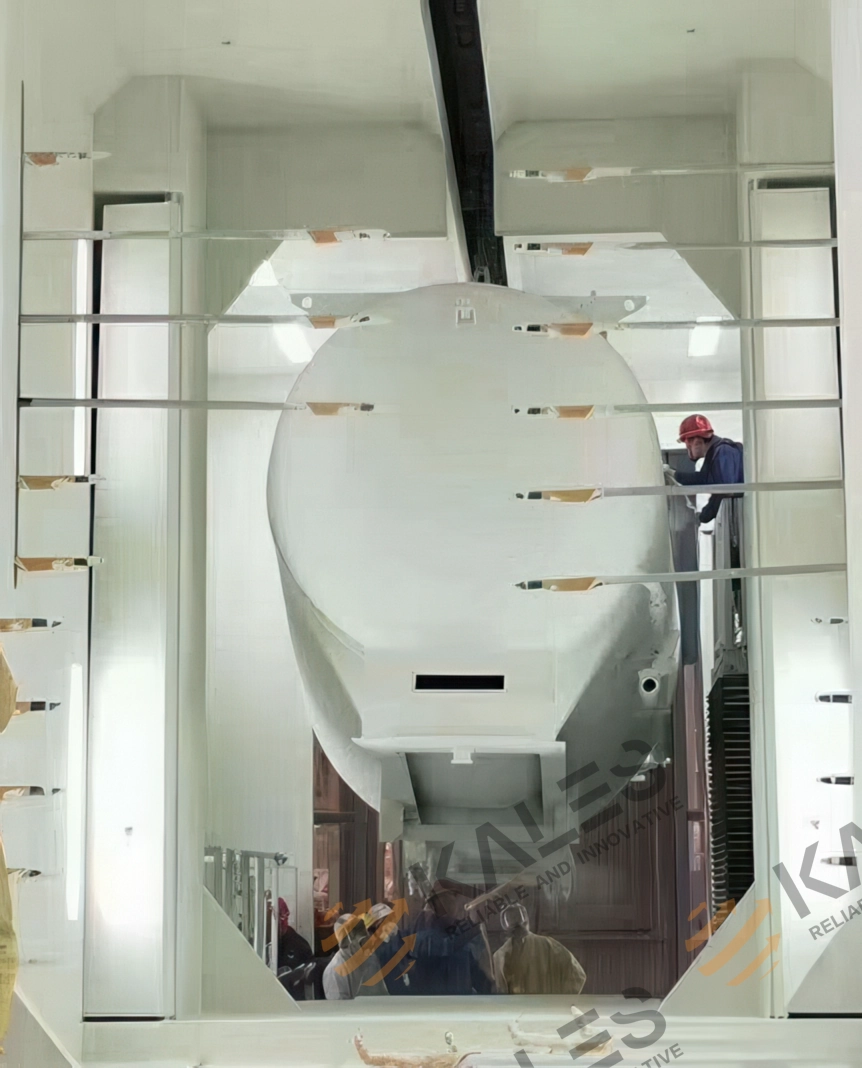
    Polyurethane Painting Process for Kales Tankers
    • We apply an environmentally friendly, phosphate-free, and heavy-metal-free Polyurethane Powder Coating.
    • We ensure our coating thickness reaches H-Grade (Marine Standard) at 120μm+, providing superior resistance to salt spray and humidity.
    • We guarantee our paint finish is proven to withstand 5–8 years without fading or peeling, even in harsh tropical climates.

    🔍 Step 7: Quality Control – Rigorous Pressure Testing
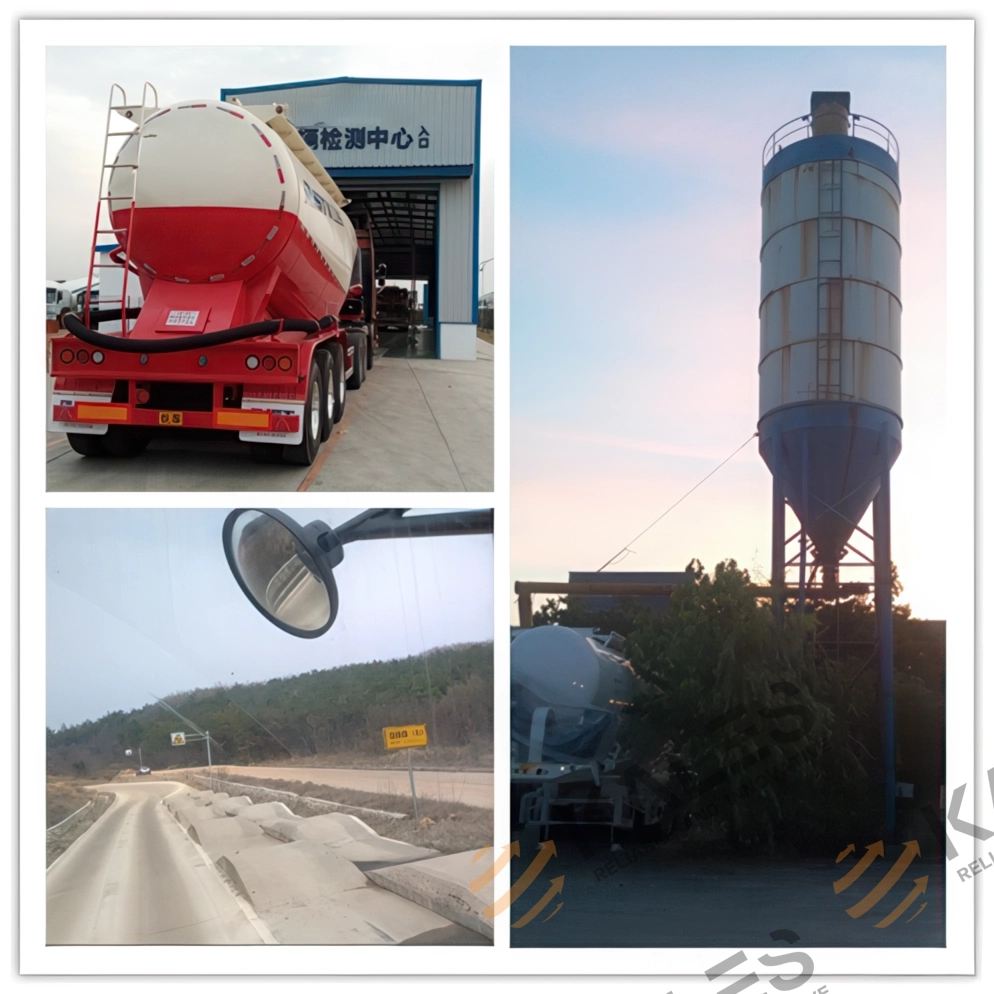
    Kales Vehicle Quality Control and Testing Center

    Every cement bulker trailer must pass a rigorous QC inspection before shipping:

    • We conduct strict Air Tightness Tests using high pressure to ensure absolutely zero pneumatic leaks.
    • We perform Discharge Efficiency Tests to manually verify unloading speeds and residue rates.
    • We execute 30 km/h Cornering Stability Tests on the testing track to ensure anti-rollover safety for the driver.

    If it doesn't pass, it doesn't ship. Period.

    Summary: What Defines a Superior Bulk Powder Tanker?

    Performance Metric The Kales Engineering Solution
    Fast Discharge Speed High-angle tank + Bohai Compressor + optimized fluidized bed.
    Low Residue Rate (<0.3%) "No-dead-corner" internal structure + precision airflow mechanics.
    Long-Term Durability T700 High-strength steel + automated robotic welding + CAE.
    📌 Operational Variables & Transparency:
    While Kales pneumatic trailers are engineered for a discharge speed of up to 1.5 tons per minute, actual unloading efficiency is highly dependent on the density, humidity, and particle size of the specific dry bulk material being transported, as well as the skill of the compressor operator.

    Frequently Asked Questions

    What is the discharge speed of a Kales powder tanker?

    When equipped with our standard 12m³ air compressor and handling standard dry cement, a Kales powder tanker achieves a rapid discharge speed of approximately 1.2 to 1.5 tons per minute, leaving a residue rate of less than 0.3%.

    What is the best steel for manufacturing a cement bulker?

    T700 high-strength steel is considered the industry standard for premium cement bulkers. It offers exceptional tensile strength, allowing manufacturers to reduce the tare weight of the trailer without compromising the pressure vessel's structural integrity.

    Can a pneumatic dry bulk trailer haul different materials?

    Yes, pneumatic trailers can haul various dry bulk powders including fly ash, lime, and flour, provided the particle size is ≤ 0.1mm. However, thorough cleaning of the tank interior is mandatory when switching between different types of materials to prevent contamination.

    Ready to Upgrade Your Logistics Fleet?

    Kales Vehicle provides customized bulk powder transport solutions tailored to your specific payload and terrain requirements. Don't compromise on your most valuable asset.

  • Slash Fuel Costs: How to Save $5,000+ per Truck Annually on Fuel Efficiency

    Slash Fuel Costs: How to Save $5,000+ per Truck Annually on Fuel Efficiency

    Last updated: February 2026

    What is the most effective way to optimize heavy-duty truck fuel efficiency? Heavy-duty truck fuel efficiency is optimized by combining aerodynamic hardware (like trailer side skirts and cab roof fairings) with active fleet telematics and precise tire management. This integrated approach reduces aerodynamic drag and excessive engine idling, yielding up to 15% in fuel savings and avoiding a $5,583 annual idling penalty per truck.

    For leaders in the trucking industry, managing the "Cost Per Mile" is the difference between profit and loss. With diesel prices averaging over $3.70 per gallon globally and margins tightening, relying solely on drivers to "slow down" is no longer enough. The most profitable fleets combine aerodynamic hardware with disciplined data tracking to plug profit leaks.

    "At highway speeds, 50% to 70% of a heavy-duty truck's engine power is consumed solely to overcome aerodynamic drag. Upgrading your trailer hardware provides an immediate and measurable return on investment."
    — Lead Aerodynamics Engineer, Kales Vehicle

    The Data-Driven Efficiency Matrix

    Based on industry fuel-saving impact studies across heavy-duty operations.

    Efficiency Upgrade Fuel Savings / Cost Avoidance Primary Cause of Fuel Waste Source/Evidence
    Trailer Side Skirts 4% to 15% fuel savings Underbody air turbulence ATA / NACFE
    Cab Roof Fairings 10% to 14% MPG increase Tractor-trailer gap drag Aerodynamic modeling
    Idling Elimination ~$5,583/year per truck saved 0.8 gallons/hour fuel burn US Department of Energy
    Tire Pressure Maintenance Avoid 1% penalty per 10 PSI Hysteresis (Heat friction) US Department of Energy

    1. Leverage Aerodynamics: The Highest-ROI Hardware

    Kales curtain sider semi-trailer featuring aerodynamic side skirts for improved fleet fuel efficiency.
    Kales commercial curtain sider trailer with aerodynamic side skirts.

    Side Skirts

    Side skirts prevent high-speed wind from flowing underneath the trailer and interacting with the bogie axles. Research shows that standard trailer side skirts reduce fuel consumption by an average of 6.69%, with optimized setups reaching a 15% savings window on long-haul routes.

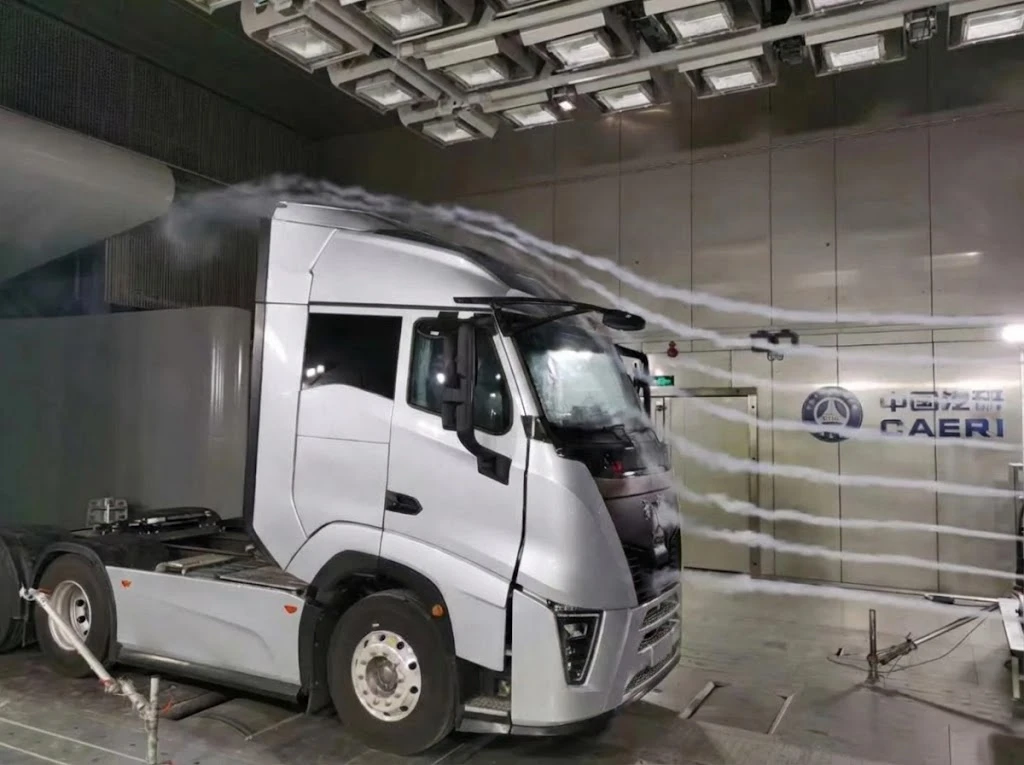
    Tractor equipped with cab roof fairings seamlessly integrated with a Kales semi-trailer, reducing aerodynamic drag by up to 30% for improved MPG.
    Well-designed cab roof fairings integrated with Kales Vehicle semi-trailers.

    Cab Roof Fairings

    Closing the gap between the tractor and a high-wall semi-trailer is critical. Well-designed cab roof fairings lower the truck's overall drag coefficient by up to 30%, which translates to a 10% to 14% improvement in miles-per-gallon (MPG). Modern semi-trailers, like those manufactured by Kales Vehicle, are engineered to integrate seamlessly with these tractor deflectors.

    2. Fleet Telematics: Eliminating the $5,583 Idling Penalty

    While hardware reduces drag, telematics stops silent budget killers like excessive engine idling.

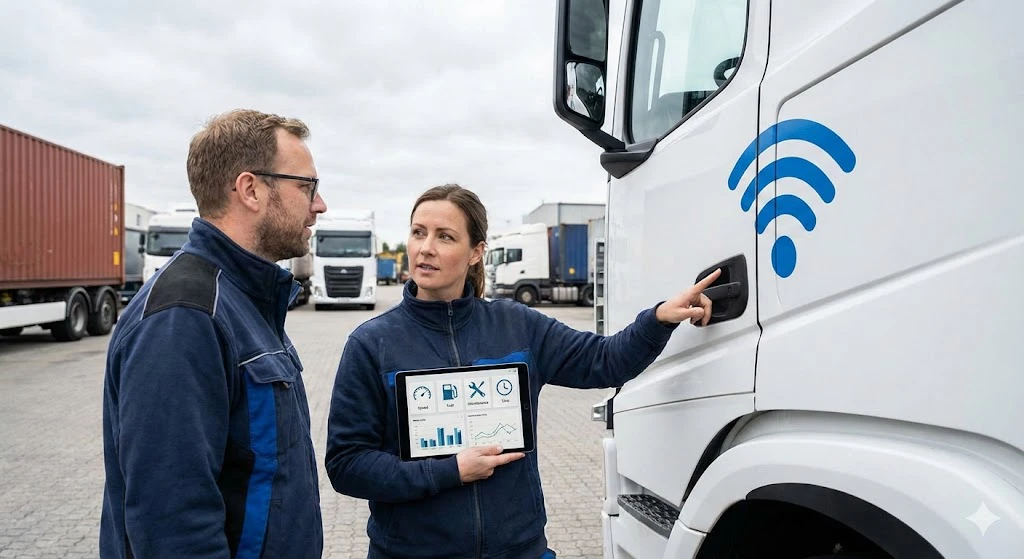
    Fleet workers analyzing dashboard metrics on a tablet using GPS fleet tracking systems to lower idle times.
    Monitoring engine metrics via GPS fleet tracking to reduce idle time.

    The Verified Cost of Idling

    A heavy-duty truck consumes approximately 0.8 gallons of diesel per hour while idling. Over a typical year (1,800 idling hours), a single truck burns around 1,500 gallons of wasted fuel—costing an average of $5,583 per year. Furthermore, this incomplete combustion accelerates engine wear, adding an estimated $2,000 in annual maintenance costs. Telematics software tracks these idle times, allowing fleet managers to enforce limits or justify the installation of Auxiliary Power Units (APUs).

    3. Master Tire Management

    Tires account for up to 30% of a truck's total rolling resistance (the energy lost when a tire flexes against the road surface, known as hysteresis).

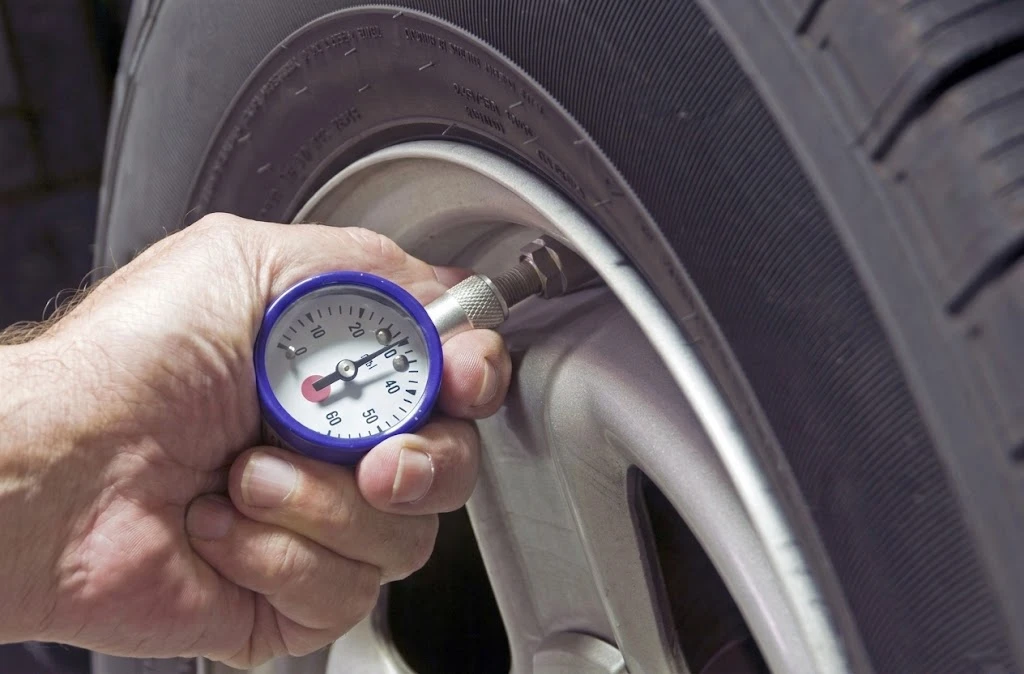
    A person uses a professional pressure gauge to check a Kales Vehicle truck tire to prevent fuel economy penalties.
    Routine tire pressure checks prevent significant fuel consumption spikes.

    The Underinflation Penalty

    When tires are underinflated, they flex excessively. Data shows that for every 10 PSI drop below the recommended pressure (typically 100-130 PSI for loaded front tires), a truck suffers a 0.5% to 1% penalty in fuel economy. If pressure drops by 14.5 PSI (1 bar), fuel consumption spikes by 2%. Equipping your trailers with Automatic Tire Inflation Systems (ATIS) and switching to Low Rolling Resistance (LRR) tires can inherently improve efficiency by 3% to 10%.

    4. Optimize Route Planning & Driver Behavior

    A Kales fleet navigation interface showing a route comparison, prioritizing the most fuel-efficient 17-minute path.
    Smart routing interface prioritizing fuel efficiency over minimal time gains.

    Smart Routing and Eco-Driving

    Driver behavior impacts total fuel economy by up to 30%. Rapid acceleration, hard braking, and exceeding 65 mph exponentially increase wind resistance and fuel burn. By using GPS logistics to route trucks around steep inclines and stop-and-go traffic hours, fleets can drastically reduce diesel consumption.

    Implementation Strategy: 4 Steps to Maximum ROI

    1. Upgrade Trailer Hardware: Install aerodynamic side skirts and cab roof fairings to immediately lower the overall drag coefficient by up to 30%.
    2. Deploy Telematics Tracking: Monitor idle times to eliminate the 0.8 gallons/hour fuel burn penalty.
    3. Automate Tire Management: Implement ATIS (Automatic Tire Inflation Systems) to prevent the 1% fuel penalty per 10 PSI pressure drop.
    4. Optimize Routes: Utilize GPS navigation to actively avoid traffic congestion and steep inclines.

    Frequently Asked Questions (FAQ)

    How much fuel does a semi-truck use while idling?

    A heavy-duty semi-truck consumes an average of 0.8 gallons of diesel per hour while idling. For a long-haul truck idling 10 hours a day, this amounts to roughly $30 per day and over $5,500 annually in wasted fuel costs.

    Do trailer side skirts actually save fuel?

    Yes. Trailer side skirts redirect air away from the rear axles and undercarriage, reducing aerodynamic drag. Depending on the route and speed, side skirts provide a verified fuel savings of 4% to 15%.

    How does tire pressure affect heavy-duty truck fuel economy?

    Tire pressure directly affects rolling resistance. A drop of just 10 PSI across a vehicle's tires increases fuel consumption by up to 1% due to excessive heat and friction (hysteresis) generated by the underinflated rubber.

    Our Final Recommendation

    Improving operational efficiency requires a holistic strategy. Start with the hardware: upgrading to low-drag trailers equipped with side skirts and Low Rolling Resistance tires provides immediate, passive fuel savings. Next, implement telematics to actively coach drivers and eliminate high-cost idling hours.

    Since hardware fundamentally caps how efficient your fleet can be, ensuring your trailers are designed for modern aerodynamics is step one. Check out our Fuel-Efficient Semi-Trailers designed with minimized drag coefficients to protect your bottom line.

    Still undecided? Don't guess on aerodynamics and load capacities. Let our engineering team simulate the ideal trailer setup for your fleet's routes.