Cement Tanker Trailer · Published: July 23, 2026 · Updated: July 23, 2026 · By Kales Vehicle Technical Team · Reviewed by Kales Africa Export Engineering · Market focus: Nigeria, Ghana, Kenya, Tanzania, Zambia, and neighbouring African markets
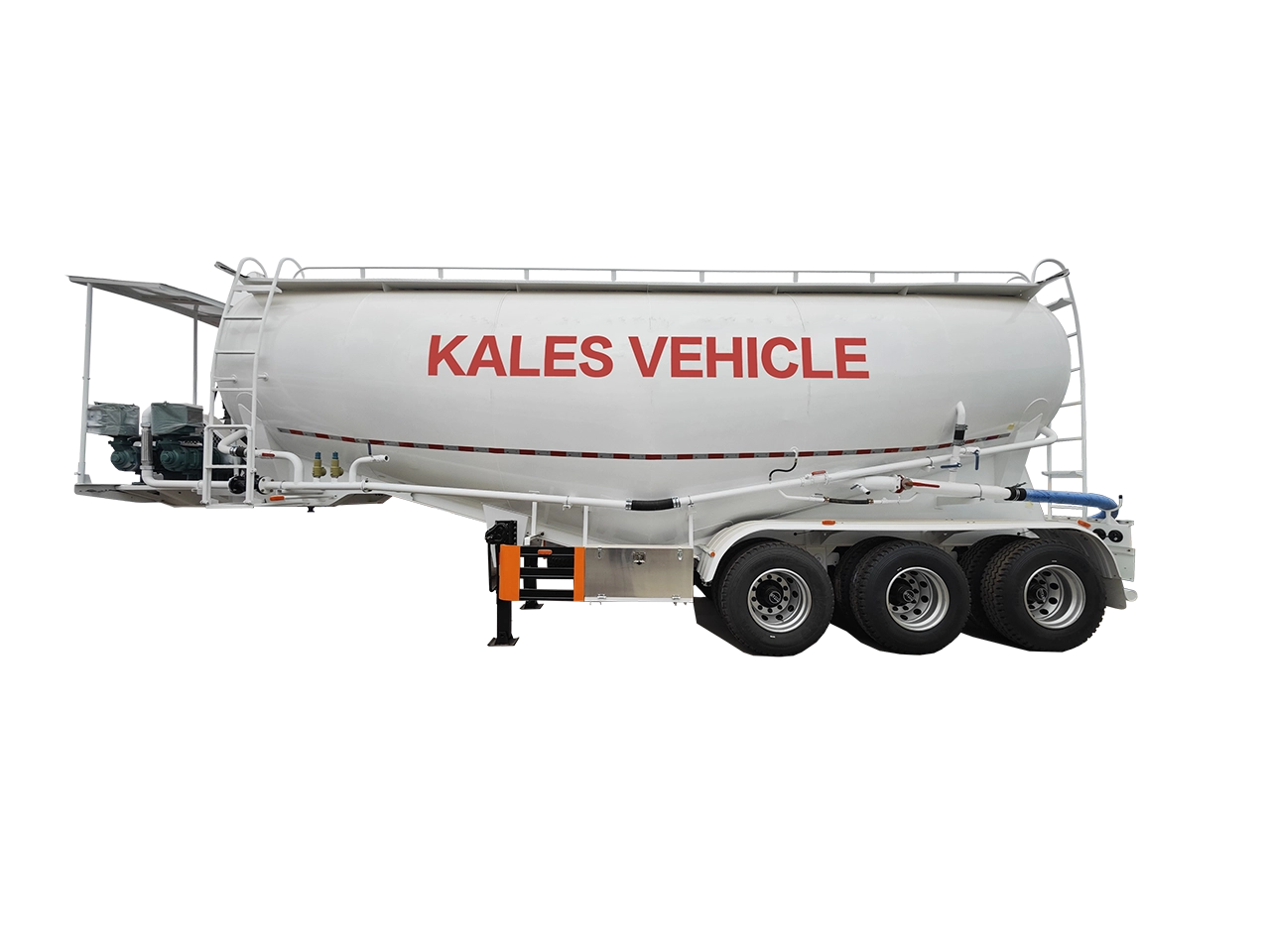
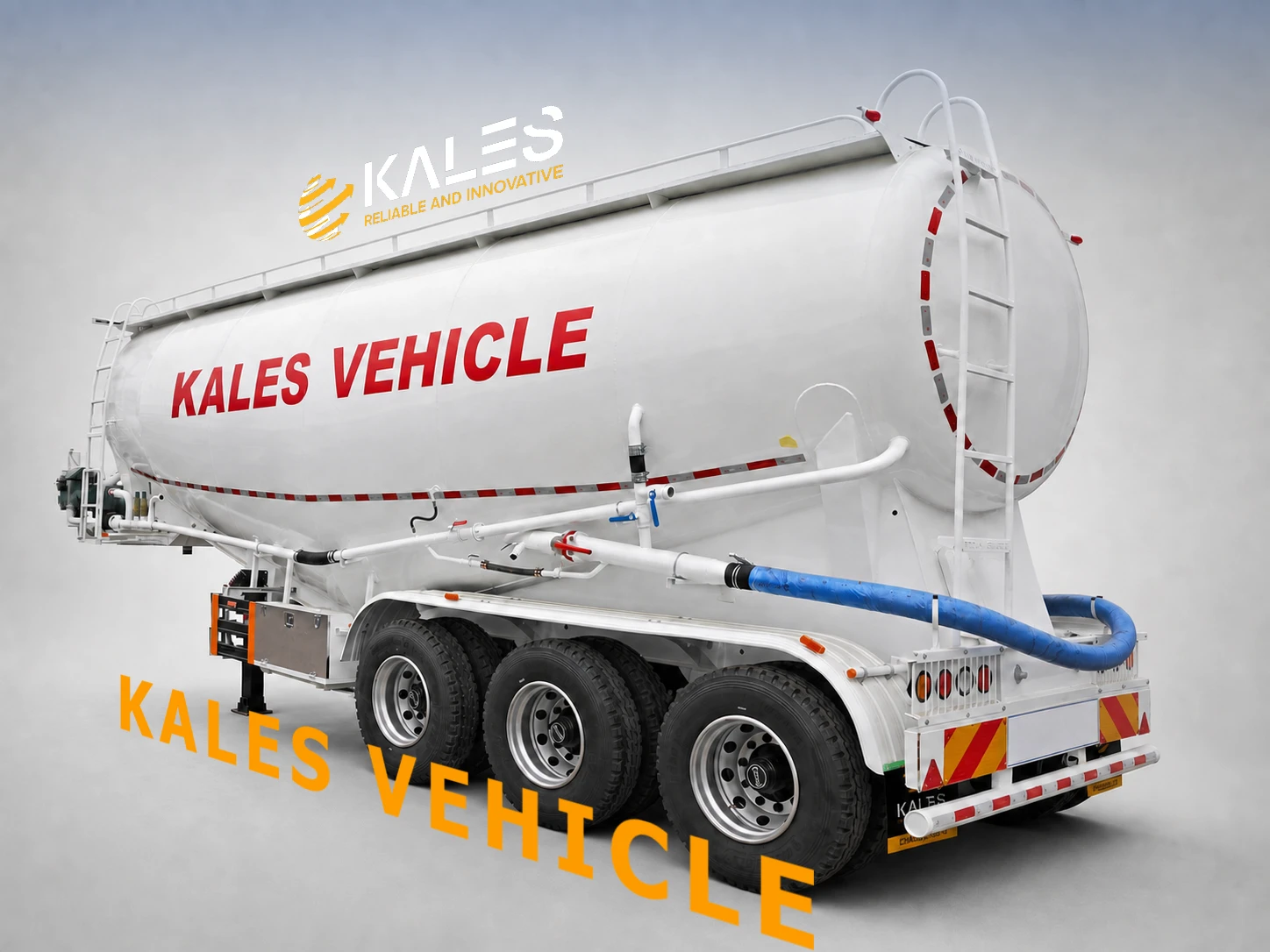
Kales 35m³ bulk cement tanker trailer: a three-axle pneumatic-discharge cement bulker developed for cement plants, concrete batching and mixer-truck operations, building-material distributors, and dry-bulk transport fleets working across African trunk roads and demanding last-mile sites.
International buyers may also know this equipment as a cement bulker trailer, dry bulk cement trailer, powder tanker, or silo trailer. This page covers the 35m³ single-product configuration rather than the larger 58m³ multi-compartment powder tanker family.
Quick answer: choose this 35m³ cement tanker semi-trailer when your operation needs a practical three-axle unit with an independent diesel engine and 12m³ twin-cylinder air compressor for unloading at sites without a reliable external air supply. The represented trailer uses super-single tyres to reduce wheel count, simplify running-gear inspection, and avoid stones becoming trapped between paired tyres. Its Q355 tank, mechanical leaf-spring suspension, and locally familiar powertrain options make it a strong fit for African cement distribution routes where uptime and repair access matter.
35m³ Cement Bulker Technical Specifications
| Product type | Three-axle pneumatic bulk cement tanker semi-trailer |
|---|---|
| Tank capacity | 35m³ total capacity; approximately 34m³ effective volume |
| Rated payload range | Approximately 32,900-33,500 kg, subject to final tare weight and local axle limits |
| Gross vehicle mass | 40,000 kg reference configuration; destination regulations must be checked before production |
| Overall dimensions | Length options 8,400-9,300 mm × 2,550 mm wide × 3,850-4,000 mm high |
| Tank material | Q355 high-strength steel |
| Tank shell and head | 5 mm shell with 6 mm reinforced heads in the reference specification |
| Axles and axle-group load | 3 axles; 24,000 kg reference axle-group load |
| Suspension | Mechanical leaf spring with 10/10/10, 8/8/8, or 4/4/4 leaf options; air suspension available |
| Tyres | Super-single tyre configuration on the represented trailer; final size and load index matched to axle load, route, and local regulation |
| Discharge engine | Huafeng 4105 or Weichai diesel engine, depending on destination support and buyer preference |
| Air compressor | 12m³ twin-cylinder Suzhou or Fuda compressor |
| Reference discharge rate | Approximately 1.2-1.8 tonnes per minute under suitable material and site conditions |
| Reference residual target | Up to 0.3% under suitable cement condition, fluidisation setup, pressure, and operating procedure |
| Departure angle | 37° or 39° configuration for ramps and uneven site access |
| Transport media | Bulk cement; other compatible low- or medium-density dry powders require engineering confirmation |
| Custom quotation | Contact KALES with the cargo density, target payload, route, tractor model, destination port, and unloading conditions. |
Best-Fit Operating Profile for African Fleets
This 35m³ cement bulker is designed for fleet owners who need more control over unloading time and material handling than bagged-cement logistics can provide. It is particularly useful for regular movement between ports, cement terminals, grinding plants, depots, and concrete batching plants.
Best for
- Cement manufacturers and distributors supplying batching plants or regional depots
- Dry-bulk carriers operating from Lagos, Tema, Mombasa, Dar es Salaam, or other African ports
- Sites where the trailer must unload without depending on a fixed external compressor
- Fleets that prioritise mechanical suspension, common axle brands, and workshop-friendly components
- Operators replacing bagged transport on stable, repeat-volume cement routes
Not ideal for
- Very high-volume multi-product work that requires the larger 58m³ four-compartment tanker
- Dense powder or abrasive mineral cargo without a confirmed tank, fluidisation, and payload review
- Routes where the proposed gross mass, axle load, or overall height exceeds local legal limits
- Wet cargo, liquid fuel, or products that are not compatible with a dry pneumatic tanker
Why African Buyers Choose This Cement Tanker Trailer
- Low-residue fluidisation design: the air slide and discharge geometry target residual material of up to 0.3% when cement condition, pressure, and operating procedure are suitable, helping reduce product left inside the tank after repeated trips.
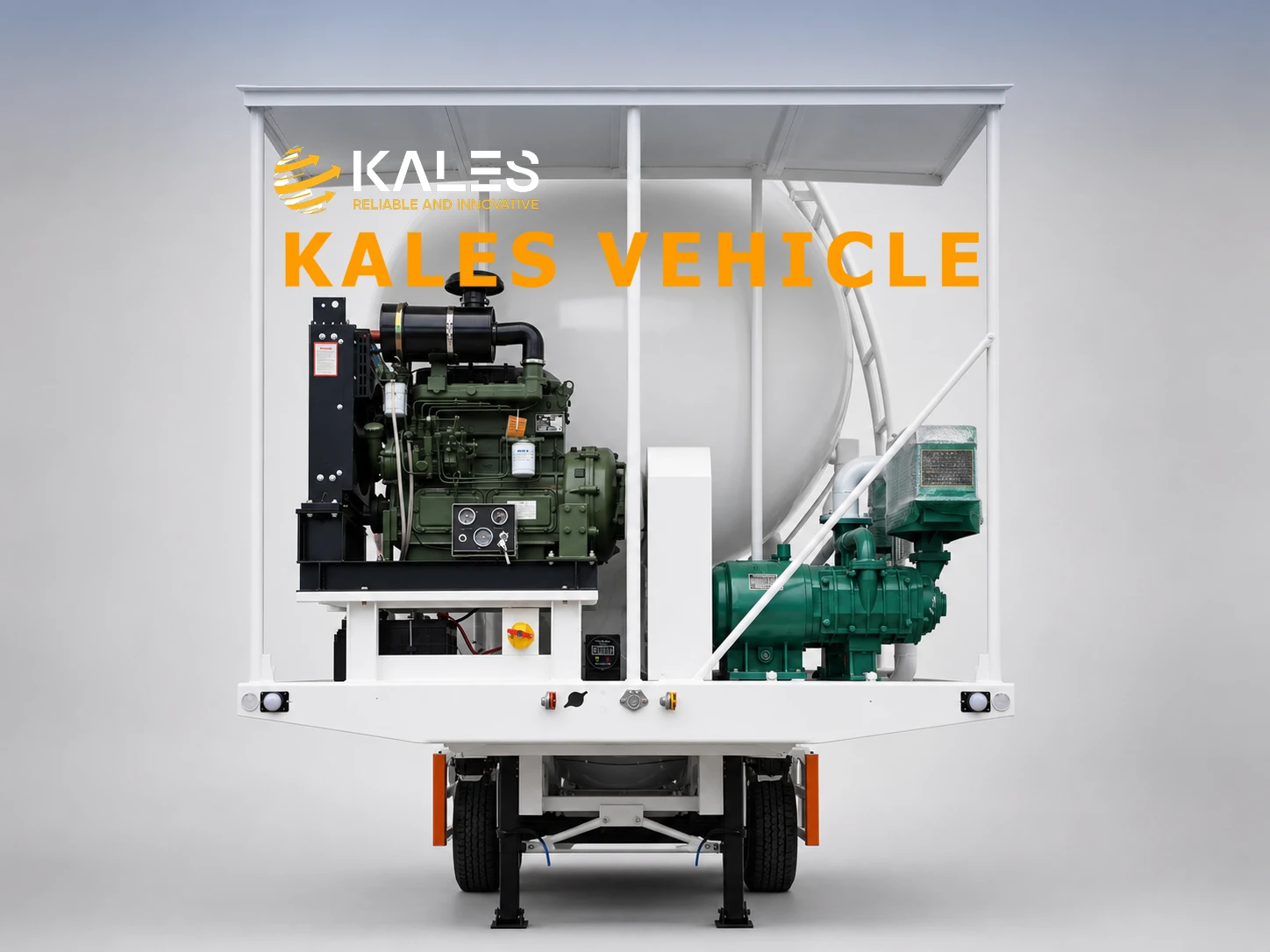
- Independent unloading package: the Huafeng or Weichai diesel engine and 12m³ twin-cylinder compressor let the trailer unload at remote depots and worksites where grid power or a fixed air supply may be unavailable.
- Road-duty Q355 tank: a 5 mm Q355 shell with 6 mm reinforced heads provides a defined structural baseline for corrugated roads, ramps, and repeated pressure cycles. Buyers can review the related Kales powder tanker manufacturing process for more detail on tank fabrication and inspection.
- Practical 35m³ operating size: the approximately 34m³ effective volume and 32.9-33.5 tonne reference payload range balance trip productivity with a manageable three-axle platform.
- Super-single tyre efficiency: one wide tyre per wheel position reduces the number of tyres and rims compared with a dual-tyre arrangement, can reduce tare and rolling resistance when correctly specified, prevents stone trapping between paired tyres, and gives workshop teams clearer access for brake, hub, and suspension inspection.
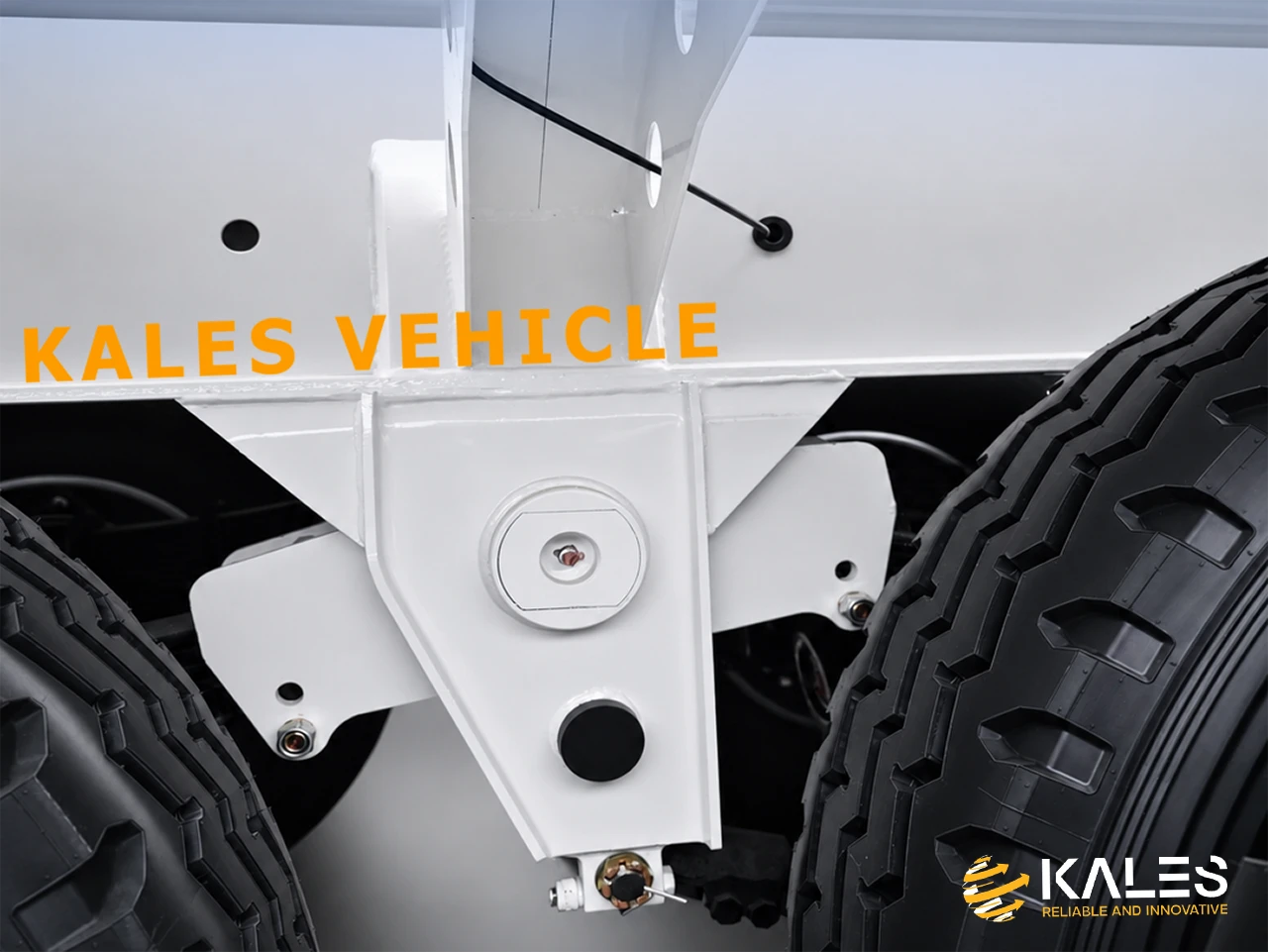
- Serviceable running gear: mechanical leaf springs and selectable FUWA, BPW, SAF, or Kales axles allow the buyer to match components to the parts network and workshop capability in the destination country.
- Configured for the actual route: super-single tyre size and load index, king pin, landing gear, suspension, tank section, power unit, and pipe arrangement are confirmed before production instead of forcing one stock specification on every market.
Specification-Backed Advantages
- Tank material: Q355 high-strength steel with a 5 mm shell and 6 mm reinforced heads provides a concrete structural specification for demanding road and pressure cycles.
- Air compressor: the 12m³ twin-cylinder compressor supports independent pneumatic unloading at ports, depots, and batching plants.
- Suspension: selectable mechanical leaf-spring packs give fleets a repairable setup that can be matched to road severity and local workshop support.
Tank Structure and Pneumatic Unloading
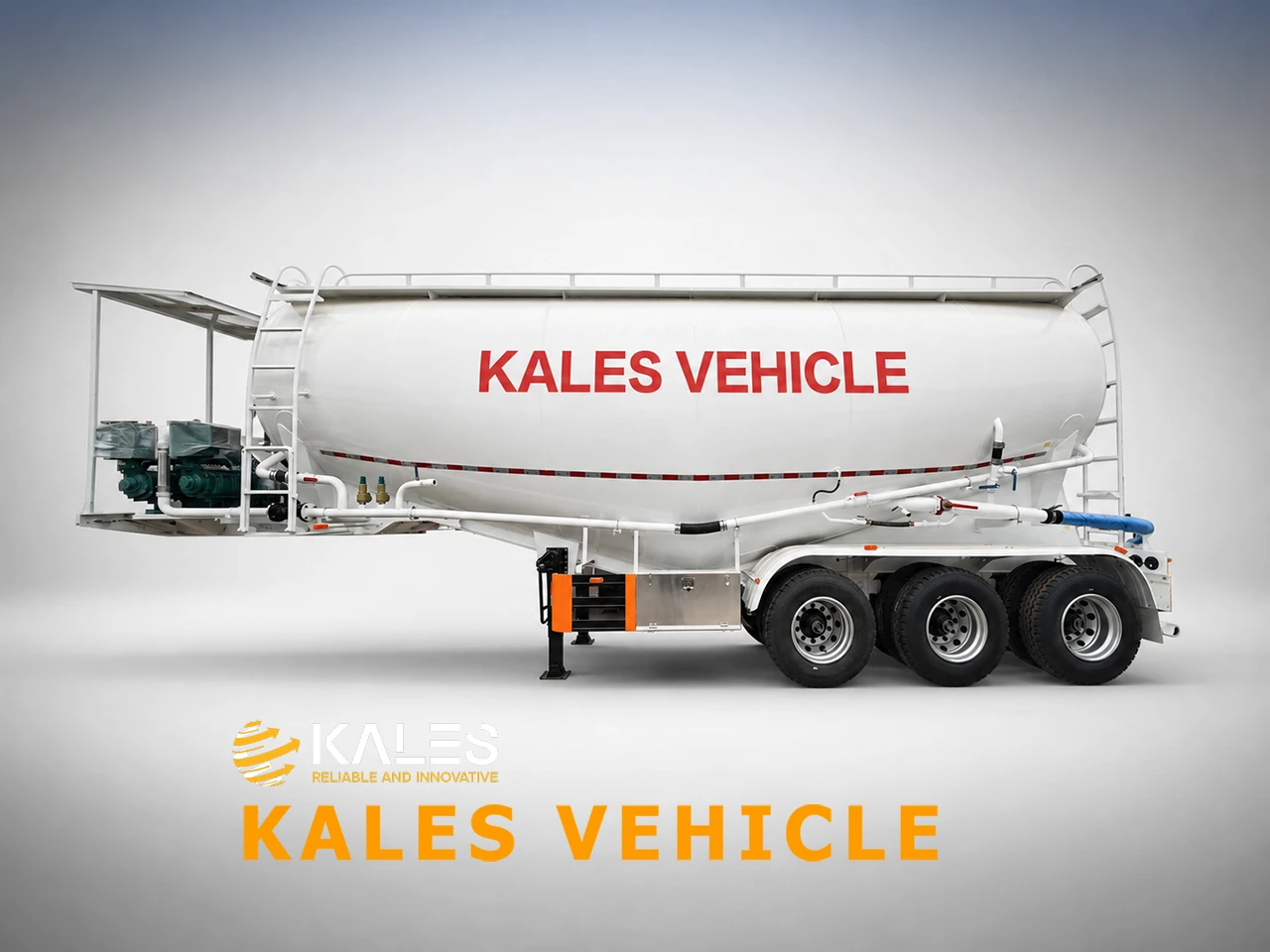
The trailer combines five main systems: the pressure tank, supporting chassis, running gear, pneumatic discharge system, and operating accessories. The fluidisation bed is the key unloading component. Compressed air passes through the air-slide material and suspends the cement so it can move towards the outlet and discharge through the pipe under pressure. The bulk powder tanker operation and maintenance guide explains the loading, pressure-control, discharge, cleaning, and inspection workflow in more detail.
Discharge performance is never determined by compressor size alone. Cement moisture, particle condition, fluidisation-bed cleanliness, hose length, outlet height, pressure control, and operator procedure all affect the actual rate and residual material. For that reason, Kales treats 1.2-1.8 tonnes per minute and up to 0.3% residual as reference engineering targets for suitable operating conditions, not as universal results for every cargo and site.
Two tank-section options
| Item | Option 1 | Option 2 |
|---|---|---|
| Tank length including heads | 8,200 mm | 8,080 mm |
| Maximum width | 2,500 mm | 2,550 mm |
| Maximum section height | 3,050 mm | 3,170 mm |
| Front and rear head geometry | 1,908 mm diameter; 1,808 mm optional | 2,230 × 1,950 mm long-axis/short-axis section |
For a broader review of axle loading, suspension choice, tyre availability, tractor matching, and rough-road specification, use the Africa semi-trailer buying guide before confirming the final build.
Discharge Power and Remote-Site Readiness
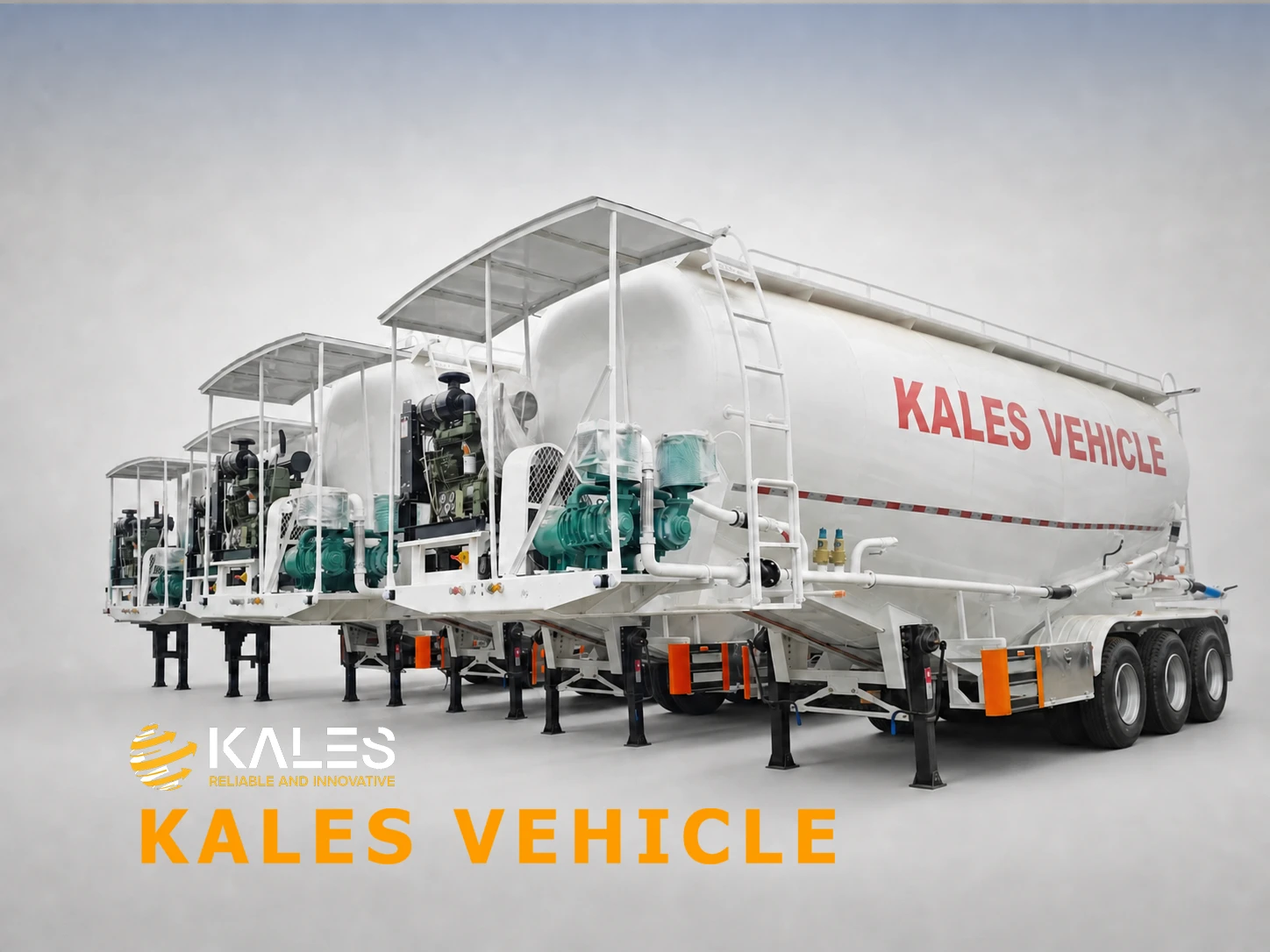
The standard independent power package uses a Huafeng 4105 or Weichai diesel engine with a 12m³ Suzhou or Fuda twin-cylinder air compressor. Weichai consumables and service knowledge are widely available in many African heavy-vehicle markets, which can simplify routine maintenance. Buyers should still confirm the preferred engine and compressor brand against their own local parts network before ordering.
Where a cement terminal or batching plant already provides a verified fixed air source, the front power unit can be omitted. This can shorten the trailer to approximately 8,400 mm and reduce tare weight, but the receiving-site pressure, flow, connection, and operating procedure must be checked first.
Braking, Coupling, and Safety Equipment
- King pin: 50# or 90# options for matching common HOWO, SHACMAN, and other tractor units.
- Brake hardware: corrosion-resistant aluminium air reservoirs, dual brake chambers, and a WABCO emergency valve in the reference package.
- ABS/EBS: Ruili/Kormee ABS can be specified, with WABCO available according to the final configuration and destination requirement.
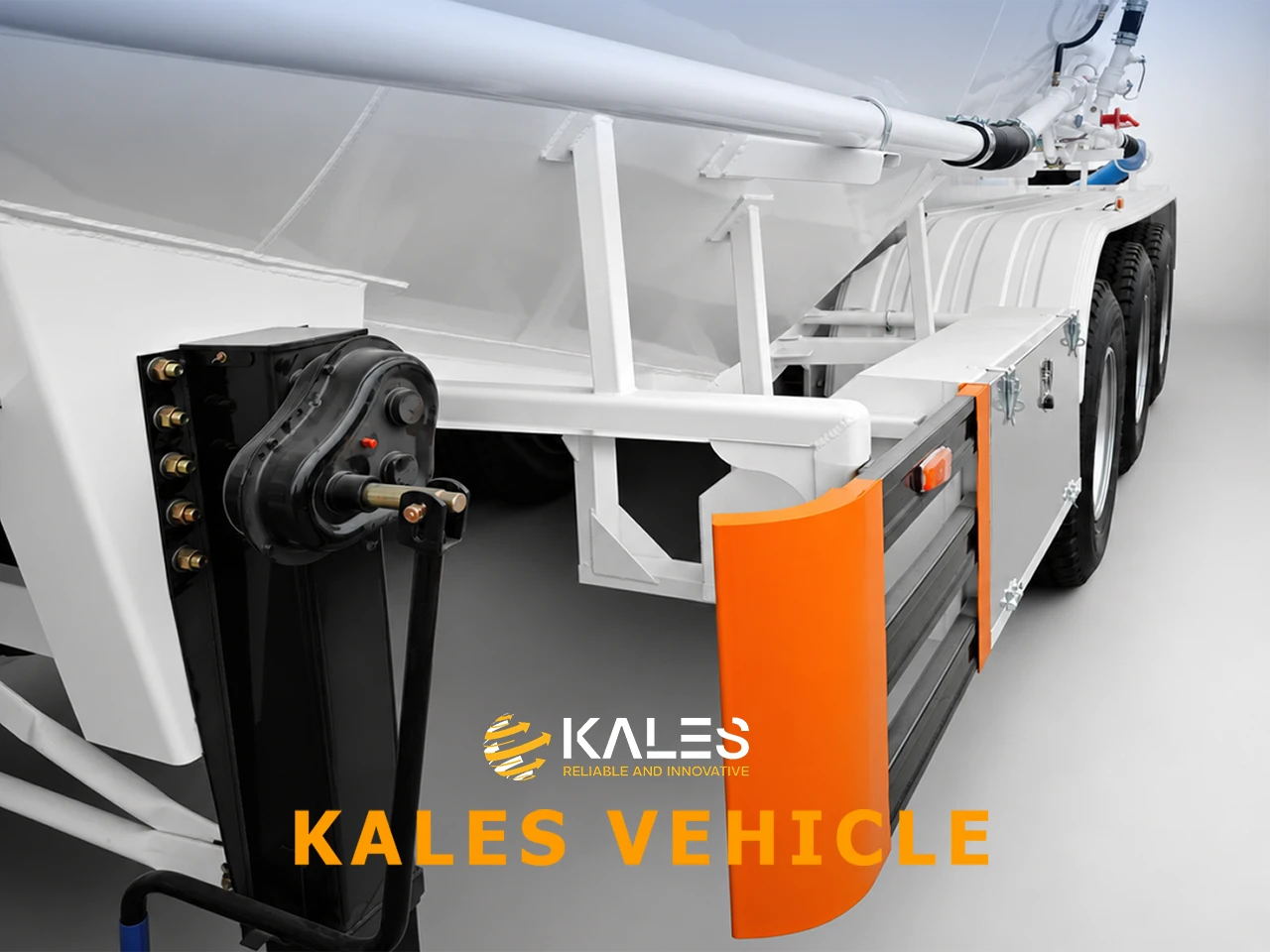
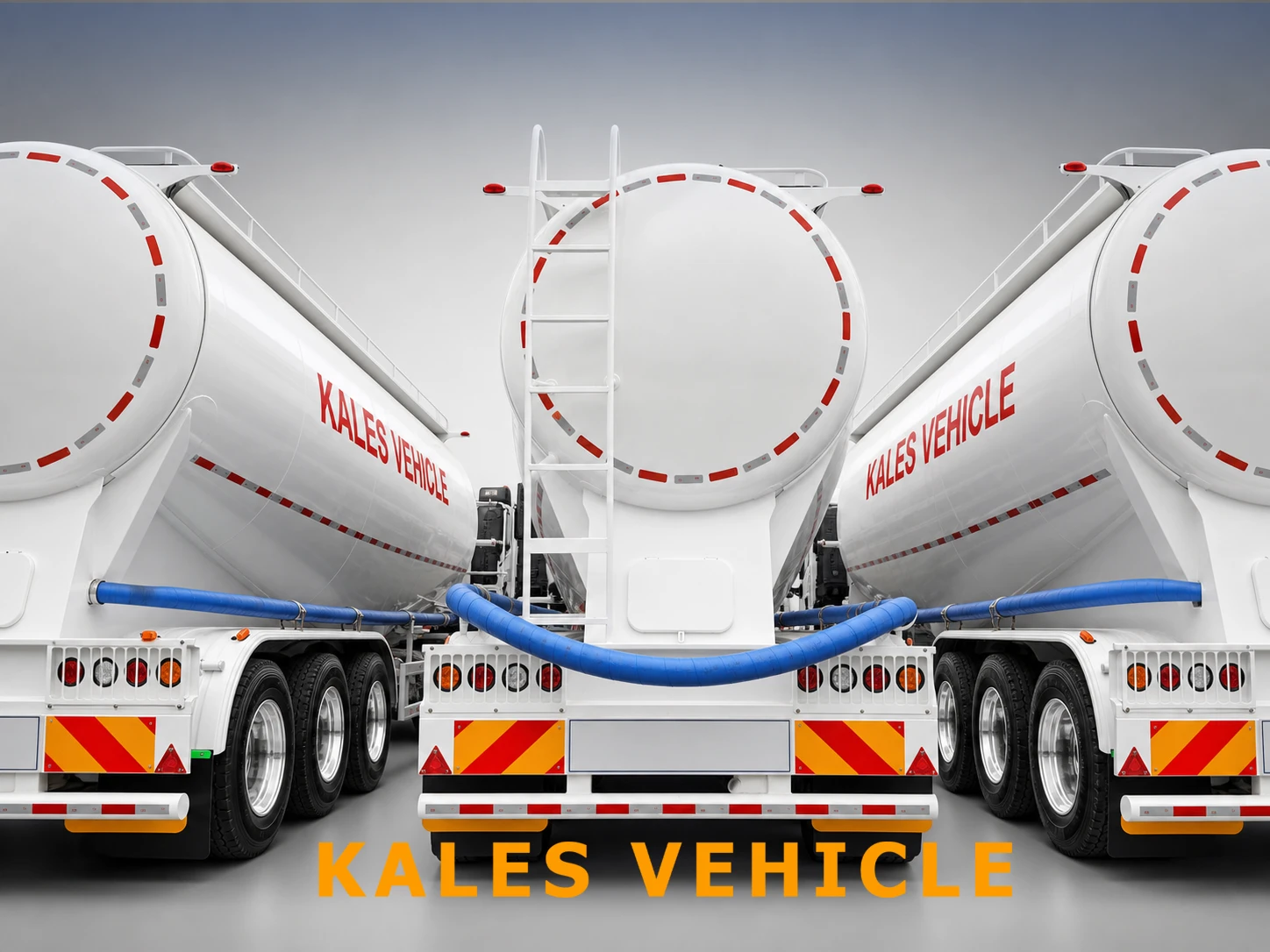
- Protection: Q235 side guards and rear underrun protection, plus toolbox, spare-wheel carrier, and fire extinguisher provision.
- Route review: brake specification, tyre rating, axle load, lighting, and underrun protection should be confirmed for the destination country before production.
Configuration Options for Budget, Roads, and Local Support
| System | Available direction | Buyer decision |
|---|---|---|
| Axles | FUWA, Kales, BPW, or SAF | Choose against local parts access, workshop familiarity, load plan, and route quality. |
| Landing gear | FUWA, Kales, or JOST | Match fleet standardisation and local service support. |
| Suspension | Mechanical leaf spring or air suspension | Mechanical suspension suits rougher roads and simpler repairs; air suspension suits better roads and cargo-protection priorities. |
| Tyres | Super-single tyres | Confirm tyre size and load index, legal axle load, inflation-control practice, replacement availability, route condition, and spare-tyre plan. |
| Tank and piping | Section geometry, intake pipe, ladder position, and power-unit layout | Configure around width limits, receiving-site layout, maintenance access, and unloading connection. |
Bulk Cement Versus Bagged Transport
Bulk cement transport can remove bag and pallet costs, reduce dependence on manual loading crews, and keep cement enclosed between the terminal and silo. On stable high-volume routes, pneumatic unloading can also shorten vehicle turnaround compared with handling individual bags. Fleets that need a larger single-tank step can compare the 40 CBM bulk cement tanker trailer. The commercial case still depends on having compatible loading and receiving silos, trained operators, reliable route volume, and a payload that complies with local law.
CIF Shipping and Pre-Delivery Inspection
Kales can prepare a configuration-specific CIF quotation for major African ports such as Lagos, Tema, Mombasa, and Dar es Salaam. Shipment may use break-bulk or Ro-Ro service depending on dimensions, sailing availability, destination, and packing plan. Export documentation can be coordinated with the buyer and clearing agent, but final customs requirements must be confirmed for the importing country.
Before shipment, buyers can request production photos, tank and chassis inspection views, pneumatic-system checks, and loading documentation. The final supply scope should state the selected axle, suspension, tyre, power-unit, compressor, braking, spare-parts, and documentation package.
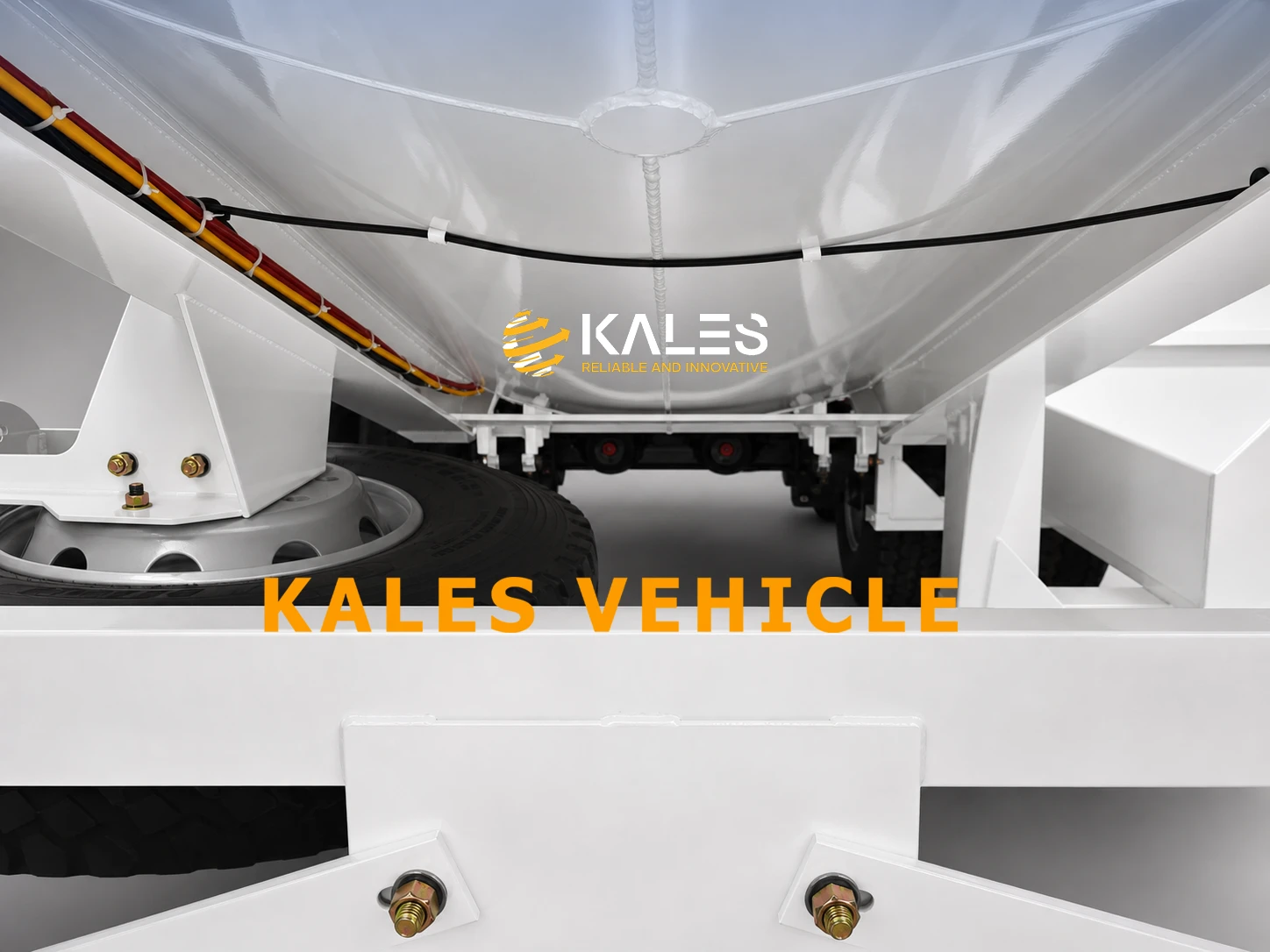
Factory and Component Inspection Views
Frequently Asked Questions
What are the tank volume and reference payload?
The tank has a 35m³ total capacity and approximately 34m³ effective volume. Reference rated payload is about 32.9-33.5 tonnes, but the legal payload must be calculated from the final tare weight, tractor combination, axle limits, and regulations in the destination country.
Can the trailer unload without an external air supply?
Yes. The standard direction includes a Huafeng or Weichai diesel engine and a 12m³ twin-cylinder compressor. If the receiving site has a compatible fixed air source, the front power package can be omitted after the pressure, flow, and connection are verified.
Is the claimed 0.3% residual guaranteed for every powder?
No single residual figure applies to every material and site. Up to 0.3% is a reference target for suitable cement condition, fluidisation setup, pressure, hose arrangement, and operating procedure. Different powders must be tested or reviewed before the specification is confirmed.
Are spare parts practical to source in Africa?
The trailer can use Weichai power, FUWA or BPW axles, mechanical leaf springs, WABCO brake components, and other brands already familiar to many African workshops. Buyers should select the final brands against the actual dealer and parts network in their country. A recommended wear-parts package can be included in the supply quotation.
Why does this cement tanker use super-single tyres?
Super-single tyres reduce the number of tyres and rims compared with a dual-tyre setup, remove the gap where stones can become trapped, and improve access for checking brakes, hubs, and suspension. A correctly matched wide tyre can also support lower tare and rolling resistance. The trade-off is that the specified tyre size, load index, inflation pressure, local replacement supply, and spare-tyre plan must be confirmed before the trailer enters service.
How can the trailer be shipped to Africa?
Kales can quote break-bulk or Ro-Ro shipment and prepare CIF options for ports including Lagos, Tema, Mombasa, and Dar es Salaam. The most suitable method depends on destination, sailing schedule, final dimensions, and the selected packing plan.
Can I inspect the finished trailer before shipment?
Yes. Buyers can request production photos, tank and chassis inspection views, pneumatic-system checks, and loading records before the trailer leaves the factory.
How is the final quotation confirmed?
Send the cargo type and density, target payload, route condition, tractor model, preferred axle and suspension, unloading-site details, destination port, and order quantity. Kales will then confirm the configuration, delivery terms, and CIF quotation.
Request a 35m³ Cement Tanker Configuration and CIF Quotation
For a configuration matched to your country, send your operating route, cement density, daily trip target, tractor model, unloading-site conditions, preferred destination port, and required delivery schedule. Kales Africa Export Engineering will prepare a technical configuration and shipping proposal for review.
Related Kales Cement and Powder Transport Equipment
- 40 CBM Bulk Cement Tanker Trailer for buyers who need a larger dry-powder silo configuration.
- 58m³ Four-Compartment Powder Tanker Trailer for higher-volume or separated powder transport requirements.
- Bulk Powder Tanker Operation and Maintenance Guide for loading, discharge, cleaning, and service planning.
- How Kales Bulk Powder Tankers Are Built for manufacturing and inspection details.