Blog

  • Kales Fuel Tanker Semi-Trailer: Operation & Maintenance Manual

    Kales Fuel Tanker Semi-Trailer: Operation & Maintenance Manual

    Foreword: Designed for professional drivers and fleet managers, this manual provides the essential SOPs (Standard Operating Procedures) for the safe operation of Kales Fuel Tanker Trailers. Adherence to these guidelines ensures compliance with international HAZMAT transport regulations.


    1. Core Systems Overview

    1.1 🛢️ Tank Body & Construction

    • Material Standards: High-tensile Carbon Steel (Q345R), Stainless Steel, or Aluminum Alloy (5083). Compliant with ADR/RID and ISO standards for dangerous goods transport.
    • Compatible Media: Gasoline (Petrol), Diesel, Kerosene, and Jet Fuel.ℹ️ Note: For transporting edible oils or specific chemicals, ensure seals (gaskets) and lubricants are food-grade or chemically compatible. Never cross-contaminate without validation.
    • Anti-Surge Design: Equipped with internal Baffles (Thickness ≥4mm, flow area >20%) to minimize liquid surge and improve vehicle stability.
    • Capacity: 20,000L – 80,000L, available in Single or Multi-Compartment configurations.Cross sectional diagram of the bulkheads and baffles in the Kales fuel tank semi trailer
    • Cross-sectional diagram of the bulkheads and baffles in the Kales fuel tank semi-trailer

    1.2 ⚙️ Manhole Assembly (Top Loading System)

    Located on the tank top, the standard Euro-style Manhole (DN500) integrates:

    • Breather Valve (P/V Vent): Dual-mode Pressure/Vacuum relief.
      • Working Pressure: +6~+8 kPa (Pressure) / -2~-3 kPa (Vacuum).
      • Emergency Venting: 21~32 kPa.
    • Safety Interlock: The cover cannot be opened unless residual tank pressure is safe.
    • Overfill Prevention: Integrated with optic/thermistor sensors to trigger high-level alarms and shut off loading automatically.

    European-style manhole cover with integrated pressure

    European-style manhole cover with integrated pressure 1.Overfill prevention probe  2.Vapor recovery valve  3.Gauging hatch (or dip tube opening)  4.Manhole cover with integrated Breather Valve and Safety Interlock

    1.3 🔋 Bottom Loading System (API Standard)

    The core system for closed-loop, environmentally friendly loading operations. Fully compliant with API RP1004.

    • Emergency Foot Valve (Internal Valve): Pneumatically operated. Features a shear groove that snaps off during a collision, keeping the tank sealed to prevent spillage.
    • API Adapter Valve: The standard 4-inch valve with a 70° nose angle for dry-break coupling. Uses FKM (Viton) seals for fuel resistance.
    • Vapor Recovery Valve: Interlocked to open with the Foot Valve, returning volatile vapors to the terminal instead of venting to the atmosphere.
    • Pneumatic Control Block: Centralizes control for all valves, including the Master Air Valve.

    Kales fuel tank semi trailer bottom discharge valve box 1 1

    Valve Box Components Legend:

    1. Master Air Valve: Activates the main pneumatic system.

    2. Compartment Switches: Pneumatic controls for individual Emergency Foot Valves.

    3. Vapor Recovery Switch: Opens the top vents (Interlocked with Master Valve).

    4. Vapor Recovery Valve: Outlet for recovering vapors during loading.

    5. Overfill Prevention Socket: Connection point for the terminal's anti-overfill monitor.

    6. API Adapter Valve: Standard 4" connection for bottom loading/unloading.

    7. API Valve Handle: Manually controls the valve opening and flow rate.

    8. Static Grounding Pin & Clamp: Essential connection point for static dissipation.


    2. Standard Operating Procedures (SOP)

    2.1 ⛽ Loading Procedure (Bottom Loading)

    A. Pre-Loading Checks

    1. 🛑 Park & Secure: Engine off, parking brake set, wheel chocks in place.
    2. Static Grounding (CRITICAL): Connect the Bonding Cable to the terminal ground. Ensure the continuity light is green.*Wait 15 minutes after parking for static dissipation before connecting.
    3. 🔄 System Reset: Ensure all valves are closed and the air pressure gauge reads 0.35–0.5 MPa (50-70 psi).

    B. Loading Execution

    1. Connections:
      • Connect Overfill Probe Socket (Ensure no "Wet" alarm).
      • Connect Vapor Recovery Hose.
      • Connect Loading Arm to the API Adapter (Lock securely).
    2. Open Master Air Valve:
      • Action: Pull the "Master" switch.
      • 💡 Function: Engages the pneumatic system and forces the Vapor Vents open to balance tank pressure.
    3. Open Product Line:
      • Actuate the Foot Valve switch for the specific compartment.
      • Manually open the API Valve Handle.
    4. Start Loading: Follow terminal procedures. Monitor the Emergency Shut Down (ESD) button.
    5. Loading Sequence:
      • Recommended: Load evenly (e.g., Center first, or Front/Rear balanced).
      • ⚠️ PROHIBITED: Driving with a full load in only the front or rear compartment (prevents Kingpin/Suspension damage).

    C. Post-Loading Disconnection

    1. Close & Disconnect: Once the pump stops, close the Foot Valve first, then the API Valve. Disconnect hoses.
    2. Final Step: Disconnect the Grounding Cable last.

    2.2 💧 Unloading Procedure (Gravity Drop)

    🛑 DANGER: Vacuum Collapse Warning

    Liquid discharging creates a massive vacuum inside the tank.
    NEVER unload without opening the Master Air Valve (Vapor Vents).
    Failure to vent the tank will cause the tank body to implode (collapse) instantly.

    Execution Steps:

    1. Hose Connection: Connect Vapor Hose (if available) first, then the Discharge Hose.
    2. Equalize Pressure: Open the Master Air Valve.Check: Listen for the "hiss" or mechanical sound of the Vapor Vents opening on top.
    3. Discharge: Open the Foot Valve, then open the Manual Discharge Valve.
    4. Monitor: Never leave the vehicle unattended. Watch the sight glass.
    5. Drain & Finish: Tilt the hose to drain residue into the storage tank. Close valves in order: Foot Valve ➔ Manual Valve. Disconnect hoses.

    2.3 🚛 Special Operations

    🔩 Lift Axle Operation

    • Permitted: Only when the trailer is Unloaded (Empty).
    • Prohibited: NEVER lift the axle when carrying a load.

    ↩️ Self-Steering Axle (Reversing)

    • Procedure: Before reversing, drive forward 3–5 meters to straighten the wheels. Shift into Reverse and ensure the Locking Pin is engaged.
    • ⚠️ Warranty Void: Reversing without locking the steering axle will cause severe damage to the steering mechanism and tires. This is NOT covered under warranty.

    3. Maintenance & Safety Checklist

    3.1 🛠️ Preventive Maintenance Schedule

    Component Action Required Frequency
    U-Bolts Re-torque after the first 50-100km (Loaded) to compensate for rubber settling. New Trailer + Monthly
    Static Grounding Check the Earthing Strap for contact with the ground and conductivity. 📅 Every Trip
    Valves Ensure all valves are fully closed. Do not leave in "Half-Open" position. 📅 Daily
    Pneumatics Clean air filters/strainers. Check system pressure. 📅 Weekly
    Breather Valves Professional inspection for sealing and pressure settings. 📅 Quarterly
    Extinguisher Check pressure gauge (Green zone) and hose condition. 📅 Monthly

    3.2 🚫 Critical Safety Rules

    1. No Overloading: Adhere strictly to the Gross Vehicle Weight (GVW) and compartment limits.
    2. No Ignition Sources: No smoking. Use only Non-Sparking Tools when working on the tank or valves.
    3. Confined Space Entry: NEVER enter the tank without: ① Full Depressurization ② Cleaning/Degassing ③ Forced Ventilation ④ Gas Testing ⑤ A Safety Spotter.
    4. Winter Precautions: If valves are frozen, DO NOT use open flames. Use steam or hot water to thaw.

    ⚠️ Disclaimer
    This manual is based on the standard export configuration of Kales Vehicle Co., Ltd. Actual vehicle specifications may vary based on custom orders. Please refer to the technical documents delivered with your specific vehicle.
  • Kales Tipper Trailer Operator Manual: Hydraulics, Safety & Maintenance Guide

    Kales Tipper Trailer Operator Manual: Hydraulics, Safety & Maintenance Guide

    This comprehensive guide is designed for operators and fleet managers using Kales Tipper Semi Trailers. From understanding the advanced hydraulic tipping system to mastering safe unloading procedures and performing routine maintenance, this manual ensures maximum operational efficiency, safety, and longevity for your heavy-duty transport equipment.


    1. Choosing the Right Kales Tipper: Rear vs. Side Tipping Trailer

    Selecting the correct unloading method is crucial for mining and construction logistics. Kales offers specialized tipping semi trailers designed for robust performance on rough terrain.

    ✅ The Kales Advantage: Whether utilizing a Rear Tipper or Side Tipper, all Kales trailers feature a unified, high-reliability hydraulic lifting mechanism. This ensures universal component compatibility, simplified maintenance, and proven performance across global operating conditions.

    1.1 Rear Tipper Trailer (End Dump)

    • Mechanism: The cargo box tilts backward, discharging material from the rear tailgate using a powerful telescopic cylinder.
    • Best Applications: Mining transport, stone quarries, gravel yards, and heavy construction sites.
    • Kales Features: Built with a heavy-duty chassis, front-mounted lifting cylinder, and a reinforced balance frame for superior stability during off-road operations.
    Heavy duty rear tipper semi trailer with hydraulic cylinder extended for mining

    1.2 Side Tipper Trailer (Side Tipping Semi Trailer)

    • Mechanism: The body tilts to either the left or right side, ideal for efficient roadside discharge.
    • Best Applications: Narrow railway projects, road construction, and sites with height limitations where a rear dump trailer cannot operate.
    • Kales Features: Utilizes an advanced multi-cylinder synchronized tipping system. Precision hydraulic balancing ensures twist-free tilting even with uneven loads.
    Kales side tipper trailer unloading construction material on site

    2. The Core: Kales Hydraulic Tipping System Explained

    Kales tipper trailers rely on a mature high-pressure hydraulic system (~2.0 MPa), known for rapid response and precise lifting control under heavy loads.

    Hydraulic System Diagram for Rear Tipper Trailer

    Rear Tipper Hydraulic Principle Diagram

    1. Gear Pump (Hydraulic Power)
    2. Pneumatic Control Valve
    3. PTO (Power Take-Off)
    4. Telescopic Lifting Cylinder
    5. Quick Coupling Fitting
    6. Limit Valve (Safety Stop)
    7. Manual Cab Control
    8. Air Source
    9. Hydraulic Oil Tank


    Side Tipper Trailer Hydraulic Lifting System Diagram

    Side Tipper Hydraulic Principle Diagram

    1. Hydraulic Pump
    2. Directional Control Valve
    3. PTO Unit
    4. Hydraulic Limit Valve
    5. Side Shift Cylinders
    6. Tipping Control Valve
    7. Side Door Locking Cylinder
    8. Pneumatic Fitting

    Key Hydraulic Components

    • Power Unit (PTO Pump): Connects to the truck tractor gearbox to drive fluid flow.
    • Control Unit (Valve Block): The "brain" of the tipping system.
      • In-Cab Valve: Manual lever (Lift / Neutral / Lower).
      • Limit Valve: Automatically stops the tipper body at max angle to prevent rollover accidents.
    • Actuator (Hydraulic Cylinders): Hardened, chrome-plated cylinders designed for heavy-duty cycles and harsh environments.

    3. Step-by-Step Operating Guide

    ⚠️ Critical Safety Checklist:

    • Park on solid, level ground (Slope ≤3°). Never dump on soft soil or uneven terrain.
    • Engage the tractor parking brake completely.
    • Ensure no overhead obstructions (power lines, bridges) typically found in construction zones.

    3.1 Preparation (Side Tippers Only)

    1. Unlock the side gate using the pneumatic switch.
    2. Manually release any mechanical safety hooks on the cargo body.
    3. Check hinge pins: Ensure pins are locked on the correct side for discharge.

    3.2 Lifting the Trailer Body

    1. Depress clutch pedal and engage PTO switch. Slowly release clutch.
    2. Move in-cab lever to "LIFT".
    3. Gently increase engine RPM to control lift speed. Smooth operation prevents chassis stress.
    4. To pause: Disengage PTO and move lever to "Neutral".

    3.3 Lowering the Trailer Body

    1. Disengage PTO.
    2. Move control lever to "LOWER".
    3. Gravity will lower the tipper box. Control descent speed by feathering the lever.

    4. Troubleshooting: Tipper Hydraulic Faults

    Use this guide to diagnose common issues with your tipping semi trailer.

    Symptom Most Likely Cause Quick Check Action
    Tipper Won't Lift Electrical Issue (PTO) Check fuse; Listen for solenoid "click" when engaging PTO.
    Pneumatic Issue Check truck air pressure; Check for blocked air lines to the valve.
    Hydraulic Issue Check if Limit Valve is stuck. Check hydraulic oil level.
    Tipper Won't Lower Pneumatic Control Failure Check air lines on the lowering side of the valve.
    Slow Lifting Speed Pump Wear / Air Leaks Check engine RPM; Listen for air hissing; Check gear pump condition.
    Body Vibration/Jitters Low Hydraulic Oil Stop immediately. Check oil tank sight glass to prevent pump damage.
    🔧 Pro Tip: The most common cause for "No Lift" is a stuck Limit Valve due to mud or rust from off-road sites. Clean and lubricate regularly.

    5. Maintenance Schedule & Lubricants

    5.1 Hydraulic Fluid Specifications

    Climate Condition Recommended Oil (ISO) Performance Benefit
    Winter (Cold Regions) L-HM 32 Anti-Wear Low viscosity ensures fast flow during cold starts.
    Summer (Hot/Tropical) L-HM 46 Anti-Wear High viscosity protects the pump in high-temperature environments (e.g., Africa/Middle East/SE Asia).

    5.2 Maintenance Checklist

    • Daily: Check for leaks in hoses and the hydraulic tank. Verify PTO engagement.
    • Weekly: Grease cylinder pins and tailgate hinges with Heavy Duty Lithium Grease.
    • Monthly: Retorque structural bolts on the chassis frame.
    • Every 6 Months: Drain tank, replace return filter, and refill with fresh hydraulic oil.

    Need Spare Parts for Kales Tippers?

    Keep your fleet running with genuine OEM parts for Kales Tipper Semi Trailers.

    Contact Kales Support Team

  • Troubleshooting Kales Semi-Trailers: Common Faults & Repair Guide

    Troubleshooting Kales Semi-Trailers: Common Faults & Repair Guide

    Keeping your Kales semi-trailer in top condition is essential for safety, compliance, and operational efficiency. Even high-quality trailers can develop issues over time due to wear, improper maintenance, or harsh operating conditions.

    This comprehensive guide outlines the most common Kales semi-trailer problems, their root causes, and step-by-step solutions—organized by system for quick reference. Whether you're a fleet manager, owner-operator, or maintenance technician, this troubleshooting resource will help you minimize downtime and maximize trailer lifespan.

    ⚠️ Safety Warning: Always secure the trailer with wheel chocks and jack stands before performing under-chassis inspections. Ensure the air system is depressurized before disconnecting lines.

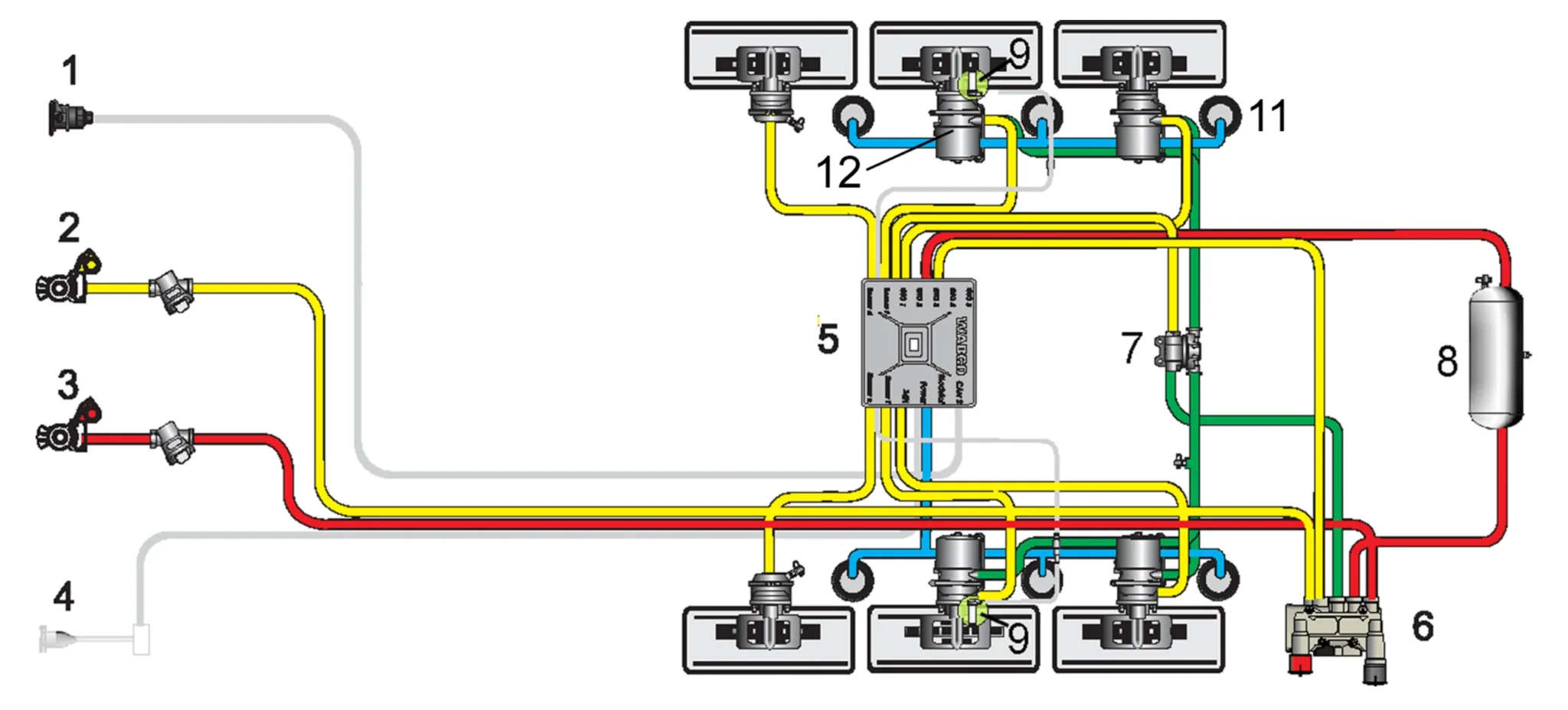
    1. Brake System Failures

    The brake system is critical for road safety. Ignoring early warning signs can lead to accidents or roadside violations.

    1.1. Weak or Delayed Braking

    Symptom Likely Cause Solution
    Reduced braking power Excessive clearance (drum/lining) Adjust clearance to manufacturer specs
    Worn brake linings Replace brake shoes
    Air leakage in brake circuit Inspect lines and valves; repair leaks
    Faulty emergency relay valve Replace repair kit or valve assembly

    1.2. Brakes Won’t Release (Dragging)

    Symptom Likely Cause Solution
    Brakes remain engaged Low air pressure (<0.8 MPa) Restore air pressure to 0.8 MPa
    Broken return spring Replace spring in brake chamber
    Bent pushrod Replace or straighten pushrod
    Incorrect stroke Re-adjust stroke length per Kales specs

    1.3. ABS Warning Light On (New)

    Symptom Likely Cause Solution
    Amber ABS light stays on Sensor gap too wide Push ABS sensor fully against tone ring
    Damaged sensor cable Inspect wiring for cuts; replace sensor
    🔧 Pro Tip: Always perform a full air system leak test during pre-trip inspections to catch issues early.

    2. Suspension System Issues

    Suspension problems affect ride quality, tire wear, and cargo stability.

    2.1. Noises from Suspension

    Symptom Likely Cause Solution
    Clunking or rattling Broken leaf spring Replace spring assembly
    Loose U-bolt nuts Tighten to specified torque (refer to manual)

    3. Fifth Wheel (Kingpin) Problems

    3.1. Handle Won’t Lock or Feels Loose

    Symptom Likely Cause Solution
    Handle doesn’t engage fully Improper position of locking hook Adjust set screw on right side:
    • Clockwise → reduces play (tighten)
    • Counter-clockwise → eases operation (loosen)

    4. Axle & Wheel Assembly Faults

    4.1. Wheel Wobble or Vibration

    Symptom Likely Cause Solution
    Visible oscillation Loose lug nuts Retorque to manufacturer specification
    Seized axle bearing Replace bearing immediately
    Bent rim Replace wheel assembly

    4.2. Overheated Wheels (Hot Hubs)

    Symptom Likely Cause Solution
    Hot hubs after trip Seized bearing / No grease Replace bearing; use correct Grease (ZG-4 / Lithium)
    Brake drag Diagnose brake system (See Section 1)
    Over-tightened axle nut Loosen and re-torque to spec

    4.3. Uneven Tire Wear

    Symptom Likely Cause Solution
    Shoulder wear / Feathering Axle misalignment Adjust tie rods; check alignment
    Center wear Over-inflation Inflate to Kales-recommended PSI
    Cupping Worn suspension parts Replace bushings or shocks

    5. Landing Gear Malfunctions

    5.1. Hard to Crank or Stuck

    Symptom Likely Cause Solution
    Excessive resistance Poor lubrication Apply grease to gears and screw
    Bent leg tubes Replace damaged leg section
    Grinding noise Worn gears Disassemble and replace gear set

    6. Electrical System Failures

    Electrical faults compromise visibility. Most issues are caused by poor grounds or corrosion.

    6.1. Lights Not Working

    Symptom Likely Cause Solution
    Lights flickering / Dim Bad Ground Connection Clean chassis ground point; check for rust
    One light out Burned-out bulb Replace bulb; check socket corrosion
    No lights working Loose 7-way plug Clean contacts; spread pins for better fit

    Final Thoughts: Prevention Is Better Than Repair

    Most Kales semi-trailer failures stem from neglected maintenance or incorrect servicing. By following a structured inspection schedule—and addressing minor issues early—you can avoid costly repairs, roadside breakdowns, and safety incidents.

    Need Replacement Parts?

    Don't let a breakdown keep you off the road. We stock genuine Kales components.

    Contact Support Team

  • Kales Trailer Lubrication Guide: Maintenance Schedule & Grease Types

    Kales Trailer Lubrication Guide: Maintenance Schedule & Grease Types

    Proper lubrication is one of the most critical yet often overlooked aspects of Kales semi-trailer maintenance. Regularly greasing the right components with the correct lubricants not only ensures smooth operation but also prevents premature wear, enhances road safety, and significantly extends your trailer’s service life.

    In this guide, we’ll walk you through everything you need to know about lubricating your Kales semi-trailer—from recommended grease types and lubrication intervals to best practices that keep your fleet running efficiently.


    Why Lubrication Matters for Your Kales Semi-Trailer

    Friction is the silent enemy of heavy-duty trailers. Without adequate lubrication, you risk:

    • Accelerated wear on moving parts
    • Heat buildup in axle bearings and joints
    • Component seizure or unexpected failure
    • Reduced fuel efficiency due to increased rolling resistance
    • Increased Safety Risks: Especially in critical systems like brakes and suspension.

    By following a structured Kales semi-trailer lubrication schedule, you protect your investment, reduce repair costs, and avoid costly roadside breakdowns.

    Mechanic applying grease to Kales semi-trailer wheel bearing for maintenance


    Recommended Lubricants for Kales Semi-Trailers

    Kales specifies three primary grease types. Using the correct lubricant is essential. Below is a comparison of the Chinese Standards (found in your manual) and their International Equivalents for global maintenance teams.

    Code Lubricant Name Standard (China) International Equivalent (Ref.) Recommended Use Case
    GZ Calcium-Based Grease ZG-4 NLGI #2 (Calcium) General-purpose, moderate temps, chassis points
    QLZ Automotive Universal Lithium Grease GB5671-85 NLGI #2 (Lithium EP) High-load, multi-point applications (Axles)
    SGZ High-Temperature Grease No. 4 ZN6-4 NLGI #3 (High Temp) High-heat zones (e.g., brake pins)
    ⚠️ Critical Warning: Never mix different grease types (e.g., Calcium vs. Lithium). This can cause chemical incompatibility, leading to grease separation and bearing failure.

    Kales Semi-Trailer Lubrication Points Diagram showing kingpin, landing gear, and suspension

    Lubrication Points Key:
    01: Kingpin & Plate | 02: Landing Gear | 03-04: Brake Adjusters | 05-06: Leaf Springs & Slides
    10: Camshaft Bracket | 11: Brake Pins | 12: Axle Bearing | 13: Movable Support Pin


    Kales Semi-Trailer Lubrication Schedule

    Below is the official maintenance chart detailing daily, monthly, and annual greasing points.

    Lubrication Frequency Chart

    Lubrication Point Daily Monthly Annually Recommended Lubricant
    Kingpin & Fifth Wheel Plate Calcium-Based (ZG-4 / NLGI #2)
    Landing Gear (Support Device) Calcium-Based (ZG-4 / NLGI #2)
    Brake Slack Adjuster Lithium Grease (GB5671 / NLGI #2 EP)
    Slack Adjuster Linkage Calcium-Based (ZG-4 / NLGI #2)
    Leaf Spring Pins & Slides ✓ (Ends) Calcium-Based (ZG-4 / NLGI #2)
    Brake Camshaft Bracket Calcium-Based (ZG-4 / NLGI #2)
    Axle Wheel Bearings Lithium Grease (GB5671 / NLGI #2 EP)
    Container Twist Lock Pins Calcium-Based (ZG-4 / NLGI #2)
    🔧 Pro Tip: Daily greasing points are typically high-wear components exposed to road debris. Treat these as part of your standard pre-trip inspection.

    Lubrication Best Practices

    ✅ DO:

    • Use clean equipment: Wipe grease fittings (zerks) before attaching the gun to prevent forcing dirt inside.
    • Purge old grease: Apply new grease until you see fresh grease purging from the joint to remove contaminants.
    • Log it: Record all maintenance in your fleet log for compliance and warranty purposes.

    ❌ DON’T:

    • Don't mix grease bases: Stick to one type or thoroughly clean the component before switching.
    • Don't over-pressurize sealed bearings: This can blow out the seals and invite contamination.
    • Don't ignore winter needs: Cold temperatures thicken grease. Ensure your lubricant is rated for your operating temperature.

    Frequently Asked Questions (FAQ)

    How often should I grease the Kingpin on a Kales Trailer?

    The Kingpin and Kingpin Plate are high-friction areas that carry the trailer's weight. Kales recommends greasing these daily or prior to every new coupling to prevent grinding and uneven wear.

    What is the best grease for trailer axle bearings?

    For axle bearings (Point 12), use a high-quality Automotive Universal Lithium Grease (NLGI #2 EP). This resists high temperatures and heavy loads better than standard chassis grease.

    Why do my trailer brakes squeak even after greasing?

    Squeaking can occur if the Camshaft Bracket or Brake Pins are dry. Ensure you verify points 10 and 11 on the diagram. If greased and still noisy, check for worn linings or glazed drums.


    Final Thoughts: Lubrication = Reliability

    For fleet managers and owner-operators, consistent lubrication is non-negotiable. By adhering to Kales’ recommended grease types and maintenance intervals, you ensure driver safety, regulatory compliance, and maximum ROI.

    🔧 Need technical support or spare parts? Contact the Kales Service Team for expert assistance!


  • The Ultimate Kales Semi-Trailer Maintenance Manual & Service Guide

    The Ultimate Kales Semi-Trailer Maintenance Manual & Service Guide

    To ensure your Kales Vehicle semi-trailer operates safely, reliably, and cost-effectively, following a scientific and scheduled preventative maintenance program is non-negotiable. This comprehensive guide combines Kales Vehicle's official OEM technical specifications with practical daily care tips, providing fleet managers and drivers with a master plan to proactively manage vehicle condition and eliminate safety risks.

    ⚠️ Important Safety Note: While this guide covers mechanical systems for Kales trailers, for ABS (Anti-lock Braking System) diagnostics, please refer strictly to the specialized ABS manufacturer's manual.

    ℹ️ Kales Tech Tip: Regularly clean the ABS tone ring and sensor to remove mud or metal debris, which are the most common causes of ABS warning light errors on heavy-duty transport vehicles.

    🆕 CRITICAL: New Kales Trailer Break-In Protocol (First 5,000 km)

    During the first month of operation, metal components will "settle" and stretch. According to Kales Vehicle engineering standards, it is mandatory to perform the following checks after the initial loaded run-in period of approximately 5,000 km or one month:

    • 🔹 Axle Alignment: Re-measure and correct alignment as suspension settling can alter the wheelbase, affecting tire life.
    • 🟥 Suspension U-Bolts: Retorque to 600–650 N·m. Loose U-bolts are the #1 cause of leaf spring breakage in commercial trailers.
    • 🟥 Wheel Nuts: Retorque to 450–500 N·m to prevent wheel loss.

    Part 1: The Master Inspection & Maintenance Schedule

    Below is the complete Kales Vehicle Inspection Checklist. This schedule is strictly aligned with our factory technical manual to ensure your warranty remains valid and your trailer stays road-ready.

    💡 Inspection Legend:

    • Daily: Driver pre-trip check (Walk-around inspection).
    • 1 / 3 / 12 Month: Professional maintenance required by certified mechanics.
    • Condition: Most checks should be performed in the Towing State (connected to tractor) or Unloaded where specified.
    System Sub-System Check Items Dly 1M 3M 12M Judgement Standard & Remarks
    Brake Device Pneumatic Brake Hose & connector Replace if cracks/damage. Note: Replace hose every 2 years; reseal connector once a year.
    Air leakage Leakage is not allowed (In towing state).
    Brake chamber pushrod stroke Standard Type: 30–35mm (Limit: 50mm).
    Long Stroke Type: Refer to spec (Limit ~64mm).
    Function of emergency relay valve In normal operation.
    Function of brake chamber No crack, wear, damage. Replace rubber diaphragm every 2 years.
    Air pressure state Should be Normal (In towing state).
    Components Exhaust sound of emergency relay valve Should be Normal.
    Internal state of air reservoir No moisture (Drain water).
    Double safe brake mechanism Brake voluntarily when air pressure in inflating line drops to 0.4 MPa.
    Brake cam wear No overwear or damage.
    Clearance: Drum & friction plate Max clearance within 0.5–0.7mm. Adjust if exceeded.
    Brake shoe friction plate / Drum wear 1. Replace plate if rivet head lower than 1mm.
    2. Drum wear: Refer to axle instruction.
    Wheel Axle Axles Cracks, damage and distortion No cracks, damage or too big distortion.
    Tire pressure Refer to tire use requirements (kPa / psi).
    Wheels & Tires Wheel cracks and damage Replace when there is serious crack or damage.
    Tire depth / abnormal wear Tire depth shall not be less than 3mm.
    Metal piece/stone/foreign matters Remove completely.
    Tightness of wheel bolts & nuts Torque: 450 ~ 500 N·m
    Axle bearing swing (Wheel cross shake) Shall not be more than 3mm. Adjust if too large.
    Oil seal aging and damage Replace.
    Suspension Leaf Spring Deflection on Right vs Left Deflection difference shall not be too large. Adjust if needed.
    Damage / Cracks Replace if damage is serious or if crack exists.
    Connecting Parts U bolts & nuts Torque: 600 ~ 650 N·m
    Connecting rod shakes Pin & bush wear: Max clearance ≤1mm.
    Balance beam shakes Copper bush wear: Max clearance ≤0.5mm.
    Wearing surface of the leaf spring seat No overwear. Replace if necessary.
    Leaf spring offset No offset allowed.
    Legs Landing Gear Performance (Work function) In normal operation.
    Damaged inner/outer cylinders; Loose parts No crack, damage, or looseness.
    Wear on rotating/sliding parts No serious wear.
    Electric System Wiring Connecting parts loose/damaged; Crossover cable damage No looseness or damage.
    Lamp Device Function; Grimy points or damaged In normal work; No grimy points or damage.
    Other Device General King pin: Wear, crack or looseness No crack or looseness.
    Check verticality & neck wear.
    50# Limit: 48mm / 90# Limit: 86mm.
    Twist lock: Function Complete and in normal work.
    Reflector & license plate Normal (No grimy points/damage/install state).
    Frame & body (Welding parts) No deformation or large distortion. No cracks at welding parts.
    Spare wheel: Steady state Firm fixation.
    Unusual parts found in former running Check parts to see if there is abnormality.
    Lubricating parts: State In good state.

    🔩 Kales Vehicle Official Torque Specifications Cheat Sheet

    Use these Kales factory-recommended torque values to prevent mechanical failure. Save this section for quick access by your maintenance team.

    Component Torque (N·m) Kales Maintenance Notes
    Wheel Nuts 450 – 500 Check daily during break-in
    Suspension U-Bolts 600 – 650 Retorque after heavy loads
    Kingpin Locknut 1100 – 1300 For new or loose pins
    Hub Lock Nut 400 (Initial) ⚠️ Seating Torque ONLY! Must back off 1/8–1/6 turn.
    Brake Chamber Clamp 30 If leakage occurs

    Note: These specifications are proprietary to Kales Vehicle Co., Ltd. and ensure the optimal performance of Kales-manufactured trailers.

    Part 2: Comprehensive Kales Semi-Trailer Maintenance Steps

    Step 1. Brake System Maintenance: The Core of Safety

    Proper air brake maintenance is critical for heavy-duty trailer safety. Follow these Kales Vehicle diagnostic steps:

    • Connect the trailer’s air brake system to the tractor’s system.
    • Check all hoses and connectors for cracks, abrasions, or leaks. Replace immediately if damaged.
    • 📅 Maintenance Schedule: Replace all rubber air hoses every 2 years as per Kales safety recommendations.
    • Pressurize to operating level and verify pressure via tractor gauge or emergency system gauge (Normal: 0.7~0.8 MPa).
    • With engine idling, fully depress the brake pedal and hold. Pressure drop must not exceed 30 kPa per min.
    • 🧼 Leak Detection: If leakage is suspected, apply soapy water to fittings—bubbles >25 mm in 3 seconds indicate a leak. Tighten or replace as needed.
    • ⚙️ Check the emergency relay valve:
      a) Close the semi-trailer air supply line shut-off valve on the tractor, then disconnect the air coupling and check whether the brakes automatically apply. If they do not apply automatically, the emergency relay valve is faulty.
      b) Reconnect the air coupling between the tractor and the semi-trailer’s air supply line, then open the shut-off valve and check whether the brakes automatically release.
      c) Check all parts of the emergency relay valve for air leaks. If soap bubbles formed at any connection do not exceed 7 mm in diameter within 3 seconds, the valve is considered leak-free and functioning normally.
      d) When the brakes are released, verify that exhaust air is discharged from the exhaust port. If so, this indicates normal operation.e) If the valve operates sluggishly or fails to function properly, replace the entire emergency relay valve.

    ⚠️ WARNING: Critical Safety Notices

    Do Not Modify: Never modify the Kales brake air system, including adding water-spray brake cooling or tapping air from trailer tanks. This compromises braking performance and may cause catastrophic failure.

    ❄️ Winter Care: In cold weather, moisture in the brake system can freeze inside valves (relay/ABS), causing brake drag, delayed release, or total lock-up.

    • Mandatory: Drain water from all semi-trailer air tanks DAILY.
    • Check the Air Dryer desiccant cartridge efficiency and replace if saturated.
    • Always drain air tanks after driving. If excessive air loss affects brake function, re-pressurize.

    🔧 Brake Chamber Checks:a) While operating the brakes, check whether the pushrod of the brake chamber moves freely and whether its stroke is within the specified range (standard working stroke: 30–35 mm). If the stroke exceeds 50 mm, an adjustment is required. *Note: For Long Stroke (LS) chambers, the limit may be higher (~64mm). Verify the chamber type tag before adjusting.

    b) With the brakes applied, check the brake chamber for air leaks:

    • Apply soapy water to the clamp area and inspect for leaks. If leakage is detected, tighten the clamp retaining nut to a torque of 30 N·m.
    • Check the front vent hole for air leakage. If leaking, replace the rubber diaphragm.
    • Inspect the exterior of the brake chamber for cracks or damage. If any are found, replace the entire brake chamber as necessary using Kales genuine parts.

    🔧 Adjustment & Reservoir:Reservoir: Open drain valve daily to discharge condensate. Re-pressurize if emergency valve activates.

    Manual Adjustment:

    a) If stroke > 50mm, tighten worm shaft clockwise until seated.

    b) Back off 90-180 degrees.

    c) Depress pedal ~10 times to auto-adjust.

    d) Road Test: Ensure vehicle does not pull to one side.

    For detailed adjustment, refer to the axle manufacturer’s operating manual provided with your Kales trailer.

    Step 2. Axle & Hub Maintenance

    Ensuring your trailer axles are in top condition is key to longevity. Follow this hub bearing adjustment procedure carefully:

    • Inspect axles and tires for bends, cracks, or damage. Use a jack with support blocks when lifting.

    🔧 Hub Bearing Adjustment Protocol:

    1. Tighten inner hub nut to 400 N·m (to seat the bearing).
    2. Back off (loosen) 1/8 to 1/6 turn (ensure wheel rotates freely).
    3. Rotate hub—Rotate the hub and gently tap it with a hand hammer (at the hub bearing area) to check whether it turns freely. If the resistance is excessive, slightly loosen the locking nut until the hub can rotate freely on its own without noticeable wobble. Then install a cotter pin to secure the locking nut in place.
    4. Apply sealant to hub cap before installation.
    • Daily: Check wheel nut tightness. If loose, retorque to 450–500 N·m.

    Step 3. Tire Care: Maximize Life & Safety

    Kales semi-trailer tire pressure check and maintenance guide for safety

    • 📉 Under-inflation: Causes shoulder wear, ply separation, blowouts, and higher fuel consumption.
    • 📈 Over-inflation: Accelerates center tread wear and increases risk of impact damage.
    • Maintenance: Maintain correct pressure (±20 kPa / ±3 psi) for all tires, including spares.
    • 🔄 Rotation: Tire wear varies depending on load, road conditions, and braking behavior. To promote even tire wear, tires should be rotated regularly—every 5,000 kilometers—following the sequence shown in the Kales tire rotation diagram above.
    • 🔧 Daily: The tightness of wheel nuts should be checked daily. If any looseness is found, the nuts must be retightened to a torque of 450–500 N·m.

    Step 4. Suspension System Maintenance

    A. Mechanical Suspension (Leaf Spring)

    • Daily: Check springs for breaks. If one side is damaged, replace both sides to maintain balance.
    • U-Bolts (Crucial):
      • Retorque to 600–650 N·m after heavy loads.
      • After replacing springs or every 5,000 km, inspect and retighten.
    • Bushings: Check connecting rod bushings—replace if cracked or worn (Limit: 1mm).

    B. Air Suspension

    • General Care: Avoid long-term parking. Drive a few km periodically to cycle air springs.
    • Cleaning: After muddy or asphalt roads, clean air springs and pistons. Replace if cracked, wrinkled, or abraded.
    • Every 6 months:
      • Inspect air dryer/filter—replace if clogged.
      • Check air line seals and valve tightness.
      • Verify U-bolt and air spring mounting bolt torque.
      • Drain air tanks (increase to every 2 weeks in freezing weather).
      • Verify ride height (H-value): Must match factory specification to ensure proper coupling and stability.
    • Every 3 months: Inspect shock absorbers for leaks or loose mounts.
    • Monthly: Check main beam bushings—no play should exist when rocking the trailer.

    Step 5. Landing Gear Maintenance

    • Check inner/outer tubes for smooth operation, deformation, or damage. Repair or replace as needed.
    • 🛢️ Lubrication: Inject grease into the gearbox and screw mechanism. Test high/low gears under no-load conditions to ensure smooth shifting. Use Kales-approved grease for optimal performance.

    Step 6. Kingpin & Fifth Wheel Maintenance

    The connection point between your tractor and Kales trailer requires diligent inspection:

    • Daily: Inspect kingpin for cracks, wear, or scoring.
    • 📏 Wear Limits: Replace if diameter < 48.0 mm (50#) or < 86.8 mm (90#).
    • 📐 Check Verticality: Replace if kingpin is bent, deformed, or shows uneven "neck" wear.
    • Clean and inspect fifth wheel plate—remove debris, check for warping.
    • Check the bolts of supporting seat and connection plate to see if they become loose, and if the supporting seat is damaged.
    • 🛢️ Lubrication: Lubricate kingpin and fifth wheel daily with high-quality grease (e.g., calcium-based ZG-4).

    🔎 Expert Checks:

    • For newly changed king pin or when the king pin becomes loose, tighten up the locknut of the king pin with tightening torque of 1100~1300 N·m.
    • Check the fifth wheel board to see if there is weld crack and if the wear plate is severely worn.
    • Check the lock hook, wearing ring and cross bolt to see if they are heavily damaged, deformed or become loose.
    • Check if the safety lock is in normal work, and whether the lever linkage is flexible or out of nimbleness.

    Step 7. Chassis Frame Inspection

    • Periodically inspect frame welds and main beams for cracks or distortion. Repair immediately if found. Kales Vehicle frames are built for durability, but regular checks ensure safety under heavy loads.

    Step 8. Axle Alignment & Wheelbase Adjustment

    Misalignment causes uneven tire wear and pulling. Check if U-bolts loosen or bushings wear.

    Semi-trailer axle alignment and wheelbase adjustment diagram - Kales Vehicle Guide

    🔧 Adjustment Procedure:

    1. Park on level ground, uncouple tractor, release brakes. Adjust landing gear so front/rear frame heights match (±2 mm).
    2. Remove outer tires and dust caps. Drop plumb lines from hub centers to ground.
    3. Adjust the middle axle first: Adjust the movable tie rod so that the perpendicularity of the middle axle centerline to the longitudinal center plane of the chassis in the horizontal direction is ≤6 mm—i.e., L₁ = L₂ (measured as the distance from the kingpin center to the center holes of the hub caps (axle end covers) on both sides of the middle axle). After adjustment, tighten the set screws on the rod ends.
    4. Adjust the front axle: Adjust movable tie rod 1 to ensure the horizontal distance between the front and middle axles meets a tolerance of ≤5 mm—i.e., B₁ = B₂ (measured as the distance between the center holes of the hub caps (axle end covers) on both sides of the front and middle axles).
    5. Adjust the rear axle: Adjust the movable tie rod to ensure the horizontal distance between the rear and middle axles meets a tolerance of ≤5 mm (measured as the distance between the center holes of the hub caps (axle end covers) on both sides of the middle and rear axles).
    6. Tighten all bolts and nuts: Use box wrenches or socket wrenches to symmetrically tighten all fasteners to the specified torque values according to their specifications.

    Part 3: Kales Technical Resources & Troubleshooting

    For detailed lubrication charts (grease types, specific points) and comprehensive troubleshooting guides (symptoms, causes, and solutions), please refer to our dedicated technical support pages:

    Conclusion

    By following this Kales semi-trailer maintenance manual, you protect your investment and ensure road safety. Regular maintenance according to these OEM standards is the best way to maximize the lifespan of your heavy-duty trailer.

    🔧 Need technical support or Genuine Kales Parts?
    Ensure your vehicle stays within warranty by using certified components.Contact Kales Service Team


  • How to Hook Up a Semi-Trailer: First-Time Setup & Coupling Guide | KALES

    How to Hook Up a Semi-Trailer: First-Time Setup & Coupling Guide | KALES

    Lead Fleet Maintenance Engineer at Kales

    Reviewed by Jason M.
    Lead Fleet Maintenance Engineer, Kales Vehicle

    What is a semi-trailer pre-trip inspection and coupling procedure? A semi-trailer pre-trip inspection is a mandatory safety protocol involving the visual and mechanical verification of the fifth-wheel coupling, air brake system pressure (800-850 kPa), and wheel nut torque (600-650 N.m). Proper execution of these steps, in accordance with commercial driving regulations, prevents trailer detachment, load loss, and severe highway accidents.

    ⚠️ DANGER / WARNING

    Always park the tractor and semi-trailer on a level, firm surface and engage the parking brakes before attempting to couple or uncouple. Failure to visually verify that the fifth wheel jaws securely lock around the kingpin can result in trailer detachment, load loss, and severe accidents. Chock the trailer wheels before reversing.

    Correct front to rear tilt angle of the fifth wheel for semi-trailers
    Figure 1: Ensure the correct front-to-rear tilt angle of the fifth wheel before attempting to couple the trailer.

    The "Emergency Room" Matrix

    Symptom Possible Root Cause Immediate Solution
    The fifth wheel jaws fail to lock around the semi-trailer kingpin. The trailer kingpin plate is resting too high relative to the tractor fifth wheel. Lower the landing gear so the kingpin plate sits 10 to 30 millimeters below the center of the fifth wheel.
    A loud hissing noise comes from the air line connections at the front of the trailer. The rubber seals inside the red or yellow gladhands are damaged, or dirt is blocking the connection port. Disconnect the gladhands, clean off any debris, and replace the rubber seals if they show signs of cracking.
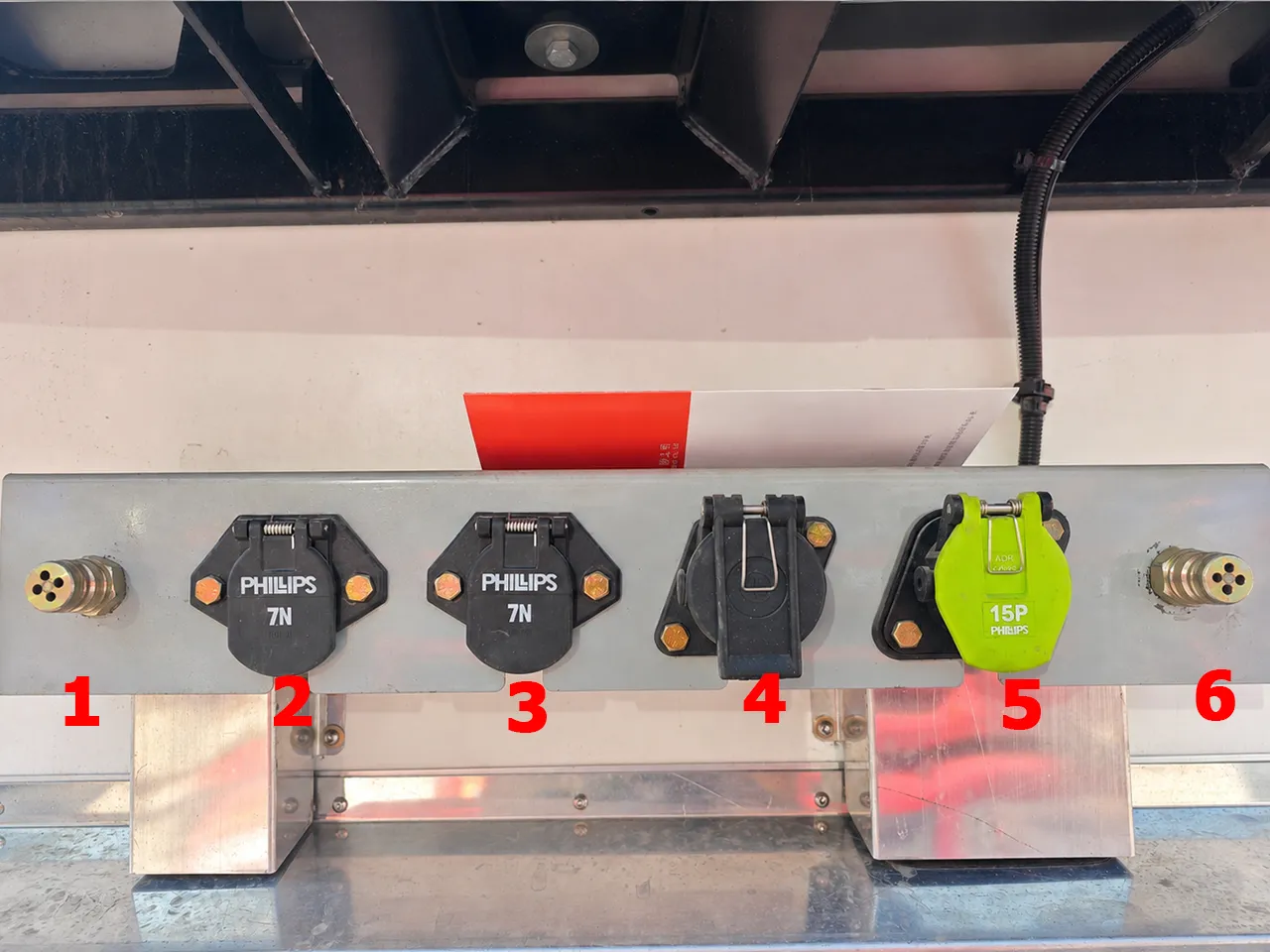
    The trailer ABS warning light stays illuminated on the dashboard. The 7-pin electrical plug or the dedicated ISO ABS cable is not fully inserted into the tractor socket. Push the electrical cables firmly into their respective sockets and ensure the locking caps snap fully shut over them.
    Your new trailer exhibits loose wheel nuts shortly after beginning its first commercial haul. The new steel rims, studs, and paint layers naturally settle and compress during their initial period under heavy load. Retorque every wheel nut to the specified 600 to 650 N.m using a calibrated heavy-duty torque wrench.

    Critical Specs & Torque Settings

    • Wheel Nut Torque Requirement: 600 - 650 N.m
    • Initial Retorque Interval: First 50 - 100 km (30 - 60 miles) of loaded driving
    • Air Brake System Operating Pressure: 800 - 850 kPa (116 - 123 psi)
    • Optimal Coupling Height Difference: Kingpin plate 10 - 30 mm lower than fifth wheel center
    • Maximum Articulation Angle for Coupling: 5 degrees or less
    • Coupling Centerline Tolerance: Within 40 mm
    📈 Field Experience Note:
    In our experience servicing thousands of commercial fleets, failure to perform the mandatory 50km wheel nut retorque procedure is the number one cause of hub damage and catastrophic wheel-off incidents on brand-new trailers. Never skip this initial maintenance step.

    Step-by-Step Coupling Guide

    Diagram showing proper height difference between fifth wheel and kingpin plate
    Figure 2: The kingpin plate must sit slightly lower than the fifth wheel.

    Step 1: Adjust Landing Gear

    Crank the landing gear handle to raise or lower the trailer. Set the height so the kingpin plate sits exactly 10 to 30 millimeters lower than the center of the tractor's fifth wheel. This allows the tractor chassis to physically lift the trailer slightly during engagement.

    Tractor to Semi-Trailer Articulation Angle Limit
    Figure 3: Keep articulation angles under 5 degrees for a safe coupling.

    Step 2: Align the Tractor

    Open the locking jaw mechanism on the fifth wheel. Reverse the tractor slowly, keeping the trailer and tractor centerlines within a 40-millimeter tolerance. Keep the tractor articulation angle equal to or less than 5 degrees to avoid damaging the kingpin.

    Step 3: Lock & Visually Inspect

    Reverse the tractor until the kingpin slides in and locks automatically into the fifth wheel. Exit the cab and shine a flashlight directly under the fifth wheel to visually confirm the jaws are entirely closed around the kingpin shank. Never rely solely on the sound of the latch or an in-cab tug test.

    Step 4: Connect Pneumatics & Electrical

    Attach the red gladhand to the supply line. Attach the yellow gladhand to the control line. Plug the 7-pin and ISO cables into the receptacles. Open the fast-fill supply valve to build the system pressure to at least 800 kPa, in accordance with FMCSA safety guidelines.

    Preventative Maintenance Checklist

    • Pre-Trip: Inspect all red and yellow gladhands to ensure the rubber seals are clean and intact.
    • Pre-Trip: Test all brake, turn, and clearance lights to confirm they illuminate brightly.
    • Pre-Trip: Build air pressure to 850 kPa and listen carefully around the axles for any hissing sounds indicating air leaks.
    • Post-Delivery (New Trailers): Retorque all the wheel nuts to 600-650 N.m after driving the first 50-100 kilometers under load.
    • Weekly: Verify that all suspension U-bolts and axle plates remain tight and free from metal fatigue cracks.
    • Weekly: Examine tire pressures and tread depths across all axles.

    Need Spare Parts?

    We stock all Kales Vehicle original parts, including heavy-duty gladhands, 7-pin electrical cords, ABS sensors, and replacement wheel studs. Consult the exploded view diagrams in your owner's manual to find the exact Part Number you require.

    Frequently Asked Questions

    Why did my semi-trailer wheel come loose during the first trip?

    New rims and studs naturally settle during their initial use under heavy load, causing the wheel nuts to lose their clamping force. You must retorque all wheel nuts to 600-650 N.m after your first 50 to 100 kilometers of loaded driving to prevent catastrophic wheel detachment.

    What is the correct height for coupling a semi-trailer to a tractor?

    The optimal height requires the trailer's kingpin plate to sit 10 to 30 millimeters lower than the center of the tractor's fifth wheel. This configuration allows the tractor chassis to physically lift the trailer slightly during engagement, ensuring a secure lock.

    How do I reliably test the air brake system during a pre-trip inspection?

    Build the air pressure to a range of 800 to 850 kPa (116 to 123 psi) and listen closely around the axles and gladhands for any hissing sounds that indicate an air leak. Test the service brakes physically to ensure all wheels engage simultaneously and evenly before entering the highway.

    Stuck? Let our Engineers Help.

    Experiencing persistent coupling issues or air leaks? Send us a photo or video of the affected component.