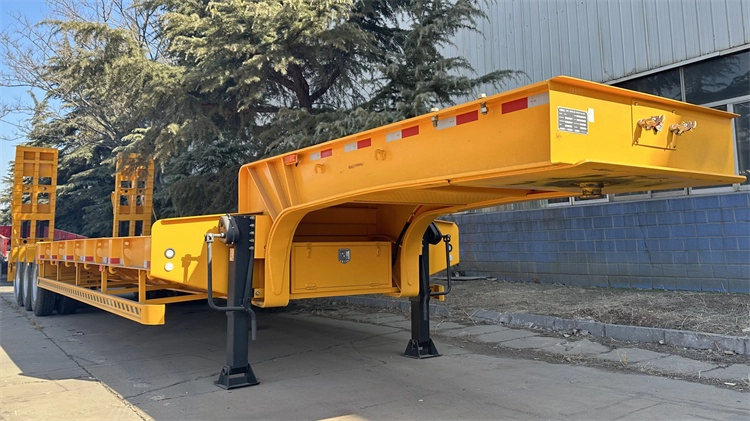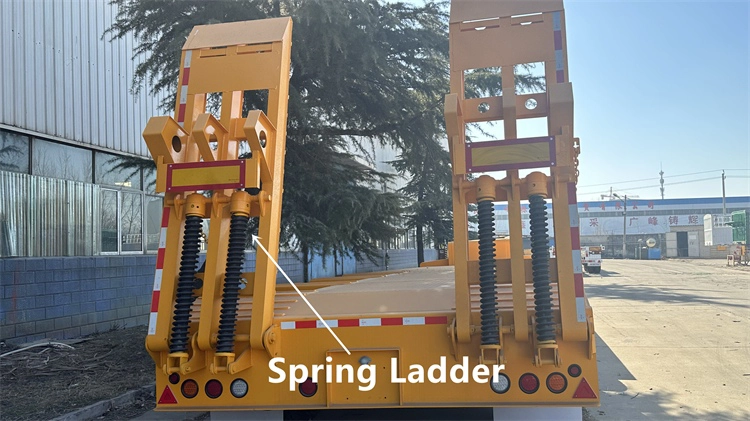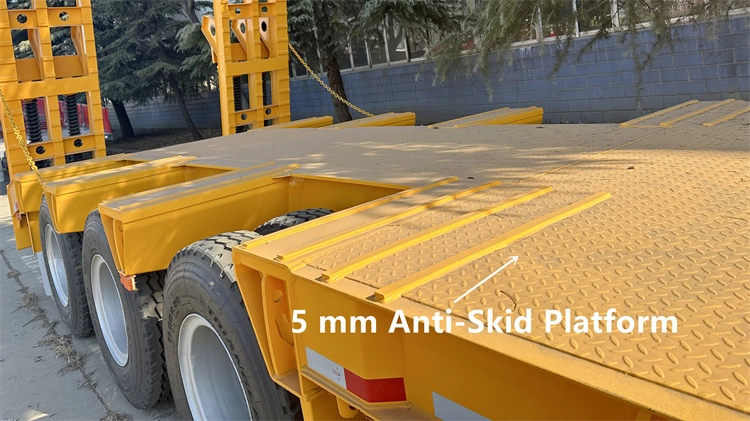
Category: Industry Knowledge & Buying Guides

Expert advice and comprehensive buying guides for semi-trailers and heavy trucks. Discover in-depth industry trends, technical comparisons (Lowbed vs. Flatbed), and essential tips to help you choose the right vehicle for your logistics projects. Make informed purchasing decisions with KALES Vehicle’s engineering expertise.

  • 6 Things You Must Clarify Before Buying a Semi-Trailer: A Global Procurement Decision Framework

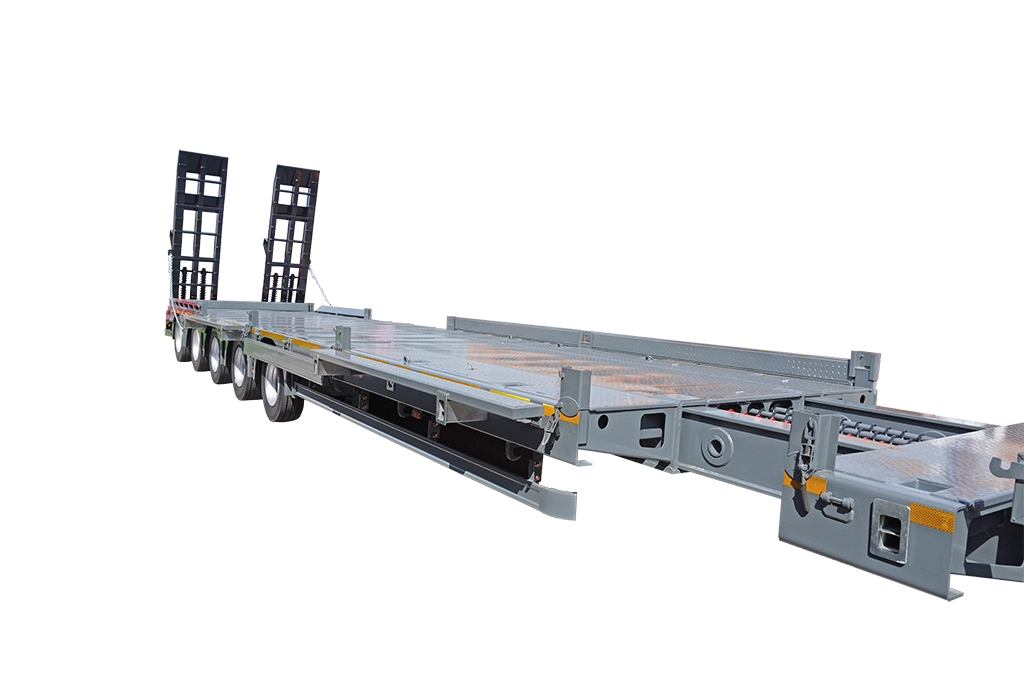
    Flatbed, step-deck, and lowbed semi-trailer chassis types compared for fleet procurement
    The correct semi-trailer specification follows the cargo, legal payload, route, regulations, lifecycle cost, and resale plan.

    Industry Knowledge & Buying Guides · Published: August 5, 2026 · Updated: August 5, 2026 · Word count: 2506 · Reading time: 14 minutes

    6 Things You Must Clarify Before Buying a Semi-Trailer: A Global Procurement Decision Framework

    Jason, Lead Engineer at Kales Vehicle

    Reviewed by Jason
    Lead Engineer, Kales Vehicle

    A profitable semi-trailer purchase starts before price comparison. Define the cargo, legal payload, real road conditions, registration rules, five-year total cost, and resale plan in that order. These six decisions turn a generic quotation into a trailer specification that can be registered, maintained, loaded legally, and operated profitably.

    Quick Answer: The Six-Factor Decision Chain

    1. Application defines the trailer category and cargo-control system.
    2. Payload defines the legal load target, structure, axle group, and tare-weight priorities.
    3. Road conditions define suspension, brakes, tires, ground clearance, and fatigue resistance.
    4. Regulations set the non-negotiable dimensional, mass, braking, lighting, and approval envelope.
    5. TCO budget narrows the specification by landed cost, fuel, maintenance, downtime, and support.
    6. Residual value determines which brands, documentation, and common specifications protect the exit price.

    The Six-Factor Procurement Sequence

    1. Application

    What cargo and loading method?

    2. Payload

    What legal net load and axle distribution?

    3. Road Conditions

    What must the running gear survive?

    4. Regulations

    What approval envelope applies?

    5. TCO Budget

    What is the landed five-year cost?

    6. Residual Value

    How will the asset exit the fleet?

    Factor 1: Application – Start With “What Am I Hauling?”

    Cargo Dictates the Engineering

    A semi-trailer is a purpose-built tool, not a generic commodity. Leading with “How much for a 13-meter flatbed?” starts at the wrong end. Begin with the cargo’s physical profile, density, center of gravity, restraint needs, and loading or unloading method. Buyers still choosing between open-deck formats should compare the flatbed, step-deck, and lowbed selection guide before requesting drawings.

    Operating scenario Typical cargo Recommended trailer type Primary engineering focus
    General freight and logistics Palletized goods, FMCG Curtain-sider or enclosed box Fast side loading, weather protection, and cargo security
    Agricultural and bulk goods Grain, timber, bagged cargo Side-wall or stake trailer Ventilation, removable sideboards, ties, and winch points
    Mining and construction Ore, aggregates, sand, gravel Rear- or side-tipper Wear-resistant body material, cylinder stability, and rollover control
    Heavy machinery and projects Excavators, transformers, coils Low-loader or extendable flatbed Low center of gravity, ramp angle, concentrated load, and gooseneck strength
    Intermodal freight 20 ft, 40 ft, or 45 ft ISO containers Container skeletal or flatbed Twist-lock positions, durability, and tare optimization
    Liquid or dry bulk Fuel, cement, chemicals, oils Code-compliant tanker or bulker Baffles, pressure rating, cargo compatibility, and discharge speed

    Application Questions Before Finalizing the Specification

    • Is the freight contract fixed or spot-market? A long-term contract can justify a specialized tipper or tanker. Spot-market fleets usually need a more versatile architecture.
    • How is the cargo loaded and unloaded? Forklift loading makes side aperture, floor capacity, and concentrated forklift axle load critical. Crane, ramp, tipping, pumping, and pneumatic discharge each create different requirements.
    • What changes on the return trip? Empty running, backhaul cargo, washout, contamination, and loading-site access can change the best body type.

    Factor 2: Payload – Legal Limit vs. Structural Rating

    Do Not Confuse Design Rating With Legal Payload

    A trailer’s structural rating, such as a “50-ton design,” is not the payload a fleet may legally carry. Revenue payload is limited by the complete combination, national and route rules, axle-group limits, spacing, tractor tare, trailer tare, fuel, driver, and load distribution.

    Legal payload = permitted gross combination mass – tractor tare – trailer tare – fuel, driver, and operating equipment

    Target market Indicative planning range Authority or framework Critical verification
    Australia About 42.5 t for common general-access combinations; higher productivity schemes can exceed 62.5 t NHVR, ADR, PBS, and ROVER Axle-group spacing, access class, route approval, and applicable PBS design
    Kazakhstan and Kyrgyzstan Often around 40 to 44 t for standard international combinations EAEU TR CU 018/2011 plus national road rules Type approval, axle limits, route restrictions, and expanding weigh-in-motion enforcement
    Uzbekistan Confirm the current national combination and axle limits National vehicle approval and road authorities Do not assume EAEU type approval applies; verify Uzbek registration and transit requirements separately
    West and East Africa Common planning ranges vary roughly from 40 to 56 t National rules with EAC, ECOWAS, or COMESA regional context Country-specific axle groups, bridge formulas, dimensions, and transit-corridor enforcement
    South America Common combinations vary roughly from 45 to 57 t National authorities such as Chile CONASET and Brazil CONTRAN Country, route, combination, gradient, stability, and permit requirements

    These figures are procurement-planning references, not legal approvals. Confirm the current registration-country and route rules in writing before production.

    Factor 3: Road Conditions – Let the Route Dictate the Spec Sheet

    A payload specification tells you what a trailer can carry. The route tells you what the chassis, suspension, brakes, wheel ends, and body must survive.

    Terrain profile Specification priorities Main procurement risk
    Sealed highways Low tare, aerodynamics, air suspension, low-rolling-resistance tires, and compatible disc brakes/EBS where supported Paying for rough-road weight that reduces payload and fuel efficiency
    Corrugated or unpaved mining roads Mechanical or bogie suspension, reinforced beams and suspension mounts, drum-brake serviceability, sealed wheel ends, and ground clearance Applying a minimalist highway structure to repeated shock and twist loads
    High-altitude and mountain routes High-capacity braking, EBS and retarder compatibility, low center of gravity, anti-roll control, and suitable axle track Brake fade, rollover exposure, and insufficient thermal capacity

    Suspension must follow the load spectrum, road roughness, cargo sensitivity, service network, and rollover risk. Use the leaf spring versus air suspension guide to compare repairability, ride quality, axle load sharing, and five-year cost.

    Brakes and tires must also be specified as part of the tractor-trailer system. Compare ABS, EBS, RSS, and AEBS in the semi-trailer braking systems guide, then match size, construction, wheels, inflation practice, and route heat using the semi-trailer tire and wheel selection guide.

    Factor 4: Regulations – Define the Non-Negotiable Boundaries

    Cross-border procurement requires more than a structurally capable trailer. Non-compliance can prevent registration, restrict route access, invalidate insurance assumptions, or require expensive modifications after arrival.

    Australia: ADR, ROVER, NHVR, and PBS

    • Confirm every applicable Australian Design Rule, including the current braking, lighting, coupling, underrun, dimensional, and plate requirements.
    • Confirm the vehicle and approval pathway in the Department of Infrastructure’s ROVER system before shipment.
    • For Performance Based Standards operation, confirm the approved design, vehicle network, mass conditions, and operating route with the NHVR.

    Central Asia: Separate EAEU and National Requirements

    • Kazakhstan and Kyrgyzstan participate in the EAEU framework; confirm the applicable TR CU 018/2011 vehicle approval and national registration requirements.
    • Uzbekistan is not an EAEU member. Confirm Uzbek national type approval, axle, dimensional, customs, and transit requirements independently.
    • Account for weigh-in-motion expansion and cross-border differences along the complete corridor.

    Africa: National Enforcement Within Regional Corridors

    • Use EAC, ECOWAS, COMESA, and SADC frameworks as regional context, then confirm national axle, dimension, registration, and roadworthiness rules.
    • Verify tridem axle limits and spacing rather than assuming one 24-ton rule applies across every country.
    • Match invoices, certificates, and import documents to the correct vehicle description and HS classification.

    For country and corridor detail, use the Africa semi-trailer buying guide.

    South America: National Rules Control

    • Confirm each country’s combination mass, axle load, dimensions, braking, lighting, reflective marking, coupling, and route restrictions.
    • Chile CONASET and Brazil CONTRAN are examples of national authorities; Mercosur context does not replace national registration approval.
    • Mountain routes require a separate review of grade, brake energy, stability, and dangerous-goods controls where applicable.

    Factor 5: Budget – Compare Five-Year Total Cost of Ownership

    Factory price is only one part of the trailer’s five-year cost. A realistic comparison includes acquisition, fuel or energy effects, tires, maintenance, compliance, insurance, downtime, and the value recovered at disposal.

    Five-year TCO = acquisition + freight and import + fuel impact + maintenance and tires + compliance and insurance + downtime – residual value

    FOB Price vs. Total Landed Cost

    Do not approve a budget using the factory FOB price alone. Use the complete landed calculation:

    Landed cost = FOB price + ocean freight + insurance + import duty and tax + port and clearing fees + inland delivery + certification + assembly and commissioning

    Depending on destination, shipping method, duties, port conditions, and certification scope, landed cost can be 30% to 60% higher than the factory quotation. Request the same Incoterm and scope from every supplier before comparing offers.

    Cost area What to request Why it changes TCO
    Vehicle and options Signed specification, drawings, exclusions, brands or approved equivalents Prevents a low quote from hiding a lower system specification
    Freight and port Packing, stacking, lifting, securing, unstacking, and destination charges Exposes costs and damage risks outside the factory gate
    Operation Tare estimate, legal payload, tire plan, maintenance schedule, and spares Connects the specification to revenue, downtime, and cost per kilometer
    Compliance Approval responsibility, certificates, inspection plan, and route assumptions Reduces registration delay and post-arrival modification

    Factor 6: Residual Value – Plan the Exit Before Buying

    Residual value reduces net lifetime cost. A trailer with maintainable components, complete records, structural integrity, and a specification recognized by second-hand buyers is easier to sell than an unusual low-price build with unavailable parts.

    What Protects Resale Value

    Supported components

    Axle, suspension, landing gear, and brake brands with local parts and service protect uptime and buyer confidence.

    Maintenance evidence

    Inspection, alignment, brake, tire, coating, repair, and load records demonstrate how the asset was operated.

    Structural condition

    Traceable steel, controlled repairs, corrosion protection, and straight chassis geometry preserve value.

    Common architecture

    Widely serviceable dimensions and components generally have a larger secondary market than highly specialized one-off builds.

    Brand names such as BPW, FUWA, Jost, and SAF-Holland can support resale only where the components are genuine, correctly specified, and supported in the destination market. A premium component with no regional distributor can still create long downtime.

    Pre-Purchase Semi-Trailer Procurement Checklist

    Complete every row before requesting final factory quotations.

    Factor Buyer self-assessment Operational specification to record
    1. Application Primary cargo and loading/unloading method? Cargo type, density, dimensions, restraint, forklift, crane, tipping, ramp, pump, or pneumatic discharge
    2. Payload Maximum legal route GCM and target net payload? Tractor tare, trailer tare, axle groups, spacing, load distribution, and legal payload calculation
    3. Road conditions Sealed/unsealed share, temperature, dust, water, and gradients? Route survey, annual distance, speed, shock loads, brake-energy demand, ground clearance, and tire heat
    4. Regulations What type approval and registration documents apply? ADR/ROVER/PBS, EAEU or national approval, axle and dimension rules, lighting, brakes, permits, and customs documents
    5. TCO budget Landed-cost ceiling and five-year maintenance reserve? FOB scope, freight, tax, certification, assembly, fuel impact, tires, spares, labor, and downtime
    6. Residual value Ownership horizon and target exit value? Three-, five-, or eight-year plan, component support, documentation, condition standard, and likely secondary buyer

    Five Common Procurement Pitfalls

    1. Buying before securing the freight parameters: a trailer ordered without confirmed cargo and loading data often requires expensive compromise later.
    2. Selecting purely on invoice price: a small initial saving can be overtaken by downtime, tire wear, poor payload, and repairs.
    3. Copying another fleet’s specification: route, tractor, driver behavior, cargo distribution, registration, and service network may be different.
    4. Relying on overloading for profit: weigh-in-motion and telematics increase enforcement exposure, while overloading accelerates fatigue and can void warranty assumptions.
    5. Ignoring spare-parts availability: a specialized component without local stock can keep a trailer grounded while parts travel by air.

    Frequently Asked Questions

    What should I clarify first before buying a semi-trailer?

    Start with the cargo and loading method. The application determines the body type, deck, restraint, discharge, stability, and cleanliness requirements. Price comparison becomes meaningful only after that operating requirement is defined.

    Does a 50-ton design rating mean I can legally carry 50 tonnes?

    No. Structural capacity and legal payload are different. Legal payload depends on the complete tractor-trailer combination, tare weights, axle groups, spacing, national rules, route access, and load distribution.

    Should rough-road fleets always choose the heaviest chassis?

    No. The chassis should be engineered for the load spectrum and fatigue environment. Unnecessary weight reduces legal payload and fuel efficiency, while insufficient local reinforcement or poor welding causes fatigue. Request calculations, material traceability, drawings, and inspection evidence.

    How should I compare two semi-trailer quotations?

    Normalize the technical specification, Incoterm, freight and port scope, certification, component brands, tare, legal payload, spares, warranty, inspection, and commissioning. Then compare five-year TCO rather than only the factory price.

    What protects semi-trailer resale value?

    Use supported components, preserve maintenance and repair records, protect the chassis from corrosion, avoid undocumented modifications, and choose an architecture that second-hand buyers in the destination market can service.

    Regulatory Reference Points

    • Australia: NHVR general access, Performance Based Standards, Australian Design Rules, and the ROVER vehicle approval system.
    • Central Asia: EAEU TR CU 018/2011 for applicable member states plus each country’s national registration, road, and customs rules.
    • Africa: national road and vehicle authorities, with EAC, ECOWAS, COMESA, and SADC frameworks as regional context.
    • South America: national authorities including Chile CONASET and Brazil CONTRAN, plus route and permit authorities.

    Final Recommendation

    Document the six decisions in sequence: application, legal payload, road conditions, regulations, five-year TCO, and residual value. Then request quotations against one signed specification and compare suppliers on the same technical, commercial, inspection, delivery, and warranty scope. When the operating inputs are clear, the correct trailer category and system specification become much easier to defend.

    Need Engineering Support for Your Next Fleet Order?

    Send your cargo profile, tractor data, legal payload target, route conditions, registration market, destination port, annual mileage, and ownership horizon. The KALES international sales engineering team can prepare a route-matched specification, landed-cost review, and five-year TCO framework.

    Request a Free Route and Payload Consultation WhatsApp Us Email Inquiry

  • Africa Semi-Trailer Guide

    Africa Semi-Trailer Guide

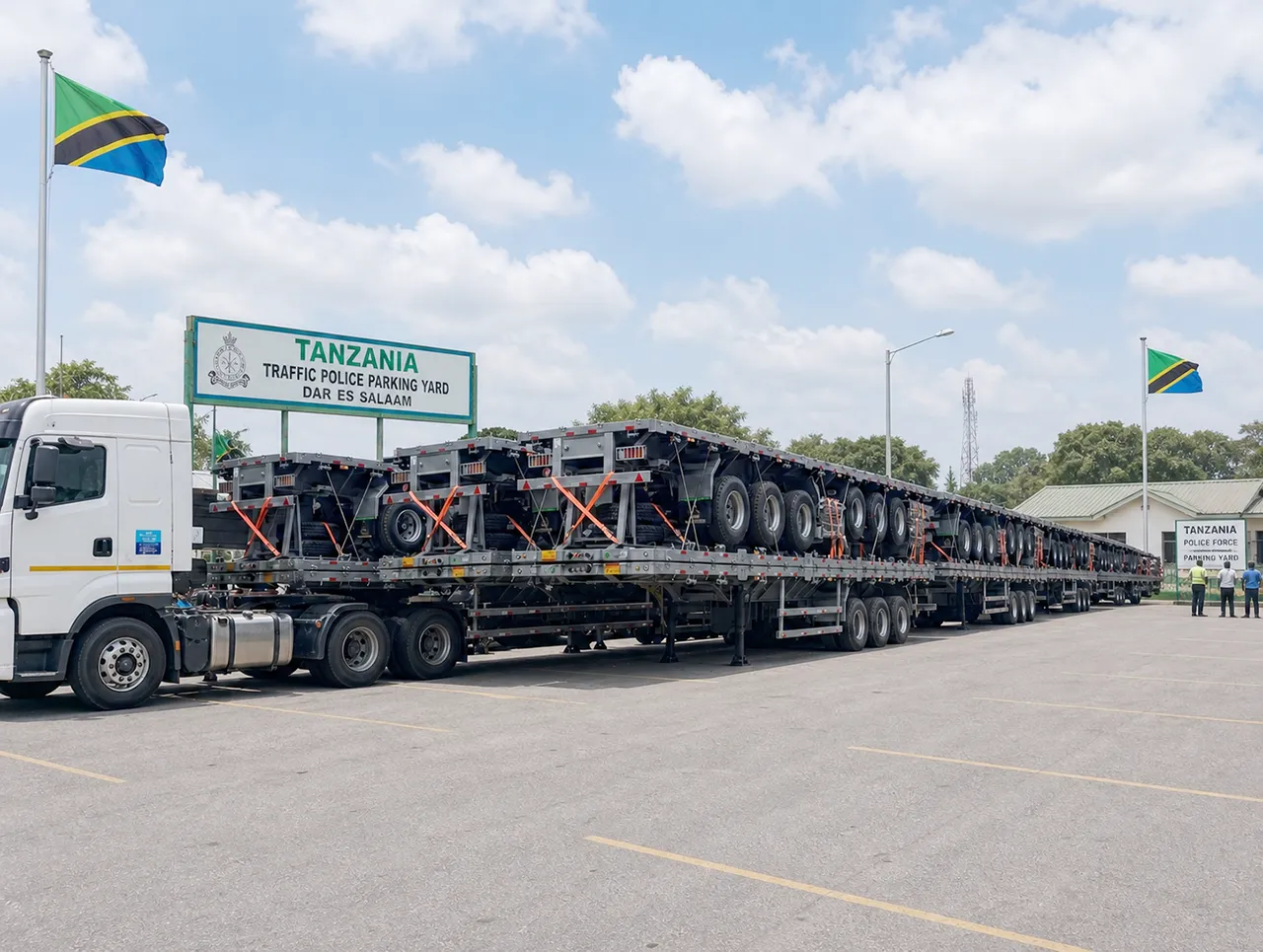
    Fleet of Kales three-axle flatbed semi-trailers prepared for delivery to a logistics customer in Tanzania
    Export flatbed semi-trailers prepared for an East African fleet program. Final specifications should be matched to the destination country, route, cargo, and tractor.

    Published: July 10, 2026 · Updated: July 10, 2026 · Industry Knowledge & Buying Guides · Word count: 2542 · Reading time: 15 minutes

    Africa Semi-Trailer Guide

    Jason, Lead Engineer at Kales Vehicle

    Reviewed by Jason
    Lead Engineer, Kales Vehicle

    The best semi-trailer for Africa is not one universal heavy-duty model. It is a trailer specified for a named country, legal axle regime, cargo, road corridor, tractor, workshop network, and port plan. East African corridor fleets often prioritize axle-load compliance and grade performance; Southern African fleets usually need precise combination, dimensional, braking, and high-speed stability checks; West African buyers commonly place more weight on rough-road durability, corrosion control, heat management, and parts availability. Confirm the rules in every country on the route before production.

    Quick Answer: How to Buy a Semi-Trailer for Africa

    • Start with the operating country and corridor, not a catalog payload. Legal mass depends on national rules, axle spacing, axle groups, tractor configuration, and the complete vehicle combination.
    • Send the real cargo profile. Include maximum single-piece weight, load distribution, density, dimensions, loading method, and empty-return frequency.
    • Match the trailer to the tractor before ordering. Fifth-wheel height, kingpin position, turning clearance, air and electrical connections, braking control, and gross combination limits must work together.
    • Choose running gear for the route and service network. Suspension, tires, wheels, brakes, axles, and spare parts should be maintainable where the trailer operates.
    • Compare landed lifecycle cost, not ex-factory price alone. Include freight, port handling, tax, assembly, homologation, spares, fuel, tires, maintenance, and downtime.

    Seven Inputs to Define Before Requesting a Semi-Trailer Quote

    Africa is not one homologation or operating zone. Even where regional programs encourage harmonization, national authorities enforce vehicle registration, dimensions, axle loads, roadworthiness, dangerous-goods rules, and permits. A useful quotation therefore begins with operating data, not only a request for a “60 ton trailer.”

    1. Countries and exact route: list the registration country, every transit country, border crossings, ports, mine or construction sites, paved-road share, unpaved-road share, gradients, and seasonal access constraints.
    2. Cargo: state cargo type, density, maximum payload requested, maximum legal payload expected, single-piece weight, dimensions, center of gravity, loading equipment, and load-restraint method.
    3. Tractor: provide tractor make and model, axle layout, fifth-wheel height and position, permitted gross combination mass, tire size, air couplings, voltage, lighting connector, and ABS/EBS interface.
    4. Legal envelope: confirm overall length, width, height, axle-group mass, axle spacing, turning requirements, underrun protection, lighting, braking, and any abnormal-load permit conditions with the relevant road authority.
    5. Duty cycle: give annual distance, trips per day, average speed, empty-return share, loading cycles, ambient temperature, dust, mud, standing water, coastal exposure, and downtime target.
    6. Maintenance capability: identify local axle, brake, suspension, tire, electrical, hydraulic, and welding support. Specify preferred brands only after checking parts availability.
    7. Delivery scope: define Incoterm, destination port, stacking or containerization method, port lifting plan, assembly responsibility, documentation, commissioning, training, warranty process, and initial spares.

    Use the tractor-trailer matching guide to measure fifth-wheel height, front swing radius, rear clearance, and kingpin setback before approving a drawing.

    East, West and Southern Africa Semi-Trailer Specification Matrix

    This matrix is a procurement starting point, not a legal approval. Country regulations and route surveys take priority over regional labels.

    Regional Fit

    What to verify first in each operating region

    The right specification follows the corridor, cargo, tractor, and repair network.

    East Africa

    First checks: EAC/national axle-load rules, weighbridge exposure, long inland corridors, grades, border operation, tire availability, and empty returns.

    Common applications: container and general cargo flatbeds, sidewall trailers, tankers, and construction logistics.

    Southern Africa

    First checks: national combination and dimensional rules, vehicle standards, high-speed stability, mining or abnormal-load permits, braking, and established parts networks.

    Common applications: mining tippers, lowbeds, tankers, container chassis, and highway freight trailers.

    West Africa

    First checks: national and transit-country rules, pavement variability, drainage and rainy-season exposure, heat, corrosion, port conditions, and field-service capability.

    Common applications: general-cargo flatbeds and sidewalls, tankers, cement bulkers, tippers, and construction-support trailers.

    Regional Buying Guidance for African Fleets

    East Africa: Design Around the Corridor and Weighbridge

    For Kenya, Tanzania, Uganda, Rwanda, Burundi, South Sudan, and other East African operations, begin with the current national implementation of regional vehicle-load controls. The East African Community acts library is a useful official reference point, but buyers should still obtain written confirmation from the registration authority and road agency in every operating country.

    Long port-to-inland routes make axle distribution, grade performance, tire temperature, brake heat, and fuel consumption important. Do not assume a tri-axle layout automatically gives a particular legal payload. The tractor axle layout, trailer axle spacing, tare mass, load position, and local formula all affect the legal result.

    Air suspension and a lift axle may help in a compliant design where the route, regulation, controls, and service network support them. Mechanical suspension can remain the more repairable choice on severe roads or in workshops with limited pneumatic capability. Compare both options in the leaf spring versus air suspension guide.

    Southern Africa: Verify the Complete Vehicle Combination

    South Africa and neighboring SADC markets have developed freight corridors, but a capable highway does not remove legal or engineering constraints. Verify the complete combination: tractor, semi-trailer, axle groups, dimensions, coupling geometry, brakes, tires, lighting, speed rating, load restraint, and any cross-border requirements. The SADC transport program provides regional context; national road-traffic and standards authorities remain the final sources for an individual vehicle.

    Mining and project cargo require a route survey and permit review before a lowbed or heavy tipper is frozen. The machine footprint, concentrated load, deck height, ramp angle, ground clearance, articulation, bridge limits, and escort conditions matter more than a headline tonnage. Buyers comparing platforms should first review flatbed, step-deck, and lowbed selection.

    West Africa: Prioritize Durability Without Oversimplifying the Region

    Nigeria, Ghana, Côte d’Ivoire, Senegal, and their neighboring markets do not share one road condition or one vehicle rule. A coastal highway, Sahel corridor, urban port route, quarry road, and remote construction site create different requirements. Confirm national and transit-country regulations, then document the actual route condition and maintenance network.

    For rough roads, examine fatigue-sensitive details: crossmember spacing, suspension mounting, local reinforcement, weld access, landing-gear bracing, mud protection, hose routing, electrical sealing, and tire clearance. For coastal and humid service, specify surface preparation, coating system, cavity protection, fastener treatment, drainage, and inspection criteria rather than asking only for “anti-rust paint.” The semi-trailer painting and anticorrosion guide explains the evidence buyers should request.

    Brake choice must follow the risk profile. Mud and simple field service may favor proven drum-brake packages in some fleets, while frequent high-energy braking, modern diagnostics, or applicable homologation may favor disc brakes with the correct control system. Neither design is universally safer in every West African duty cycle. Compare heat, inspection, spares, ABS/EBS compatibility, and technician capability in the disc versus drum brake guide.

    How to Specify the Main Trailer Systems

    Chassis and Payload

    A heavier chassis is not automatically more durable, and a lighter chassis is not automatically more profitable. The design must carry the declared load spectrum while controlling fatigue, deflection, local stress, tare mass, weld quality, and repairability. Ask for a general arrangement drawing, material certificates for critical steel, welding and inspection records, axle-load calculation, tare-weight estimate, and payload statement tied to the intended legal combination. The semi-trailer chassis material guide covers Q355-class and high-strength steels, aluminum, traceability, and welding controls.

    Suspension, Axles, Tires and Wheels

    Choose suspension only after defining the road, load variability, rollover sensitivity, empty mileage, service network, and regulatory needs. Confirm axle rating, track width, brake package, bearing and seal availability, wheel-end inspection method, alignment tolerances, and local parts support. Tire size must fit legal axle loads, rim capacity, ground clearance, inflation practice, speed, heat, and replacement availability. Use the semi-trailer tire and wheel selection guide before approving super singles, duals, steel wheels, or aluminum wheels.

    Braking and Electrical Compatibility

    Specify the braking system as a tractor-trailer system. Confirm service and emergency circuits, ABS/EBS architecture, power connector, warning lamps, diagnostic access, load sensing, spring-brake behavior, reservoir capacity, hose protection, and local compliance. UNECE Regulation No. 13 is an internationally recognized braking reference and is available from the UNECE vehicle regulations portal; it does not replace destination-country approval. For system-level choices, review the semi-trailer braking systems guide.

    Body Type and Cargo Control

    Use a flatbed or skeletal trailer for containers only when twist-lock positions, deck loading, and route rules match the container program. Use sidewalls or fences when cargo retention and mixed freight justify them. Use a lowbed for machinery only after checking concentrated loads and route clearance. Tankers and bulkers require cargo compatibility, pressure or discharge design, rollover assessment, valves, emergency controls, cleaning, and dangerous-goods compliance where applicable.

    Representative product pages can help define questions, but they are not substitutes for engineering approval. Compare a 40 ft flatbed semi-trailer, an Africa-focused drop-side trailer, and a 45,000 L aluminum fuel tanker only after the route and cargo requirements are documented.

    Compare Landed Lifecycle Cost, Not Only the Trailer Price

    A low ex-factory quotation can become expensive after ocean freight, port storage, lifting, assembly, customs, homologation, local modifications, unavailable spares, tire mismatch, or downtime. Request a transparent commercial comparison with the same scope for every supplier.

    Cost or risk What to request Why it matters
    Vehicle and options Base specification, option list, exclusions, currency, validity, and production lead time Prevents unlike-for-like quote comparisons
    Freight and port Incoterm, shipping method, package dimensions, lifting points, unstacking plan, and destination charges Exposes costs that sit outside the factory price
    Compliance Drawings, certificates, destination review responsibility, inspection plan, and permit assumptions Reduces rework and registration delay
    Operation Estimated tare, legal payload calculation, tire configuration, fuel-sensitive options, and maintenance schedule Connects the specification to revenue and running cost
    Support Warranty terms, claim workflow, remote support, parts list, prices, and recommended initial stock Limits downtime after delivery

    If the purchase also includes tractor heads, inspect and price them separately. The refurbished HOWO truck guide for African fleets provides a structured inspection and warranty checklist.

    How to Verify an Export Semi-Trailer Supplier

    Supplier verification should produce evidence, not only sales claims. Ask for business registration, factory address, recent production media, welding and quality procedures, component traceability, drawing control, inspection records, loading plan, warranty terms, and references relevant to the same trailer type and duty cycle. For remote inspections, require a live video sequence tied to the vehicle identification and agreed inspection points.

    • Before deposit: approve the technical specification, drawing, component brands or acceptable equivalents, inspection plan, delivery scope, change-control rule, payment milestones, and warranty.
    • During production: review material and component records, key dimensions, weld preparation, alignment, coating preparation, and any agreed hold points.
    • Before shipment: verify VIN/chassis identity, tare where available, dimensions, brake and lighting function, leaks, fastener torque records, coating checks, accessories, spares, documents, and packaging.
    • At destination: follow the approved lifting and assembly plan, inspect transport damage, commission the trailer, train operators, and record the handover condition.

    Semi-Trailer RFQ Checklist for African Buyers

    Send this minimum data set with the first request for quotation:

    • Registration country, transit countries, destination port, and exact operating corridor
    • Cargo type, density, maximum unit weight, dimensions, center of gravity, and loading method
    • Desired payload and the legal limit confirmed for the intended vehicle combination
    • Tractor model, axle layout, fifth-wheel height, coupling position, voltage, air connectors, and ABS/EBS interface
    • Road surface mix, maximum gradient, ambient temperature, rain, dust, mud, coastal exposure, and annual distance
    • Preferred locally supported axle, suspension, brake, tire, wheel, hydraulic, and electrical brands
    • Required certificates, inspection witness points, Incoterm, delivery date, spares, training, and warranty support

    Frequently Asked Questions

    What is the best semi-trailer for African roads?

    There is no single best model for all African roads. The correct trailer is the one matched to the destination country’s laws, cargo, route surface, gradients, tractor, loading method, climate, and local maintenance network. A compliant flatbed for an East African corridor may need a different suspension, brake, tire, and corrosion package from a mining lowbed in Southern Africa or a coastal tanker in West Africa.

    Is a three-axle semi-trailer legal everywhere in Africa?

    No. A three-axle layout does not create one continent-wide legal payload. Legality depends on national rules, axle and axle-group limits, spacing, dimensions, tractor configuration, gross combination limits, cargo distribution, and sometimes route permits. Confirm the complete combination with the responsible authority in every operating country.

    Should African fleets choose leaf spring or air suspension?

    Choose by duty cycle and support capability. Mechanical leaf spring suspension can offer simpler field repair and strong rough-road tolerance. Air suspension can improve ride, load sharing, height control, and compatibility with some lift-axle or sensitive-cargo applications, but it requires suitable controls, protection, parts, and technicians. Neither is universally correct.

    Are drum brakes always better than disc brakes in West Africa?

    No. Drum brakes may be attractive where parts familiarity, mud exposure, and simple field service dominate. Disc brakes may suit fleets that value inspection access, consistent response, modern EBS integration, and managed high-energy braking. The decision must also consider heat, dust, water, axle specification, tractor compatibility, local regulation, and workshop skill.

    What documents should I request before paying a semi-trailer deposit?

    Request the signed technical specification, general arrangement drawing, commercial scope, component schedule, inspection plan, certificate list, production and delivery schedule, packaging plan, warranty terms, change-control procedure, and payment milestones. Clarify who is responsible for destination-country approval before production begins.

    How many semi-trailers can be stacked for ocean shipping?

    There is no safe universal number. Stacking depends on trailer type, structure, dimensions, carrier acceptance, port equipment, lifting analysis, securing design, and destination unstacking capability. Require a shipment-specific packing drawing, lifting points, center-of-gravity information, securing method, and an approved unstacking procedure.

    Sources and Compliance References

    Reviewed July 10, 2026. These sources provide regional or technical context. Buyers must verify the latest national rules and obtain destination-country approval for the exact vehicle combination.

    Final Recommendation

    Buy the route, not the brochure. Freeze the country, corridor, cargo, tractor, legal envelope, duty cycle, and maintenance plan before selecting payload, axle count, suspension, brakes, tires, or steel grade. Then compare suppliers on documented compliance, manufacturing evidence, landed lifecycle cost, and support. This process produces a more defensible African semi-trailer specification than adding weight or choosing the lowest quotation.

    Request an Africa Route-Specific Trailer Specification

    Send your destination country, operating corridor, cargo, tractor details, expected legal payload, road conditions, port, and preferred delivery term. The Kales Vehicle team can review the inputs and prepare a configuration and drawing for local compliance confirmation.

    Contact Kales Vehicle for a semi-trailer specification review

  • Semi-Trailer Tire & Wheel Selection Guide: 12R22.5 vs 295/80R22.5, Steel vs Aluminum

    Semi-Trailer Tire & Wheel Selection Guide: 12R22.5 vs 295/80R22.5, Steel vs Aluminum

    Industry Knowledge & Buying Guides · Published: June 9, 2026 · Updated: August 4, 2026 · Word count: 3272 · Reading time: 19 minutes

    Semi-Trailer Tire & Wheel Selection Guide: 12R22.5 vs 295/80R22.5, Steel vs Aluminum

    Jason, Lead Engineer at Kales Vehicle

    Reviewed by Jason
    Lead Engineer, Kales Vehicle

    Choosing semi-trailer tires and wheels is not a routine parts decision. It directly affects payload, fuel economy, casing life, brake heat control, and workshop risk. For fleets running across Africa, Central Asia, Southeast Asia, South America, and Australia, the right specification is the one that matches the harshest real section of the route, not the smoothest part of the brochure route.

    Quick Answer for Fleets

    • Choose 12R22.5 when your trailer needs more sidewall height, more ground-clearance tolerance, and better survival on rough or mixed-surface routes.
    • Choose 295/80R22.5 when your trailers spend most of their time on paved, higher-speed highway work where lower ride height and more stable highway behavior matter more.
    • Choose 11R22.5 for standard-load, medium-duty, urban, and legacy applications only after confirming that its load index covers the actual axle load.
    • Radial tires usually make more sense for long-haul paved work because they run cooler and more efficiently, while bias tires still earn their place in severe off-road and mining service.
    • Forged aluminum wheels are a weight-and-heat decision, not just a cosmetic upgrade. They can recover useful payload, but the hub stud length and re-torque protocol must be checked first.
    • If your fleet is considering super single tires, pair the change with TPMS or ATIS. On remote corridors, blowout management matters as much as fuel savings.

    KALES route-first rule: spec trailer tires and wheels for the worst 10% of the route, because that is where sidewall cuts, rim damage, brake heat, and downtime usually start.

    Why Tire and Wheel Spec Is a Fleet Profit Decision

    On a semi-trailer axle group, tires and wheels control more than rolling. They influence deck height, trailer stability, tread wear rate, bearing and suspension load, downhill heat behavior, and how much dead weight the fleet is dragging every kilometer. That is why tire and wheel selection belongs in procurement planning, not only in the workshop after the trailer is already built.

    For a long-haul tractor-trailer logging more than 200,000 km (125,000 miles) per year, tire procurement, retreading, replacement, and fuel-efficiency variance can put tire-related operating expense in the range of $6,000 to $10,000 USD annually. The purchase decision must therefore be evaluated as part of total cost of ownership, not as a unit-price comparison.

    Decision area What tire and wheel choice changes What the fleet feels in practice
    Payload Wheel weight and tire format change rolling-package mass Lighter highway packages can recover billable payload across every trip
    Fuel economy Rolling resistance changes with tire construction and contact patch High-mileage highway fleets usually see the benefit first
    Durability Sidewall height, casing type, and wheel material affect damage resistance Mixed-terrain routes punish low-profile highway specifications quickly
    Brake heat management Wheel material and tire construction affect heat rejection around the wheel end Long descents and tropical heat expose weak combinations early
    Maintenance cost Tread wear patterns reveal inflation, alignment, suspension, and bearing issues A tire replacement bill often starts as a chassis-management problem

    11R22.5 vs 12R22.5 vs 295/80R22.5: Which Tire Profile Fits Your Route?

    The heavy-duty trailer market still revolves around two common naming systems: imperial sizes such as 11R22.5 and 12R22.5, and metric sizes such as 295/80R22.5. The practical difference is not branding. It is ride height, sidewall behavior, and route fit.

    A typical 12R22.5 has a section width around 305 mm and a taller sidewall than a 295/80R22.5 highway tire. That usually means more chassis clearance and a little more tolerance on broken surfaces. A typical 295/80R22.5 package sits lower overall, which helps reduce trailer ride height and center-of-gravity penalty on paved, long-haul work. The narrower 11R22.5 remains common on medium-duty, bus, urban, and legacy applications, but its lower typical load index must be checked carefully. Exact dimensions vary by brand, load index, and tread family, so always confirm with the actual tire data book before final spec.

    Parameter 11R22.5 12R22.5 295/80R22.5
    Typical section width Approx. 279 mm (11.0 in) Approx. 300 to 305 mm (12.0 in) 295 mm (11.6 in)
    Typical overall diameter Approx. 1,050 mm (41.3 in) Approx. 1,085 mm (42.7 in) Approx. 1,020 mm (40.2 in)
    Matching tubeless rim 8.25×22.5 9.00×22.5 8.25×22.5 or 9.00×22.5
    Typical load index 146/143 (single 3,000 / dual 2,725 kg) 152/149 (single 3,550 / dual 3,250 kg) 150/147 to 152/149
    Typical cold inflation 830 kPa (120 psi) 930 kPa (135 psi) 830 to 930 kPa (120 to 135 psi)
    Best route match Standard-load, urban, medium-duty, and legacy applications Mixed terrain, poor roads, quarry access roads, mining support Long-haul asphalt corridors, line-haul reefer, van, tanker, and highway flatbed work
    Main caution Lower load capacity than common 12R22.5 heavy-duty packages Can give away some highway-efficiency advantage versus a lower-profile road tire Less forgiving when the route includes sharp rock, potholes, and repeated edge impacts

    Actual outer diameter can vary by 15 to 20 mm with tread depth and manufacturer tolerance. Never mix 12R22.5 and 295/80R22.5 on the same axle or drive tandem; the diameter difference can affect ABS signals, speedometer readings, effective gearing, and fifth-wheel attitude.

    Radial vs Bias Ply Tires: Efficiency vs Severe-Service Toughness

    The tire profile answers only one part of the question. The other part is construction. Radial tires and bias-ply tires behave differently under heat, load, and sidewall abuse.

    Tire construction Where it usually wins Main strengths Main trade-offs
    Radial Paved, higher-speed, long-haul service Lower rolling resistance, cooler running, more even tread wear, better highway economics Less forgiving in severe rock-cut and low-speed abuse when compared with a true severe-service bias setup
    Bias ply Mining, rough haul roads, severe off-road support Strong sidewall toughness, good resistance to impacts and cuts, stable in harsh low-speed abuse More heat buildup and poorer efficiency on sustained highway duty

    What the Radial Fuel Saving Means in Dollars

    Industry testing commonly places comparable radial designs at 15% to 25% lower rolling resistance than conventional bias-ply tires. Because tire rolling resistance is a material part of total highway road load, a well-managed radial package can support approximately 5% to 10% lower fuel use and 30% to 50% longer tread life than a bias package in sustained paved service.

    For a combination traveling 200,000 km per year at 33 L/100 km with fuel at $1.10 per liter, annual fuel cost is $72,600 USD. A conservative 5% saving equals $3,630 USD per truck per year, which can cover the cost difference of a radial conversion on a high-mileage fleet.

    The rule is simple: radial is usually the default answer for modern highway trailers, but it is not automatically the best answer for every route. When fleets in Africa or South America spend real time on broken haul roads, a tougher bias package can still protect total tire cost better than a highway-optimized radial that keeps failing at the sidewall.

    Workshop Diagnostic: What Trailer Tread Wear Is Trying to Tell You

    A semi-trailer tire should not be treated as an isolated wear part. Many tire failures are actually alignment, inflation, suspension, or bearing faults that first show up in the tread.

    Wear pattern Most likely root cause Workshop action
    Center wear Over-inflation Reset cold inflation pressure to the real load-and-speed requirement, not a generic maximum-sidewall habit
    Shoulder wear on both edges Under-inflation or chronic overloading Verify axle load, inflation practice, and whether the trailer is regularly leaving the yard overloaded
    Cupping or scalloping Worn dampers, loose wheel bearings, or suspension instability Inspect suspension hardware, wheel-end play, and axle-end stability before fitting new tires
    Feathered edge Toe misalignment or axle-tracking error Run a proper axle-alignment check and inspect suspension hanger condition
    Repeated damage on one axle position Localized route strike, brake drag, or chassis issue Compare wheel-end heat, brake release, and axle geometry instead of blaming the tire alone

    Forged Aluminum vs Steel Trailer Wheels

    For fleets comparing wheel materials, the real questions are payload, heat behavior, and service discipline.

    Factor Steel wheel Forged aluminum wheel
    Upfront cost Lower Higher
    Weight Approx. 45 to 48 kg for a 22.5×9.00 wheel Approx. 24 to 25 kg for a comparable forged wheel
    Heat behavior Approx. 50 W/(m K) thermal conductivity Approx. 160 to 200 W/(m K), improving wheel-end heat rejection
    Workshop repair culture Easier for basic-field repair logic in remote workshops Demands cleaner handling, correct torque, and better fitment discipline
    Best fit Rough service, mining support, budget-led standardization Highway fleets chasing payload, fuel, and thermal control

    On a 3-axle trailer and 6×4 tractor combination with 22 wheel positions, switching from full steel to full aluminum wheels can often recover approximately 500 to 550 kg (1,100 to 1,200 lb), depending on the exact wheel and hardware specifications. That recovered weight can be turned into payload where axle law and cargo density allow it.

    Forged Aluminum Wheel ROI Example

    Assume 22 forged aluminum wheels cost an additional $170 each, creating $3,740 USD of upfront investment. With annual fuel savings of $1,100, payload gain of $1,800, and tire/brake wear savings of $300, the payback period is approximately 1.17 years. For long-haul fleets exceeding 150,000 km (93,000 miles) annually, a 12- to 15-month payback is a practical target, subject to local fuel prices and payload rules.

    Critical Conversion Warning

    Do not treat an aluminum-wheel conversion as a simple wheel swap.

    • Check stud length: aluminum-wheel flange thickness often requires longer hub studs for correct thread engagement.
    • Use the right nuts and surfaces: match hardware to the wheel-seat design and keep the mounting faces clean.
    • Enforce re-torque discipline: after initial service, wheels should be re-torqued according to the fleet’s wheel policy and supplier guidance. Do not skip the first follow-up inspection.

    Single, Dual, and Super Single Trailer Tire Layouts

    Wide-base single tires, often called super singles, are now part of many fleet-efficiency discussions because they remove one tire from each wheel end and simplify the contact patch.

    Layout Main advantage Main risk Best-use logic
    Dual tires Redundancy and familiar service practice More weight and more rolling complexity Best for mixed fleets, remote corridors, and operators who value limp-home tolerance
    Super single Lower weight and cleaner rolling package No backup tire if the casing fails on that wheel end Best for disciplined highway fleets that can support TPMS/ATIS and proactive tire management

    On paper, a super-single package can improve payload and rolling efficiency. In practice, the failure mode is harsher. A blowout removes the entire wheel-end support, which is a very different operational problem from losing one tire in a dual set. That risk matters far more in the Australian Outback, cross-border African lanes, or remote mining corridors than it does in dense service networks.

    Recommended Tire and Wheel Combinations by Route Type

    Based on field-use logic and export fleet realities, the best spec is usually the one that matches the route, workshop capability, and business model together.

    Region or route pattern Recommended direction Why it usually works
    Southeast Asia highway work with high heat and humidity 295/80R22.5 radial + forged aluminum wheel package Highway efficiency and better wheel-end heat behavior matter more than rough-road sidewall protection
    Central Asia and Australia long-haul paved corridors 295/80R22.5 radial, with aluminum wheels where payload math justifies it Lower ride height, payload discipline, and long-distance highway economics usually lead the decision
    Africa and South America mixed terrain, quarry access, or mining support 12R22.5 or severe-service bias package + heavy-duty steel wheels Higher sidewall tolerance and easier field-service logic often protect total operating cost better than a pure highway setup
    Remote fleets with weak roadside support Stay conservative: dual tires and steel wheels unless the business case for change is strong Serviceability and failure tolerance can outweigh theoretical efficiency gains

    Do Not Ignore the Brake and Suspension Connection

    Wheel and tire changes affect the rest of the running gear. Lighter wheels reduce unsprung mass, while different tire profiles change ride height and suspension behavior. That means brake response, alignment condition, and suspension health all matter more after a spec change, not less.

    If your fleet is pairing wheel upgrades with highway-brake upgrades, also review the Semi-Trailer Braking Systems Guide: ABS, EBS, RSS and AEBS and the long-downgrade brake-fade guide. The rolling package and the braking package should be treated as one operating system.

    Fleet Workshop Checklist Before You Approve a Tire or Wheel Change

    Check item Why it matters Workshop note
    Actual route profile Spec must match the worst road section, not only the average highway section Break the route into paved, broken, quarry, and mountain segments before ordering
    Axle load and inflation practice Wrong pressure strategy destroys even good tires quickly Use real load data and a cold-pressure policy, not rule-of-thumb inflation
    Hub, stud, and wheel-seat compatibility Essential when moving from steel to aluminum Confirm stud length, nut type, and mounting-face condition before conversion
    Alignment and suspension condition New tires cannot compensate for a bent or unstable chassis Check toe, axle tracking, hanger condition, dampers, and bushings
    Brake-release and wheel-end heat behavior Dragging brakes create tire and heat complaints that look like tire faults Inspect brake balance, chamber release, and wheel-end temperature after road test

    Wheel Fitment, Inflation, and Safety Rules

    1. Control galvanic corrosion: clean aluminum wheel and steel hub mounting faces and follow the wheel supplier’s approved anti-seize procedure in humid or salt-spray service.
    2. Re-torque after initial service: check aluminum wheels after the first 50 to 100 km (30 to 60 miles) using a calibrated torque wrench. Typical 22.5-inch values are often 550 to 600 N m (405 to 440 lb-ft), but the wheel and hub supplier specification always controls.
    3. Maintain cold pressure: running a radial tire 10% under-inflated can increase fuel use by approximately 1.5% and reduce tread life by about 10%. TPMS is strongly recommended for long-haul fleets.
    4. Match tire and rim systems: 22.5-inch tubeless tires require 15-degree drop-center tubeless rims. A 12.00-20 tube-type tire requires a compatible multi-piece lock-ring steel wheel. These systems are not interchangeable.
    5. Do not weld forged aluminum wheels: welding or torch heat can compromise the heat-treated structure. Bent or cracked wheels must be removed from service.

    Frequently Asked Questions

    Which is better for rough roads: 12R22.5 or 295/80R22.5?

    Usually 12R22.5. Its taller sidewall and higher overall package make it a safer choice for mixed terrain, broken shoulders, mining access roads, and routes where rim protection and chassis clearance matter more than low ride height.

    Are radial trailer tires always better than bias tires?

    No. Radials are usually better for paved, higher-speed, long-haul service because they run cooler and more efficiently. Bias tires still make sense where sidewall toughness, cut resistance, and harsh low-speed abuse matter more than highway fuel economy.

    Do forged aluminum wheels really increase payload?

    They can. A full set of aluminum wheels can remove several hundred kilograms of dead weight from a tractor-trailer combination, depending on wheel count and exact spec. But the value only holds if the route is road-focused enough and the fleet manages fitment and re-torque correctly.

    When should a fleet avoid super singles?

    Avoid them when roadside support is weak, routes are remote, and the fleet cannot support TPMS or ATIS. On those routes, the redundancy of dual tires is often more valuable than the theoretical efficiency gain of a wide-base single.

    What tread wear pattern points to alignment instead of inflation?

    Feathering and repeated one-edge wear are stronger alignment warnings. Center wear usually points to over-inflation, while both-shoulder wear usually points to under-inflation or overload.

    Can 295/80R22.5 directly replace 12R22.5 tires?

    Do not mix or swap them without checking the complete running-gear system. The roughly 6.5 cm (2.5 in) diameter difference changes ground clearance, ABS and speedometer signals, effective gearing, and fifth-wheel attitude.

    Can a damaged forged aluminum wheel be repaired by welding?

    No. Welding or torch heat can destroy the wheel’s heat-treated structure and create a catastrophic high-speed failure risk. Bent or cracked forged aluminum wheels must be removed from service.

    Should international buyers use ply rating or load index?

    Prioritize the load/speed index, such as 152/149L. Ply rating is an older comparative convention; modern radial tires use load and speed indices for safety and regulatory checks.

    Reference Standards and Industry Sources

    1. ISO 4223 and the ETRTO Standards Manual for tire and rim terminology, dimensions, inflation, and load guidance.
    2. TRA Year Book standards published by the Tire and Rim Association.
    3. SAE J267, Wheels/Rims – Commercial Vehicles – Test Procedures and Performance Requirements.
    4. GB/T 2977-2016, Commercial Vehicle Tyres Series – Designation, Dimensions, Inflation Pressure and Load Capacity.

    Final Recommendation

    Use 11R22.5 only where the standard-load application and axle rating support it. If your fleet runs mostly paved, higher-speed routes, start from a 295/80R22.5 radial highway package and evaluate whether aluminum wheels improve the payload and heat equation enough to justify the conversion. If the route includes severe broken surfaces, quarry access, or mining support, move toward a 12R22.5 or severe-service bias direction on steel wheels. The correct semi-trailer tire and wheel choice is the one that survives the real route while still protecting fuel, payload, and maintenance cost.

    Need Route-Matched Tire and Wheel Spec Support?

    If you are comparing 11R22.5, 12R22.5, and 295/80R22.5, planning a steel-to-aluminum wheel conversion, or evaluating super singles for a new trailer build, send your route profile, axle load target, wheel-end standard, and workshop constraints. KALES can help you turn that route reality into a practical trailer running-gear specification.

    WhatsApp Us Email Inquiry

  • Ultimate Guide to Semi-Trailer Landing Gear: Mechanical vs. Hydraulic, Payload Specs, and Brand Selection

    Ultimate Guide to Semi-Trailer Landing Gear: Mechanical vs. Hydraulic, Payload Specs, and Brand Selection

    Kales Vehicle semi-trailer landing gear comparison showing mechanical and hydraulic support-leg configurations for export trailer procurement
    Mechanical and hydraulic semi-trailer landing gear configurations compared for payload class, route conditions, and export fleet serviceability.

    Industry Knowledge & Procurement Guide · Published: June 5, 2026 · Updated: June 5, 2026 · Word count: 2641 · Reading time: 15 minutes

    Ultimate Guide to Semi-Trailer Landing Gear: Mechanical vs. Hydraulic, Payload Specs, and Brand Selection

    Jason, Lead Engineer at Kales Vehicle

    Reviewed by Jason
    Lead Engineer, Kales Vehicle

    The landing gear is the only load-bearing support when a semi-trailer is uncoupled from the tractor. If the configuration is wrong, the result is not just slower trailer handling. It can lead to gear stripping, bent support legs, unstable coupling on uneven ground, and expensive downtime in markets where replacement parts are difficult to source quickly.

    3-Minute Quick Read

    • Mechanical vs. hydraulic: for most African, South American, and Southeast Asian export fleets, mechanical landing gear remains the best choice because it is field-repairable and does not depend on hydraulic support hardware.
    • Do not buy by the 28T label alone: you must check lift capacity, static load, and side load together. Weak side load performance is one of the most common causes of landing gear failure on rough routes.
    • Brand choice is a spare-parts decision: JOST and SAF-Holland fit premium markets well, but FUWA or Kales OEM often make more commercial sense where aftermarket parts density matters more than brand prestige.
    • Operational rule: when lifting a loaded trailer, always use low gear. High-gear lifting under load destroys the internal transmission much faster than most operators expect.

    Quick answer: choose mechanical landing gear for most general freight, mixed-road, and long-haul export operations where serviceability and spare-part access matter most. Move to hydraulic landing gear only when coupling frequency is high enough that labor savings and turnaround speed justify the added maintenance complexity.

    Why Landing Gear Selection Matters More Than Many Buyers Assume

    Many buyers treat landing gear as a minor accessory because it sits at the front of the trailer and looks simple. In practice, it is one of the most abused support systems on a semi-trailer. It has to carry front-end load when the tractor is detached, tolerate imperfect ground conditions, survive repeated coupling impact, and keep working in dust, rain, and low-maintenance environments.

    That is why brand selection is not really about asking which manufacturer has the best catalog reputation. The real procurement question is which landing gear setup is least likely to fail under your payload band, your route conditions, and your local repair ecosystem. For a fleet operating in Lagos, Mombasa, or inland Peru, the answer is often different from the answer for a fleet operating in Rotterdam or Texas.

    1. What a Semi-Trailer Landing Gear Actually Does

    Landing gear, also called landing legs, sits near the kingpin and supports the front of the semi-trailer whenever the prime mover is detached. The system normally consists of one drive leg with the gearbox and crank handle, one driven leg, and a cross shaft that keeps both sides synchronized so the trailer stays level.

    It sounds simple, but this assembly does three different jobs at once: it lifts the trailer during coupling and uncoupling, holds the front-end load while the trailer is parked, and resists side shock when the tractor backs in imperfectly or the trailer is parked on uneven ground. That is why buyers must think beyond the common shorthand of “28-ton legs.”

    2. The Three Load Metrics You Must Never Confuse

    When buyers ask for “28T landing gear,” they usually mean the lift rating. That is only one of three separate load metrics that matter in real use.

    Metric What it means Why it matters
    Lift capacity The maximum weight the landing gear can raise during coupling or uncoupling This is the value most often referenced by 24T, 28T, or 32T product labels
    Static load capacity The maximum parked front-end load the support legs can hold safely over time This determines whether a loaded trailer can remain uncoupled without overstressing the support structure
    Side load capacity The ability to resist lateral impact and uneven-ground shock This is often the hidden weak point on rough roads, mining yards, and low-discipline coupling environments

    In Kales export experience, side load is the metric buyers ignore most often. A landing gear can look correctly rated on paper for lift and static support, but still fail early if the trailer regularly sees rough shoulders, potholes, uneven dirt surfaces, or off-angle tractor coupling.

    3. Mechanical vs. Hydraulic Landing Gear

    Feature Mechanical landing gear Hydraulic landing gear
    Drive mechanism Manual crank and internal gearbox Hydraulic cylinder with pump support
    Typical operation time About 5 to 10 minutes Often under 2 minutes
    Maintenance complexity Low High
    Failure pattern Gear wear, operator misuse, bent support shoes Seal leakage, hose issues, pump or hydraulic control faults
    Power dependency None Requires working hydraulic or auxiliary power support
    Best-fit mission General freight, export fleets, rough routes, service-limited regions High-frequency coupling environments such as ports and distribution hubs
    Mechanical semi-trailer landing gear close-up showing manual gearbox leg assembly and support shoes
    Mechanical landing gear close-up showing the manual gearbox-driven leg assembly used on mainstream export trailers.
    Hydraulic semi-trailer landing gear close-up showing cylinder-driven support-leg hardware
    Hydraulic landing gear close-up showing the cylinder-driven support hardware used where faster cycle time justifies higher maintenance complexity.

    Across Kales export deliveries into Africa and South America, mechanical landing gear still dominates because it solves the fleet owner’s real problem: staying serviceable when the trailer is far from a premium workshop. A roadside mechanic can usually troubleshoot and repair a manual gearbox faster than a remote fleet can source hydraulic seals, pumps, or system-specific hardware.

    When mechanical is the right answer

    • Long-haul operations where uncoupling happens only occasionally
    • Mixed-road routes where parts access is more important than operator convenience
    • Emerging-market fleets that must keep maintenance simple and workshop-friendly
    • Cost-sensitive buyers who value reliability over cycle-speed convenience

    When hydraulic is justified

    • Port or yard operations with 5 or more coupling cycles per day
    • Heavy-haul applications where repeated manual cranking creates major labor loss
    • Operations with trained technicians and dependable hydraulic service support
    • High-frequency distribution fleets where time saved at each uncoupling adds up materially

    Linked landing gear vs. independent landing gear

    Buyers also need to separate linked landing gear from independent landing gear. A linked setup uses a cross shaft so the drive leg and the driven leg travel together. This is still the normal road-trailer solution because it keeps both sides level during daily coupling and uncoupling, reduces twisting at the front frame, and stays easy for workshop mechanics to understand.

    Independent landing gear removes that synchronized cross-shaft logic and lets each side move separately, usually through hydraulic control or a more specialized support layout. It is useful when chassis packaging, special heavy-haul arrangements, or controlled hydraulic actuation make synchronized manual travel less important. The tradeoff is that setup accuracy, synchronization discipline, and maintenance quality become much more important than they are on a mainstream linked mechanical system.

    Comparison image showing linked landing gear with cross shaft versus independent landing gear support-leg layout
    Linked landing gear keeps both legs synchronized through a cross shaft, while independent landing gear allows separate side movement for specialized chassis or hydraulic arrangements.
    • Choose linked landing gear for standard semi-trailers, general freight, tankers, flatbeds, and most export fleets that need level support and easy roadside service.
    • Choose independent landing gear only when the trailer layout or operating cycle truly needs separate leg actuation and the workshop can keep the system synchronized.

    4. How to Choose the Right Payload Rating

    The best procurement shortcut is to estimate the front-end load the landing gear must actually support when the trailer is uncoupled. In many practical trailer layouts, the front-end static requirement lands roughly in the 30% to 45% range of total trailer-plus-cargo weight, depending on chassis geometry and load distribution.

    For example, an 80-ton lowbed trailer carrying a 70-ton payload does not put the full 82 tons on the landing gear. But the front-end support load can still be large enough that buying too light a support set becomes risky very quickly. This is why a mainstream heavy-duty 28T system with strong static support and proper bracing often remains the commercial baseline for export lowbeds.

    Mainstream decision bands

    • 24T class: suitable for lighter dry van, curtainsider, and standard flatbed missions where front-end load is moderate
    • 28T class: the international mainstream standard and usually the default starting point for lowbeds, tankers, heavy flatbeds, and export general-freight trailers
    • 32T and above: reserved for more extreme heavy-haul and specialized applications where front-end load and dynamic stress move outside mainstream operating bands

    5. Why Side Load Is the Failure Metric Too Many Buyers Miss

    In markets with rough roads, side load matters almost as much as lift capacity. A trailer parked on a crowned dirt shoulder, a tractor coupling slightly off-angle, or repeated lateral shock in a quarry yard can damage landing gear faster than normal vertical lifting load.

    That is why Kales recommends heavy-duty 28T support sets with stronger side-load resistance when the trailer is headed for mining, agriculture logistics, road construction support, or inland routes with frequent potholes and uneven surfaces. On paper the price difference may look small, but over years of operation it is often the cheapest insurance on the whole front support assembly.

    6. Brand Selection: JOST, SAF-Holland, FUWA, or Kales OEM

    Brand selection is really the meeting point between budget, reliability expectations, and the spare-parts ecosystem where the trailer will actually work.

    JOST

    JOST remains one of the benchmark premium options. It is a strong fit for buyers serving Europe, North America, or premium export programs where long-term durability and sealed gearbox protection carry clear commercial value.

    SAF-Holland

    SAF-Holland is especially strong in North American and premium industrial service contexts. It fits fleets that value corrosion resistance, higher-spec component systems, and dependable long-life hardware in formal maintenance environments.

    FUWA

    FUWA is often the most practical answer for mainstream African and South American operations because aftermarket parts are widely distributed and familiar to local workshops. That spare-parts density often matters more to uptime than paying extra for a higher-tier nameplate.

    Kales OEM

    Kales OEM support legs are optimized around export chassis integration, emerging-market cost discipline, and practical interchange with international mounting logic. For buyers sourcing a complete trailer rather than retrofitting support legs later, this often creates the cleanest balance between budget, compatibility, and reinforced installation quality.

    7. Three Operating Mistakes That Destroy Landing Gear Early

    Using high gear to lift a loaded trailer

    This is one of the fastest ways to destroy the internal transmission. High gear is for fast travel with low resistance, not for lifting under real front-end weight. Under heavy load, use low gear and keep the force path controlled.

    Buying by brand prestige while ignoring local repair conditions

    A famous brand is not automatically the right choice if replacement parts take 60 days to arrive and the trailer must sit idle while waiting. Uptime economics matter more than logo prestige once the trailer is in service.

    Ignoring travel length and chassis integration

    The gear may be strong enough, but if the travel range does not match the fifth-wheel height of the tractor, daily coupling becomes inefficient or impossible. The mounting and chassis bracing are just as important as the gear unit itself.

    8. Why Factory Installation and Bracing Matter

    Even a premium landing gear assembly can perform badly if the installation is weak. Proper heavy-duty V- or W-bracing, correct welding sequence, and synchronized integration with the chassis structure are what preserve the rated performance in real service.

    V-shaped landing gear bracing detail on a semi-trailer front support structure
    V-shaped landing gear bracing detail showing how the front support zone is tied back into the trailer frame to resist side load and coupling shock.

    This is where many budget comparisons go wrong. Buyers see two support-leg sets with similar lift ratings and assume they will behave the same in service. They do not. A stronger V-shaped brace improves how impact loads travel back into the chassis, reduces front-frame twist, and helps the support legs stay aligned after repeated coupling on uneven surfaces.

    This is one reason factory-installed support legs on complete trailers usually outperform aftermarket retrofits. The front structure, kingpin area, and landing gear supports are designed together instead of treated as separate workshop tasks.

    9. Landing Gear Shoe Base Selection: G, A, S, T, and R

    The landing gear leg itself is only half the decision. The shoe base determines how the support load meets the ground. Choosing the wrong foot for the route or yard condition is one reason otherwise strong landing gear sinks, skids, or wears prematurely.

    Landing gear shoe base comparison showing G pivot, A rocking, S air suspension, T sand, and R wheel base types
    Landing gear shoe-base types used across different support conditions: G (Pivot), A (Rocking), S (Air Suspension), T (Sand), and R (Wheel).
    Code Base type Best-fit condition Procurement logic
    G Pivot General paved yards and mixed standard trailer parking A practical mainstream choice where the support foot needs moderate self-adjustment on ordinary ground.
    A Rocking Uneven parking surfaces with more fore-aft movement Useful when the support foot must follow slight pitch changes without concentrating load on one edge.
    S Air suspension foot Trailers whose operating profile emphasizes smoother yard contact and reduced shock transfer Chosen where the fleet wants a foot style better matched to higher-spec trailer running gear and cleaner support conditions.
    T Sand shoe Soft shoulders, mine yards, dirt surfaces, and loose ground The larger footprint helps reduce sink-in risk and is often the right answer for African construction, quarry, and rural freight routes.
    R Wheel base Specialized maneuvering or support arrangements where rolling contact is operationally useful Best reserved for special applications rather than normal highway trailer parking logic.

    For most export buyers, the practical decision usually comes down to pivot or rocking feet for standard yard work and sand shoes for soft-ground service. Wheel-type and more specialized foot arrangements should be selected only when the operating scenario clearly justifies them.

    10. Frequently Asked Questions

    Is hydraulic landing gear worth the extra cost?

    It is worth the cost only when coupling frequency is high enough that labor savings and faster turnaround offset the extra maintenance complexity. For low-frequency long-haul work, mechanical systems remain the more economical answer.

    What do TTMA and AAR standards change for export buyers?

    They improve interchangeability and physical compatibility across more mature markets. Even where they are not legally required, they help future parts replacement and reduce long-term sourcing risk.

    When should I choose a sand shoe instead of a cushion foot?

    Choose a sand shoe for dirt roads, soft shoulders, mine yards, and unstable surfaces. Choose a cushion foot where operations are mainly on paved concrete yards and the goal is shock moderation on cleaner surfaces.

    Is 28T still the mainstream safe starting point for export lowbeds and heavy flatbeds?

    Yes. For many export lowbeds, tankers, and heavy-duty flatbeds, 28T remains the most practical baseline because it gives strong lift performance, broad aftermarket support, and a familiar maintenance profile.

    What information should I send before requesting a landing gear recommendation?

    Send the trailer type, target payload, prime mover fifth-wheel height, destination country, and route condition. Those details determine whether the correct answer is a standard mechanical set, a heavier-duty upgrade, or a hydraulic system.

    Our Final Recommendation

    The right landing gear choice comes down to payload class, local repair conditions, and operating frequency. For most export fleets, the safest default is still a properly braced heavy-duty mechanical 28T-class system from a brand whose replacement parts can actually be sourced in the destination market. Hydraulic support legs make sense only when speed and cycle frequency are high enough to justify the added service burden.

    Need Help Matching Landing Gear to Your Trailer?

    Send your trailer specs, prime mover model, destination country, and expected operating route. The Kales engineering team will recommend a landing gear configuration that fits your payload class, workshop reality, and long-term operating budget.

    Email: [email protected]
    WhatsApp: +86 131 5638 8843
    View Kales 80-Ton 3-Axle Lowbed Trailer Specs

  • Flatbed vs. Step-Deck vs. Lowbed: The Ultimate Semi-Trailer Chassis Guide

    Flatbed vs. Step-Deck vs. Lowbed: The Ultimate Semi-Trailer Chassis Guide

    Kales Vehicle comparison image showing straight beam flatbed, gooseneck step-deck, and lowbed semi-trailer chassis types for different transport missions
    Flatbed, step-deck, and lowbed chassis solve different deck-height, cargo-geometry, and route-fit problems. They are parallel engineering choices, not trim levels.

    Industry Knowledge & Procurement Decision Guide · Published: May 31, 2026 · Updated: May 31, 2026 · Word count: 2770 · Reading time: 16 minutes

    Flatbed vs. Step-Deck vs. Lowbed: The Ultimate Semi-Trailer Chassis Guide

    Which chassis should you lock first: flatbed, step-deck, or lowbed? Start with cargo height, single-item weight, route conditions, and retrofit needs. Flatbed wins on cost and versatility, step-deck wins on highway volume and stability, and lowbed is the only compliant answer once cargo height or machinery weight exceeds standard deck limits.

    3-Minute Quick Read: Core Decision Takeaways

    • Straight beam chassis (flatbed): the most economical and versatile solution, with a fully flat deck around 1450-1550 mm from the ground and the strongest payload capacity for bulk cargo, construction materials, containers, and heavy-duty mining.
    • Gooseneck or step-deck chassis: the mainstream solution for long-haul highway logistics, with a dropped front section, lower main deck, better volume utilization, and better stability for reefer, sidewall, and other value-sensitive highway freight.
    • Lowbed or lowboy chassis: the dedicated over-dimensional solution, with a deeply recessed deck around 600-900 mm from the ground and clear specialization for construction machinery, transformers, and wind-power equipment.
    • Golden procurement rule: these are not low-end versus high-end options. They are parallel engineering solutions. Define cargo first, lock the chassis second, and compare prices last.
    • Five-year TCO only matters after fit: a cheaper trailer with the wrong deck height, stress path, or route suitability can create fines, downtime, cracked welds, and lost revenue that dwarf the factory price difference.

    Quick answer: choose flatbed when payload strength, low purchase cost, and multi-purpose retrofit flexibility matter most; choose step-deck when highway volume utilization, lower center of gravity, and cargo stability drive revenue; choose lowbed when cargo height, machinery geometry, or single-item weight makes a standard deck illegal or operationally impractical.

    Why the Chassis Structure Is the First Decision in Semi-Trailer Procurement

    Many buyers start inquiries by saying, “I need a 40ft 3-axle semi-trailer,” without defining the actual cargo profile. Comparing quotes only by price while leaving the chassis type undefined is one of the fastest ways to buy the wrong trailer for the job.

    1. Pain point 1: the buyer chooses the cheapest straight-beam trailer, then finds that an excavator loaded onto it exceeds legal height by 0.5 meters and triggers fines, route restrictions, or impoundment.
    2. Pain point 2: the fleet runs a straight-beam chassis in long-haul cold chain or light-cargo highway service, then loses yearly revenue because it cannot use the volume advantage of a step-deck style layout.
    3. Pain point 3: the operator sends a highway-oriented gooseneck trailer into heavy West African mining duty, then cracks the weld seams around the bend within two years and ends up outside warranty because the trailer was structurally mismatched to the mission.

    Once the chassis type is locked, roughly 80% of the trailer’s payload logic, retrofit boundaries, maintenance pattern, and legal compliance path is already decided. That is why the first real procurement question is not “What is the cheapest 40ft trailer?” but “What structure actually matches the cargo and route?”

    Quick Structure Comparison Before You Request Quotes

    Chassis type Typical deck height Best-fit mission Main limitation Typical FOB China range
    Straight beam flatbed 1450-1550 mm Bulk cargo, building materials, containers, mining and general heavy-duty haulage Limited cargo height under legal road limits $9,500 – $13,500
    Gooseneck / step-deck Main deck 1200-1380 mm, upper deck 1900-2100 mm Long-haul highway logistics, reefer, express sidewall, lightweight high-value cargo Less tolerant of severe off-road overload and torsional abuse $14,000 – $18,000
    Lowbed / lowboy 600-900 mm, or lower on special designs Excavators, transformers, oversized machinery, wind-power and OOG cargo High tare weight, high procurement cost, and very low versatility for standard freight $18,000 – $35,000+

    1. Straight Beam Chassis: The Most Economical and Versatile Solution

    Structural characteristics

    The straight beam is the most fundamental and most widely used trailer chassis. The two main longitudinal beams hold a consistent section height from front to rear, typically around 360-450 mm in web height, which creates a fully flat loading deck and a ground clearance around 1450-1550 mm. Standard materials are usually Q345B or Q355B high-tensile steel, with no bends, drops, or stepped transitions in the primary load path.

    Kales Vehicle straight beam flatbed semi-trailer chassis showing the standard flat deck structure used for general cargo and heavy-duty transport
    Kales straight beam flatbed chassis: the baseline structure for rugged payload strength, retrofit flexibility, and general heavy-duty transport.

    Core advantages

    • Maximum payload capacity: with the same steel input, the straight beam gives the most direct structural path and the fewest stress concentration points. A standard 3-axle straight beam can carry roughly 60 tons payload, including a short-term overload margin around 30% in real field conditions.
    • Lowest manufacturing cost: fewer processing steps, easier beam fabrication, and lower scrap rates usually keep the FOB factory price about 20% below a comparable step-deck and more than 40% below a specialized lowbed.
    • Excellent retrofit compatibility: it is far easier to add sidewalls, fence structures, container twist locks, or even tipping systems later. That makes straight beam the default “multi-purpose fleet” platform.

    For fleets that need a dependable baseline trailer, the 40ft flatbed semi-trailer platform is still the default reference because it stays useful across construction material, mixed cargo, and container-linked transport.

    Core limitations

    • Restricted loading height: with a 1.5 m deck and legal road height limits usually around 4.0-4.2 m, real cargo height is only about 2.5-2.7 m. That immediately blocks taller machinery.
    • Higher center of gravity: the higher deck makes top-heavy cargo less stable on curves and less attractive for fast long-distance highway service.

    This is why straight beam remains dominant in mining, agriculture-linked heavy haulage, and flexible general cargo fleets. In fact, the West Africa flatbed trailer case study reflects exactly this preference for rugged, repairable structure over highway optimization.

    2. Gooseneck / Step-Deck Chassis: The Mainstream Choice for Long-Haul Logistics

    Structural characteristics

    The front section of a step-deck trailer drops after the fifth-wheel connection, creating a stepped transition that lowers the main deck to around 1200-1380 mm while keeping an upper deck over the gooseneck at roughly 1900-2100 mm. That upper deck can still carry short, light cargo such as pallets, small crates, or short boxed freight.

    Kales Vehicle gooseneck step-deck semi-trailer chassis with lowered main deck for highway cargo volume and stability
    Kales gooseneck step-deck chassis: lower main-deck geometry improves cube utilization and highway stability for reefer, van, and value-sensitive freight.

    Core advantages

    • Maximum volume utilization: on the same overall trailer length, a step-deck can create about 8-10% more usable loading space than a straight beam. For fleets paid by cubic volume, that space advantage directly improves per-trip margin.
    • Superior highway stability: lowering the main deck and the cargo center of gravity reduces rollover risk and improves behavior at sustained highway speed.
    • Better compatibility with air suspension: step-deck geometry naturally gives more room for air bag travel and installation precision, which improves ride control for fragile cargo.

    This is why step-deck logic dominates long-haul reefer, van, and curtainsider applications. When the business case is built around fast loading, damage control, and highway efficiency, structures like a 13M curtainsider semi-trailer or other lower-deck highway builds become more competitive than a purely flat heavy-haul platform. If suspension choice is part of the same specification discussion, compare it against the leaf spring vs. air suspension guide before locking the axle package.

    Core limitations

    • Weaker tolerance for harsh off-road abuse: the bend area around the gooseneck creates natural stress concentration. Continuous overload on rough, twisting mining roads raises the risk of weld cracking compared with a straight beam.
    • Difficult retrofit path: once the stepped geometry is fixed, it becomes much harder to add universal non-standard attachments or convert the trailer into something like a tipper configuration later.

    In other words, step-deck is excellent when the route is primarily paved and the revenue model values cube, stability, and freight protection. It is the wrong chassis to treat as a rough-road universal heavy-duty tool.

    3. Lowbed Trailer / Lowboy Chassis: The Exclusive Solution for Over-Dimensional Cargo

    Structural characteristics

    The lowbed is the most engineering-intensive of the three mainstream chassis families. Its “high-low-high” architecture creates a deeply recessed loading zone, typically 600-900 mm from the ground, so that tall machinery can stay within legal total vehicle height once loaded.

    This is not a premium version of a flatbed. It is a special-purpose structure built because standard deck height simply cannot solve over-height cargo legally.

    Kales Vehicle removable gooseneck lowbed semi-trailer chassis with recessed deck and heavy equipment loading geometry
    Kales removable gooseneck lowbed chassis: recessed deck geometry keeps tall machinery road-legal and supports safer heavy-equipment loading.

    High-end derivatives

    Lowbed subtype Structural idea Best use case
    Well deck / drop-in deck Main loading area is recessed even deeper, sometimes down to 300-400 mm clearance Extreme-height cargo such as large chemical tanks and heavy transformers
    Removable gooseneck (RGN) Front gooseneck detaches hydraulically so crawler machinery can drive on from the front Heavy excavators, crawler equipment, safer self-loading without cranes
    Extendable / telescopic beam Beam slides outward to extend overall deck length Wind blades, bridge members, long industrial steel and oversized project cargo

    Core advantages

    • The only compliant over-height solution: if a 3.4 m excavator must stay under a 4.1 m road limit, deck height becomes a legal issue, not a preference issue.
    • Extreme heavy-haul customization: payload design can scale from around 60 tons to well above 200 tons using extra axles or hydraulic modular systems.
    • Loading efficiency on machinery jobs: removable-gooseneck designs can remove expensive and risky crane loading steps.

    The practical product path depends on cargo profile. A fleet moving standard excavators may fit a 50T lowbed semi-trailer, while mixed oversized contracts are closer to a telescopic detachable gooseneck lowbed trailer.

    Core limitations

    • Very high procurement cost: even a basic 3-axle lowbed often costs two to three times more than a straight beam with similar nominal tonnage. Advanced hydraulic RGN or telescopic builds can move far beyond $40,000 to $80,000.
    • High tare weight and low versatility: tare weight often lands around 11-16 tons or more, and the deck geometry makes standard pallets, containers, and bulk cargo far less efficient to load. Empty-run risk is high.

    The lowbed is therefore not a general logistics trailer. It is a project, machinery, and OOG transport tool, and it only pays when the cargo profile genuinely requires it.

    4. Cost and 5-Year TCO Comparison of the Three Chassis

    Do not compare these chassis families by base procurement price alone. The reference below only helps in gray-area cases where more than one structure might physically work. It is not a claim that one trailer can replace the others in every operation.

    Baseline reference: 30-ton payload, 200 km/day, 5 years, estimated FOB Qingdao pricing. The step-deck column represents a reefer-box style highway logistics application, and the lowbed column represents a 3-axle machinery-haul profile.

    Cost category Straight beam (general flatbed) Gooseneck / step-deck (reefer profile) Lowbed 3-axle (machinery profile)
    Base procurement price (FOB) $11,500 $26,000 (including box and cooling unit) $22,000
    5-year maintenance cost $2,200 $4,500 $5,500
    5-year downtime / wear $3,000 $2,400 $6,500
    5-year estimated cargo damage $1,500 (physical friction / wear) $3,500 (temperature loss / collision exposure) $1,000 (mechanical shifting)
    Residual value at year 5 -$3,500 -$7,500 -$8,000
    5-year total cost of ownership $14,700 $28,900 $27,000
    Estimated payback period 7-9 months 12-16 months 14-18 months

    The key lesson is straightforward: a flatbed is cheapest because it is structurally simple and versatile; a step-deck earns back its higher cost only when volume and highway productivity matter; a lowbed justifies its cost only when legal machinery transport or specialized project cargo leaves no compliant alternative.

    5. Cargo vs. Trailer Matching Matrix

    Cargo type Recommended chassis Alternative chassis
    Iron ore, coal, heavy-duty off-road haulage Straight beam tipper / dump Straight beam flatbed
    20ft / 40ft / 45ft containers Straight beam skeleton chassis None
    Cement, steel rebar, construction materials Straight beam flatbed or sidewall
    Cold chain, pharmaceuticals, electronics Step-deck reefer trailer
    FMCG, express parcels, furniture Step-deck sidewall / van Straight beam sidewall for short-haul work
    Medium machinery, 30-60 tons Lowbed, 3-4 axles Straight beam heavy-duty, only for short machinery that stays legal
    Mining trucks, transformers, 80-ton-plus projects Custom lowbed, 6+ axles or RGN

    6. Regional Market Preferences at a Glance

    West Africa and Latin America, non-trunk and rough-route operations

    Straight beam remains the dominant choice, usually around 65-70% of demand. That reflects mining, rough agricultural transport, construction materials, and a strong economic preference for chassis that can be repaired locally and tolerate structural abuse.

    East Africa and MENA, highway-linked corridors

    Gooseneck and step-deck platforms become more competitive, often around 45-55% share, because better highway infrastructure supports long-haul, high-value freight, cold chain, and highway tanker transport.

    Global heavy-project and mining logistics

    Lowbed trailers typically hold a smaller but durable 10-20% share. Whether it is bauxite transport support in Guinea, machinery relocation in Latin America, or oil-field project logistics in Central Asia, oversized equipment movement still depends on custom lowboy and RGN solutions.

    7. The 5-Second Decision Tree

    1. Is the cargo over 2.7 meters tall, or is a single item over 60 tons?
      Yes: lock Lowbed Trailer / RGN. Other structures will be illegal, overloaded, or operationally unsafe.
      No: go to question 2.
    2. Is the cargo highly sensitive to loading volume, such as lightweight consumer goods or express cargo?
      Yes: prioritize Gooseneck / Step-Deck.
      No: go to question 3.
    3. Is the route mainly long-haul highway service with high-value freight?
      Yes: prioritize Gooseneck / Step-Deck for better stability and a lower center of gravity.
      No: go to question 4.
    4. Do you need heavy-duty off-road mining access, or frequent future retrofits for multi-purpose work?
      Yes: lock Straight Beam for the strongest structure and easiest modification path.

    8. Core Engineering FAQ

    Can I cut and weld a straight beam trailer into a step-deck later?

    Strongly not recommended. The conversion cost is high, the original stress path is destroyed, payload capacity usually drops sharply, and factory warranty coverage disappears. If long-haul volume demand is even reasonably likely, order the step-deck up front.

    Can a step-deck trailer survive open-pit mining roads?

    It is a vulnerable match. Severe torsional load and repeated impact on unpaved mining roads make the weld zone around the gooseneck bend a high-risk failure point. For sustained heavy off-road duty, the safer combination is still straight beam plus mechanical leaf spring suspension.

    Is the gooseneck on a lowbed the same as the gooseneck on a step-deck?

    No. On a lowbed, the gooseneck exists mainly to connect the trailer to the fifth wheel and create the drop architecture; it is usually not a freight deck. On a step-deck, the upper deck over the gooseneck is intentionally usable cargo space for short and light freight.

    Why can straight beam and step-deck trailers share the same suspension families?

    Standard mechanical leaf spring systems can be used across many trailer geometries. The more important difference appears when air suspension enters the picture: step-deck geometry usually gives better vertical clearance and travel for air bags, which improves ride control and freight protection.

    Final Recommendation

    If your freight profile is still broad, rough-road, and payload-driven, straight beam remains the safest economic default. If your revenue depends on highway volume utilization, freight stability, and lower center of gravity, move toward step-deck. If cargo height or unit weight pushes beyond normal road limits, stop comparing standard trailers and move directly into lowbed or RGN planning.

    The real mistake is not paying more for the wrong trailer. It is buying a structurally mismatched trailer because the quote looked cheaper before the cargo geometry was defined.

    Start Your Precision Procurement Planning

    Avoid comparing prices before matching specifications. Send the Kales Vehicle engineering team the top three cargoes your fleet transports most often, including length, width, height, single-item weight, and daily mileage.

    1. Audit your requirements: list cargo dimensions, single-item weight, route condition, and daily operating distance.
    2. Request blueprints and bottom-line pricing: we will return a CAD-matched proposal and a real FOB quote within 24 hours.
    3. Lock logistics timing: once the design is confirmed, ocean freight from major Chinese ports to Africa or Latin America usually lands in roughly 30-45 days, and freight often accounts for about 15-25% of total procurement cost.

    Email: [email protected]
    WhatsApp: +86 131 5638 8843
    Request a quote or chassis recommendation

  • Leaf Spring vs Air Suspension for Semi-Trailers: The Complete Buyer’s Guide to Payload, Comfort, and     Maintenance Cost

    Leaf Spring vs Air Suspension for Semi-Trailers: The Complete Buyer’s Guide to Payload, Comfort, and Maintenance Cost

    Industry Knowledge & Buying Guides · May 31, 2026 · Reading time: 18 minutes

    Leaf Spring vs Air Suspension Semi-Trailer: The 2026 Fleet Buyer’s Decision Guide

    How to Choose the Right Suspension for Your Fleet

    The complete decision guide to leaf spring versus air suspension semi-trailers — built around realistic China factory-direct pricing, actual repair-market labor rates in Africa, Latin America, and the Middle East, and the six operational dimensions that determine 5-year total cost of ownership.

    Quick Answer: Leaf spring suspension is the better choice for heavy-duty off-road operation — mining, construction, overloaded routes, rural distribution — due to higher rated axle load (13 tons per axle versus air suspension’s 11 tons), lower upfront cost, simpler field repair, and 20–30% overload tolerance. A standard tri-axle leaf spring trailer carries 39 tons rated load; the air suspension equivalent carries 33 tons — a 6-ton structural difference that matters more than ride quality for bulk cargo operations. Air suspension is the better choice for high-value cargo, long-distance highway logistics, and operations where ride quality and load distribution matter — refrigerated goods, electronics, fragile cargo, fuel and chemical tankers. At Kales Vehicle’s China factory-direct FOB pricing, air suspension typically adds only $580–$1,000 per axle ($1,740–$3,000 for a tri-axle trailer) over leaf spring — a fraction of the $2,800–$4,500 per axle premium charged by European OEM brands. For most African, Latin American, and Middle East mining and construction fleets, leaf spring remains the best 5-year TCO choice. For highway logistics carrying high-value cargo above 80 km/h, air suspension typically pays back within 1.5–2.5 years through reduced cargo damage, lower tire wear, and modest fuel savings.

    Key Takeaways

    • Rated axle load: standard Kales multi-leaf spring axle is rated at 13 tons per axle versus air suspension’s 11 tons per axle — a tri-axle leaf spring trailer carries 39 tons rated load against the air suspension equivalent’s 33 tons. This 6-ton structural difference is the dominant factor in suspension selection for any bulk cargo operation, before ride quality is even considered.
    • Overload behavior: multi-leaf spring suspension is generally more tolerant of short-term abuse and load variation in harsh operating environments, while air suspension has almost no practical overload buffer once dynamic shock, potholes, and off-road impact loading are added. In mining and construction duty, operation above rated load is not recommended for either system, but air suspension reaches damaging pressure spikes much sooner.
    • Upfront cost difference (China factory-direct): air suspension typically adds $580–$1,000 per axle ($1,740–$3,000 for a tri-axle trailer) to the base purchase price — far below the $2,800–$4,500 per axle premium charged by European OEM brands like BPW, SAF-Holland, or Hendrickson.
    • Vibration transmission: air suspension reduces vibration transferred to cargo by 60–72% versus leaf spring, dropping high-value cargo damage rates from typical 2–4% down to 0.5–1% on long-distance routes.
    • Maintenance ecosystem: leaf spring can be repaired at any roadside workshop in West Africa, Andean Latin America, or Central Asia; air suspension requires specialized parts and trained technicians, available in major cities but rare in remote operating zones.
    • 5-year TCO outcome: leaf spring saves approximately $15,900 per trailer in mining operation; air suspension saves approximately $51,700 per trailer in long-distance high-value reefer logistics — the right answer depends entirely on which operating profile your fleet runs.

    Why Suspension Choice Determines Trailer Economics

    Most semi-trailer purchase decisions get made on three numbers: payload capacity, axle configuration, and price. Suspension type tends to be treated as a side specification — a checkbox between “standard leaf spring” and “premium air suspension” with a vague upcharge attached. This is a serious misreading of how the suspension system actually drives fleet economics over the trailer’s operational life.

    If you’ve spent any time comparing semi-trailer quotes for your fleet, you’ve already noticed something strange: two trailers with identical chassis specifications, same brake systems, and same body type can differ in price by $1,740 to $3,000 per unit when sourced from a Chinese factory like Kales Vehicle, or by $8,400 to $13,500 when sourced through European OEM channels. The variable hiding behind that price gap is almost always the same — suspension type. The dramatic difference between the two cost ranges is also why African, Latin American, and Middle East fleets are increasingly choosing China-direct procurement: the air suspension premium that makes economic sense at $580–$1,000 per axle becomes prohibitive at $2,800–$4,500 per axle.

    This guide breaks down exactly how leaf spring and air suspension systems perform across the six decision dimensions that actually matter for B2B fleet operators, and it does so using real China factory-direct cost structures — not European OEM list prices that inflate every TCO calculation by a factor of four to five times. The conclusion is not what most suppliers want you to believe: with realistic pricing, air suspension makes economic sense in a much wider range of operations than the “premium European cost” math would suggest. Equally, leaf spring remains the unambiguous winner for the operating profiles where most of our African, Andean, and Central Asian mining customers actually run.

    1. Load Capacity and Overload Tolerance — Where Leaf Spring Still Dominates

    The Engineering Reality of Heavy-Duty Off-Road Operation

    The single largest engineering difference between multi-leaf spring and air suspension is rated axle load capacity. Kales Vehicle’s standard multi-leaf spring axle is rated at 13 tons per axle for heavy-duty mining and construction service. The standard air suspension axle is rated at 11 tons per axle, reflecting the air bag’s structural ceiling at typical ride height settings. Across a tri-axle trailer this becomes a 39-ton versus 33-ton rated payload difference — a 6-ton gap that fundamentally reshapes which trailer can carry which cargo legally. For 30-ton iron ore loads, copper concentrate, or aggregate haulage, only the leaf spring trailer operates within its rated envelope. The air suspension trailer is structurally overloaded before ride quality is even considered.

    The second engineering difference is overload behavior — what happens when real-world operating abuse pushes axle load, impact shock, or suspension travel beyond the rated envelope. Multi-leaf spring suspension is a passive mechanical system: stress is distributed across multiple stacked leaves, and temporary overload or poor road shock is usually absorbed as accelerated wear, sag, or cracked leaves rather than immediate system collapse. That is why mining and construction fleets still prefer it when route discipline is weak and payload variation is common. This is not a recommendation to operate above rated capacity; it is a statement about which system is more recoverable when abuse inevitably happens.

    KALES 66-series leaf spring trailer suspension for heavy-duty payload, overload tolerance, and rough-road durability
    KALES 66-series leaf spring trailer suspension reference for heavy-duty payload, overload tolerance, and rough-road recovery. See the 66 Series Leaf Spring Trailer Suspension product page for hardware details.

    Air suspension is a pneumatically controlled system with much less tolerance for overload once payload spikes are combined with dynamic shock from potholes, corrugation, and off-road impact. Once cargo weight and road shock drive bag pressure above the intended operating window, ride height drops, the leveling valve struggles to recover target pressure, and repeated shock loading can damage the bags, lines, or valves very quickly. In practical mining and construction duty, fleets should treat air suspension as having almost no usable overload buffer.

    Load Behavior Dimension Multi-Leaf Spring (13 t/axle) Air Suspension (11 t/axle)
    Rated load per axle (Kales standard) 13 tons 11 tons
    Rated payload, tri-axle trailer 39 tons 33 tons
    Rated payload, 2-axle trailer 26 tons 22 tons
    Behavior when actual load exceeds rating Usually more recoverable in abusive duty, but accelerated wear rises sharply Very limited real-world buffer; dynamic shock can trigger rapid bag or valve damage
    Behavior at sustained overload Accelerated leaf wear, gradual sag Air bag rupture, leveling valve damage
    Failure mode Single leaf crack — trailer remains operable Air bag burst — trailer unable to maintain ride height
    Recovery in remote location Roadside repair, broken leaf removed temporarily Tow required if multiple bags fail
    Typical service life under heavy load 5–8 years primary leaves 3–5 years air bags in dust environment

    Why Mining and Construction Fleets Choose Leaf Spring

    Across our African mining customer base — Guinea bauxite, Mali gold, DRC copper, Zambia copper-cobalt, South Africa chrome — leaf spring suspension is selected on roughly 92% of new trailer orders. This is not because air suspension would not deliver better ride quality; it would. It is because the operating environment makes air suspension’s failure modes economically catastrophic in ways that leaf spring’s failure modes are not, and the rated load gap (39 t vs 33 t tri-axle) eliminates the air suspension trailer from compliant operation on most mining loads in the first place.

    A leaf spring trailer with a damaged spring pack is usually easier to recover in the field and easier to return to service with basic workshop support. An air suspension trailer with a ruptured bag or failed leveling hardware is more likely to stop the unit immediately. In a mining operation generating $4,000–$8,000 per trailer per day in revenue, even a short unplanned stop can erase the annual maintenance-cost difference between the two suspension types.

    Where Leaf Spring’s Load Behavior Becomes a Problem

    Leaf spring suspension’s load tolerance is its strength, but its load distribution is its weakness. Multi-leaf systems transfer cargo weight to the chassis through a relatively concentrated pivot — the spring eye and U-bolt contact zone — which means dynamic load spikes (potholes, speed bumps, hard braking) are transmitted to the chassis frame and to the cargo with minimal damping. For bulk cargo this is acceptable. For high-density cargo with fragile structure (palletized electronics, refrigerated pharmaceuticals, glass packaging, automotive parts), the cumulative damage from leaf spring’s stiffer ride cycle is the dominant cost driver, often exceeding the entire cost of the suspension system itself within 18 months.

    This is the central trade-off the rest of this guide unpacks: leaf spring is forgiving of vehicle abuse but unforgiving of cargo abuse. Air suspension is forgiving of cargo abuse but unforgiving of vehicle abuse. Picking correctly between them requires honest assessment of which kind of abuse your operation actually generates.

    2. Ride Quality and Cargo Protection — Where Air Suspension Earns Its Premium

    The Vibration Transmission Numbers Most Suppliers Don’t Publish

    Ride quality is the suspension dimension where marketing language tends to get vague. “Smoother ride,” “better comfort,” “premium feel” — these are subjective descriptions that don’t help a fleet operator calculate whether the upcharge is worth it. The honest answer requires looking at vertical vibration acceleration measured at the cargo deck, expressed in m/s² RMS, across realistic road surfaces.

    Field measurement data from Kales Vehicle test programs and third-party logistics studies show consistent vibration transmission patterns across surface types. Air suspension reduces vertical acceleration at the cargo deck by 60–72% versus multi-leaf spring on highway surfaces, by 45–58% on graded gravel roads, and by 30–42% on rough mining roads. The reduction is most dramatic at high frequency (10–50 Hz), which is precisely the frequency band that damages packaged cargo, electronics, and refrigerated goods.

    KALES adjustable German-style air suspension system for semi-trailer ride quality, axle load leveling, and highway cargo protection
    KALES adjustable German-style air suspension system reference for ride quality, axle load leveling, and highway cargo protection. See the Adjustable German-Style Air Suspension System product page for hardware details.
    Road Surface Leaf Spring (m/s² RMS at cargo deck) Air Suspension (m/s² RMS at cargo deck) Reduction
    Smooth highway (asphalt, < 80 km/h) 0.8 – 1.2 0.25 – 0.40 65–72%
    Highway at 80–100 km/h (typical wear) 1.4 – 2.1 0.45 – 0.70 62–68%
    Graded gravel road, dry 2.8 – 4.2 1.4 – 2.1 48–58%
    Rough mining road, loaded 4.5 – 7.0 3.0 – 4.5 32–42%
    Cross-country, off-road 7.0 – 11.0 5.5 – 8.0 22–30%

    How Vibration Reduction Translates to Cargo Damage Rates

    The financial significance of vibration reduction depends entirely on what your trailer is hauling. For bulk ore, sand, gravel, or aggregates, vibration is irrelevant — you are hauling material that cannot be damaged by vibration. For palletized goods, electronics, pharmaceuticals, glass, refrigerated cargo, and packaged consumer goods, vibration is the dominant cargo damage driver on long-distance routes, frequently exceeding theft and accident damage combined.

    Operating data from East African and West African long-haul logistics operators delivers a consistent range: cargo damage rates on multi-leaf spring trailers run 2–4% by value for high-value packaged goods over 800+ km routes; the same goods on air suspension trailers run 0.5–1% by value. For a $80,000 per-load consumer electronics shipment, this is a difference of $1,200–$2,400 per load — recovered against air suspension’s $1,740–$3,000 trailer purchase premium in roughly two to three loads.

    Self-Leveling: The Hidden Operational Advantage

    Multi-leaf spring suspension delivers fixed ride height — the trailer sits at one height regardless of load. Air suspension delivers active height control through leveling valves that maintain constant ride height across the loading range. This has three specific operational advantages that rarely appear in spec sheets but matter significantly to fleet operators handling diverse cargo.

    First, dock height stability: an air suspension trailer maintains the same deck height whether empty, half-loaded, or fully loaded, which dramatically simplifies forklift loading and dock-leveler interface in distribution center operations. A leaf spring trailer can vary 100–150 mm in deck height between empty and full load, requiring dock plate adjustment for every load.

    Second, load distribution control: air suspension automatically rebalances load between axles as cargo shifts during transport, reducing concentrated wear on any single axle. Leaf spring distributes load through fixed mechanical geometry that does not respond to load shifts, leading to faster wear on whichever axle absorbs the most cargo movement.

    Third, lift axle integration: many air suspension configurations support pneumatically liftable axles, allowing operators to raise non-load-bearing axles when running empty, reducing tire wear by 20–35% on return legs. Leaf spring lift axle conversions are mechanically possible but significantly more complex and rarely cost-justified.

    3. Maintenance Cost and Repair Ecosystem — The Operating Cost Reality

    Annual Maintenance Cost at Realistic Repair-Market Rates

    Annual maintenance cost differs significantly between leaf spring and air suspension trailers, with the gap widening dramatically when operating conditions move from highway to off-road. Using realistic labor rates from African, Latin American, and Middle East repair markets ($25–$45 per hour for general mechanical work, $40–$70 per hour for specialized air suspension service), leaf spring trailers typically cost $295–$535 per year to maintain in normal service. Air suspension costs $600–$1,060 per year in highway service and $905–$1,815 per year in mining and construction service.

    Note that all numbers in this section reflect labor and parts costs typical of the markets Kales Vehicle serves — not European or North American repair rates, which run two to three times higher and produce dramatically different (and largely irrelevant) TCO conclusions for our customer base. A maintenance comparison referencing $80–$120 per hour European workshop rates effectively assumes a fleet operator can air-freight parts from Germany within 48 hours, which describes essentially zero of our actual customers.

    Multi-Leaf Spring Annual Maintenance Breakdown

    Maintenance Item Frequency Cost per Event Annualized Cost
    Leaf inspection and crack check Quarterly $15 – $30 labor $60 – $120
    U-bolt torque check and replacement Every 6 months $20 – $40 $40 – $80
    Leaf replacement (broken/cracked) Every 18–30 months $180 – $320 $120 – $200
    Spring eye bushing replacement Every 24–36 months $80 – $140 $35 – $70
    Shock absorber replacement Every 30–40 months $120 – $200 $40 – $65
    Total annual maintenance $295 – $535

    Air Suspension Annual Maintenance — Highway Operation

    Maintenance Item Frequency Cost per Event Annualized Cost
    Air bag inspection and pressure test Quarterly $25 – $45 labor $100 – $180
    Air bag replacement (normal wear) Every 24–36 months, 4 bags $140 – $220 per bag $200 – $360
    Leveling valve replacement Every 24 months, 2 valves $90 – $160 per valve $90 – $160
    Air compressor (trailer-side, if equipped) Every 36–48 months $280 – $420 $80 – $120
    Air dryer cartridge replacement Annual $50 – $90 $50 – $90
    Air line and fitting repairs Irregular $40 – $120 per event $80 – $150
    Total annual maintenance (highway) $600 – $1,060

    Air Suspension Annual Maintenance — Mining and Off-Road Operation

    Maintenance Item Frequency Cost per Event Annualized Cost
    Air bag replacement (rock damage) Every 6–12 months, 1–3 bags $140 – $220 per bag $280 – $660
    Leveling valve replacement (dust contamination) Every 12 months $90 – $160 $90 – $160
    Air compressor failure (high duty cycle) Every 18–24 months $280 – $420 $160 – $250
    Air line damage and rerouting Every 6–12 months $100 – $250 $160 – $350
    Standard inspection and diagnostics Quarterly $35 – $65 $140 – $260
    Air dryer cartridge replacement Every 8 months (dust) $50 – $90 $75 – $135
    Total annual maintenance (mining/off-road) $905 – $1,815

    The Repair Ecosystem Multiplier

    Direct maintenance cost is only half the operating cost picture. The other half is repair ecosystem availability — how quickly and locally you can fix a problem when it occurs. This is where the gap between leaf spring and air suspension widens far beyond what the maintenance cost tables suggest, and where many fleet operators discover the true cost of suspension choice only after their trailer is grounded 400 km from the nearest dealer.

    Multi-leaf spring suspension can be repaired by essentially any roadside mechanical workshop in the markets Kales Vehicle serves. A broken leaf can be replaced in 2–4 hours using basic tools and locally fabricated or stocked replacement leaves. There are no proprietary parts, no electronic diagnostics, no specialized training required. In Guinea, Mali, Burkina Faso, Bolivia, Ecuador, Paraguay, and the rural regions of every country we ship to, leaf spring repair is a commodity service.

    Air suspension repair requires specialized parts (specific air bag part numbers, leveling valves matched to the chassis configuration, replacement air lines with correct fittings) and trained technicians who can diagnose pneumatic system issues. These resources are concentrated in capital cities and major industrial centers — Nairobi, Lagos, Casablanca, Lima, Bogotá, Buenos Aires, Dubai. Outside these centers, air suspension downtime expands rapidly, with trailers sometimes grounded for 7–14 days waiting for parts to arrive from a distant dealer.

    4. Five-Year Total Cost of Ownership — Two Scenarios That Dominate Real Fleet Decisions

    The 5-year total cost of ownership of a semi-trailer suspension depends on operating environment, cargo type, daily distance, and downtime exposure — not just purchase price. With realistic China factory-direct purchase prices ($580–$1,000 per axle premium for air suspension) and local repair market labor rates, the TCO math produces clearer, more actionable results than the inflated European-cost calculations published by most industry sources. In the two scenario models below, TCO is calculated as 5-year depreciation plus operating costs, net of quantified operating savings. In other words, purchase price is not treated as a fully consumed cash cost; the model deducts residual value and then adds maintenance, downtime, cargo damage, and any measurable fuel or tire effects. For mining and construction operations with bulk cargo, leaf spring delivers approximately $15,900 lower 5-year TCO per trailer. For long-haul reefer logistics carrying high-value cargo, air suspension delivers approximately $51,700 lower 5-year TCO per trailer through reduced cargo damage, lower tire wear, and quantified operating savings. The right answer depends entirely on which side of this divide your operation sits on.

    Scenario A: African Mining — 30-Ton Iron Ore, 200 km/Day

    This scenario reflects a typical mid-sized iron ore haulage operation in West Africa: a tri-axle tipper or flatbed trailer hauling 30-ton bulk loads from mine to railhead or port, operating 200 km/day, 6 days/week, primarily on graded mining roads with stretches of poor-condition rural highway. Cargo value is essentially zero per trailer-load (bulk ore is sold by tonnage at the destination, with no value risk during transport).

    The first observation, before any TCO math, is that a 30-ton load fits comfortably within the leaf spring trailer’s 39-ton rated envelope and uses most of the air suspension trailer’s 33-ton rated envelope. In other words, both can carry the nominal payload on paper, but the air suspension option leaves far less margin once real-world ticket variation, axle balance, and dynamic shock are considered. West African mining loads frequently overrun the ticket weight by 5–15%, pushing actual loads to 32–35 tons. That is where leaf spring remains more recoverable, while the air suspension trailer moves quickly into overload territory and higher compliance risk on weighbridge inspection points along the export corridor.

    Cost Category (5-year horizon) Leaf Spring Trailer (39 t rated) Air Suspension Trailer (33 t rated)
    Trailer purchase price reference (Kales factory-direct, FOB Qingdao) $20,000 $22,500
    Compliance status at nominal 30-ton load Within rated envelope with substantial margin Within rated envelope on paper, but with limited margin for load variation and road shock
    5-year maintenance (mining environment) $2,200 $6,800
    5-year major component replacement $1,200 (spring stacks) $3,500 (compressor, leveling system)
    5-year downtime cost (net operating contribution lost) $3,000 (15 days at $200/day) $9,000 (45 days at $200/day)
    5-year cargo damage (bulk ore — negligible) $0 $0
    Estimated trailer residual value at year 5 -$5,500 -$5,000
    5-year TCO (depreciation + operating costs – quantified savings) $20,900 $36,800
    TCO advantage Baseline +$15,900 (76% more expensive)

    The mining scenario produces an unambiguous result even at China factory-direct pricing: leaf spring delivers approximately $15,900 lower 5-year TCO per trailer. Across a fleet of 20 trailers — typical for a mid-sized West African mining contractor — this is $318,000 in 5-year savings, enough to fund 15 additional trailers at FOB pricing or a complete repower of the existing tractor fleet. The cargo type (bulk ore, vibration-insensitive) eliminates air suspension’s primary advantage, while the operating environment (rough roads, dust, remote location) maximizes its cost penalties — and the structural rated load gap means the air suspension option is also the non-compliant option.

    Scenario B: East African Long-Haul Refrigerated Logistics — 22-Ton Reefer Box, 600 km/Day

    This scenario reflects a typical high-value long-haul refrigerated logistics operation in East Africa: a tri-axle reefer box trailer (rigid-wall insulated box body with diesel-electric refrigeration unit) hauling 22-ton loads of pharmaceuticals, electronics, packaged FMCG, or cold-chain food, operating 600 km/day across the Mombasa–Nairobi–Kampala corridor, with approximately 60% of route distance on paved highway and 40% on secondary roads. Cargo value averages $80,000–$140,000 per load.

    Note that East African long-haul cold-chain operations almost universally use rigid reefer box trailers rather than the curtain-side configurations common in European logistics. Cold-chain compliance requirements, loading-zone security considerations, and tropical rainy season protection make the curtain-side option operationally non-viable in this corridor — this scenario reflects the trailer type Kales actually delivers to East African refrigerated logistics buyers.

    A 22-ton load fits comfortably within both suspension types’ rated envelopes (39 t leaf spring, 33 t air suspension), so the selection question shifts entirely from load capacity to ride quality, cargo damage exposure, and operating cost over distance.

    Cost Category (5-year horizon) Leaf Spring Reefer Box Air Suspension Reefer Box
    Trailer purchase price reference (Kales factory-direct, FOB Qingdao) $36,000 $38,500
    Reefer unit + insulated box body Carrier or Thermo King 30 unit (included) Carrier or Thermo King 30 unit (included)
    5-year depreciation cost (purchase less residual) $25,500 $26,700
    5-year maintenance (highway environment) $2,500 $4,200
    5-year downtime cost $4,000 (20 days at $200/day) $2,400 (12 days, near major cities)
    5-year cargo damage (pharmaceuticals, electronics, cold chain) $48,000 (illustrative claims and spoilage exposure) $9,500 (illustrative claims and spoilage exposure)
    5-year reefer unit operating savings Baseline -$2,800
    5-year tractor fuel savings on highway duty Baseline -$8,200
    5-year tire wear differential Baseline -$3,500
    Residual value assumption at year 5 $10,500 $11,800
    5-year total cost of ownership $80,000 $28,300
    TCO advantage +$51,700 (183% more expensive) Baseline

    The long-haul high-value reefer scenario flips completely. Air suspension delivers approximately $51,700 lower 5-year TCO per trailer — and the dominant driver is not maintenance, fuel, or tire wear, but cargo damage avoidance. The table above uses a depreciation-based ownership model rather than a gross cash-outlay model: purchase price is reduced by residual value first, then maintenance, downtime, cargo claims, and quantified operating savings are layered on top. Under that model, the vibration sensitivity of pharmaceutical and electronics cargo combined with the 800,000+ km of route distance over 5 years means leaf spring’s higher vibration transmission generates roughly $40,000 of additional cargo damage liability that air suspension simply does not produce.

    The Critical Insight

    The two scenarios above are not edge cases — they represent the two dominant operating profiles in B2B fleet markets. Most fleet operators sit clearly on one side or the other. The supplier who sells you the same suspension regardless of your operation is either ignorant or pursuing margin over fit.

    Three principles emerge from this data, all of them clearer when calculated at China factory-direct pricing rather than European OEM pricing. First, cargo value matters more than road quality. A leaf spring trailer on a perfect highway with low-value cargo still saves money over air suspension. An air suspension trailer on a rough road with high-value cargo still saves money over leaf spring. Second, operating distance amplifies all effects. A 200 km/day operation has limited exposure to either advantage or disadvantage. A 600 km/day operation generates roughly three times the value differential, making suspension choice three times more financially consequential.

    Third, the air suspension payback period at China factory-direct pricing is dramatically shorter than industry-standard analysis suggests. With only $1,740–$3,000 of additional upfront cost (versus $8,400–$13,500 at European OEM pricing), high-value cargo operations typically recover the air suspension premium in 1.5–2.5 years through avoided cargo damage alone — before counting fuel savings, tire savings, or driver retention benefits. For the East African reefer scenario above, the $2,500 air suspension premium is recovered in approximately 5 months of operation through cargo damage avoidance alone. Compared to the $51,700 of total 5-year savings, the question is not whether the upgrade is justified but whether any responsible fleet manager could justify not specifying it.

    5. Trailer Type Compatibility — Which Suspension Fits Which Trailer

    Suspension choice is not equally consequential across all trailer types. Some trailer applications are essentially neutral on suspension type; others are dominated by suspension considerations. The matrix below maps the ten most common semi-trailer types Kales Vehicle exports against their suspension-fit profile, with the recommended default and the conditions under which the alternative makes sense.

    Trailer Type Default Suspension When to Switch
    Tipper / dump trailer Multi-leaf spring Rarely — overload tolerance is critical for mining tipper duty
    Flatbed (general cargo) Multi-leaf spring Switch to air for palletized high-value cargo > 500 km/day
    Sidewall / fence trailer Multi-leaf spring Switch to air for packaged consumer goods on highway routes
    Skeleton / container chassis Mixed (route-dependent) Air for port-to-DC highway runs; leaf for rural container distribution
    Lowbed / lowboy (machinery) Multi-leaf spring Switch to air for sensitive equipment (precision machinery, generators)
    Reefer box (insulated, refrigerated) Air suspension preferred Stay with leaf only for short-haul reefer in poor-road regions
    Fuel tanker Air suspension preferred Stay with leaf only for off-road fuel delivery to remote sites
    Chemical tanker Air suspension Rarely justified to switch — sloshing dynamics favor air damping
    Stainless steel / food-grade tanker Air suspension Rarely justified to switch — sanitation routes require highway operation
    Cement / dry bulk tanker Multi-leaf spring Switch to air only for long-distance highway delivery routes

    The Tanker Special Case

    Tanker trailers warrant individual treatment because the cargo dynamics are fundamentally different from boxed or palletized goods. Liquid cargo in a partially filled tank generates sloshing forces during acceleration, braking, and cornering — forces that interact strongly with suspension stiffness in ways that significantly affect both vehicle stability and tank wear. Air suspension’s progressive damping characteristic absorbs slosh energy that leaf spring transmits directly to the chassis, reducing both rollover risk and long-term fatigue cracking at tank-to-chassis attachment points.

    For fuel tankers, chemical tankers, and stainless steel food-grade tankers operating primarily on paved highways, air suspension is the default Kales recommendation regardless of cost considerations. The combined effect of stability improvement, tank longevity, and cargo containment integrity overwhelms the modest purchase price premium. The exception is fuel tankers serving remote off-road delivery routes (mining sites, agricultural operations, off-grid power generation), where the maintenance ecosystem reality forces a return to leaf spring despite the dynamic advantages of air.

    6. Regional Market Fit — Where Each Suspension Wins by Geography

    Suspension choice interacts strongly with regional operating conditions: road infrastructure quality, climate (dust, temperature extremes, humidity), repair ecosystem density, and dominant cargo profiles all vary significantly across the markets Kales Vehicle serves. The regional fit guide below reflects accumulated delivery and service data across approximately 8,000 trailers shipped between 2020 and 2026.

    West Africa — Mining and Construction Dominant

    Across Nigeria, Ghana, Côte d’Ivoire, Senegal, Mali, Burkina Faso, Guinea, and Liberia, mining and construction operations dominate trailer demand, and leaf spring is the default specification on roughly 88% of trailers Kales delivers to the region. Air suspension finds adoption primarily on Lagos–Abidjan and Dakar–Bamako highway logistics routes for FMCG and packaged consumer goods, where paved highway distance combined with cargo value justifies the upgrade. Coastal port-to-inland container chassis operations are split roughly 60/40 in favor of leaf spring, reflecting mixed road conditions on the inland legs.

    East and Southern Africa — Long-Haul Logistics Strong

    The Mombasa–Nairobi–Kampala–Kigali corridor, the Beira–Harare–Lusaka corridor, the Dar es Salaam–Lubumbashi corridor, and the Durban–Johannesburg–Lusaka corridor all generate strong demand for air suspension in long-haul refrigerated and high-value packaged cargo applications. Across Kenya, Tanzania, Uganda, Rwanda, Mozambique, Zambia, Zimbabwe, and South Africa, air suspension adoption runs approximately 30–40% on new trailer orders — substantially higher than West Africa. Mining operations in Zambia, DRC, and South Africa remain firmly on leaf spring.

    North Africa and Middle East — Highway and Tanker Heavy

    Across Morocco, Algeria, Egypt, Saudi Arabia, UAE, Oman, Jordan, and Iraq, paved highway infrastructure quality is significantly higher than sub-Saharan Africa, and operating profiles favor long-distance highway transport of fuel, chemicals, packaged goods, and refrigerated cargo. Air suspension adoption runs 50–65% on new trailer orders, the highest of any Kales-served region. The remaining leaf spring orders are concentrated in construction, agricultural, and rural distribution applications.

    Andean Latin America — Mining and Altitude

    Bolivia, Peru, Ecuador, and northern Chile combine mining-dominant cargo profiles with extreme altitude operating conditions (3,000–4,500 m above sea level on key routes), steep gradients, and long sections of rough mountain road. In these corridors, fleets still lean heavily toward leaf spring because the system is simpler to repair in mining towns, more tolerant of repeated shock loading, and less sensitive to the combined effect of overload and road impact. Air suspension can still make sense for sealed-box, reefer, or tanker operations on the better highway corridors linking ports, industrial zones, and major distribution centers, but it needs disciplined loading control and a stronger spare-parts plan than most mountain mining fleets are willing to carry.

    Regional Fit

    Where each suspension wins by geography

    West Africa

    Leaf spring dominant

    Mining, construction, and inland container moves still favor field-repairable suspension with more overload tolerance.

    East & Southern Africa

    Mixed, with stronger air-suspension demand

    Long-haul reefer and packaged-goods corridors support faster payback. Pair this with the disc brake and EBS configuration guide when safety spec is part of the buying decision.

    North Africa & Middle East

    Air suspension strongest fit

    Paved highways, tanker duty, and major-city repair access reduce the downside of pneumatic systems.

    Andean Latin America

    Leaf spring usually safer for mining altitude duty

    Altitude, long descents, and heavy mining payloads still favor rugged mechanical suspension. If tire life becomes a dominant cost instead, compare with the tire-cost reduction guide before assuming air suspension is the first lever to pull.

    Our Final Recommendation

    If your fleet primarily hauls ore, aggregates, cement, construction material, or mixed loads on rough roads, choose multi-leaf spring and spend the savings on stronger chassis specification, spare spring packs, and brake durability. If your fleet primarily hauls refrigerated goods, electronics, pharmaceuticals, fuel, chemicals, or other vibration-sensitive cargo on long paved corridors, specify air suspension and treat the extra upfront cost as a route-specific risk-control investment rather than a luxury option.

    Kales Vehicle Specification Rule: Start the suspension decision with real route conditions, actual payload discipline, cargo damage exposure, and repair-network depth — not with a generic idea that one suspension type is always “premium” and the other is always “basic.” For mining abuse, leaf spring remains the safer default. For highway cargo protection, air suspension usually wins.

    Need a route-specific suspension recommendation?

    Send your cargo type, legal payload target, daily distance, road mix, and service region. The KALES engineering team will tell you whether leaf spring or air suspension is the better 5-year decision for that route.

    Request a suspension recommendation
    Chat on WhatsApp