Lowbed Trailer Procurement Guide · Published: October 24, 2024 · Updated: June 3, 2026 · By Kales Vehicle Engineering Team · Reviewed by Kales Export Sales Engineering · Market focus: global heavy equipment transport, export project logistics, contractor fleets, and specialized machinery haulage
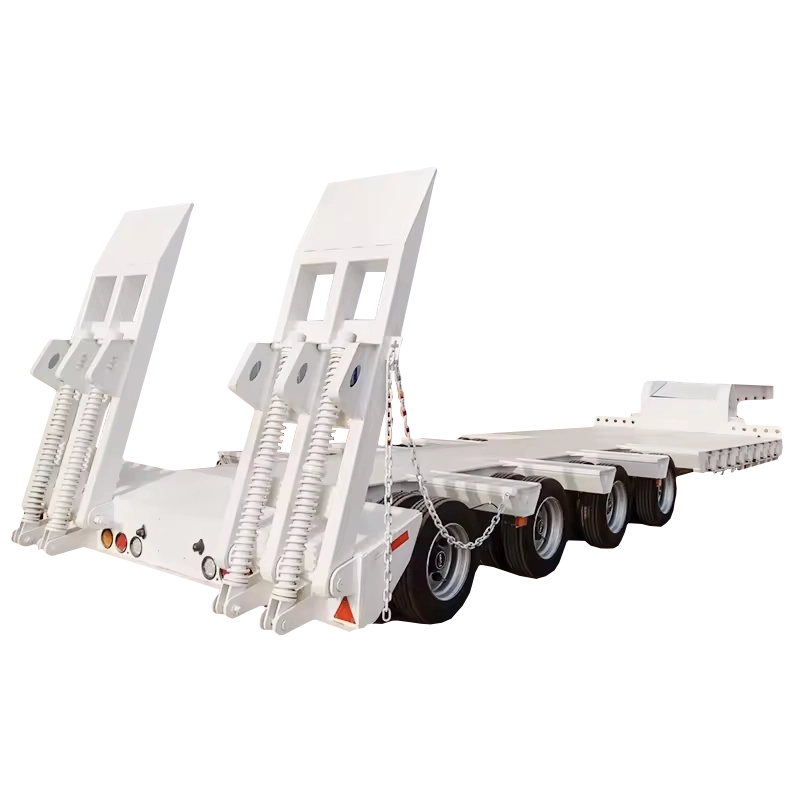
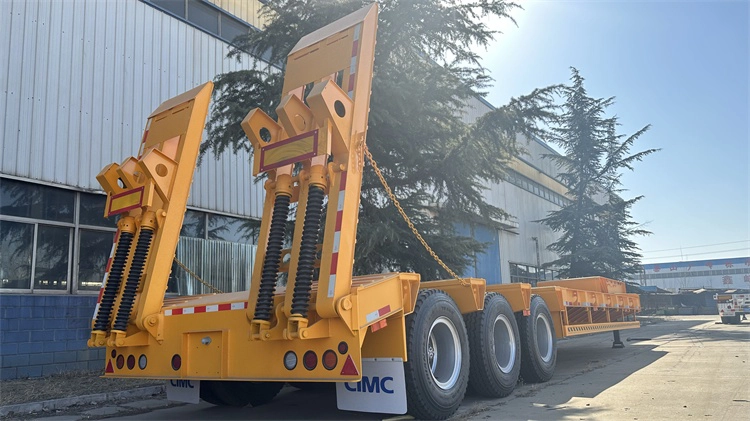
80 ton lowbed semi trailer: this Kales lowbed platform is positioned for buyers who need a broader export-ready 80 ton heavy-haul trailer rather than a value-led regional 3 axle Africa build. It stays within the practical fixed-deck lowbed category, but it is framed for buyers comparing deck width options, hydraulic ramp upgrades, axle-class matching, and higher-spec export procurement for excavators, bulldozers, drilling units, transformers, and other concentrated machinery loads.
Engineering guidance from the Kales Vehicle trailer team for buyers comparing mainstream 80 ton lowbed platforms with Africa-value configurations, side-extension lowbeds, and detachable-gooseneck heavy-haul trailers.
Quick answer: choose this 80 ton lowbed semi trailer when your project needs a fixed-deck heavy-haul platform with broader export positioning than the Africa-focused 3 axle page, but without stepping all the way into a detachable-gooseneck or telescopic trailer. It is the right fit for buyers who need stronger international procurement framing, configurable width and ramp options, and a platform that can serve mixed machinery categories across contractor, industrial, and project-logistics work.
Why Buyers Choose This Global 80 Ton Lowbed Platform
- Broader buying intent: positioned for export heavy-haul procurement, not only for the lower-cost Africa 3 axle route.
- Project cargo range: excavators, bulldozers, cranes, transformers, construction machinery, steel modules, and industrial equipment with concentrated axle load.
- Platform flexibility: fixed-deck lowbed structure with configurable width support, ramp choice, and axle matching before production.
- Engineering basis: HG60 high-strength beam structure, reinforced gooseneck zone, anti-slip deck, and heavy-duty suspension options.
- Procurement logic: better suited to buyers comparing export documentation, structural margin, loading method, and configuration depth rather than chasing the lowest initial quote.
Specification-backed advantages
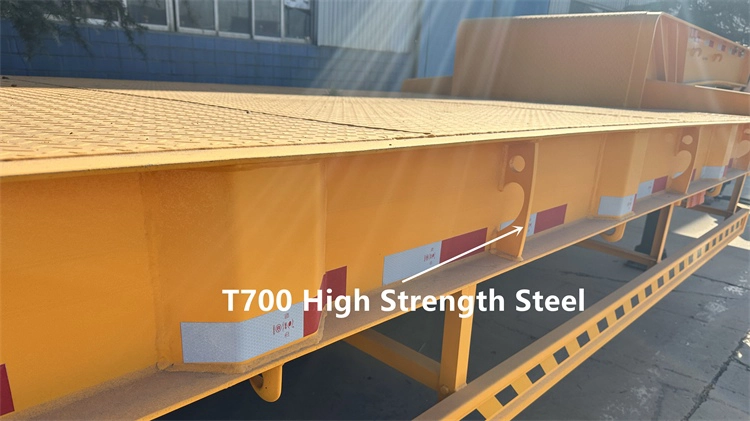
- Main beam: HG60 high-strength steel with 20 mm upper plate, 20 mm lower plate, and 12 mm double web. This provides a concrete durability and load-control basis for the stated duty cycle.
- Payload class: 60 to 80 tons depending on route regulation, deck layout, axle specification, and tractor match. This defines the working band to validate against the cargo, route, and local legal limits.
- Brake system: Dual-circuit air brake system with WABCO valve logic. This gives the buyer a specific braking or safety package to verify for the intended route.
Technical Snapshot
| Product type | 80 ton fixed-deck lowbed semi trailer |
|---|---|
| Payload class | 60 to 80 tons depending on route regulation, deck layout, axle specification, and tractor match |
| Reference dimensions | 13,000 x 3,000 x 1,750 mm, customizable for cargo profile and route requirement |
| Main beam | HG60 high-strength steel with 20 mm upper plate, 20 mm lower plate, and 12 mm double web |
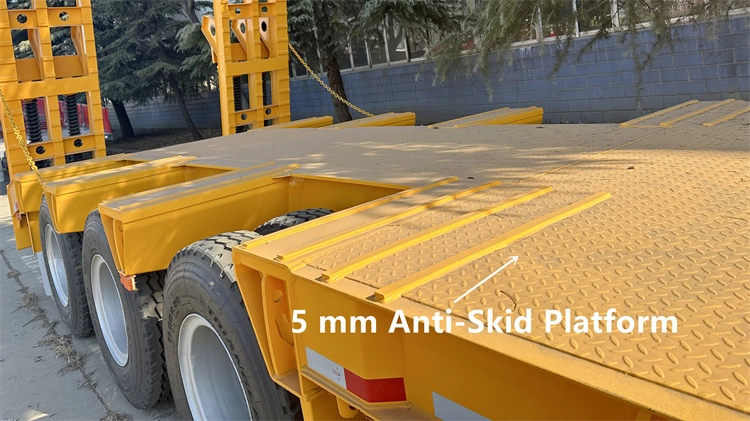
| Deck plate | 5 mm anti-slip checkered steel platform |
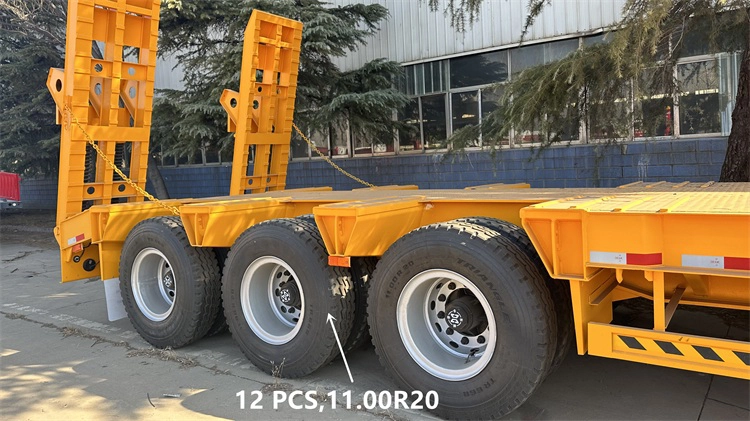
| Axle matching | 3 axles with 13T, 16T, or 20T options; FUWA, BPW, or KALES matching |
| Suspension | Heavy-duty mechanical suspension with 8 mm or 10 mm configuration options |
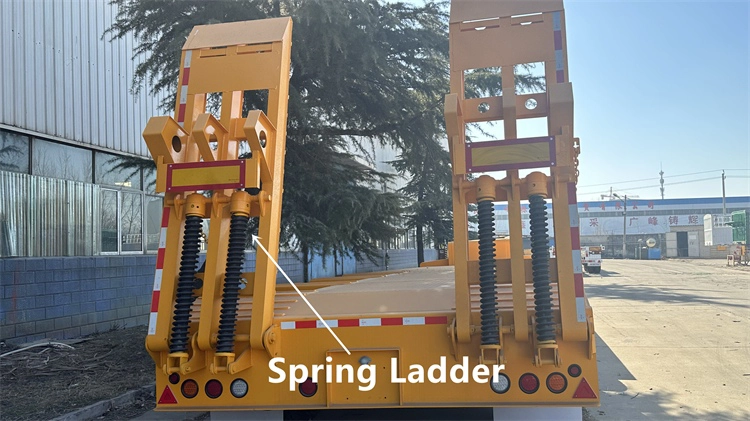
| Ramp options | Reinforced spring ramps as standard, hydraulic ramps available for higher loading frequency |
| Brake system | Dual-circuit air brake system with WABCO valve logic |
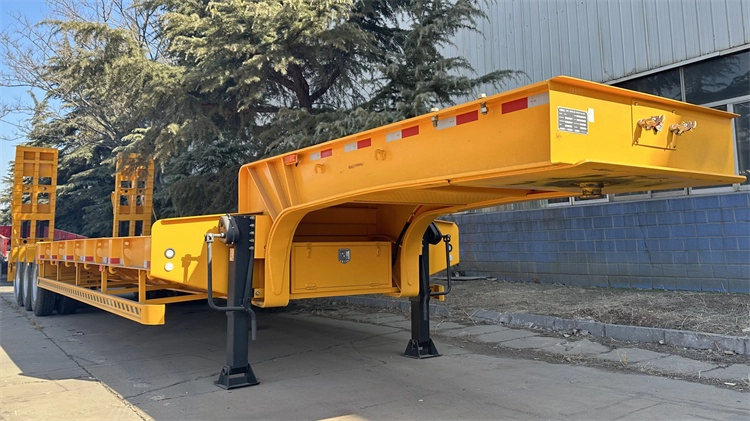
| Landing gear | JOST or KALES 28T heavy-duty landing gear |
Best Fit Operating Profile
This page fits buyers who need a mainstream 80 ton lowbed platform with more formal export and project-logistics positioning than the Africa value page, but who still want the service logic and deck simplicity of a fixed lowbed trailer. It is a practical fit for contractors, machinery distributors, industrial project carriers, equipment-rental groups, and specialized transport buyers who need real heavy-haul capacity without defaulting immediately to a detachable-gooseneck chassis.
Best for
- Export buyers comparing heavy machinery transport platforms across multiple countries or project environments
- Contractor and industrial fleets moving excavators, bulldozers, rollers, drilling equipment, and dense project cargo
- Procurement teams that need configurable deck width, ramp type, and axle class before final production release
- Operators who need a stronger procurement narrative than the Africa 3 axle page but do not need telescopic or RGN structure yet
Not ideal for
- Buyers whose real priority is the lowest-cost Africa-oriented 3 axle heavy-equipment trailer
- Front-loading operations that require detachable gooseneck access for frequent crawler loading
- Extra-long project cargo that requires telescopic extension rather than a fixed low deck
How This Page Is Positioned Against the Africa 80 Ton Lowbed Page
This page owns the broader 80 ton lowbed platform intent. The Africa-focused page stays narrower: value-led, simpler-service, and explicitly centered on a practical 3 axle route for mixed African operating conditions. Here, the positioning is wider and more international. The buyer is usually comparing configuration depth, export suitability, and machinery mix rather than only day-one price discipline.
| Buyer comparison point | This page | Africa 80 ton page |
|---|---|---|
| Primary intent | Global fixed-deck 80 ton lowbed platform | Value-led 3 axle Africa machinery trailer |
| Procurement frame | Export-heavy-haul specification and project fit | Lower-cost fleet practicality and simpler service |
| Buyer concern | Configuration depth, structural margin, and broader cargo suitability | Affordability, workshop familiarity, and regional uptime |
| Step-up path | Side-extension lowbed or detachable-gooseneck trailer | This global 80 ton platform when broader export framing is needed |
Engineering and Serviceability Details
Main beam and gooseneck structure
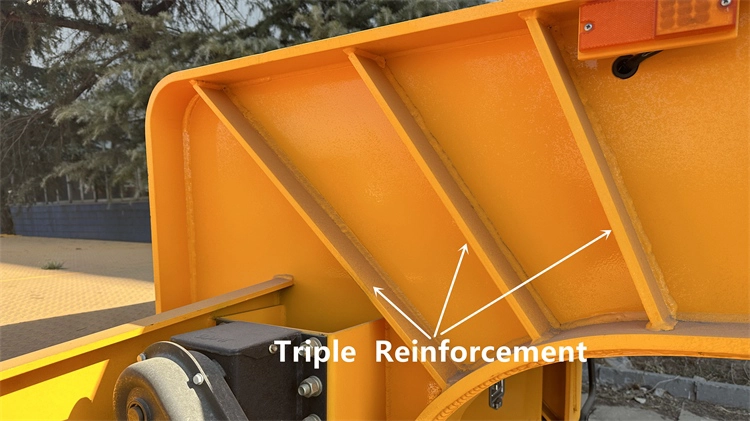
The technical case for an 80 ton lowbed starts with concentrated-load support, not marketing payload language. HG60 beam material, the 20 mm upper and lower plates, and the 12 mm double web are chosen to resist sagging and fatigue when dense machinery sits on a relatively compact low deck. The reinforced gooseneck zone matters because braking, turning, and grade changes put high stress into that transition area.
Deck width, ramp choice, and loading logic
This platform remains a fixed-deck lowbed, but it should be reviewed as a configurable loading system. Standard 3,000 mm width is practical for many machines, while side support or wider-deck adjustments can be specified for broader equipment. Reinforced mechanical ramps remain appropriate where service simplicity matters, while hydraulic ramps become the better choice once loading frequency, machine size, or operator safety expectations increase.
Axle, suspension, and maintenance logic
For export heavy-haul fleets, serviceability still matters, but the procurement review is usually more structured than on the Africa-value page. Buyers should confirm axle class, suspension thickness, brake-valve matching, and spare-parts strategy based on actual route severity and support networks. The point is to specify enough structural and running-gear margin for the job without drifting into unnecessary special-transport complexity.
Quotation and Procurement Guidance
Buyers searching for an 80 ton lowbed semi trailer often compare this platform against both low-cost regional lowbeds and more specialized RGN or telescopic trailers. That comparison only works when the operating requirement is clear. The right question is not simply whether one trailer is cheaper. It is whether the configuration gives enough structural margin, width flexibility, ramp suitability, and export-readiness to support the cargo plan over years of use.
Kales supplies this 80 ton lowbed as a configurable factory-direct platform. Before quotation approval, buyers should lock in machine type, axle load distribution, required deck width, ramp style, operating country, and tractor saddle height. That process keeps the product aligned with actual engineering need and prevents the common purchasing error of buying either too light a regional trailer or too specialized a heavy-haul chassis.
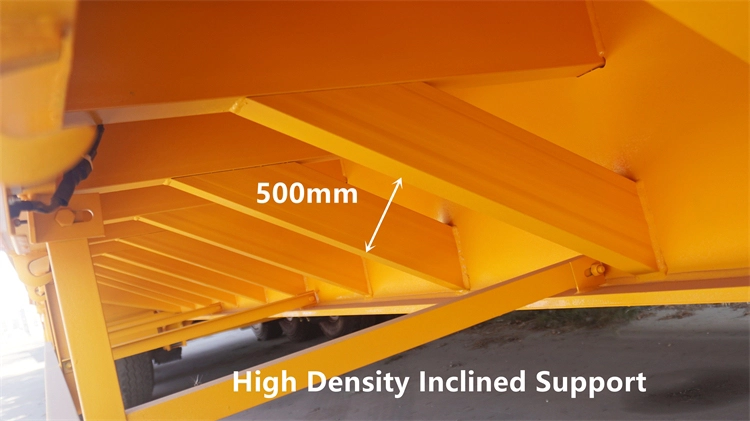
Factory Images and Inspection Views
Frequently Asked Questions
How is this page different from the Africa 80 ton lowbed page?
This page is the broader global fixed-deck 80 ton platform. It is written for buyers comparing export-heavy-haul specification, cargo flexibility, and configuration depth. The Africa page stays narrower and more value-led around a practical 3 axle route with simpler service priorities.
When should I stay with a fixed-deck 80 ton lowbed instead of moving to an RGN?
Stay with this platform when rear loading is acceptable and the machinery mix does not require frequent front-loading through a detachable gooseneck. Move to an RGN once crawler loading access or project cargo geometry makes front loading operationally necessary.
Can this trailer be configured for wider machinery?
Yes. Standard width is around 3,000 mm, but side extensions or related width adjustments can be specified when the machine profile or route requirement calls for more deck support.
Should I choose mechanical or hydraulic ramps?
Mechanical ramps remain the practical choice when service simplicity and lower acquisition cost matter most. Hydraulic ramps become more appropriate when loading is frequent, machines are heavier to handle, or the operating team wants faster loading cycles.
What should I confirm before requesting a quote?
Confirm machine model, total weight, axle-load concentration, required deck width, operating country, local transport limits, tractor saddle height, and preferred ramp type. Those inputs determine whether this fixed-deck 80 ton platform is the correct configuration or whether a side-extension or detachable-gooseneck trailer is the better fit.
Request Drawing and Quote
If you are sourcing an 80 ton lowbed semi trailer for excavators, bulldozers, drilling equipment, transformers, or project machinery, send the cargo model, operating country, weight distribution, target deck width, and preferred ramp style. Kales can then match the platform specification to the actual transport duty instead of quoting a generic trailer with the wrong heavy-haul logic.
- Email: jennylee@kalestruck.com
- WhatsApp: +86 131 5638 8843
- Request scope: cargo model, dimensions, weight, axle-load pattern, route country, tractor saddle height, ramp preference
Related Kales Lowbed Options, Guides & Delivery Cases
- 80 Ton 3 Axle Lowbed Trailer with Side Extension for wider cargo that needs more deck support than this standard-width platform.
- 80 Ton Telescopic Detachable Gooseneck Trailer for front-loading and more specialized oversized project cargo.
- Guinea 80-Ton Heavy-Duty Lowbed Bauxite Mining Delivery Case Study: Field report on 8 custom 4-axle HG60 lowbeds hauling 50-ton CAT 349 excavators across the Boké corridor.
- Lowbed Semi-Trailer Axle Configuration & Payload Engineering Guide: Technical manual on 2-axle to 4-axle selection, deck height profiles, bridge formulas, and RGN vs fixed ramp trade-offs.
Leave a Reply
You must be logged in to post a comment.