Published: September 9, 2026 · Word count: 2232 · Reading time: 13 minutes
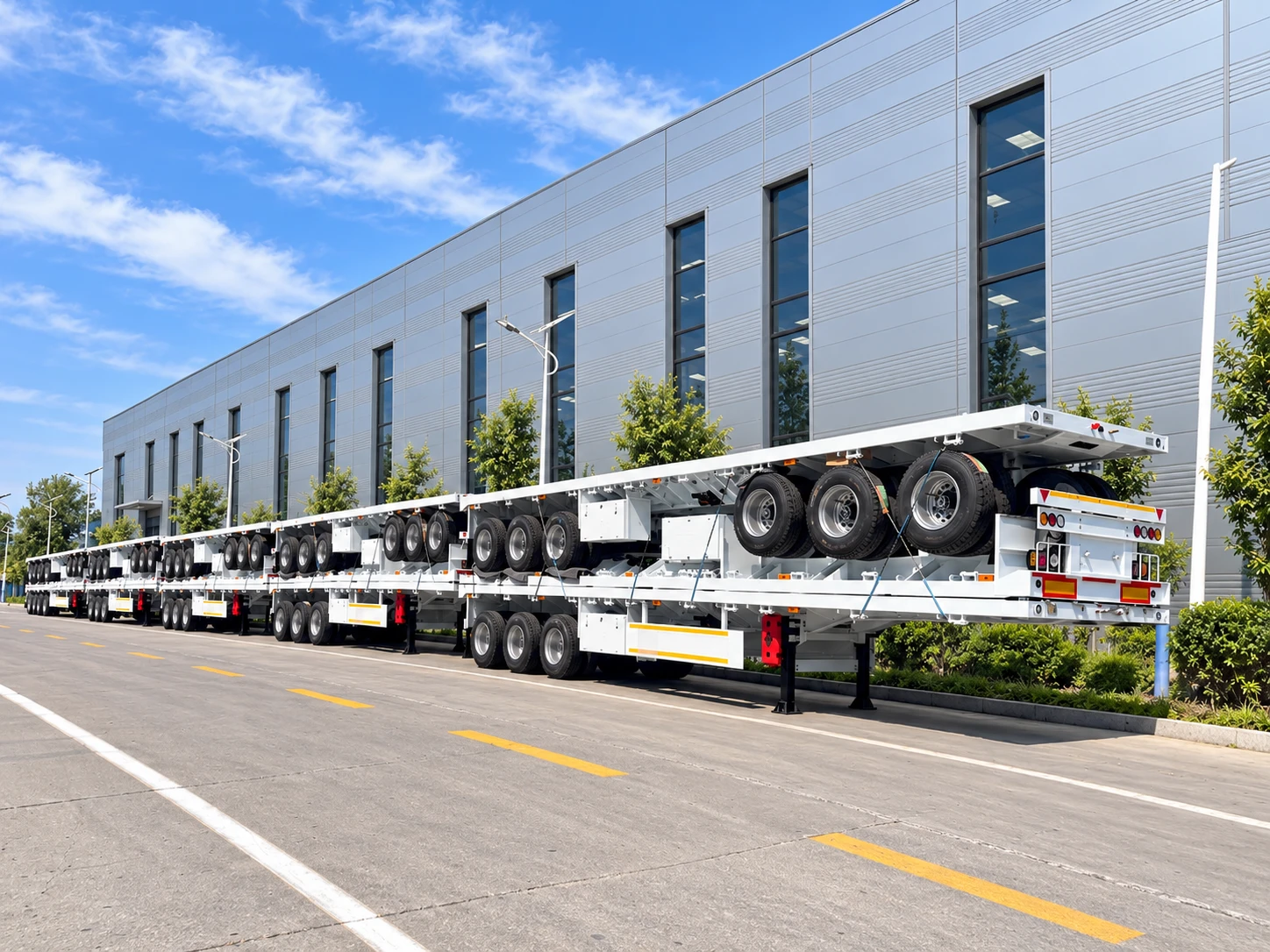
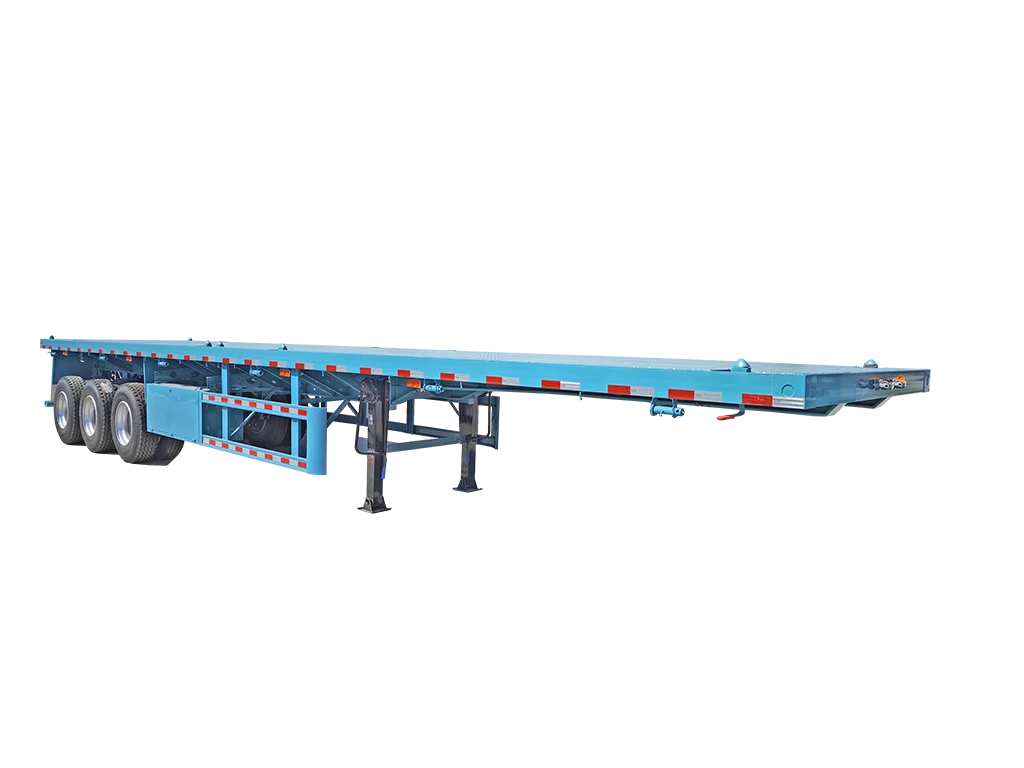
A leading intermodal container drayage operator based in Lagos, Nigeria, took delivery of a fleet of fifteen custom-engineered Kales 3-Axle 40ft Container Flatbed Semi-Trailers to support round-the-clock freight clearing operations out of Apapa Port and Tin Can Island Container Terminal. Hauling dense 40ft high-cube containers and paired 20ft import boxes through congested port bottlenecks, across damaged access roads, and up the Lagos–Ibadan Expressway demands exceptional chassis fatigue strength, reliable pneumatic braking, and high-quality twist lock hardware.
This export delivery case study examines the specific operational stress factors facing container transporters in Nigeria, the heavy-duty structural reinforcements engineered into Kales flatbeds, and the complete Standards Organisation of Nigeria Conformity Assessment Programme (SONCAP) certification and customs clearance process at Lagos.
Executive Summary for Nigerian Fleet Operators & Drayage Contractors
- Delivery Scope: 15 units of 3-axle 40ft container flatbed semi-trailers delivered to a premier Lagos container drayage fleet.
- Operating Corridors: Apapa Wharf, Tin Can Island, Lilypond Container Depot, Lagos–Ibadan Expressway, Sagamu Interchange, and long-haul dispatch to Kano Inland Dry Port (IDP).
- Primary Cargo: 20ft standard ISO containers (single or paired), 40ft standard and high-cube dry vans, refrigerated sea containers (reefers), and breakbulk steel/bagged agricultural goods.
- Structural Highlights: 500mm high-tensile T700 steel main beams, 12 sets of heavy-duty retractable ISO twist locks, 3 × 13-ton heavy-duty FUWA axles, 10-leaf mechanical spring suspension (13mm × 90mm), and 3mm diamond checkered steel floor.
- Compliance & Quality: Fully compliant with Nigerian Federal Road Safety Corps (FRSC) axle regulations, complete pre-shipment SONCAP / SON conformity certification, and direct sea shipment to Apapa Port.
Quick Answer: Why choose Kales reinforced 40ft container flatbeds for Lagos port operations?
Standard commercial flatbed trailers often suffer crossmember buckling, twist-lock pedestal tearing, and spring pack cracking when subjected to Nigeria’s severe road conditions and frequent 32–36 ton container overloads. Kales container flatbed trailers utilize high-strength T700 structural steel for the main chassis beam, dense 250mm crossmember spacing, heavy-duty forged steel container twist locks, and dual-line WABCO pneumatic brakes. This provides the structural elasticity and stopping power needed to withstand Apapa port gridlock, potholed arterials, and continuous highway hauling with zero frame sagging.
Key Takeaways for West African Logistics Fleets
- Intermodal Flexibility: With 12 retractable forged twist locks, one flatbed seamlessly accommodates 1 × 40ft container, 2 × 20ft containers, or 1 × 20ft container loaded in the center for optimal axle weight distribution.
- Frame Fatigue Resistance: High-tensile T700 steel (yield strength 700 MPa) provides double the yield strength of ordinary Q235 steel, preventing chassis neck fractures caused by dynamic pitching on rough road surfaces.
- Low Maintenance Mechanical Suspension: Heavy-duty 10-leaf spring packs and reinforced equalizer rockers resist harsh pothole impacts without requiring complex workshop recalibration.
- Certified Nigerian Compliance: Complete SONCAP Pre-Export Verification of Conformity ensures rapid, hassle-free customs clearance through the Nigeria Customs Service (NCS) at Apapa Port.
1. Operating Challenges in the Lagos Port & Industrial Corridor
Lagos is Nigeria’s commercial powerhouse, handling over 70% of the nation’s maritime imports through the twin seaports of Apapa and Tin Can Island. For drayage logistics operators, moving heavy containers out of the port terminals onto the national highway network involves brutal operating conditions:
- Port Access Road Infrastructure: Access corridors such as Creek Road, Wharf Road, and the Oshodi-Apapa Expressway frequently suffer from deep potholes, uneven asphalt transitions, and unpaved staging yards. Standard lightweight chassis experience severe twisting and stress concentrations that lead to weld cracking at the crossmembers within months.
- Severe Container Loading Imbalances: Import shipping containers are often loaded near maximum maritime payload limits (frequently 30 to 34 tons of cargo plus container tare), with cargo weight unevenly distributed. Trailers must withstand extreme localized point-loads without bending along the main beams or deforming the twist-lock mounting pedestals.
- Stop-and-Go Gridlock & Thermal Brake Stress: Prolonged hours in dense port traffic interspersed with high-speed highway transit along the Lagos–Ibadan corridor puts immense thermal stress on trailer braking systems. Reliable dual-line pneumatic systems with heavy-duty brake drums are non-negotiable to prevent brake fade and jackknife accidents.
2. Custom Structural Engineering for Nigerian Road Realities
T700 High-Strength Steel Chassis Spine
To eliminate the chronic frame sagging that plagues low-grade commercial trailers in Nigeria, Kales engineers utilized high-grade T700 thermo-mechanically rolled high-strength alloy steel for the primary load-bearing chassis structure:
- Main Beam Height: 500 mm depth with engineered pre-camber profile, submerged-arc welded automatically to ensure homogeneous weld penetration.
- Upper Flange: 14 mm thickness high-tensile steel plate.
- Lower Flange: 16 mm thickness high-tensile steel plate to resist extreme tensile forces during full-payload transit.
- Web Plate: 8 mm thickness high-tensile steel with reinforcing gussets over the suspension bogie area.
- Neck Transition: Smooth radiused gooseneck with double internal reinforcement plates to eliminate notch stress failure where the frame couples with the tractor fifth wheel.
12-Lock Intermodal Versatility & Checkered Steel Deck
Nigerian drayage operations require complete cargo flexibility. A trailer delivering an imported 40ft container to an industrial park in Sagamu must frequently backhaul two 20ft empty containers or a loaded 20ft container of agricultural commodities (such as cocoa or cashew nuts) to the port for export:
- 12 Retractable Twist Locks: Forged high-tensile steel locks mounted in heavy steel casting boxes flush with the deck. Fleets can lock down 1 × 40ft container, 2 × 20ft containers, or 1 × 20ft container centered directly over the bogie for optimal axle weight distribution.
- 3 mm Diamond Anti-Skid Steel Deck: Supported by transverse through-beams spaced every 250 mm. The solid steel deck allows the trailer to operate as an open flatbed for pallets, structural steel, crated machinery, and bagged cement when container freight is unavailable.
- Heavy Perimeter Tie-Down Ropes & Hooks: 24 heavy-duty forged lashing rings and side winches welded along the side coaming to secure non-containerized cargo reliably.
Tri-Axle Running Gear & Fail-Safe Braking
The running gear is specified for long-distance durability and ease of maintenance across Nigeria:
- Axles: 3 × 13,000 kg capacity genuine FUWA heavy-duty round-beam axles with high-performance bearings and standardized 10-hole wheel studs.
- Suspension: Heavy mechanical multi-leaf suspension featuring 10-leaf spring packs (13 mm thickness × 90 mm width) and heavy cast equalizer rockers with greasable bronze bushings.
- Tires & Wheels: 12 units of 12R22.5 all-steel tubeless radial tires mounted on 9.00-22.5 heavy steel disc wheels, offering excellent puncture resistance and high highway heat dissipation.
- Braking Hardware: Dual-line pneumatic brake system equipped with genuine WABCO RE-6 relay valves, dual air storage reservoirs (45L + 45L), and 30/30 double spring brake chambers on all three axles.
- Landing Legs: JOST-compatible 28-ton two-speed manual landing gear with wide heavy-duty sand shoes to prevent sinking on unpaved port holding pads.
Delivered Fleet Engineering Specifications
| Technical Parameter | Standard Export Specification | Kales Nigeria Port Drayage Specification |
|---|---|---|
| Overall Dimensions | 12,500 mm × 2,500 mm × 1,550 mm | 12,500 mm × 2,500 mm × 1,520 mm (40ft Standard) |
| Payload Capacity | 40,000 kg | 50,000 kg (Severe-Duty Rated Payload) |
| Tare Weight | ~7,500 kg | ~7,200 kg (Optimized High-Strength T700 Structure) |
| Main Beam Material | Q345 Carbon Steel | T700 High-Yield Alloy Steel (700 MPa) |
| Main Beam Dimensions | Height: 480 mm, Flanges: 12/14 mm, Web: 6 mm | Height: 500 mm, Flanges: 14/16 mm, Web: 8 mm |
| Floor Plate | 2.5 mm corrugated or timber | 3 mm High-Strength Diamond Checkered Steel Plate |
| Container Twist Locks | 8 to 12 generic cast locks | 12 Heavy-Duty Forged Retractable ISO Twist Locks |
| Axles | 3 × 13T generic brand | 3 × 13T Genuine FUWA Heavy-Duty Axles |
| Suspension | Standard 8-leaf mechanical | Heavy-duty 10-leaf (13 mm × 90 mm) mechanical spring |
| Brake System | Single WABCO valve, 2 axles braked | Full WABCO dual-line with 30/30 chambers on all 3 axles |
| Tires | 11.00R20 with tubes | 12R22.5 Premium Tubeless All-Steel Radial Tires |
Durability Analysis: Commodity Trailers vs. Kales Nigeria Fleet Build
| Evaluation Criterion | Commodity Export Flatbed | Kales Nigeria Drayage Flatbed | Long-Term Commercial Impact |
|---|---|---|---|
| Main Beam Deflection | Noticeable center sag under 32-ton container load | Zero permanent deflection; high camber retention | Prevents chassis dragging and tire scrubbing wear. |
| Twist Lock Seat Integrity | Pedestals crack or tear from lateral container sway | Forged lock housings fully boxed into crossmembers | Eliminates catastrophic container dislodgment on highways. |
| Leaf Spring Longevity | Frequent leaf fracture within 4–6 months on port potholes | Heavy 10-leaf packs rated for 100,000+ km service | Saves $1,200+ per trailer annually in suspension repairs. |
| Braking Distance (Laden) | Extended stopping distances; high drum overheating risk | Immediate pneumatic response via 6 × 30/30 chambers | Protects against rear-end collisions in sudden highway stops. |
3. SONCAP Certification, Sea Freight & Lagos Port Clearance
Importing commercial trailers into Nigeria requires strict adherence to federal standards. Kales manages the entire verification, nested shipping, and customs clearance pipeline to guarantee smooth delivery:
3.1 15-Unit Fleet Staging & Nested Ocean Packaging (Tianjin to Apapa Port)
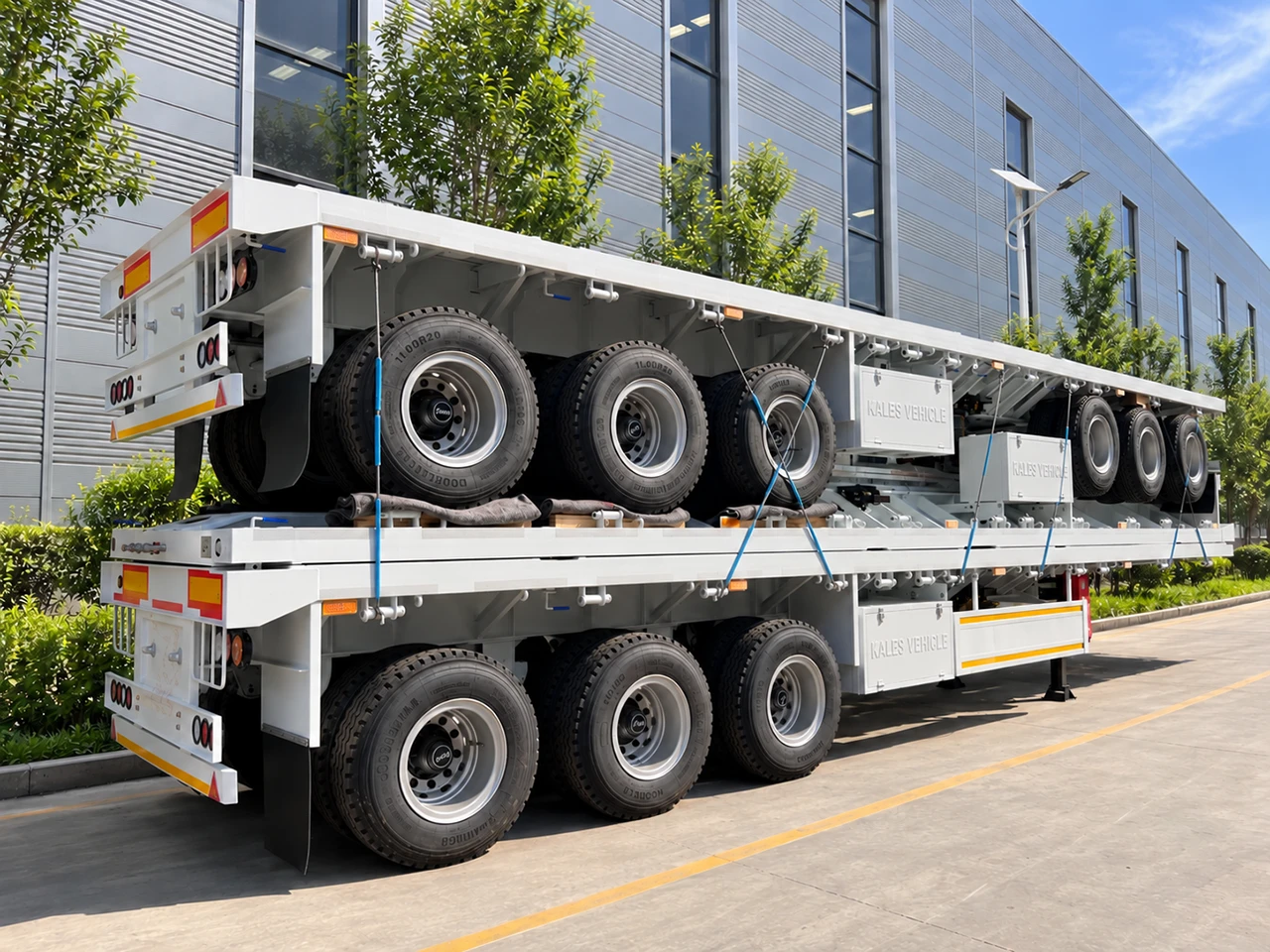
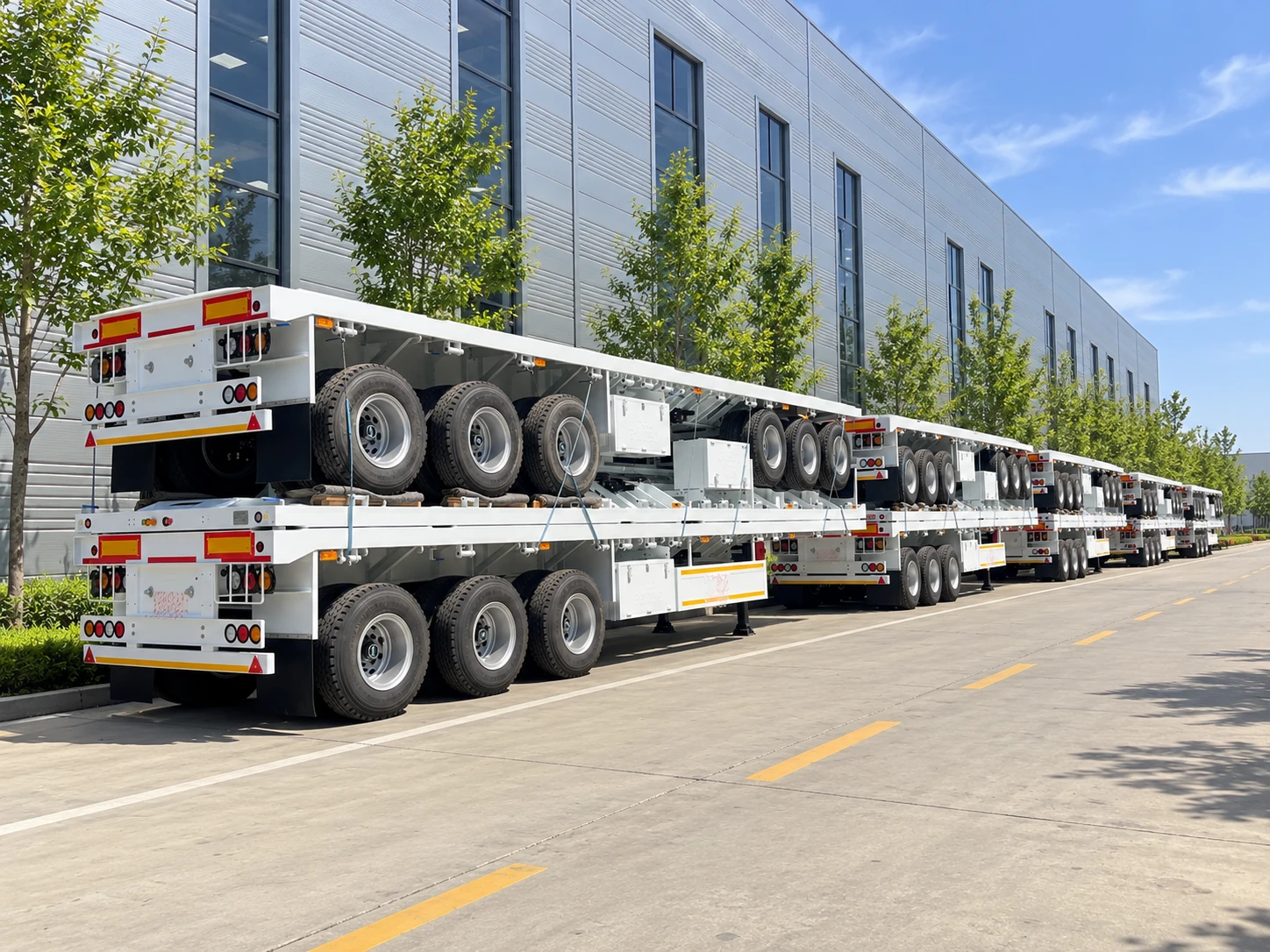
To optimize ocean freight economics for breakbulk shipping to Lagos, Kales bundled the fifteen flatbeds into stable, nested stacks of three units each. This packaging strategy reduced vessel deck footprint by over 60%, drastically cutting freight costs while preventing transit damage:
Each 3-in-1 nested stack was secured with engineered steel clamping brackets welded directly between chassis main beams, heavy wooden isolation blocks to prevent paint abrasion, and marine anti-corrosion wax coating on all exposed wheel hubs, brake drums, and kingpin assemblies:
The rear perspective shows all five stacks aligned with heavy channel under-run bumpers, protected tail lamps, and dedicated ocean tie-down lashing rings fully accessible for stevedore crane rigging:
3.2 Lagos Port Clearance, SONCAP Verification & Customer Acceptance Inspection
Commercial vehicles imported into Nigeria must comply with the Standards Organisation of Nigeria Conformity Assessment Programme (SONCAP). Kales coordinated third-party laboratory material inspections, factory quality audits, and vehicle VIN documentation to secure the official Product Certificate (PC) and final SONCAP Certificate before vessel departure, ensuring zero customs demurrage at Apapa Port.
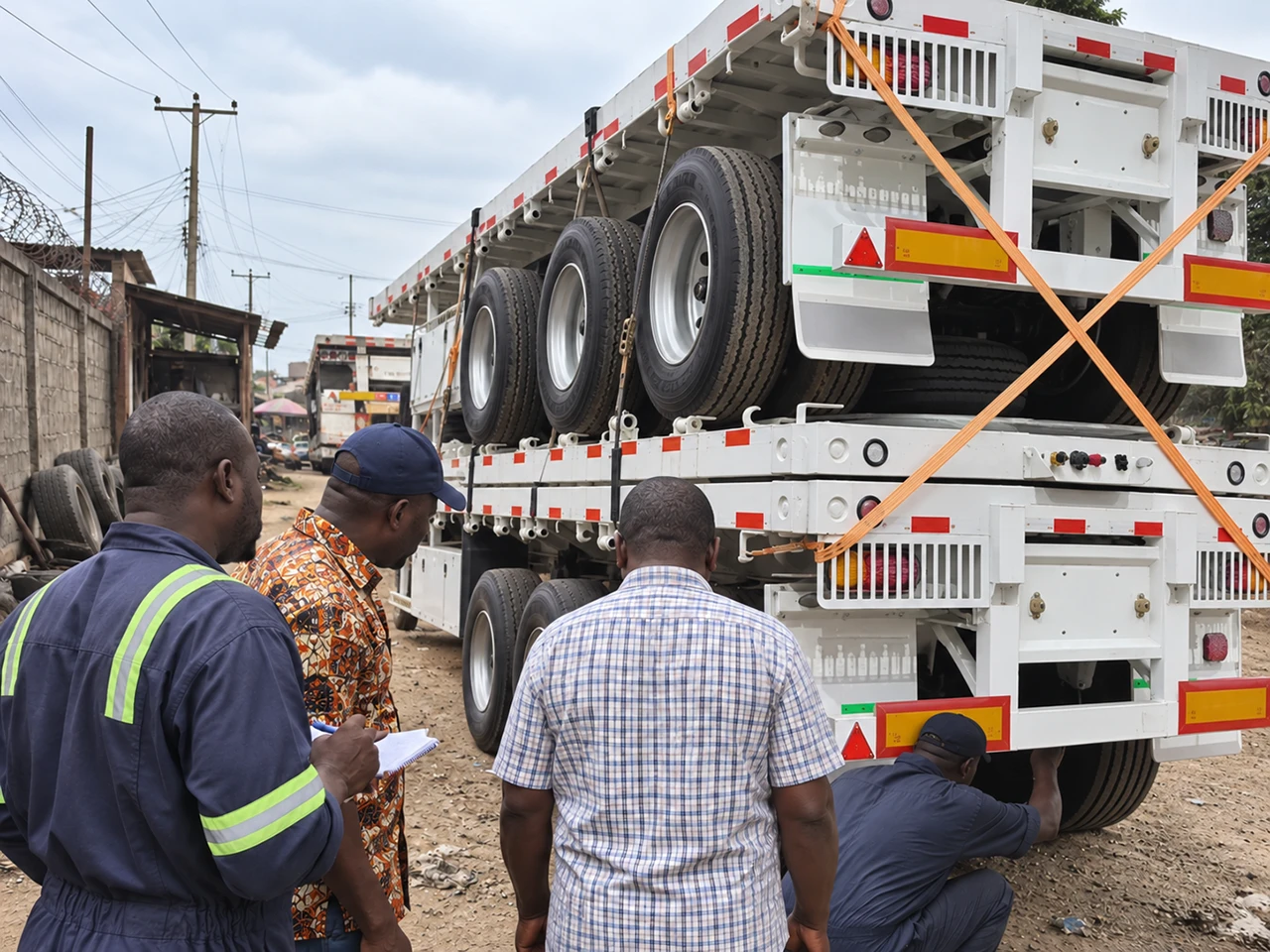
Upon arrival in Lagos, all trailers underwent joint physical inspection with the Nigerian client transport director, verifying twist lock alignment, pneumatic brake pressure holding, and FRSC-compliant reflective contour markings:
Procurement Advice for Nigerian Container Transporters
Fleet owners purchasing flatbed trailers for Nigerian port operations should verify several technical points before contracting:
- Prioritize Tubeless 12R22.5 Tires: Tubeless radial tires dissipate highway heat substantially better than older tube-type 11.00R20 tires, dramatically cutting roadside blowouts on the hot asphalt of the Sagamu–Benin expressway.
- Inspect Twist Lock Box Welding: Ensure container twist lock boxes are welded continuously into transverse crossmembers, not merely tacked to the top of side channels.
- Demand Verified Factory SONCAP Paperwork: Uncertified trailers face indefinite demurrage, customs seizure, and heavy penalties at Lagos ports. Work only with established manufacturers capable of issuing authentic SONCAP documentation.
Explore Complementary Kales Export Configurations
Fleets operating container and bulk logistics across West Africa can also explore our specialized 3-Axle 40ft Africa Workhorse Flatbed, compare with our 45ft Long-Deck Export Flatbed, or evaluate our heavy-duty 3-Axle Dropside Flatbed Trailer for mixed grain, bagged freight, and container transport.
Frequently Asked Questions: Container Flatbed Trailers in Nigeria
- Can this 40ft flatbed carry two 20ft containers simultaneously?
- Yes. The trailer is equipped with 12 retractable twist locks arranged to secure either one 40ft container, two 20ft containers, or a single 20ft container positioned centrally over the suspension bogie for optimal axle weight distribution.
- How does Kales ensure trailers clear Nigerian customs without delay?
- Kales executes the full SONCAP verification protocol prior to export, including factory audit and Product Certificate issuance. We supply original Bills of Lading, Commercial Invoices with Form M references, Packing Lists, and the SONCAP Certificate directly to your clearing agent in Lagos.
- Why is T700 steel superior to standard Q345 steel for Nigerian roads?
- T700 steel has a minimum yield strength of 700 MPa compared to 345 MPa for Q345. This enables the main beam to absorb severe torsional flexing and dynamic impact shock from deep potholes without permanent bending, while reducing overall tare weight by approximately 500 kg.
Conclusion and Customer Operating Results
Within their first eight months of intensive service, the fifteen Kales 3-Axle 40ft Container Flatbed Semi-Trailers logged over 1.2 million accumulated fleet kilometers along the Apapa–Lagos–Ibadan corridor with zero main beam cracks, zero twist-lock failures, and minimal unscheduled maintenance. By selecting purpose-built trailers engineered with high-strength T700 steel and genuine FUWA running gear, the Nigerian logistics operator achieved industry-leading fleet dispatch reliability and lowered long-term total cost of ownership.
Request a Factory-Direct Flatbed Quotation & Specification Sheet
Are you expanding container transport, port drayage, or mixed-freight logistics operations in Nigeria or West Africa? Speak with Kales vehicle export engineers to customize flatbed lengths, axle specifications, twist lock layouts, and delivery schedules to your fleet requirements.
Contact Kales Fleet Engineering Team | WhatsApp / Mobile: +86 131 5638 8843
Leave a Reply
You must be logged in to post a comment.