Author: admin

  • Semi-Trailer Painting Full Analysis (2025 Edition): From Manual Brushing to Powder Coating

    Semi-Trailer Painting Full Analysis (2025 Edition): From Manual Brushing to Powder Coating

    A comprehensive evolution of anti-corrosion & environmental compliance. Learn how to distinguish "True Protection" from "Superficial Shine."

    What is the best anti-corrosion coating for semi-trailers?
    The optimal anti-corrosion system for high-end semi-trailers combines Cathodic Electrodeposition (E-coat) for the chassis to ensure 360° rust prevention in inner cavities, and Electrostatic Powder Coating or Liquid Baking Paint for the upper body to provide UV resistance and zero-VOC environmental compliance. A scientific E-coat system can extend a trailer's lifespan to over 15 years in harsh environments.

    I. Introduction: It's More Than Just "Face Value"

    Many people believe that painting a semi-trailer is simply a matter of spraying on a few coats of topcoat.

    But in reality, the anti-corrosion system of a modern semi-trailer has evolved from primitive manual brushing to sophisticated industrial processes like Cathodic Electrodeposition (E-coat) + Intermediate Coat + Liquid Baking Paint or Electrostatic Powder Coating. A scientifically engineered paint system allows a high-strength steel chassis to serve safely for 15 years under harsh salt spray, snow-melt chemicals, and mud. Conversely, a low-quality coating can lead to structural rust-through in as little as 3 years.

    Against the backdrop of global "Carbon Neutrality" goals and stricter environmental regulations (such as EU REACH), paint is no longer just a cosmetic feature. It is the bottom line of safety, an environmental responsibility, and a core variable in the Total Cost of Ownership (TCO).

    II. Comparison of the Top 5 Coating Systems

    Process Type Principle VOC Emissions Utilization Typical Application
    Manual Brushing Hand-applied alkyd paint High <30% Small workshops, non-standard repairs
    Standard Liquid Spray Air gun spray (Epoxy/PU) Med/High 40–60% Mainstream chassis beams
    Cathodic E-coat (E-coat) Electrical deposition in tank Very Low >95% Full chassis (including inner cavities)
    Liquid Baking Paint High-temp cured topcoat Medium 50–70% High-end finish, Cabins
    Powder Coating Electrostatic adhesion + Melting Zero VOC >98% Box bodies, Fenders, Toolboxes

    ✅ 2025 Industry Trends:

    • Chassis: E-coat has become the standard mainstream solution for high-end trailers.
    • Upper Body/Accessories: Powder coating is rapidly replacing liquid paint, balancing environmental compliance with physical performance.

    III. Deep Dive: E-coat, Liquid Baking & Powder Coating

    (A) Cathodic Electrodeposition (E-coat)

    Diagram illustrating the cathodic electrodeposition (e-coat) process used by Kales Vehicle for semi-trailer chassis, showing the chassis submerged in a dip tank.

    Fig 1: The mechanism of Cathodic Electrodeposition ensuring 360° coverage.

    Kales flatbed semi-trailer frame undergoing electrophoretic coating (e-coat) in a dip tank, ensuring full corrosion protection including inner cavities.Full Immersion Cathodic Electrodeposition (E-coat) reaching all inner cavities at Kales facility.
    • Principle: The entire chassis is submerged in an electrified tank. Paint particles are deposited evenly onto the metal surface, reaching inner cavities and weld seams that spray guns miss.
    • Advantage: 360° coverage, Adhesion Grade 0 (GB/T 9286), Salt Spray Resistance ≥1000 hours with no red rust.
    • ⚠️ Limitations:
      1. High capital investment; strictly for conductive metals.
      2. Poor UV Resistance: E-coat (Epoxy resin) chalks when exposed to sunlight. It must be covered with a UV-resistant topcoat for outdoor use.

    (B) Liquid Baking Paint (High-Temp Cured)

    • Principle: Polyurethane or acrylic resins are cured in baking ovens at 120–140℃, creating a dense cross-linked structure.
    • Advantage: High gloss, excellent color retention (no chalking for 5 years), Pencil Hardness ≥H, resistant to minor scratches.
    • Best For: High-end export trailers, Reefer units, and Aluminum box exteriors.

    (C) Electrostatic Powder Coating

    Diagram showing the electrostatic powder coating mechanism applied to Kales trailer parts, where a spray gun applies charged powder onto a grounded metal component.

    Fig 2: Electrostatic powder coating mechanism principles.

    Automated electrostatic powder coating applied to Kales flatbed semi-trailer components after e-coat, providing durable, zero-VOC finish on visible parts like side rails and toolboxes.
    Kales flatbed trailer parts receiving powder coating after e-coat for long-lasting, eco-friendly surface protection.
    • Principle: Negatively charged powder is sprayed onto a grounded workpiece, then melted and cured at 180–200℃.
    • Core Advantages:
      • Zero VOCs: Compliant with strict national and international environmental laws.
      • High Efficiency: >98% utilization (overspray is recycled).
      • Dense Coating: One-pass application, no sagging (runs), no pinholes from solvent evaporation.
      • Mechanical Strength: Impact resistance ≥50 kg·cm, excellent stone-chip resistance.
    • ⚠️ Thickness Control: Optimal thickness is 60–100μm.Note: Excessive thickness (>120μm) makes the coating brittle, prone to cracking under impact, and causes severe "orange peel."
    • Resin Types:
      • Epoxy: Strong adhesion but poor UV resistance (Inner parts only).
      • Polyester (TGIC/HAA): Excellent weatherability, suitable for outdoor visible parts (Box bodies, fenders).

    IV. Construction Standards & Acceptance Criteria

    (A) Surface Preparation: The Foundation (70% of Quality)

    Side-by-side comparison of a rusty steel surface and the clean, silver-grey Sa2.5 sandblasted surface standard strictly followed by Kales Vehicle.

    Fig 3: Rusty surface vs. Sa2.5 sandblasted surface (The Kales Standard).

    • Manual Brushing: St2 (Visual removal of floating rust) → Not Recommended.
    • Standard Spray/Powder: Sa2.5 Sandblasting (GB/T 8923.1). The surface must present a uniform metallic luster with a roughness of Rz=40–70μm (to increase anchor points).
    • E-coat: Degreasing → Phosphating → Multi-stage Pure Water Rinsing (Cleanliness ISO 8502-9 Class 2).
    • Aluminum Parts: Must undergo Chrome-free conversion (e.g., Zirconium/Silane) or compliant chromating. Simple acid washing or standard phosphating is strictly prohibited.

    (B) Thickness Standards (Reference QC/T 934-2013)

    Process Primer Intermediate Topcoat Total DFT
    Standard Spray Epoxy Zinc (60μm) Epoxy Iron (60μm) PU (50μm) ≥170μm
    E-coat + Baking E-coat (20-25μm) Epoxy (40-60μm) Baking (40-50μm) ≥110μm
    Powder Coating Polyester (60–100μm) Single Layer

    💡 Key Insight: Why is "thinner" Powder/E-coat better?

    Quality is not just about thickness, but about density and cross-linking degree. High-temperature cured powder or E-coat forms a molecular cross-link density far higher than air-dried liquid paint, effectively blocking water and oxygen penetration even at lower thicknesses.

    V. 7 Major Paint Failure Risks (Deep Analysis)

    🔴 Risk 1: Poor Surface Prep = Adhesion Loss

    Mechanism: 70% of adhesion relies on substrate surface status. Oil, scale, or insufficient roughness prevents anchoring.
    Symptoms: Blistering, peeling sheets (especially at welds); Cross-cut test fails (≥ Grade 2); Red rust within 48h of salt spray.
    Prevention: Mandate Sa2.5 Sandblasting; Use white gloves to check cleanliness upon delivery.

    🔴 Risk 2: Wrong Primer = No Electrochemical Protection

    Mechanism: Zinc-rich primers protect steel sacrificially. If zinc content is low (<60%) or cheap iron-red primer is used, electrochemical protection is lost.
    Data: Genuine Zinc-rich (≥80%) resists salt spray >500h; Fake Zinc-rich (<40%) rusts in 72h.
    Prevention: Contract must state "Dry Film Zinc Content ≥80%" and demand lab reports.

    🔴 Risk 3: Improper Curing

    Symptoms: Baking paint chalks in 6 months; Powder coating cracks (over-baked) or peels (under-baked); E-coat rusts early due to thinness in cavities.
    Prevention: Factories must use Oven Temperature Trackers to verify the curing curve; Powder must be stored dry (<60% humidity).

    🔴 Risk 4: Incompatible Coating System

    • Typical Error A: E-coat primer + Topcoat without sanding/intermediate coat. Result: Topcoat peels off the slick E-coat.
    • Typical Error B: Aluminum + Zinc-rich primer. Result: Major Mistake! Zinc cannot protect aluminum and causes a saponification reaction, leading to total detachment.

    Solution: Use Epoxy Iron Cloud intermediate coats (wet-on-wet) for steel; Specialized Epoxy primer or direct Polyester powder for aluminum.

    🔴 Risk 5: Design "Dead Zones"

    Problem: Closed beams without drain holes (water accumulation); Gaps between cross members (capillary action).
    Prevention: Drill Φ8–10mm drain holes in closed beams; E-coat solves cavity issues; Standard trailers need internal cavity wax.

    🔴 Risk 6: Severe Environment

    Problem: Northern regions (snow melt agents), Coastal (salt spray), Mining (acidic dust).
    Recommendation: Mandatory E-coat + High DFT (≥160μm). Regular chassis washing.

    🔴 Risk 7: Improper Use & Maintenance

    Mistake: Using high-pressure water guns directly flushing weld seams. Ignoring scratches.
    Correct Practice:

    • Use low-pressure water and neutral detergents (pH 6-8) for chassis cleaning. Avoid strong acids/alkalis that destroy the paint's cross-linked structure.
    • Crucial: Small area scratches must be spot-repaired immediately using zinc-rich touch-up paint to prevent rust spread.
    • Perform annual inspections of key stress points.

    VI. Material-Specific Recommendations

    Material Recommended Process TABOO (Do Not Do)
    Carbon Steel (Q355/Q700) E-coat + Liquid Baking (Chassis)
    Powder Coating (External Parts)
    Avoid acid wash instead of sandblasting.
    Aluminum Alloy Chrome-free Prep + Polyester Powder
    OR Zirconium + Specialized Paint
    Strictly No Zinc-rich primers.
    No direct E-coat (requires special process).
    Stainless Steel Usually unpainted.
    If needed: Adhesion Promoter + Topcoat.
    Avoid sanding that destroys the dense passive film.

    VII. Lifespan & ROI Analysis (Real Data)

    System 5-Year Status 10-Year Status Est. Life
    Manual Alkyd Major Rust Structure Loss >30% ≤6 Years
    Standard Spray Local Floating Rust Weld Corrosion 10–12 Years
    E-coat + Baking Almost No Rust Minor Topcoat Aging 15–18 Years
    Powder Coating No Fading/Peeling Intact 12–15 Years
    💰 The Economics (Case Study):
    In 2018, a mining fleet in Zambia purchased 50 trailers with the Kales E-coat chassis system. After 5 years of operation in a highly acidic mining dust environment, the structural rust rate was less than 2%. This saved the customer approximately $45,000 in secondary sandblasting and repainting costs.E-coat + Baking paint may cost $1,200–$1,800 more per trailer initially compared to standard spray, but it extends service life by 5+ years and significantly increases resale value.

    VIII. Buyer's Checklist: "Four Looks, One Ask"

    1. Look at the Inner Cavity: Is it a uniform gray/black? (Sign of E-coat; spray guns can't reach here).
    2. Look at Box/Parts Coating: Is the edge wrapping complete and thick? (Sign of Powder Coating).
    3. Check Hardness: Scratch lightly with a key. No mark? = Baked/Powder. Deep white scratch? = Air-dried paint.
    4. Check Welds & Edges: Is there full coverage? Manual paint often leaves "shadow zones."
    5. ASK DIRECTLY:
      • "Is the chassis fully immersion E-coated?"
      • "Is the aluminum pre-treatment Chrome-free?"
      • "Is powder thickness controlled under 100μm?"
    ⚠️ Warning: Beware of "Mirror-Finish" New Trucks. Excessive polishing is often done to hide insufficient roughness or orange peel. True industrial corrosion protection values uniformity over mere reflection.

    Conclusion: Paint is the "Invisible Brand" of Quality

    Today's semi-trailer painting has gone far beyond aesthetics. E-coat protects the chassis safety line, Baking Paint offers high-end texture, and Powder Coating delivers green durability.

    Choosing the right paint isn't about finding the "most expensive" option, but matching the system to your operating environment. A highway logistics van requires a different strategy than a mining dump trailer.

    At Kales Vehicle, we adhere to a "Customized for Application" philosophy:

    • No Blind Upgrades: Precise powder thickness control avoids brittleness.
    • Scientific Protection: We prevent rookie mistakes like using zinc primer on aluminum.
    • Transparent Delivery: From material selection to thickness reports, complete transparency.

    "Check the paint before you buy the truck. Good paint is worth its weight in gold."

    With the same steel quality, a scientific anti-corrosion system—Chassis E-coat, Body Powder, Scientific Prep—is what defines a truly high-end semi-trailer.

    Appendix: 2026 Coating Selection Guide (Kales Logic)

    Customer Need Recommended Solution Kales Service Feature
    Economy Logistics (Short haul/Inland) Sa2.5 Sandblast + Epoxy Zinc + PU (DFT≥160μm) Strict material standards, refusing "shiny surface" traps.
    Efficient Long-Haul / Cold Chain Full Chassis E-coat + Intermediate + Baking Paint Provides coating test reports, supports 3rd party inspection.
    Environmental Priority / Export Chassis E-coat + Body Powder Coating Zero VOC process, meets international certifications.
    Aluminum Upper Body Users Chrome-free Prep + Polyester Powder Specialized prep + Weather-resistant formula to avoid galvanic/saponification issues.

    Don't Let Bad Paint Eat Your Profits

    Tell us about your fleet's operating environment. Kales engineers will customize the optimal anti-corrosion system and provide a precise quote within 2 hours.

    * Free consultation. Factory direct pricing. No middlemen.

  • The Ultimate 2025 Guide to Semi-Trailer Material Selection

    The Ultimate 2025 Guide to Semi-Trailer Material Selection

    From GB to ASTM Standards: Building a Defense Line for Safety, Cost-Reduction, and Compliance

    Based on the latest GB/T 1591-2018 standards and real-world failure analysis, this guide provides a complete technical framework for international fleet managers to procure high-quality semi-trailers from China.

    📖 Technical Index

    • 1. Industry Evolution: High-Tensile Steel
    • 2. Steel Selection Radar: Key KPIs
    • 3. Risk Mitigation: 5 Major Failures
    • 4. Aluminum & Stainless Steel Specs
    • 5. Non-Metal: Flooring & Composites
    • 6. Joints: Welding, Huck Bolts & Sealants
    • 7. Global Standards (GB/ASTM/EN)
    • 8. ROI Analysis: Total Cost of Ownership

    I. Introduction: Material Breakthroughs in Manufacturing

    Selecting the right semi-trailer is a system engineering challenge that combines mechanics, metallurgy, and economics. The manufacturing sector is undergoing a profound transformation:

    • Steel Upgrades: A complete transition from older Q345 to Q355 High-Strength Low-Alloy (HSLA) steel; Q700 (700MPa) is standard for lightweighting, while BST1500 dominates the wear-resistant sector.
    • Material Diversification: Aluminum alloy extends beyond tankers to fuel and food-grade transport; Stainless steel expands to corrosive solid transport.
    • Globalization: Designs are now strictly benchmarked against ASTM (USA) and EN (Europe) standards for export compliance.

    II. Core Material Systems: The Chassis Foundation

    Finite Element Analysis of Heavy Duty Semi Trailer Chassis Structure Q355 Steel

    Diagram of Semi-Trailer Chassis Structure (Finite Element Analysis Stress Map)

    1. Steel: The Backbone of Your Trailer

    Category Grade Application & Notes
    Mild Carbon Steel Q235B (ASTM A36) Toolboxes, Mudguards. Lowest cost, strictly prohibited for main load-bearing structures.
    HSLA Steel Q355B/C/D/E Main Beams, Cross Members. The industry standard, replacing Q345. Equivalent to S355JR or A572 Gr.50.
    High-Tensile Steel Q700L/E (T700) Lightweight Main Beams (15-30% weight reduction). Superior tensile strength.
    Wear-Resistant Steel BST1500 / NM450 Dump Trailer floors. Hardox equivalent. BST1500 offers ≥1500MPa tensile strength.
    Regulation Update: GB/T 1591-2018 strictly mandates Q355 over Q345, raising minimum yield strength to ≥355 MPa.

    III. Key Technical Indicators for Steel Selection

    The Selection Mantra: "L for Forming, X for Welding; E for Cold Climates, Preheat for 1500."

    Grade Yield Strength Carbon Equiv. (CEV) Impact Energy (-40℃) Best Use Case
    Q355E ≥355 MPa ≤0.42 ≥34 J Mining & Off-Road. High toughness.
    Q700E ≥700 MPa ≤0.50 ≥34 J Cold Climates (Russia/Canada).
    BST1500 ≥1300 MPa >0.60 Available @ -20℃ Extreme Wear Resistance.

    IV. 5 Major Failure Risks & Prevention Strategies

    Based on real-world failure analysis cases.

    🔴 Risk 1: Cold Brittleness (Brittle Fracture)

    Case Study: A dump trailer using standard BST700L (no impact rating) suffered a main beam fracture at -32°C. Tests revealed impact energy of only 8J (Safe threshold ≥27J).

    Prevention:

    1. Grade Selection: For cold regions, strictly specify Q355E or Q700E.
    2. Contract Clauses: Mandate "Charpy V-Notch Impact Energy ≥27J @ -40°C".

    🔴 Risk 2: Welding Cold Cracks

    Microscopic comparison of Healthy Weld vs. Cold Crack in High Tensile Steel

    Microscopic comparison of Healthy Weld vs. Cold Crack in High Tensile Steel

    Root Cause: High tensile steels have high carbon equivalents, leading to hydrogen-induced cracking.

    Prevention:

    1. Pre-heating: Q700 requires 150–200°C; BST1500 requires 200–250°C.
    2. Post-Weld Heat Treatment: Essential for releasing hydrogen.
    3. Inspection: 100% MT/UT testing is non-negotiable.

    🔴 Risk 3: Structural Buckling (Over-Lightweighting)

    Symptom: Chassis distortion on rough roads; "Wavy" buckling of the web plate.

    Prevention:

    1. Minimum Thickness: Web plate thickness should never go below 5mm, even when using Q700.
    2. Design Check: FEA Verification must show first-order modal frequency ≥8 Hz and a safety factor ≥2.0.
    3. Avoid: Do not blindly replace 6mm Q355 with 4mm Q700.

    🔴 Risk 4: Corrosion & Rust

    Prevention:

    1. Surface Prep: Mandatory Sa2.5 Sandblasting (Roughness Rz=40–70 μm).
    2. Coating System: Epoxy Zinc-Rich Primer (≥60μm) + Polyurethane Topcoat.
    3. Coastal Areas: Use Polyurea chassis armor.

    🔴 Risk 5: Counterfeit Materials

    Case: A factory used "HQ700" which turned out to be Q420. The chassis bent within 6 months.

    Prevention:

    1. Source: Buy only from mills with IATF 16949 certification (e.g., Baosteel, Ansteel).
    2. Verification: Request the original MTC (Mill Test Certificate) and cross-check Heat Numbers.
    3. On-Site Test: Perform spectral component analysis + tensile testing upon material arrival.

    V. Aluminum & Stainless Steel: Applications

    1. Aluminum Alloy (5083/6061)

    • Applications: Tanker bodies (5083-H116), Aviation Fuel (Non-sparking).
    • ⚠️ Galvanic Corrosion: Aluminum and Steel create a battery effect. Solution: Use Rubber/PTFE isolation gaskets; never bolt directly metal-to-metal.
    • ⚠️ Fatigue: Promote Friction Stir Welding (FSW) for 90% joint strength retention.

    2. Stainless Steel (304/316L)

    • Applications: Chemical tankers (316L for acid resistance).
    • ⚠️ Intergranular Corrosion: Always choose Low-Carbon grades (304L/316L).
    • ⚠️ Pickling: Post-weld acid washing (passivation) is mandatory.

    VI. Non-Metal Components: Flooring

    1. Composite Materials (FRP/GRP)

    Top choice for Reefer Trailers. No thermal bridging.

    • Selection Key: The Gel Coat must be UV-Resistant to prevent yellowing. Glass fiber content should be ≥25%.

    2. Flooring Materials

    Container Grade Bamboo China's Competitive Edge. High strength, water-resistant, and more durable than plywood. Standard thickness: 28-30mm.
    Hardwood (Apitong) The standard for US/European markets. Extreme nail-holding power for securing heavy machinery.

    VII. Joint Technology: Welding vs. Mechanical

    Structural integrity depends 30% on material and 70% on connection technology.

    1. Welding Process

    Material Consumables (AWS) Critical Process
    HSLA (Q355) ER70S-6 Standard MAG welding.
    High-Tensile (Q700) ER70-G Must Preheat 100-150℃!
    Wear-Resistant ER50-6 (Base) + ER70-G Preheat 200℃ + Soft wire base layer.
    Aluminum (5083) ER5356 / ER5183 Indoor welding only (Wind protection).
    Stainless (304) ER308L Must be Pickled & Passivated.

    2. Mechanical Fastening: The Huck Bolt

    ✅ The Solution for Steel-Aluminum Joints

    • Why: Steel and Aluminum cannot be welded together due to different melting points.
    • Benefit: Vibration resistance is 5x that of standard nuts/bolts. Permanent locking.
    • Anti-Corrosion: Must use Dacromet coated collars.

    3. Sealing Process (Waterproofing)

    The final defense for keeping cargo dry.

    • Acidic Silicone: Cheap but releases acetic acid, corroding metal and peeling paint.
    • MS Polymer Sealant: The industry standard. Solvent-free, UV resistant (10+ years), and paintable.

    VIII. Global Standards Comparison Table

    China GB Europe EN USA ASTM Note
    Q235B S235JR A36 Mild Steel
    Q355B S355JR A572 Gr.50 HSLA Steel
    Q700 S700MC A514 Gr.B High Tensile
    5083-H116 EN AW-5083 AA 5083 Marine Alum.

    IX. Total Cost of Ownership (TCO) & Recommendations

    💡 ROI Case Study

    An Aluminum Alloy Box Trailer is 2.2 tons lighter than a steel one. Based on 100,000 km/year, this weight saving translates to significant fuel savings or additional payload revenue. The Payback Period is typically under 6 months.

    Operational Scenario Chassis Material Body Material Tech Requirement
    General Cargo Q355B Corrugated Steel Standard Painting
    Long-Haul Logistics Q700E 5083 Aluminum Huck Bolt Connections
    Fuel/Hazardous Q550 5083 Aluminum Anti-static, Air-tightness
    Mining/Off-Road Q700E BST1500 (Hardox) Pre-heat weld, Chassis Armor

    Conclusion: The "Safety-Longevity-ROI" Trinity

    Modern semi-trailer sourcing is no longer just about price. Q355 offers the best baseline value, Q700 dominates lightweighting, and Aluminum is essential for specialized ROI. Our Advice: Don't just buy "Steel"—buy the right steel for your specific terrain.

  • Ordering a Disc Brake Trailer? Why EBS & Air Suspension Are Non-Negotiable

    Ordering a Disc Brake Trailer? Why EBS & Air Suspension Are Non-Negotiable

    In our previous guide, Disc Brakes vs. Drum Brakes: The Ultimate Guide for Fleets, we discussed the superior safety of disc brakes. But here is the hard truth:
    Disc brakes are like high-performance athletes—they need the right equipment to perform. Using them with an outdated suspension or without electronic control is a recipe for premature failure.

    For many fleet owners, upgrading the trailer is the smartest, most cost-effective way to improve safety. But if you tick the box for "Disc Brakes," you must also tick the boxes for EBS and Air Suspension.

    This isn't an upsell. It's about physics, longevity, and protecting your investment. Here is the technical breakdown from Kales Vehicle experts.


    1. EBS: The "Brain" Your Trailer Needs

    🛑 Braking Distance Comparison (EBS Disc vs. Conventional Drum)

    ✅ Vehicles with EBS and Disc Brakes
    50 km/h
    25m

    ↓ 5m shorter

    80 km/h
    45m

    ↓ 20m shorter!

    90 km/h
    48m

    ↓ 27m shorter!

    ⛔ Vehicles with Conventional Braking & Drum Brakes
    50 km/h
    30m
    80 km/h
    65m
    90 km/h
    75m
    Conclusion: The faster the speed, the more obvious the advantage of EBS + Disc Brakes.
    At 80km/h, it can save 20 meters of stopping distance, potentially saving lives.

    You might think: "My driver is experienced, and my truck has standard air brakes. Why pay extra for Trailer EBS?"

    A. The "20-Meter" Safety Gap

    Disc brakes bite instantly (0.3s), while pneumatic signals are slow (0.6s+). EBS solves this by transmitting signals electronically.

    The Data: Tests show that at 80 km/h, an EBS-equipped vehicle can stop 20 meters shorter than one with conventional brakes. That 20 meters is the difference between a near-miss and a fatal collision.

    B. Coupling Force Control (Anti-Jackknife)

    EBS manages the "Coupling Force" at the kingpin. Ideally, the force between tractor and trailer should be zero.

    Through the ISO 11992 protocol, EBS constantly adjusts the trailer's braking pressure to ensure it neither "pushes" the truck (Jackknife risk) nor "drags" it. This active stability is impossible with standard air brakes.

    C. The Hidden Bonus: RSS & Wear Control

    • 🛡️ Roll Stability Support (RSS): Automatically brakes specific wheels to prevent rollover on curves.
    • 💰 Wear Harmonization: EBS sensors monitor pad thickness. It reduces pressure on worn pads and increases it on new ones, ensuring all pads wear evenly. This means you can replace all pads at once, reducing service downtime.

    ⚠️ Crucial Warning: The ISO 7638 Cable

    EBS is useless if it's not plugged in!
    We often see drivers connect the air hoses but forget the ISO 7638 Power Cable (the thick 5-pin or 7-pin spiral cable). Without this connection, your premium EBS is dead, and your disc brakes revert to "dumb" mechanical mode.

    👉 Action Item: Ensure your tractors have this socket functioning and drivers use it.


    2. Air Suspension: The "Bodyguard" for Calipers

    Some buyers think Air Suspension is just for driver comfort. For Disc Brakes, it is a mechanical necessity.

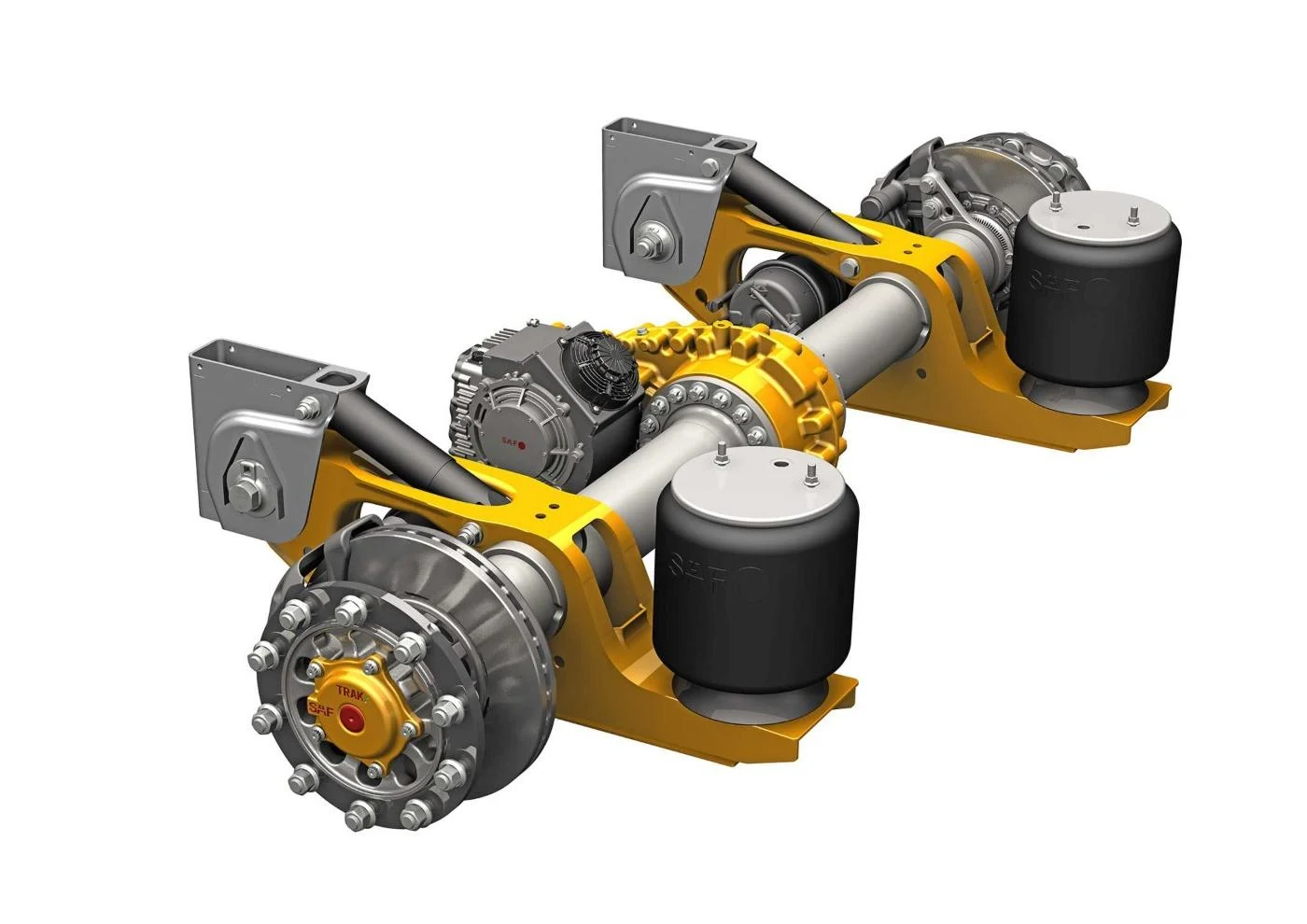
    Air suspension system on a semi-trailer axle that filters road vibrations and maintains constant tire contact with the ground for improved stability and ride comfort.

    Air suspension filters vibration and ensures constant road contact.

    🛡️ 1. Vibration Protection

    The Problem: Steel leaf springs transmit harsh road vibrations directly to the axle. This can shake precise caliper mechanisms loose, causing seizing.

    The Solution: Air bags act as a damper, filtering out vibrations and extending caliper life.

    🛑 2. Eliminating "Wheel Hop"

    Physics: When braking hard on a bumpy road, steel springs make the axle "hop." A bouncing tire has zero friction.

    The Solution: Air suspension keeps the tire firmly planted on the asphalt, ensuring 100% braking power.

    ⚖️ 3. Load Equalization

    Air suspension instantly equalizes weight across all axles. This ensures no single disc brake is overloaded, preventing rotor cracking due to heat stress.


    Summary: Calculate Your ROI

    Upgrading your trailer configuration is cheaper than buying a new truck, and it pays for itself.

    Feature The Real Benefit (ROI)
    Trailer EBS 1. Shorter Stops: Up to 20m less at 80km/h.
    2. Wear Control: Balances pad wear for single-stop maintenance.
    3. Stability: Includes Anti-Rollover (RSS).
    Air Suspension Protects sensitive calipers from vibration damage & prevents tire hopping.
    ISO 7638 Cable Free but Critical. Ensure your drivers plug it in!

    By choosing Disc Brakes + EBS + Air Suspension, you are building a trailer that is safer, lasts longer, and commands a higher resale value.

    Ready to spec your premium trailer?

    Don't guess. Let Kales Vehicle experts configure the perfect axle and suspension package for your specific road conditions.


    📱 Chat with Kales Experts (WhatsApp)

  • Disc Brakes vs. Drum Brakes: The Ultimate Guide for Fleets

    Disc Brakes vs. Drum Brakes: The Ultimate Guide for Fleets

    “I heard disc brakes are safer, but they cost thousands more?”
    “Are disc brakes too fragile for heavy loads?”
    “Is the upgrade really worth the investment?”

    In recent years, "Disc Brakes" have become a buzzword in the logistics industry. With stricter international safety regulations, more new trucks and premium trailers are coming standard with disc brakes. However, many fleet owners still have doubts: Are they really that good? Or are they just an expensive trend?

    Today, we provide a no-nonsense, technical breakdown. We will clarify the advantages, disadvantages, and determine if this investment is worth your money.


    1. What is the Difference? "Clamping" vs. "Expanding"

    To understand which is better, we must look at how they work.

    🛠️ Drum Brakes: The Classic Standard

    The brake drum rotates with the wheel. When braking, internal pistons push the brake shoes outward to rub against the inner wall of the drum.
    Features: Low cost and traditional design. Because brake shoes are durable and provide high braking torque at the same diameter, they remain the top choice for heavy-duty off-road transport.

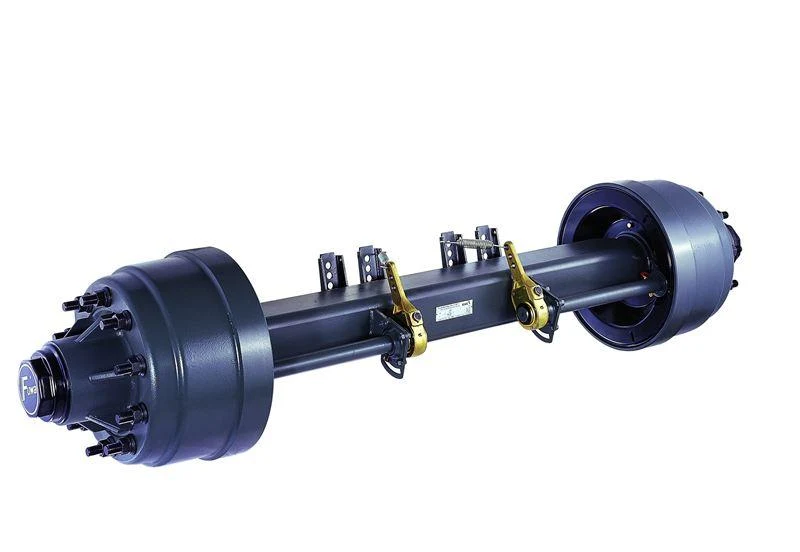
    Kales American-type 13-ton drum brake semi-trailer axle for heavy-duty transport

    ⚙️ Disc Brakes: The Modern Standard

    The brake disc (rotor) rotates with the tire. When braking, the caliper clamps the brake pads against the disc from both sides to generate friction.
    Features: Rapid development. They are now standard on dangerous goods transport and high-end logistics vehicles worldwide.

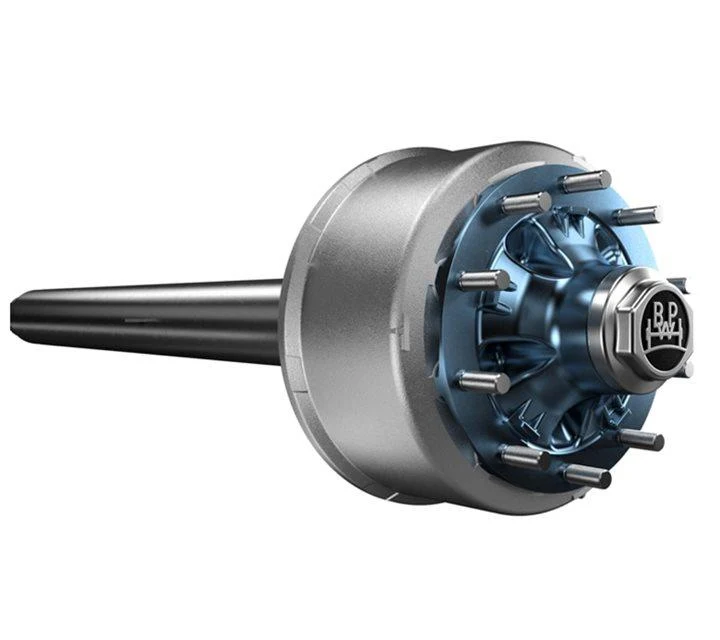
    Kales American-type 13-ton disc brake semi-trailer axle for standard freight trailers


    2. Why Are Regulations Pushing for Disc Brakes? 4 Key Advantages

    Compared to drums, disc brakes offer a quantum leap in safety:

    1. Faster Response (Essential for ABS/EBS)

    Disc brakes respond instantly, allowing for high-frequency braking actions. This makes them perfectly compatible with ABS (Anti-lock Braking System) and EBS (Electronic Braking System). On wet roads, this prevents jackknifing and side-slipping effectively.

    2. Resists "Heat Fading" & Stable Pedal Feel

    Drum Brake Pain Point: Under continuous braking, the drum heats up and expands (diameter increases). The brake shoes can lose contact with the drum surface, causing brake failure (Heat Fade).
    Disc Brake Advantage: Excellent heat dissipation. Even if the disc expands due to heat, it expands in thickness, not away from the pads. Braking force remains stable, and pedal travel does not increase dangerously.

    3. Balanced Braking Force (No Veering)

    Drum brakes have a "self-energizing" effect which can lead to uneven braking force between left and right wheels. Disc brakes provide linear and equal braking force on both sides, keeping the vehicle stable during emergency stops.

    4. Visual Maintenance & Automatic Adjustment

    Disc brakes come with automatic gap adjustment mechanisms, reducing manual labor. Brake pad thickness is visible without dismantling the wheel hub, eliminating "hidden wear" risks.


    3. The Financials: TCO (Total Cost of Ownership) Analysis

    Many truckers are scared off by the initial cost. Let's calculate the real ROI.

    Initial Investment Upgrading a 3-axle trailer to Disc Brakes + Air Suspension
    Approx. cost increase: ~$5,500 USD

    💰 Hidden Profits (ROI):

    1. Weight Savings (More Cargo):
    Disc axles are lighter than drum axles. A 3-axle setup saves about 150kg.

    • 📝 Calculation: Based on 150,000 km/year operation:
    • Extra cargo revenue can amount to ~$1,000+ USD per year.
    • In 3 years, you earn back ~$3,000 USD just on weight.

    2. Maintenance Savings (Less Downtime):
    Faster Changes: Disc pads take 30 mins to change; Drums take half a day. Time is money.
    Tire Life: Disc brakes + Air suspension ensure even tire wear. Saving 20% on 22 tires/year saves at least ~$800 - $1,200 USD/year.

    Conclusion: While the upfront cost is higher, through fuel savings, extra cargo, and tire longevity, you typically break even in 2-3 years, while enjoying superior safety.


    4. The "Enemies" of Disc Brakes: Know the Limitations!

    Disc brakes are advanced, but they require proper usage.

    ⚠️ 1. Lower Absolute Braking Torque

    At the same size, drum brakes provide higher absolute stopping torque. For severely overloaded vehicles, drums are still "stronger."
    Solution: Disc brakes MUST be used with auxiliary braking systems (Retarders/Engine Brakes). Relying solely on friction brakes for heavy loads will wear them out quickly.

    ❌ 2. Fatal Mistake: Thermal Shock (Water Cooling)!

    This is the disc brake's biggest weakness.

    • Physics (Quenching Effect): Brake discs are cast metal. If a red-hot disc (400°C+) is suddenly sprayed with cold water (a common habit in some regions), it will shrink instantly and crack or shatter.
    • Mud & Dirt: In muddy mining sites, gravel can get trapped in the open caliper, acting like sandpaper. Use drum brakes for construction sites.

    5. Avoid Pitfalls: Matching Tractor & Trailer

    If you feel a "pushing" sensation or "soft brakes," the issue might not be the disc brakes, but a mismatch between the Tractor and Trailer braking systems.

    🚛 Braking System Compatibility Table

    Tractor Config Trailer Config (Disc) Match Effect
    EBS + Disc EBS + Disc ★ Best ★
    ABS + Disc EBS + Disc ★ Best ★
    EBS + Disc ABS + Disc Medium
    ABS + Drum ABS + Disc Poor
    ABS + Drum EBS + Disc ❌ Very Bad ❌

    💡 Expert Note: Mixing an old Drum Brake Truck with a new Disc Brake Trailer often causes response lag. Consult a professional for valve adjustment.


    6. Practical Guide: Daily Use & Maintenance

    1. The 3 Golden Rules

    • 🚫 NO Water Cooling: Do not spray water on hot discs. They will crack.
    • 👀 Visual Check: Inspect the open caliper structure daily for debris or cracks.
    • 💧 Drain Air Tanks: Drain water from air tanks every 2 weeks to protect the valves.

    2. Maintenance Standards

    ⚠️ The Red Line: 2mm

    Kales experts advise: When brake pad friction material wears down to 2mm, replace immediately!
    Also replace if you see: Glazing (shiny surface), Cracks, or Oil contamination.

    🛠️ Axle Maintenance Tip

    Axle Care: Don't forget to grease the axle hubs annually.
    💡 Want less hassle? Choose Kales 13-Ton Disc Brake Axles. They come with specialized long-life lubrication, offering longer maintenance intervals and better stability.


    7. Summary: Who Should Switch?

    Should you upgrade? Find your scenario:

    • Highly Recommended: Standard Load Transport, Express Logistics, Dangerous Goods, High-Value Cargo (Electronics/Cold Chain).
    • Use Caution: Severe Overloading, Mining/Off-road sites, or drivers who refuse to use Retarders.

    ❓ FAQ

    Q: How often should I change disc brake pads?
    A: It depends on usage. For standard highway logistics, front axle pads last 100k-150k km, trailer pads 80k-120k km. Using a retarder can extend this to 200k+ km.

    Q: Can I put disc brakes on leaf spring suspension?
    A: Technically yes, but Air Suspension is strongly recommended (and often legally required) with disc brakes to reduce vibration damage to the precise caliper mechanisms.

    Q: I see small cracks on the rotor. Should I change it?
    A: Hairline heat cracks on the surface are normal. However, if cracks extend to the edge or are deeper than 1.5mm, replace the rotor immediately to prevent shattering.

    Need a specific trailer configuration or quote?

    Our team can calculate the TCO for your specific route.
    📱 Chat with Kales Experts (WhatsApp)

  • Is Your Trailer Safe? The Ultimate Guide to ABS, EBS, and Anti-Rollover Systems

    Is Your Trailer Safe? The Ultimate Guide to ABS, EBS, and Anti-Rollover Systems

    Common Questions from Fleet Managers:

    "My tank trailer has EBS; does that mean it brakes automatically?"

    "Is standard ABS enough? Why do I need RSS (Roll Stability)?"

    "Does the trailer need to support AEBS, or is that just for the tractor truck?"

    If you think a semi-trailer is just a "passive metal box" being dragged behind a truck, think again.

    In modern intelligent transport systems, the trailer's own safety systems—especially the braking architecture—directly determine whether the entire combination can stop safely, stay stable, or actively avoid accidents in critical moments. As a professional semi-trailer manufacturer, Kales Vehicle is here to walk you through ABS, EBS, RSS, and AEBS, clarifying their relationships, capabilities, and common misconceptions.


    1. The Foundation: ABS — Anti-Lock, Steering Control

    ABS (Anti-lock Braking System) is currently the mandatory standard for trailers in many regions. Fundamentally, it is an extension of the pneumatic braking system that allows for electronic intervention.

    Core Function:During emergency braking, ABS monitors wheel speed to prevent trailer wheels from locking up. Once a wheel locks, the tire loses lateral grip, causing the trailer to slide, swing, or even lead to a catastrophic Jackknife accident.

    The image on the right visually compares tire marks under three conditions:

    • Rolling: Clear tread pattern, reliable steering control.
    • ABS Active: Dotted/intermittent marks, "brake-and-roll", directional control maintained.
    • Locked-up: Solid dark skid marks, total loss of control.
    A technical diagram comparing tire marks on pavement, showing clear tread prints for normal rolling, faint intermittent scuff marks for ABS braking, and solid dark rubber streaks for locked wheel skidding.
    Fig 1: Tire Mark Comparison: A. Rolling vs B. ABS Active vs C. Locked Wheel

    Principle & Advantages:

    The driver's braking action is transmitted pneumatically via the foot valve. Wheel speed sensors are installed on key axles (typically 2S/2M or 4S/2M configurations). When the system detects an impending lock-up, the modulator valve rapidly adjusts air pressure, achieving a "rapid pulsing" effect several times per second.

    • Simple Control Principle: Adds electronic monitoring to traditional air lines. Low cost and easy maintenance.
    • Foundation for Expansion: This logic forms the hardware platform for advanced functions like ESP (Electronic Stability Program).
    A schematic diagram illustrating the principle of a typical semi-trailer 2S/2M Anti-lock Braking System, showing the configuration of two wheel speed sensors and two pressure modulators
    Fig 2: Typical Semi-Trailer 2S/2M ABS System Schematic1. ISO 7638 Power Supply 2. Service Line 3. Supply Line 4. Stop Light Power (ISO 1185, Optional) 5. TEBS Modulator (with pressure sensors) 6. Park Release Emergency Valve (PREV) 7. Overflow Valve 8. Service Brake Reservoir 9. ABS Speed Sensor 11. Suspension Air Bag 12. Spring Brake Chamber. (Lines represent cable and pipe connections)

    ⚠️ Expert Tip: The primary goal of Trailer ABS is to prevent loss of control, not necessarily to shorten braking distance. For long-wheelbase, high-center-of-gravity trailers, it is the absolute baseline for safety.

    2. Advanced Guardian: Rollover Prevention (RSS/RSP/RSC)

    In the realm of "Intelligent Trailers," the anti-rollover system is the true game-changer. Although manufacturers use different names, the core objective is identical:

    • RSS (Roll Stability Support) —— ZF / WABCO
    • RSP (Roll Stability Program) —— Knorr-Bremse
    • RSC (Roll Stability Control) —— Haldex

    1. Why do trailers roll over?

    According to the ECE R111 standard, a rollover becomes a critical risk when lateral acceleration reaches approximately 0.4G. For trailers carrying liquids, hanging meat, or unevenly distributed loads, this threshold is even lower.

    kales Trailer Roll Stability Control Logic Diagram showing intervention flow
    Fig 3: RSS Logic: The system actively applies brakes to specific wheels to counteract rollover forces.

    2. How does it react faster than a human?

    This system relies on physics and algorithms, not driver reaction time. Here are the two mainstream working logics:

    🔵 WABCO RSS 3-Stage Logic

    • Stage 1 (Warning @ ~0.2G): Applies light braking (approx. 2 bar). Purpose: Test wheel grip and pre-charge the system, not to decelerate.
    • Stage 2 (Strong Intervention @ ~0.3G): If lateral force increases, the system brakes hard to forcibly reduce speed.
    • Stage 3 (Correction): Applies higher brake pressure to the inner wheels of the curve to prevent the trailer from straightening out abruptly, guiding it through the turn.

    🟠 Knorr RSP Smart Logic

    Test Pulse: When rollover risk is detected, the system sends a tiny brake signal to check if the "inner wheels" slow down.

    If they slow down, they have grip. If they do NOT slow down, it means the wheels are about to lift off (slip), and the system immediately identifies high risk and applies full braking.

    3. A Warning for Fleets and Drivers

    🚨 System Activation = Near Miss Event

    If the driver feels the trailer "tugging" back, or the telematics system reports an RSS activation, take it seriously:

    • Without this system, the vehicle might have already rolled over.
    • It is a severe warning regarding driving behavior (cornering too fast) or load distribution (CG too high).
    • Mandatory Check: Frequent activation increases wear. Always check brake linings and suspension systems.

    3. EBS: Making Braking "Fast, Precise, and Stable"

    EBS (Electronic Braking System), also known as Brake-by-Wire, is not a single function but a powerful electronic control platform. It integrates sensors and actuators, often deeply linked with the air suspension.

    Schematic diagram showing a semi-trailer Electronic Braking System (EBS) integrated with conventional air suspension control components.
    Fig 4: EBS Braking System Schematic Integrated with Air Suspension1. ISO 7638 Power Supply 2. Service Line 3. Supply Line 4. Stop Light Power (Optional) 5. Pneumatic Extension Module (PEM) 6. Overflow Valve (Integrated) 7. Charging Valve (Integrated) 8. Service Brake Part 9. Spring Brake Chamber 10. Service Reservoir 11. Air Suspension Reservoir 12. Raise/Lower Valve 13. Red Button (Park) 14. Black Button (Release) 15. Air Bag 16. Lift Axle Valve 17. Levelling Valve 18. ABS Sensor 19. TEBS Modulator 20. PREV.

    1. How it works: From "Blowing Air" to "Digital Signals"

    Traditional air brakes rely on the foot pedal to control air flow physically. EBS uses a pedal position sensor to detect the driver's braking intent. The control unit calculates the required brake pressure for each axle based on speed, load, and wheel speed.

    This information is transmitted via the CAN Bus to the Electro-Pneumatic Modulator (EPM), which adjusts pressure directly near the wheels. This eliminates the delay caused by long pneumatic lines.

    2. Hidden Benefits of Modern EBS

    Modern EBS (like systems used by Kales Vehicle) typically uses a modular design, integrating the ECU, sensors, and pneumatic control into one compact component, simplifying the trailer chassis layout.

    🔍 The "Invisible Bonuses" of EBS: Not just fast, but smart

    • Coupling Force Control (CFC): The system optimizes the braking timing and force between the tractor and trailer, preventing "trailer push" or "tugging," making the combination drive more smoothly.
    • Brake Blending: Intelligently distributes deceleration intent between endurance braking (like retarders) and service braking (pads), extending brake pad life.
    • Lining Wear Control: Automatically adjusts braking force distribution across axles to ensure even wear on all brake pads, simplifying fleet maintenance.
    • Multi-Function Integration: Modern EBS modules often integrate Lift Axle Control (LAC), RSS, dynamic wheelbase control, TPMS, and overflow valves, eliminating the need for complex external plumbing.

    Comparison Summary:

    Feature Traditional ABS (Pneumatic) Smart EBS (Electronic)
    Signal Transmission Air Pipes (Slow) CAN Bus Signal (Light Speed)
    Response Delay 0.3 ~ 0.6 Seconds Almost Zero Delay
    Functionality Anti-lock Only Lift Axle, Wear Balance, Coupling Control

    4. AEBS Synergy: The Danger of "Lag"

    Although AEBS (Advanced Emergency Braking System) decisions are made by the tractor's radar and camera, the trailer's execution capability is critical.

    • Trailer with Standard ABS only:
      When the tractor triggers a violent AEBS stop, the trailer reacts with a pneumatic lag. The massive inertia of the trailer pushes the tractor forward. This extends braking distance and causes a dangerous "Pushing Effect," potentially leading to loss of control.
    • Trailer with EBS:
      As the tractor brakes, the trailer receives the signal via the ISO 11992 interface (or ISO 7638) instantly. It applies full braking force with zero delay, creating a "Stretching Effect" that keeps the entire vehicle combination straight and stable.

    5. The Pyramid of Trailer Intelligent Braking

    [Visual: Imagine a Pyramid Structure]

    Fig 5: Hierarchy of Intelligent Safety Technology

    L1 FoundationABS
    Legal Baseline
    L2 PlatformEBS
    Electronic Brain
    L3 AdvancedRSS + AEBS
    Active Safety

    6. Advice for Fleet Managers and Buyers

    As a professional trailer manufacturer, Kales Vehicle suggests considering the following:

    1. Think Long Term: Choose EBS/RSS

    If you transport liquids (tank trailers), livestock, or high-value cargo, we strongly recommend EBS with RSS. While the initial cost is higher, preventing just one rollover accident covers the cost many times over.

    2. Don't Ignore the "ISO 7638" Cable

    A Fatal Blind Spot for Drivers! The trailer's ABS/EBS system MUST be powered and communicate via the ISO 7638 Coiled Cable (the thickest plug).

    If unplugged or damaged, the most advanced EBS becomes "brain dead," reverting to an old-school air brake with NO anti-lock or anti-rollover protection. Always check before driving.

    ISO 7638 Connection

    3. Tractor-Trailer Compatibility

    When buying, check if the spec sheet confirms "EBS Supported" and "RSS/RSP Functionality." Even if your tractor truck is state-of-the-art, an outdated trailer braking system will compromise the safety of the entire rig.


    Conclusion: Safety is the Biggest ROI

    In the era of intelligent transport, the trailer is no longer a silent partner. Don't just look at volume and price; ask: "Is the braking system smart enough?"

    Kales Vehicle is dedicated to providing the safest, most durable semi-trailer solutions for global clients.

    Contact Our Technical Team

  • The Ultimate Guide to Bulk Powder Tanker Semi Trailers: Operation, Maintenance & Specs

    The Ultimate Guide to Bulk Powder Tanker Semi Trailers: Operation, Maintenance & Specs

    In the heavy transport industry, efficiency is king. Whether you call it a pneumatic dry bulk trailer, a cement bulker, or a "silobas," choosing the right equipment and operating it correctly is crucial for profitability. As a leading manufacturer exporting to Africa, Latin America, and Central Asia, Kales Vehicle Co., Ltd. presents this comprehensive guide to mastering your bulk powder tanker semi trailer.


    4-Compartment 58m³ Powder Tanker trailer 58CBM Bulk Powder Transport trailer for sale
    Kales 3-axle bulk powder tanker semi trailer for cement transport ready for export.

    1. Why Choose Kales Pneumatic Dry Bulk Trailers?

    Designing trailers for rough terrain requires more than just steel; it requires engineering precision. Kales trailers are built to withstand the harsh road conditions of mining regions while delivering high-speed unloading.

    • ⚡ Fast Unloading Speed: Achieves 1.2–1.5 tons/minute, significantly reducing waiting time at the construction site.
    • 📉 Ultra-Low Residue: Our advanced fluidized bed design ensures a residue rate of <0.1%, saving you material costs on every trip.
    • 🛠️ World-Class Components: We use globally trusted brands for easy maintenance:
      • Diesel Engines: Reliable Weichai engines for consistent power.
      • Air Compressors: High-performance Bohai or Suzhou compressors (12m³ dual-cylinder).
      • Braking: Genuine WABCO braking systems for safety.
    • 🌍 Reinforced Chassis: Specially strengthened sub-frames and suspension systems designed for African and Central Asian road conditions.

    2. Selecting the Right Bulk Tanker Configuration

    Choosing between a V-shape, Cone-shape, or Tipper depends entirely on your cargo.

    🚛 Type A: Horizontal "V-Shape" Cement Trailer

    Best for: Cement, Fly Ash, Lime Powder.

    • Pros: Low center of gravity provides superior stability on highways. Simple internal structure allows for large capacity (up to 85m³).
    • Cons: Not suitable for coarse materials that don't fluidize well.

    Kales 3 axle 68m³ bulk powder tanker semi trailer for cement transport ready for

    🚀 Type B: Vertical "Cone" Tanker

    Best for: Granules, Fertilizer, Coarse materials.

    • Pros: Gravity-assisted discharge ensures clean unloading of heavier particles.
    • Cons: Higher center of gravity requires careful driving on curves.

    4-Compartment 58m³ Powder Tanker trailer 58CBM Bulk Powder Transport trailer for sale

    🆙 Type C: Tipper (Lift-Type) Powder Tanker

    Best for: Food-grade Flour, PTA, Pharmaceutical Powders.

    • Pros: Zero residue makes it ideal for hygiene-sensitive cargo. Easy to clean internally.
    • Cons: Requires a flat, stable site for lifting to prevent tipping over.

    Kales 3 axle Tipper Lift Type Powder tanker semi trailer for cement transport ready for


    3. Power Source: Diesel Engine vs. PTO

    When ordering your Kales cement trailer, you must decide how to power the air compressor.

    Feature Independent Diesel Engine PTO (Power Take-Off)
    Flexibility High. Works with ANY truck head. Ideal for logistics companies with mixed fleets. Low. Must be paired with a specific truck head equipped with a PTO gearbox.
    Weight Heavier (Adds approx. 500kg). Lighter (Saves fuel during empty return trips).
    Maintenance Requires separate engine oil/filter changes. Low maintenance (uses truck engine power).

    Diagram of pneumatic conveying system showing air compressor check valve and discharge pipe scaled
    1

    1. Air Compressor、2. Check Valve、3. Front Air Chamber Inlet Valve、4. Safety Valve (0–0.3 MPa)、5. External Air Source、6. Pressure Gauge、7. Middle Air Chamber Inlet Valve、8. Rear Air Chamber Inlet Valve、9. Secondary Blow Valve、10. Front Compartment Discharge Butterfly Valve、11. Rear Compartment Discharge Butterfly Valve、12. Discharge Hose

    4. Standard Operating Procedure (SOP) for Safe Unloading

    Follow this step-by-step guide to ensure safety and prevent damage to the fluidization canvas.

    ⚠️ Critical Safety Rules

    MOISTURE WARNING: Never allow water into the tank or air lines. Wet cement creates concrete blockages that can ruin the tank.
    PRESSURE HAZARD: Never open the manhole cover while the pressure gauge reads above 0 MPa.

    Step 1: Start-Up

    1. Connect the discharge hose to the silo inlet securely.
    2. Close the Pressure Relief Valve and Discharge Butterfly Valve. Open the Air Inlet Valves.
    3. Start the Weichai diesel engine.
    4. Adjust the hand throttle to the rated RPM. (Target: Keep Air Compressor at 850–1000 RPM. Do not over-rev!)
    5. Wait until tank pressure builds to 0.2 MPa.

    Step 2: Unloading

    1. Open the Secondary Blow Valve (Assist Valve) to clear the discharge pipe.
    2. Slowly open the main Discharge Butterfly Valve.
    3. Monitor the pressure. If it drops rapidly, the tank is emptying.

    Step 3: Cleaning & Shutdown

    1. When pressure drops to 0.15–0.10 MPa, alternate opening and closing the front/rear inlet valves. This "sweeping" action clears residue.
    2. Stop the engine. Open the pressure relief valve to release all remaining air before disconnecting hoses.

    5. Troubleshooting: How to Unblock a Cement Tanker Pipe

    A clogged discharge hose is a nightmare for drivers. If your pressure gauge spikes (>0.25 MPa) and discharge stops, follow this emergency procedure.

    The "Pulse" Technique (Emergency Unblocking)

    1. STOP: Do not increase the throttle; this will pack the powder tighter.
    2. CLOSE: Close the main Discharge Butterfly Valve.
    3. BLAST: Open the Secondary Blow Valve fully to blast air through the hose.
    4. PULSE: Quickly open and close the Discharge Butterfly Valve. The sudden pressure bursts often dislodge the blockage.
    5. MANUAL: If this fails, stop the engine, release ALL pressure, and physically check the rubber hose. A hard section indicates the clog.

    6. Maintenance Guide for Rough Roads

    To extend the life of your dry bulk trailer in Africa or Central Asia, pay attention to these often-overlooked areas.

    ✅ Chassis & Suspension

    • U-Bolts: Retighten leaf spring U-bolts every 5,000 km. Loose bolts are the #1 cause of suspension failure on dirt roads.
    • Cushion Pads: Inspect the rubber pads between the tank body and chassis. Worn pads lead to metal-on-metal stress cracks.

    ✅ Fluidization System

    • Canvas Life: The breathable belt inside the tank usually lasts 1–2 years. If unloading slows down, replace it.
    • Water Separator: Drain the air compressor tank daily. Moisture is the enemy of the fluidization belt.

    Ready to Upgrade Your Fleet?

    Kales Vehicle Co., Ltd. delivers durable, high-performance transport solutions tailored to your market. Contact us today for technical diagrams and a custom quote.

    Get a Free Quote   View Product Catalog