Fuel Tanker Trailer Product Guide | Published: August 3, 2026 | Updated: August 3, 2026 | By KALES Vehicle Engineering Team | Reviewed by KALES Export Sales Engineering | Market focus: East Africa, Southern Africa, West Africa, and cross-border fuel distribution
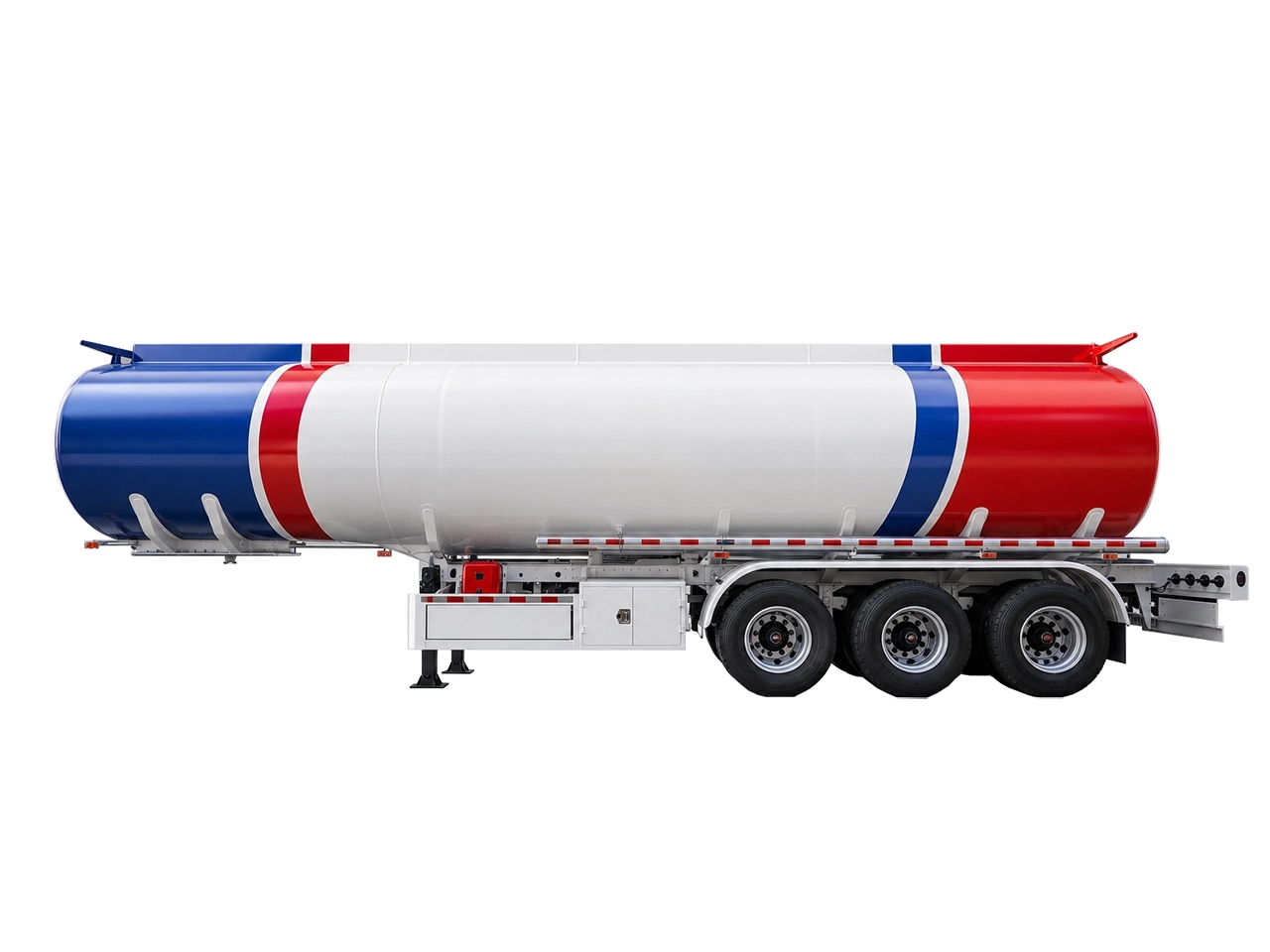
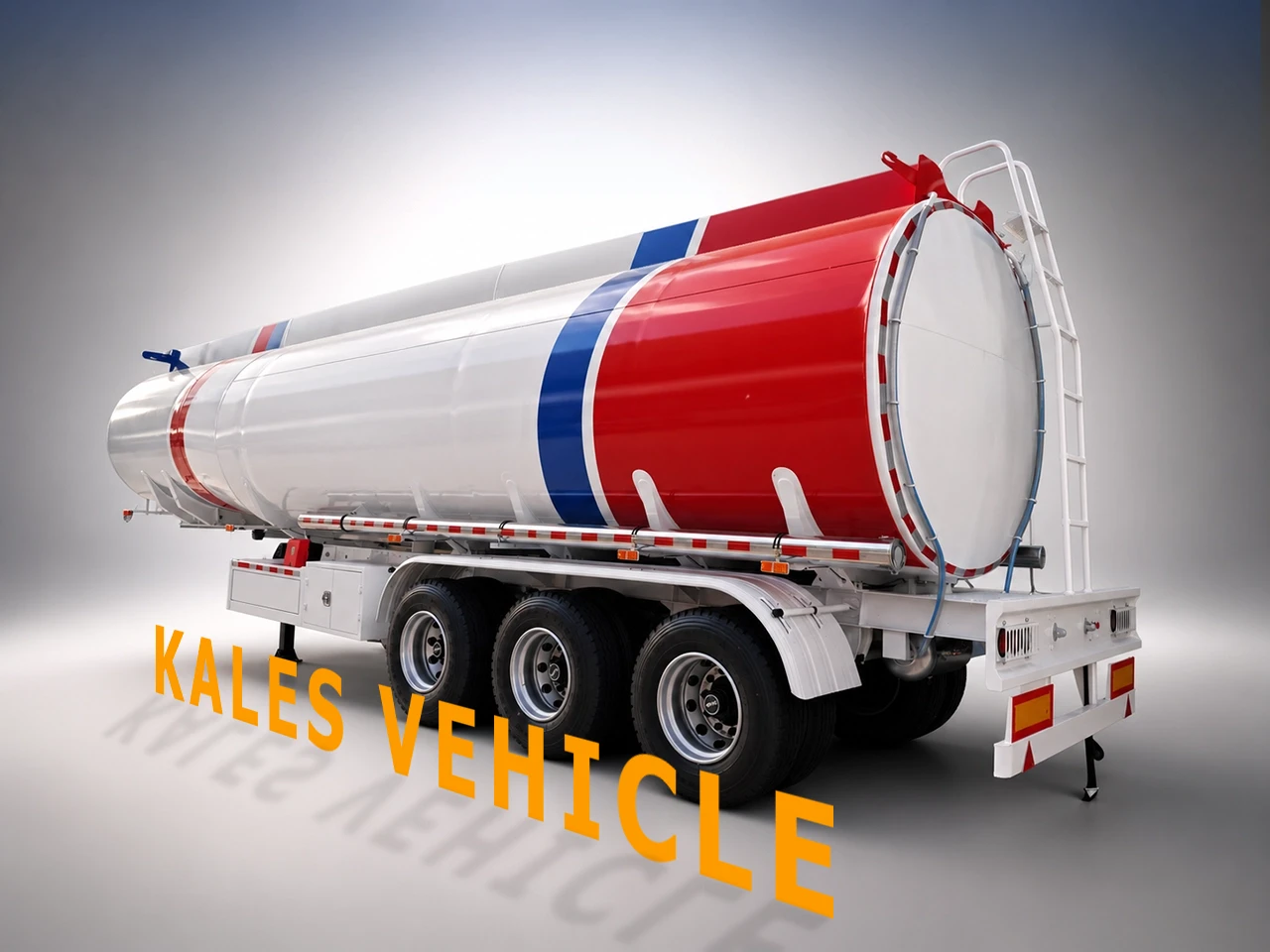
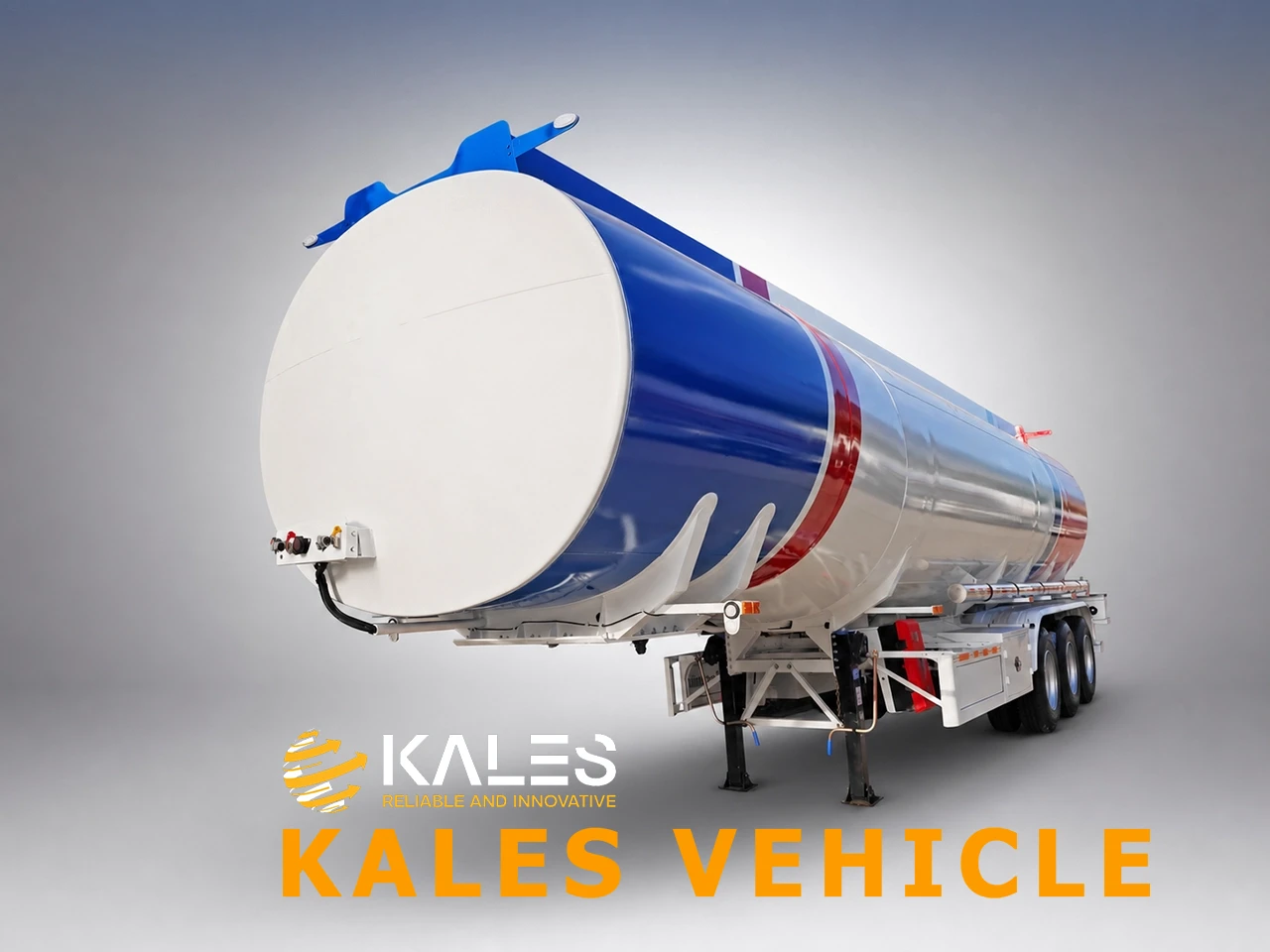
KALES 45,000L three-compartment fuel tanker trailer: this tri-axle split-type oil tanker is designed for high-volume road distribution of petroleum products and other approved liquid cargoes. The reference configuration combines a 45,000L tank, three independently loaded compartments, a Q355 high-strength carbon-steel tank body, emergency shut-off equipment, and a detachable tank-and-chassis layout that can simplify overseas shipping.
This product brief is prepared by the KALES Vehicle trailer engineering and export teams. Final tank material, cargo approval, axle load, braking package, and country documentation must be confirmed in the signed technical agreement before production.
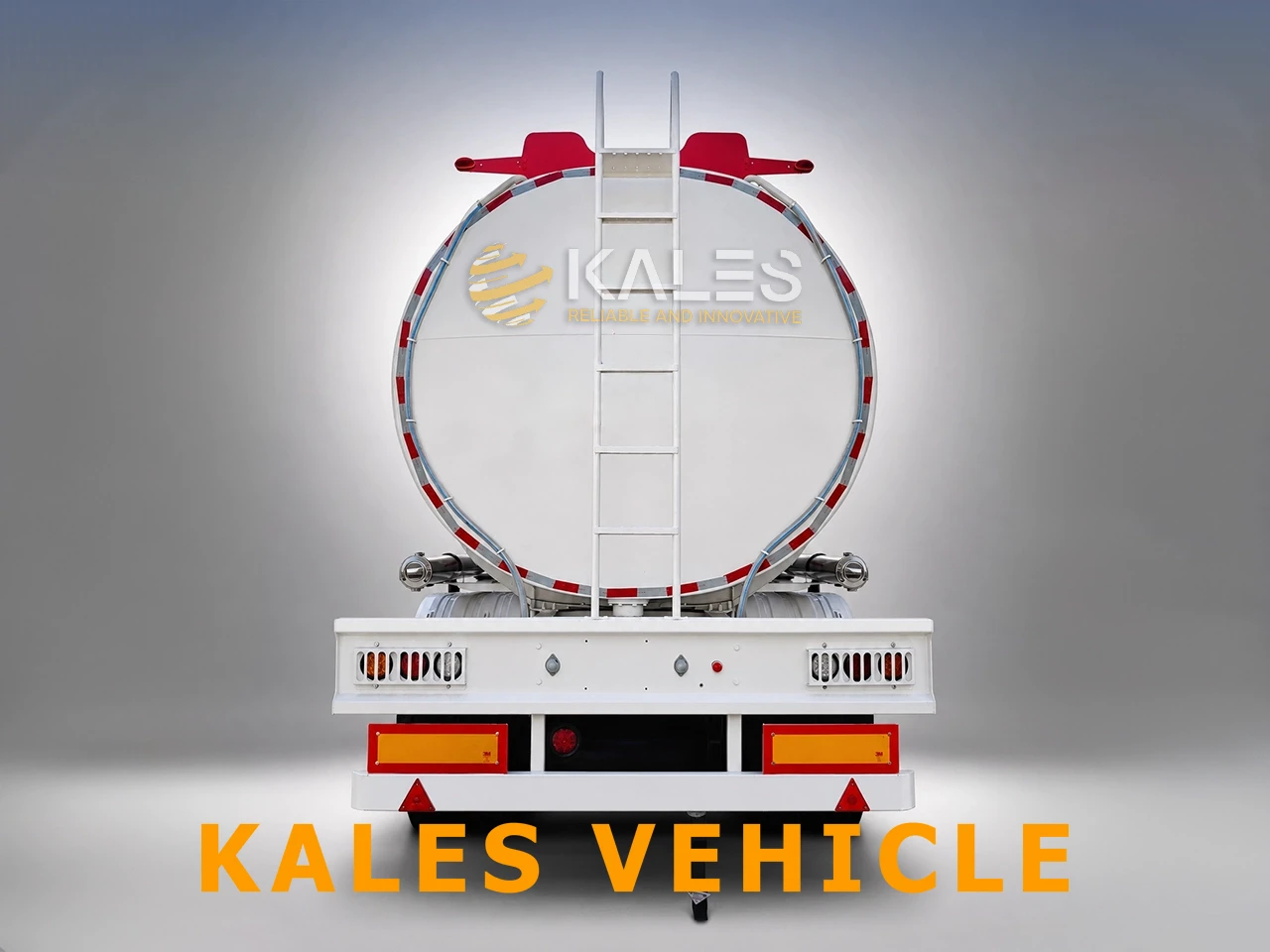
Quick answer: choose this 45,000L three-compartment fuel tanker trailer when a fleet needs to carry different petroleum products on one route, unload each compartment independently, and ship the tank and running gear in separate packages. The reference build uses three compartments, approximately 13,000 x 2,600 x 3,950 mm overall dimensions, 6 mm tank-wall steel, 8 mm head plates, three emergency shut-off valves, internal anti-surge baffles, and three axles. Actual legal payload and equipment depend on liquid density, axle limits, tractor compatibility, and the destination country’s rules.
45,000L Fuel Tanker Technical Snapshot
| Product type | Tri-axle, three-compartment split-type fuel tanker semi-trailer |
|---|---|
| Overall dimensions | Approximately 13,000 x 2,600 x 3,950 mm reference configuration |
| Effective tank capacity | 45,000 litres, subject to final tank design and filling limits |
| Compartments | 3 independent compartments with separate loading and discharge arrangements |
| Tank material | Q355 high-strength carbon steel reference build; stainless steel, aluminium, or lined options can be specified for suitable cargoes |
| Tank and head thickness | 6 mm tank wall and 8 mm head reference values, subject to engineering review |
| Manhole covers | 3 European-style explosion-protection manhole covers |
| Emergency shut-off | 3 bottom emergency valves, pneumatic or manual operation according to configuration |
| Overflow protection | 3 level-probe sets, one for each compartment, when included in the selected package |
| Anti-surge protection | Multiple internal baffles to reduce liquid movement during braking, acceleration, and cornering |
| Axles and suspension | 3 FUWA, BPW, or KALES axles; mechanical suspension or air suspension options |
| Tyres | 12R22.5 dual tyres, 12 units, or a 315/80R22.5 single-tyre alternative where approved |
| King pin | 2-inch (50#) or 3-inch (90#) standard king pin selected for the tractor fifth wheel |
| Reference tare and payload | Approximately 8,500-9,500 kg tare and 35,000-36,500 kg payload range; confirm legal values for the final build and route |
| Split-type shipping | Tank body and chassis can be separated for containerized or disassembled ocean transport |
Where This Fuel Tanker Fits African Fleet Operations
The three-compartment layout is intended for fuel distributors, mining support fleets, industrial fuel suppliers, and logistics operators that need controlled multi-product delivery. Separate compartments can reduce the need to send different trailers on the same route, but each compartment must be assigned only to a compatible and approved liquid.
Good fit for
- Petrol, diesel, kerosene, lubricating oil, and other approved petroleum distribution between terminals, depots, mines, and service stations
- Port-to-inland routes from Mombasa, Dar es Salaam, Walvis Bay, Durban, Tema, or other regional gateways after local route and cargo checks
- Cross-border delivery in Kenya, Tanzania, Uganda, Rwanda, Zambia, Ghana, Nigeria, Mozambique, and neighbouring markets when the final package meets each jurisdiction’s requirements
- Operators that need three independent loading and unloading cycles for different grades or delivery destinations
- Export buyers that benefit from shipping the tank and chassis as separate packages and assembling them at destination
Not a universal fit
- Highly corrosive, food-grade, or hazardous chemical cargo without the required tank material, lining, cleaning procedure, and certification review
- Routes where the combined tractor, trailer, cargo density, axle spacing, or gross mass exceeds local limits
- Operations that cannot provide approved loading bays, grounding points, emergency equipment, driver training, and spill-response procedures
Why Buyers Choose a Three-Compartment Split Tanker
- One trailer, three delivery plans: independent compartments support separate products, customers, or unloading sequences when the cargo plan allows it.
- Lower liquid movement: internal anti-surge baffles help moderate surge forces and improve stability; safe speed and loading practice remain essential.
- Export logistics flexibility: separating the tank body from the chassis can reduce shipping volume and simplify destination assembly. Customs treatment and savings vary by country and must be checked with the importer.
- Serviceable running gear: FUWA, BPW, or KALES axle and landing-gear options allow the buyer to match local parts availability and service capability.
- Configurable cargo protection: stainless steel, aluminium, internal lining, vapour recovery, heating, metering, and pump packages can be reviewed for the actual liquid and operating environment.
Safety, Tank, and Chassis Engineering Details
Three independent compartments
Internal partition plates divide the tank into three sections. Each section can be loaded and discharged independently, which supports mixed petroleum grades or staged delivery. The final compartment volume, fill limit, vapour-management method, and compatibility matrix must be stated in the technical agreement rather than assumed from the nominal 45,000L capacity.
Manholes, valves, and overflow control
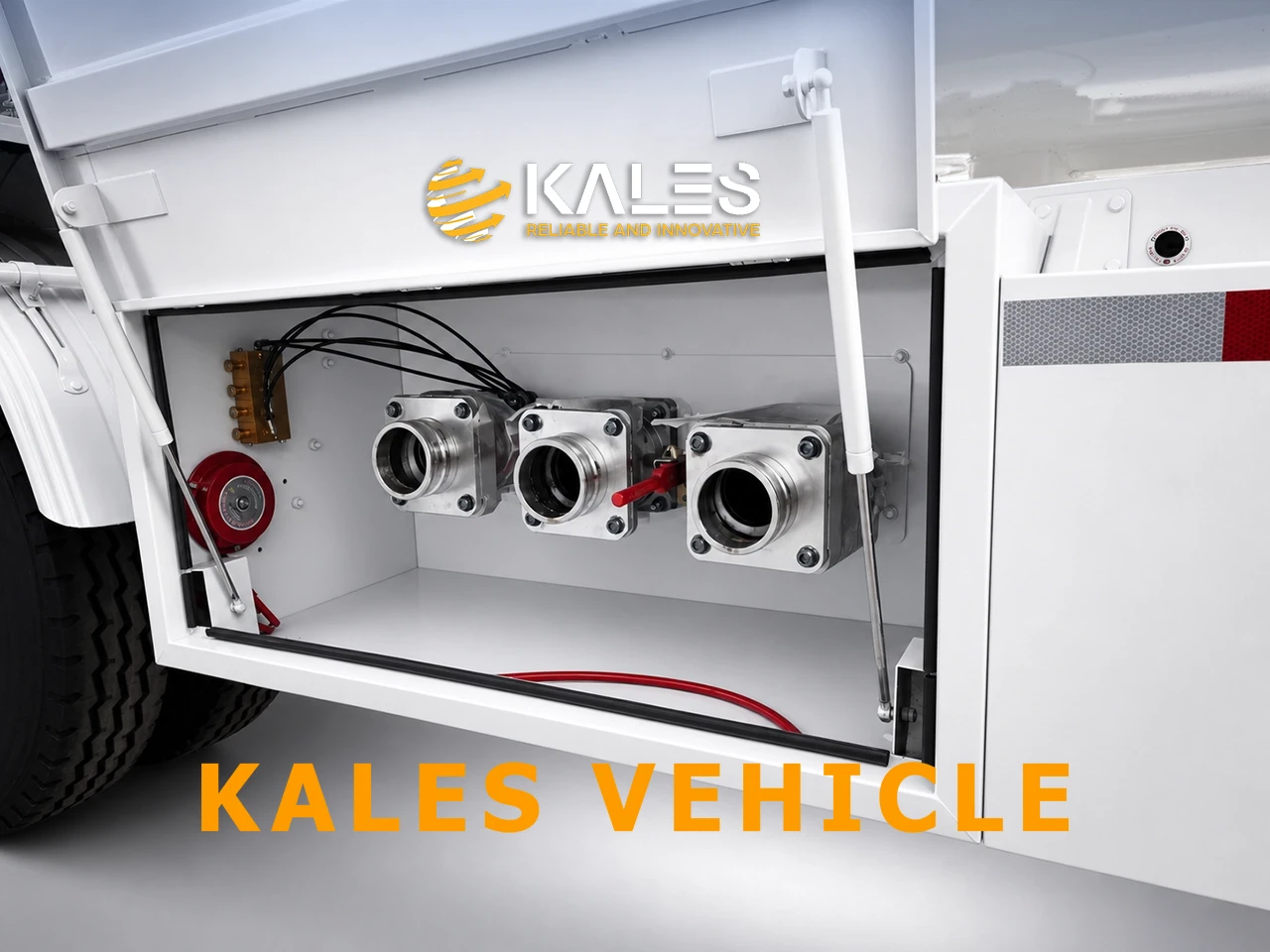
Each compartment can receive a European-style explosion-protection manhole cover with breathing and pressure-relief functions appropriate to the selected cargo system. Bottom emergency shut-off valves are intended to isolate flow after a serious incident, while level probes can help stop filling before overflow. Operators still need a written loading procedure, grounding check, inspection routine, and emergency response plan.
Grounding, fire equipment, and anti-surge baffles
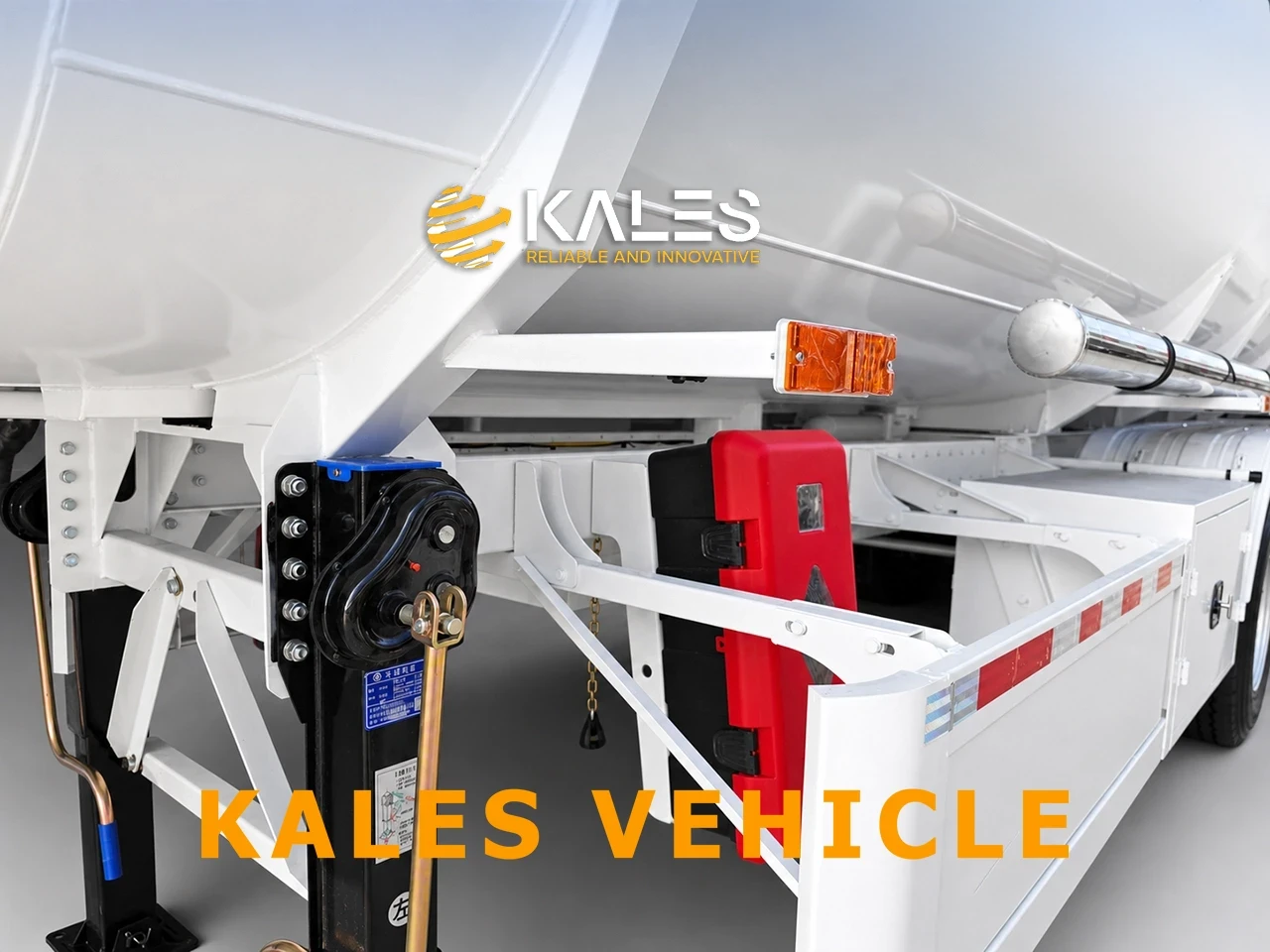
The reference package includes a tank-to-chassis static-grounding connection, two dry-powder extinguishers, an exhaust flame arrestor where specified, and multiple internal anti-surge baffles. These features support safe operation but do not replace site risk assessment, compatible transfer hoses, correct placarding, or local fire and dangerous-goods rules.
Pressure and weld inspection
KALES can arrange factory leak testing, weld inspection, dimensional checks, and delivery documentation according to the agreed inspection plan. The inspection method, test pressure, non-destructive testing scope, and report format must be confirmed before fabrication; this page does not claim a universal certification or a fixed test result.
Split chassis and overseas assembly
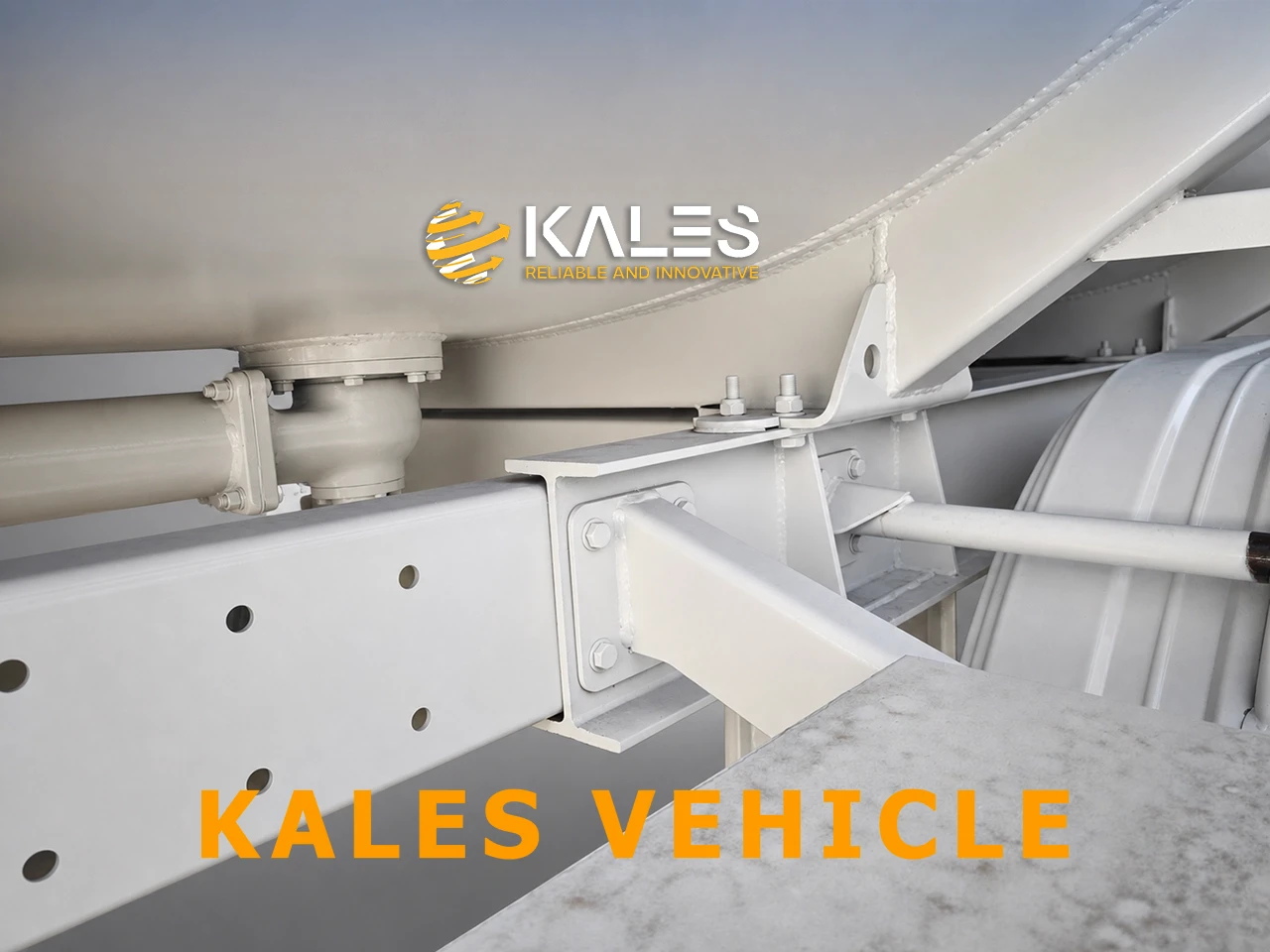
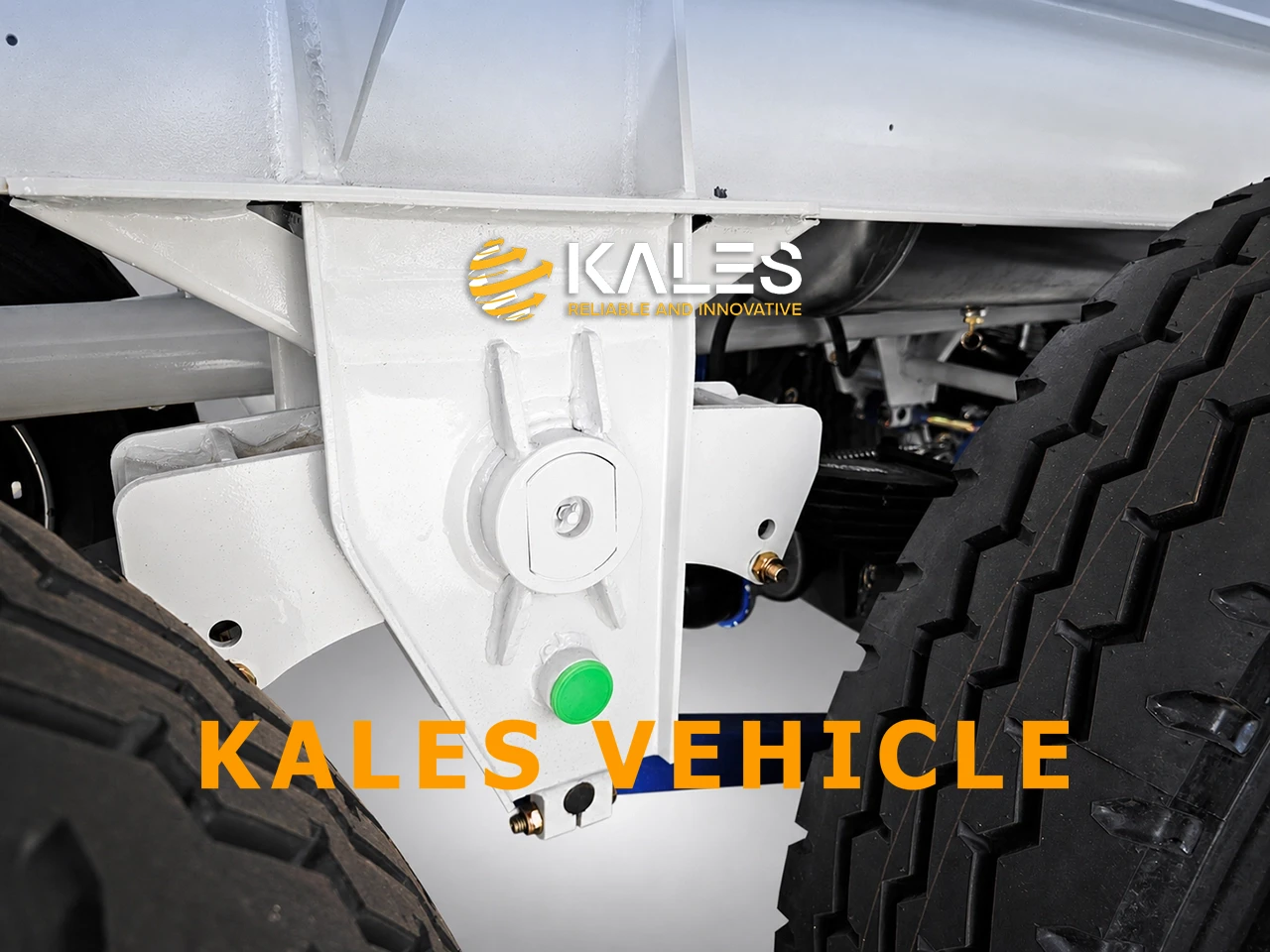
The tank body and chassis are joined with high-strength bolts and locating features so they can be separated for transport and reassembled at destination. A typical assembly requires suitable lifting equipment, torque-controlled tools, grounding continuity checks, valve and hose checks, brake and lighting tests, and a final roadworthiness inspection. KALES should confirm the assembly drawings and tool list for the buyer’s site.
Africa procurement checklist
- Confirm each liquid, density, flash point, compatibility requirement, and compartment allocation.
- Check national and corridor rules for gross mass, axle loads, dimensions, dangerous-goods marking, fire equipment, and driver training.
- Match the king pin, fifth-wheel height, electrical connector, brake system, tyre size, and suspension to the tractor and local workshops.
- Specify the unloading valves, hoses, vapour recovery, pump, meter, grounding cable, and spill-control equipment required at the loading and delivery sites.
- Request the final drawing, material schedule, inspection plan, spare-parts list, assembly instructions, and delivery scope before signing the order.
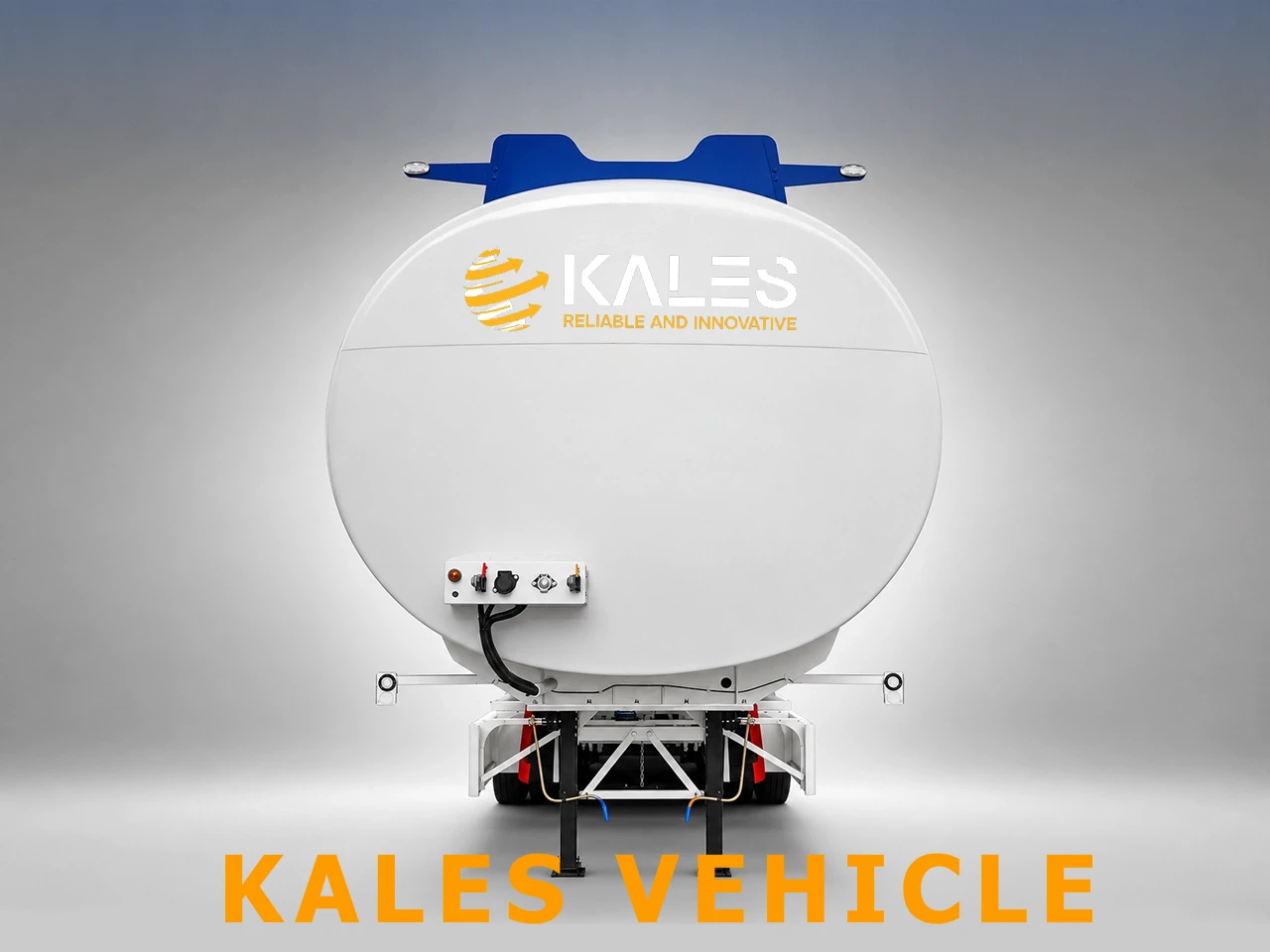
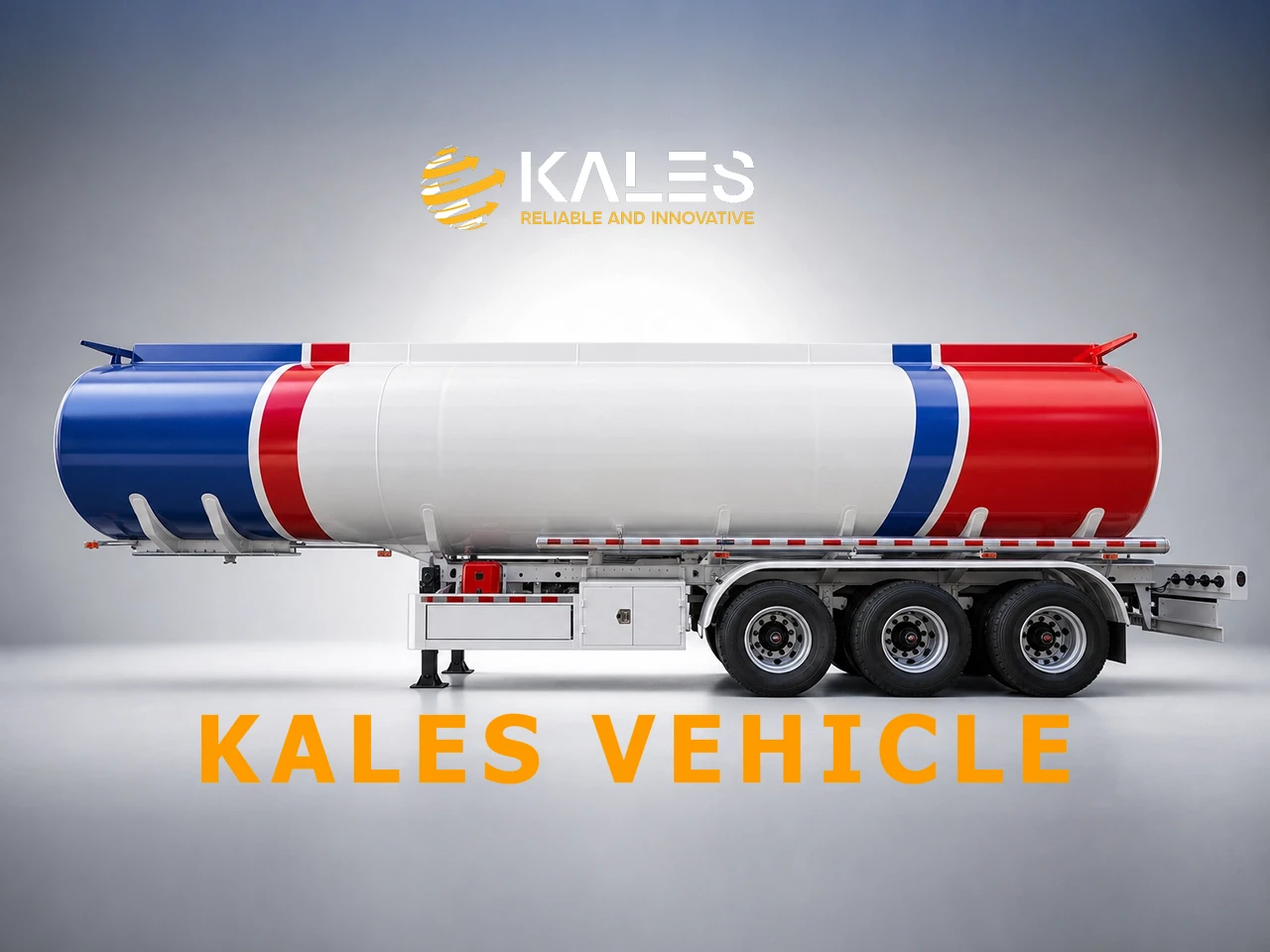
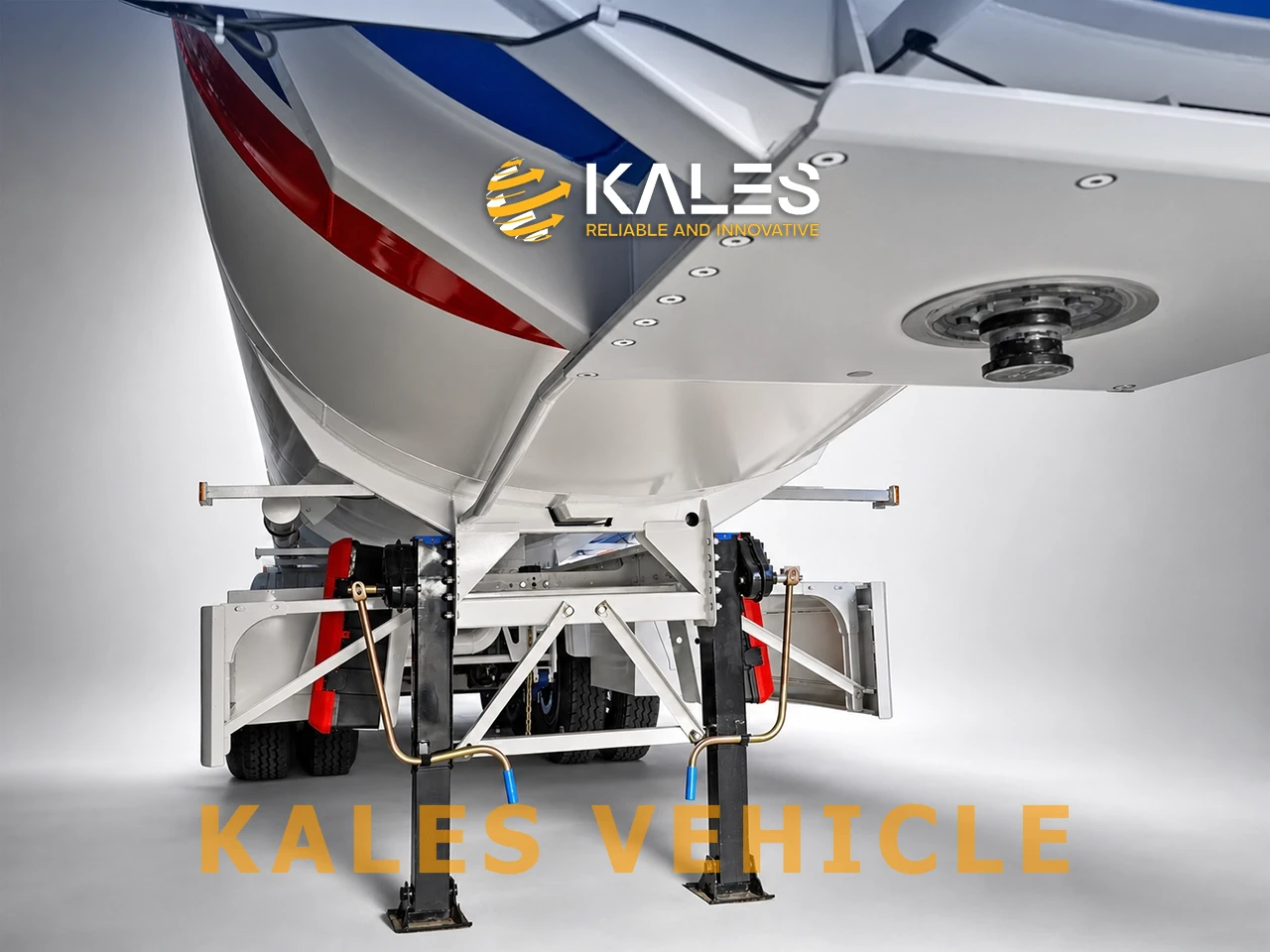
Inspection Views of the 45,000L Split-Type Tanker
Frequently Asked Questions
Can the three compartments carry different fuels?
They can be assigned to different compatible products when the tank material, seals, valves, loading procedure, cleaning plan, and local rules allow it. The final compartment matrix should be approved before production.
What is the legal payload of the 45,000L tanker?
The supplied reference range is approximately 35,000-36,500 kg payload, but legal payload depends on liquid density, tare weight, axle limits, gross vehicle weight, and the destination route. The signed technical agreement is the controlling document.
Is the split design suitable for shipping to Africa?
The detachable tank-and-chassis layout is intended to support separate-package ocean transport and destination assembly. Container dimensions, lifting equipment, customs treatment, and assembly scope must be confirmed for the chosen port and inland route.
Can the tanker carry chemicals or food-grade liquids?
Only after a separate engineering review. Stainless steel, aluminium, or lined tanks, compatible seals, cleaning procedures, and the required local documentation may be needed. The carbon-steel fuel configuration should not be assumed suitable for another cargo.
Which tractor should be matched to this trailer?
Confirm the tractor fifth-wheel height and rating, king-pin size, electrical and brake connections, engine and axle capacity, tyre clearance, and local gross-mass limit. KALES can prepare a matching checklist from the buyer’s tractor data.
What should an African buyer request with the quotation?
Request the final general arrangement drawing, compartment volumes, material schedule, valve and hose list, axle and brake brands, inspection plan, assembly instructions, spare-parts list, delivery terms, and the documents required by the destination country and corridor operator.
Request a 45,000L Fuel Tanker Specification
Send KALES your cargo list, compartment plan, loading and unloading sites, tractor details, destination country, port, route, and required compliance documents. The engineering team can then confirm the tank material, valve package, suspension, axles, brakes, shipping method, and assembly scope for your project.
Related KALES Tanker Options
- 54 CBM Fuel Tanker Trailer for fleets comparing a larger nominal fuel-tanker capacity.
- 45,000L Aluminum Alloy Tanker Trailer for buyers evaluating tare weight and corrosion resistance.
- 3-Axle Heated Asphalt Tanker Semi Trailer for temperature-controlled asphalt and bitumen logistics rather than general fuel distribution.