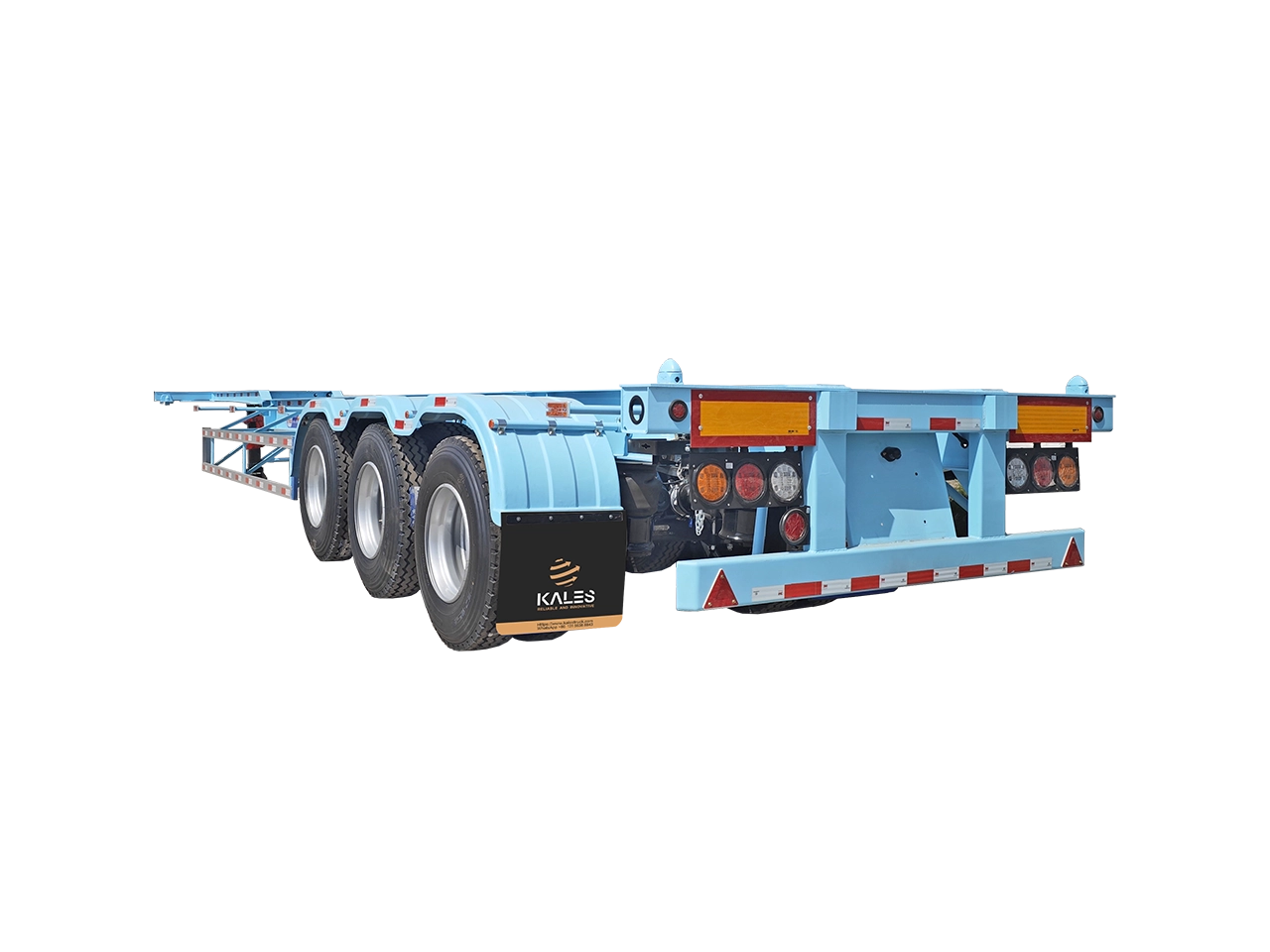
Engineering guidance from the Kales Vehicle product team for buyers comparing a lightweight reefer chassis with a conventional 6.5-ton steel skeleton trailer.
Quick answer: choose this 40ft refrigerated skeleton trailer when your fleet moves high-value reefer containers on routes where payload, ride control, and corrosion resistance affect total cost of ownership. The BPW air suspension and front lift axle suit empty-return fuel savings and loaded axle-load compliance. Confirm the final tare, legal gross weight, lift-axle control logic, and container lock layout against the destination country’s rules before ordering.
Technical Snapshot
| System | Parameter | Specification |
|---|---|---|
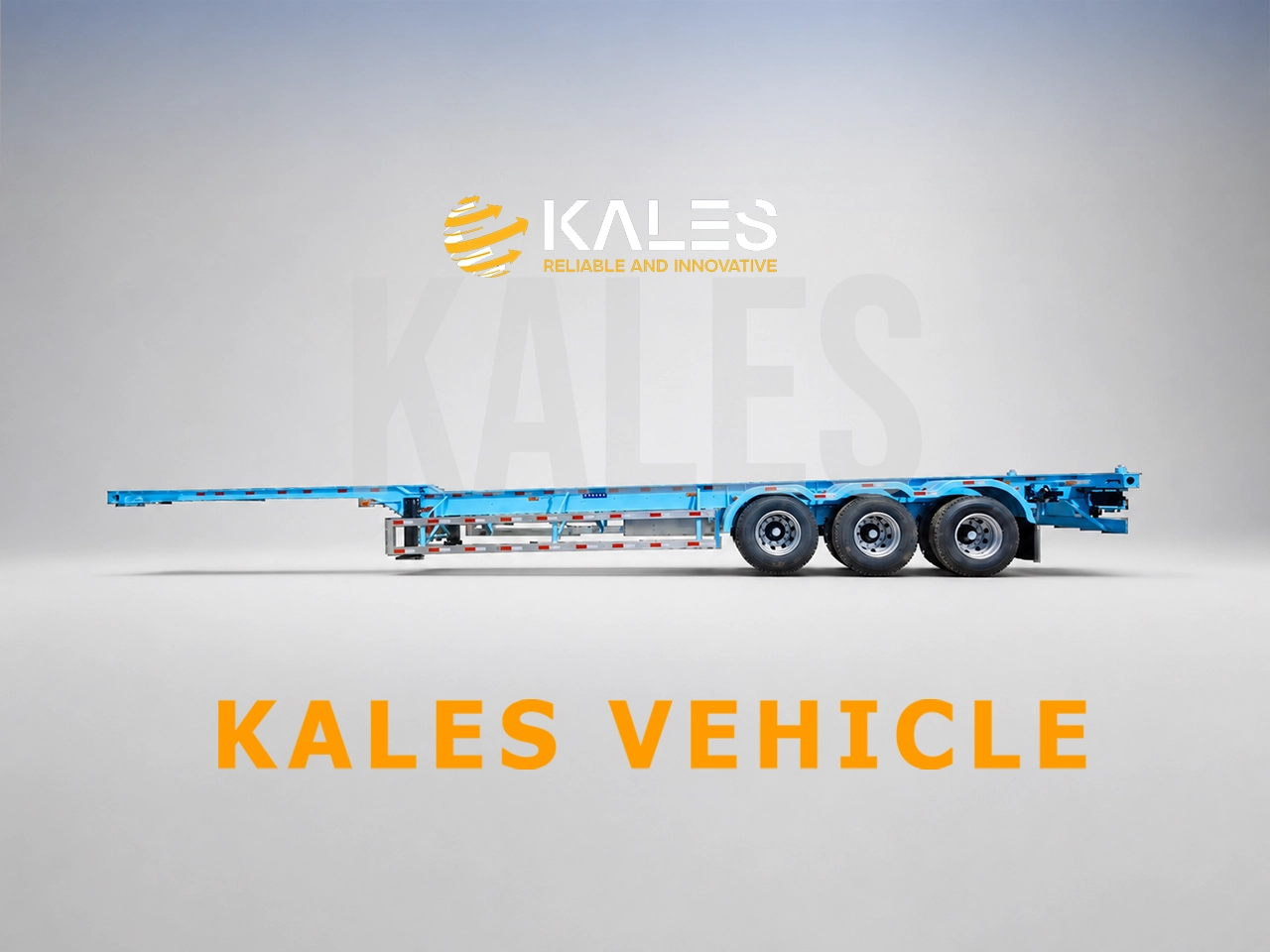
| Dimensions | Overall size (L x W x H) | 12,500 x 2,550 x 1,350 mm |
| Dimensions | Wheelbase | 6,800 + 1,310 + 1,310 mm |
| Weight | Tare weight | 4,800 kg +/- 3% represented configuration |
| Weight | Rated payload | 40,000 kg, subject to local axle and gross-weight limits |
| Weight | Gross vehicle weight | 44,800 kg represented design rating |
| Frame | Main beam material | T700L / Q690D high-strength steel |
| Frame | Main beam height | 450-480 mm variable section |
| Frame | Flange / web thickness | Top and bottom flange 14-16 mm / 16-18 mm; web 6-8 mm |
| Frame | Welding and finish | Robotic automatic welding, shot blasting, and electrostatic powder coating |
| Running gear | Axle brand and model | BPW ECO Plus 400 series |
| Running gear | Axle configuration | Tri-axle; first axle liftable |
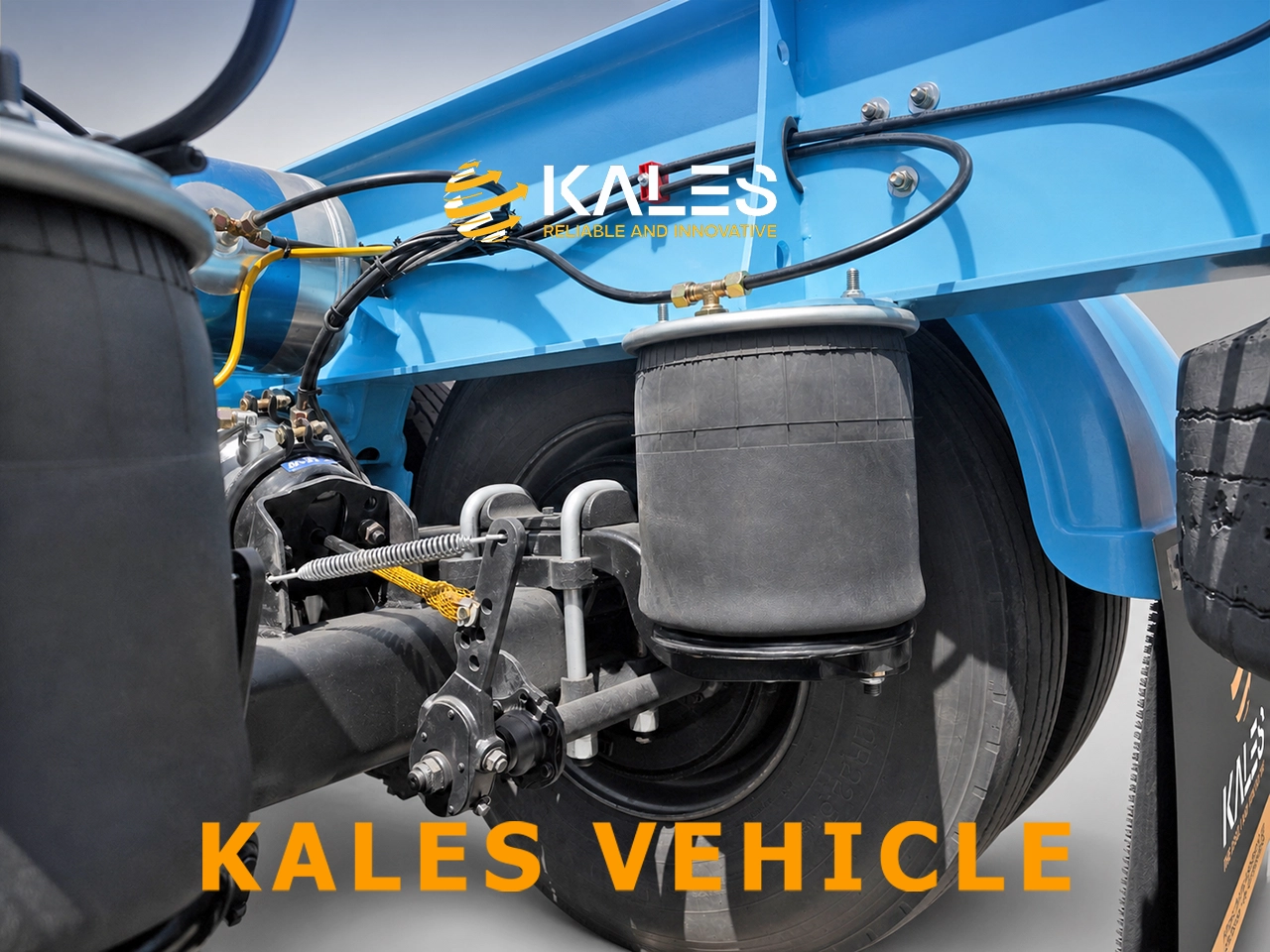
| Running gear | Suspension | Air suspension, dual air bags per axle, isolated lift-axle circuit |
| Running gear | Shock absorbers | Twin-tube hydraulic, 6 units |
| Wheels and tires | Tire / rim | 12R22.5 18PR / 9.0-22.5 aluminum rim option |
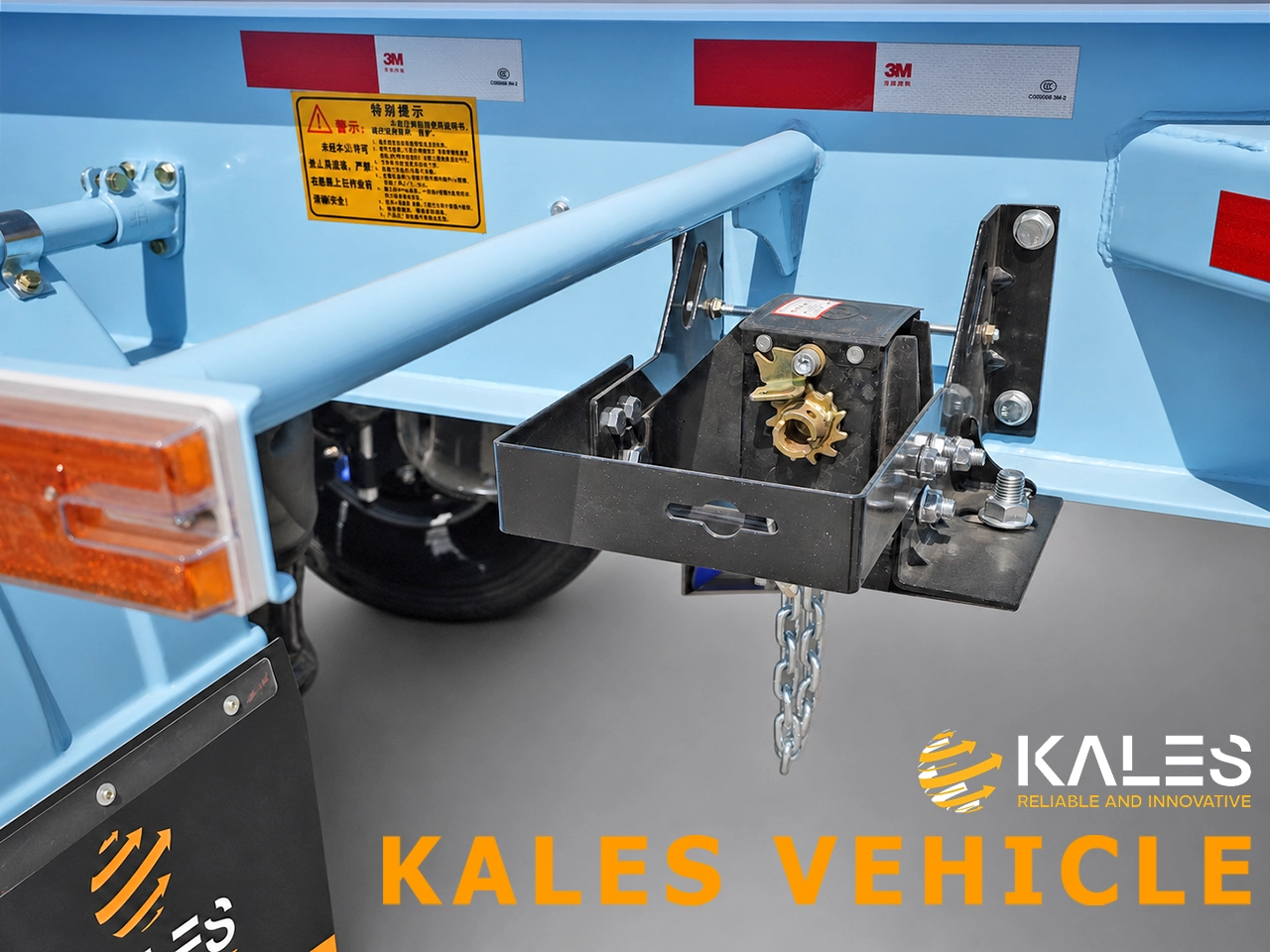
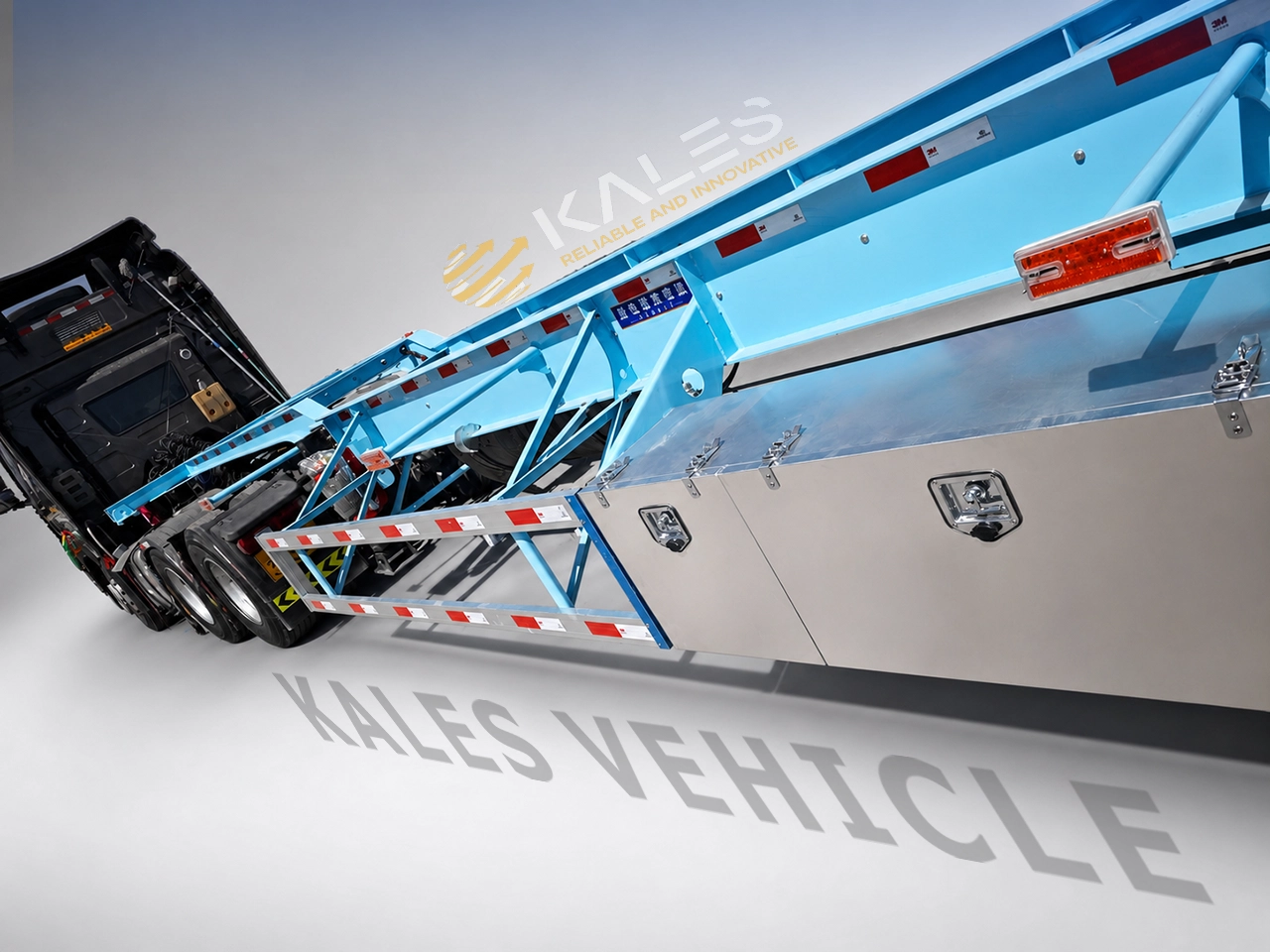
| Locks | Twist locks | 4 ISO-standard floating twist locks |
| Braking and electrical | Brake control | WABCO or KNORR ABS/EBS |
| Braking and electrical | Air tanks | Aluminum dual chamber, 40 L + 40 L |
| Braking and electrical | Wiring and lamps | 7-core national-standard harness and LED lights |
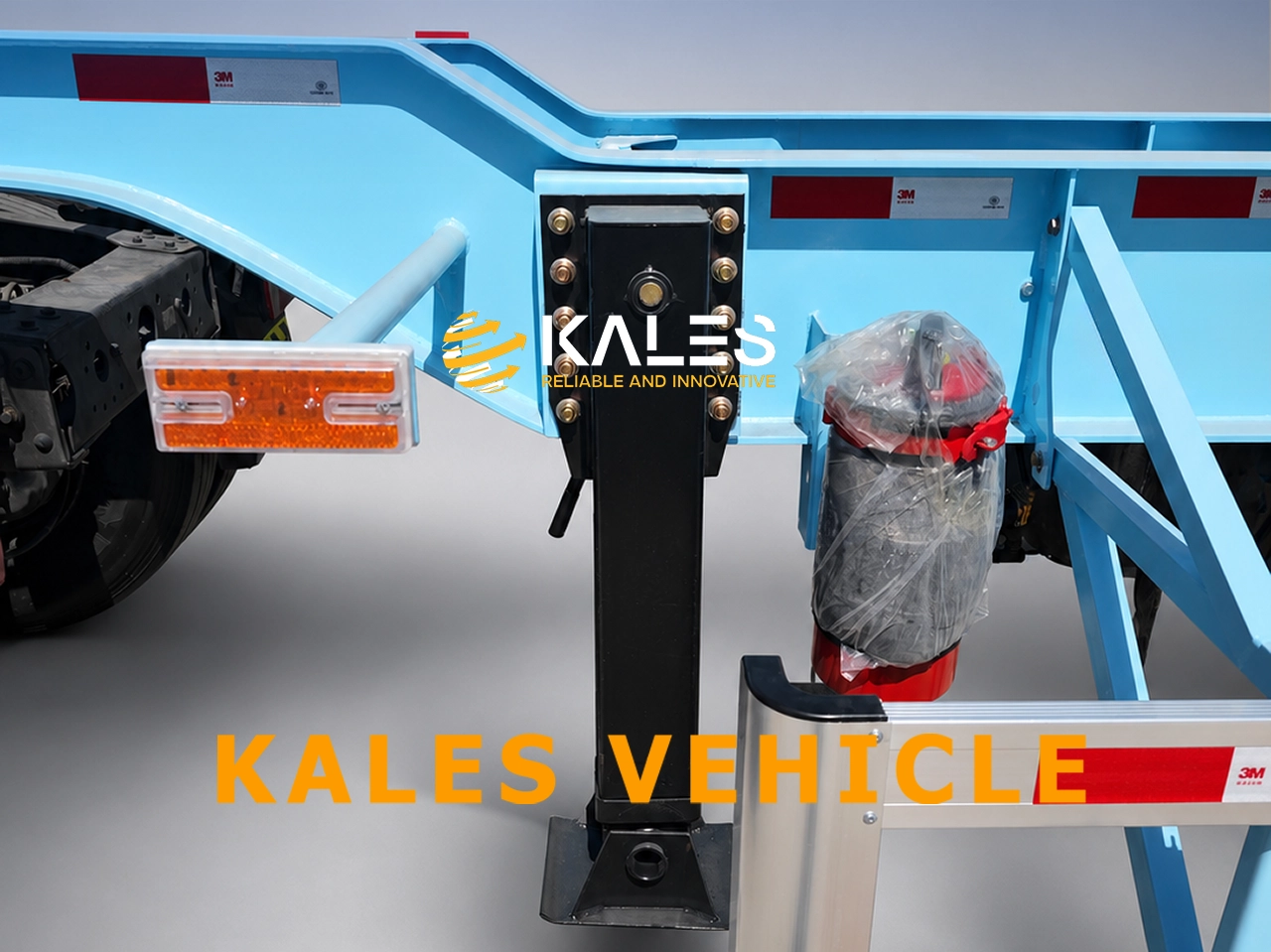
| Landing gear | Configuration | JOST or BPW two-speed linked landing gear |
| Surface protection | Coating system | 80-120 micrometer electrostatic powder coating after Sa2.5 blast cleaning and pre-treatment |
Best Fit Operating Profile
This reefer skeleton chassis fits pharmaceutical, seafood, frozen-food, and other high-value cold-chain operators moving 40ft refrigerated containers between ports, cold stores, distribution centers, and regional hubs. It is especially relevant to fleets that pay close attention to legal payload, compressor-friendly ride quality, empty-leg fuel use, and corrosion exposure in coastal or de-icing environments.
Best for
- 40ft refrigerated container transport on regulated port and inland corridors
- Fleet operators that need a lower tare target without abandoning a 40-ton rated chassis
- Cold-chain routes with frequent empty repositioning where a lift axle can reduce rolling resistance and tire scrub
- Coastal, humid, or washdown-heavy operations where a documented coating system matters
Not ideal for
- Container-only work that does not require reefer ride control or the higher equipment specification
- General cargo that needs a full deck, side retention, or weather protection
- Routes whose legal axle limits or road conditions require a different axle count or suspension design
Why Buyers Choose This Reefer Skeleton Chassis
- Protects commercial payload: the represented 4.8-ton tare target uses T700L/Q690D steel and aluminum components to leave more legal payload under a fixed gross-weight limit than a conventional 6.5-ton steel chassis.
- Controls road vibration: BPW air suspension and twin hydraulic shocks reduce high-frequency shock transfer to the container and reefer equipment. The independent lift-axle air circuit keeps chassis height stable during raise and lower cycles.
- Improves empty-leg economics: lifting the first axle when the load and local rules permit can reduce tire scrub, rolling resistance, and unnecessary axle wear. The final control logic must be set for the destination market.
- Extends corrosion protection: 80-120 micrometer powder coating, Sa2.5 blast cleaning, and pre-treatment are specified for coastal humidity, de-icing salt, and cold-store washdown exposure.
- Uses serviceable running gear: BPW axles, JOST/BPW landing gear, WABCO or KNORR brake control, and standard 12R22.5 tires give export fleets a recognizable replacement-parts path.
How the business case is assessed
In the supplied fleet example, an East China pharmaceutical cold-chain operator reported annual savings of about $1,700 per vehicle on tires and $3,900 on fuel after a 20-unit purchase, with cargo claims falling from $12,000 to $1,250 per vehicle and uptime reaching 98% after 12 months. These are customer-reported operating results, not a universal guarantee; Kales should validate the route, payload, tire policy, and baseline before using them in a fleet ROI model.
Engineering and Serviceability Details
Main beam and welding
The variable-section T700L/Q690D main beam balances strength and tare control along the chassis. Robotic automatic welding is followed by shot blasting so weld penetration and surface preparation are more consistent than a purely manual process. The represented frame is rated for a 40-ton payload class, but the legal load on the road remains the lower of the design rating and the destination jurisdiction’s limits.
BPW air suspension and lift axle
Dual air bags per axle and six twin-tube hydraulic shock absorbers are intended to damp road input before it reaches the refrigerated container and compressor mountings. The lift axle has an isolated air circuit so raising or lowering it does not unnecessarily change the load-bearing axle air pressure. A load-sensing interlock can be specified to keep all axles in contact when the payload exceeds the agreed threshold; speed-sensitive lowering and manual cabin control should be confirmed in the final drawing.
Powder coating and repair logic
Powder coating is specified at 80-120 micrometers with a target of at least 1,000 hours in salt-spray testing and GB/T 9286 Class 0 adhesion for the represented process. Actual performance depends on pretreatment, film thickness, edge coverage, and operating exposure. Small chips can be cleaned and spot-repaired with a compatible epoxy primer and polyurethane topcoat; large impact or corrosion areas should be assessed before recoating.
Warranty and acceptance
- Three-year / 300,000 km frame warranty, subject to the signed supply agreement.
- Two-year unlimited-mileage BPW axle coverage for the supplied axle package.
- Five-year anti-corrosion coating warranty for the represented powder-coat system.
- Delivery checks: empty weight 4,656-4,944 kg, lift-axle raise/lower time no more than 8/5 seconds, diagonal twist-lock deviation no more than 3 mm, BPW serial-number validation, and e-warranty activation.
Factory Images and Inspection Views
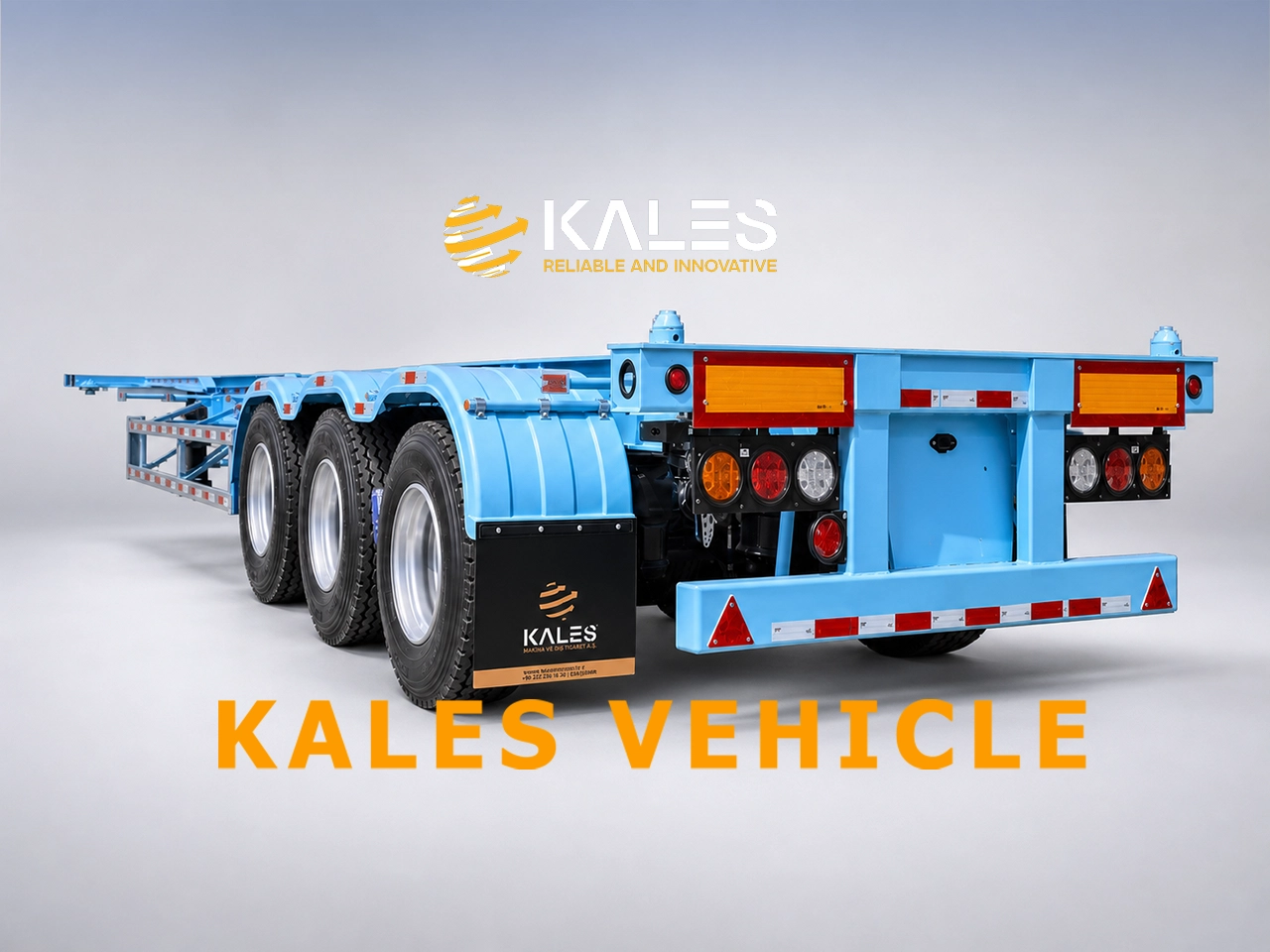
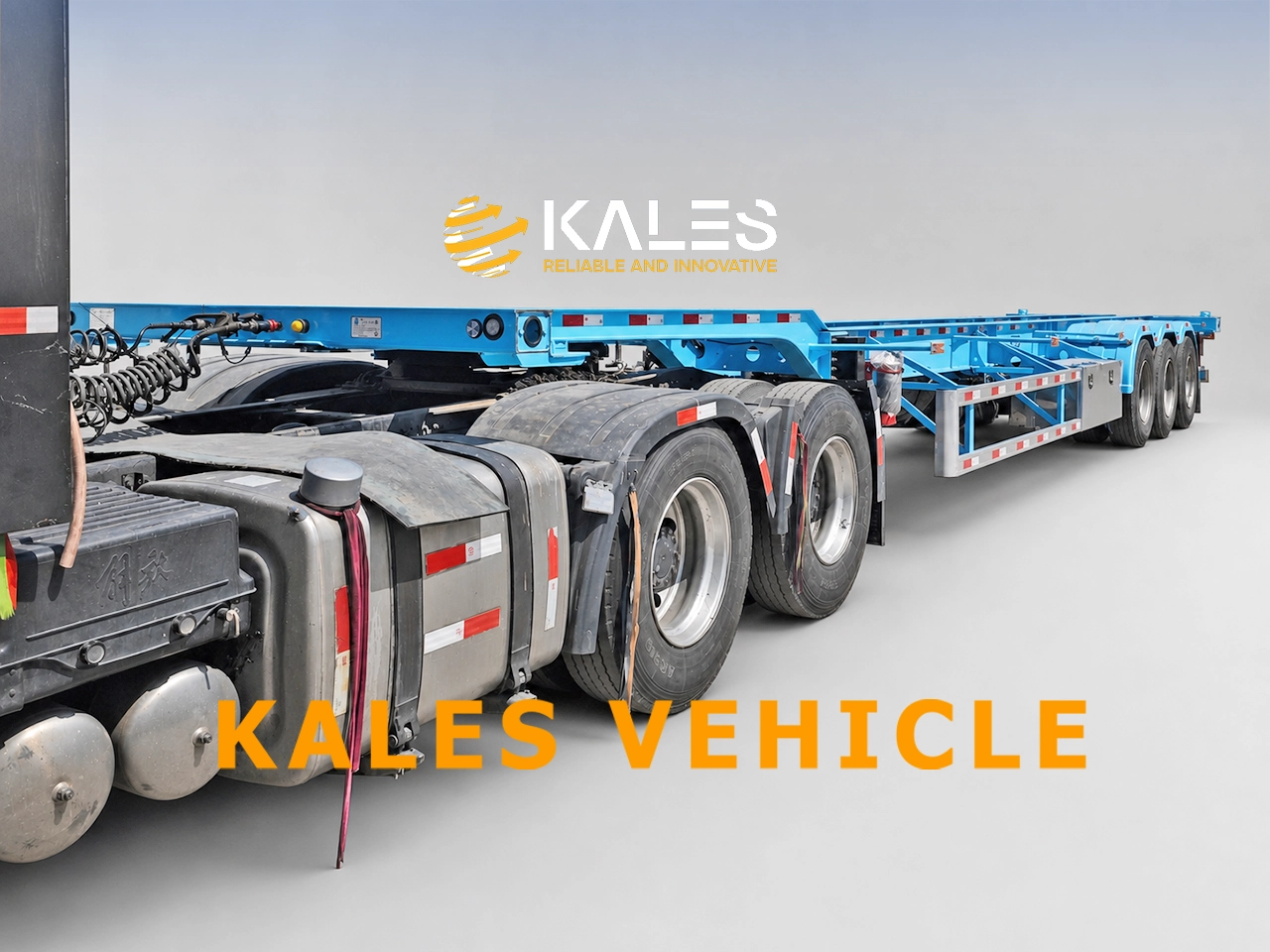
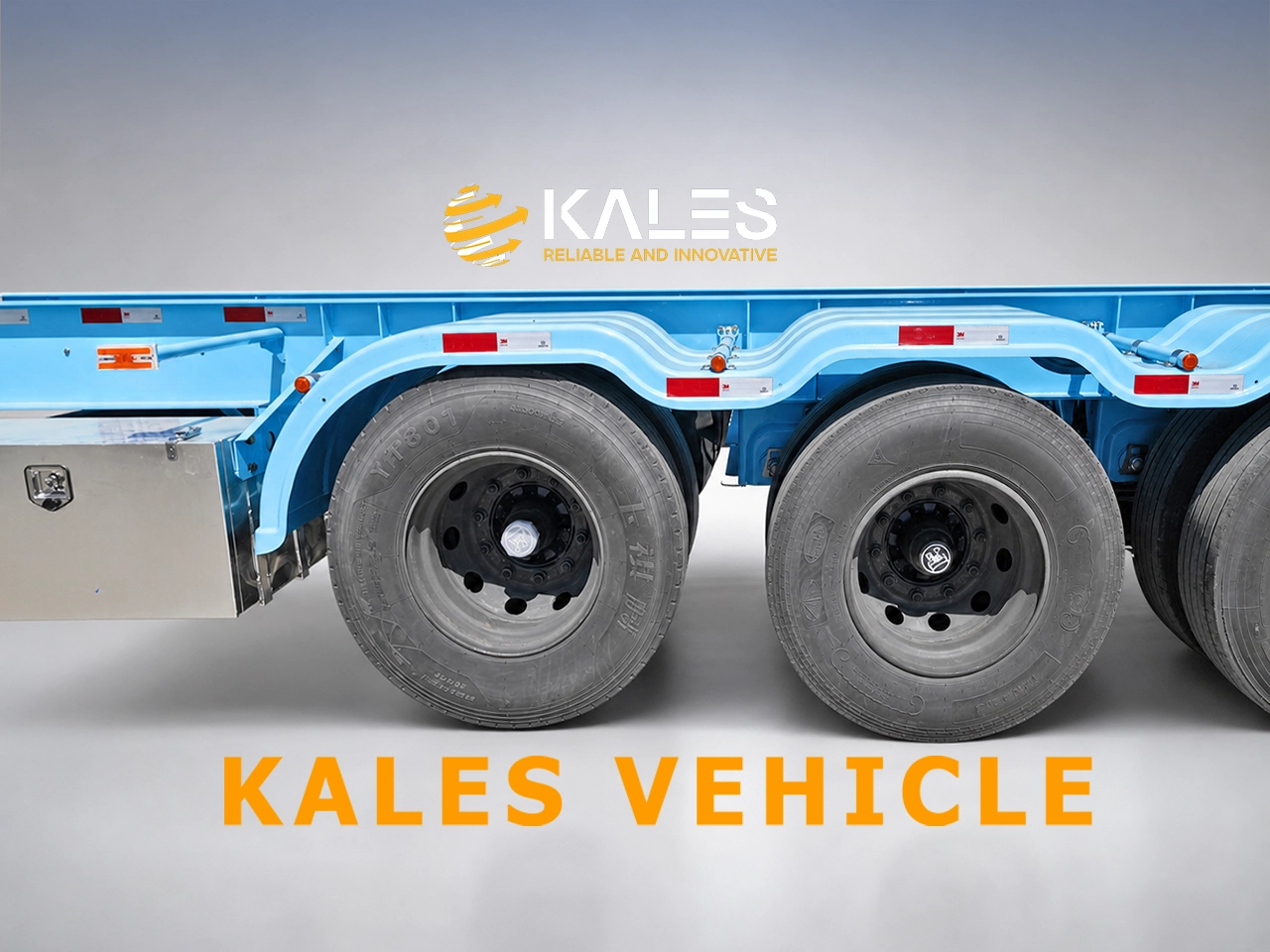
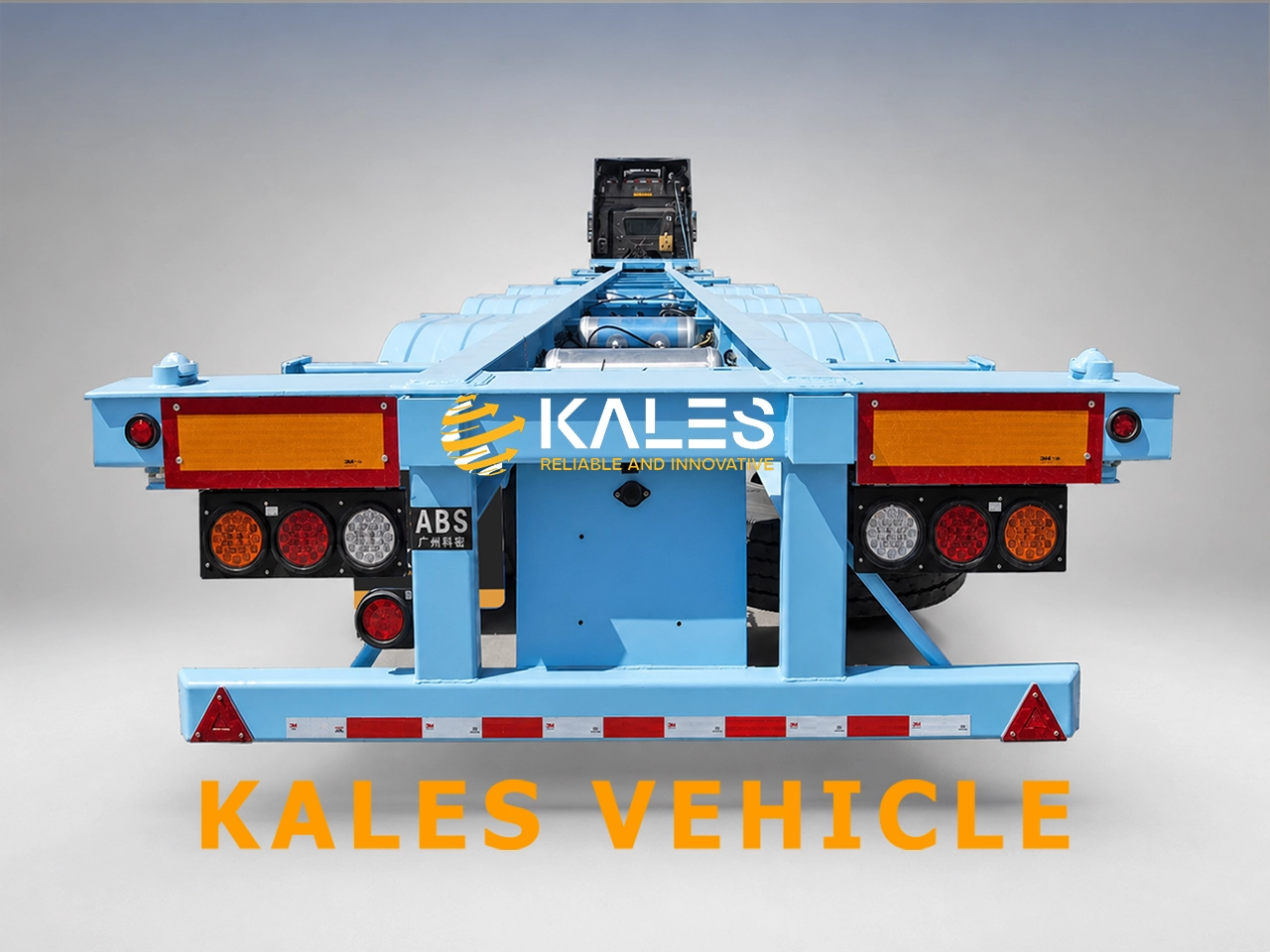
Frequently Asked Questions
Does the 4.8-ton tare target compromise frame strength?
No. The target is achieved through high-strength T700L/Q690D steel, a variable-section beam, aluminum components, and controlled welding. The represented design is checked for a 40-ton payload class with a stated safety factor of at least 1.8. Final registration and legal payload still depend on the local vehicle standard and axle limits.
When should the front lift axle be lowered?
The axle should be lowered whenever the payload, axle-load distribution, speed, or local regulation requires three axles on the road. Speed-sensitive lowering above 30 km/h, load-sensing interlock above 18 tons, and a manual cabin switch can be specified, but the final thresholds must be confirmed for the destination market.
How is powder coating repaired after a stone chip?
Clean and key the damaged area, remove any corrosion, apply a compatible epoxy primer, and finish with a matching polyurethane touch-up. Larger damage should be inspected for substrate loss before local repair. Full recoating is not normally required for an isolated chip.
What maintenance interval should we expect for the air suspension?
Inspect air bags, air lines, valves, and shock absorbers during scheduled service and after severe road events. A typical air-bag service life is 5-8 years or about 800,000 km, while shock absorbers commonly last 3-5 years; actual life depends on load, road conditions, and maintenance. OEM BPW parts are available through the supply program.
What should be confirmed before ordering?
Send the destination country, reefer container mix, target payload, route condition, legal gross and axle limits, preferred axle and brake brands, lift-axle control requirements, coating environment, quantity, and delivery term. Kales will then confirm the drawing, acceptance values, warranty scope, and quotation.
Request a Cold-Chain Drawing and Quote
For a tailored quotation, send your container type, payload target, route country, annual mileage, empty-return pattern, corrosion environment, and required BPW, brake, lift-axle, or wheel specification. The Kales engineering team can then price the right reefer chassis instead of a generic 40ft skeleton trailer.
- Email: jennylee@kalestruck.com
- WhatsApp: +86 131 5638 8843
- Request scope: cargo, dimensions, payload, route, quantity, delivery term, and configuration requirements
Related Kales Container Options
- 40ft Container Chassis Semi Trailer for mainstream 20ft/40ft container haulage where reefer-specific ride and tare optimization are not required.
- 4-Axle 12m Container Skeleton Semi-Trailer for routes that need broader axle-load distribution and a higher-spec 4-axle export platform.
- 40ft Flatbed Semi Trailer for mixed container and general-freight work that needs a full open deck instead of a dedicated reefer skeleton chassis.