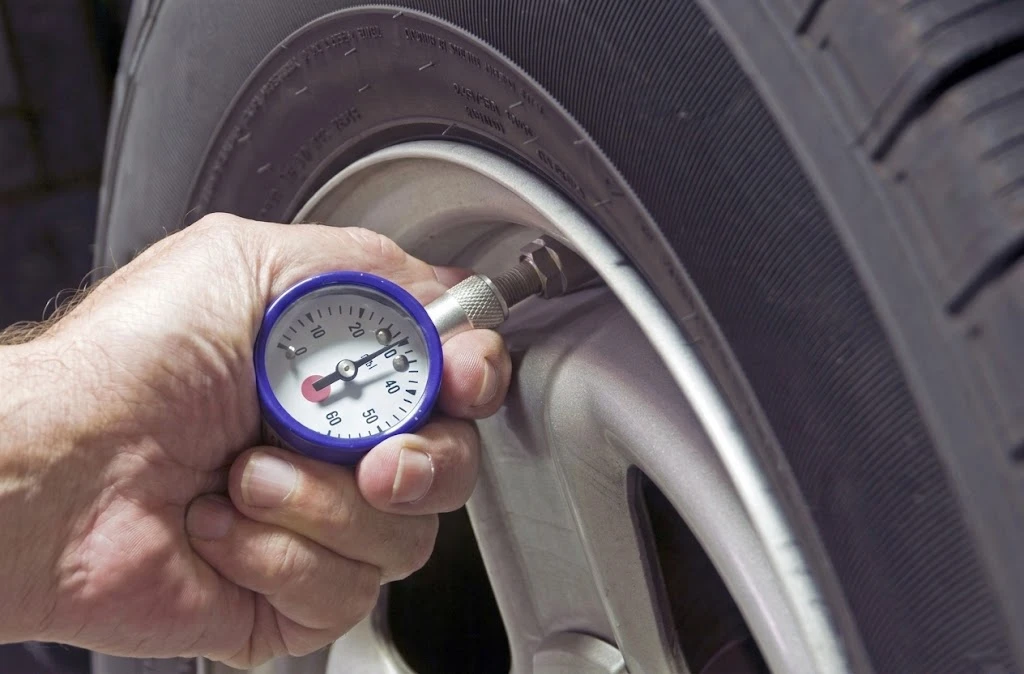
Category: Technical Support

Access official Kales Vehicle technical support resources. Find maintenance schedules, troubleshooting guides, repair manuals, and spare parts advice to keep your semi-trailers and trucks operating efficiently.

  • How to Hook Up a Semi-Trailer: First-Time Setup & Coupling Guide | KALES

    How to Hook Up a Semi-Trailer: First-Time Setup & Coupling Guide | KALES

    Lead Fleet Maintenance Engineer at Kales

    Reviewed by Jason M.
    Lead Fleet Maintenance Engineer, Kales Vehicle

    What is a semi-trailer pre-trip inspection and coupling procedure? A semi-trailer pre-trip inspection is a mandatory safety protocol involving the visual and mechanical verification of the fifth-wheel coupling, air brake system pressure (800-850 kPa), and wheel nut torque (600-650 N.m). Proper execution of these steps, in accordance with commercial driving regulations, prevents trailer detachment, load loss, and severe highway accidents.

    ⚠️ DANGER / WARNING

    Always park the tractor and semi-trailer on a level, firm surface and engage the parking brakes before attempting to couple or uncouple. Failure to visually verify that the fifth wheel jaws securely lock around the kingpin can result in trailer detachment, load loss, and severe accidents. Chock the trailer wheels before reversing.

    Correct front to rear tilt angle of the fifth wheel for semi-trailers
    Figure 1: Ensure the correct front-to-rear tilt angle of the fifth wheel before attempting to couple the trailer.

    The "Emergency Room" Matrix

    Symptom Possible Root Cause Immediate Solution
    The fifth wheel jaws fail to lock around the semi-trailer kingpin. The trailer kingpin plate is resting too high relative to the tractor fifth wheel. Lower the landing gear so the kingpin plate sits 10 to 30 millimeters below the center of the fifth wheel.
    A loud hissing noise comes from the air line connections at the front of the trailer. The rubber seals inside the red or yellow gladhands are damaged, or dirt is blocking the connection port. Disconnect the gladhands, clean off any debris, and replace the rubber seals if they show signs of cracking.
    The trailer ABS warning light stays illuminated on the dashboard. The 7-pin electrical plug or the dedicated ISO ABS cable is not fully inserted into the tractor socket. Push the electrical cables firmly into their respective sockets and ensure the locking caps snap fully shut over them.
    Your new trailer exhibits loose wheel nuts shortly after beginning its first commercial haul. The new steel rims, studs, and paint layers naturally settle and compress during their initial period under heavy load. Retorque every wheel nut to the specified 600 to 650 N.m using a calibrated heavy-duty torque wrench.

    Critical Specs & Torque Settings

    • Wheel Nut Torque Requirement: 600 - 650 N.m
    • Initial Retorque Interval: First 50 - 100 km (30 - 60 miles) of loaded driving
    • Air Brake System Operating Pressure: 800 - 850 kPa (116 - 123 psi)
    • Optimal Coupling Height Difference: Kingpin plate 10 - 30 mm lower than fifth wheel center
    • Maximum Articulation Angle for Coupling: 5 degrees or less
    • Coupling Centerline Tolerance: Within 40 mm
    📈 Field Experience Note:
    In our experience servicing thousands of commercial fleets, failure to perform the mandatory 50km wheel nut retorque procedure is the number one cause of hub damage and catastrophic wheel-off incidents on brand-new trailers. Never skip this initial maintenance step.

    Step-by-Step Coupling Guide

    Diagram showing proper height difference between fifth wheel and kingpin plate
    Figure 2: The kingpin plate must sit slightly lower than the fifth wheel.

    Step 1: Adjust Landing Gear

    Crank the landing gear handle to raise or lower the trailer. Set the height so the kingpin plate sits exactly 10 to 30 millimeters lower than the center of the tractor's fifth wheel. This allows the tractor chassis to physically lift the trailer slightly during engagement.
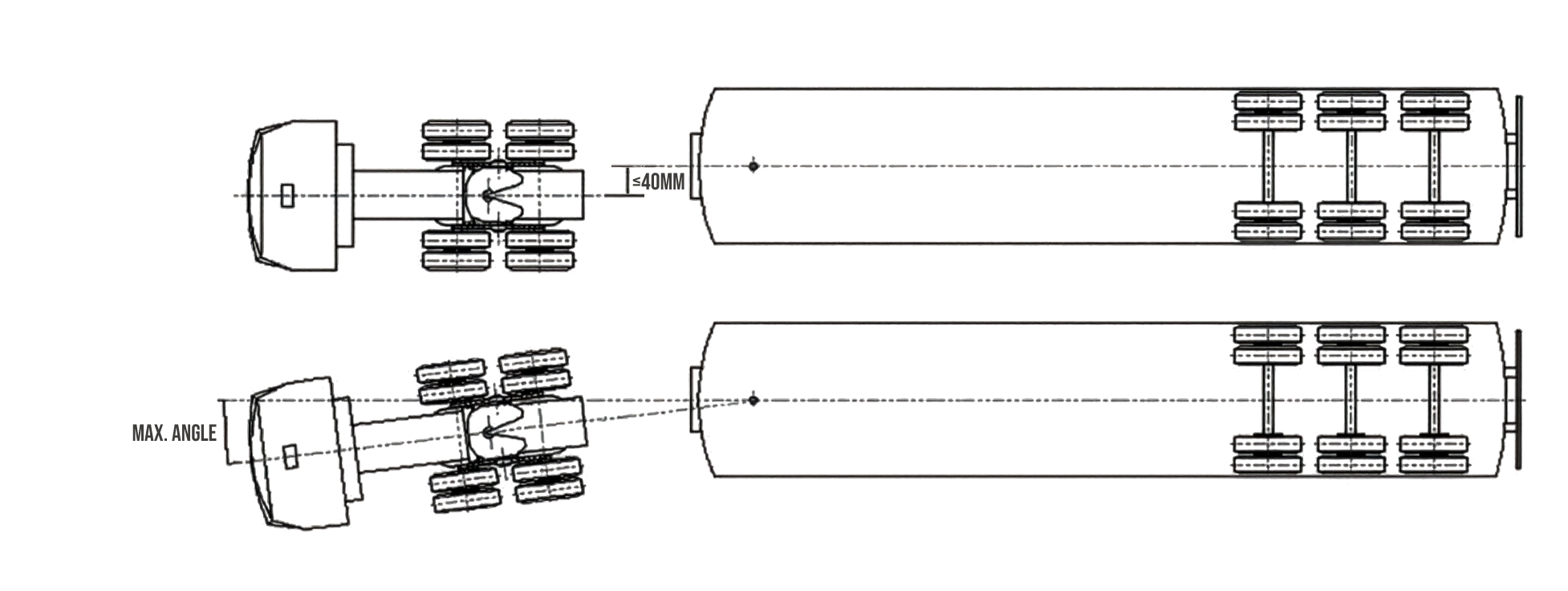
    Tractor to Semi-Trailer Articulation Angle Limit
    Figure 3: Keep articulation angles under 5 degrees for a safe coupling.

    Step 2: Align the Tractor

    Open the locking jaw mechanism on the fifth wheel. Reverse the tractor slowly, keeping the trailer and tractor centerlines within a 40-millimeter tolerance. Keep the tractor articulation angle equal to or less than 5 degrees to avoid damaging the kingpin.

    Step 3: Lock & Visually Inspect

    Reverse the tractor until the kingpin slides in and locks automatically into the fifth wheel. Exit the cab and shine a flashlight directly under the fifth wheel to visually confirm the jaws are entirely closed around the kingpin shank. Never rely solely on the sound of the latch or an in-cab tug test.

    Step 4: Connect Pneumatics & Electrical

    Attach the red gladhand to the supply line. Attach the yellow gladhand to the control line. Plug the 7-pin and ISO cables into the receptacles. Open the fast-fill supply valve to build the system pressure to at least 800 kPa, in accordance with FMCSA safety guidelines.

    Preventative Maintenance Checklist

    • Pre-Trip: Inspect all red and yellow gladhands to ensure the rubber seals are clean and intact.
    • Pre-Trip: Test all brake, turn, and clearance lights to confirm they illuminate brightly.
    • Pre-Trip: Build air pressure to 850 kPa and listen carefully around the axles for any hissing sounds indicating air leaks.
    • Post-Delivery (New Trailers): Retorque all the wheel nuts to 600-650 N.m after driving the first 50-100 kilometers under load.
    • Weekly: Verify that all suspension U-bolts and axle plates remain tight and free from metal fatigue cracks.
    • Weekly: Examine tire pressures and tread depths across all axles.

    Need Spare Parts?

    We stock all Kales Vehicle original parts, including heavy-duty gladhands, 7-pin electrical cords, ABS sensors, and replacement wheel studs. Consult the exploded view diagrams in your owner's manual to find the exact Part Number you require.

    Frequently Asked Questions

    Why did my semi-trailer wheel come loose during the first trip?

    New rims and studs naturally settle during their initial use under heavy load, causing the wheel nuts to lose their clamping force. You must retorque all wheel nuts to 600-650 N.m after your first 50 to 100 kilometers of loaded driving to prevent catastrophic wheel detachment.

    What is the correct height for coupling a semi-trailer to a tractor?

    The optimal height requires the trailer's kingpin plate to sit 10 to 30 millimeters lower than the center of the tractor's fifth wheel. This configuration allows the tractor chassis to physically lift the trailer slightly during engagement, ensuring a secure lock.

    How do I reliably test the air brake system during a pre-trip inspection?

    Build the air pressure to a range of 800 to 850 kPa (116 to 123 psi) and listen closely around the axles and gladhands for any hissing sounds that indicate an air leak. Test the service brakes physically to ensure all wheels engage simultaneously and evenly before entering the highway.

    Stuck? Let our Engineers Help.

    Experiencing persistent coupling issues or air leaks? Send us a photo or video of the affected component.
  • Manufacturing Kales Bulk Powder Tankers: Precision Engineering for Cement & Fly Ash Trailers

    Manufacturing Kales Bulk Powder Tankers: Precision Engineering for Cement & Fly Ash Trailers

    Lead Structural Engineer at Kales

    Reviewed by Jason M.
    Chief Structural Engineer, Kales Vehicle

    What is a pneumatic dry bulk trailer? A pneumatic dry bulk trailer (also known as a cement bulker) is a specialized heavy-duty commercial vehicle designed to transport dry powder materials with a particle size of ≤ 0.1mm, such as bulk cement, fly ash, lime, mineral powder, and flour. Achieving fast discharge speeds and structural durability requires precision engineering, including CAE design, T700 high-strength steel, and robotic welding.

    About Kales Vehicle: A Premier Powder Tanker Manufacturer

    Founded in 2012 and headquartered in Shandong, China, Kales Vehicle possesses over a decade of specialized experience in semi-trailer R&D and manufacturing according to ISO 9001 quality management standards. We have successfully delivered 12,000+ units globally, including over 2,000 pneumatic dry bulk trailers, serving heavy industry clients across East Asia, Southeast Asia, Central Asia, the Middle East, and Africa.

    We don't settle for "good enough." We build heavy-duty transport equipment engineered to withstand the toughest job site conditions.

    Why High-Quality Cement Bulkers Are Difficult to Perfect

    A common misconception in the logistics industry is that a powder tanker is simply "a steel tank welded onto a chassis." In reality, achieving fast discharge speeds, minimal residue rates, stable handling, and long-term chassis durability depends entirely on precision engineering. A poorly built tanker inevitably leads to clogged pipes, structural cracks, and severe profit loss.

    Follow us as we walk you through the 7-step manufacturing journey of a premium Kales bulk powder transport trailer.

    🔧 Step 1: Design – CAE Simulation for Maximum Structural Integrity

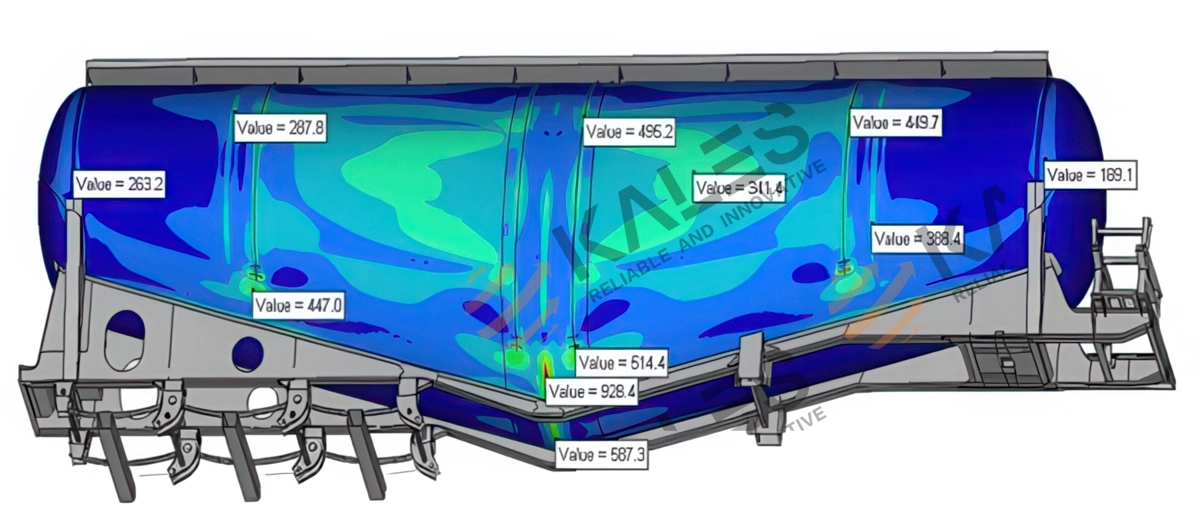
    3D CAE Simulation model of Kales Cement Bulker Trailer
    Figure 1: Advanced 3D CAE Simulation validates structural integrity before physical production.

    We do not rely on empirical estimates; instead, we utilize advanced 3D modeling and CAE (Computer-Aided Engineering) mechanical simulations to validate every structural component before production begins.

    • We utilize a steeper tank angle design that exceeds standard industry benchmarks by 2–3° to ensure smoother material flow and significantly faster discharge rates.
    • We rely on rigorous stress analysis to inform the skeletal layout, effectively preventing cracking and deformation under heavy payloads.
    • We engineer a refined chassis structure that deliberately lowers the center of gravity (C.G.), providing superior anti-rollover stability on rough mining terrain.

    ✂️ Step 2: CNC Cutting & Forming – Precision Defines Lifespan

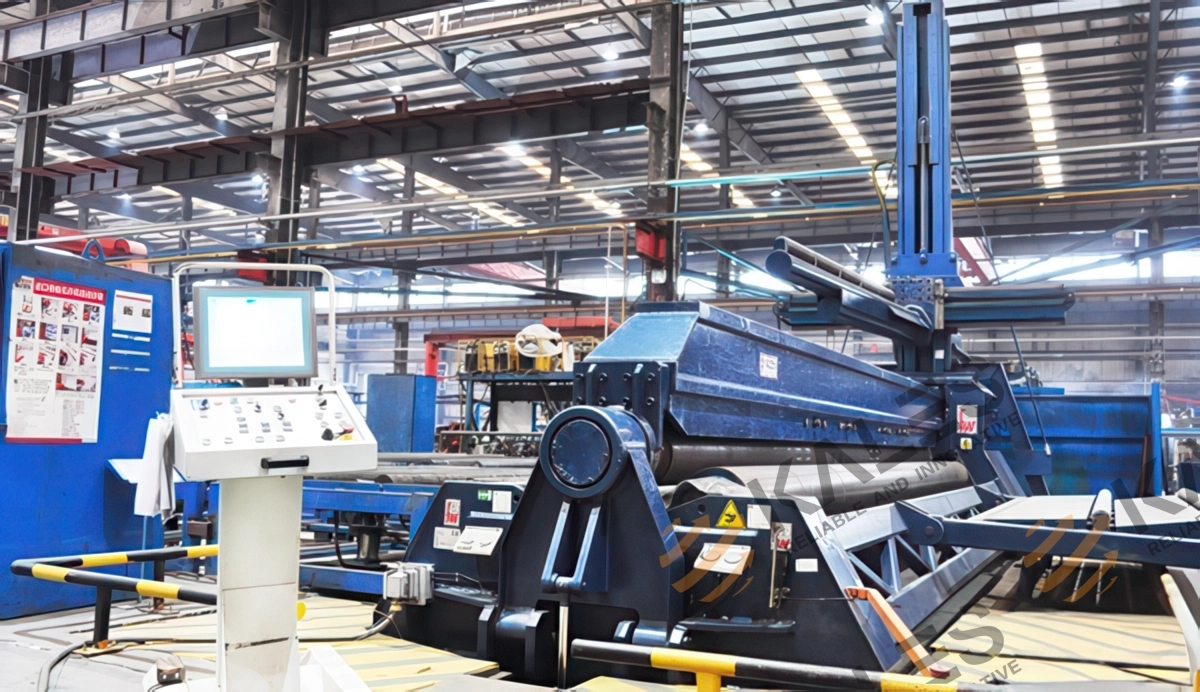
    CNC Plate Rolling Machine forming tank body steel
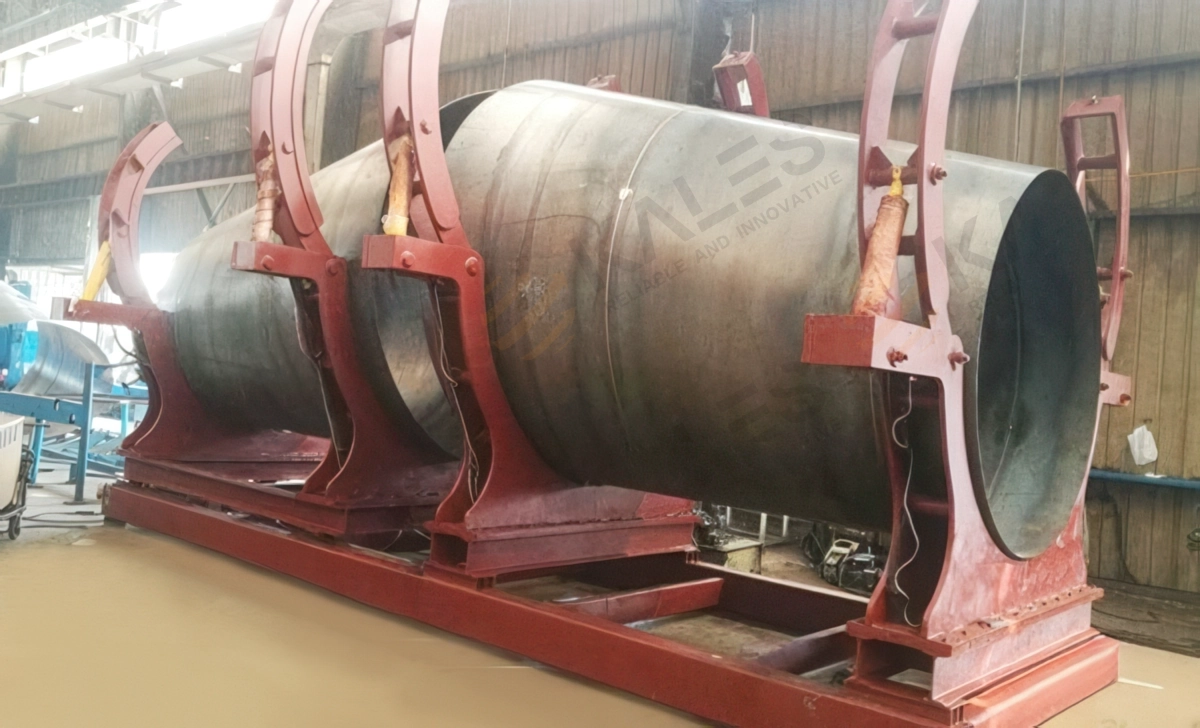
    Frame alignment jig for powder tanker assembly
    • We strictly utilize premium T700/Q345B high-strength steel that is laser-cut to a strict tolerance of ≤ 0.01mm to maintain 100% material integrity.
    • We process the tank body using advanced CNC rolling machines in a single pass, completely eliminating the hammering and internal stress that cause structural weak points.
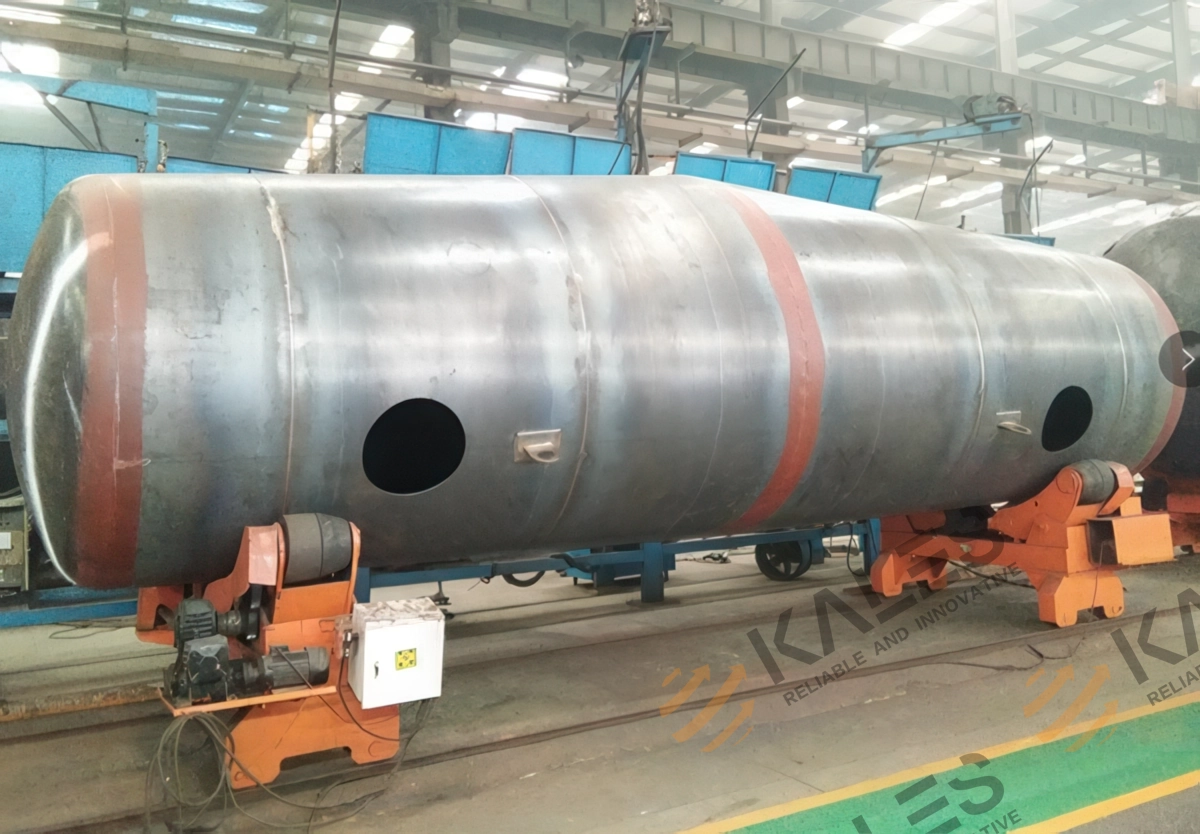
    • We assemble the sections on a framed assembly platform to guarantee a perfectly straight and true tank body alignment.
    💡 Engineering Insight: Any thermal warping or internal damage to the steel during the forming process drastically increases the risk of future weld seam cracking under pressure.

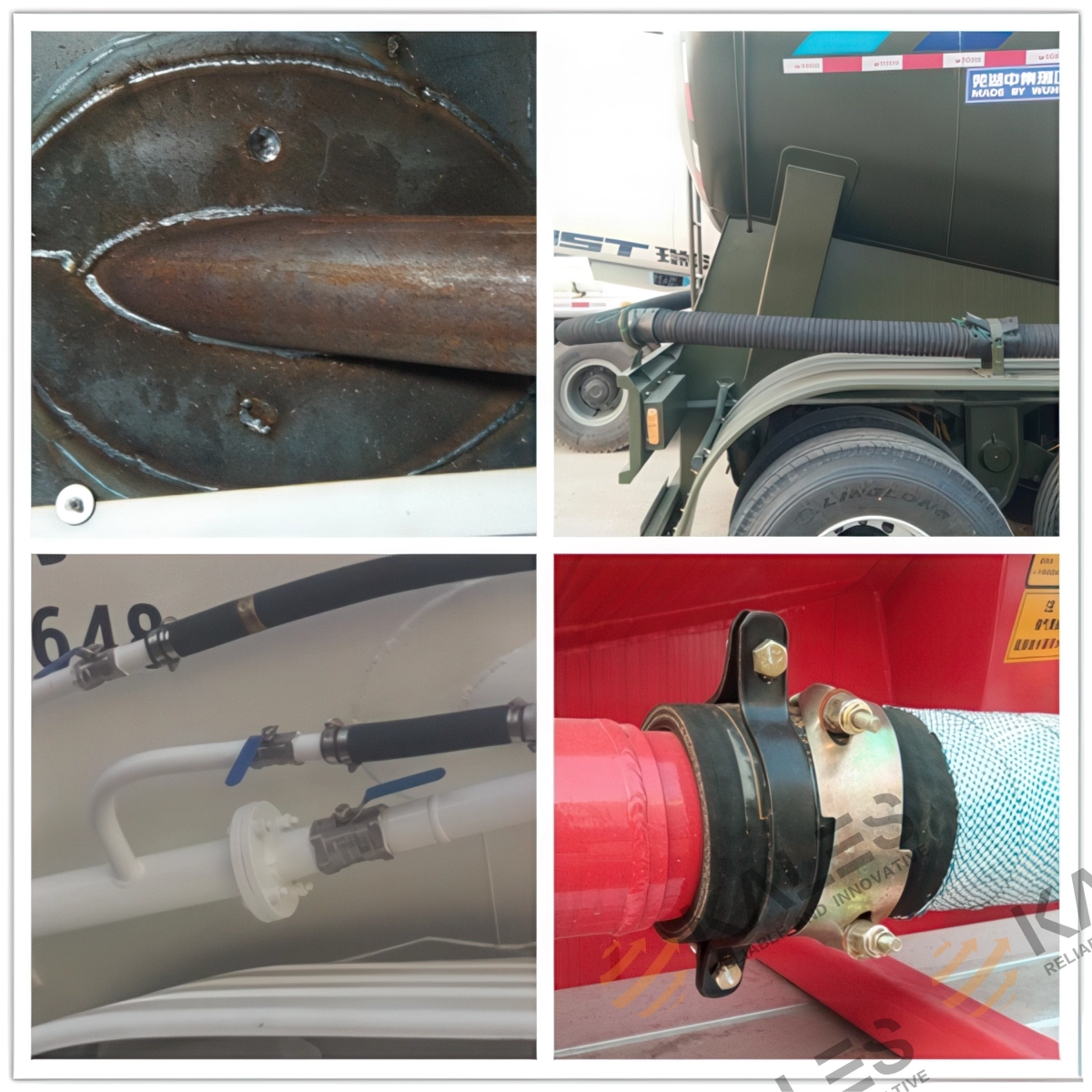
    🔥 Step 3: Robotic Welding – The Invisible Craftsmanship

    Automatic Robotic Welding Process for Kales Tanker Trailers
    Figure 2: Automated robotic welding ensures uniform, deep-penetration seams for pressure vessel safety.

    We utilize fully automated robotic welding technology to ensure the tank can safely withstand high internal pneumatic pressure without failure.

    • We deploy single-sided welding with double-sided forming technology to create deep, consistent penetration for maximum seam strength.
    • We ensure all welds are flawlessly uniform and completely free of porosity or slag inclusions, which is critical for pressure vessel safety standards.
    • We guarantee even stress distribution across the entire tank body to prevent localized stress points that lead to metal fatigue over time.

    ⚙️ Step 4: Chassis Alignment – Eliminating Trailer Sway

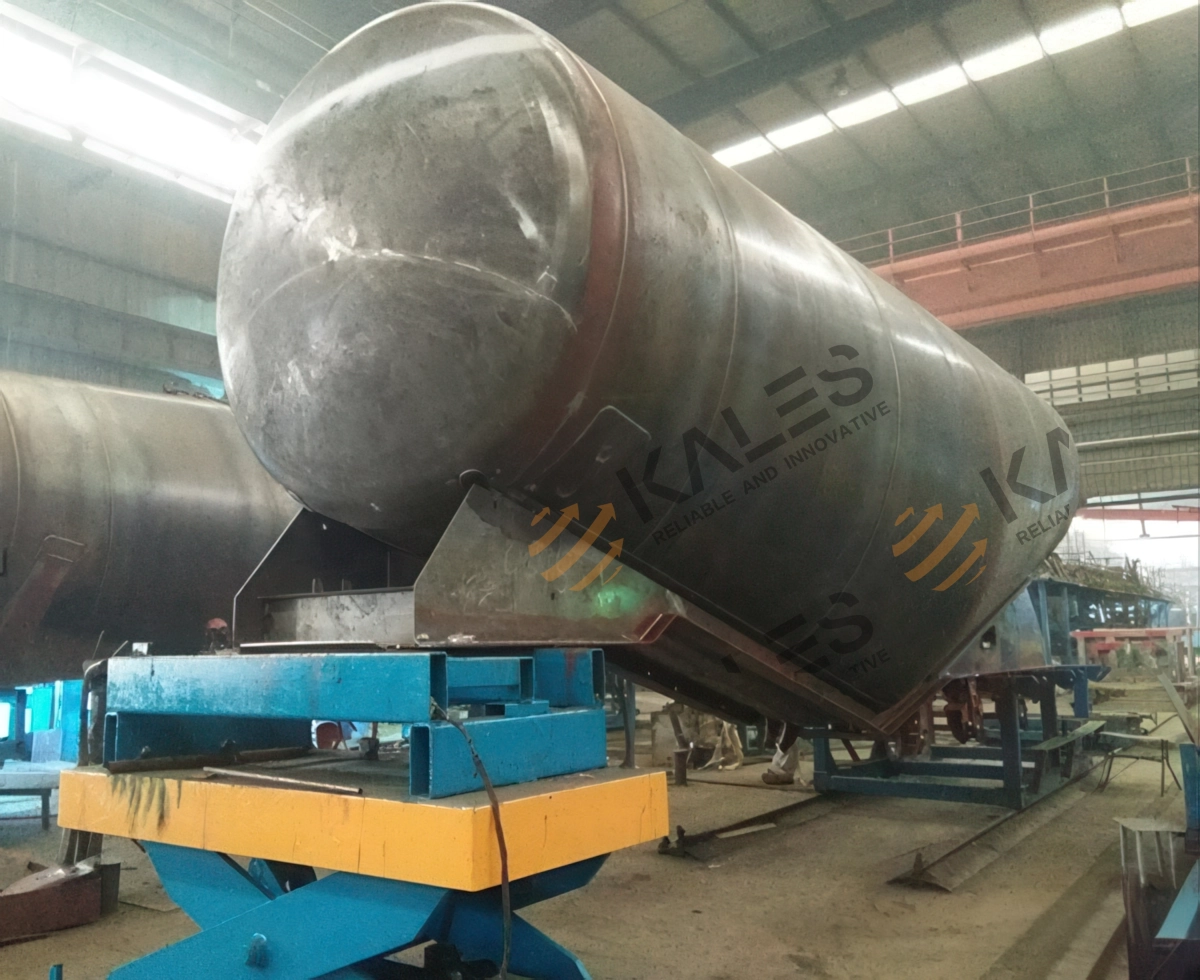
    Chassis Frame Leveling and Alignment System
    Figure 3: Precision chassis alignment prevents irregular tire wear and trailer swaying.

    A frequent driver complaint with inferior trailers is a dangerous "swaying" or "wobbling" sensation at highway speeds. Kales resolves this by performing meticulous chassis and kingpin laser alignment immediately after the tank is mounted.

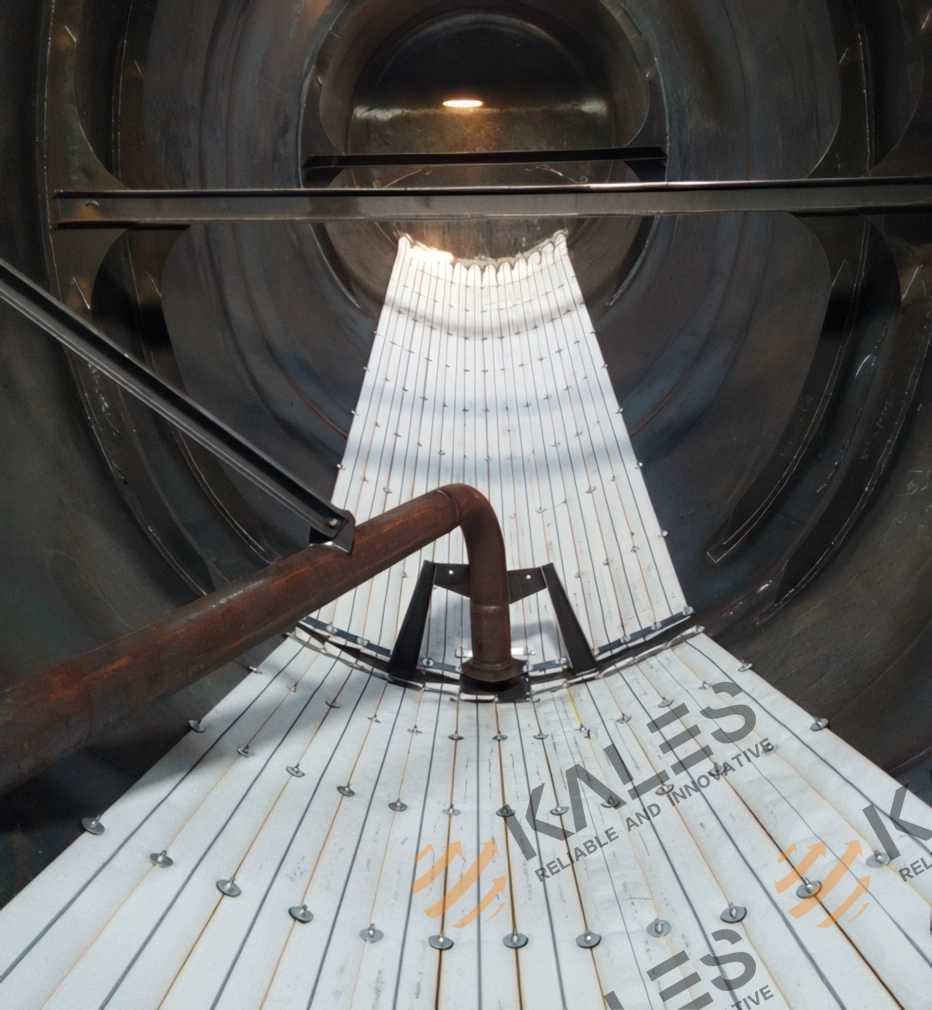
    💨 Step 5: The "Heart" of the System – Air Compressor & Discharge

    Internal Fluidization Bed of Kales Powder Tanker
    Detailed schematic of Kales Cement Bulker discharge system

    The operational efficiency of a pneumatic trailer relies entirely on its power source and internal fluidization design.

    • We equip our trailers with renowned Weichai Diesel Engines and Bohai/Fuda Air Compressors (12m³ double-cylinder) to ensure a massive and stable air pressure output.
    • We combine an enlarged outlet with a high-angle fluidized bed to achieve remarkable discharge speeds of up to 1.5 tons per minute.
    • We implement a "No-Dead-Corner" internal tank structure to guarantee a residual rate of <0.3%, ensuring you deliver more product on every load.
    📈 Real Field Experience: In 2024, a major cement logistics client in the Middle East reported that our optimized fluidized bed design reduced their per-truck discharge time by 12 minutes, directly saving thousands of liters in diesel fuel annually across their fleet.

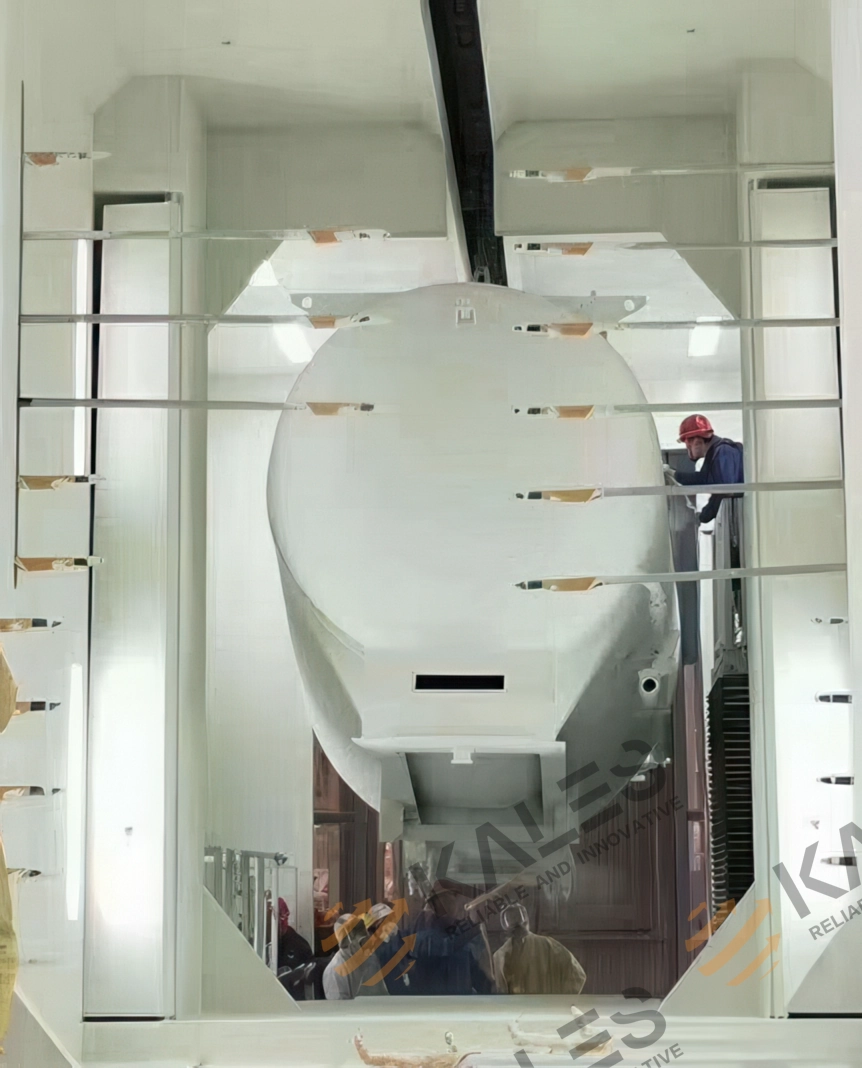
    🎨 Step 6: Protective Coating – Marine-Grade Protection

    Polyurethane Painting Process for Kales Tankers
    • We apply an environmentally friendly, phosphate-free, and heavy-metal-free Polyurethane Powder Coating.
    • We ensure our coating thickness reaches H-Grade (Marine Standard) at 120μm+, providing superior resistance to salt spray and humidity.
    • We guarantee our paint finish is proven to withstand 5–8 years without fading or peeling, even in harsh tropical climates.

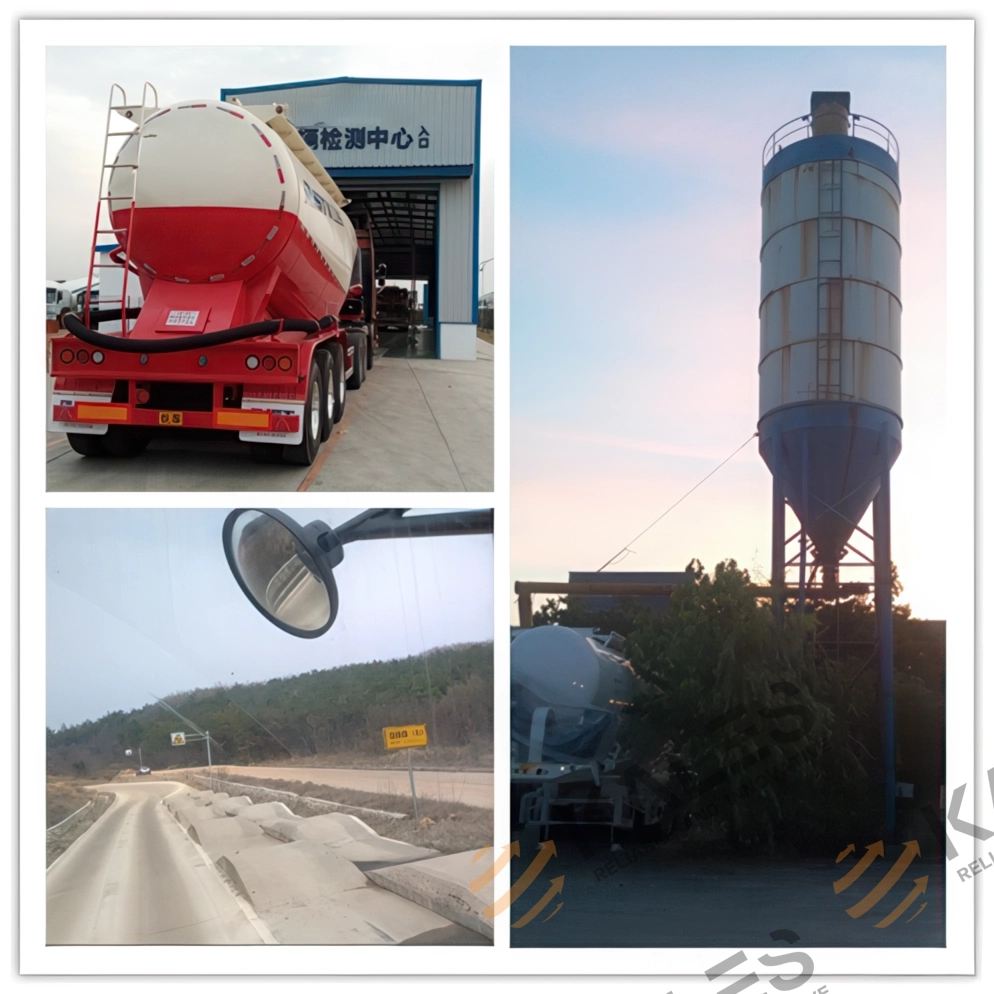
    🔍 Step 7: Quality Control – Rigorous Pressure Testing

    Kales Vehicle Quality Control and Testing Center

    Every cement bulker trailer must pass a rigorous QC inspection before shipping:

    • We conduct strict Air Tightness Tests using high pressure to ensure absolutely zero pneumatic leaks.
    • We perform Discharge Efficiency Tests to manually verify unloading speeds and residue rates.
    • We execute 30 km/h Cornering Stability Tests on the testing track to ensure anti-rollover safety for the driver.

    If it doesn't pass, it doesn't ship. Period.

    Summary: What Defines a Superior Bulk Powder Tanker?

    Performance Metric The Kales Engineering Solution
    Fast Discharge Speed High-angle tank + Bohai Compressor + optimized fluidized bed.
    Low Residue Rate (<0.3%) "No-dead-corner" internal structure + precision airflow mechanics.
    Long-Term Durability T700 High-strength steel + automated robotic welding + CAE.
    📌 Operational Variables & Transparency:
    While Kales pneumatic trailers are engineered for a discharge speed of up to 1.5 tons per minute, actual unloading efficiency is highly dependent on the density, humidity, and particle size of the specific dry bulk material being transported, as well as the skill of the compressor operator.

    Frequently Asked Questions

    What is the discharge speed of a Kales powder tanker?

    When equipped with our standard 12m³ air compressor and handling standard dry cement, a Kales powder tanker achieves a rapid discharge speed of approximately 1.2 to 1.5 tons per minute, leaving a residue rate of less than 0.3%.

    What is the best steel for manufacturing a cement bulker?

    T700 high-strength steel is considered the industry standard for premium cement bulkers. It offers exceptional tensile strength, allowing manufacturers to reduce the tare weight of the trailer without compromising the pressure vessel's structural integrity.

    Can a pneumatic dry bulk trailer haul different materials?

    Yes, pneumatic trailers can haul various dry bulk powders including fly ash, lime, and flour, provided the particle size is ≤ 0.1mm. However, thorough cleaning of the tank interior is mandatory when switching between different types of materials to prevent contamination.

    Ready to Upgrade Your Logistics Fleet?

    Kales Vehicle provides customized bulk powder transport solutions tailored to your specific payload and terrain requirements. Don't compromise on your most valuable asset.

  • Preventing Semi-Trailer Brake Fade: How Proper Descents Stop 1,000°F Overheating

    Preventing Semi-Trailer Brake Fade: How Proper Descents Stop 1,000°F Overheating

    Last updated: March 2026

    Lead Engineer at Kales

    Reviewed by Jason M.
    Lead Fleet Maintenance Engineer, Kales Vehicle

    What is semi-trailer brake fade? Brake fade is the dangerous loss of a commercial truck's stopping power during long mountain descents. It occurs when aggressive, continuous braking pushes drum or rotor temperatures past 600°F (325°C), burning away friction limits. By 1,000°F (538°C), linings vaporize and mechanical fade expands the drums outward, resulting in catastrophic failure without warning.

    For even the most seasoned heavy-haul truck drivers, navigating continuous downhill grades remains a high-stakes physics problem. According to Federal Motor Carrier Safety Administration (FMCSA) data, brake-related problems contribute to nearly 30% of all large truck crashes. When transporting an 80,000lb load, downhill margins for error virtually disappear. To ensure the safety of your cargo and protect your commercial asset, drivers must master transmission braking and thermal management.

    The Physics of Downhill Safety

    How temperature escalates into total mechanical failure during continuous braking.

    Brake Temperature Physical Phenomenon Danger Level
    < 400°F (204°C) Normal heat dissipation through drums/rotors. Safe Operation
    ~ 600°F (325°C) Lubricants vaporize; friction coefficient drops rapidly. Warning (Fade Begins)
    1,000°F+ (538°C+) Linings vaporize; extreme heat expands the drum outward away from the shoes. Catastrophic Failure

    The Standardized Safety Process for Mountain Grades

    Truck driver performing pre-trip inspection on brakes before downhill driving
    A thorough inspection of brake pads and air systems is your first line of defense.

    Step 1: The "Pre-Trip Inspection" (PTI) Is Non-Negotiable 🔧

    Before cresting a mountain pass, you must verify the thermal capacity and active tolerance of your foundational components. Vehicles suffering from continuous operation wear are severely jeopardized on 6%+ grades.

    • Brake Clearances: Visually inspect slack adjusters. Brakes slightly out of adjustment heat up faster because other axles must absorb the stopping burden.
    • Air Systems: Bleed the air dryer to ensure zero moisture. Frozen or damp lines severely delay air transfer to the trailer relay valves.
    • Cooling Upgrades: In mining sectors using "brake water spray" cooling systems, ensure maximum water levels and clear nozzles.
    • Tire Degradation: 1,000°F brake heat bleeds directly into wheel rims and tires, elevating blowout risks on defective rubber.
    Truck driver downshifting gear before entering steep downhill slope
    Shift to a lower gear before cresting the peak to maximize engine braking.

    Step 2: Securing the "Right Gear" Strategy ⚙️

    Defensive thermal management begins with the transmission, not the foot pedal. The golden rule for long grades is utilizing lower gears before crossing the peak.

    🛑 The Danger of Neutral Coasting

    Coasting a semi-trailer in neutral is illegal and eliminates critical engine compression resistance. Furthermore, idling RPMs fail to power the air compressor fast enough to replace the massive air volume lost during continuous downhill braking.

    Truck dashboard showing retarder and engine brake indicators
    Utilizing auxiliary braking systems reduces the burden on foundation brakes.

    Step 3: Mastering "Snub Braking"

    "Riding" the brakes with light, continuous pressure acts as an immediate catalyst for glaze and drum expansion. Instead, the official CDL Guidelines mandate the Snub Braking cycle to force intermittent cooling intervals.

    1. Allow the vehicle speed to drift up to your established "safe control speed" (e.g., 40 mph).
    2. Apply service brakes firmly to cut the speed by 5-6 mph in approximately 3 seconds.
    3. Release the pedal completely. This flushes the friction zone with air, bleeding heat off the drum.
    4. Leverage the engine brake/retarder to hold the vehicle until it inevitably creeps back up, then repeat.
    Heavy truck driving in foggy and rainy mountain weather
    Rain or snow drastically reduces tire traction and brake effectiveness.

    Step 4: Weather Adaptation Formulas 🌧️

    Weather severely restricts the braking coefficient of friction on the asphalt. Search data warns that wet roads or icy conditions mandate an immediate drop in baseline downhill speed by at least 1/3 (or 33%). When pairing wet conditions with the "Jake Brake" (engine brake), monitor your drive axles—aggressive engine braking on slick surfaces can trigger a dangerous trailer jackknife.

    📌 Transparency & Operational Variables:
    While mastering Snub Braking drastically reduces the risk of overheating, downhill safety is never absolute. Extreme payload overloading beyond the trailer's rated capacity, undetected mechanical flaws in slack adjusters, or severe black ice can compromise even the best driving techniques. Drivers must always prioritize their company's specific safety manual and the manufacturer's load limits.

    Our Final Recommendation

    Downhill trailer safety relies entirely on avoiding extreme temperatures. A driver using Snub Braking essentially prevents the foundation brakes from breaching the 600°F (325°C) threshold where mechanical friction drop-off begins. Do not ride the pedal, remain in a lowered gear, and maintain your pneumatic lines impeccably.

    Since long-haul safety starts from the ground up, explore our KALES Heavy-Duty Semi-Trailers. Our units are structurally optimized to accommodate integrated high-performance axles and advanced auxiliary braking configurations specifically engineered for safe, loaded mountain descents.

    Frequently Asked Questions

    At what temperature does semi-truck brake fade occur?

    Brake fade initiates as drum temperatures surpass 600°F (325°C), burning away crucial friction lubricants. By the time temperatures escalate to 1,000°F (538°C) or higher, physical expansion forces (mechanical fade) push the drum dangerously out of the brake shoe's reach, leading to total failure.

    What is the "Snub Braking" technique?

    Snub braking is a commercial driving method for descents. Instead of resting a foot on the brake constantly, a driver firmly applies the brakes for about 3 seconds to shave off 5-6 mph from their top safe speed, then completely releases them to allow immediate airflow and cooling before repeating the cycle.

    What percentage of truck crashes involve brake problems?

    FMCSA analyses reveal that brake system issues or failures contribute to approximately 29% to 33% of all large truck accidents, stressing the vital importance of proper downhill heat management and pre-trip inspections.

    Still undecided on the safest trailer configuration?

    Don't guess. Let our engineering team configure the precise braking load parameters for your fleet's mountain operations.

  • New vs. Retread: How to Slash Semi-Trailer Tire Costs by 50%

    New vs. Retread: How to Slash Semi-Trailer Tire Costs by 50%

    Last updated: February 2026

    Lead Engineer at Kales

    Reviewed by Jason M.
    Lead Fleet Maintenance Engineer, Kales Vehicle

    What is tire retreading? Tire retreading is the process of applying a new rubber tread to an inspected, used heavy-duty tire casing. Unlike purchasing new commercial truck tires, retreads cost 30% to 50% less while delivering comparable wear-out mileage. According to NHTSA research, properly maintained retread tires are as safe as new tires for long-haul transportation.

    In the world of fleet management, tires are typically the second-largest operating expense after fuel. With a standard semi-trailer requiring 8 to 12 tires, constantly purchasing premium brand-new rubber can drain your budget quickly. As margins tighten, smart logistics companies are shifting their Cost Per Mile (CPM) strategy by relying on a proven alternative.

    The Data-Driven Comparison

    Based on 2023 commercial fleet data and federal safety studies.

    Feature New Commercial Tire Premium Retread Tire Source/Evidence
    Average Cost $250 – $600+ $150 – $300 Industry Averages
    Mileage Lifespan ~100,000 miles Comparable (~100k miles) Fleet Performance Data
    Highway Debris Origin 68% of tire debris 32% of tire debris Univ. of Michigan / NHTSA
    Casing Lifespan 1 Life Cycle 2 to 3 Retread Cycles Retreading Standards

    Dramatic reduction in raw materials for commercial truck tire retreading.

    Retreading significantly cuts manufacturing material requirements.

    Cost Savings: The 50% Rule

    Manufacturing a retread requires only 7 gallons of oil compared to the 22 gallons needed for a new tire. This dramatic reduction in raw materials translates to a massive price cut. By utilizing the existing steel-belted tire casing—which is engineered to outlast its original tread—fleets typically save 30% to 50% per tire.

    💰 Financial Impact: Replacing 8 worn trailer tires with retreads instead of new ones instantly saves a fleet between $960 and $1,600 per vehicle.

    📈 Real-World Impact: A Kales client operating a fleet of 50 curtain-sider trailers switched to a tier-1 retread program. By pairing these with our low-wear suspension systems, they reported a verified annual saving of $48,000 without a single blowout incident.

    NHTSA study proving heavy-duty tire retread safety and reliability.

    Properly maintained retreads meet strict federal safety standards.

    Safety Reliability: The NHTSA Verdict

    "Road alligators" (peeled tire treads on highways) are rarely the fault of the retreading process itself. A comprehensive study by the University of Michigan and the National Highway Traffic Safety Administration (NHTSA) concluded that road hazards and under-inflation are the primary causes of tire failure, affecting both new and retread tires equally.

    🛡️ Data Reality: Their data revealed that 68% of highway tire debris actually originates from NEW tires, debunking the myth that retreads are inherently unsafe.

    "Road hazards and under-inflation are the primary causes of tire failure, affecting both new and retread tires equally. Proper inflation maintenance is the true key to highway safety."

    National Highway Traffic Safety Administration (NHTSA)

    Non-destructive laser inspection during the heavy-duty tire retreading process.

    Advanced laser inspection guarantees casing structural integrity.

    The Retreading Limits & Process

    Not every tire qualifies for a second life. Reputable facilities utilize non-destructive testing and laser inspections to ensure zero structural damage. For high-speed, long-haul operations, a high-quality tier-1 casing (from brands like Michelin or Bridgestone) can typically be safely retreaded 2 to 3 times.

    ⚠️ Critical Condition: The casing must be less than 7 years old and must have been maintained with proper air pressure throughout its life cycle.
    📌 Transparency & Operational Variables:
    While retread tires offer mathematical savings, actual mileage and casing lifespan are strictly dependent on operational habits. Extreme off-road conditions, consistent overloading beyond trailer capacities, and neglect of daily tire pressure checks will severely reduce the performance of both new and retreaded tires alike. Always consult your tire manufacturer's specific pressure charts based on your axle loads.

    Frequently Asked Questions (FAQ)

    Are retread tires illegal for commercial trucks?

    No, retread tires are 100% legal. The Federal Motor Carrier Safety Administration (FMCSA) only restricts the use of retread tires on the steering (front) axles of passenger buses. They are highly recommended for drive and trailer axles on heavy-duty trucks.

    How many miles do retread trailer tires last?

    Modern, premium retreads deliver wear-out mileage that is virtually identical to comparably priced new tires. Depending on load weights and routes, a well-maintained trailer retread can easily reach 80,000 to 100,000 miles before needing to be replaced or recycled.

    Why do truck tires blow out on the highway?

    The leading cause of tire failure is under-inflation, which causes excessive heat buildup (hysteresis) that destroys the tire's structural integrity. This heat fatigue affects brand-new tires just as severely as retreads.

    Our Final Recommendation

    Retreading is not about being "cheap"—it is highly calculated mathematical efficiency. By combining reliable, brand-new tires on your steering axles with a robust retread routing program for your trailer axles, you maximize uptime, reduce environmental waste, and drastically lower your operating costs. The secret to success lies in protecting your initial investment: maintain strict tire pressure protocols so your new tire casings remain healthy enough to be retreaded multiple times.

    Protect your tire investment by pairing them with trailers built for heavy-duty stability. Check out Kales Vehicle's Heavy-Duty Semi-Trailers, engineered with premium axles and suspension systems designed to minimize uneven tire wear and extend your casing lifespans.

    Still undecided? Don't guess on load capacities and axle configurations. Let our engineering team simulate the ideal trailer and suspension setup for your fleet's routes.

  • Slash Fuel Costs: How to Save $5,000+ per Truck Annually on Fuel Efficiency

    Slash Fuel Costs: How to Save $5,000+ per Truck Annually on Fuel Efficiency

    Last updated: February 2026

    What is the most effective way to optimize heavy-duty truck fuel efficiency? Heavy-duty truck fuel efficiency is optimized by combining aerodynamic hardware (like trailer side skirts and cab roof fairings) with active fleet telematics and precise tire management. This integrated approach reduces aerodynamic drag and excessive engine idling, yielding up to 15% in fuel savings and avoiding a $5,583 annual idling penalty per truck.

    For leaders in the trucking industry, managing the "Cost Per Mile" is the difference between profit and loss. With diesel prices averaging over $3.70 per gallon globally and margins tightening, relying solely on drivers to "slow down" is no longer enough. The most profitable fleets combine aerodynamic hardware with disciplined data tracking to plug profit leaks.

    "At highway speeds, 50% to 70% of a heavy-duty truck's engine power is consumed solely to overcome aerodynamic drag. Upgrading your trailer hardware provides an immediate and measurable return on investment."
    — Lead Aerodynamics Engineer, Kales Vehicle

    The Data-Driven Efficiency Matrix

    Based on industry fuel-saving impact studies across heavy-duty operations.

    Efficiency Upgrade Fuel Savings / Cost Avoidance Primary Cause of Fuel Waste Source/Evidence
    Trailer Side Skirts 4% to 15% fuel savings Underbody air turbulence ATA / NACFE
    Cab Roof Fairings 10% to 14% MPG increase Tractor-trailer gap drag Aerodynamic modeling
    Idling Elimination ~$5,583/year per truck saved 0.8 gallons/hour fuel burn US Department of Energy
    Tire Pressure Maintenance Avoid 1% penalty per 10 PSI Hysteresis (Heat friction) US Department of Energy

    1. Leverage Aerodynamics: The Highest-ROI Hardware

    Kales curtain sider semi-trailer featuring aerodynamic side skirts for improved fleet fuel efficiency.
    Kales commercial curtain sider trailer with aerodynamic side skirts.

    Side Skirts

    Side skirts prevent high-speed wind from flowing underneath the trailer and interacting with the bogie axles. Research shows that standard trailer side skirts reduce fuel consumption by an average of 6.69%, with optimized setups reaching a 15% savings window on long-haul routes.

    Tractor equipped with cab roof fairings seamlessly integrated with a Kales semi-trailer, reducing aerodynamic drag by up to 30% for improved MPG.
    Well-designed cab roof fairings integrated with Kales Vehicle semi-trailers.

    Cab Roof Fairings

    Closing the gap between the tractor and a high-wall semi-trailer is critical. Well-designed cab roof fairings lower the truck's overall drag coefficient by up to 30%, which translates to a 10% to 14% improvement in miles-per-gallon (MPG). Modern semi-trailers, like those manufactured by Kales Vehicle, are engineered to integrate seamlessly with these tractor deflectors.

    2. Fleet Telematics: Eliminating the $5,583 Idling Penalty

    While hardware reduces drag, telematics stops silent budget killers like excessive engine idling.

    Fleet workers analyzing dashboard metrics on a tablet using GPS fleet tracking systems to lower idle times.
    Monitoring engine metrics via GPS fleet tracking to reduce idle time.

    The Verified Cost of Idling

    A heavy-duty truck consumes approximately 0.8 gallons of diesel per hour while idling. Over a typical year (1,800 idling hours), a single truck burns around 1,500 gallons of wasted fuel—costing an average of $5,583 per year. Furthermore, this incomplete combustion accelerates engine wear, adding an estimated $2,000 in annual maintenance costs. Telematics software tracks these idle times, allowing fleet managers to enforce limits or justify the installation of Auxiliary Power Units (APUs).

    3. Master Tire Management

    Tires account for up to 30% of a truck's total rolling resistance (the energy lost when a tire flexes against the road surface, known as hysteresis).

    A person uses a professional pressure gauge to check a Kales Vehicle truck tire to prevent fuel economy penalties.
    Routine tire pressure checks prevent significant fuel consumption spikes.

    The Underinflation Penalty

    When tires are underinflated, they flex excessively. Data shows that for every 10 PSI drop below the recommended pressure (typically 100-130 PSI for loaded front tires), a truck suffers a 0.5% to 1% penalty in fuel economy. If pressure drops by 14.5 PSI (1 bar), fuel consumption spikes by 2%. Equipping your trailers with Automatic Tire Inflation Systems (ATIS) and switching to Low Rolling Resistance (LRR) tires can inherently improve efficiency by 3% to 10%.

    4. Optimize Route Planning & Driver Behavior

    A Kales fleet navigation interface showing a route comparison, prioritizing the most fuel-efficient 17-minute path.
    Smart routing interface prioritizing fuel efficiency over minimal time gains.

    Smart Routing and Eco-Driving

    Driver behavior impacts total fuel economy by up to 30%. Rapid acceleration, hard braking, and exceeding 65 mph exponentially increase wind resistance and fuel burn. By using GPS logistics to route trucks around steep inclines and stop-and-go traffic hours, fleets can drastically reduce diesel consumption.

    Implementation Strategy: 4 Steps to Maximum ROI

    1. Upgrade Trailer Hardware: Install aerodynamic side skirts and cab roof fairings to immediately lower the overall drag coefficient by up to 30%.
    2. Deploy Telematics Tracking: Monitor idle times to eliminate the 0.8 gallons/hour fuel burn penalty.
    3. Automate Tire Management: Implement ATIS (Automatic Tire Inflation Systems) to prevent the 1% fuel penalty per 10 PSI pressure drop.
    4. Optimize Routes: Utilize GPS navigation to actively avoid traffic congestion and steep inclines.

    Frequently Asked Questions (FAQ)

    How much fuel does a semi-truck use while idling?

    A heavy-duty semi-truck consumes an average of 0.8 gallons of diesel per hour while idling. For a long-haul truck idling 10 hours a day, this amounts to roughly $30 per day and over $5,500 annually in wasted fuel costs.

    Do trailer side skirts actually save fuel?

    Yes. Trailer side skirts redirect air away from the rear axles and undercarriage, reducing aerodynamic drag. Depending on the route and speed, side skirts provide a verified fuel savings of 4% to 15%.

    How does tire pressure affect heavy-duty truck fuel economy?

    Tire pressure directly affects rolling resistance. A drop of just 10 PSI across a vehicle's tires increases fuel consumption by up to 1% due to excessive heat and friction (hysteresis) generated by the underinflated rubber.

    Our Final Recommendation

    Improving operational efficiency requires a holistic strategy. Start with the hardware: upgrading to low-drag trailers equipped with side skirts and Low Rolling Resistance tires provides immediate, passive fuel savings. Next, implement telematics to actively coach drivers and eliminate high-cost idling hours.

    Since hardware fundamentally caps how efficient your fleet can be, ensuring your trailers are designed for modern aerodynamics is step one. Check out our Fuel-Efficient Semi-Trailers designed with minimized drag coefficients to protect your bottom line.

    Still undecided? Don't guess on aerodynamics and load capacities. Let our engineering team simulate the ideal trailer setup for your fleet's routes.