Tag: semi-trailer maintenance

  • The Ultimate 2025 Guide to Semi-Trailer Material Selection

    The Ultimate 2025 Guide to Semi-Trailer Material Selection

    From GB to ASTM Standards: Building a Defense Line for Safety, Cost-Reduction, and Compliance

    Based on the latest GB/T 1591-2018 standards and real-world failure analysis, this guide provides a complete technical framework for international fleet managers to procure high-quality semi-trailers from China.

    📖 Technical Index

    • 1. Industry Evolution: High-Tensile Steel
    • 2. Steel Selection Radar: Key KPIs
    • 3. Risk Mitigation: 5 Major Failures
    • 4. Aluminum & Stainless Steel Specs
    • 5. Non-Metal: Flooring & Composites
    • 6. Joints: Welding, Huck Bolts & Sealants
    • 7. Global Standards (GB/ASTM/EN)
    • 8. ROI Analysis: Total Cost of Ownership

    I. Introduction: Material Breakthroughs in Manufacturing

    Selecting the right semi-trailer is a system engineering challenge that combines mechanics, metallurgy, and economics. The manufacturing sector is undergoing a profound transformation:

    • Steel Upgrades: A complete transition from older Q345 to Q355 High-Strength Low-Alloy (HSLA) steel; Q700 (700MPa) is standard for lightweighting, while BST1500 dominates the wear-resistant sector.
    • Material Diversification: Aluminum alloy extends beyond tankers to fuel and food-grade transport; Stainless steel expands to corrosive solid transport.
    • Globalization: Designs are now strictly benchmarked against ASTM (USA) and EN (Europe) standards for export compliance.

    II. Core Material Systems: The Chassis Foundation
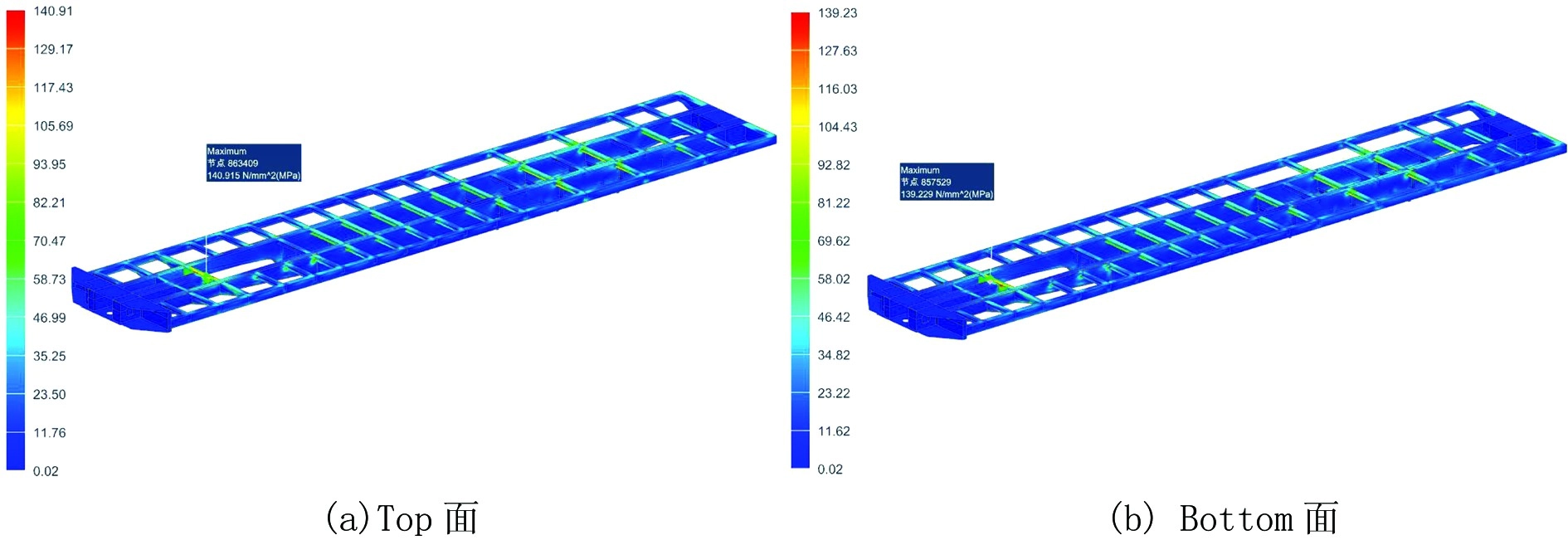
    Finite Element Analysis of Heavy Duty Semi Trailer Chassis Structure Q355 Steel

    Diagram of Semi-Trailer Chassis Structure (Finite Element Analysis Stress Map)

    1. Steel: The Backbone of Your Trailer

    Category Grade Application & Notes
    Mild Carbon Steel Q235B (ASTM A36) Toolboxes, Mudguards. Lowest cost, strictly prohibited for main load-bearing structures.
    HSLA Steel Q355B/C/D/E Main Beams, Cross Members. The industry standard, replacing Q345. Equivalent to S355JR or A572 Gr.50.
    High-Tensile Steel Q700L/E (T700) Lightweight Main Beams (15-30% weight reduction). Superior tensile strength.
    Wear-Resistant Steel BST1500 / NM450 Dump Trailer floors. Hardox equivalent. BST1500 offers ≥1500MPa tensile strength.
    Regulation Update: GB/T 1591-2018 strictly mandates Q355 over Q345, raising minimum yield strength to ≥355 MPa.

    III. Key Technical Indicators for Steel Selection

    The Selection Mantra: "L for Forming, X for Welding; E for Cold Climates, Preheat for 1500."

    Grade Yield Strength Carbon Equiv. (CEV) Impact Energy (-40℃) Best Use Case
    Q355E ≥355 MPa ≤0.42 ≥34 J Mining & Off-Road. High toughness.
    Q700E ≥700 MPa ≤0.50 ≥34 J Cold Climates (Russia/Canada).
    BST1500 ≥1300 MPa >0.60 Available @ -20℃ Extreme Wear Resistance.

    IV. 5 Major Failure Risks & Prevention Strategies

    Based on real-world failure analysis cases.

    🔴 Risk 1: Cold Brittleness (Brittle Fracture)

    Case Study: A dump trailer using standard BST700L (no impact rating) suffered a main beam fracture at -32°C. Tests revealed impact energy of only 8J (Safe threshold ≥27J).

    Prevention:

    1. Grade Selection: For cold regions, strictly specify Q355E or Q700E.
    2. Contract Clauses: Mandate "Charpy V-Notch Impact Energy ≥27J @ -40°C".

    🔴 Risk 2: Welding Cold Cracks
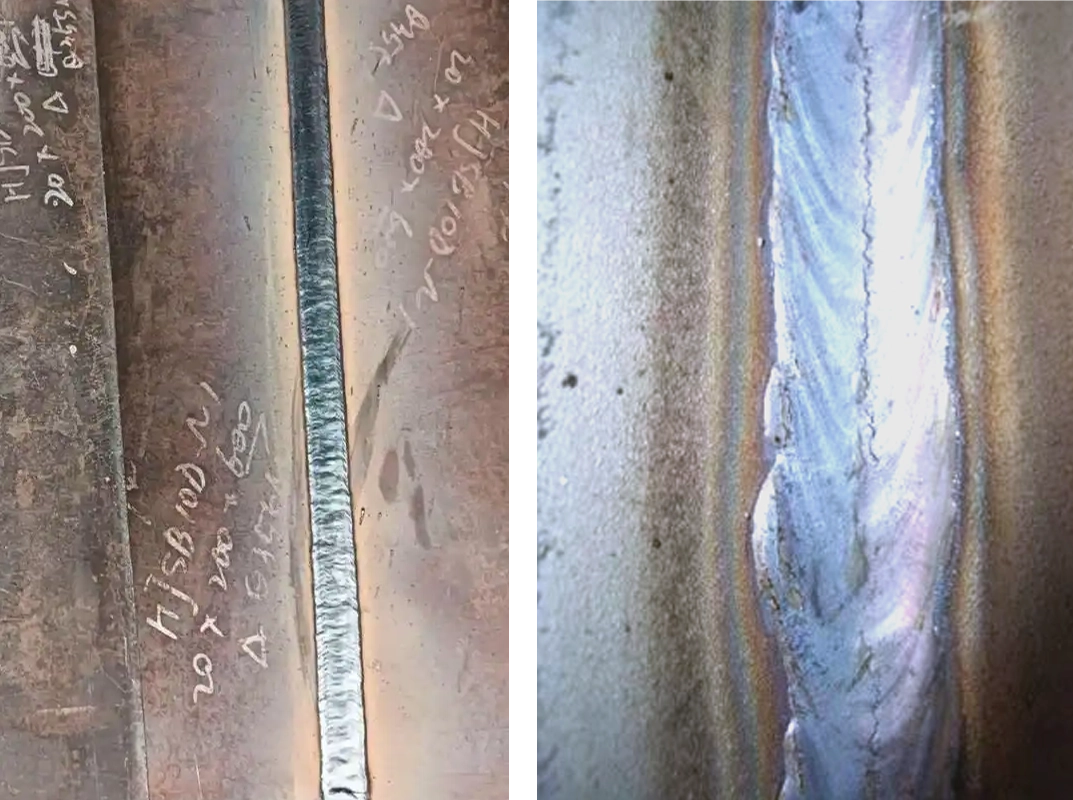
    Microscopic comparison of Healthy Weld vs. Cold Crack in High Tensile Steel

    Microscopic comparison of Healthy Weld vs. Cold Crack in High Tensile Steel

    Root Cause: High tensile steels have high carbon equivalents, leading to hydrogen-induced cracking.

    Prevention:

    1. Pre-heating: Q700 requires 150–200°C; BST1500 requires 200–250°C.
    2. Post-Weld Heat Treatment: Essential for releasing hydrogen.
    3. Inspection: 100% MT/UT testing is non-negotiable.

    🔴 Risk 3: Structural Buckling (Over-Lightweighting)

    Symptom: Chassis distortion on rough roads; "Wavy" buckling of the web plate.

    Prevention:

    1. Minimum Thickness: Web plate thickness should never go below 5mm, even when using Q700.
    2. Design Check: FEA Verification must show first-order modal frequency ≥8 Hz and a safety factor ≥2.0.
    3. Avoid: Do not blindly replace 6mm Q355 with 4mm Q700.

    🔴 Risk 4: Corrosion & Rust

    Prevention:

    1. Surface Prep: Mandatory Sa2.5 Sandblasting (Roughness Rz=40–70 μm).
    2. Coating System: Epoxy Zinc-Rich Primer (≥60μm) + Polyurethane Topcoat.
    3. Coastal Areas: Use Polyurea chassis armor.

    🔴 Risk 5: Counterfeit Materials

    Case: A factory used "HQ700" which turned out to be Q420. The chassis bent within 6 months.

    Prevention:

    1. Source: Buy only from mills with IATF 16949 certification (e.g., Baosteel, Ansteel).
    2. Verification: Request the original MTC (Mill Test Certificate) and cross-check Heat Numbers.
    3. On-Site Test: Perform spectral component analysis + tensile testing upon material arrival.

    V. Aluminum & Stainless Steel: Applications

    1. Aluminum Alloy (5083/6061)

    • Applications: Tanker bodies (5083-H116), Aviation Fuel (Non-sparking).
    • ⚠️ Galvanic Corrosion: Aluminum and Steel create a battery effect. Solution: Use Rubber/PTFE isolation gaskets; never bolt directly metal-to-metal.
    • ⚠️ Fatigue: Promote Friction Stir Welding (FSW) for 90% joint strength retention.

    2. Stainless Steel (304/316L)

    • Applications: Chemical tankers (316L for acid resistance).
    • ⚠️ Intergranular Corrosion: Always choose Low-Carbon grades (304L/316L).
    • ⚠️ Pickling: Post-weld acid washing (passivation) is mandatory.

    VI. Non-Metal Components: Flooring

    1. Composite Materials (FRP/GRP)

    Top choice for Reefer Trailers. No thermal bridging.

    • Selection Key: The Gel Coat must be UV-Resistant to prevent yellowing. Glass fiber content should be ≥25%.

    2. Flooring Materials

    Container Grade Bamboo China's Competitive Edge. High strength, water-resistant, and more durable than plywood. Standard thickness: 28-30mm.
    Hardwood (Apitong) The standard for US/European markets. Extreme nail-holding power for securing heavy machinery.

    VII. Joint Technology: Welding vs. Mechanical

    Structural integrity depends 30% on material and 70% on connection technology.

    1. Welding Process

    Material Consumables (AWS) Critical Process
    HSLA (Q355) ER70S-6 Standard MAG welding.
    High-Tensile (Q700) ER70-G Must Preheat 100-150℃!
    Wear-Resistant ER50-6 (Base) + ER70-G Preheat 200℃ + Soft wire base layer.
    Aluminum (5083) ER5356 / ER5183 Indoor welding only (Wind protection).
    Stainless (304) ER308L Must be Pickled & Passivated.

    2. Mechanical Fastening: The Huck Bolt

    ✅ The Solution for Steel-Aluminum Joints

    • Why: Steel and Aluminum cannot be welded together due to different melting points.
    • Benefit: Vibration resistance is 5x that of standard nuts/bolts. Permanent locking.
    • Anti-Corrosion: Must use Dacromet coated collars.

    3. Sealing Process (Waterproofing)

    The final defense for keeping cargo dry.

    • Acidic Silicone: Cheap but releases acetic acid, corroding metal and peeling paint.
    • MS Polymer Sealant: The industry standard. Solvent-free, UV resistant (10+ years), and paintable.

    VIII. Global Standards Comparison Table

    China GB Europe EN USA ASTM Note
    Q235B S235JR A36 Mild Steel
    Q355B S355JR A572 Gr.50 HSLA Steel
    Q700 S700MC A514 Gr.B High Tensile
    5083-H116 EN AW-5083 AA 5083 Marine Alum.

    IX. Total Cost of Ownership (TCO) & Recommendations

    💡 ROI Case Study

    An Aluminum Alloy Box Trailer is 2.2 tons lighter than a steel one. Based on 100,000 km/year, this weight saving translates to significant fuel savings or additional payload revenue. The Payback Period is typically under 6 months.

    Operational Scenario Chassis Material Body Material Tech Requirement
    General Cargo Q355B Corrugated Steel Standard Painting
    Long-Haul Logistics Q700E 5083 Aluminum Huck Bolt Connections
    Fuel/Hazardous Q550 5083 Aluminum Anti-static, Air-tightness
    Mining/Off-Road Q700E BST1500 (Hardox) Pre-heat weld, Chassis Armor

    Conclusion: The "Safety-Longevity-ROI" Trinity

    Modern semi-trailer sourcing is no longer just about price. Q355 offers the best baseline value, Q700 dominates lightweighting, and Aluminum is essential for specialized ROI. Our Advice: Don't just buy "Steel"—buy the right steel for your specific terrain.
  • The Ultimate Guide to Bulk Powder Tanker Semi Trailers: Operation, Maintenance & Specs

    The Ultimate Guide to Bulk Powder Tanker Semi Trailers: Operation, Maintenance & Specs

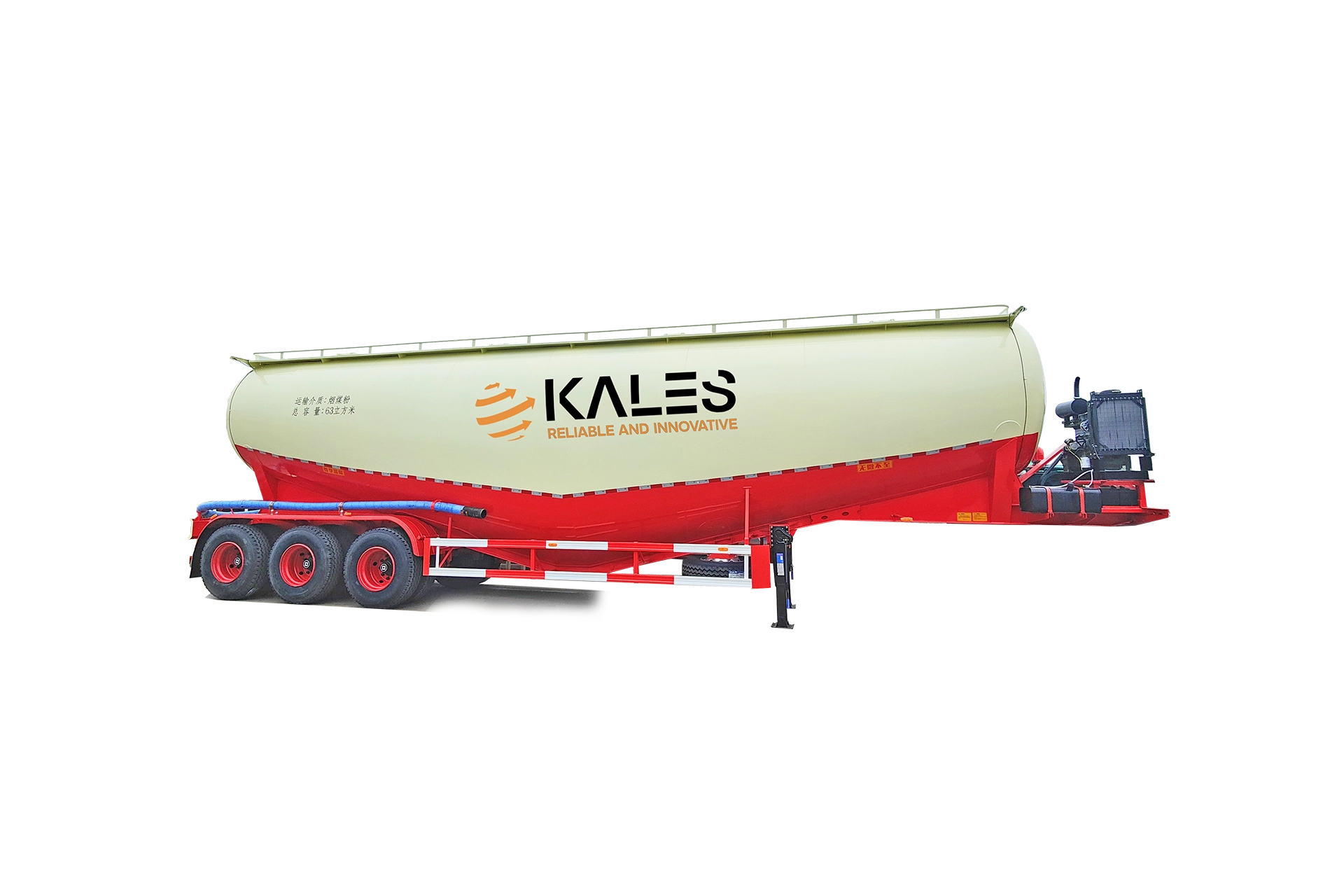
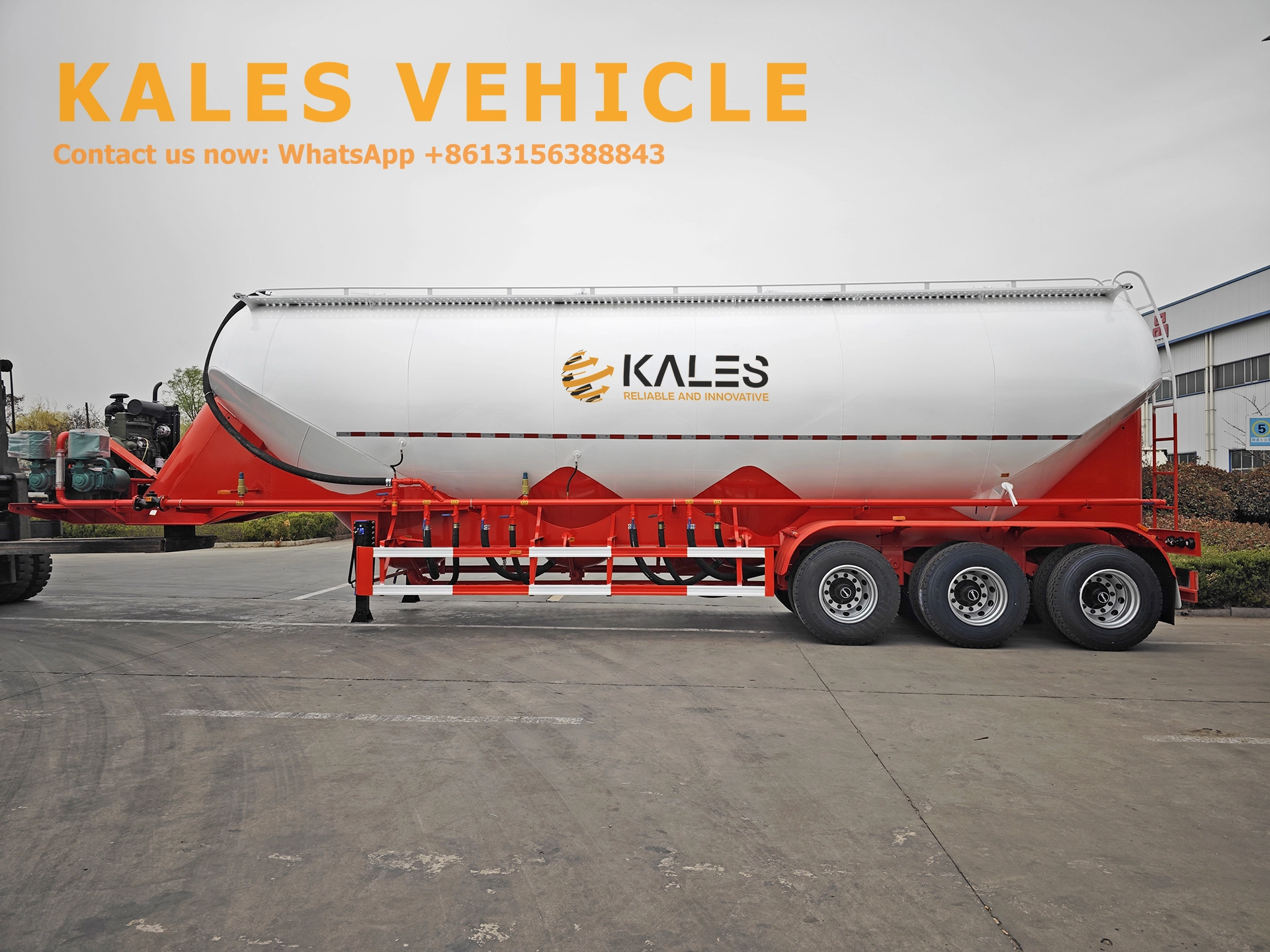
    In the heavy transport industry, efficiency is king. Whether you call it a pneumatic dry bulk trailer, a cement bulker, or a "silobas," choosing the right equipment and operating it correctly is crucial for profitability. As a leading manufacturer exporting to Africa, Latin America, and Central Asia, Kales Vehicle Co., Ltd. presents this comprehensive guide to mastering your bulk powder tanker semi trailer.


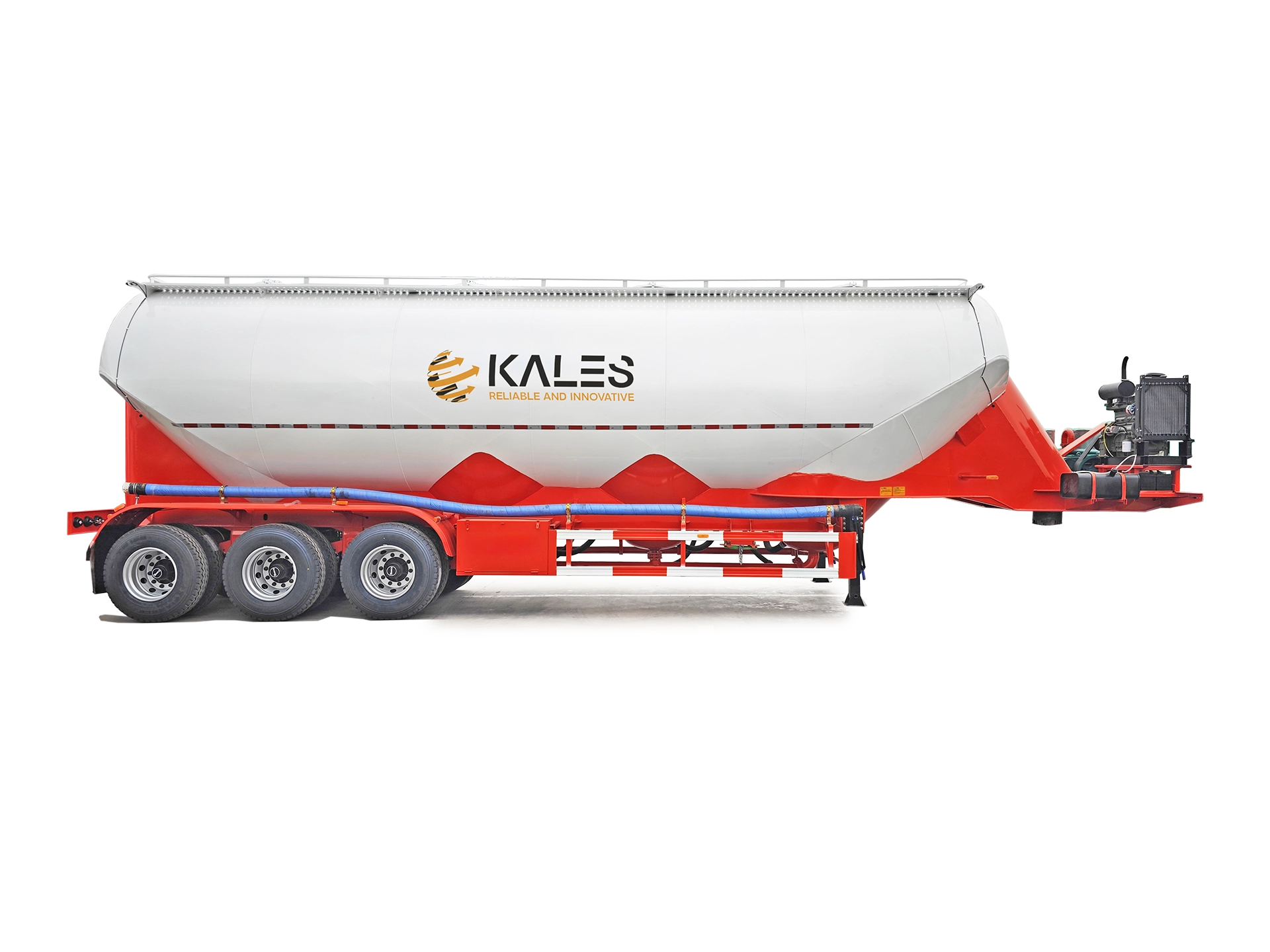
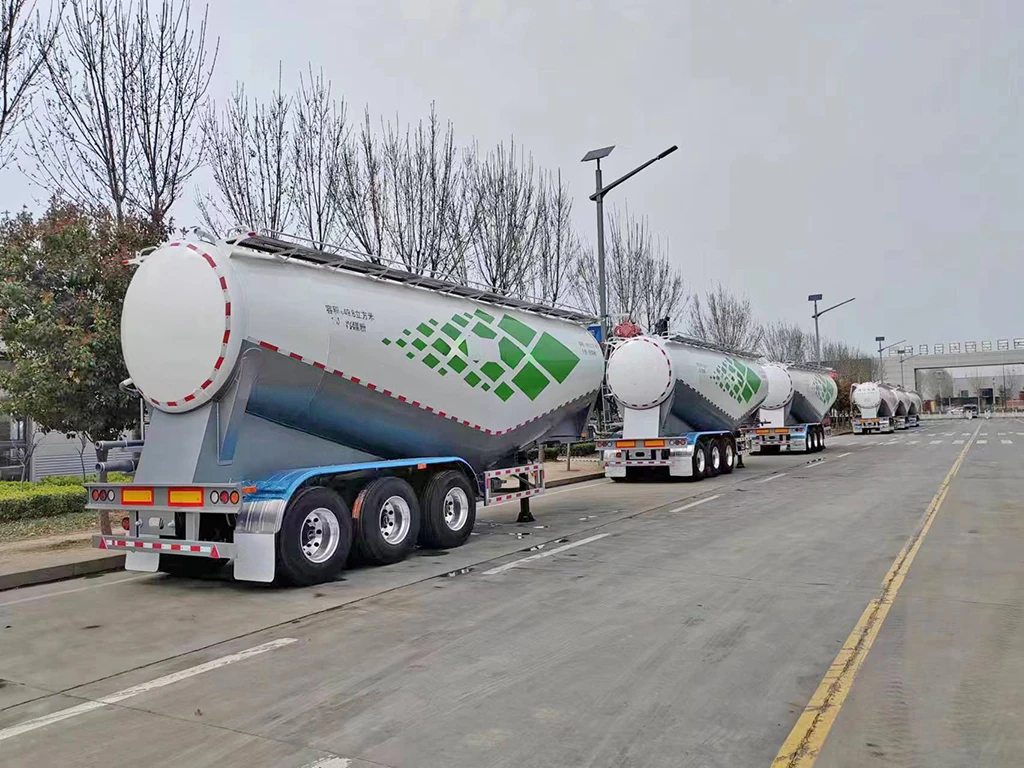
    4-Compartment 58m³ Powder Tanker trailer 58CBM Bulk Powder Transport trailer for sale
    Kales 3-axle bulk powder tanker semi trailer for cement transport ready for export.

    1. Why Choose Kales Pneumatic Dry Bulk Trailers?

    Designing trailers for rough terrain requires more than just steel; it requires engineering precision. Kales trailers are built to withstand the harsh road conditions of mining regions while delivering high-speed unloading.

    • ⚡ Fast Unloading Speed: Achieves 1.2–1.5 tons/minute, significantly reducing waiting time at the construction site.
    • 📉 Ultra-Low Residue: Our advanced fluidized bed design ensures a residue rate of <0.1%, saving you material costs on every trip.
    • 🛠️ World-Class Components: We use globally trusted brands for easy maintenance:
      • Diesel Engines: Reliable Weichai engines for consistent power.
      • Air Compressors: High-performance Bohai or Suzhou compressors (12m³ dual-cylinder).
      • Braking: Genuine WABCO braking systems for safety.
    • 🌍 Reinforced Chassis: Specially strengthened sub-frames and suspension systems designed for African and Central Asian road conditions.

    2. Selecting the Right Bulk Tanker Configuration

    Choosing between a V-shape, Cone-shape, or Tipper depends entirely on your cargo.

    🚛 Type A: Horizontal "V-Shape" Cement Trailer

    Best for: Cement, Fly Ash, Lime Powder.

    • Pros: Low center of gravity provides superior stability on highways. Simple internal structure allows for large capacity (up to 85m³).
    • Cons: Not suitable for coarse materials that don't fluidize well.

    Kales 3 axle 68m³ bulk powder tanker semi trailer for cement transport ready for

    🚀 Type B: Vertical "Cone" Tanker

    Best for: Granules, Fertilizer, Coarse materials.

    • Pros: Gravity-assisted discharge ensures clean unloading of heavier particles.
    • Cons: Higher center of gravity requires careful driving on curves.

    4-Compartment 58m³ Powder Tanker trailer 58CBM Bulk Powder Transport trailer for sale

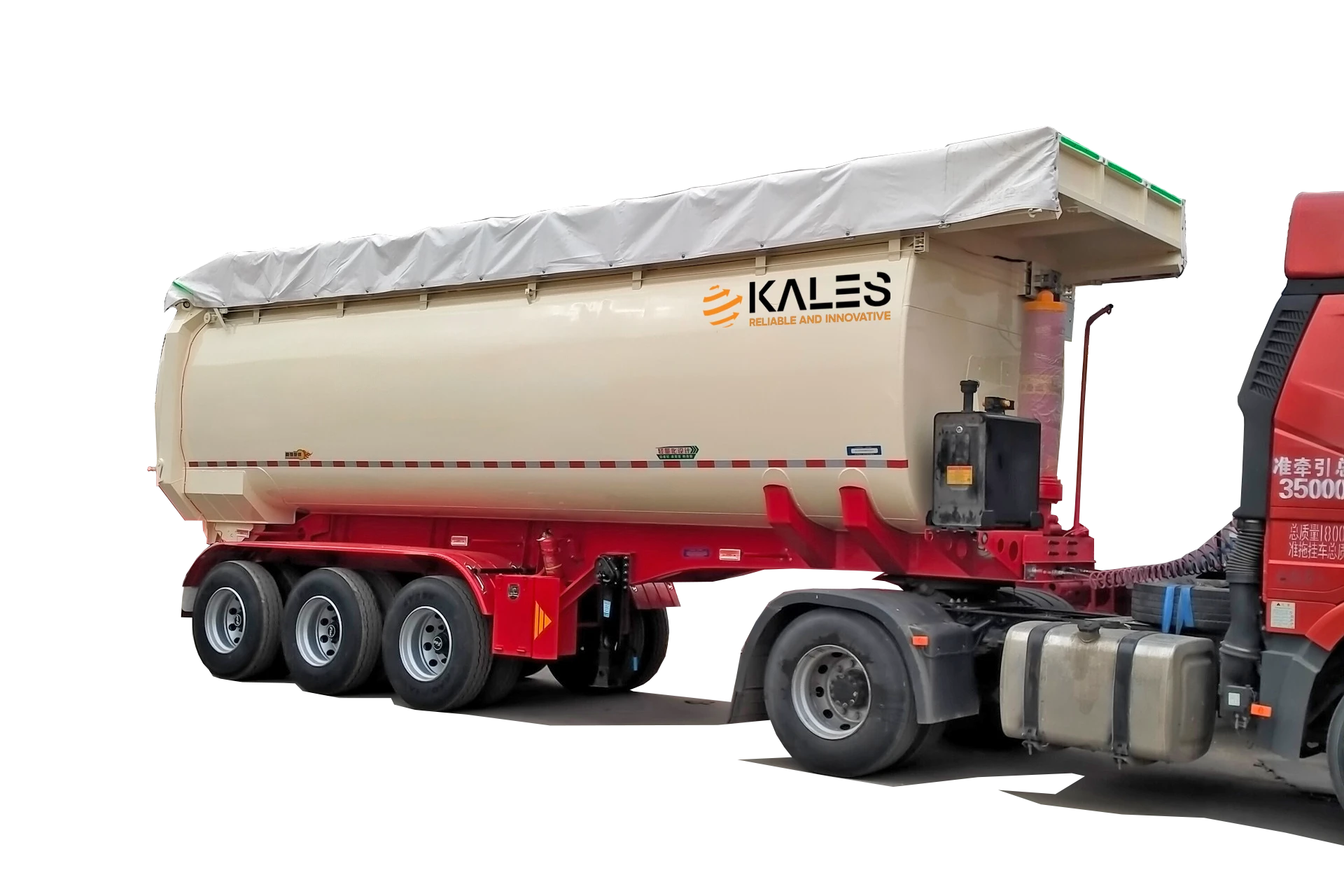
    🆙 Type C: Tipper (Lift-Type) Powder Tanker

    Best for: Food-grade Flour, PTA, Pharmaceutical Powders.

    • Pros: Zero residue makes it ideal for hygiene-sensitive cargo. Easy to clean internally.
    • Cons: Requires a flat, stable site for lifting to prevent tipping over.

    Kales 3 axle Tipper Lift Type Powder tanker semi trailer for cement transport ready for


    3. Power Source: Diesel Engine vs. PTO

    When ordering your Kales cement trailer, you must decide how to power the air compressor.

    Feature Independent Diesel Engine PTO (Power Take-Off)
    Flexibility High. Works with ANY truck head. Ideal for logistics companies with mixed fleets. Low. Must be paired with a specific truck head equipped with a PTO gearbox.
    Weight Heavier (Adds approx. 500kg). Lighter (Saves fuel during empty return trips).
    Maintenance Requires separate engine oil/filter changes. Low maintenance (uses truck engine power).

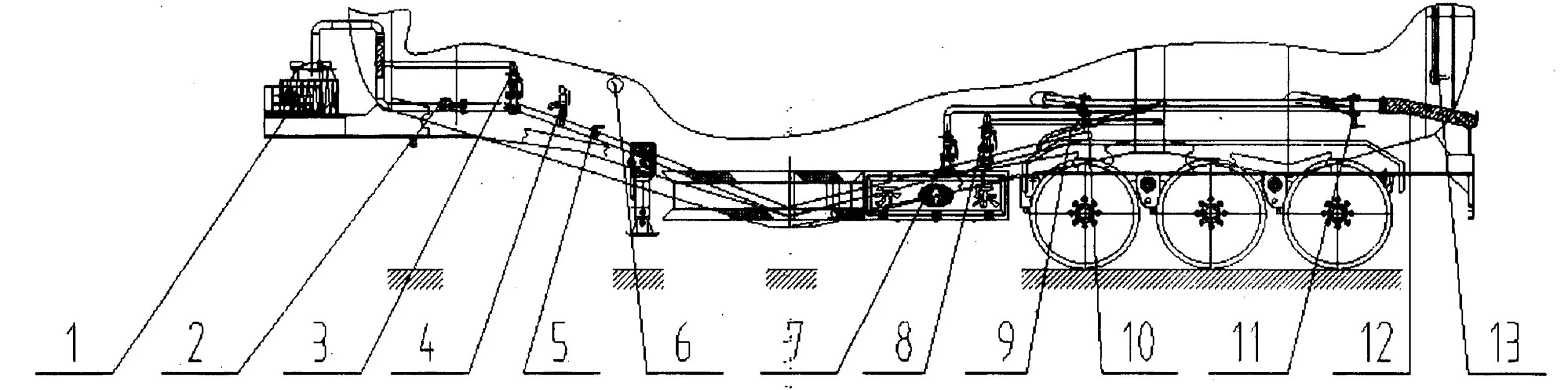
    Diagram of pneumatic conveying system showing air compressor check valve and discharge pipe scaled
    1

    1. Air Compressor、2. Check Valve、3. Front Air Chamber Inlet Valve、4. Safety Valve (0–0.3 MPa)、5. External Air Source、6. Pressure Gauge、7. Middle Air Chamber Inlet Valve、8. Rear Air Chamber Inlet Valve、9. Secondary Blow Valve、10. Front Compartment Discharge Butterfly Valve、11. Rear Compartment Discharge Butterfly Valve、12. Discharge Hose

    4. Standard Operating Procedure (SOP) for Safe Unloading

    Follow this step-by-step guide to ensure safety and prevent damage to the fluidization canvas.

    ⚠️ Critical Safety Rules

    MOISTURE WARNING: Never allow water into the tank or air lines. Wet cement creates concrete blockages that can ruin the tank.
    PRESSURE HAZARD: Never open the manhole cover while the pressure gauge reads above 0 MPa.

    Step 1: Start-Up

    1. Connect the discharge hose to the silo inlet securely.
    2. Close the Pressure Relief Valve and Discharge Butterfly Valve. Open the Air Inlet Valves.
    3. Start the Weichai diesel engine.
    4. Adjust the hand throttle to the rated RPM. (Target: Keep Air Compressor at 850–1000 RPM. Do not over-rev!)
    5. Wait until tank pressure builds to 0.2 MPa.

    Step 2: Unloading

    1. Open the Secondary Blow Valve (Assist Valve) to clear the discharge pipe.
    2. Slowly open the main Discharge Butterfly Valve.
    3. Monitor the pressure. If it drops rapidly, the tank is emptying.

    Step 3: Cleaning & Shutdown

    1. When pressure drops to 0.15–0.10 MPa, alternate opening and closing the front/rear inlet valves. This "sweeping" action clears residue.
    2. Stop the engine. Open the pressure relief valve to release all remaining air before disconnecting hoses.

    5. Troubleshooting: How to Unblock a Cement Tanker Pipe

    A clogged discharge hose is a nightmare for drivers. If your pressure gauge spikes (>0.25 MPa) and discharge stops, follow this emergency procedure.

    The "Pulse" Technique (Emergency Unblocking)

    1. STOP: Do not increase the throttle; this will pack the powder tighter.
    2. CLOSE: Close the main Discharge Butterfly Valve.
    3. BLAST: Open the Secondary Blow Valve fully to blast air through the hose.
    4. PULSE: Quickly open and close the Discharge Butterfly Valve. The sudden pressure bursts often dislodge the blockage.
    5. MANUAL: If this fails, stop the engine, release ALL pressure, and physically check the rubber hose. A hard section indicates the clog.

    6. Maintenance Guide for Rough Roads

    To extend the life of your dry bulk trailer in Africa or Central Asia, pay attention to these often-overlooked areas.

    ✅ Chassis & Suspension

    • U-Bolts: Retighten leaf spring U-bolts every 5,000 km. Loose bolts are the #1 cause of suspension failure on dirt roads.
    • Cushion Pads: Inspect the rubber pads between the tank body and chassis. Worn pads lead to metal-on-metal stress cracks.

    ✅ Fluidization System

    • Canvas Life: The breathable belt inside the tank usually lasts 1–2 years. If unloading slows down, replace it.
    • Water Separator: Drain the air compressor tank daily. Moisture is the enemy of the fluidization belt.

    Ready to Upgrade Your Fleet?

    Kales Vehicle Co., Ltd. delivers durable, high-performance transport solutions tailored to your market. Contact us today for technical diagrams and a custom quote.

    Get a Free Quote   View Product Catalog

  • The Ultimate Kales Semi-Trailer Maintenance Manual & Service Guide

    The Ultimate Kales Semi-Trailer Maintenance Manual & Service Guide

    To ensure your Kales Vehicle semi-trailer operates safely, reliably, and cost-effectively, following a scientific and scheduled preventative maintenance program is non-negotiable. This comprehensive guide combines Kales Vehicle's official OEM technical specifications with practical daily care tips, providing fleet managers and drivers with a master plan to proactively manage vehicle condition and eliminate safety risks.

    ⚠️ Important Safety Note: While this guide covers mechanical systems for Kales trailers, for ABS (Anti-lock Braking System) diagnostics, please refer strictly to the specialized ABS manufacturer's manual.

    ℹ️ Kales Tech Tip: Regularly clean the ABS tone ring and sensor to remove mud or metal debris, which are the most common causes of ABS warning light errors on heavy-duty transport vehicles.

    🆕 CRITICAL: New Kales Trailer Break-In Protocol (First 5,000 km)

    During the first month of operation, metal components will "settle" and stretch. According to Kales Vehicle engineering standards, it is mandatory to perform the following checks after the initial loaded run-in period of approximately 5,000 km or one month:

    • 🔹 Axle Alignment: Re-measure and correct alignment as suspension settling can alter the wheelbase, affecting tire life.
    • 🟥 Suspension U-Bolts: Retorque to 600–650 N·m. Loose U-bolts are the #1 cause of leaf spring breakage in commercial trailers.
    • 🟥 Wheel Nuts: Retorque to 450–500 N·m to prevent wheel loss.

    Part 1: The Master Inspection & Maintenance Schedule

    Below is the complete Kales Vehicle Inspection Checklist. This schedule is strictly aligned with our factory technical manual to ensure your warranty remains valid and your trailer stays road-ready.

    💡 Inspection Legend:

    • Daily: Driver pre-trip check (Walk-around inspection).
    • 1 / 3 / 12 Month: Professional maintenance required by certified mechanics.
    • Condition: Most checks should be performed in the Towing State (connected to tractor) or Unloaded where specified.
    System Sub-System Check Items Dly 1M 3M 12M Judgement Standard & Remarks
    Brake Device Pneumatic Brake Hose & connector Replace if cracks/damage. Note: Replace hose every 2 years; reseal connector once a year.
    Air leakage Leakage is not allowed (In towing state).
    Brake chamber pushrod stroke Standard Type: 30–35mm (Limit: 50mm).
    Long Stroke Type: Refer to spec (Limit ~64mm).
    Function of emergency relay valve In normal operation.
    Function of brake chamber No crack, wear, damage. Replace rubber diaphragm every 2 years.
    Air pressure state Should be Normal (In towing state).
    Components Exhaust sound of emergency relay valve Should be Normal.
    Internal state of air reservoir No moisture (Drain water).
    Double safe brake mechanism Brake voluntarily when air pressure in inflating line drops to 0.4 MPa.
    Brake cam wear No overwear or damage.
    Clearance: Drum & friction plate Max clearance within 0.5–0.7mm. Adjust if exceeded.
    Brake shoe friction plate / Drum wear 1. Replace plate if rivet head lower than 1mm.
    2. Drum wear: Refer to axle instruction.
    Wheel Axle Axles Cracks, damage and distortion No cracks, damage or too big distortion.
    Tire pressure Refer to tire use requirements (kPa / psi).
    Wheels & Tires Wheel cracks and damage Replace when there is serious crack or damage.
    Tire depth / abnormal wear Tire depth shall not be less than 3mm.
    Metal piece/stone/foreign matters Remove completely.
    Tightness of wheel bolts & nuts Torque: 450 ~ 500 N·m
    Axle bearing swing (Wheel cross shake) Shall not be more than 3mm. Adjust if too large.
    Oil seal aging and damage Replace.
    Suspension Leaf Spring Deflection on Right vs Left Deflection difference shall not be too large. Adjust if needed.
    Damage / Cracks Replace if damage is serious or if crack exists.
    Connecting Parts U bolts & nuts Torque: 600 ~ 650 N·m
    Connecting rod shakes Pin & bush wear: Max clearance ≤1mm.
    Balance beam shakes Copper bush wear: Max clearance ≤0.5mm.
    Wearing surface of the leaf spring seat No overwear. Replace if necessary.
    Leaf spring offset No offset allowed.
    Legs Landing Gear Performance (Work function) In normal operation.
    Damaged inner/outer cylinders; Loose parts No crack, damage, or looseness.
    Wear on rotating/sliding parts No serious wear.
    Electric System Wiring Connecting parts loose/damaged; Crossover cable damage No looseness or damage.
    Lamp Device Function; Grimy points or damaged In normal work; No grimy points or damage.
    Other Device General King pin: Wear, crack or looseness No crack or looseness.
    Check verticality & neck wear.
    50# Limit: 48mm / 90# Limit: 86mm.
    Twist lock: Function Complete and in normal work.
    Reflector & license plate Normal (No grimy points/damage/install state).
    Frame & body (Welding parts) No deformation or large distortion. No cracks at welding parts.
    Spare wheel: Steady state Firm fixation.
    Unusual parts found in former running Check parts to see if there is abnormality.
    Lubricating parts: State In good state.

    🔩 Kales Vehicle Official Torque Specifications Cheat Sheet

    Use these Kales factory-recommended torque values to prevent mechanical failure. Save this section for quick access by your maintenance team.

    Component Torque (N·m) Kales Maintenance Notes
    Wheel Nuts 450 – 500 Check daily during break-in
    Suspension U-Bolts 600 – 650 Retorque after heavy loads
    Kingpin Locknut 1100 – 1300 For new or loose pins
    Hub Lock Nut 400 (Initial) ⚠️ Seating Torque ONLY! Must back off 1/8–1/6 turn.
    Brake Chamber Clamp 30 If leakage occurs

    Note: These specifications are proprietary to Kales Vehicle Co., Ltd. and ensure the optimal performance of Kales-manufactured trailers.

    Part 2: Comprehensive Kales Semi-Trailer Maintenance Steps

    Step 1. Brake System Maintenance: The Core of Safety

    Proper air brake maintenance is critical for heavy-duty trailer safety. Follow these Kales Vehicle diagnostic steps:

    • Connect the trailer’s air brake system to the tractor’s system.
    • Check all hoses and connectors for cracks, abrasions, or leaks. Replace immediately if damaged.
    • 📅 Maintenance Schedule: Replace all rubber air hoses every 2 years as per Kales safety recommendations.
    • Pressurize to operating level and verify pressure via tractor gauge or emergency system gauge (Normal: 0.7~0.8 MPa).
    • With engine idling, fully depress the brake pedal and hold. Pressure drop must not exceed 30 kPa per min.
    • 🧼 Leak Detection: If leakage is suspected, apply soapy water to fittings—bubbles >25 mm in 3 seconds indicate a leak. Tighten or replace as needed.
    • ⚙️ Check the emergency relay valve:
      a) Close the semi-trailer air supply line shut-off valve on the tractor, then disconnect the air coupling and check whether the brakes automatically apply. If they do not apply automatically, the emergency relay valve is faulty.
      b) Reconnect the air coupling between the tractor and the semi-trailer’s air supply line, then open the shut-off valve and check whether the brakes automatically release.
      c) Check all parts of the emergency relay valve for air leaks. If soap bubbles formed at any connection do not exceed 7 mm in diameter within 3 seconds, the valve is considered leak-free and functioning normally.
      d) When the brakes are released, verify that exhaust air is discharged from the exhaust port. If so, this indicates normal operation.e) If the valve operates sluggishly or fails to function properly, replace the entire emergency relay valve.

    ⚠️ WARNING: Critical Safety Notices

    Do Not Modify: Never modify the Kales brake air system, including adding water-spray brake cooling or tapping air from trailer tanks. This compromises braking performance and may cause catastrophic failure.

    ❄️ Winter Care: In cold weather, moisture in the brake system can freeze inside valves (relay/ABS), causing brake drag, delayed release, or total lock-up.

    • Mandatory: Drain water from all semi-trailer air tanks DAILY.
    • Check the Air Dryer desiccant cartridge efficiency and replace if saturated.
    • Always drain air tanks after driving. If excessive air loss affects brake function, re-pressurize.

    🔧 Brake Chamber Checks:a) While operating the brakes, check whether the pushrod of the brake chamber moves freely and whether its stroke is within the specified range (standard working stroke: 30–35 mm). If the stroke exceeds 50 mm, an adjustment is required. *Note: For Long Stroke (LS) chambers, the limit may be higher (~64mm). Verify the chamber type tag before adjusting.

    b) With the brakes applied, check the brake chamber for air leaks:

    • Apply soapy water to the clamp area and inspect for leaks. If leakage is detected, tighten the clamp retaining nut to a torque of 30 N·m.
    • Check the front vent hole for air leakage. If leaking, replace the rubber diaphragm.
    • Inspect the exterior of the brake chamber for cracks or damage. If any are found, replace the entire brake chamber as necessary using Kales genuine parts.

    🔧 Adjustment & Reservoir:Reservoir: Open drain valve daily to discharge condensate. Re-pressurize if emergency valve activates.

    Manual Adjustment:

    a) If stroke > 50mm, tighten worm shaft clockwise until seated.

    b) Back off 90-180 degrees.

    c) Depress pedal ~10 times to auto-adjust.

    d) Road Test: Ensure vehicle does not pull to one side.

    For detailed adjustment, refer to the axle manufacturer’s operating manual provided with your Kales trailer.

    Step 2. Axle & Hub Maintenance

    Ensuring your trailer axles are in top condition is key to longevity. Follow this hub bearing adjustment procedure carefully:

    • Inspect axles and tires for bends, cracks, or damage. Use a jack with support blocks when lifting.

    🔧 Hub Bearing Adjustment Protocol:

    1. Tighten inner hub nut to 400 N·m (to seat the bearing).
    2. Back off (loosen) 1/8 to 1/6 turn (ensure wheel rotates freely).
    3. Rotate hub—Rotate the hub and gently tap it with a hand hammer (at the hub bearing area) to check whether it turns freely. If the resistance is excessive, slightly loosen the locking nut until the hub can rotate freely on its own without noticeable wobble. Then install a cotter pin to secure the locking nut in place.
    4. Apply sealant to hub cap before installation.
    • Daily: Check wheel nut tightness. If loose, retorque to 450–500 N·m.

    Step 3. Tire Care: Maximize Life & Safety

    Kales semi-trailer tire pressure check and maintenance guide for safety

    • 📉 Under-inflation: Causes shoulder wear, ply separation, blowouts, and higher fuel consumption.
    • 📈 Over-inflation: Accelerates center tread wear and increases risk of impact damage.
    • Maintenance: Maintain correct pressure (±20 kPa / ±3 psi) for all tires, including spares.
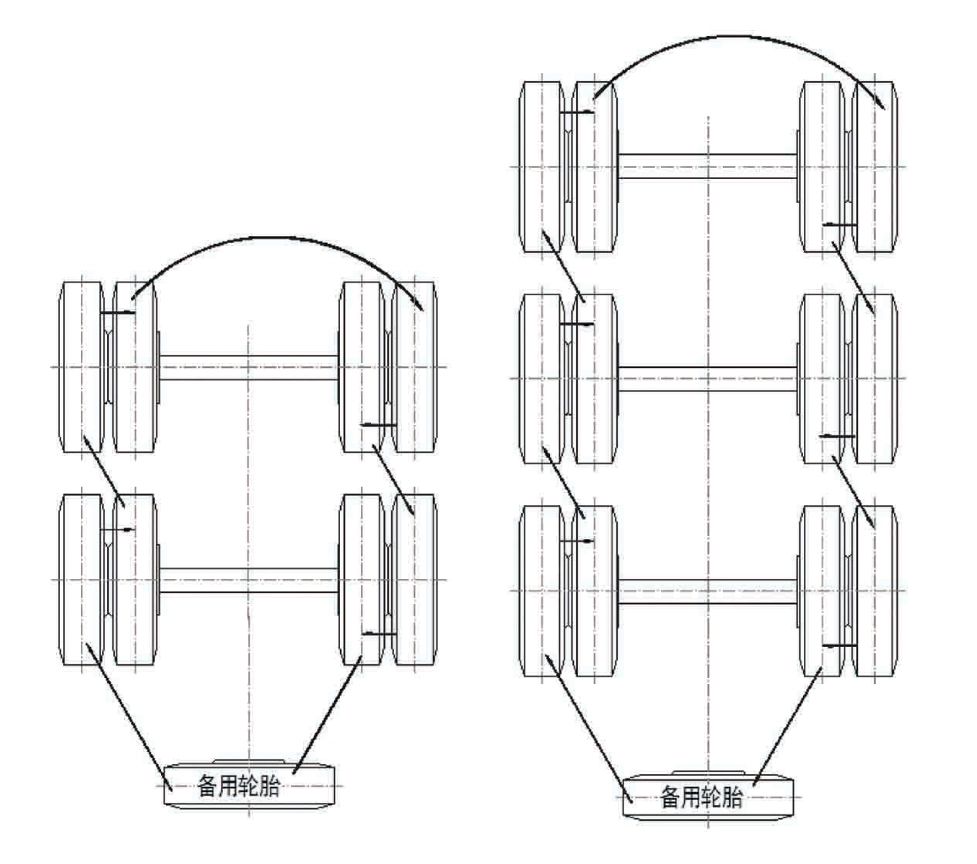
    • 🔄 Rotation: Tire wear varies depending on load, road conditions, and braking behavior. To promote even tire wear, tires should be rotated regularly—every 5,000 kilometers—following the sequence shown in the Kales tire rotation diagram above.
    • 🔧 Daily: The tightness of wheel nuts should be checked daily. If any looseness is found, the nuts must be retightened to a torque of 450–500 N·m.

    Step 4. Suspension System Maintenance

    A. Mechanical Suspension (Leaf Spring)

    • Daily: Check springs for breaks. If one side is damaged, replace both sides to maintain balance.
    • U-Bolts (Crucial):
      • Retorque to 600–650 N·m after heavy loads.
      • After replacing springs or every 5,000 km, inspect and retighten.
    • Bushings: Check connecting rod bushings—replace if cracked or worn (Limit: 1mm).

    B. Air Suspension

    • General Care: Avoid long-term parking. Drive a few km periodically to cycle air springs.
    • Cleaning: After muddy or asphalt roads, clean air springs and pistons. Replace if cracked, wrinkled, or abraded.
    • Every 6 months:
      • Inspect air dryer/filter—replace if clogged.
      • Check air line seals and valve tightness.
      • Verify U-bolt and air spring mounting bolt torque.
      • Drain air tanks (increase to every 2 weeks in freezing weather).
      • Verify ride height (H-value): Must match factory specification to ensure proper coupling and stability.
    • Every 3 months: Inspect shock absorbers for leaks or loose mounts.
    • Monthly: Check main beam bushings—no play should exist when rocking the trailer.

    Step 5. Landing Gear Maintenance

    • Check inner/outer tubes for smooth operation, deformation, or damage. Repair or replace as needed.
    • 🛢️ Lubrication: Inject grease into the gearbox and screw mechanism. Test high/low gears under no-load conditions to ensure smooth shifting. Use Kales-approved grease for optimal performance.

    Step 6. Kingpin & Fifth Wheel Maintenance

    The connection point between your tractor and Kales trailer requires diligent inspection:

    • Daily: Inspect kingpin for cracks, wear, or scoring.
    • 📏 Wear Limits: Replace if diameter < 48.0 mm (50#) or < 86.8 mm (90#).
    • 📐 Check Verticality: Replace if kingpin is bent, deformed, or shows uneven "neck" wear.
    • Clean and inspect fifth wheel plate—remove debris, check for warping.
    • Check the bolts of supporting seat and connection plate to see if they become loose, and if the supporting seat is damaged.
    • 🛢️ Lubrication: Lubricate kingpin and fifth wheel daily with high-quality grease (e.g., calcium-based ZG-4).

    🔎 Expert Checks:

    • For newly changed king pin or when the king pin becomes loose, tighten up the locknut of the king pin with tightening torque of 1100~1300 N·m.
    • Check the fifth wheel board to see if there is weld crack and if the wear plate is severely worn.
    • Check the lock hook, wearing ring and cross bolt to see if they are heavily damaged, deformed or become loose.
    • Check if the safety lock is in normal work, and whether the lever linkage is flexible or out of nimbleness.

    Step 7. Chassis Frame Inspection

    • Periodically inspect frame welds and main beams for cracks or distortion. Repair immediately if found. Kales Vehicle frames are built for durability, but regular checks ensure safety under heavy loads.

    Step 8. Axle Alignment & Wheelbase Adjustment

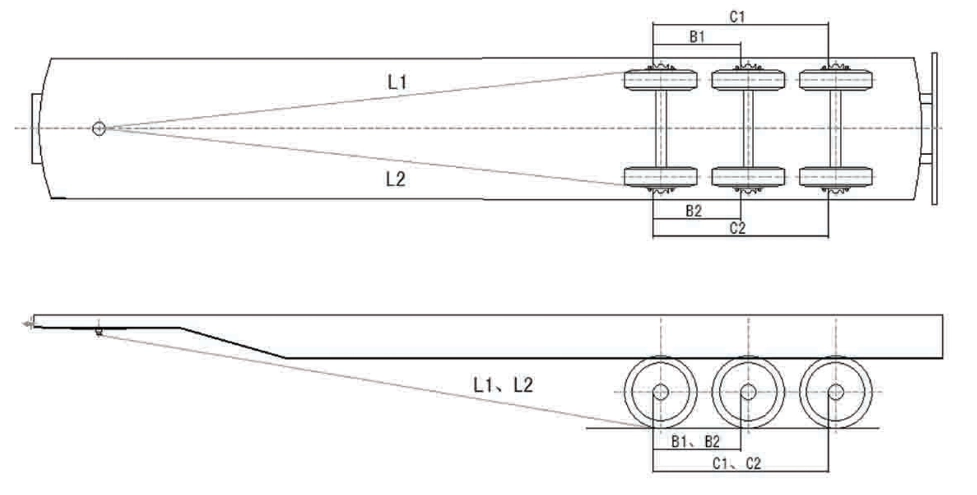
    Misalignment causes uneven tire wear and pulling. Check if U-bolts loosen or bushings wear.

    Semi-trailer axle alignment and wheelbase adjustment diagram - Kales Vehicle Guide

    🔧 Adjustment Procedure:

    1. Park on level ground, uncouple tractor, release brakes. Adjust landing gear so front/rear frame heights match (±2 mm).
    2. Remove outer tires and dust caps. Drop plumb lines from hub centers to ground.
    3. Adjust the middle axle first: Adjust the movable tie rod so that the perpendicularity of the middle axle centerline to the longitudinal center plane of the chassis in the horizontal direction is ≤6 mm—i.e., L₁ = L₂ (measured as the distance from the kingpin center to the center holes of the hub caps (axle end covers) on both sides of the middle axle). After adjustment, tighten the set screws on the rod ends.
    4. Adjust the front axle: Adjust movable tie rod 1 to ensure the horizontal distance between the front and middle axles meets a tolerance of ≤5 mm—i.e., B₁ = B₂ (measured as the distance between the center holes of the hub caps (axle end covers) on both sides of the front and middle axles).
    5. Adjust the rear axle: Adjust the movable tie rod to ensure the horizontal distance between the rear and middle axles meets a tolerance of ≤5 mm (measured as the distance between the center holes of the hub caps (axle end covers) on both sides of the middle and rear axles).
    6. Tighten all bolts and nuts: Use box wrenches or socket wrenches to symmetrically tighten all fasteners to the specified torque values according to their specifications.

    Part 3: Kales Technical Resources & Troubleshooting

    For detailed lubrication charts (grease types, specific points) and comprehensive troubleshooting guides (symptoms, causes, and solutions), please refer to our dedicated technical support pages:

    Conclusion

    By following this Kales semi-trailer maintenance manual, you protect your investment and ensure road safety. Regular maintenance according to these OEM standards is the best way to maximize the lifespan of your heavy-duty trailer.

    🔧 Need technical support or Genuine Kales Parts?
    Ensure your vehicle stays within warranty by using certified components.Contact Kales Service Team


  • New vs. Retread: How to Slash Semi-Trailer Tire Costs by 50%

    New vs. Retread: How to Slash Semi-Trailer Tire Costs by 50%

    Last updated: February 2026

    Lead Engineer at Kales

    Reviewed by Jason M.
    Lead Fleet Maintenance Engineer, Kales Vehicle

    What is tire retreading? Tire retreading is the process of applying a new rubber tread to an inspected, used heavy-duty tire casing. Unlike purchasing new commercial truck tires, retreads cost 30% to 50% less while delivering comparable wear-out mileage. According to NHTSA research, properly maintained retread tires are as safe as new tires for long-haul transportation.

    In the world of fleet management, tires are typically the second-largest operating expense after fuel. With a standard semi-trailer requiring 8 to 12 tires, constantly purchasing premium brand-new rubber can drain your budget quickly. As margins tighten, smart logistics companies are shifting their Cost Per Mile (CPM) strategy by relying on a proven alternative.

    The Data-Driven Comparison

    Based on 2023 commercial fleet data and federal safety studies.

    Feature New Commercial Tire Premium Retread Tire Source/Evidence
    Average Cost $250 – $600+ $150 – $300 Industry Averages
    Mileage Lifespan ~100,000 miles Comparable (~100k miles) Fleet Performance Data
    Highway Debris Origin 68% of tire debris 32% of tire debris Univ. of Michigan / NHTSA
    Casing Lifespan 1 Life Cycle 2 to 3 Retread Cycles Retreading Standards

    Dramatic reduction in raw materials for commercial truck tire retreading.

    Retreading significantly cuts manufacturing material requirements.

    Cost Savings: The 50% Rule

    Manufacturing a retread requires only 7 gallons of oil compared to the 22 gallons needed for a new tire. This dramatic reduction in raw materials translates to a massive price cut. By utilizing the existing steel-belted tire casing—which is engineered to outlast its original tread—fleets typically save 30% to 50% per tire.

    💰 Financial Impact: Replacing 8 worn trailer tires with retreads instead of new ones instantly saves a fleet between $960 and $1,600 per vehicle.

    📈 Real-World Impact: A Kales client operating a fleet of 50 curtain-sider trailers switched to a tier-1 retread program. By pairing these with our low-wear suspension systems, they reported a verified annual saving of $48,000 without a single blowout incident.

    NHTSA study proving heavy-duty tire retread safety and reliability.

    Properly maintained retreads meet strict federal safety standards.

    Safety Reliability: The NHTSA Verdict

    "Road alligators" (peeled tire treads on highways) are rarely the fault of the retreading process itself. A comprehensive study by the University of Michigan and the National Highway Traffic Safety Administration (NHTSA) concluded that road hazards and under-inflation are the primary causes of tire failure, affecting both new and retread tires equally.

    🛡️ Data Reality: Their data revealed that 68% of highway tire debris actually originates from NEW tires, debunking the myth that retreads are inherently unsafe.

    "Road hazards and under-inflation are the primary causes of tire failure, affecting both new and retread tires equally. Proper inflation maintenance is the true key to highway safety."

    National Highway Traffic Safety Administration (NHTSA)

    Non-destructive laser inspection during the heavy-duty tire retreading process.

    Advanced laser inspection guarantees casing structural integrity.

    The Retreading Limits & Process

    Not every tire qualifies for a second life. Reputable facilities utilize non-destructive testing and laser inspections to ensure zero structural damage. For high-speed, long-haul operations, a high-quality tier-1 casing (from brands like Michelin or Bridgestone) can typically be safely retreaded 2 to 3 times.

    ⚠️ Critical Condition: The casing must be less than 7 years old and must have been maintained with proper air pressure throughout its life cycle.
    📌 Transparency & Operational Variables:
    While retread tires offer mathematical savings, actual mileage and casing lifespan are strictly dependent on operational habits. Extreme off-road conditions, consistent overloading beyond trailer capacities, and neglect of daily tire pressure checks will severely reduce the performance of both new and retreaded tires alike. Always consult your tire manufacturer's specific pressure charts based on your axle loads.

    Frequently Asked Questions (FAQ)

    Are retread tires illegal for commercial trucks?

    No, retread tires are 100% legal. The Federal Motor Carrier Safety Administration (FMCSA) only restricts the use of retread tires on the steering (front) axles of passenger buses. They are highly recommended for drive and trailer axles on heavy-duty trucks.

    How many miles do retread trailer tires last?

    Modern, premium retreads deliver wear-out mileage that is virtually identical to comparably priced new tires. Depending on load weights and routes, a well-maintained trailer retread can easily reach 80,000 to 100,000 miles before needing to be replaced or recycled.

    Why do truck tires blow out on the highway?

    The leading cause of tire failure is under-inflation, which causes excessive heat buildup (hysteresis) that destroys the tire's structural integrity. This heat fatigue affects brand-new tires just as severely as retreads.

    Our Final Recommendation

    Retreading is not about being "cheap"—it is highly calculated mathematical efficiency. By combining reliable, brand-new tires on your steering axles with a robust retread routing program for your trailer axles, you maximize uptime, reduce environmental waste, and drastically lower your operating costs. The secret to success lies in protecting your initial investment: maintain strict tire pressure protocols so your new tire casings remain healthy enough to be retreaded multiple times.

    Protect your tire investment by pairing them with trailers built for heavy-duty stability. Check out Kales Vehicle's Heavy-Duty Semi-Trailers, engineered with premium axles and suspension systems designed to minimize uneven tire wear and extend your casing lifespans.

    Still undecided? Don't guess on load capacities and axle configurations. Let our engineering team simulate the ideal trailer and suspension setup for your fleet's routes.