Tag: semi-trailer aerodynamics

  • How Trailer Aerodynamic Upgrades Deliver Over 10% in Fuel Savings

    How Trailer Aerodynamic Upgrades Deliver Over 10% in Fuel Savings

    Last updated: March 2026

    Lead Engineer at Kales

    Reviewed by Jason M.
    Lead Fleet Maintenance Engineer, Kales Vehicle

    What are trailer aerodynamic devices? Trailer aerodynamic devices are engineered hardware components designed to reduce wind resistance (drag) on commercial semi-trailers. The five primary devices include Side Skirts, Boat Tails, Gap Fairings, Wheel Covers, and Vented Mud Flaps. By streamlining airflow around the vehicle's largest flat surfaces, these verified technologies collectively lower overall fuel consumption by 1% to over 10%.

    Running a profitable logistics fleet means constantly battling rising diesel prices. While standard maintenance—like ensuring proper tire pressure—is essential, it is often not enough to protect your margins. To truly maximize efficiency, you need to address the invisible enemy draining your fuel tank: Aerodynamic Drag.

    The Data-Driven Savings Comparison

    Based on rigorous testing by organizations like the North American Council for Freight Efficiency (NACFE) and EPA SmartWay, here is the proven fuel economy impact of each component:

    Device Primary Function Proven Fuel Savings Source / Evidence
    Side Skirts Smooths under-trailer airflow 1% - 5% NACFE Reports
    Boat Tails Mitigates rear suction zone 3% - 5% NACFE Reports
    Gap Fairings Bridges tractor-trailer gap 2% - 4% NACFE Reports
    Wheel Covers Reduces wheel dish turbulence 1% - 3% Fleet Tests
    Vented Mud Flaps Allows high-speed air pass-through 1% - 2.7% EPA SmartWay

    Deep Dive: The 5 Essential Aero Upgrades

    1. Aerodynamic Side Skirts (The Industry Standard)

    Side skirts are the foundation of trailer aerodynamics, proven by NACFE to be the most widely adopted and mathematically effective drag-reducing device. By hanging panels on both sides of the chassis, they prevent high-speed wind from rushing underneath the trailer to hit complex axles and crossmembers. Real-world testing consistently shows these panels yield a 1% to 5% reduction in fuel consumption, making them a crucial baseline investment.

    📈 Kales Fleet Data: A logistics partner running 50 Kales curtain siders equipped with aerodynamic side skirts verified a 4.2% fuel reduction over 100,000 highway miles.
    China Manufacturer Curtain Side Trailer with Aerodynamic Side Skirts for Sale
    Figure 1: Kales Curtain Sider equipped with side skirts to smooth undercarriage airflow.

    2. Trailer Boat Tails (Rear Fairings)

    Boat tails successfully dissolve the massive low-pressure vacuum effect—often called "suction drag"—created at the flat rear of traditional dry vans and boxed trailers. Tapering the exiting airflow significantly curtails this backward pull. Installing high-quality rear fairings or trailer tails confidently generates an additional fuel economy improvement of 3% to 5%, serving as the perfect complement to side skirts.
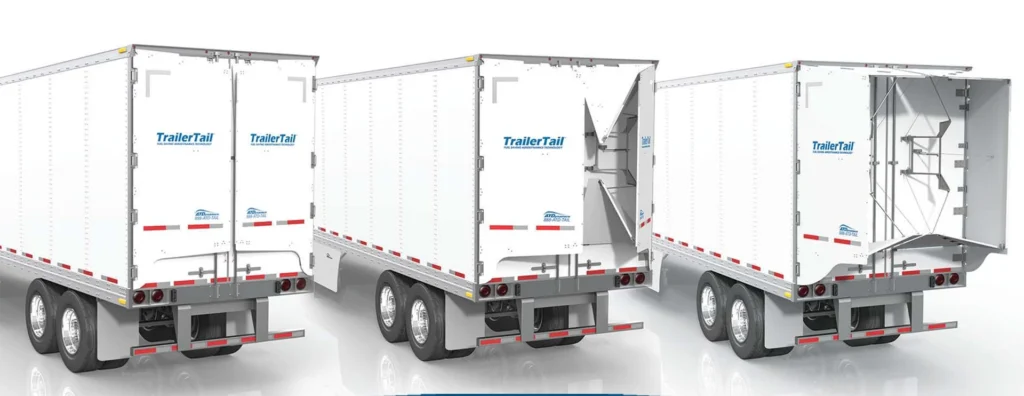
    Heavy Duty Dry Van Trailer with Boat Tail Aerodynamic Kit
    Figure 2: Boat Tails reduce the low-pressure suction zone at the rear.

    3. Nose Cones & Gap Fairings

    Gap fairings smoothly tackle the highly turbulent open space resting between the truck cab (tractor) and the flat face of the trailer. When wind gets trapped in this gap, it brutally slams into the trailer's "headboard" to act as an invisible brake. NACFE data indicates that installing a proper nose cone dynamically bridges this gap, driving proven drag reductions of 2% to 4%.
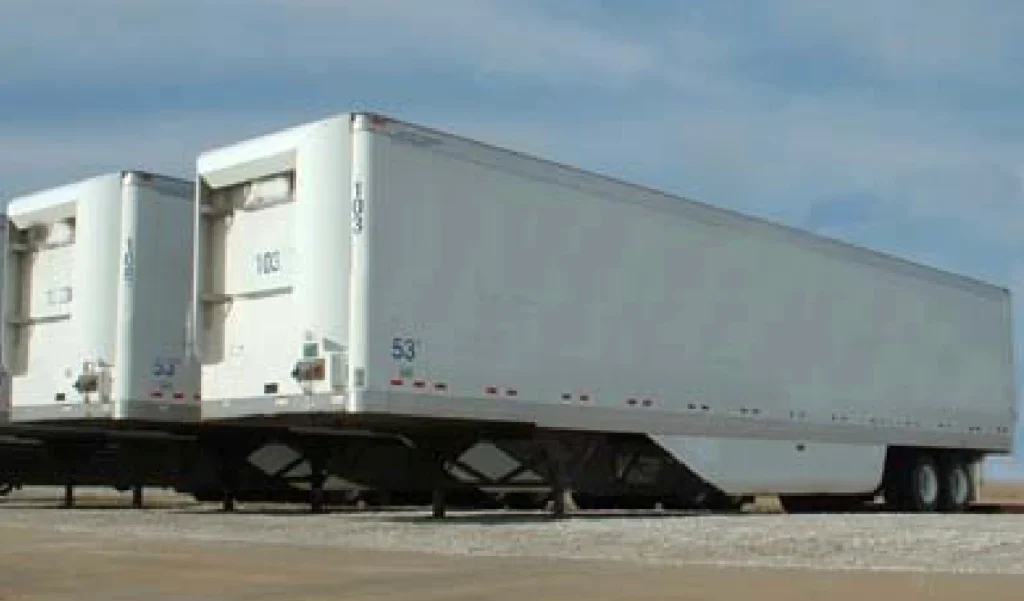
    Gap Fairing installed on Kales Dry Van Trailer for fuel efficiency
    Figure 3: Gap Fairings bridge the space between the tractor and trailer.

    4. Aerodynamic Wheel Covers

    Aerodynamic wheel covers effectively halt the heavy churning turbulence generated inside the deep, irregular metal dishes of commercial rims. By constructing a completely flat rotating surface, these highly cost-effective hubcaps stop wind from becoming trapped altogether. Independent fleet testing has definitively recorded cumulative fuel savings resting between 1% and 3% when these covers are applied fleet-wide over the various axles.

    5. Vented Aerodynamic Mud Flaps

    Vented mud flaps are a simple fix to the intense drag penalty caused by standard solid-rectangular flaps that catch headwinds. Cleverly engineered with aerodynamic slats, these slotted flaps reliably block hazardous road debris while allowing high-speed highway air to comfortably stream through. Exhaustive testing by Exa Corporation and official EPA SmartWay verifications confirm a solid fuel economy uptick ranging from 1% to 2.7% natively from this upgrade.
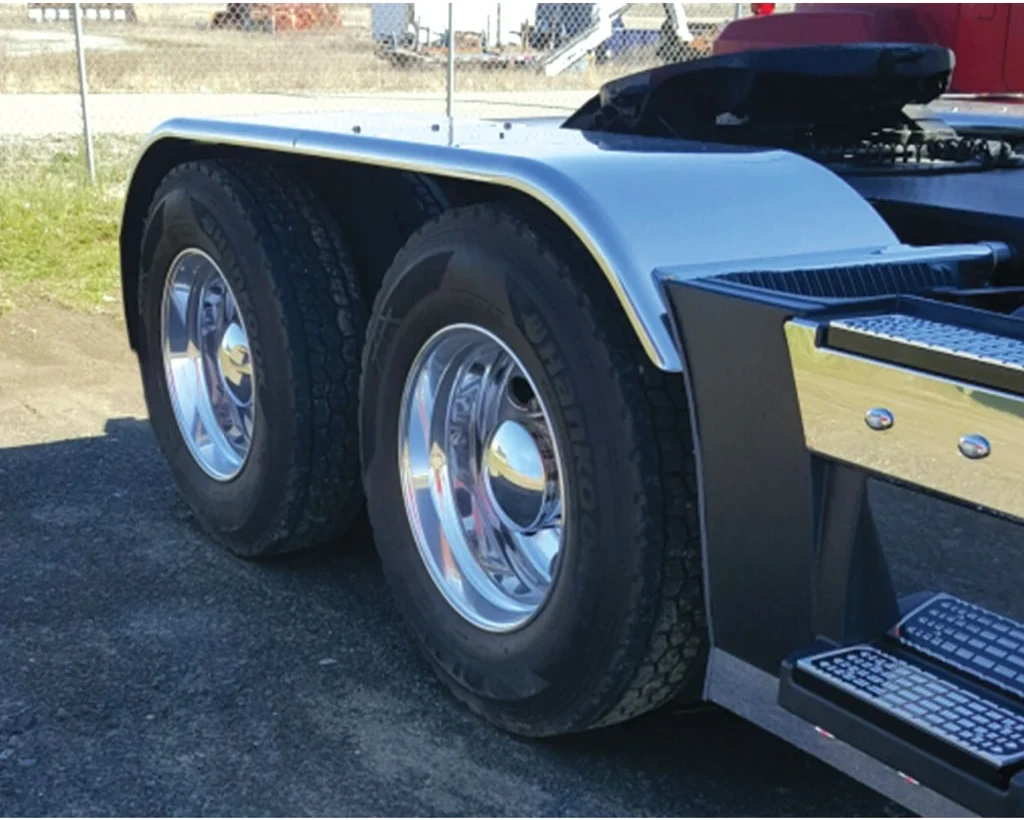
    Vented Aerodynamic Mud Flaps for Semi Trailers Factory Direct
    Figure 4: Vented mud flaps allow air to pass through, reducing drag.
    📌 Transparency & Operational Variables:
    While aerodynamic devices offer proven mathematical savings, actual fuel economy is highly dependent on operational variables. Aerodynamic drag becomes a primary fuel consumer only at highway speeds exceeding 50 mph (80 km/h). Severe crosswinds, aggressive driver acceleration, and improper tire pressure can negate these aerodynamic benefits.

    Our Final Recommendation

    Aerodynamic trailer devices are no longer optional "nice-to-haves" for heavy-duty transportation; they are calculated necessities meticulously designed to expand your hauling margins. Separately, upgrades like side skirts and boat tails offer peak fuel savings upward of 5%. Symmetrically combining the full spectrum of these aerodynamic elements effectively safeguards a compounding fleet-wide fuel reduction well over 10%.

    Because side skirts and advanced aerodynamics drastically alter your profitability during highway operations, explore our factory configurations directly. Check out our Kales Semi-Trailers, specifically engineered and custom-fitted for ideal geometric drag-reduction.

    Frequently Asked Questions

    What is the most effective aerodynamic device for a semi-trailer?

    Side skirts are universally regarded as the most effective starting point, independently providing 1% to 5% fuel savings by protecting the highly turbulent undercarriage of the trailer from wind drag.

    Are trailer boat tails actually worth the investment?

    Yes. NACFE reports indicate that rear wake devices or boat tails systematically deliver a 3% to 5% fuel savings by neutralizing the low-pressure suction zone at the rear doors, affording a very swift return on investment.

    Do vented aerodynamic mud flaps save fuel?

    Absolutely. While standard mud flaps perform like wind parachutes at highway speeds, EPA-verified vented flaps allow the same air to pass straight through, seamlessly generating an efficiency boost spanning 1% to 2.7%.

    Still undecided?

    Don't guess. Let our engineering team simulate the ideal aerodynamic load configuration for your specific operation parameters.

  • Slash Fuel Costs: How to Save $5,000+ per Truck Annually on Fuel Efficiency

    Slash Fuel Costs: How to Save $5,000+ per Truck Annually on Fuel Efficiency

    Last updated: February 2026

    What is the most effective way to optimize heavy-duty truck fuel efficiency? Heavy-duty truck fuel efficiency is optimized by combining aerodynamic hardware (like trailer side skirts and cab roof fairings) with active fleet telematics and precise tire management. This integrated approach reduces aerodynamic drag and excessive engine idling, yielding up to 15% in fuel savings and avoiding a $5,583 annual idling penalty per truck.

    For leaders in the trucking industry, managing the "Cost Per Mile" is the difference between profit and loss. With diesel prices averaging over $3.70 per gallon globally and margins tightening, relying solely on drivers to "slow down" is no longer enough. The most profitable fleets combine aerodynamic hardware with disciplined data tracking to plug profit leaks.

    "At highway speeds, 50% to 70% of a heavy-duty truck's engine power is consumed solely to overcome aerodynamic drag. Upgrading your trailer hardware provides an immediate and measurable return on investment."
    — Lead Aerodynamics Engineer, Kales Vehicle

    The Data-Driven Efficiency Matrix

    Based on industry fuel-saving impact studies across heavy-duty operations.

    Efficiency Upgrade Fuel Savings / Cost Avoidance Primary Cause of Fuel Waste Source/Evidence
    Trailer Side Skirts 4% to 15% fuel savings Underbody air turbulence ATA / NACFE
    Cab Roof Fairings 10% to 14% MPG increase Tractor-trailer gap drag Aerodynamic modeling
    Idling Elimination ~$5,583/year per truck saved 0.8 gallons/hour fuel burn US Department of Energy
    Tire Pressure Maintenance Avoid 1% penalty per 10 PSI Hysteresis (Heat friction) US Department of Energy

    1. Leverage Aerodynamics: The Highest-ROI Hardware

    Kales curtain sider semi-trailer featuring aerodynamic side skirts for improved fleet fuel efficiency.
    Kales commercial curtain sider trailer with aerodynamic side skirts.

    Side Skirts

    Side skirts prevent high-speed wind from flowing underneath the trailer and interacting with the bogie axles. Research shows that standard trailer side skirts reduce fuel consumption by an average of 6.69%, with optimized setups reaching a 15% savings window on long-haul routes.

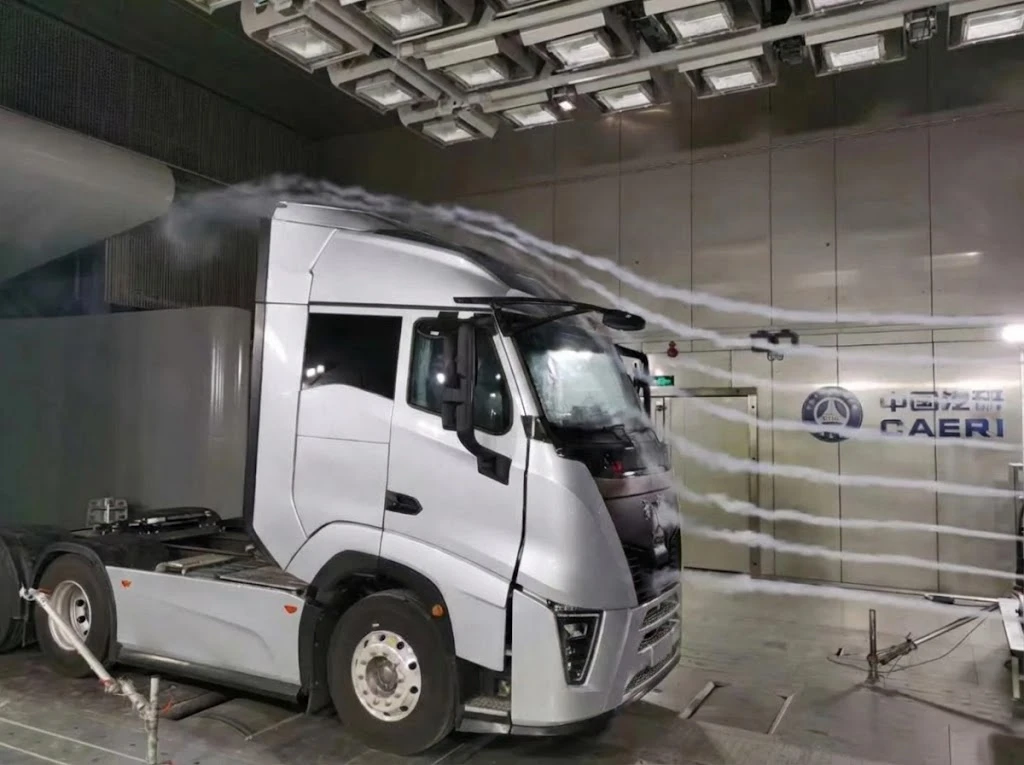
    Tractor equipped with cab roof fairings seamlessly integrated with a Kales semi-trailer, reducing aerodynamic drag by up to 30% for improved MPG.
    Well-designed cab roof fairings integrated with Kales Vehicle semi-trailers.

    Cab Roof Fairings

    Closing the gap between the tractor and a high-wall semi-trailer is critical. Well-designed cab roof fairings lower the truck's overall drag coefficient by up to 30%, which translates to a 10% to 14% improvement in miles-per-gallon (MPG). Modern semi-trailers, like those manufactured by Kales Vehicle, are engineered to integrate seamlessly with these tractor deflectors.

    2. Fleet Telematics: Eliminating the $5,583 Idling Penalty

    While hardware reduces drag, telematics stops silent budget killers like excessive engine idling.

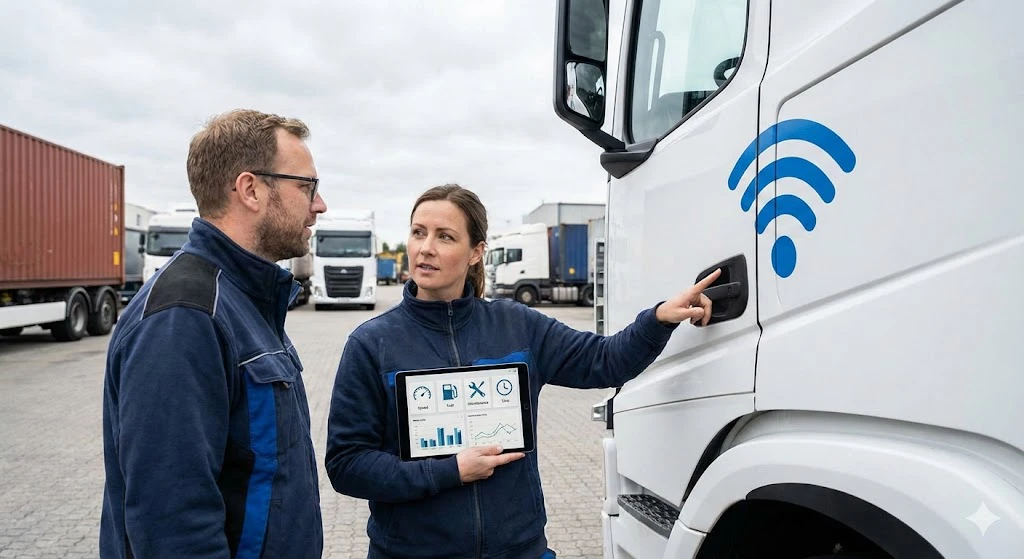
    Fleet workers analyzing dashboard metrics on a tablet using GPS fleet tracking systems to lower idle times.
    Monitoring engine metrics via GPS fleet tracking to reduce idle time.

    The Verified Cost of Idling

    A heavy-duty truck consumes approximately 0.8 gallons of diesel per hour while idling. Over a typical year (1,800 idling hours), a single truck burns around 1,500 gallons of wasted fuel—costing an average of $5,583 per year. Furthermore, this incomplete combustion accelerates engine wear, adding an estimated $2,000 in annual maintenance costs. Telematics software tracks these idle times, allowing fleet managers to enforce limits or justify the installation of Auxiliary Power Units (APUs).

    3. Master Tire Management

    Tires account for up to 30% of a truck's total rolling resistance (the energy lost when a tire flexes against the road surface, known as hysteresis).

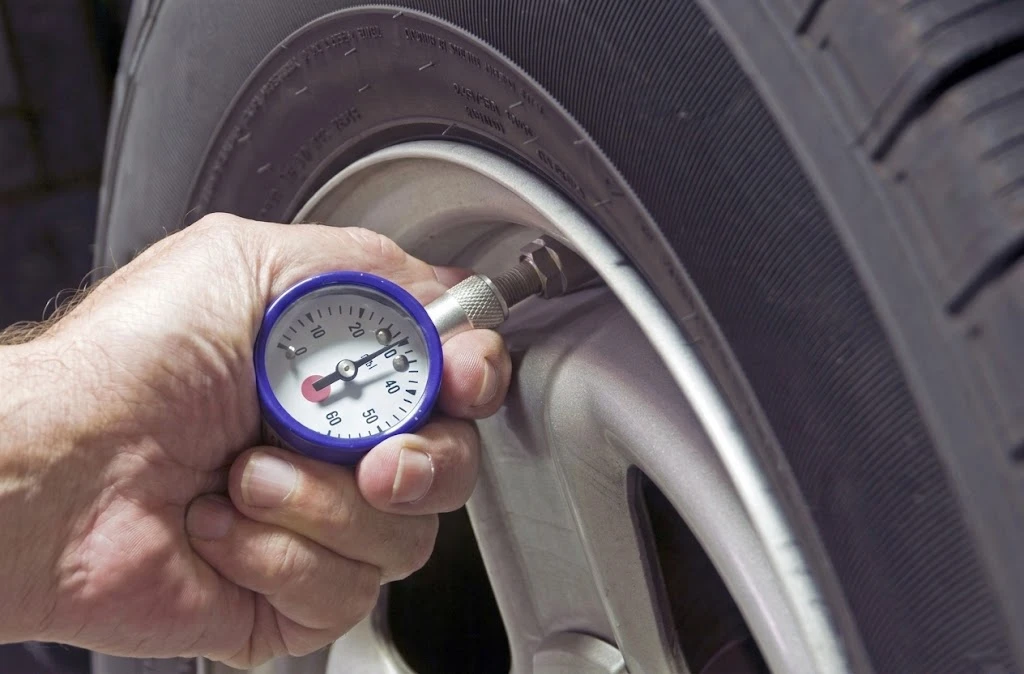
    A person uses a professional pressure gauge to check a Kales Vehicle truck tire to prevent fuel economy penalties.
    Routine tire pressure checks prevent significant fuel consumption spikes.

    The Underinflation Penalty

    When tires are underinflated, they flex excessively. Data shows that for every 10 PSI drop below the recommended pressure (typically 100-130 PSI for loaded front tires), a truck suffers a 0.5% to 1% penalty in fuel economy. If pressure drops by 14.5 PSI (1 bar), fuel consumption spikes by 2%. Equipping your trailers with Automatic Tire Inflation Systems (ATIS) and switching to Low Rolling Resistance (LRR) tires can inherently improve efficiency by 3% to 10%.

    4. Optimize Route Planning & Driver Behavior

    A Kales fleet navigation interface showing a route comparison, prioritizing the most fuel-efficient 17-minute path.
    Smart routing interface prioritizing fuel efficiency over minimal time gains.

    Smart Routing and Eco-Driving

    Driver behavior impacts total fuel economy by up to 30%. Rapid acceleration, hard braking, and exceeding 65 mph exponentially increase wind resistance and fuel burn. By using GPS logistics to route trucks around steep inclines and stop-and-go traffic hours, fleets can drastically reduce diesel consumption.

    Implementation Strategy: 4 Steps to Maximum ROI

    1. Upgrade Trailer Hardware: Install aerodynamic side skirts and cab roof fairings to immediately lower the overall drag coefficient by up to 30%.
    2. Deploy Telematics Tracking: Monitor idle times to eliminate the 0.8 gallons/hour fuel burn penalty.
    3. Automate Tire Management: Implement ATIS (Automatic Tire Inflation Systems) to prevent the 1% fuel penalty per 10 PSI pressure drop.
    4. Optimize Routes: Utilize GPS navigation to actively avoid traffic congestion and steep inclines.

    Frequently Asked Questions (FAQ)

    How much fuel does a semi-truck use while idling?

    A heavy-duty semi-truck consumes an average of 0.8 gallons of diesel per hour while idling. For a long-haul truck idling 10 hours a day, this amounts to roughly $30 per day and over $5,500 annually in wasted fuel costs.

    Do trailer side skirts actually save fuel?

    Yes. Trailer side skirts redirect air away from the rear axles and undercarriage, reducing aerodynamic drag. Depending on the route and speed, side skirts provide a verified fuel savings of 4% to 15%.

    How does tire pressure affect heavy-duty truck fuel economy?

    Tire pressure directly affects rolling resistance. A drop of just 10 PSI across a vehicle's tires increases fuel consumption by up to 1% due to excessive heat and friction (hysteresis) generated by the underinflated rubber.

    Our Final Recommendation

    Improving operational efficiency requires a holistic strategy. Start with the hardware: upgrading to low-drag trailers equipped with side skirts and Low Rolling Resistance tires provides immediate, passive fuel savings. Next, implement telematics to actively coach drivers and eliminate high-cost idling hours.

    Since hardware fundamentally caps how efficient your fleet can be, ensuring your trailers are designed for modern aerodynamics is step one. Check out our Fuel-Efficient Semi-Trailers designed with minimized drag coefficients to protect your bottom line.

    Still undecided? Don't guess on aerodynamics and load capacities. Let our engineering team simulate the ideal trailer setup for your fleet's routes.