Tag: Pre-trip Inspection

  • How to Hook Up a Semi-Trailer: First-Time Setup & Coupling Guide | KALES

    How to Hook Up a Semi-Trailer: First-Time Setup & Coupling Guide | KALES

    Lead Fleet Maintenance Engineer at Kales

    Reviewed by Jason M.
    Lead Fleet Maintenance Engineer, Kales Vehicle

    What is a semi-trailer pre-trip inspection and coupling procedure? A semi-trailer pre-trip inspection is a mandatory safety protocol involving the visual and mechanical verification of the fifth-wheel coupling, air brake system pressure (800-850 kPa), and wheel nut torque (600-650 N.m). Proper execution of these steps, in accordance with commercial driving regulations, prevents trailer detachment, load loss, and severe highway accidents.

    ⚠️ DANGER / WARNING

    Always park the tractor and semi-trailer on a level, firm surface and engage the parking brakes before attempting to couple or uncouple. Failure to visually verify that the fifth wheel jaws securely lock around the kingpin can result in trailer detachment, load loss, and severe accidents. Chock the trailer wheels before reversing.
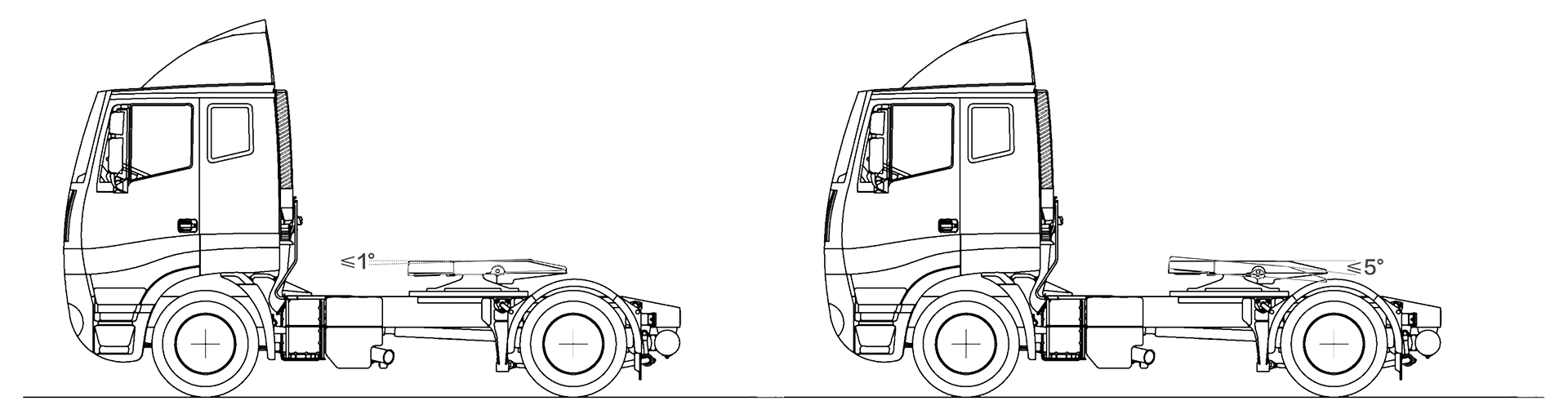
    Correct front to rear tilt angle of the fifth wheel for semi-trailers
    Figure 1: Ensure the correct front-to-rear tilt angle of the fifth wheel before attempting to couple the trailer.

    The "Emergency Room" Matrix

    Symptom Possible Root Cause Immediate Solution
    The fifth wheel jaws fail to lock around the semi-trailer kingpin. The trailer kingpin plate is resting too high relative to the tractor fifth wheel. Lower the landing gear so the kingpin plate sits 10 to 30 millimeters below the center of the fifth wheel.
    A loud hissing noise comes from the air line connections at the front of the trailer. The rubber seals inside the red or yellow gladhands are damaged, or dirt is blocking the connection port. Disconnect the gladhands, clean off any debris, and replace the rubber seals if they show signs of cracking.
    The trailer ABS warning light stays illuminated on the dashboard. The 7-pin electrical plug or the dedicated ISO ABS cable is not fully inserted into the tractor socket. Push the electrical cables firmly into their respective sockets and ensure the locking caps snap fully shut over them.
    Your new trailer exhibits loose wheel nuts shortly after beginning its first commercial haul. The new steel rims, studs, and paint layers naturally settle and compress during their initial period under heavy load. Retorque every wheel nut to the specified 600 to 650 N.m using a calibrated heavy-duty torque wrench.

    Critical Specs & Torque Settings

    • Wheel Nut Torque Requirement: 600 - 650 N.m
    • Initial Retorque Interval: First 50 - 100 km (30 - 60 miles) of loaded driving
    • Air Brake System Operating Pressure: 800 - 850 kPa (116 - 123 psi)
    • Optimal Coupling Height Difference: Kingpin plate 10 - 30 mm lower than fifth wheel center
    • Maximum Articulation Angle for Coupling: 5 degrees or less
    • Coupling Centerline Tolerance: Within 40 mm
    📈 Field Experience Note:
    In our experience servicing thousands of commercial fleets, failure to perform the mandatory 50km wheel nut retorque procedure is the number one cause of hub damage and catastrophic wheel-off incidents on brand-new trailers. Never skip this initial maintenance step.

    Step-by-Step Coupling Guide
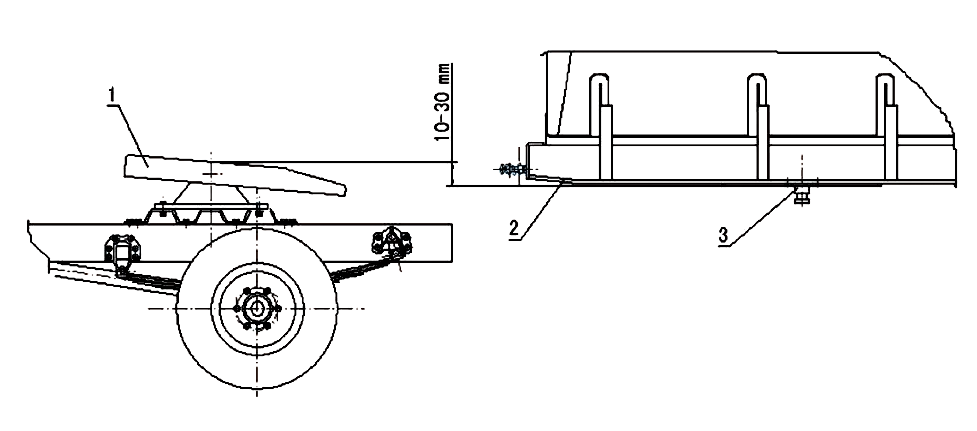
    Diagram showing proper height difference between fifth wheel and kingpin plate
    Figure 2: The kingpin plate must sit slightly lower than the fifth wheel.

    Step 1: Adjust Landing Gear

    Crank the landing gear handle to raise or lower the trailer. Set the height so the kingpin plate sits exactly 10 to 30 millimeters lower than the center of the tractor's fifth wheel. This allows the tractor chassis to physically lift the trailer slightly during engagement.
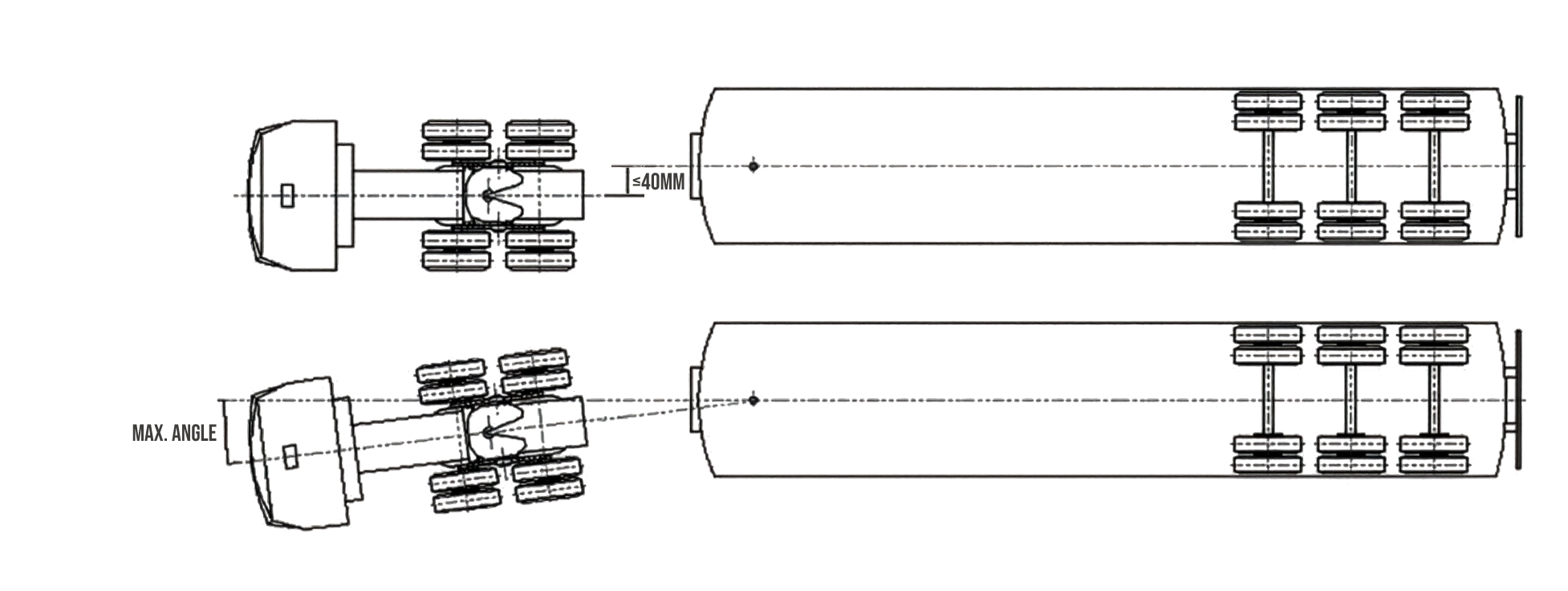
    Tractor to Semi-Trailer Articulation Angle Limit
    Figure 3: Keep articulation angles under 5 degrees for a safe coupling.

    Step 2: Align the Tractor

    Open the locking jaw mechanism on the fifth wheel. Reverse the tractor slowly, keeping the trailer and tractor centerlines within a 40-millimeter tolerance. Keep the tractor articulation angle equal to or less than 5 degrees to avoid damaging the kingpin.

    Step 3: Lock & Visually Inspect

    Reverse the tractor until the kingpin slides in and locks automatically into the fifth wheel. Exit the cab and shine a flashlight directly under the fifth wheel to visually confirm the jaws are entirely closed around the kingpin shank. Never rely solely on the sound of the latch or an in-cab tug test.

    Step 4: Connect Pneumatics & Electrical

    Attach the red gladhand to the supply line. Attach the yellow gladhand to the control line. Plug the 7-pin and ISO cables into the receptacles. Open the fast-fill supply valve to build the system pressure to at least 800 kPa, in accordance with FMCSA safety guidelines.

    Preventative Maintenance Checklist

    • Pre-Trip: Inspect all red and yellow gladhands to ensure the rubber seals are clean and intact.
    • Pre-Trip: Test all brake, turn, and clearance lights to confirm they illuminate brightly.
    • Pre-Trip: Build air pressure to 850 kPa and listen carefully around the axles for any hissing sounds indicating air leaks.
    • Post-Delivery (New Trailers): Retorque all the wheel nuts to 600-650 N.m after driving the first 50-100 kilometers under load.
    • Weekly: Verify that all suspension U-bolts and axle plates remain tight and free from metal fatigue cracks.
    • Weekly: Examine tire pressures and tread depths across all axles.

    Need Spare Parts?

    We stock all Kales Vehicle original parts, including heavy-duty gladhands, 7-pin electrical cords, ABS sensors, and replacement wheel studs. Consult the exploded view diagrams in your owner's manual to find the exact Part Number you require.

    Frequently Asked Questions

    Why did my semi-trailer wheel come loose during the first trip?

    New rims and studs naturally settle during their initial use under heavy load, causing the wheel nuts to lose their clamping force. You must retorque all wheel nuts to 600-650 N.m after your first 50 to 100 kilometers of loaded driving to prevent catastrophic wheel detachment.

    What is the correct height for coupling a semi-trailer to a tractor?

    The optimal height requires the trailer's kingpin plate to sit 10 to 30 millimeters lower than the center of the tractor's fifth wheel. This configuration allows the tractor chassis to physically lift the trailer slightly during engagement, ensuring a secure lock.

    How do I reliably test the air brake system during a pre-trip inspection?

    Build the air pressure to a range of 800 to 850 kPa (116 to 123 psi) and listen closely around the axles and gladhands for any hissing sounds that indicate an air leak. Test the service brakes physically to ensure all wheels engage simultaneously and evenly before entering the highway.

    Stuck? Let our Engineers Help.

    Experiencing persistent coupling issues or air leaks? Send us a photo or video of the affected component.
  • Preventing Semi-Trailer Brake Fade: How Proper Descents Stop 1,000°F Overheating

    Preventing Semi-Trailer Brake Fade: How Proper Descents Stop 1,000°F Overheating

    Last updated: March 2026

    Lead Engineer at Kales

    Reviewed by Jason M.
    Lead Fleet Maintenance Engineer, Kales Vehicle

    What is semi-trailer brake fade? Brake fade is the dangerous loss of a commercial truck's stopping power during long mountain descents. It occurs when aggressive, continuous braking pushes drum or rotor temperatures past 600°F (325°C), burning away friction limits. By 1,000°F (538°C), linings vaporize and mechanical fade expands the drums outward, resulting in catastrophic failure without warning.

    For even the most seasoned heavy-haul truck drivers, navigating continuous downhill grades remains a high-stakes physics problem. According to Federal Motor Carrier Safety Administration (FMCSA) data, brake-related problems contribute to nearly 30% of all large truck crashes. When transporting an 80,000lb load, downhill margins for error virtually disappear. To ensure the safety of your cargo and protect your commercial asset, drivers must master transmission braking and thermal management.

    The Physics of Downhill Safety

    How temperature escalates into total mechanical failure during continuous braking.

    Brake Temperature Physical Phenomenon Danger Level
    < 400°F (204°C) Normal heat dissipation through drums/rotors. Safe Operation
    ~ 600°F (325°C) Lubricants vaporize; friction coefficient drops rapidly. Warning (Fade Begins)
    1,000°F+ (538°C+) Linings vaporize; extreme heat expands the drum outward away from the shoes. Catastrophic Failure

    The Standardized Safety Process for Mountain Grades

    Truck driver performing pre-trip inspection on brakes before downhill driving
    A thorough inspection of brake pads and air systems is your first line of defense.

    Step 1: The "Pre-Trip Inspection" (PTI) Is Non-Negotiable 🔧

    Before cresting a mountain pass, you must verify the thermal capacity and active tolerance of your foundational components. Vehicles suffering from continuous operation wear are severely jeopardized on 6%+ grades.

    • Brake Clearances: Visually inspect slack adjusters. Brakes slightly out of adjustment heat up faster because other axles must absorb the stopping burden.
    • Air Systems: Bleed the air dryer to ensure zero moisture. Frozen or damp lines severely delay air transfer to the trailer relay valves.
    • Cooling Upgrades: In mining sectors using "brake water spray" cooling systems, ensure maximum water levels and clear nozzles.
    • Tire Degradation: 1,000°F brake heat bleeds directly into wheel rims and tires, elevating blowout risks on defective rubber.
    Truck driver downshifting gear before entering steep downhill slope
    Shift to a lower gear before cresting the peak to maximize engine braking.

    Step 2: Securing the "Right Gear" Strategy ⚙️

    Defensive thermal management begins with the transmission, not the foot pedal. The golden rule for long grades is utilizing lower gears before crossing the peak.

    🛑 The Danger of Neutral Coasting

    Coasting a semi-trailer in neutral is illegal and eliminates critical engine compression resistance. Furthermore, idling RPMs fail to power the air compressor fast enough to replace the massive air volume lost during continuous downhill braking.

    Truck dashboard showing retarder and engine brake indicators
    Utilizing auxiliary braking systems reduces the burden on foundation brakes.

    Step 3: Mastering "Snub Braking"

    "Riding" the brakes with light, continuous pressure acts as an immediate catalyst for glaze and drum expansion. Instead, the official CDL Guidelines mandate the Snub Braking cycle to force intermittent cooling intervals.

    1. Allow the vehicle speed to drift up to your established "safe control speed" (e.g., 40 mph).
    2. Apply service brakes firmly to cut the speed by 5-6 mph in approximately 3 seconds.
    3. Release the pedal completely. This flushes the friction zone with air, bleeding heat off the drum.
    4. Leverage the engine brake/retarder to hold the vehicle until it inevitably creeps back up, then repeat.
    Heavy truck driving in foggy and rainy mountain weather
    Rain or snow drastically reduces tire traction and brake effectiveness.

    Step 4: Weather Adaptation Formulas 🌧️

    Weather severely restricts the braking coefficient of friction on the asphalt. Search data warns that wet roads or icy conditions mandate an immediate drop in baseline downhill speed by at least 1/3 (or 33%). When pairing wet conditions with the "Jake Brake" (engine brake), monitor your drive axles—aggressive engine braking on slick surfaces can trigger a dangerous trailer jackknife.

    📌 Transparency & Operational Variables:
    While mastering Snub Braking drastically reduces the risk of overheating, downhill safety is never absolute. Extreme payload overloading beyond the trailer's rated capacity, undetected mechanical flaws in slack adjusters, or severe black ice can compromise even the best driving techniques. Drivers must always prioritize their company's specific safety manual and the manufacturer's load limits.

    Our Final Recommendation

    Downhill trailer safety relies entirely on avoiding extreme temperatures. A driver using Snub Braking essentially prevents the foundation brakes from breaching the 600°F (325°C) threshold where mechanical friction drop-off begins. Do not ride the pedal, remain in a lowered gear, and maintain your pneumatic lines impeccably.

    Since long-haul safety starts from the ground up, explore our KALES Heavy-Duty Semi-Trailers. Our units are structurally optimized to accommodate integrated high-performance axles and advanced auxiliary braking configurations specifically engineered for safe, loaded mountain descents.

    Frequently Asked Questions

    At what temperature does semi-truck brake fade occur?

    Brake fade initiates as drum temperatures surpass 600°F (325°C), burning away crucial friction lubricants. By the time temperatures escalate to 1,000°F (538°C) or higher, physical expansion forces (mechanical fade) push the drum dangerously out of the brake shoe's reach, leading to total failure.

    What is the "Snub Braking" technique?

    Snub braking is a commercial driving method for descents. Instead of resting a foot on the brake constantly, a driver firmly applies the brakes for about 3 seconds to shave off 5-6 mph from their top safe speed, then completely releases them to allow immediate airflow and cooling before repeating the cycle.

    What percentage of truck crashes involve brake problems?

    FMCSA analyses reveal that brake system issues or failures contribute to approximately 29% to 33% of all large truck accidents, stressing the vital importance of proper downhill heat management and pre-trip inspections.

    Still undecided on the safest trailer configuration?

    Don't guess. Let our engineering team configure the precise braking load parameters for your fleet's mountain operations.