Tag: Heavy Duty Trailer

  • Kales Tipper Trailer Operator Manual: Hydraulics, Safety & Maintenance Guide

    Kales Tipper Trailer Operator Manual: Hydraulics, Safety & Maintenance Guide

    This comprehensive guide is designed for operators and fleet managers using Kales Tipper Semi Trailers. From understanding the advanced hydraulic tipping system to mastering safe unloading procedures and performing routine maintenance, this manual ensures maximum operational efficiency, safety, and longevity for your heavy-duty transport equipment.


    1. Choosing the Right Kales Tipper: Rear vs. Side Tipping Trailer

    Selecting the correct unloading method is crucial for mining and construction logistics. Kales offers specialized tipping semi trailers designed for robust performance on rough terrain.

    ✅ The Kales Advantage: Whether utilizing a Rear Tipper or Side Tipper, all Kales trailers feature a unified, high-reliability hydraulic lifting mechanism. This ensures universal component compatibility, simplified maintenance, and proven performance across global operating conditions.

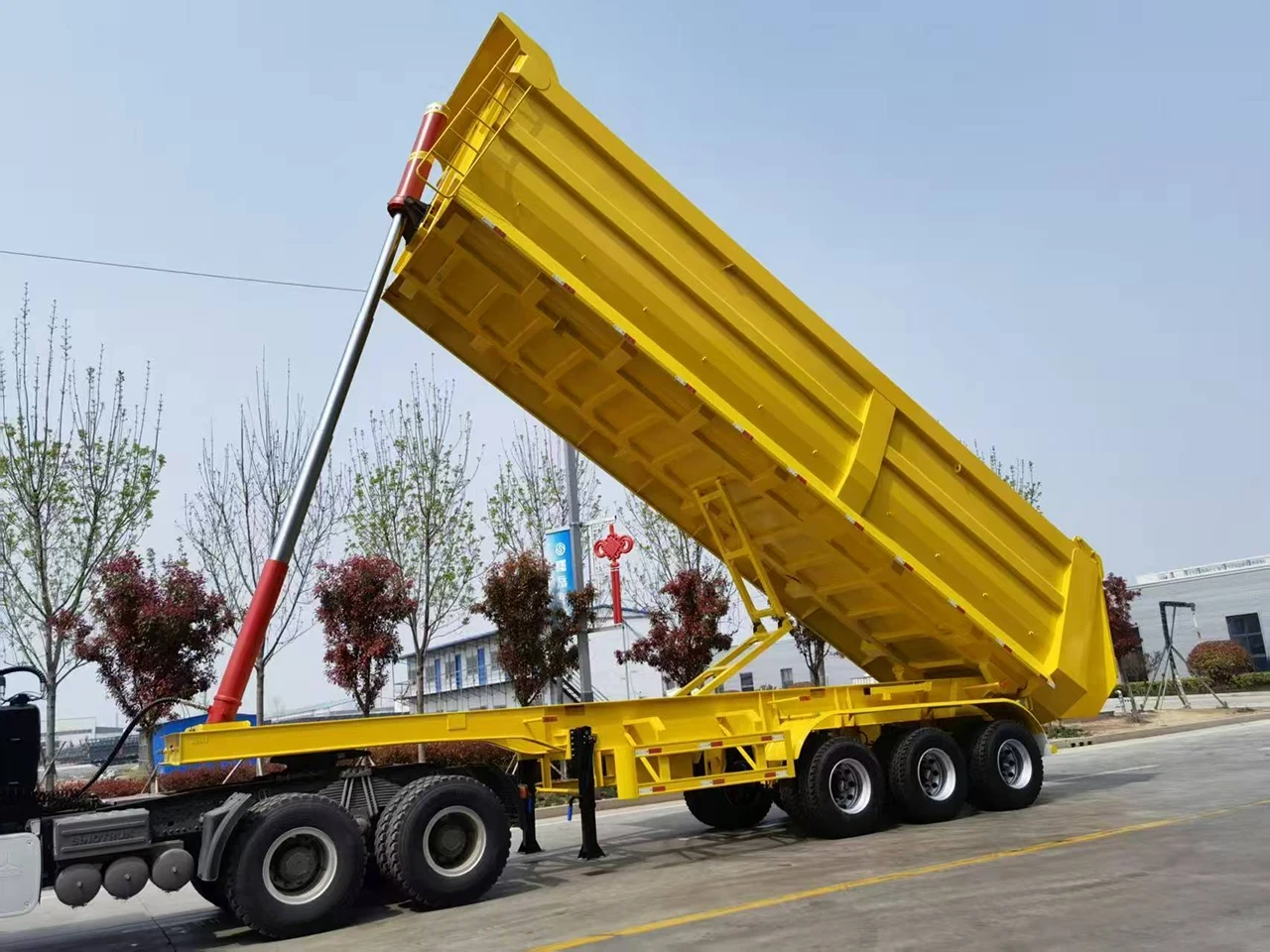
    1.1 Rear Tipper Trailer (End Dump)

    • Mechanism: The cargo box tilts backward, discharging material from the rear tailgate using a powerful telescopic cylinder.
    • Best Applications: Mining transport, stone quarries, gravel yards, and heavy construction sites.
    • Kales Features: Built with a heavy-duty chassis, front-mounted lifting cylinder, and a reinforced balance frame for superior stability during off-road operations.
    Heavy duty rear tipper semi trailer with hydraulic cylinder extended for mining

    1.2 Side Tipper Trailer (Side Tipping Semi Trailer)

    • Mechanism: The body tilts to either the left or right side, ideal for efficient roadside discharge.
    • Best Applications: Narrow railway projects, road construction, and sites with height limitations where a rear dump trailer cannot operate.
    • Kales Features: Utilizes an advanced multi-cylinder synchronized tipping system. Precision hydraulic balancing ensures twist-free tilting even with uneven loads.
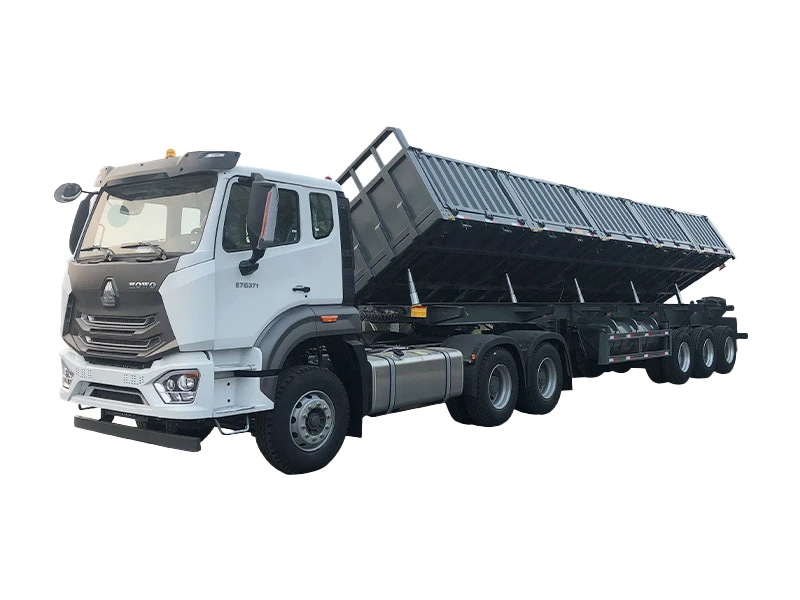
    Kales side tipper trailer unloading construction material on site

    2. The Core: Kales Hydraulic Tipping System Explained

    Kales tipper trailers rely on a mature high-pressure hydraulic system (~2.0 MPa), known for rapid response and precise lifting control under heavy loads.
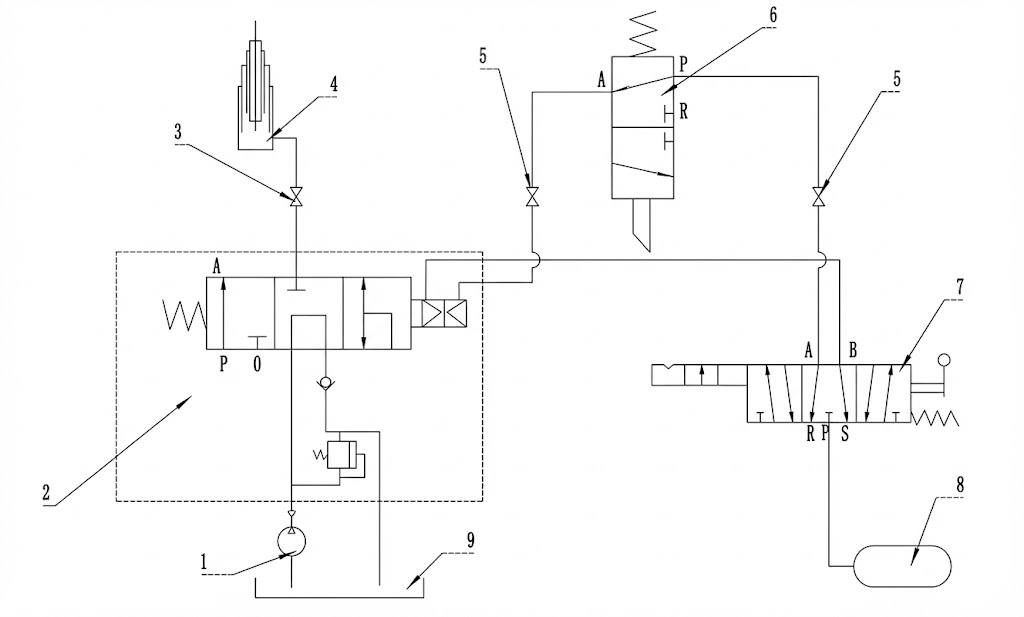
    Hydraulic System Diagram for Rear Tipper Trailer

    Rear Tipper Hydraulic Principle Diagram

    1. Gear Pump (Hydraulic Power)
    2. Pneumatic Control Valve
    3. PTO (Power Take-Off)
    4. Telescopic Lifting Cylinder
    5. Quick Coupling Fitting
    6. Limit Valve (Safety Stop)
    7. Manual Cab Control
    8. Air Source
    9. Hydraulic Oil Tank
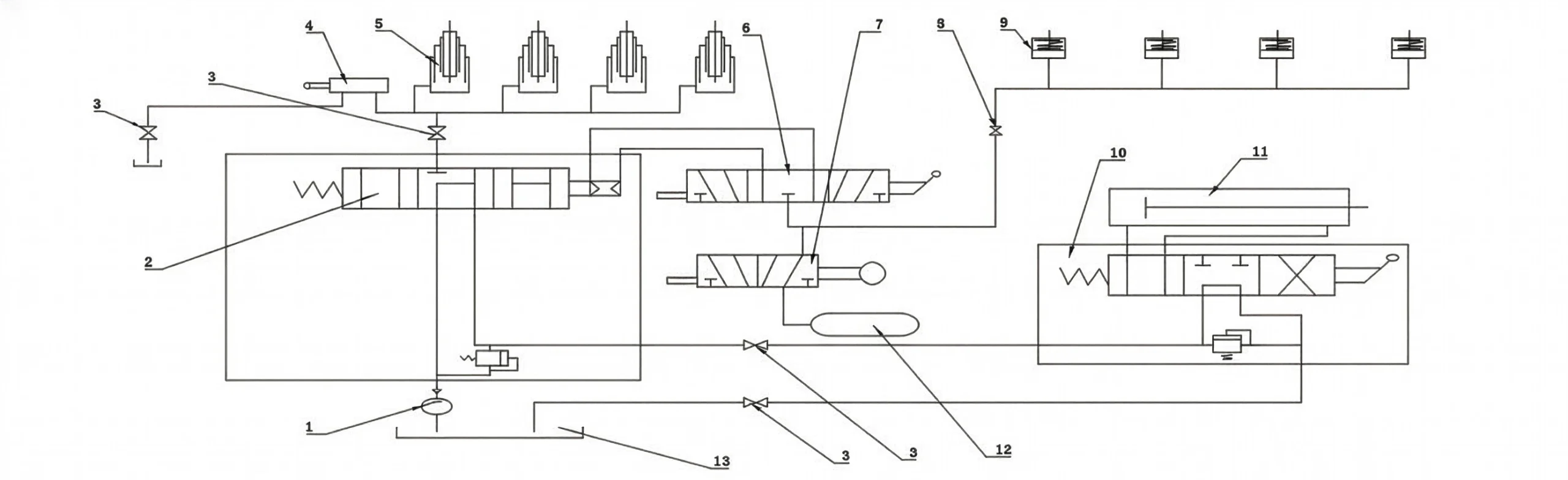

    Side Tipper Trailer Hydraulic Lifting System Diagram

    Side Tipper Hydraulic Principle Diagram

    1. Hydraulic Pump
    2. Directional Control Valve
    3. PTO Unit
    4. Hydraulic Limit Valve
    5. Side Shift Cylinders
    6. Tipping Control Valve
    7. Side Door Locking Cylinder
    8. Pneumatic Fitting

    Key Hydraulic Components

    • Power Unit (PTO Pump): Connects to the truck tractor gearbox to drive fluid flow.
    • Control Unit (Valve Block): The "brain" of the tipping system.
      • In-Cab Valve: Manual lever (Lift / Neutral / Lower).
      • Limit Valve: Automatically stops the tipper body at max angle to prevent rollover accidents.
    • Actuator (Hydraulic Cylinders): Hardened, chrome-plated cylinders designed for heavy-duty cycles and harsh environments.

    3. Step-by-Step Operating Guide

    ⚠️ Critical Safety Checklist:

    • Park on solid, level ground (Slope ≤3°). Never dump on soft soil or uneven terrain.
    • Engage the tractor parking brake completely.
    • Ensure no overhead obstructions (power lines, bridges) typically found in construction zones.

    3.1 Preparation (Side Tippers Only)

    1. Unlock the side gate using the pneumatic switch.
    2. Manually release any mechanical safety hooks on the cargo body.
    3. Check hinge pins: Ensure pins are locked on the correct side for discharge.

    3.2 Lifting the Trailer Body

    1. Depress clutch pedal and engage PTO switch. Slowly release clutch.
    2. Move in-cab lever to "LIFT".
    3. Gently increase engine RPM to control lift speed. Smooth operation prevents chassis stress.
    4. To pause: Disengage PTO and move lever to "Neutral".

    3.3 Lowering the Trailer Body

    1. Disengage PTO.
    2. Move control lever to "LOWER".
    3. Gravity will lower the tipper box. Control descent speed by feathering the lever.

    4. Troubleshooting: Tipper Hydraulic Faults

    Use this guide to diagnose common issues with your tipping semi trailer.

    Symptom Most Likely Cause Quick Check Action
    Tipper Won't Lift Electrical Issue (PTO) Check fuse; Listen for solenoid "click" when engaging PTO.
    Pneumatic Issue Check truck air pressure; Check for blocked air lines to the valve.
    Hydraulic Issue Check if Limit Valve is stuck. Check hydraulic oil level.
    Tipper Won't Lower Pneumatic Control Failure Check air lines on the lowering side of the valve.
    Slow Lifting Speed Pump Wear / Air Leaks Check engine RPM; Listen for air hissing; Check gear pump condition.
    Body Vibration/Jitters Low Hydraulic Oil Stop immediately. Check oil tank sight glass to prevent pump damage.
    🔧 Pro Tip: The most common cause for "No Lift" is a stuck Limit Valve due to mud or rust from off-road sites. Clean and lubricate regularly.

    5. Maintenance Schedule & Lubricants

    5.1 Hydraulic Fluid Specifications

    Climate Condition Recommended Oil (ISO) Performance Benefit
    Winter (Cold Regions) L-HM 32 Anti-Wear Low viscosity ensures fast flow during cold starts.
    Summer (Hot/Tropical) L-HM 46 Anti-Wear High viscosity protects the pump in high-temperature environments (e.g., Africa/Middle East/SE Asia).

    5.2 Maintenance Checklist

    • Daily: Check for leaks in hoses and the hydraulic tank. Verify PTO engagement.
    • Weekly: Grease cylinder pins and tailgate hinges with Heavy Duty Lithium Grease.
    • Monthly: Retorque structural bolts on the chassis frame.
    • Every 6 Months: Drain tank, replace return filter, and refill with fresh hydraulic oil.

    Need Spare Parts for Kales Tippers?

    Keep your fleet running with genuine OEM parts for Kales Tipper Semi Trailers.
    Contact Kales Support Team

  • Manufacturing Kales Bulk Powder Tankers: Precision Engineering for Cement & Fly Ash Trailers

    Manufacturing Kales Bulk Powder Tankers: Precision Engineering for Cement & Fly Ash Trailers

    Lead Structural Engineer at Kales

    Reviewed by Jason M.
    Chief Structural Engineer, Kales Vehicle

    What is a pneumatic dry bulk trailer? A pneumatic dry bulk trailer (also known as a cement bulker) is a specialized heavy-duty commercial vehicle designed to transport dry powder materials with a particle size of ≤ 0.1mm, such as bulk cement, fly ash, lime, mineral powder, and flour. Achieving fast discharge speeds and structural durability requires precision engineering, including CAE design, T700 high-strength steel, and robotic welding.

    About Kales Vehicle: A Premier Powder Tanker Manufacturer

    Founded in 2012 and headquartered in Shandong, China, Kales Vehicle possesses over a decade of specialized experience in semi-trailer R&D and manufacturing according to ISO 9001 quality management standards. We have successfully delivered 12,000+ units globally, including over 2,000 pneumatic dry bulk trailers, serving heavy industry clients across East Asia, Southeast Asia, Central Asia, the Middle East, and Africa.

    We don't settle for "good enough." We build heavy-duty transport equipment engineered to withstand the toughest job site conditions.

    Why High-Quality Cement Bulkers Are Difficult to Perfect

    A common misconception in the logistics industry is that a powder tanker is simply "a steel tank welded onto a chassis." In reality, achieving fast discharge speeds, minimal residue rates, stable handling, and long-term chassis durability depends entirely on precision engineering. A poorly built tanker inevitably leads to clogged pipes, structural cracks, and severe profit loss.

    Follow us as we walk you through the 7-step manufacturing journey of a premium Kales bulk powder transport trailer.

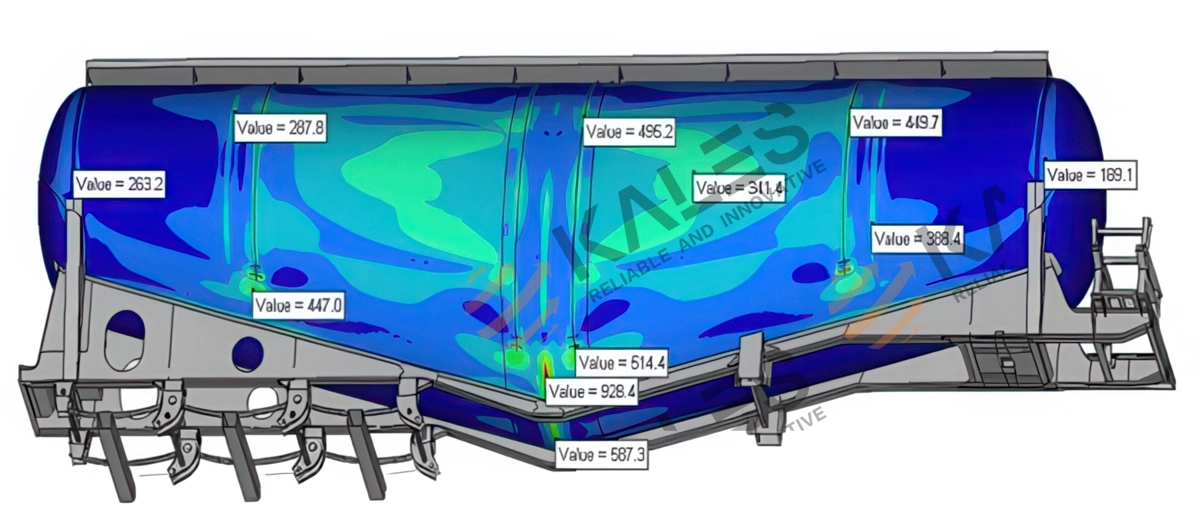
    🔧 Step 1: Design – CAE Simulation for Maximum Structural Integrity

    3D CAE Simulation model of Kales Cement Bulker Trailer
    Figure 1: Advanced 3D CAE Simulation validates structural integrity before physical production.

    We do not rely on empirical estimates; instead, we utilize advanced 3D modeling and CAE (Computer-Aided Engineering) mechanical simulations to validate every structural component before production begins.

    • We utilize a steeper tank angle design that exceeds standard industry benchmarks by 2–3° to ensure smoother material flow and significantly faster discharge rates.
    • We rely on rigorous stress analysis to inform the skeletal layout, effectively preventing cracking and deformation under heavy payloads.
    • We engineer a refined chassis structure that deliberately lowers the center of gravity (C.G.), providing superior anti-rollover stability on rough mining terrain.

    ✂️ Step 2: CNC Cutting & Forming – Precision Defines Lifespan

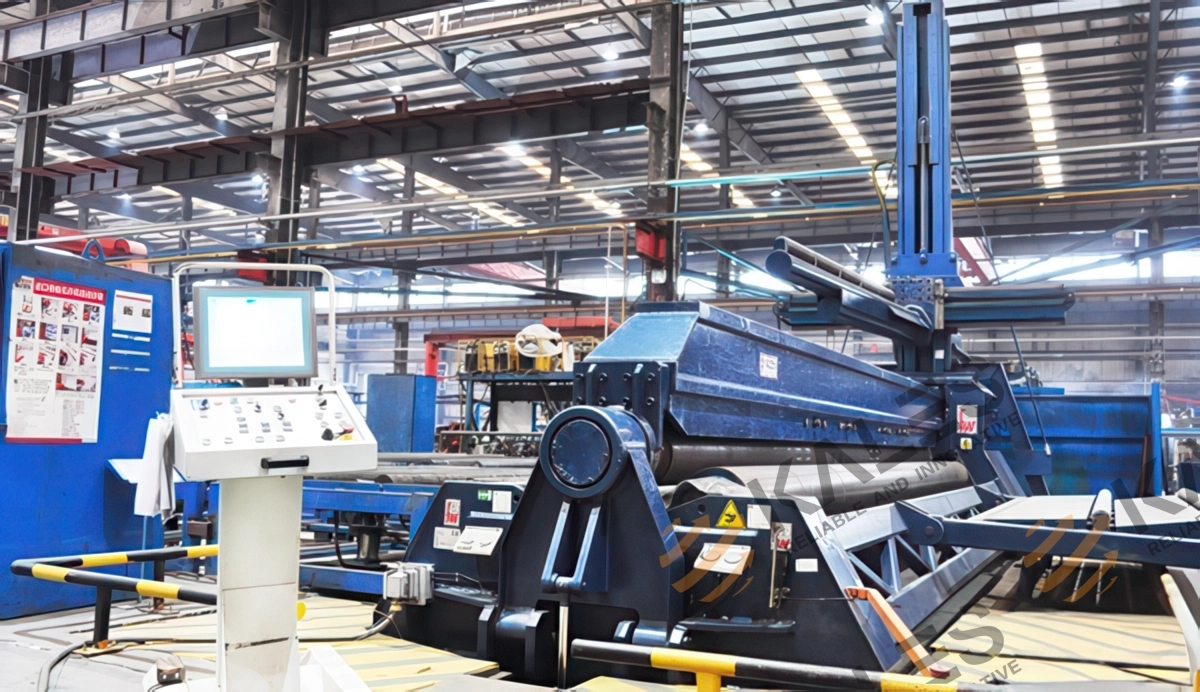
    CNC Plate Rolling Machine forming tank body steel
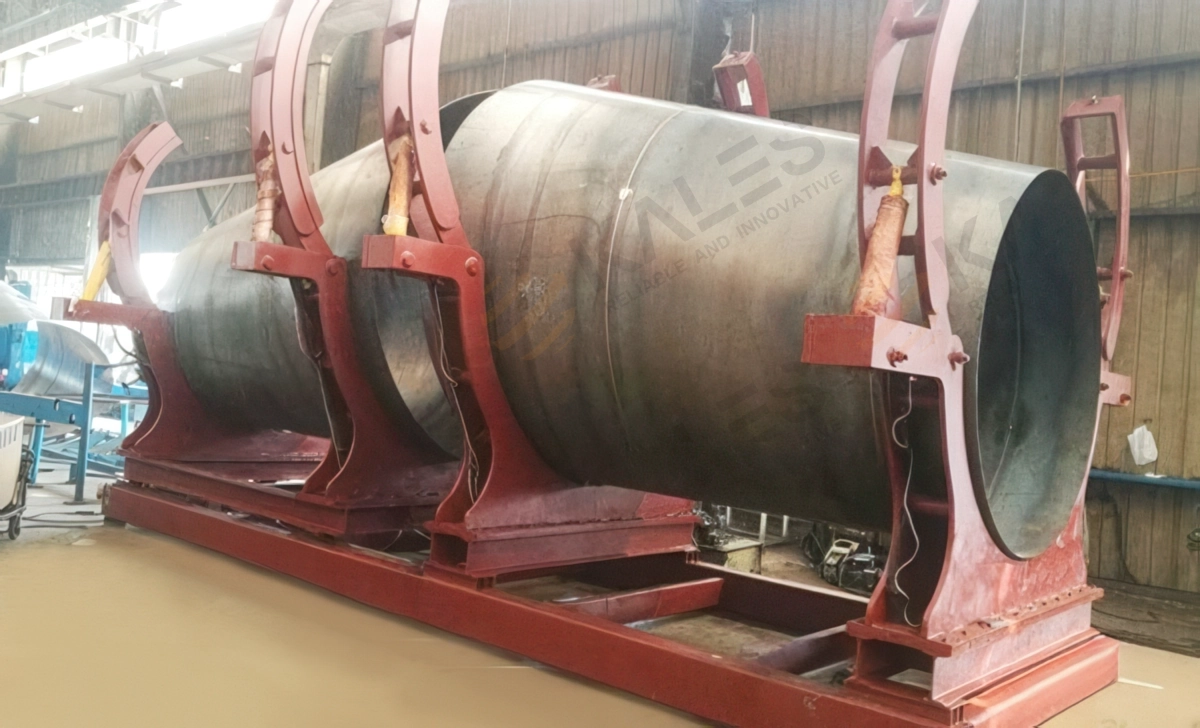
    Frame alignment jig for powder tanker assembly
    • We strictly utilize premium T700/Q345B high-strength steel that is laser-cut to a strict tolerance of ≤ 0.01mm to maintain 100% material integrity.
    • We process the tank body using advanced CNC rolling machines in a single pass, completely eliminating the hammering and internal stress that cause structural weak points.
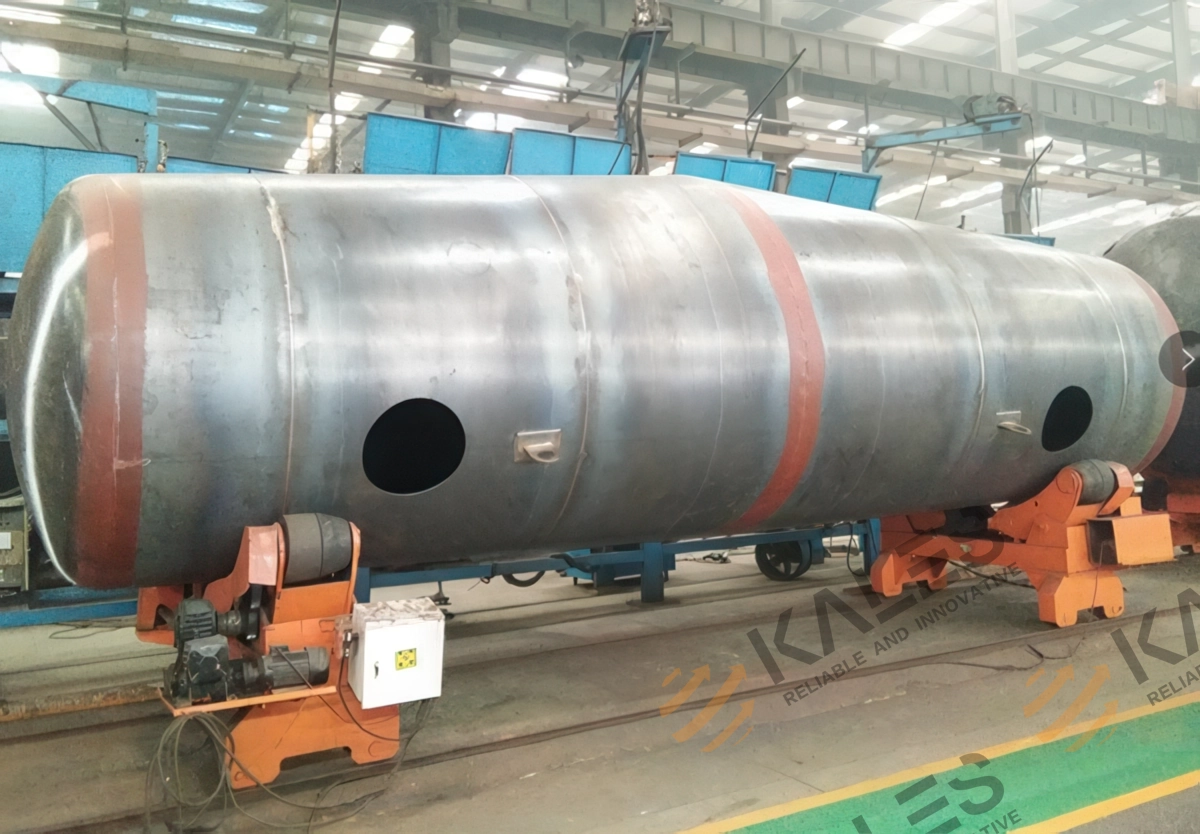
    • We assemble the sections on a framed assembly platform to guarantee a perfectly straight and true tank body alignment.
    💡 Engineering Insight: Any thermal warping or internal damage to the steel during the forming process drastically increases the risk of future weld seam cracking under pressure.

    🔥 Step 3: Robotic Welding – The Invisible Craftsmanship

    Automatic Robotic Welding Process for Kales Tanker Trailers
    Figure 2: Automated robotic welding ensures uniform, deep-penetration seams for pressure vessel safety.

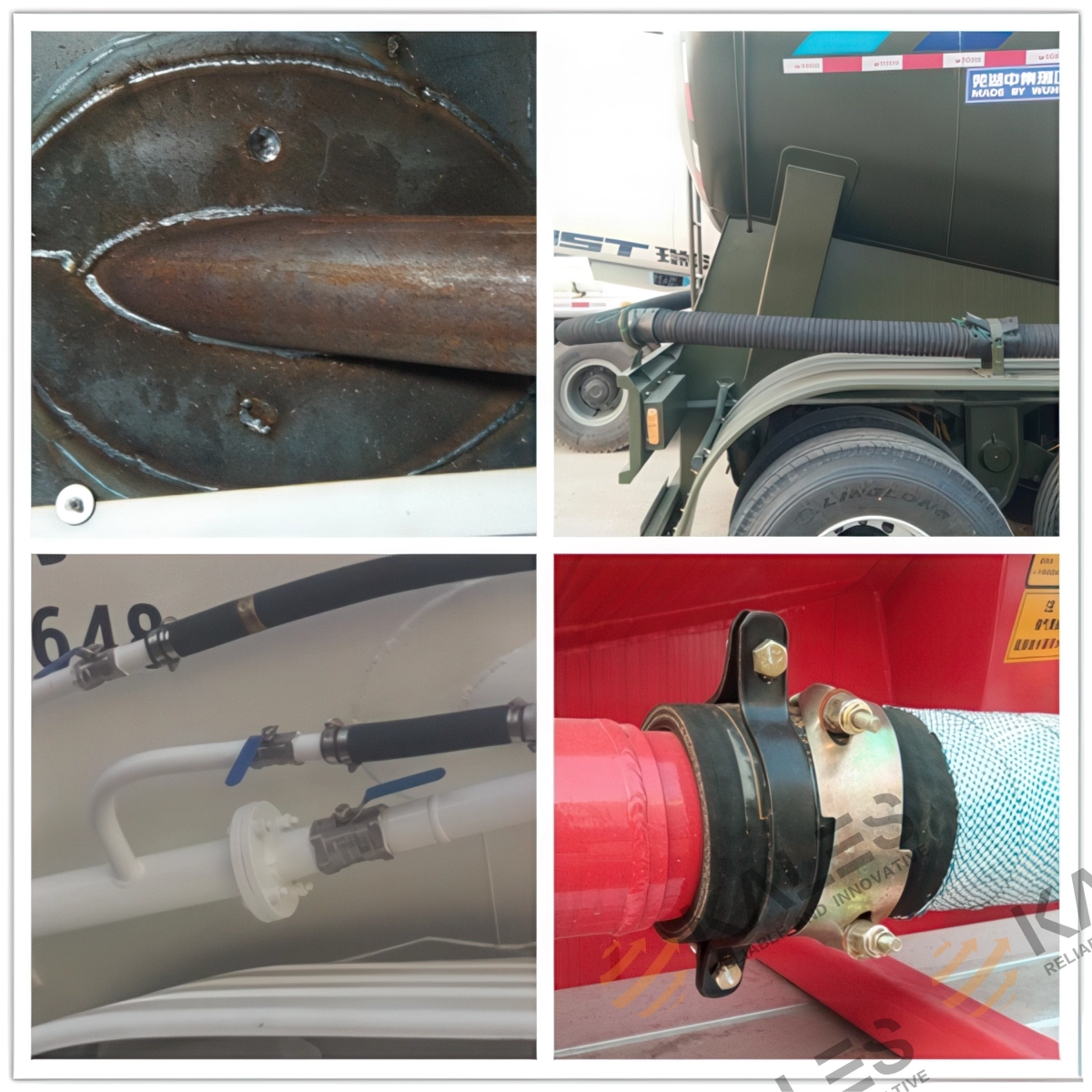
    We utilize fully automated robotic welding technology to ensure the tank can safely withstand high internal pneumatic pressure without failure.

    • We deploy single-sided welding with double-sided forming technology to create deep, consistent penetration for maximum seam strength.
    • We ensure all welds are flawlessly uniform and completely free of porosity or slag inclusions, which is critical for pressure vessel safety standards.
    • We guarantee even stress distribution across the entire tank body to prevent localized stress points that lead to metal fatigue over time.

    ⚙️ Step 4: Chassis Alignment – Eliminating Trailer Sway

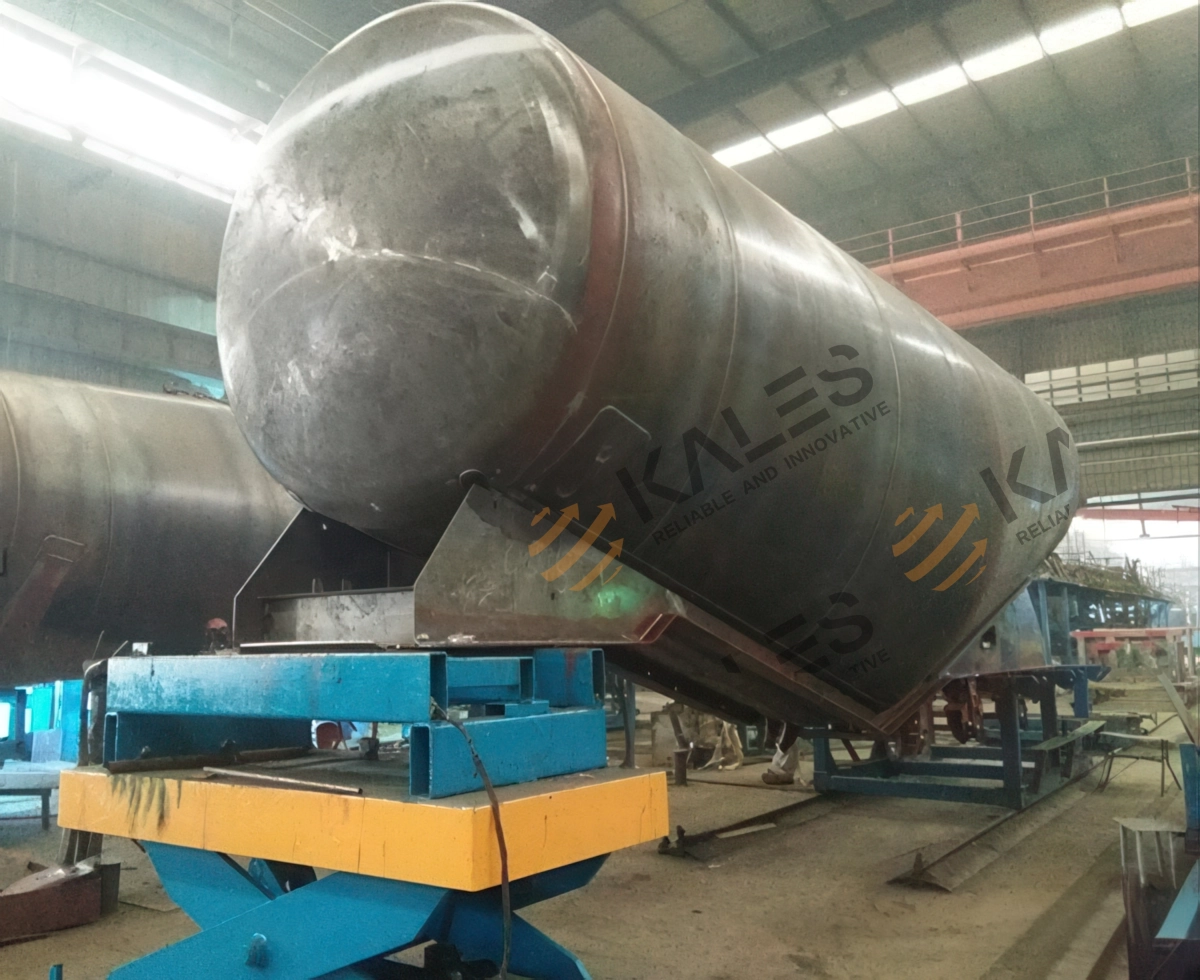
    Chassis Frame Leveling and Alignment System
    Figure 3: Precision chassis alignment prevents irregular tire wear and trailer swaying.

    A frequent driver complaint with inferior trailers is a dangerous "swaying" or "wobbling" sensation at highway speeds. Kales resolves this by performing meticulous chassis and kingpin laser alignment immediately after the tank is mounted.

    💨 Step 5: The "Heart" of the System – Air Compressor & Discharge

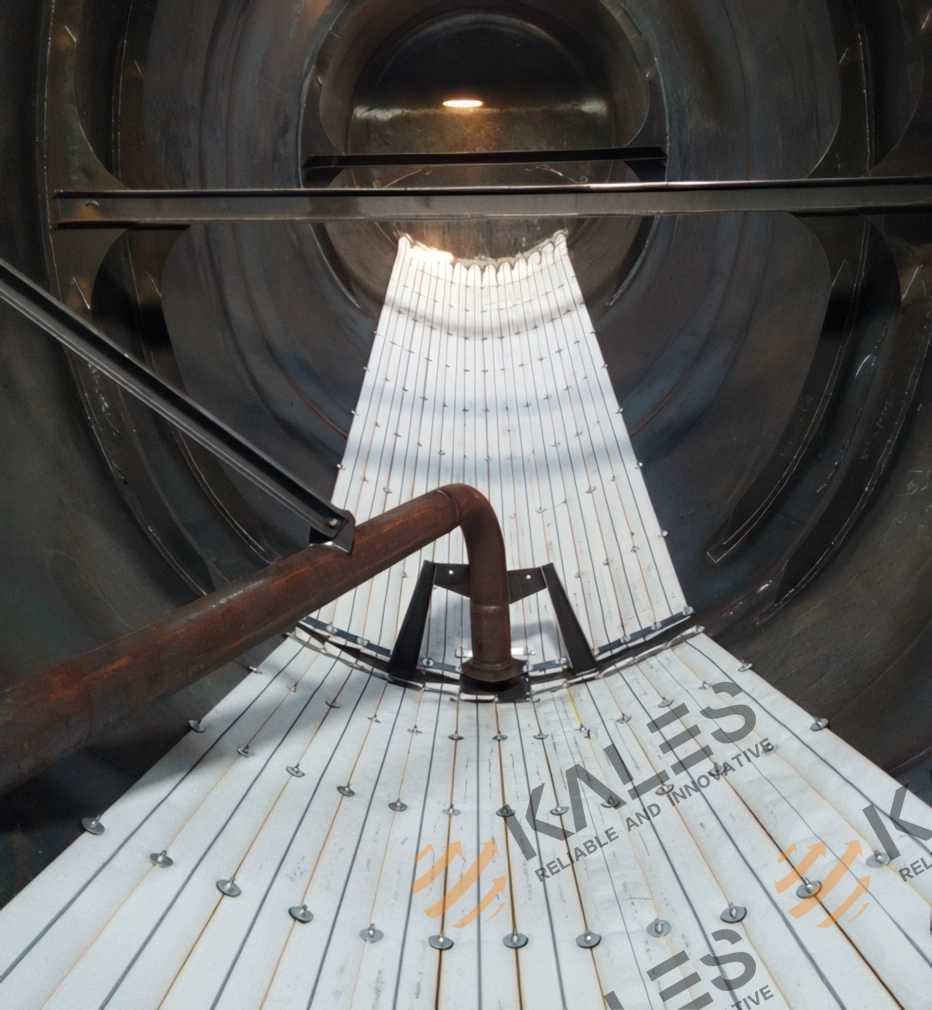
    Internal Fluidization Bed of Kales Powder Tanker
    Detailed schematic of Kales Cement Bulker discharge system

    The operational efficiency of a pneumatic trailer relies entirely on its power source and internal fluidization design.

    • We equip our trailers with renowned Weichai Diesel Engines and Bohai/Fuda Air Compressors (12m³ double-cylinder) to ensure a massive and stable air pressure output.
    • We combine an enlarged outlet with a high-angle fluidized bed to achieve remarkable discharge speeds of up to 1.5 tons per minute.
    • We implement a "No-Dead-Corner" internal tank structure to guarantee a residual rate of <0.3%, ensuring you deliver more product on every load.
    📈 Real Field Experience: In 2024, a major cement logistics client in the Middle East reported that our optimized fluidized bed design reduced their per-truck discharge time by 12 minutes, directly saving thousands of liters in diesel fuel annually across their fleet.

    🎨 Step 6: Protective Coating – Marine-Grade Protection

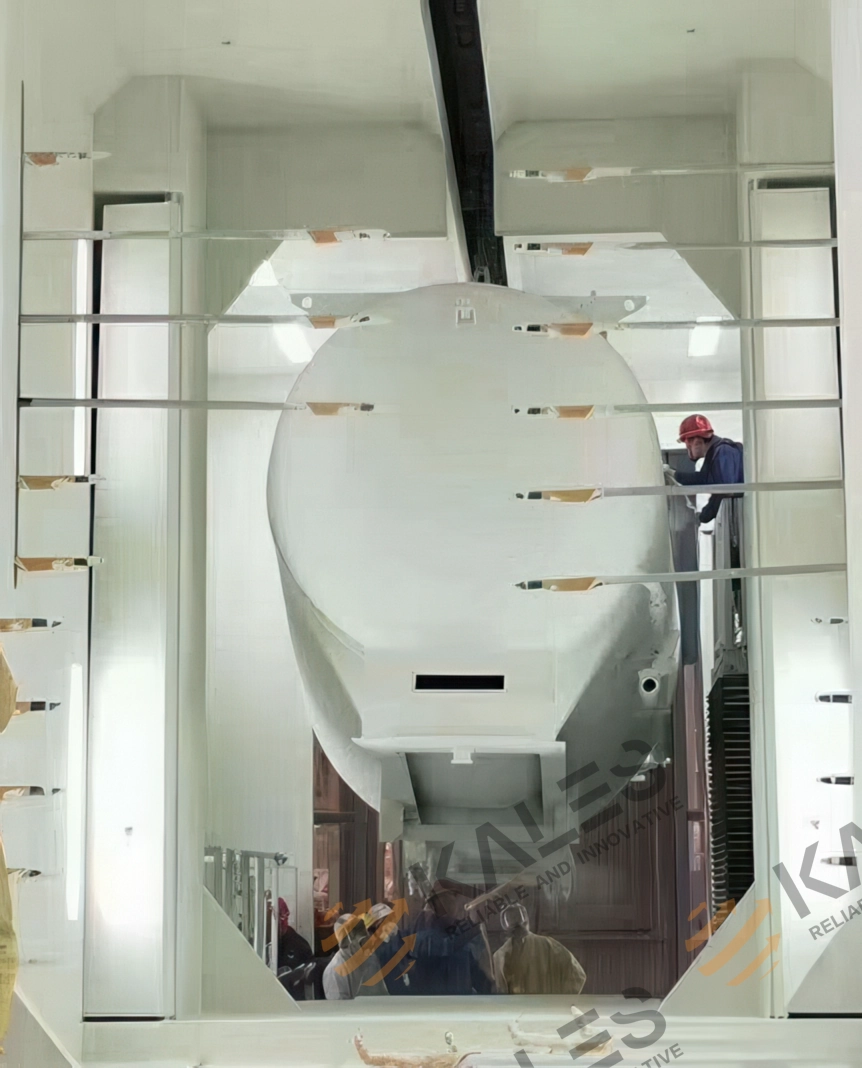
    Polyurethane Painting Process for Kales Tankers
    • We apply an environmentally friendly, phosphate-free, and heavy-metal-free Polyurethane Powder Coating.
    • We ensure our coating thickness reaches H-Grade (Marine Standard) at 120μm+, providing superior resistance to salt spray and humidity.
    • We guarantee our paint finish is proven to withstand 5–8 years without fading or peeling, even in harsh tropical climates.

    🔍 Step 7: Quality Control – Rigorous Pressure Testing

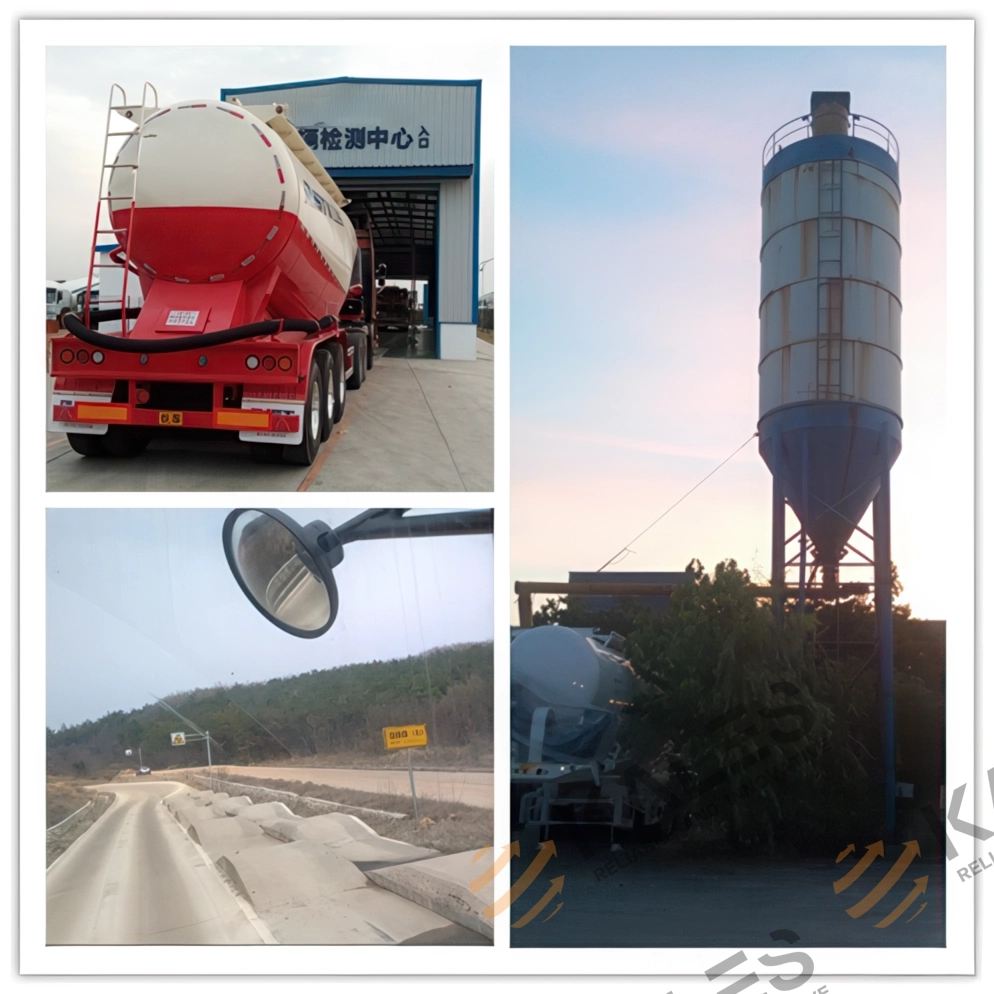
    Kales Vehicle Quality Control and Testing Center

    Every cement bulker trailer must pass a rigorous QC inspection before shipping:

    • We conduct strict Air Tightness Tests using high pressure to ensure absolutely zero pneumatic leaks.
    • We perform Discharge Efficiency Tests to manually verify unloading speeds and residue rates.
    • We execute 30 km/h Cornering Stability Tests on the testing track to ensure anti-rollover safety for the driver.

    If it doesn't pass, it doesn't ship. Period.

    Summary: What Defines a Superior Bulk Powder Tanker?

    Performance Metric The Kales Engineering Solution
    Fast Discharge Speed High-angle tank + Bohai Compressor + optimized fluidized bed.
    Low Residue Rate (<0.3%) "No-dead-corner" internal structure + precision airflow mechanics.
    Long-Term Durability T700 High-strength steel + automated robotic welding + CAE.
    📌 Operational Variables & Transparency:
    While Kales pneumatic trailers are engineered for a discharge speed of up to 1.5 tons per minute, actual unloading efficiency is highly dependent on the density, humidity, and particle size of the specific dry bulk material being transported, as well as the skill of the compressor operator.

    Frequently Asked Questions

    What is the discharge speed of a Kales powder tanker?

    When equipped with our standard 12m³ air compressor and handling standard dry cement, a Kales powder tanker achieves a rapid discharge speed of approximately 1.2 to 1.5 tons per minute, leaving a residue rate of less than 0.3%.

    What is the best steel for manufacturing a cement bulker?

    T700 high-strength steel is considered the industry standard for premium cement bulkers. It offers exceptional tensile strength, allowing manufacturers to reduce the tare weight of the trailer without compromising the pressure vessel's structural integrity.

    Can a pneumatic dry bulk trailer haul different materials?

    Yes, pneumatic trailers can haul various dry bulk powders including fly ash, lime, and flour, provided the particle size is ≤ 0.1mm. However, thorough cleaning of the tank interior is mandatory when switching between different types of materials to prevent contamination.

    Ready to Upgrade Your Logistics Fleet?

    Kales Vehicle provides customized bulk powder transport solutions tailored to your specific payload and terrain requirements. Don't compromise on your most valuable asset.