Flatbed Semi Trailer Procurement Guide · Published: January 17, 2025 · Updated: June 3, 2026 · By Kales Vehicle Trailer Engineering Team · Reviewed by Kales Export Sales Engineering · Market focus: Africa, Southeast Asia, Latin America, port logistics, building materials, and mixed general freight
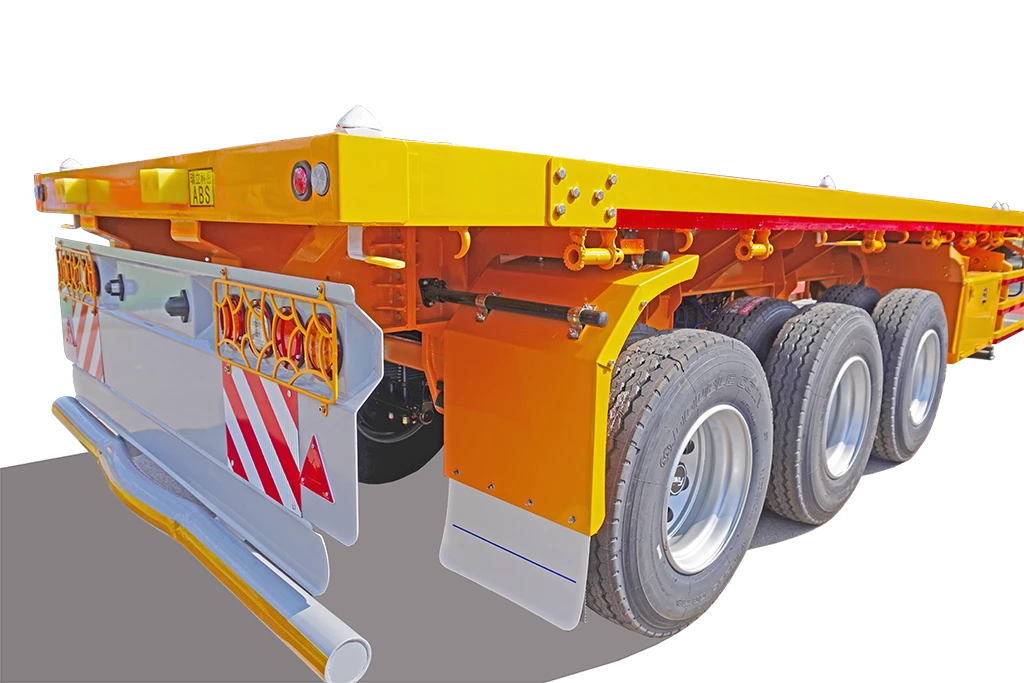
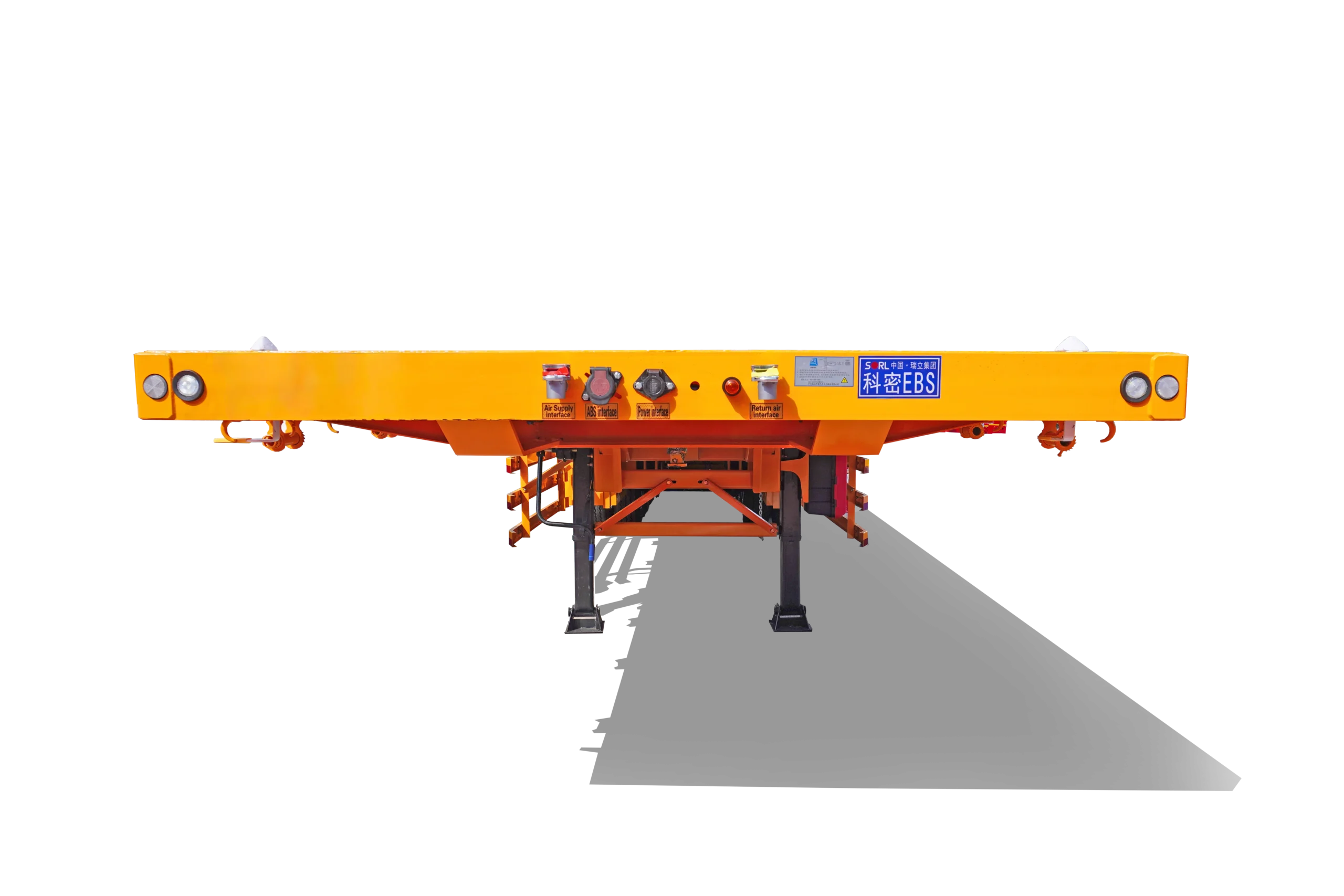
Kales 3 axle flatbed container semi trailer: this page is built for buyers who need a standard flatbed trailer that can carry both containers and open-deck cargo without moving into a pure skeleton chassis or a regionalized heavy-payload flatbed program. It is positioned as a general-purpose export flatbed for mixed freight fleets that need 12 container locks, a 60 ton class loading band, and practical serviceability.
Engineering guidance from the Kales Vehicle trailer team for buyers comparing a standard 3 axle flatbed, a pure container chassis, and a drop-side flatbed for more mixed cargo restraint needs.
Quick answer: choose this 3 axle flatbed container semi trailer when your fleet needs one export-ready platform for 20ft or 40ft containers, steel, timber, machinery, and general cargo, and you want more cargo versatility than a pure container chassis. The represented stock type uses a 12500 × 2500 × 1650 mm body, 60,000 kg loading capacity, 12 container locks, 3 mm diamond plate deck, 3 axles, mechanical leaf spring suspension. Contact KALES for a tailored quotation based on the required configuration, order quantity, and destination.
Technical Snapshot
| Product type | 3 axle flatbed semi trailer |
|---|---|
| Main use case | Container and general cargo flatbed transport |
| Overall dimensions | 12500 × 2500 × 1650 mm |
| Tare weight | 6500 kg |
| Loading capacity | 60,000 kg |
| Axles | 3 axles, 13T / 14T / 15T / 16T / 20T options, FUWA, BPW, Kales, or other approved brands |
| Suspension | Mechanical suspension with 10/10/10 leaf springs |
| Container locks | 12 sets |
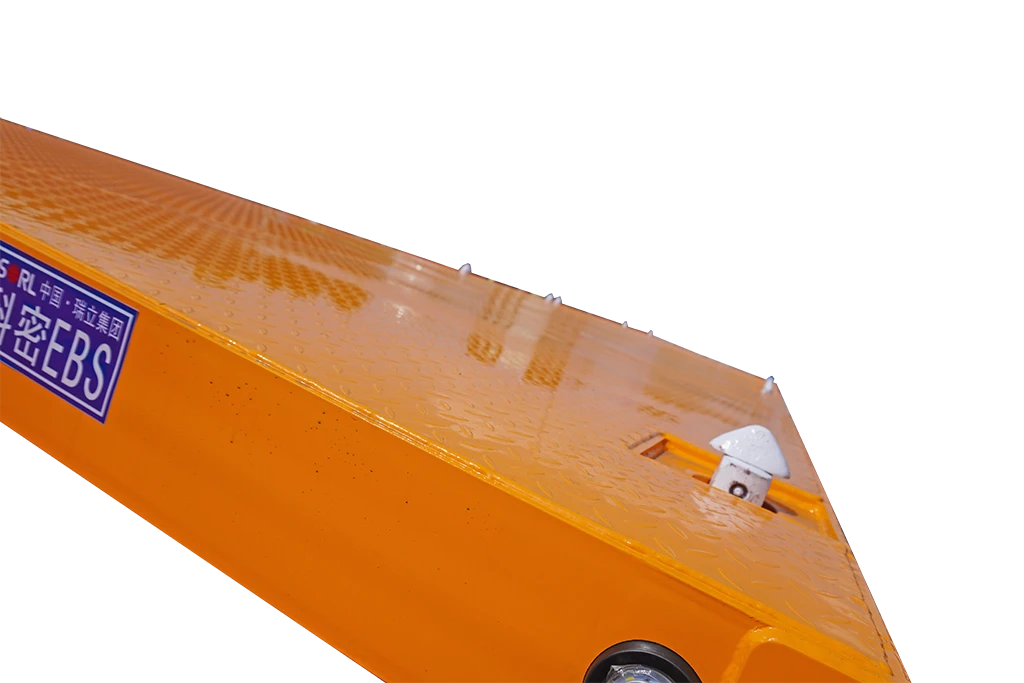
| Deck plate | 3 mm diamond plate |
| Custom quotation | Contact KALES for a tailored quotation based on the required configuration, order quantity, and destination. |
Structural and equipment details
| Specification item | Kales data |
|---|---|
| Main beam | 500 mm beam height, 12 mm upper plate, 14 mm lower plate, 8 mm web plate |
| Tires | 12R22.5, 12 units |
| Kingpin | 50 mm or 90 mm |
| Landing gear | 28 ton class |
| Brake system | Dual-line braking system with 6 large brake chambers |
| Electrical system | 24V with 7-way harness |
| Spare wheel bracket | 2 pieces |
| Delivery method | Bulk vessel, RO-RO, or 45FT container depending on final configuration |
Best Fit Operating Profile
This 3 axle flatbed trailer is best for mixed freight fleets that alternate between container moves and open-deck cargo such as steel, timber, machinery, and construction materials. It is aimed at buyers who want one broadly useful platform instead of maintaining separate specialized trailers for every route type.
Best for
- 20ft and 40ft container transport with twist-lock capability
- Steel, timber, machinery, palletized freight, and construction cargo
- Regional or cross-border mixed-freight operations
- Fleets that want one standard flatbed to cover both container and open cargo work
Not ideal for
- Buyers who only haul containers and want the lightest possible pure chassis structure
- Operations that need side restraint from fixed drop sides or fence structures
- Routes that need a market-specific 40ft payload strategy rather than a general export flatbed configuration
Why Buyers Choose This 3 Axle Flatbed Trailer
- Container plus cargo versatility: 12 locks allow container work while the full deck stays useful for open general freight.
- Clear export standard positioning: a practical mainstream flatbed rather than a niche one-market design.
- Strong working structure: 500 mm main beam and 3 mm diamond plate deck support mixed loading tasks.
- Mechanical service logic: leaf spring suspension and conventional brake layout remain easy to support in export markets.
- Competitive price point: positioned below more specialized flatbed variants while keeping meaningful load capacity.
Specification-backed advantages
- Main beam: 500 mm beam height, 12 mm upper plate, 14 mm lower plate, 8 mm web plate. This provides a concrete durability and load-control basis for the stated duty cycle.
- Loading capacity: 60,000 kg. This defines the working band to validate against the cargo, route, and local legal limits.
- Brake system: Dual-line braking system with 6 large brake chambers. This gives the buyer a specific braking or safety package to verify for the intended route.
How This Flatbed Fits the Kales Platform Range
This page should be understood as a general-purpose flatbed, not as a pure container chassis and not as a market-specific heavy 40ft workhorse page. The right buying decision depends on whether your freight is mixed, container-only, or needs side-restraint structures for more varied cargo control.
| Buyer comparison point | Best-fit direction | Why |
|---|---|---|
| One trailer for containers and open cargo | 3 axle flatbed container semi trailer | Best when fleets need both twist-locks and a usable full flat deck |
| Container-only chassis work | 40ft container chassis semi trailer | Better when the operation mainly values lower tare and pure container duty |
| Mixed freight with side restraint needs | 3 axle drop-side flatbed trailer | Better when cargo needs side support for bulk bags, pallet cargo, or irregular loads |
| Market-specific 40ft heavy payload flatbed | 3-axle 40ft flatbed trailer for Africa | Better when the route and commercial model need a localized heavy workhorse angle |
Engineering and Serviceability Details
Why 12 container locks matter here
The main reason this product belongs in a separate buying discussion from a generic flat deck is the lock arrangement. With 12 container locks, the trailer keeps real container utility while remaining useful for open freight, which is exactly what many mixed-fleet buyers need.
Why the deck and beam specification matter more than marketing claims
Flatbed pages are often over-written with generic durability language. In practice, buyers should care more about beam dimensions, deck plate thickness, axle rating options, and brake layout. Those are the details that decide whether the trailer will tolerate repeated mixed loading in export conditions.
Why this page stays with mechanical suspension
For a general-purpose flatbed in export markets, mechanical leaf spring suspension remains a rational baseline because it is simpler to maintain and less dependent on specialized parts than higher-spec air systems. That matters more on mixed-freight operations than on premium highway-only applications.
How is the final quotation confirmed?
KALES confirms the quotation after reviewing the required specification, quantity, destination, and delivery terms. Send the operating requirements for an accurate proposal.
Quotation and Procurement Guidance
Before ordering, buyers should confirm whether their routes are truly mixed between containers and open cargo, the target tractor saddle height, the axle-rating requirement, and whether the operation would benefit more from a pure container chassis, a localized 40ft flatbed, or a drop-side flatbed variant.
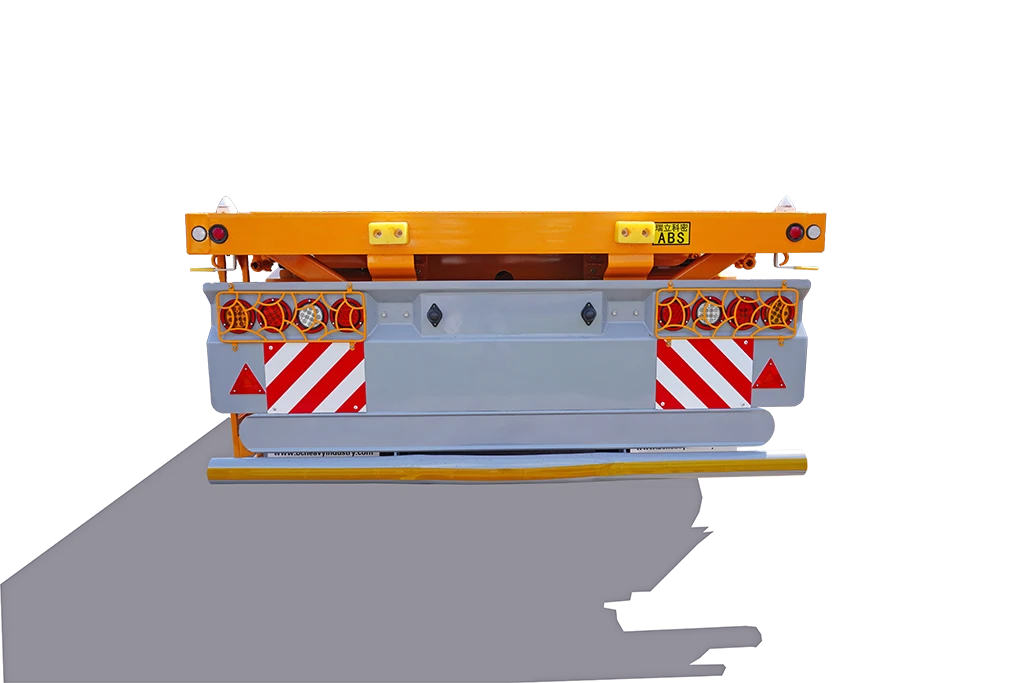
Inspection Views
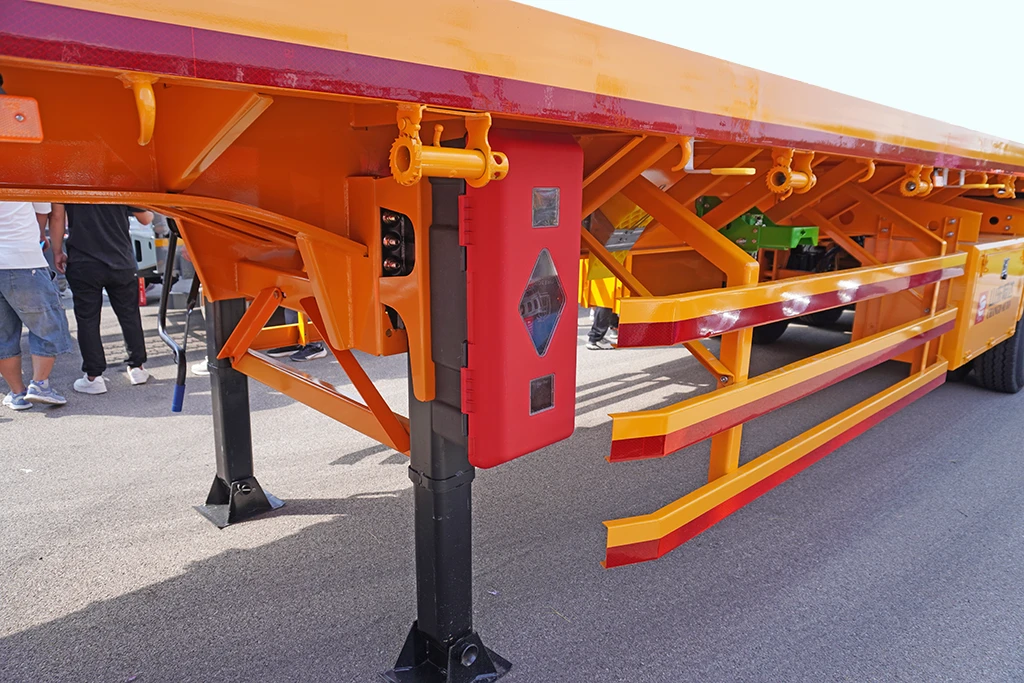
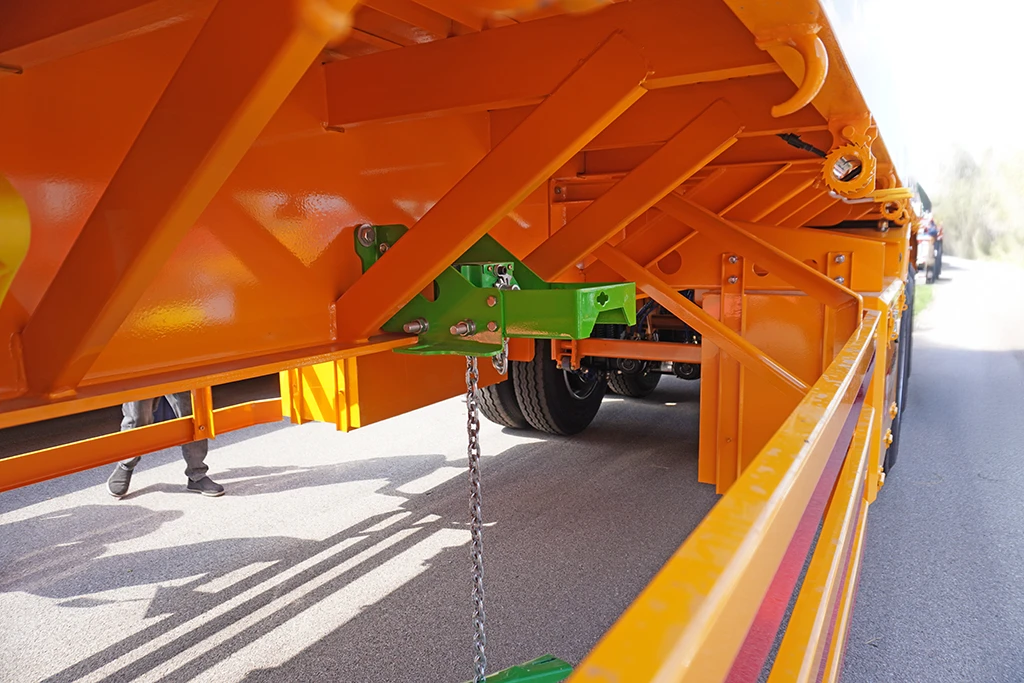
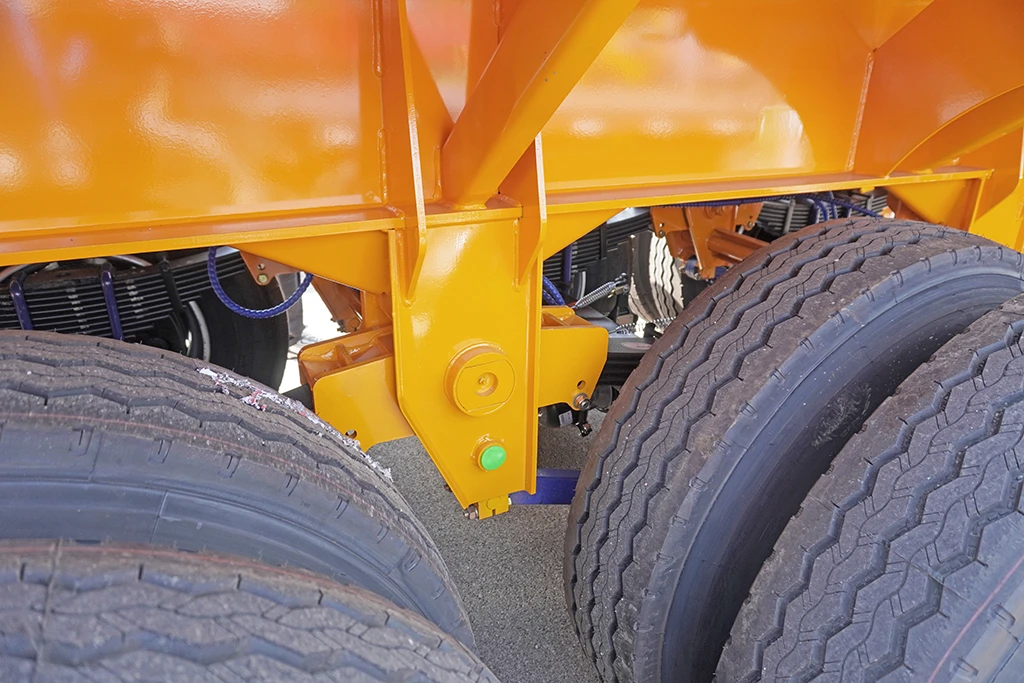
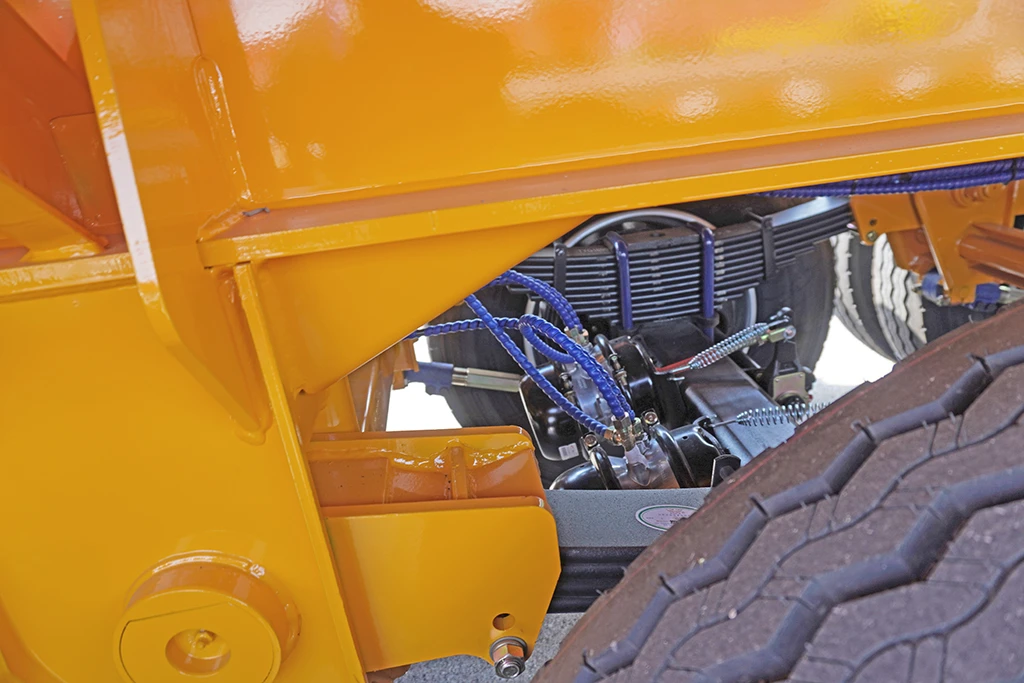
Frequently Asked Questions
Is this trailer a pure container chassis?
No. This page is for a full-deck flatbed with 12 container locks, so it can carry containers and open cargo. A pure container chassis is a different product choice.
What container sizes can it handle?
The represented configuration is positioned for mainstream 20ft and 40ft container handling through its twist-lock arrangement.
What other cargo can it carry besides containers?
It is also suited to steel, timber, machinery, building materials, palletized freight, and other open-deck general cargo.
Who should choose this flatbed instead of a drop-side trailer?
Buyers who mainly need an open platform for container and general cargo work should start here. Buyers needing side restraint for mixed freight should compare the drop-side flatbed version.
What should I confirm before requesting a quote?
Confirm cargo mix, saddle height, axle requirement, container-only versus mixed-use reality, and whether your fleet would be better served by this general flatbed, a pure chassis, or a sidewall variant.
Compare Related Flatbed Options
This mixed-use flatbed container trailer sits between a container-first chassis and the broader standardized flatbed pages. If the buyer intent is really an Africa-positioned 40ft workhorse, a longer 45ft export deck, or a drop-side flatbed with side-retention flexibility, compare those adjacent options below.
- 3-Axle 40ft Flatbed Trailer for Africa | Regional Workhorse Platform — for a more localized 40ft heavy-workhorse flatbed position
- Tri-Axle 45ft Flatbed Semi Trailer | 40ft/45ft Export Platform — for buyers who need the longer export deck and 45ft framing
- 3-Axle Drop-Side Flatbed Trailer | Container, Bulk & General Cargo — for mixed cargo work that needs removable side retention
Request Drawing and Quote
If you need a 3 axle flatbed container semi trailer, send your cargo mix, container size pattern, target saddle height, and route country. Kales can then confirm whether this standard mixed-use flatbed is the right export fit for your fleet.
Leave a Reply
You must be logged in to post a comment.