Trailer Parts Buying Guide · Published: December 8, 2024 · Updated: June 3, 2026 · By Kales Vehicle Coupling Engineering Team · Reviewed by Kales Export Parts Sales Engineering · Market focus: Africa, Latin America, Middle East tractor-trailer fleets, trailer rebuild workshops, and parts distributors
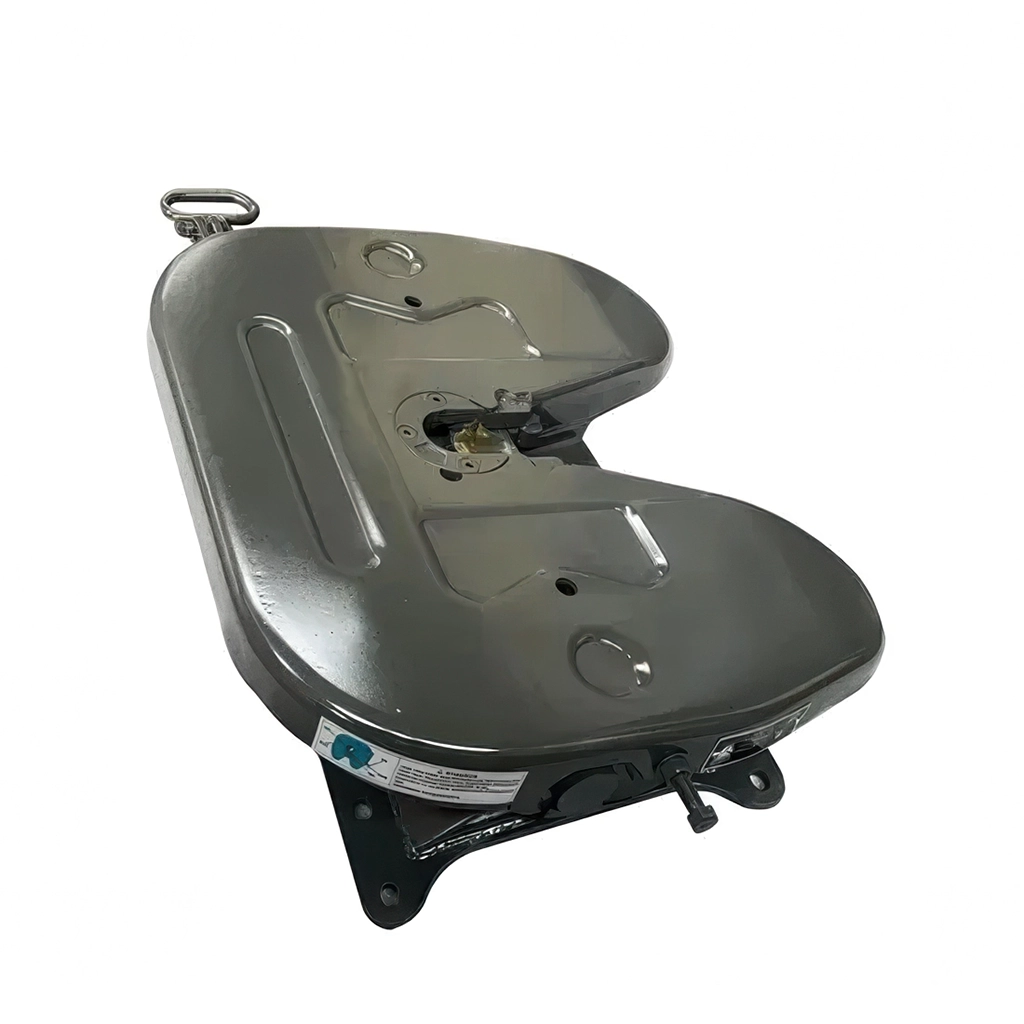
Fifth wheel coupling family: this Kales page covers tractor-side fifth wheel couplings for semi-trailer connection service, centered on 50 mm and 90 mm classes with fixed, lift, and slide configurations. It is built for buyers who need the correct coupling platform for the tractor rather than the trailer-side king pin alone.
Engineering guidance from the Kales Vehicle parts team for buyers comparing fifth wheel couplings, king pins, and other tractor-trailer connection hardware across fleet replacement and rebuild programs.
Quick answer: choose the 50 mm fifth wheel coupling for lighter and more standard tractor-semi-trailer duty, and move to the 90 mm class when your fleet needs higher traction mass, heavier vertical load support, or broader heavy-haul transport use. If the job is to secure the tractor-side coupling assembly rather than just replace the king pin, this Kales product family is the correct page to start from.
Technical Snapshot
| Product type | Fifth wheel coupling family for tractor trucks and semi-trailers |
|---|---|
| Connection classes | 50 mm (2 inch) and 90 mm (3.5 inch) |
| Main configurations | Fixed, lift, and slide models |
| Reference standard | GB/T 31879-2015 |
| Typical traction mass range | 50T to 120T depending on selected model |
| Rated vertical load range | Up to 35T on the heavier-duty 90 class models |
| Seat panel thickness | 8 mm to 10 mm depending on model |
| Custom quotation | Contact KALES for a tailored quotation based on the required configuration, order quantity, and destination. |
Representative model table
| Model | Coupling class | Height | Maximum traction mass | Rated vertical load | Weight |
|---|---|---|---|---|---|
| KASD50S-C32 | 50 class | 165 mm | 50T | Standard-duty application | 117 kg |
| KASD90S-B21 | 90 class | 165 mm | 70T | 30T | 130 kg |
| KASD90S-A61 | 90 class | 200 mm | 120T | 35T | 185 kg |
Best Fit Operating Profile
This fifth wheel coupling family is best suited to tractor truck builders, fleet workshops, parts distributors, and rebuild programs that need the full tractor-side coupling assembly matched to the trailer weight class. It fits fleets running standard line-haul tractors, heavier project-transport tractors, and export rebuild programs where coupling reliability matters more than simply sourcing the lowest-cost hardware.
Best for
- Tractor units that need a complete fifth wheel coupling replacement
- Standard route fleets using a 50 class coupling
- Heavier-duty transport fleets moving up to a 90 class coupling
- Fleet rebuild programs that must match tractor coupling to trailer load class
Not ideal for
- Buyers who only need the trailer-side king pin and not the tractor-side coupling assembly
- Trailer parking-support applications that actually require landing gear
- Programs where the tractor chassis or top plate geometry has not yet been confirmed
Why Buyers Choose This Fifth Wheel Coupling Family
- Clear tractor-side positioning: this page is for the fifth wheel coupling assembly, not the trailer-side king pin alone.
- Two load classes: 50 class for lighter standard duty and 90 class for heavier traction mass and vertical load demand.
- Multiple operating forms: fixed, lift, and slide configurations support different tractor and route requirements.
- Defensible engineering basis: representative models are tied to declared traction mass, height, seat plate thickness, and vertical load values.
- Standard-based production: built around GB/T 31879-2015 for road-vehicle fifth wheel technical requirements.
Specification-backed advantages
- Seat panel thickness: 8 mm to 10 mm depending on model. This provides a concrete durability and load-control basis for the stated duty cycle.
- Typical traction mass range: 50T to 120T depending on selected model. This defines the working band to validate against the cargo, route, and local legal limits.
- Main configurations: Fixed, lift, and slide models. This gives builders and fleet workshops an exact fitment reference before ordering.
How This Fifth Wheel Coupling Family Should Be Evaluated
The right way to evaluate a fifth wheel coupling is to check the tractor role first: expected traction mass, vertical load demand, trailer class, chassis installation height, and whether the fleet needs a fixed, lift, or slide structure. That is different from evaluating a king pin, which is only one trailer-side component inside the full coupling system.
| Buyer situation | Best-fit Kales option | Why |
|---|---|---|
| Standard-duty tractor unit on regular highway work | 50 class coupling | Good fit where towing mass is moderate and the fleet does not need the heavier 90 class assembly |
| Heavier-duty tractor supporting broader transport scenarios | 90 class coupling | Better for higher traction mass, stronger support load, and harder working conditions |
| Buyer only replacing the trailer connection pin | King pin product page | The king pin is the trailer-side part; it is not the full tractor coupling assembly |
| Buyer solving trailer support while uncoupled | Trailer landing gear product page | Landing gear handles parked trailer support, not tractor-trailer locking |
Engineering and Serviceability Details
What the fifth wheel actually does in service
The fifth wheel coupling is the tractor-side interface that locks onto the trailer king pin, carries vertical load, and allows turning articulation between tractor and semi-trailer. In daily fleet use, it must absorb start-up force, braking force, road shock, and repeated coupling cycles without unstable wear or poor locking behavior.
Why 50 class and 90 class should not be treated as the same thing
The 50 class is more appropriate for lighter and more standard transport service. The 90 class exists for heavier work where traction mass and support load are materially higher. That distinction matters because coupling size is not cosmetic. It affects safety margin, service life, and suitability for the tractor-trailer combination actually running in the field.
Representative model logic
The KASD50S-C32 is the lighter representative model at 165 mm height and 50T maximum traction mass. The KASD90S-B21 moves to 70T maximum traction mass with 30T rated vertical load. The KASD90S-A61 goes further with 200 mm height, 120T maximum traction mass, 35T rated vertical load, and a thicker 10 mm seat panel. Buyers should match the model to the tractor program instead of assuming one coupling fits every chassis.
How is the final quotation confirmed?
KALES confirms the quotation after reviewing the required specification, quantity, destination, and delivery terms. Send the operating requirements for an accurate proposal.
Quotation and Procurement Guidance
Before asking for a quote, buyers should send the target tractor model, expected towing mass, required coupling class, mounting height, and whether the job needs fixed, lift, or slide structure. Kales can then match the right fifth wheel coupling and avoid the common mistake of pricing a standard assembly against a heavy-duty tractor application.
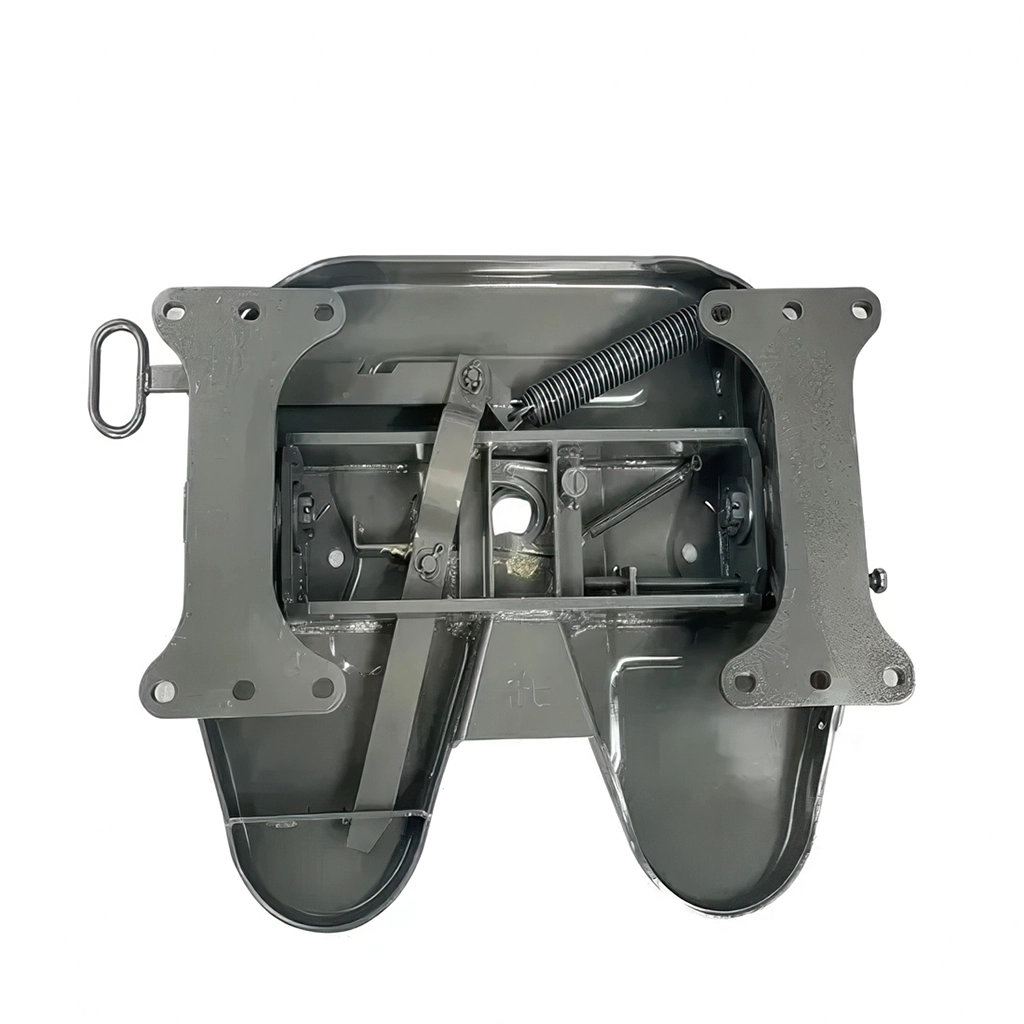
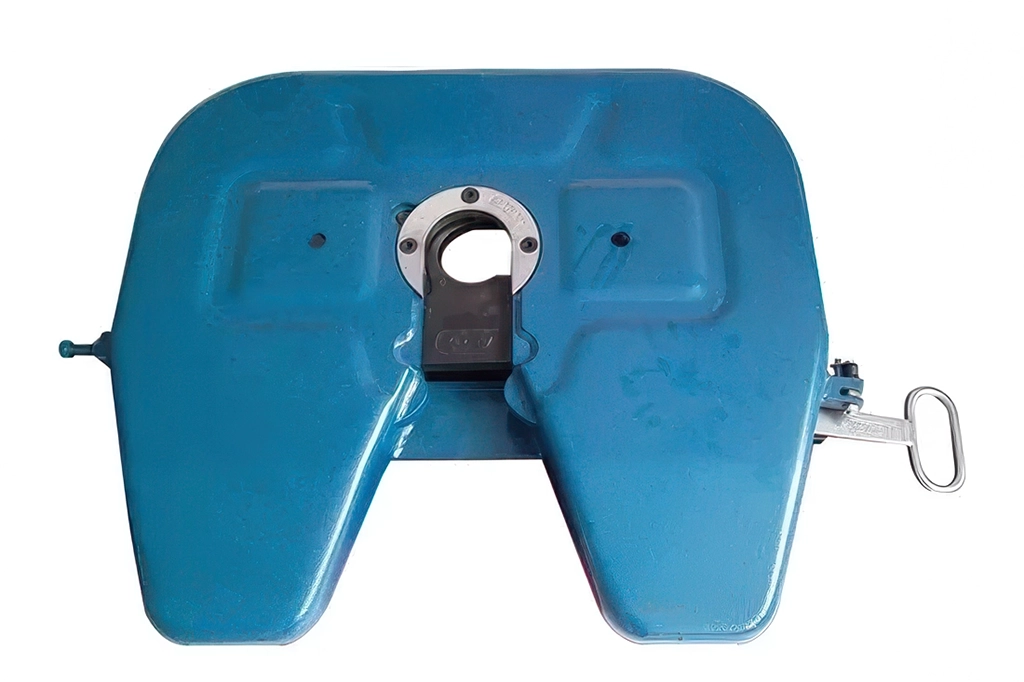
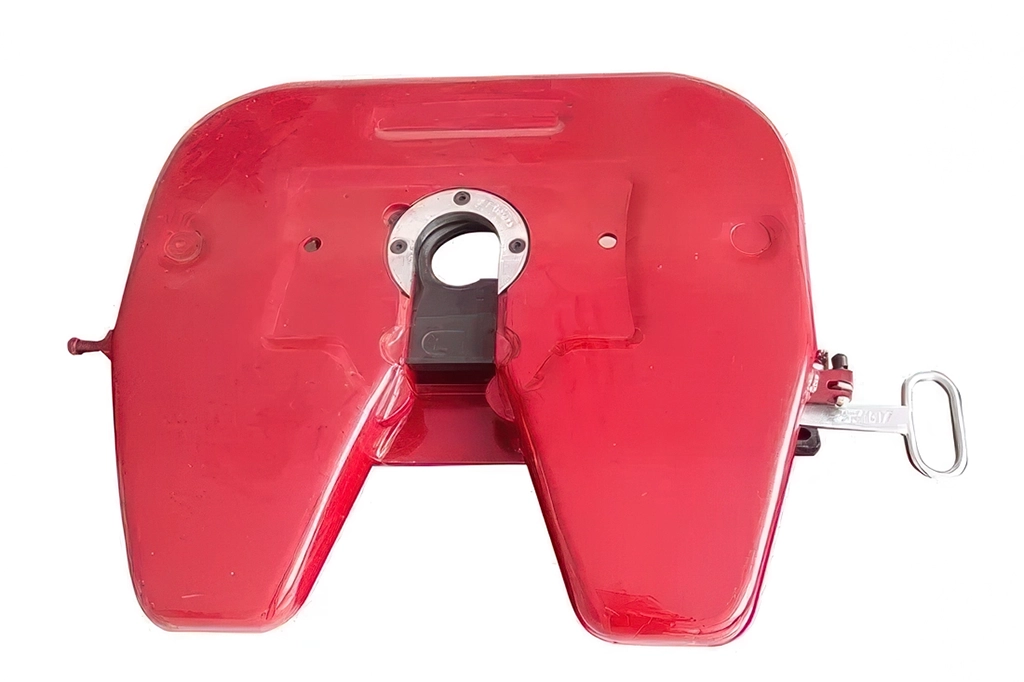
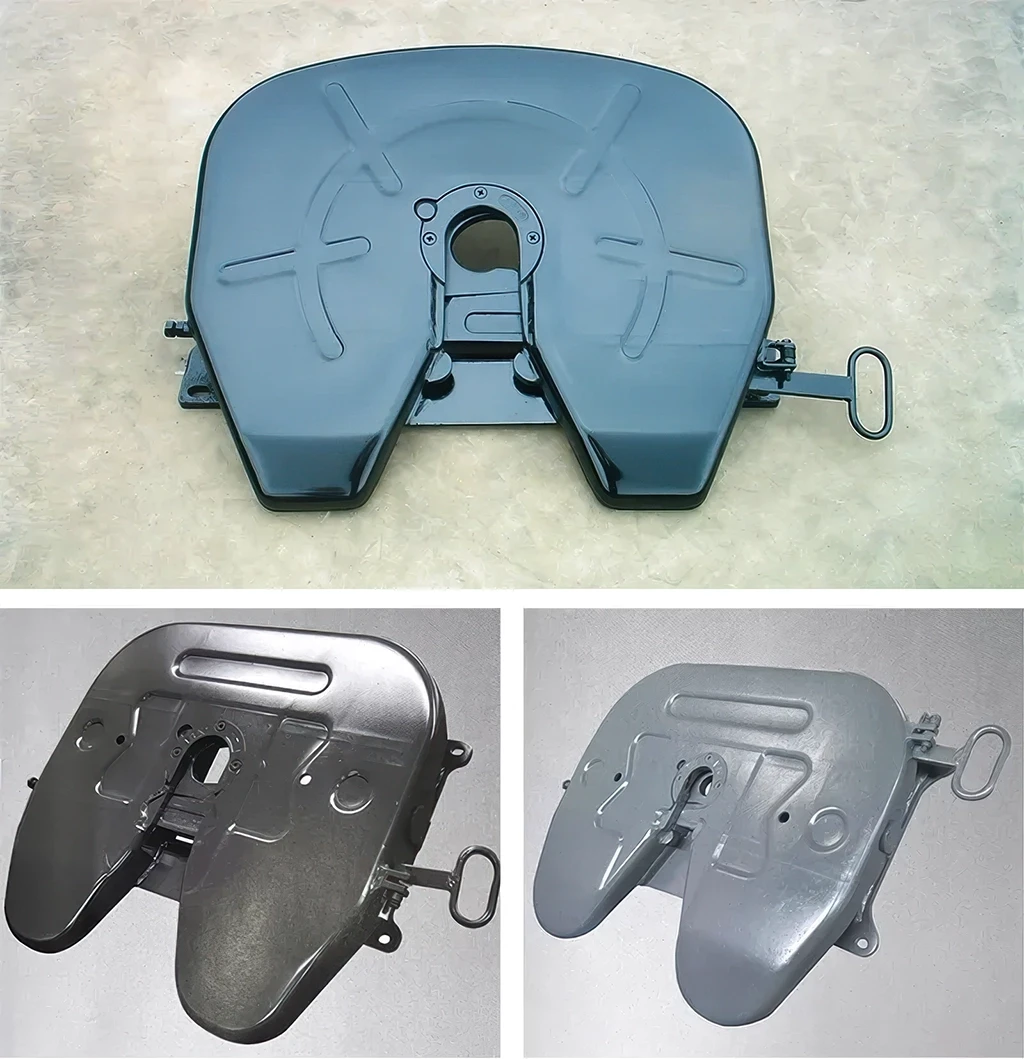
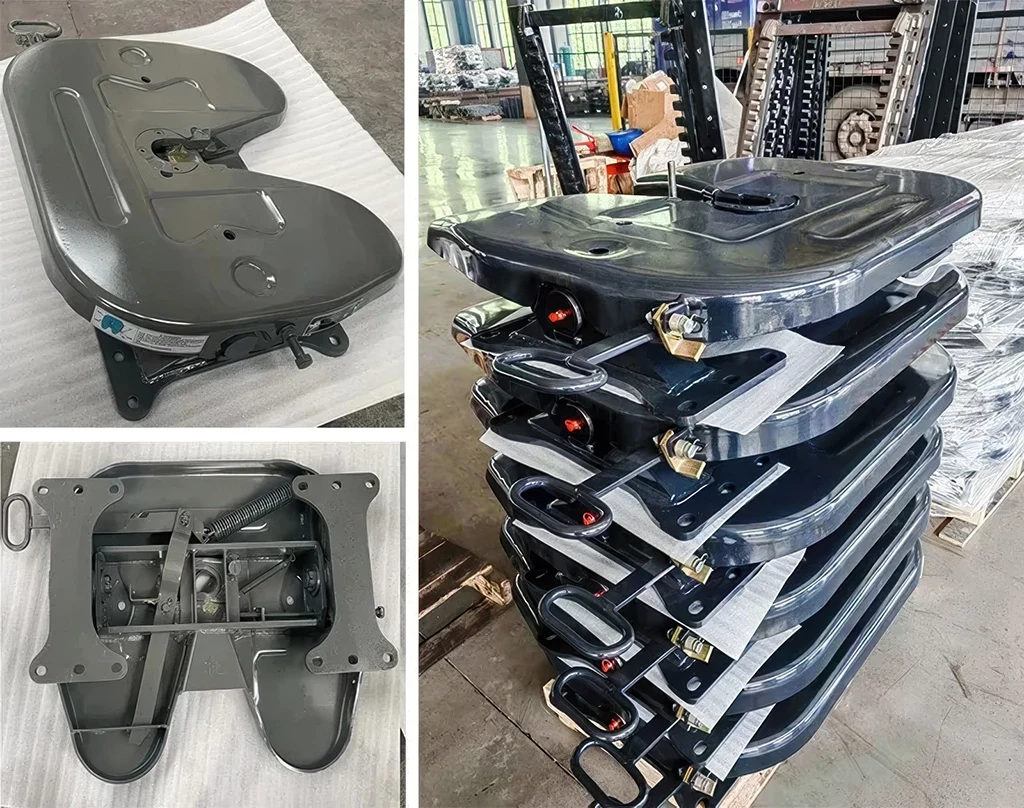
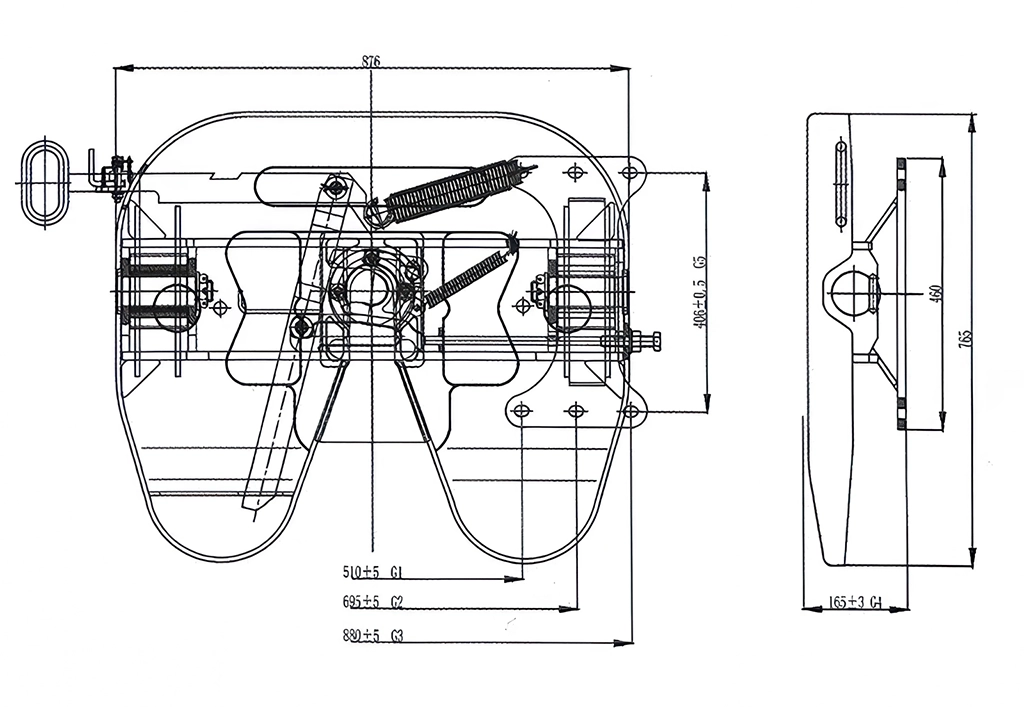
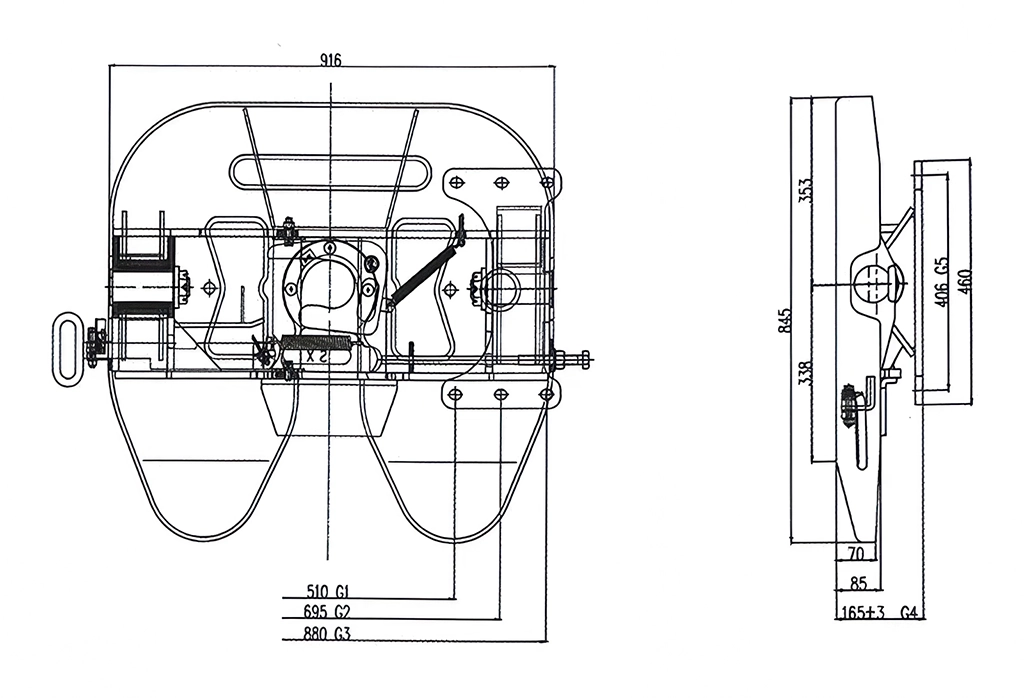
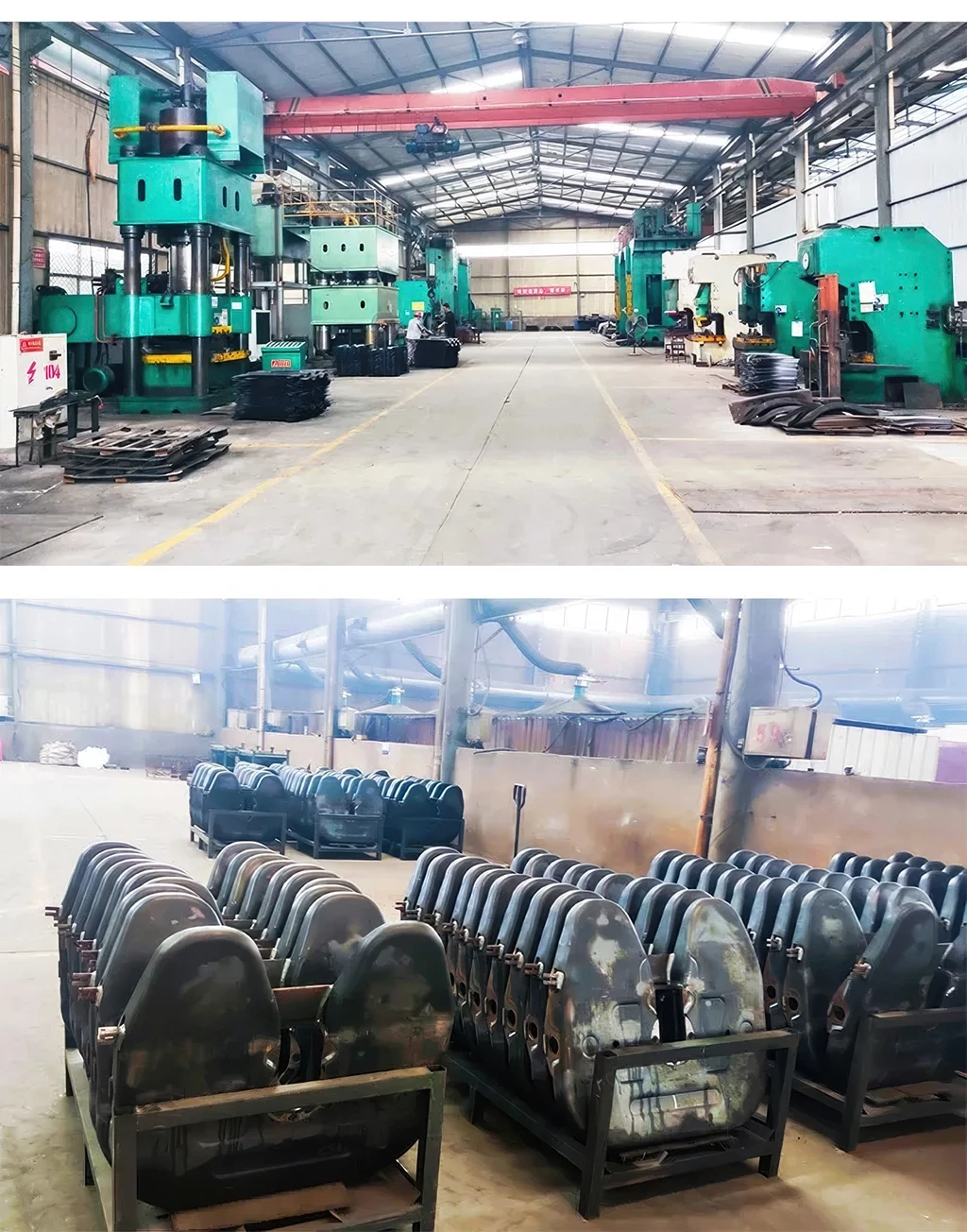
Inspection Views
Frequently Asked Questions
What is a fifth wheel coupling used for?
A fifth wheel coupling is the heavy-duty mechanical hitch on a tractor truck (prime mover) that connects to the kingpin of a semi-trailer. It supports the trailer’s front vertical load (bogie weight) while allowing horizontal articulation and smooth steering during turning and highway transport.
What are the 8 key steps for coupling a tractor to a semi-trailer?
- Step 1 (Inspection): Inspect the fifth wheel plate, locking jaws, grease coverage, and the trailer kingpin/apron plate for damage.
- Step 2 (Alignment): Position the tractor squarely in front of the trailer with the center lines aligned.
- Step 3 (Approach): Back the tractor up until the fifth wheel just touches the trailer apron plate.
- Step 4 (Height Check): Verify trailer height so the trailer bottom plate is slightly lower than the fifth wheel center (fifth wheel tilts and lifts trailer slightly upon entry).
- Step 5 (Lock Engagement): Back the tractor smoothly and firmly under the trailer until the fifth wheel locking jaws snap shut around the kingpin.
- Step 6 (Tug Test): Put the tractor in low forward gear and perform a gentle tug test against the trailer brakes to ensure mechanical lock.
- Step 7 (Visual Lock Confirmation): Inspect behind the cab to confirm the lock release handle is fully in, safety latch is locked, and no gap exists between fifth wheel and apron.
- Step 8 (Air & Landing Gear): Connect the electrical cable and brake air lines (glad hands), charge trailer air tanks, fully raise the landing gear legs, and stow the crank handle.
What is the difference between this page and the king pin page?
This page covers the tractor-side fifth wheel coupling assembly. The king pin page covers the trailer-side connection pin only. They work together, but they are not the same part.
When should I choose a 50 class fifth wheel coupling?
Choose the 50 class when the tractor works in lighter or more standard transport service and does not need the heavier traction mass capacity of a 90 class assembly.
When is a 90 class coupling the better fit?
Move to the 90 class when your tractor program needs higher traction mass, stronger support load, or broader heavy-duty transport use.
Does Kales supply fixed, lift, and slide versions?
Yes. This product family includes fixed, lift, and slide structures depending on the tractor requirement and operating scenario.
What information should I send before requesting a quote?
Send the tractor model, required coupling class, expected towing mass, mounting height, and whether you need a fixed, lift, or slide configuration.
Request Fifth Wheel Coupling Matching and Quote
If you need a fifth wheel coupling for a tractor truck and semi-trailer, send your tractor model, target towing mass, coupling class, and installation requirement. Kales can then match the correct 50 class or 90 class configuration for your fleet.
Leave a Reply
You must be logged in to post a comment.